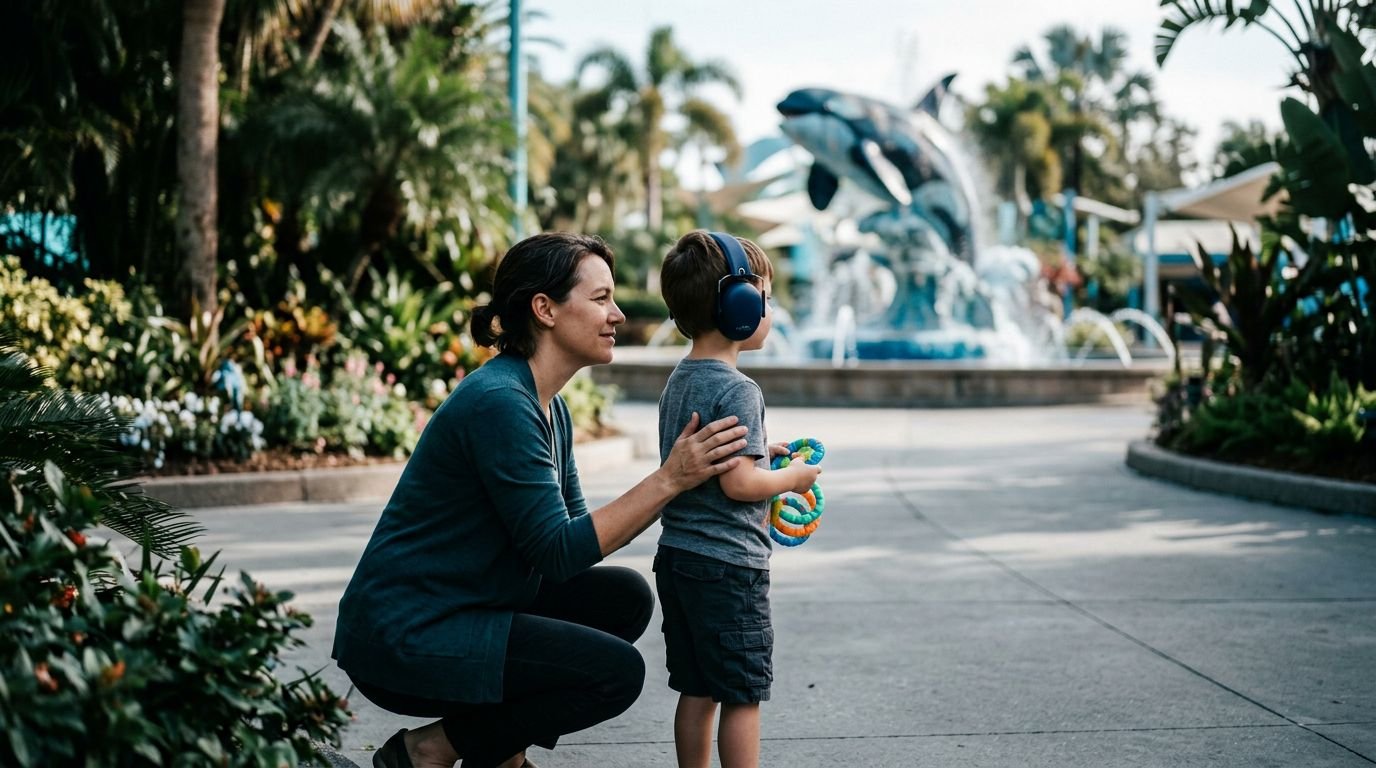
A theme park day can be exciting for families visiting with a child with autism spectrum disorder or other special needs. Crowds, heat, loud announcements, changing plans, and long waits can build up fast, even when your child has looked forward to the visit for weeks.
This SeaWorld Orlando autism guide helps you plan around your child’s real needs, not an unrealistic schedule. A slower day with a few favorite animals, planned breaks, and clear next steps can be a wonderful family vacation day.
Start with a flexible plan, then let your child’s energy guide the rest.
Key Takeaways
- Review SeaWorld Orlando’s current accessibility and sensory information before your visit, then create a simple plan with only one or two priorities.
- Stop at Guest Services early to discuss the Ride Accessibility Program (RAP) or Special Access if your child cannot safely wait in a traditional queue.
- Plan for sensory needs throughout the park, including heat, crowds, announcements, enclosed spaces, applause, and animal-area sounds—not only thrill rides.
- Use quiet rooms, shaded benches, animal exhibits, snacks, and familiar comfort items as planned reset options before your child becomes overwhelmed.
- Keep the day flexible and leave early if needed; a successful visit is based on your child’s comfort rather than completing every attraction.
Plan for a SeaWorld Orlando Visit Before Leaving Home
SeaWorld Orlando is a Certified Autism Center through IBCCES. Team members receive training in autism awareness, communication, sensory needs, and emotional awareness. That doesn’t mean every moment will be quiet or predictable. It does mean the park has programs and tools that can help your family feel more supported.
Before your trip, review SeaWorld’s current guest accessibility information. Park procedures, attraction availability, and operating hours can change, so check again close to your travel date.
SeaWorld also publishes an Orlando accessibility guide with ride information and sensory details. The sensory guide uses a 1-to-10 scale to help families think through sound, lighting, motion, crowds, and other possible triggers. It can also help you preview a required riding position for certain rides.
A number on a chart isn’t a yes-or-no answer. Your child may handle a fast ride but struggle with an enclosed pre-show. Another child may love the lights and sounds but need space when a crowd gathers. Use the guide as a planning tool, then trust what you already know about your child.
Before leaving the hotel, keep the preview simple. Show a few park photos, explain the first stop, and share only the next step.
- Pack noise-reducing headphones, comfort items, charging cords, and devices in one small pouch.
- Bring a portable charger because your phone may hold tickets, maps, food orders, and family messages.
- Use a simple visual plan with a few choices, such as “see dolphins,” “ride one ride,” “have lunch,” and “take a break.”
- Choose one or two must-do experiences for the whole day, not a long list that turns into pressure.
If your family visits several attractions that use IBCCES programs, the IBCCES Accessibility Card may be helpful to explore before your trip. Ask SeaWorld directly how current accommodations work for your visit.
Start at Guest Services and Ask About RAP
Arrive early enough that you do not need to rush through security and immediately join a line. Once inside the park, make Guest Services your first stop if your child may need support with traditional attraction queues.
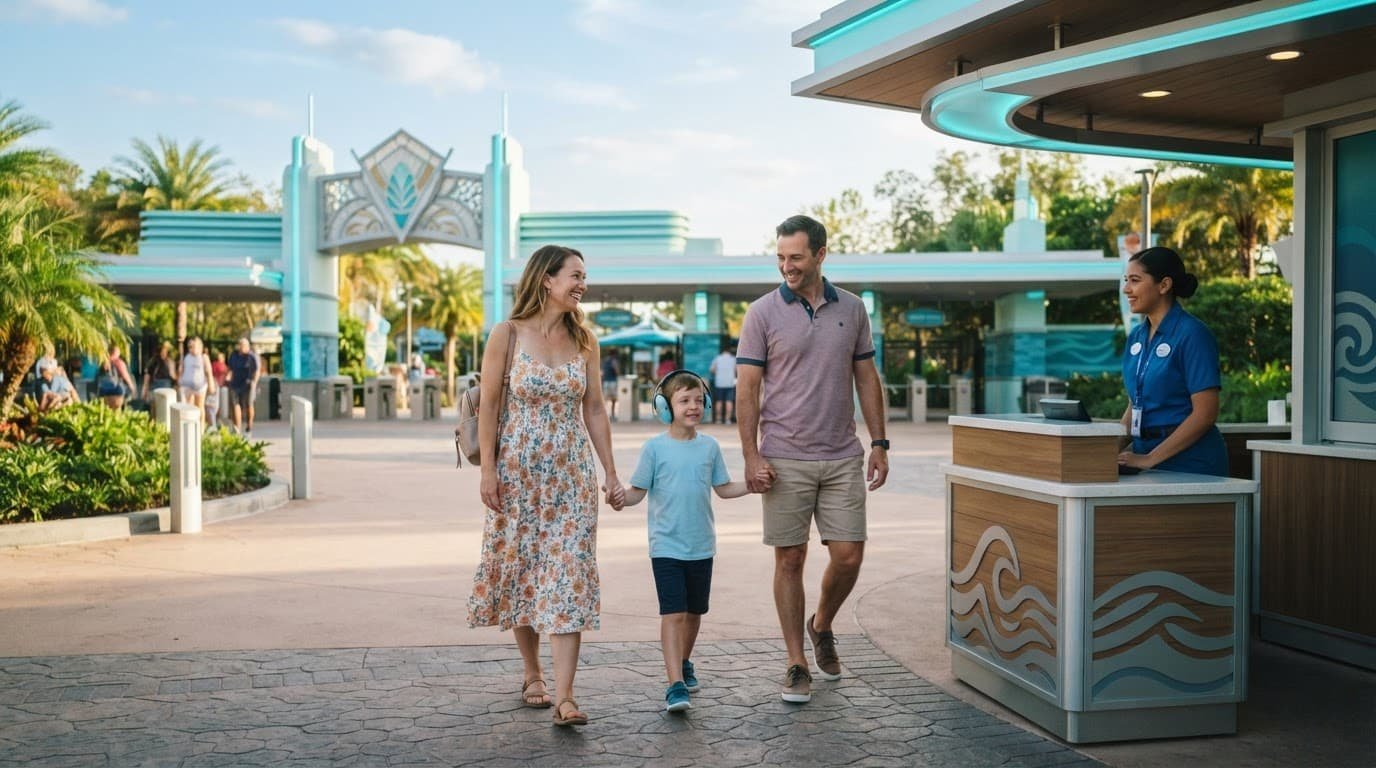
SeaWorld’s Ride Accessibility Program, often called RAP, provides Special Access for guests who cannot wait in a standard queue because of a disability. You do not need to share your child’s full medical history. Explain the practical issue instead.
You might say that your child’s special needs make a crowded line unsafe, especially when sensory processing disorder affects waiting. You can also explain that your child needs room to move during a wait. IBCCES training can support the conversation, but it does not replace describing the specific queue barrier.
An Undercover Tourist overview of SeaWorld RAP notes that families have not typically needed to provide a doctor’s note. Still, the park’s current policy governs, and the service desk makes the final decision.
The basic process usually looks like this:
- Visit the service desk in person and explain the queue-related challenge your child experiences.
- Receive a RAP or Special Access sheet that explains ride access and boarding procedures.
- Go to the attraction entrance or the marked RAP location and ask a team member for a return time.
- Spend the wait time somewhere else, then return at the assigned time for boarding instructions.
The return time is often based on the current standby wait. It gives your family a different place to wait. It is not a virtual queue or unlimited immediate ride access.
A RAP return time is most helpful when you use the wait for something your child already enjoys, such as a snack, an animal exhibit, a quiet room break, or time with a favorite device.
RAP and Special Access are for listed rides and attractions. They do not usually apply to shows, restaurant lines, merchandise checkouts, parades, or character meet-and-greets.
What the Ride Accessibility Program Reviews
RAP is not based on a diagnosis alone. Each attraction has manufacturer safety rules, and SeaWorld reviews each guest’s physical and mental safety requirements for that ride, including the required riding position.
For some attractions, that includes boarding safely and keeping the required riding position. Guests may also need to use the restraint device correctly, follow directions, and exit during an emergency. Some rides have transfer requirements, including the ability to reach and maintain the required riding position safely. Others may require enough upper-body control to stay safely positioned.
This can feel disappointing if a child cannot ride something they were excited about. Still, the goal is safety, not exclusion. Ask the team member to explain the requirement in plain language. It is okay to ask follow-up questions before your child sees the loading area.
Major rides that families often ask about include Manta, Mako, Kraken, Pipeline, and Journey to Atlantis. The current RAP sheet at the service desk is the best place to confirm which attractions are included. It also shows where access requests are handled, which entrance to use, and what riding position each ride requires.
Smaller attractions may have a different Special Access process. If an entrance is not staffed, a team member may direct you to the exit or another marked access point. Ask about boarding and the required riding position before waiting, so your family does not stand in the wrong place.
Plan Around Sensory Needs, Not Only Rides
The biggest surprise for first-time families is that sensory overload can happen outside roller coasters. A child may skip every thrill ride and still feel overwhelmed by bright sun, strollers, speakers, crowds, animal smells, and sudden applause.
Use the sensory guide to consider the whole park. It can help you compare attractions before your trip. Your family can also plan low-pressure animal experiences between bigger moments.
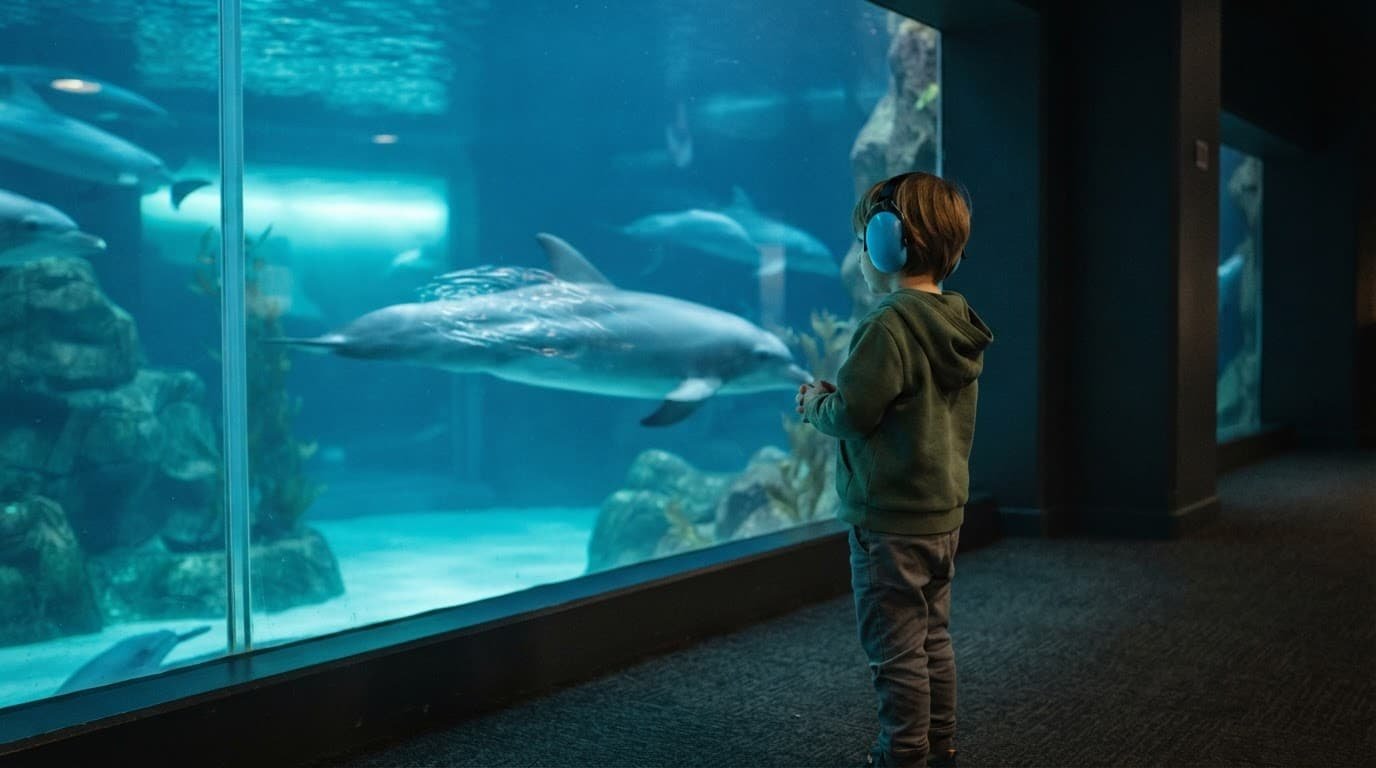
Here is a practical way to think about a few popular areas.
| Park area | Sensory considerations | A calmer approach |
|---|---|---|
| Dolphin Cove | Open sun, birds, crowd noise, water splashing, and occasional loud reactions | Visit early, stand away from the busiest railings, and use noise-reducing headphones if needed |
| Shark Encounter | A darker, enclosed space with echoing sounds and people moving through a shared path | Go during a less busy time and leave before it becomes too crowded |
| Manatee viewing areas | Dimmer lighting, water sounds, indoor temperature changes, and slower pacing | Use this as a seated or slower break between high-energy experiences |
| Turtle Trek | A pre-show and 3D theater experience that may include sound, darkness, and visual effects | Review the sensory rating first and skip it if enclosed theaters are difficult |
Dolphin Cove is often a good place to slow down, especially when there is no active presentation. It is still an outdoor space with plenty of movement. Let your child watch from a distance if that feels better. There is no need to stand at the front.
SeaWorld materials have identified a lower-sensory outdoor area near Dolphin Cove in the past. Ask Guest Services to identify the current low sensory area when you arrive. Locations and access can change with park operations.
Antarctica: Empire of the Penguin can be another area to plan carefully. The cold temperature, dim environment, bright visual effects, and enclosed spaces may feel exciting for some children and uncomfortable for others. If your child wants to see penguins but not ride, ask a team member about the best way to access animal viewing that day.
Attractions and shows both need planning for volume, applause, exits, and crowd movement. Sitting near an exit can make a big difference. Your family can also leave early if the sound level becomes too much.
Use Quiet Rooms Before Things Feel Too Big
A quiet room is not only for a full sensory overload. It can be a place to reset before your child reaches that point.
SeaWorld Orlando lists quiet rooms near the Information and Reservations Counter, close to the park entrance, and inside the Child Care Facility in Sesame Street Land. They are generally first-come, first-served. Ask a team member or the service desk about current access and availability when you arrive.
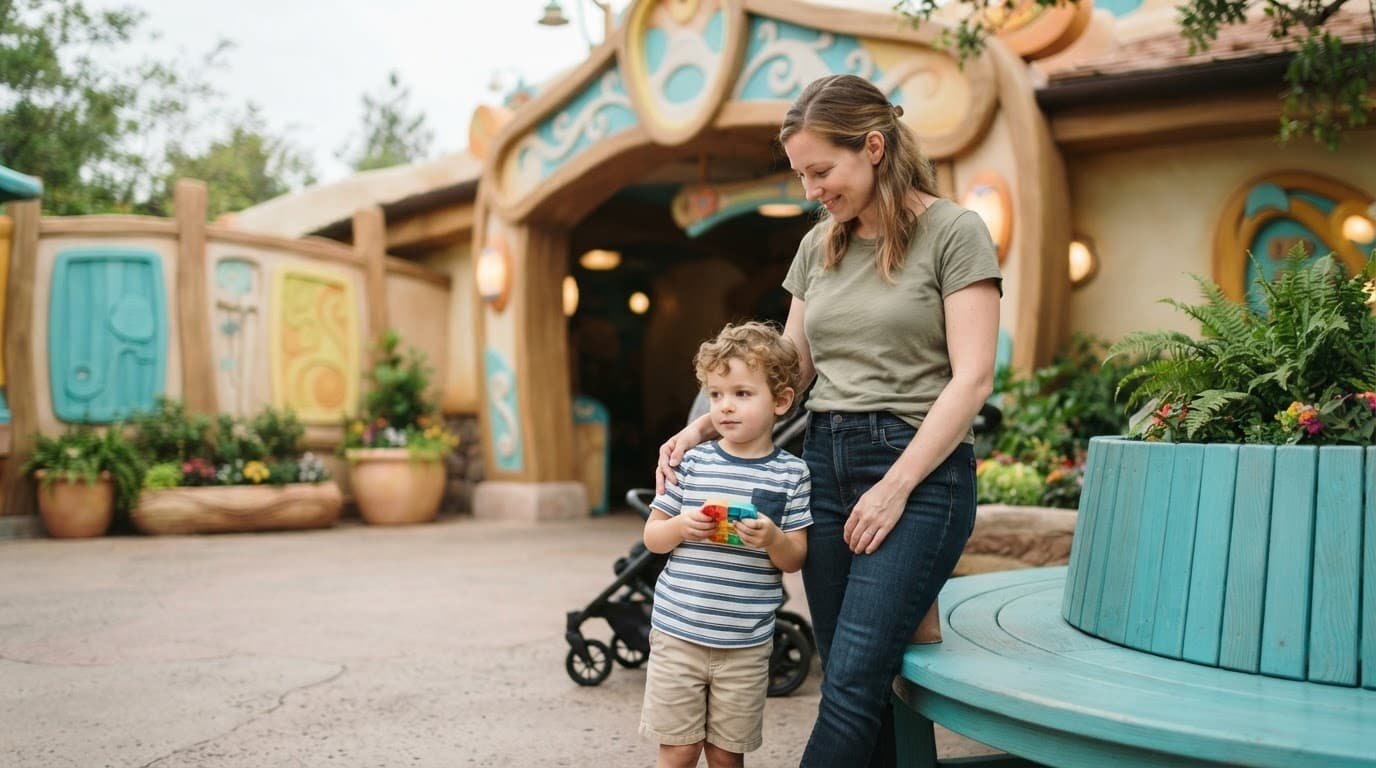
The Sesame Street Land quiet room can be especially helpful for younger children who need a break after rides, character interactions, or a busy meal. Give yourself extra time to walk there. Waiting until your child is already overwhelmed can make every step feel harder.
Guest Services is also the place to ask about complimentary noise-reducing headphones. Availability and checkout procedures may change, so confirm how the program works that day and where the headphones need to be returned.
Keep your child’s familiar noise-reducing headphones in the park bag if they are comfortable. Park-provided headphones may have a different fit or texture. New headphones may not work well on a hot day.
If a quiet room is occupied, do not panic. Look for a less busy outdoor table, a shaded bench away from the main walkway, or an animal-viewing area where your child can face away from the crowd. A five-minute break can be enough to help everyone reset.
Build a SeaWorld Day That Can Change
The best autism-friendly park plan has room to change. Your child may love an exhibit longer than expected. A ride could be temporarily closed. Florida weather may interrupt the afternoon. Those moments do not mean the day is off track.
Start with one priority in the morning. Many families choose a favorite animal exhibit or one ride before crowds and heat build. After that, stay in the same general area instead of crossing the park repeatedly.
If you receive a RAP return time or use Special Access, use that wait for something nearby. A snack, bathroom break, dolphin viewing, or quiet room visit can make the time feel purposeful instead of like another delay.
Avoid stacking too many timed commitments. A packed schedule can become another source of stress, especially when your child’s special needs make a break necessary as a scheduled return time arrives. Ask team members what flexibility is available if your family has a difficult moment.
Keep communication short and clear. “We are waiting for the ride.” “First snack, then dolphins.” “The ride is closed. We can choose sharks or a break.” A simple change card or picture on your phone can help when words are hard to find.
A small tech pouch can save the day. Put the portable battery, cable, noise-reducing headphones, tablet, and any communication device together. Families often remember the device and forget the charger.
Food breaks matter too. Do not wait until everyone is hungry and tired. Pick an earlier or later meal time when possible, and choose seating with space around your table. Familiar snacks can also help while you decide what comes next.
If you drove to the park, keep the ride back to the hotel calm. Use a familiar playlist, set the car temperature before pulling out, and give one simple next step: “We are going back to rest now.” A nearby hotel can make that reset much easier.
Leaving early is always a valid choice. A good SeaWorld day is not measured by closing time.
If Disney Is Also Part of Your Orlando Trip
SeaWorld and Disney are different parks, but many autism travel basics carry over. Familiar routines, clear choices, quiet breaks, flexible plans, and a charged phone can help at either park.
If your family is adding Disney World days, these planning resources can help you prepare: the Disney World with Autism PDF guide and the Disney autism travel guide on Amazon.
Disney’s disability process, rides, and app tools differ from SeaWorld’s access process. Treat each park as its own plan, even when your park bag and daily routine look similar. For a fuller look at Disney’s access process, calming spaces, and park-by-park planning, our Disney World autism guide is a helpful next step.
Frequently Asked Questions
What should we do first when we arrive at SeaWorld Orlando?
Visit Guest Services early if your child may need support with traditional attraction queues. You can also ask about current quiet room locations, sensory resources, and noise-reducing headphones.
Does SeaWorld’s RAP let us skip attraction lines?
No. RAP or Special Access usually provides a return time based on the current standby wait, allowing your family to wait somewhere else. It generally applies to listed rides and attractions, not shows, restaurants, merchandise lines, or character meet-and-greets.
Can RAP override a ride’s safety requirements?
No. SeaWorld still reviews the required riding position, restraint use, transfer needs, and other safety requirements for each attraction. Ask a team member to explain the requirements before your child waits or enters the loading area.
Where can my child take a quiet break?
SeaWorld lists quiet rooms near the Information and Reservations Counter, near the park entrance, and inside the Child Care Facility in Sesame Street Land. They are generally first-come, first-served, so ask a team member about current availability and consider a shaded bench or less crowded outdoor area as a backup.
How should we plan our first SeaWorld day?
Choose one or two must-do experiences, schedule breaks before they become urgent, and keep the rest of the day open. Use simple language, nearby activities, familiar snacks, and a flexible plan so your child can guide the pace.
A Calmer First Day at SeaWorld Orlando
A successful SeaWorld Orlando visit does not need every coaster, show, exhibit, or photo opportunity. It needs a pace your child can manage and flexibility when the day changes.
Use Guest Services early and plan pauses before they feel urgent. Let your SeaWorld Orlando autism guide support your family’s choices. Comfort, flexibility, and family confidence matter more than completing every attraction.