A family vacation should not feel like a week-long emergency drill. Yet a family trip involving ADHD can turn packing, departure times, crowded airports, and changing plans into a lot to manage at once.
That does not mean your family is not made for travel. It means the trip needs a little more structure, breathing room, and fewer decisions when everyone is already tired.
A calm vacation starts before you leave home, with a plan that works for your real family.
Key Takeaways
- Choose a destination and itinerary that match your family’s energy, with fewer transitions, two daily priorities, and plenty of flexible time.
- Make executive dysfunction easier to manage with shared checklists, labeled alarms, clear roles, and buffers for delays, breaks, meals, and bathroom stops.
- Keep medication, documents, chargers, food, comfort items, and a change of clothes in a carry-on or delay bag that stays with your family.
- Research destination medication rules early, keep prescriptions in their original containers, and ask the prescribing clinician before changing any medication routine.
- Protect familiar routines, schedule recovery time, and treat breaks or changed plans as normal parts of a successful family vacation.
Start with a realistic family travel plan
The best family vacation is not always the one with the biggest itinerary. It is the one where your family can rest, eat, move, and enjoy time together without feeling rushed every hour.
A lower-demand trip can still be a successful one. Good travel planning starts with a destination that matches your family’s energy. A road trip, beach rental, cruise, nearby city, or one-park-per-day Disney vacation can be a better fit than a packed schedule with several hotel changes.
Keep the big decisions simple to reduce decision fatigue. Pick your transportation, hotel, and one or two main activities per day. Review travel insurance and cancellation coverage before booking, then leave everything else flexible.
Structure does not take away spontaneity. It gives your family a safe place to return to when the day changes.
Choose fewer transitions
Every transition takes energy. Changing hotels, switching parks, making tight connections, and moving between distant attractions can cause stress before the fun begins.
A direct flight may cost more than one with a connection. It may prevent a missed connection, a long airport wait, and a tired child who has reached their limit. The same thinking applies to hotels. A nearby hotel, vacation rental, or resort with food options can remove several daily decisions.
If you are planning a road trip, familiar routines can come along for the ride. These holiday travel traditions can give children something predictable to look forward to, even when they are sleeping somewhere new.
Build a flexible itinerary
Choose two daily priorities. Maybe it is a morning at the pool and one museum. Maybe it is a favorite Disney ride and a character meal. Younger children can choose a favorite stop, teens can weigh in on timing, and adults can manage reservations. That is enough.
Avoid planning five timed activities across town. Walking, bathroom breaks, snack stops, traffic, weather, and sensory breaks all take time. A plan that has room for real life is easier to follow.
Make executive dysfunction visible, not stressful
Executive dysfunction can affect working memory, time management, task initiation, and decision-making. Travel asks for all of those skills at once. That is why a simple trip can feel so overwhelming.
Do not expect one parent, one child, or one shared phone note to hold every detail. Put the plan where everyone can see it.
Use a paper checklist, a shared calendar, a whiteboard, or a basic notes app. The right system can become your family’s shared travel checklist.

Break planning into small jobs
Do not try to plan the whole vacation in one evening. Give each task its own day.
- Adults can divide medication, documents, and transportation responsibilities. Save every confirmation in one folder.
- Make a short packing list a week before departure, not the night before.
- Give each teen one preparation task, such as checking chargers or filling water bottles.
- Ask younger children to choose a comfort item and carry-on activity.
A shared checklist also lowers the mental load between partners. One adult does not need to remember every snack, reservation, charger, and bathroom stop alone.
Use alarms for the moment you must leave
Time blindness is real, especially on travel days. Knowing that your flight is at 10:00 a.m. does not always translate into leaving the house at the right time.
Set several alarms with clear labels: “wake up,” “finish breakfast,” “load the car,” and “leave now.” The final alarm should happen before you think you need to leave.
Add extra time for finding parking, returning a rental car, bathroom breaks, traffic, and children who suddenly need a different shirt. Buffers are not wasted time. They are part of the plan.
Pack a travel bag for the first 24 hours
Checked luggage gets delayed. Hotel rooms are not always ready. A long travel day can stretch even longer when someone is hungry, cold, bored, or overwhelmed.
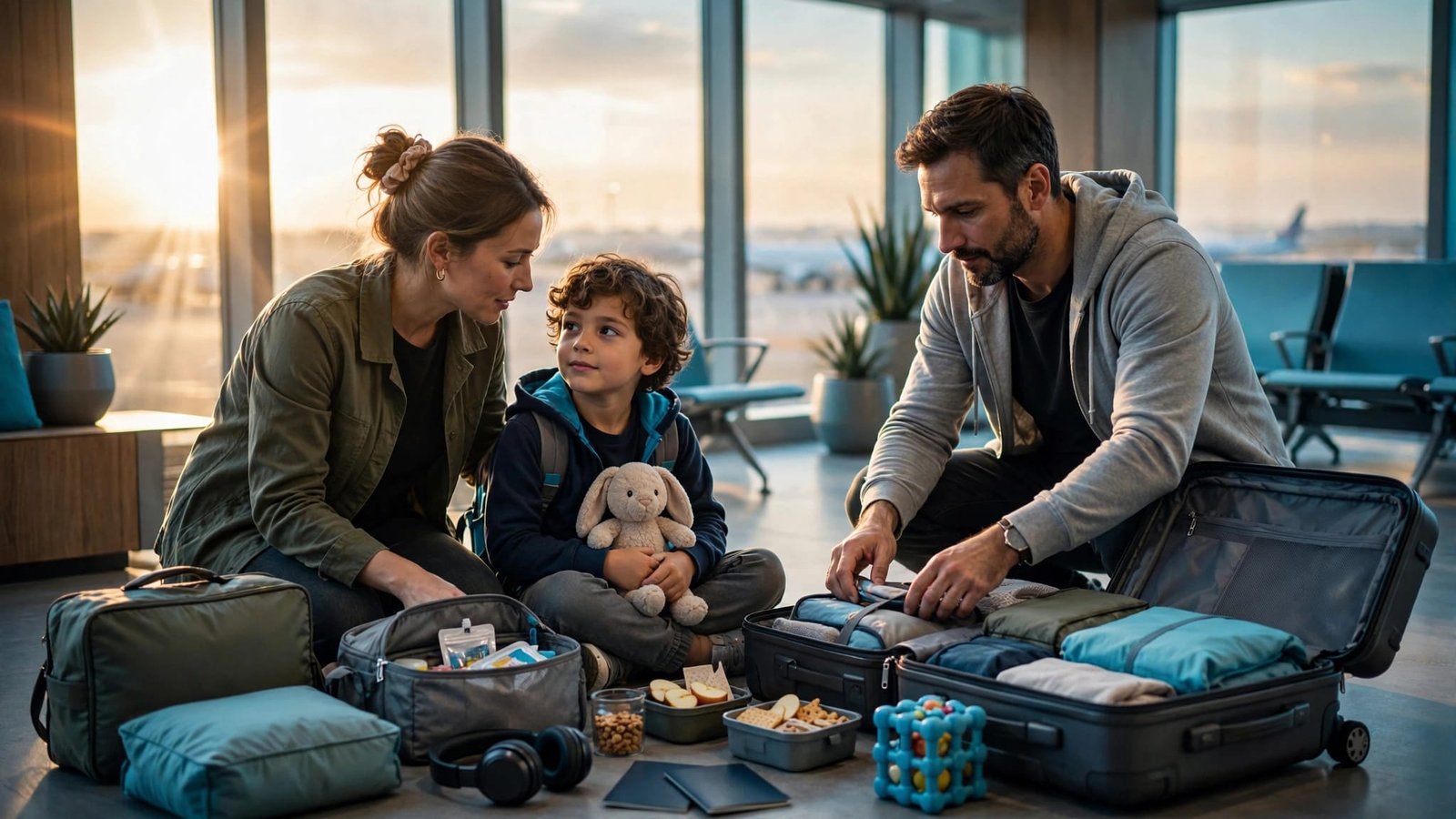
Your carry-on should have the items your family cannot easily replace. Include medication, easy food, chargers, comfort items, and a change of clothing. Keep these supplies together in one backpack or small suitcase that stays with you.

Photo by Ivan S
Create a simple dopamine kit
A dopamine kit isn’t a shopping list or a reason to buy new toys. It’s a personalized set of familiar items for regulation, comfort, and boredom.
Children may choose a stuffed animal or coloring activity. Teens might prefer a playlist, game, or favorite snack. Adults may need a hoodie, familiar drink, or quiet activity. Each traveler can choose what helps them feel comfortable.
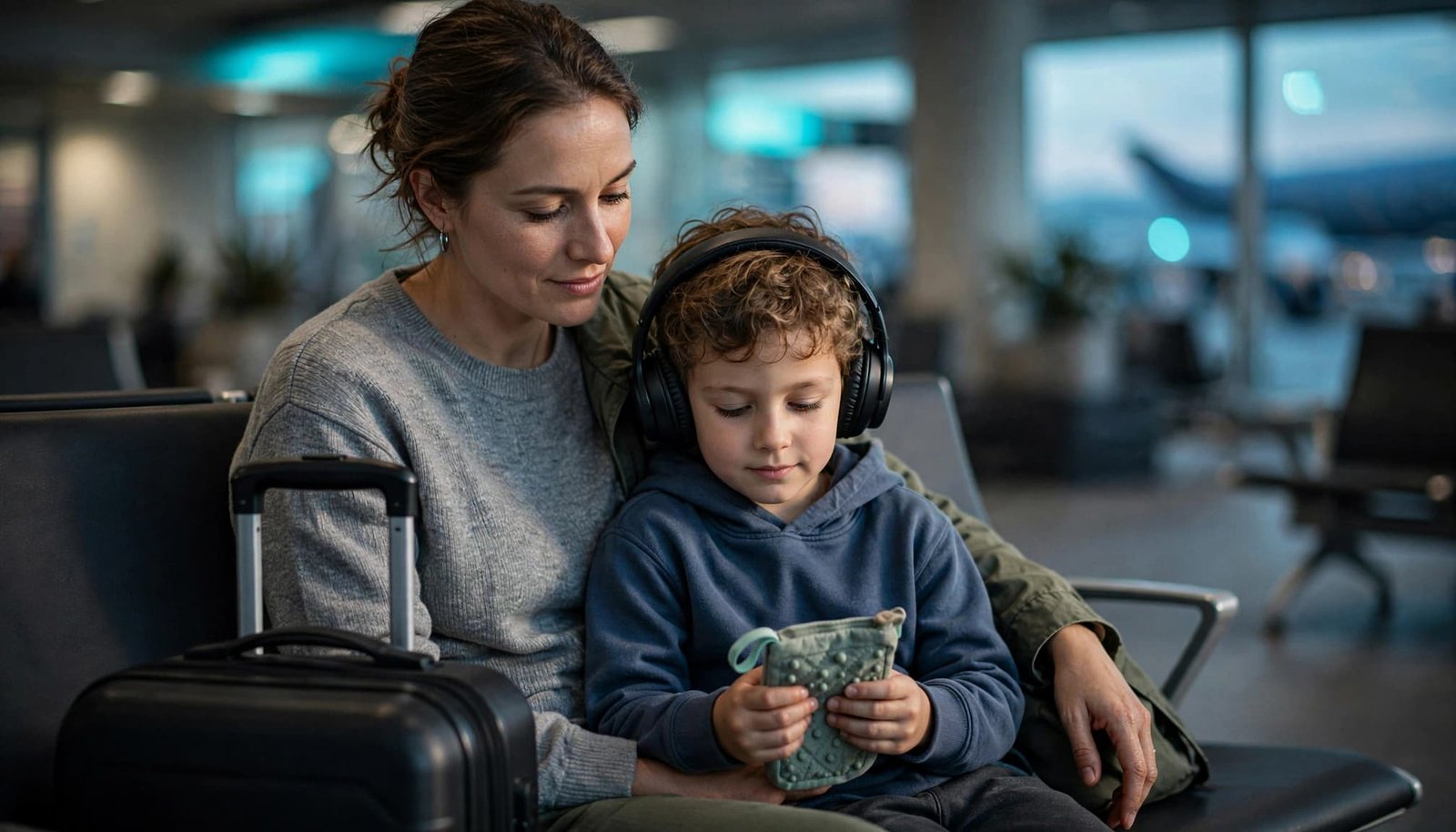
Pack noise-canceling headphones or ear defenders that have already been tested at home. Some travelers prefer a quieter space, music, or no headphones at all. Travel day is not the time to introduce something new that may feel uncomfortable.
Keep tech together
Put devices, headphones, charging cords, portable batteries, and adapters in one pouch. Families often remember the tablet and forget the charger.
Your phone may hold boarding passes, hotel details, maps, tickets, messages, and reservations. A portable charger is not an extra item. It belongs in the travel bag.
For backup supplies that take care of the less-fun parts of travel, visit Trip Rescue Shop. It has practical travel items, including stroller needs and cleaning supplies, plus must-have items for sick days for those unexpected sick-on-vacation moments.
Handle ADHD medication before you travel
Medication planning should happen early, especially for international travel. A prescription that’s legal at home may be restricted, controlled, or prohibited elsewhere.
Keep all medications in your carry-on or hand luggage. Use original labeled containers and bring enough for the full trip, plus an appropriate supply for delays, as your care team recommends.
The CDC’s guidance on restricted medications abroad explains why common treatments need extra attention before international travel.
Check country rules, not only airline rules
TSA screening rules and another country’s medication laws aren’t the same thing. ADHD stimulants, including amphetamine-based medications, can have strict rules overseas.
Check current airline procedures, destination-country controlled-substance rules, customs requirements, and healthcare requirements close to departure. These rules can change after your initial research.
The U.S. State Department advises travelers to check destination medication laws before they leave. Some destinations may require a clinician letter, sometimes called a travel letter, translated paperwork, a copy of the prescription, or advance authorization.
The International Narcotics Control Board traveler guidance can also help you find destination-specific information. Verify the requirements again close to departure.
Ask the prescriber before changing routines
Children, teens, and adults shouldn’t change timing or skip doses without advice from their prescribing clinician, pharmacist, or healthcare team. They also shouldn’t add sleep medication without that guidance.
Bring a current medication list, prescription details, and the prescribing clinician’s contact information. Keep these papers accessible with the medications, not inside checked luggage.
This is general travel information, not individualized medical advice.
Make airport security less overwhelming
Airports have noise, bright lights, long lines, announcements, crowds, and constant changes. For a child or adult with ADHD, that can lead to sensory overload fast.
Different sensory sensitivities may call for different supports, including movement, headphones, visual previews, a quieter waiting area, or extra processing time.
Talk through the airport process before travel. Explain the basic order: check bags, go through the checkpoint, find the gate, use the restroom, get a snack, then wait to board. Photos or a short video of the airport can help younger children know what to expect.
Arrive early enough to take breaks
Getting to the airport early is not about sitting around for hours. It gives you time to stop when someone needs a bathroom, a snack, quieter space, or a few minutes away from the line.
Look for a gate farther from busy food courts. Let your child move before boarding if they need movement. A short walk, stair climb, or quiet corner can be more helpful than repeatedly asking them to sit still. Movement, breaks, and communication are support strategies, not misbehavior.
For families who need added help with screening, TSA Cares can provide information before the trip. TSA PreCheck may reduce screening friction for eligible travelers. It isn’t a substitute for accommodations or a guarantee of a quiet, short experience. Call ahead, explain what may make the checkpoint difficult, and check current TSA, airline, and airport requirements before departure.
Give simple choices
Travel anxiety often gets worse when a child feels powerless. Offer small choices that don’t change the schedule.
“Do you want the red snack or the crackers?” “Headphones now or after the checkpoint?” “Do you want to walk beside me or hold the suitcase?”
These choices give a child some control without adding more decisions for everyone else.
Choose transportation that fits your budget and energy
Premium services can be helpful, but they are not the only answer for families traveling with ADHD. You do not have to pay for every upgrade to have a calmer trip.
A slower, lower-cost option may work better. Driving can give your family control over snacks, music, bathroom breaks, and departure time. A vacation rental may provide a kitchen, laundry, and a quieter place to reset than a busy hotel.
Spend money where it removes real stress
Think about which problem creates the most travel stress for your family. Maybe it is an early-morning flight. Maybe it is long walks to transportation. Maybe it is sleeping in one crowded hotel room.
Spend where it matters most, if your budget allows. That could mean one extra hotel night near the airport, a room with a kitchenette, seat selection so your family sits together, or a nonstop flight.
Skip add-ons that create more pressure. A paid theme park service with several timed return windows may help one family and feel like another clock to watch for another.
Use travel insurance for covered disruptions
Travel insurance can help with covered cancellations, interruptions, medical events, and some baggage or medication problems. It doesn’t make every nonrefundable reservation refundable.
Read the travel insurance policy and exclusions before purchasing. Coverage varies, so check current terms for cancellations, interruptions, medical events, delayed or lost prescription medication, mobility or sensory support items, and baggage limits.
Keep your travel insurance documents and contact details with a delay bag. Include medication, identification, chargers, snacks, a change of clothes, and copies of reservations. A missed connection is easier when your essentials are already with you.
Protect routines once you arrive
A vacation does not need to look exactly like home. Still, familiar routines can make a new place feel safer.
Keep bedtime cues consistent when possible. Bring the same pajamas, sound machine, bedtime book, or music your child uses at home. Plan familiar breakfast foods if selective eating is part of your family’s routine. Familiar cues can ease routine loss for children, teens, and adults adjusting to a new setting.
ADHD-friendly travel gets easier when the destination is not packed with surprises from morning until night.

Start with a low-pressure first day
Do not schedule your biggest activity right after a flight or long drive. Check in, unpack a few essentials, eat something familiar, and let everyone settle.
If you arrive at Disney, skip the pressure to race into a park. A resort pool, a short walk, or an early night may be the better choice. Your vacation has not failed because you rested.
Plan recovery time before a meltdown
Many families wait until someone is crying, angry, or completely done before taking a break. An afternoon reset can reduce accumulated burnout before it reaches that point.
Return to the hotel in the afternoon. Sit in a quiet restaurant. Find a bench away from the crowd. Keep the evening optional.
A break is not lost vacation time. It is often what makes the next activity possible.
Share the mental load and prevent travel arguments
Close quarters, missed meals, noise, and tired children can test any family. ADHD-related emotional dysregulation can make small problems feel much bigger in the moment. Missed meals, fatigue, changing plans, and constant decisions can expose executive dysfunction and fuel conflict. These responses aren’t intentional defiance or a parenting failure.
Talk about roles before you leave. One adult can handle tickets and reservations, while a travel partner handles snacks, medications, and comfort items. If you’re traveling solo with children, simplify even more and ask older kids to take on age-appropriate jobs.
Use a reset phrase
Choose one neutral phrase before the trip, such as “We need a reset” or “Let’s pause for ten minutes.” It gives adults a chance to pause before an argument grows. Offer children and teens simple choices or age-appropriate jobs.
Do not try to solve every disagreement while standing in a crowded airport or theme park line. Get water, food, quiet, or fresh air first. Then decide what to do next.
Let plans change without blame
A ride may close. Weather may change. A child may decide they can’t handle the activity they wanted yesterday.
That is disappointing, but it is not bad behavior or poor planning. Keep one backup option nearby, such as a hotel break, indoor show, pool time, or favorite snack.
For Disney families who need added sensory-friendly planning support, the Disney World with Autism Guide on Etsy shares practical ideas for park days, breaks, and accessibility needs. You can also find the Disney travel guide on Amazon.
Plan for the post-trip crash
The return home can be harder than the trip itself. Laundry, unpacking, school, work, missed sleep, and a sudden end to the fun can lead to a post-trip crash. That accumulated fatigue can feel like burnout, signaling a need for recovery, not a personal failure.
Leave one quiet day at home if you can, and don’t schedule a full calendar. Children, teens, and adults may need different amounts of downtime after a late flight or long drive. Order an easy meal, unpack essentials first, and let the rest wait.
Unpack in stages
Start with medication, chargers, school or work items, and dirty clothes. Souvenirs and extra bags can wait.
Put one load of laundry in, but don’t feel pressure to finish every suitcase that night. The trip is over. Your family doesn’t need to race anymore.
A gentle landing helps everyone hold onto the good parts of the vacation instead of remembering only the exhaustion.
Frequently Asked Questions
What is the best travel plan for a family with ADHD?
The best plan is usually a lower-demand trip with fewer transitions, simple daily priorities, and room for rest. Choose transportation, lodging, and activities that fit your family’s energy instead of trying to fill every hour.
What should we keep in our carry-on when traveling with ADHD?
Pack medication, easy food, chargers, a portable battery, comfort items, headphones, and a change of clothes. Keep these supplies together in a bag that stays with you in case checked luggage is delayed or plans change.
How should we prepare ADHD medication for international travel?
Check the destination country’s controlled-substance and customs rules well before departure, because airline and local medication requirements may differ. Keep medication in its original labeled container and ask your healthcare team whether you need a clinician letter, translated paperwork, or advance authorization.
How can we make airports less overwhelming?
Review the airport process in advance, arrive early enough for movement and sensory breaks, and use simple choices to give children some control. Headphones, a quieter waiting area, snacks, and extra processing time may also help.
What should we do when travel plans change?
Pause before trying to solve the problem, then offer water, food, quiet, or fresh air. Keep one nearby backup option, such as a hotel break, pool time, an indoor activity, or a favorite snack, and avoid treating the change as bad behavior.
Final thoughts on ADHD family travel
A successful trip isn’t measured by attraction counts, perfect photos, or how much you fit into one day. It’s measured by comfort, connection, and genuine enjoyment.
When you plan for traveling with ADHD, buffers, clear roles, familiar items, and recovery time can support children, teens, and adults. These accommodations can make the vacation feel more manageable.
The goal isn’t a perfect trip. It’s a flexible family trip that feels like yours.