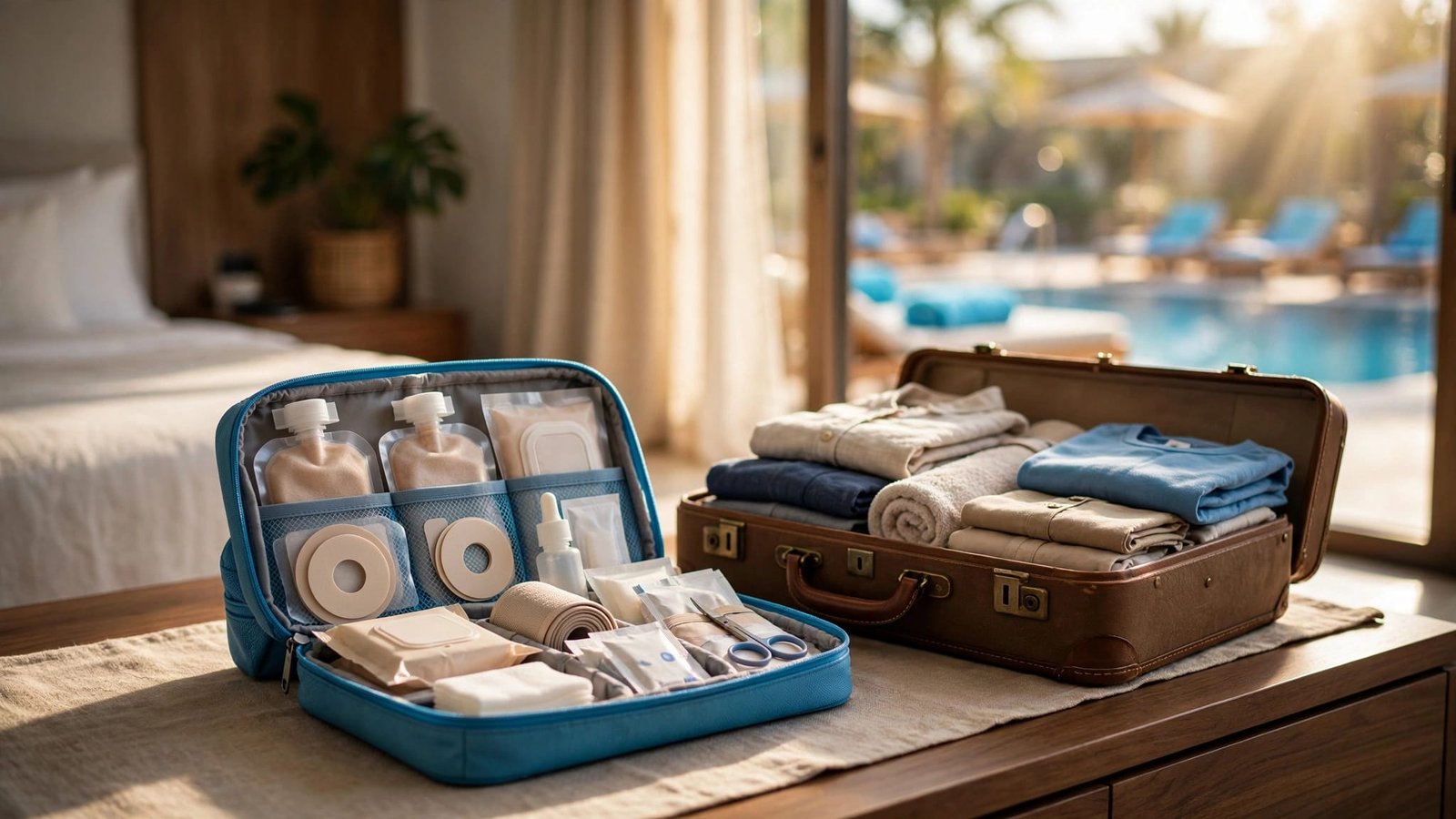
A family vacation should have room for missed turns, extra pool time, and changes of plan. If you’re traveling with an ostomy, it also needs room to care for your stoma bag without making every day revolve around it.
A few dependable backups can make the difference between a manageable interruption and a stressful afternoon. Start with your usual care routine, then build a trip that gives your family time, privacy, and options when you need them.
Build the vacation around your real routine
The right destination isn’t always the one with the busiest itinerary. Think about how you’ll get there, where you’ll stay, and how easy it is to take a break.
Choose lodging that makes pouch care easier
Before booking, ask about the bathroom layout and whether your room has enough space to store supplies and manage a stoma bag. A room near transportation may save you a long walk when you’re tired. If you prefer familiar food or need to manage hydration carefully, a kitchenette or easy grocery access may help.
For a theme park trip, plan a realistic route back to the hotel. For a cruise, ask about cabin bathrooms and medical-supply policies before you commit. Your comfort matters as much as the attractions.
Give family members useful jobs
Decide who carries a backup kit and who takes the children to the next activity while you make pouch changes or take a break. Agree on how you’ll let each other know when plans change. Keep medical details as private as you want them. Your family can understand, “I need 20 minutes at the room,” without needing an explanation in a crowded line.
K&S The Travel Crusaders offers special needs travel planning for families coordinating routines, access needs, and a more comfortable pace. Medical decisions should still come from your healthcare provider.
What to pack when traveling with an ostomy
Pack for the scheduled trip and a delay. Estimate your usual pouch changes, then allow for leaks, heat, illness, and an unexpected extra night with emergency supplies.
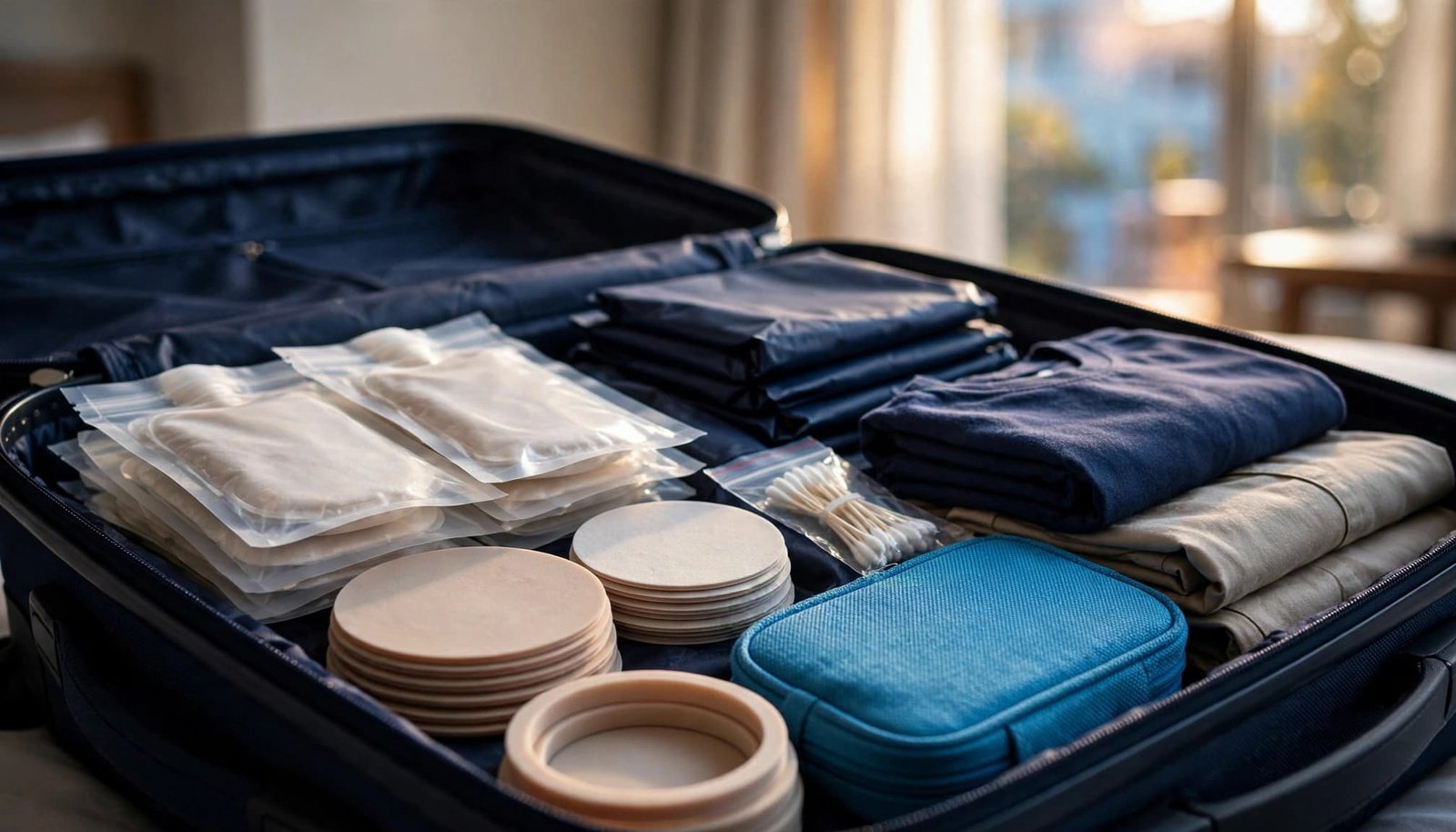
Keep a complete change kit with you
Keep essential ostomy supplies in carry-on luggage, enough for the travel day and the first stretch after arrival if checked luggage is delayed. Your complete change kit should include your usual ostomy supplies: an ostomy pouch, skin barriers, wipes or remover, disposal bags, and any seals or accessories in your routine. Add a backup stoma bag, spare underwear, and clothing.
The United Ostomy Associations of America’s air travel tips recommend packing supplies in at least two places, including a carry-on and checked luggage. If two adults are traveling, divide backup supplies between their bags for another safety net. Keep any medication you need with you, too.
Pack for the outing, not only the suitcase
A small day bag can hold a full set of supplies for your stoma bag, wipes, a spare layer, and water. Refill it each evening so you aren’t searching a hotel room before breakfast.
Store products according to their packaging instructions, especially when a bag could sit in a hot car. If you use cut-to-fit skin barriers, prepare some ahead of time. Bring your supplier’s name, product details, and your ostomy nurse’s contact information in a phone note or travel folder.
What happens at airport security?
Airport security can feel personal when you wear a stoma bag. A little preparation helps you explain what you need without discussing it in front of the whole line.

Tell the officer before screening
A simple, quiet statement is enough: “I have a stoma bag.” You can also hand over UOAA’s Travel Communication Card as your travel communication card if you’d rather not say it aloud.
According to TSA’s ostomy screening guidance, you don’t have to remove your ostomy pouch for screening. Additional screening may be needed. UOAA says you shouldn’t be asked to expose or empty it; an officer may instead ask you to touch its outside through your clothing so your hands can be tested. You can request a private screening and ask whether a self pat-down is permitted, though a pat-down may still be required.
A communication card explains your needs. It doesn’t replace security screening or guarantee exactly how the checkpoint will operate.
Check scissors and ask for help early
UOAA says curved-point ostomy scissors with blades shorter than four inches may be allowed in a U.S. carry-on. Screening decisions and rules abroad can vary. Pre-cutting several barriers is simpler than depending on scissors to pass a checkpoint; check current rules before you fly.
If you’d like to discuss disability-related screening support, contact TSA Cares at least 72 hours before departure. Allow extra airport time even after making the request. Keep your change kit easy to reach in your carry-on luggage, and tell your airline about any additional medical items or baggage needs before travel.
Keep flights, food, and hydration comfortable
You don’t need a special vacation diet because you have an ostomy. You do need a plan that respects how your own body responds to food, heat, and long travel days. For individual medical guidance, follow the plan from your healthcare provider.
If your pouch inflates on the plane
Swallowed air, gas-producing foods, and cabin pressure can leave your stoma bag feeling full. Visit the restroom when you can. If you use a drainable pouch, release gas through its outlet according to your usual routine. If you use a closed pouch, change it when needed. Don’t puncture the pouch.
Before flying, go easy on foods or drinks that you know cause gas. Carbonated drinks bother some travelers; others notice certain beans or vegetables. Familiar meals are often easier than trying a new food shortly before boarding.
Drink with your care needs in mind
Long walks and warm weather can affect hydration. People with a stoma may face greater fluid and electrolyte loss when output rises, especially in heat or during activity, according to TravelHealthPro’s stoma travel guidance.
Carry water and follow the hydration plan your care team recommends for your type of ostomy. If your output changes sharply, or you feel unwell, don’t try to push through another park, tour, or beach day. Know where to get medical advice at your destination.
Make family days flexible, not empty
A good vacation plan still includes things you’re excited to do. It also leaves room to step away for pouch changes without losing the day.
Plan stops before everyone needs one
On a road trip, keep your change kit in the passenger area, not under the luggage. Include emergency supplies and disposal bags, and identify likely restroom stops. Allow time for an unplanned one. At a resort or theme park, note nearby restrooms and the easiest route back to your room. That makes it easier to tend to your stoma bag without disrupting the day.
One main activity and an easy meal may suit your family better than a full day of reservations. If you have pouch leaks, another adult can take the kids for a snack while you find privacy. Then everyone can meet up without feeling rushed.
Trip Rescue Shop has practical family travel items, including strollers and cleaning supplies for unexpected sick-on-vacation moments. Choose extras that support your usual routine, and pack skin barriers if they’re part of your usual kit.
Account for other family needs, too
If your family is also planning around autism or sensory needs, leave space for quiet breaks, familiar snacks, and a flexible park plan. Our Disney World autism guide offers more ideas for preparing around those needs.
The Disney World With Autism Guide is also available as an Etsy PDF guide and an Amazon ebook. Those resources can help with family and sensory planning; your ostomy care plan should come from your healthcare team.
Prepare for supply problems away from home
A backup plan is most useful when it names the first person you’ll call if your stoma bag becomes unavailable. Save the details before departure, especially for a trip abroad.
Check insurance before you pay
Ask your insurer whether your regular health coverage applies at your destination. When comparing travel insurance for foreign travel, disclose relevant medical conditions and ask about pre-existing-condition exclusions, emergency care, medical evacuation, and coverage for supplies. Get answers in the policy documents, not only in a phone conversation.
The CDC’s travel insurance guidance recommends checking your existing coverage and its exclusions before leaving. Keep your policy number and assistance phone number with your reservations. If you’re taking a cruise or planning activities away from major towns, check how the policy applies there as well.
Know where to start if supplies run out
Before international travel, save your supplier’s phone number and the exact names or product numbers of your pouches and barriers. Keep emergency supplies separate from your main luggage, and ask your ostomy nurse what to do if your usual product isn’t available.
If ostomy supplies run short abroad, contact your supplier first. A local clinic, hospital, ostomy support group, or International Ostomy Association member group may help you locate products, but availability isn’t guaranteed. Coloplast’s ostomy travel guidance also recommends keeping supplier details handy for this reason. Don’t wait until your last pouch to ask for help.
Key Takeaways
- Keep a complete change kit in your carry-on, then split extra ostomy supplies between bags.
- Tell TSA about your stoma bag before screening, and use a communication card to request privacy.
- Plan familiar meals, water, restroom stops, and extra time for airport security.
- Check insurance coverage, save supplier contacts, and pack emergency supplies before traveling abroad.
Frequently Asked Questions
How many ostomy supplies should I bring?
Start with what you’d normally use, then add extra for pouch leaks and delays. Coloplast suggests packing two to three times what you expect to need. Your best amount depends on trip length, your usual schedule for pouch changes, and how easily you could replace supplies.
Do I have to empty or show my pouch at airport security?
No. TSA doesn’t require you to remove it. UOAA says you shouldn’t have to expose or empty it, though additional screening, including a pat-down, may occur. Tell the officer about your stoma bag before screening begins.
Can medical scissors go in my carry-on?
UOAA says certain curved-point scissors with blades under four inches may be allowed. Check current TSA and destination rules before leaving, since an officer makes the screening decision. Pre-cut barriers give you a backup.
What if my ostomy bag fills with air during a flight?
Use the restroom and follow your normal method for releasing gas from a drainable pouch or changing a closed one. Keep a change kit within reach rather than in an overhead bag you can’t access immediately.
A vacation plan with room to breathe
Traveling with an ostomy takes preparation, but your family trip doesn’t have to revolve around the next “what if.” Keep supplies close, know where to get help, and give each day enough room to change.
That flexibility leaves more time for what you came to enjoy together.
Leave a Reply