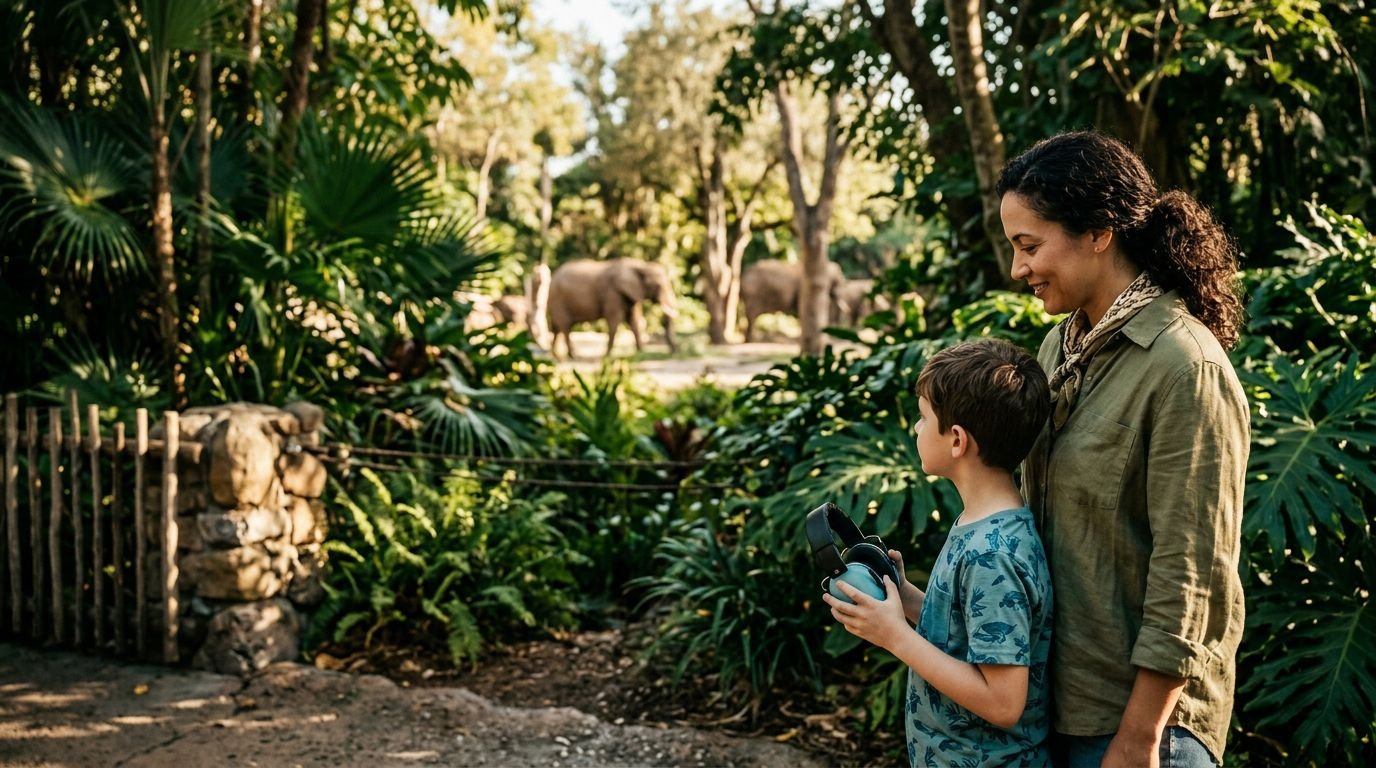
A successful Animal Kingdom day may end before dinner, and that can still feel like a Disney win.
For first-time families, planning a Disney vacation around a neurodivergent child with cognitive disabilities means prioritizing comfort over a checklist of attractions across the theme parks. Magic Kingdom, Epcot, and Hollywood Studios each have a different sensory profile, so no park is universally better for every child. It has beautiful animal trails and slower moments, but heat, sudden rain, loud shows, long walks, and intense rides can still be challenging.
Start with a flexible plan. Leave space for a snack, a quiet trail, a change of clothes, or an early exit when your child has had enough.
Key Takeaways
- Plan a flexible Animal Kingdom day around your child’s comfort, with one priority attraction, one animal experience, and plenty of room for breaks or an early exit.
- Review each attraction’s sensory demands before riding, and respect your child’s choice to skip anything that feels overwhelming.
- Prepare familiar supports, including snacks, headphones, comfort items, visual schedules, cooling gear, and a change of clothes.
- Disability Access Service is based on the functional barrier created by a traditional queue, not on a diagnosis alone. Review Disney’s current process and eligibility rules before traveling.
- Quiet trails, shaded areas, a stroller used as a wheelchair when approved, and a nearby hotel break can help your family manage heat, crowds, and sensory overload.
Plan an Animal Kingdom Day With Breathing Room
Animal Kingdom can be a comfortable first Walt Disney World park for many autistic children. There are animals to watch, paths to explore, and places where your child can move instead of standing in one crowded area.
Still, it is not automatically a low-sensory park. Pandora can feel busy early in the day. Africa and Asia have open paths with limited shade in places. Drumming, music, characters, stroller traffic, and packed theater exits can add up quickly.
A good day does not need ten attractions. Pick one must-do ride, one animal experience, and one familiar meal. Anything else is a bonus.
Try to choose one part of the park for each part of the day. For example, start in Pandora or Africa, take a midday break, then visit Asia later if everyone still has energy. Going back and forth across the park can wear out even the happiest traveler.
If your family receives a DAS pass, use its scheduled window as one flexible anchor. It does not need to fill every hour.
The park entrance area, called The Oasis, is often a gentler place to begin. It has animal habitats, shade, and a slower pace than heading straight into a ride queue. Let your child take in the new sounds and sights before moving toward the Tree of Life.
Know the sensory side of the rides
Every child has different sensory sensitivities, and sensory processing disorder may shape how a ride feels. Watch ride videos at home if helpful, but don’t pressure your child to ride once you arrive.
| Attraction | What to consider before riding |
|---|---|
| Kilimanjaro Safaris | The vehicle can be bumpy and noisy. It is outdoors and lasts longer than many rides. |
| Na’vi River Journey | This boat ride is slow, but it is dark and has glowing scenes, sounds, and a louder ending. |
| Avatar Flight of Passage | It has 3D visuals, a tight ride position, wind, scents, and the feeling of flying. It is intense for many guests. |
| Expedition Everest | This coaster has speed, darkness, loud track sounds, backward motion, and big drops. |
| Kali River Rapids | Expect splashes, unpredictable water, crowd noise, and the chance of getting soaked. |
| Festival of the Lion King | The show is colorful and fun, but it is loud, busy, and includes audience participation. Theater exits can also feel crowded. |
| Finding Nemo: The Big Blue… and Beyond! | This indoor show has darkness, music, theater seating, and bright stage effects. |
Kilimanjaro Safaris is a favorite for many families because animals give the ride a natural focus. Others may find the bumps, vehicle noise, and longer ride time too much. A short animal trail can be a better first step.
Flight of Passage is not the ride to “try and see” if your child dislikes restraints, sudden motion, or intense screens. It is okay to enjoy Pandora, take photos, and skip the attraction.
A ride your child chooses to skip is not a missed Disney moment. Respecting that choice can protect the rest of the day.
Prepare the familiar details before you travel
Before a Disney vacation, prepare familiar details that make the day easier to understand. A Visual Schedule can take some mystery out of a big trip. Keep it simple. Show the order with photos or pictures: wake up, eat breakfast, travel to the park, go through security, choose an activity, take a break, return to the hotel.
Talk about what may change, too. Florida weather can bring rain, rides can close, and a favorite restaurant may have a later pickup time. A simple “change” card or short phrase gives your child a clear next step: “That ride is closed, now we choose a trail or a snack.”
If you are flying into Orlando and renting a car, give yourself a quiet pause before leaving the garage. This small reset can reduce transition surprises. Take photos of the car’s fuel level, windshield, tires, and existing marks. Ask how the toll program works before you drive away. Many roads around Orlando use electronic tolling, and rental-car toll fees can arrive after the trip.
Set the temperature, connect familiar music, and explain the first plan in plain language: “We are going to the hotel now.” That first drive doesn’t need to be another big adventure.

Pack familiar items your child already likes. Disney isn’t the best place to introduce brand-new sensory tools.
- Bring noise-cancelling headphones or ear defenders that have been used at home.
- Bring a Sunflower Lanyard only if your child already uses one comfortably. It is not an official access credential or guarantee of assistance.
- Pack familiar snacks, a refillable water bottle, and preferred gum or mints if those help.
- Keep devices, charging cords, headphones, and a portable battery in one pouch.
- Add a favorite hoodie, soft blanket, fidget, or comfort item for lines and transportation.
- Include a change of clothes, especially after Kali River Rapids, rain, or a hot afternoon.
- Pack medications in your park bag, not at the bottom of checked luggage.
For longer trips, repeat favorite clothes if needed. There’s no reason to add a stressful resort laundry stop when your child feels best in the same soft shorts or familiar shirt.
How Disability Access Service works at Walt Disney World
Disney’s official accommodation is called Disability Access Service, though some families search for it as a DAS pass. It isn’t a front-of-the-line pass, and eligibility isn’t based on a diagnosis alone.
The conversation centers on the functional barrier in a traditional queue, including challenges related to cognitive disabilities. Explain what happens in line and why waiting elsewhere would help your child. A diagnosis or label alone doesn’t guarantee approval.
Review Disney’s current current Disney DAS details before your trip, because policies can change. Current Walt Disney World guidance uses a live video chat process. Families can begin registration up to 60 days before their first park day.
The person requesting DAS must be at least 18, and the guest needing the accommodation must join the video chat. Disney lists video-chat hours as 7:00 AM to 8:00 PM Eastern Time. Have your My Disney Experience account ready before you begin.
If approved, the DAS pass is linked to the registered guest’s ticket and My Disney Experience account. Use the My Disney Experience app to request an attraction return time. Wait somewhere more comfortable than the standby queue. Your family can generally hold one scheduled window at a time. Once you use it, you can request another.
The DAS guest must be present and ride with the group. A DAS party is generally limited to four people, including the registered guest, though Disney may consider immediate-family situations individually.
Individual experiences can sound different, as one parent’s report on the updated DAS process shows. Treat this anecdotal report as secondary to official Disney information, then ask questions during registration.
DAS is valid only at the resort where it was issued. An approval at this resort does not transfer to California, where Disneyland has its own DAS registration process. Any DAS pass remains subject to the issuing resort’s current eligibility and validity rules.
When a stroller as a wheelchair makes sense
For some autistic children, including those with cognitive disabilities, a stroller is more than transportation. It can provide a safe, familiar space in crowds, help prevent elopement, or offer a place to regroup after sensory overload.
Ask Guest Relations about having a stroller as a wheelchair during your visit. Families often call this a red stroller tag. If approved, it may allow an eligible stroller to stay with your child where standard stroller parking would otherwise be required.
Approval depends on your child’s functional need, not on a diagnosis alone. Be ready to explain why your child needs the stroller nearby. The tag does not override stroller dimensions or other safety rules. Disney’s standard limit is 31 inches wide and 52 inches long, but confirm the current limits and tag process with Disney before you travel.
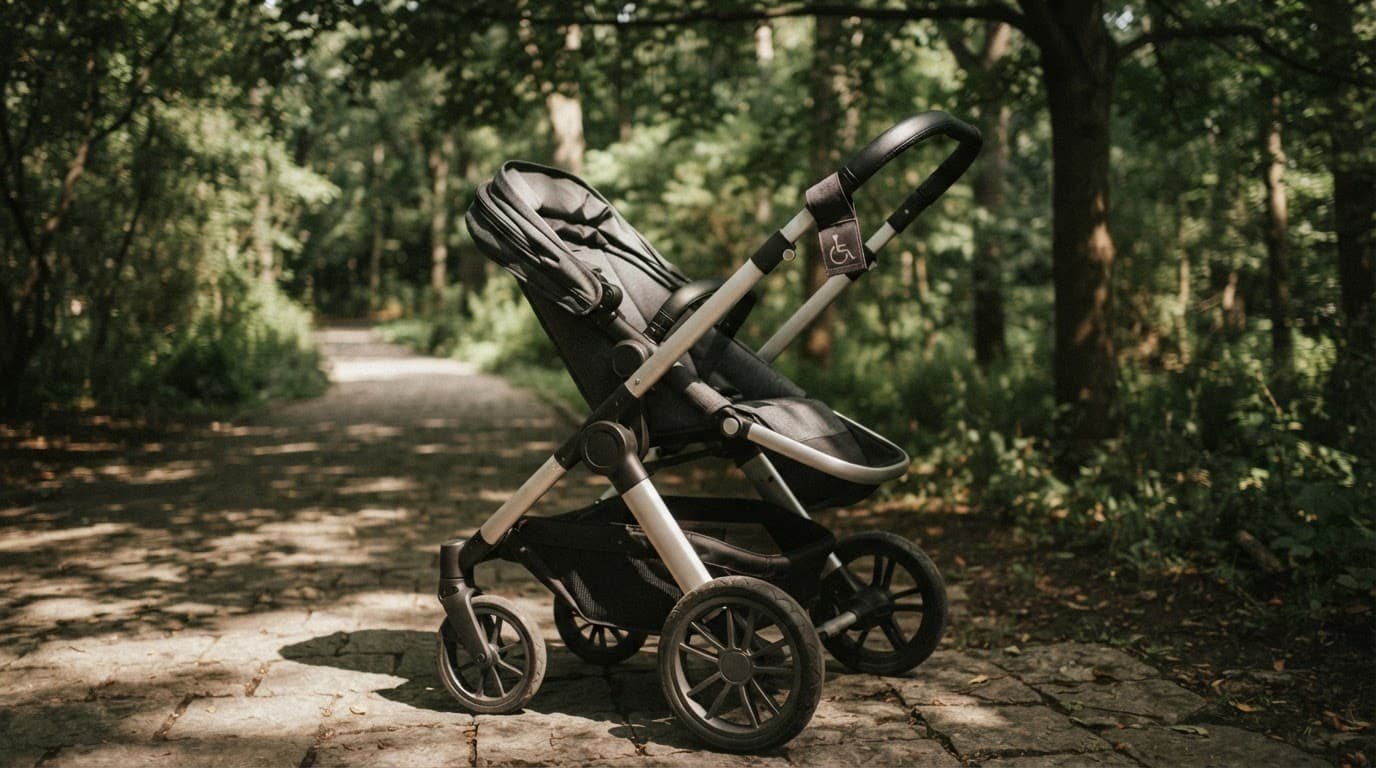
Take a photo of the stroller and its tag when you park it. Cast Members may move strollers to keep walkways clear, and parking areas can look different after a parade, rainstorm, or busy afternoon.
Keep identification with your child, and use a Sunflower Lanyard only if your child already uses one. It is an optional personal identifier, not a substitute for supervision or an official Disney accommodation. Locate companion restrooms in advance, but remember that privacy does not make them long-term sensory break spaces. Agree on which adult watches transitions, choose a meeting point if separated, and give busy park entrances and ride exits extra attention for elopement safety.
Find quiet breaks before your child needs one
Animal Kingdom has animal trails that may feel calmer than attraction queues. Maharajah Jungle Trek in Asia and Gorilla Falls Exploration Trail near Kilimanjaro Safaris are good choices when your child needs to walk, look at animals, and reset. Identify one or two quiet break areas before your child shows signs of distress.
The Oasis near the park entrance can work well early in the day or before leaving. Conservation Station offers another change of pace if your child enjoys the Wildlife Express Train, though the train may be noisy or crowded.
No place in theme parks stays quiet all day, and benches, trails, or shaded locations can become crowded. The First Aid area is for medical needs, but it is not a guaranteed sensory room. Companion restrooms can offer privacy when available, but they are not intended as extended break rooms.

Heat can be one of the park’s biggest sensory challenges. Bring water and cooling towels if your child likes them. Check the forecast, pack rain gear, and don’t wait for visible distress before taking a break.
A first park day can follow a loose rhythm:
- Arrive near park opening and do one priority attraction or animal experience.
- Take a snack, restroom, and water break before late-morning crowds build.
- Treat a scheduled DAS pass window as one planning anchor. Leave for a resort break or find a low-pressure trail around midday.
- Return only if your family wants to, then choose one more activity.
- Leave when your child is done, even if the original plan said otherwise.
A hotel close enough for a midday break can change the whole trip. Animal Kingdom Lodge is nearby, but the right resort is the one that fits your family’s budget, room needs, and transportation comfort.
Use the app for support, not more pressure
Before your first park day, link tickets in the My Disney Experience app and connect each adult to the right plans. The app can hold DAS reservations, park maps, wait times, mobile food orders, dining reservations, and messages between adults.
For families traveling with guests with cognitive disabilities, keep one adult in charge of the app and communicate changes clearly. Too many adults refreshing screens or giving instructions can make a tough moment worse, so charge your phone and bring the correct cable.
Mobile Order can reduce the stress of standing in a crowded quick-service line. Review menus before hunger becomes urgent. Schedule a pickup window, then choose a quieter outdoor table when you can. Familiar snacks still matter, especially when a child does not want a park meal.
Lightning Lane Multi Pass is separate from a DAS pass and costs extra. It may help with a few must-do attractions, but it also adds timed return windows. Skip it if more reservations will make the day feel rushed.
The Rider Switch program is another helpful option. If one child does not ride, tell a Cast Member before entering the attraction. One adult rides while another waits with the non-rider. The waiting adult can then take a turn without joining the full line again. The Rider Switch program does not require DAS.
One quick park question has a clear answer: balloons are not sold there, and balloons are not allowed inside because of the animals. Do not promise a balloon as part of the day.
Keep a trusted guide close by
A written plan can help you prepare visual schedules, park bags, meals, travel days, and rest breaks. The Disney World with Autism Guide PDF on Etsy is a third-party planning resource, not official Disney guidance, for families wanting extra support before leaving home.
If you prefer a Kindle-friendly option, the Disney autism travel guide on Amazon offers another third-party way to keep planning details close during your trip.
Frequently Asked Questions
Is Animal Kingdom a good park for an autistic child?
Animal Kingdom can be a comfortable choice because it has animal trails, open paths, and slower moments between attractions. It can still be hot, noisy, crowded, and physically tiring, so plan for breaks and avoid trying to complete every attraction.
How does Disability Access Service work at Walt Disney World?
DAS helps guests who cannot wait in a traditional queue because of a functional barrier, including challenges related to cognitive disabilities. If approved, the registered guest receives attraction return times through the My Disney Experience app and must be present to ride.
Does a diagnosis guarantee approval for DAS?
No. Disney considers how the guest’s disability affects their ability to wait in a traditional queue rather than relying on a diagnosis alone. Review the current Disney requirements and explain the specific support your child needs during registration.
Can I use a stroller as a wheelchair at Animal Kingdom?
Some children may qualify to keep an eligible stroller with them because it provides a safe space, supports mobility, or helps with elopement prevention. Ask Guest Relations about the current process, explain the functional need, and confirm the stroller’s size and safety requirements.
Where can my child take a quiet break in Animal Kingdom?
Maharajah Jungle Trek, Gorilla Falls Exploration Trail, and The Oasis may offer opportunities to walk, observe animals, or regroup away from a ride queue. These areas are not guaranteed to stay quiet, so take breaks before distress becomes visible and leave the park if your child is done.
A Good Animal Kingdom Day Can Be a Short Day
Your family’s best park plan is the one that leaves room to stop or head home early. Helpful supports, familiar snacks, and quiet trails can make the day easier, but your child does not need to do everything for it to count as a success.
Start slowly, protect your breaks, and keep expectations realistic. Planning this park around your child’s needs works best when they feel safe, heard, and comfortable enough to enjoy the moments that matter.