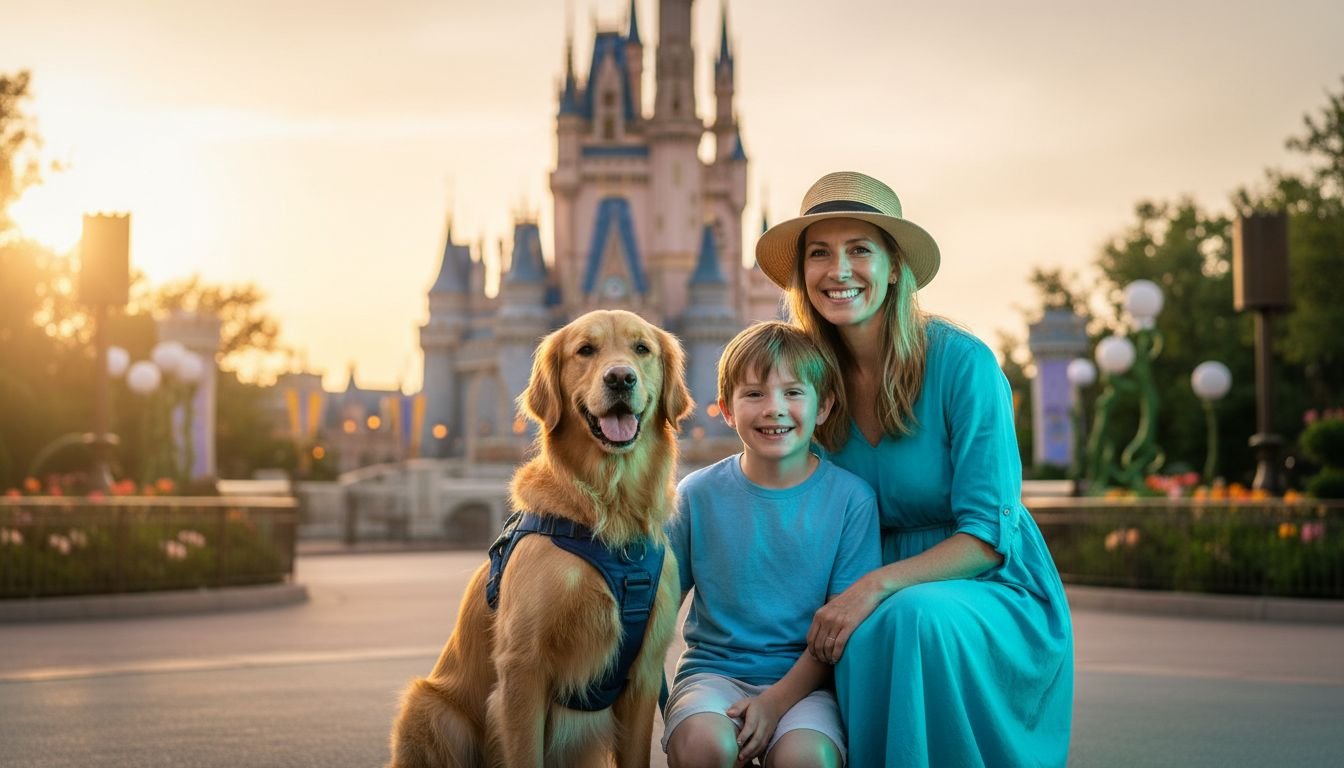
A day at Walt Disney World can change fast. A ride may close, afternoon rain can arrive, or your child may need a break sooner than planned.
For autism families, a trained service dog can provide important disability-related support. Still, Disney World service dog rules are firm, and knowing them before you arrive helps the whole family feel more comfortable. A little planning gives you more room for the moments that matter.
Key Takeaways
- Walt Disney World allows trained service dogs and miniature horses, including psychiatric service dogs trained to perform disability-related tasks. Comfort or emotional support alone does not qualify for park access.
- Disney does not require a vest, identification card, or certificate. When a task is not obvious, Cast Members may ask only whether the animal is required because of a disability and what task it performs.
- Service dogs must stay under the handler’s control, remain calm and housebroken, and stay on the floor at restaurants. The handler remains responsible for the dog at all times.
- Many attractions and Disney transportation options can accommodate service dogs, but some rides cannot. Ask at the attraction entrance about staying with the dog, Rider Switch, or a portable kennel when available.
- Plan for relief breaks, Florida heat, crowded walkways, fireworks, and sensory overload. DAS is separate from service-animal access and is not automatically approved because a guest has autism.
Who can enter the theme parks with a service dog
Walt Disney World allows trained service animals at the resort. A service animal is individually trained for disability-related work or tasks. Qualifying animals include dogs and a miniature horse.
A psychiatric service dog can qualify when it performs trained, disability-related tasks. For a psychiatric service dog, those tasks may interrupt harmful behavior or guide a handler away from overwhelm. Other tasks may include retrieving a caregiver or alerting to a panic response. Comfort alone does not meet the definition.
Emotional support animals, including emotional support dogs, therapy animals, comfort animals, and pets aren’t allowed inside the parks or Disney Springs. A letter from a licensed healthcare professional does not change that rule. Pet-friendly hotels and Disney Resorts programs are separate from park access, and a lodging reservation does not grant entry. Review the current Walt Disney World property rules before you travel.
Disney does not require a vest, identification card, or certificate. A vest can make it easier for other guests to understand that your dog is working, but it isn’t proof of training.
These requirements also mean the dog must be:
- Housebroken, under the handler’s control, and kept on a leash or harness unless the task requires another form of control.
- Calm around Guests, Cast Members, strollers, mobility devices, food, and other animals.
- Free of aggressive behavior, including lunging, growling, jumping on people, or repeated barking.
- On the floor at restaurants and food locations, never on a dining chair, bench, or table.
Disney may ask a handler to take corrective action if a dog is not behaving appropriately. If the behavior continues, the dog may need to leave the park.
What Cast Members can ask about your dog’s work
When the dog’s trained task isn’t obvious, Cast Members may ask only two ADA-compliant questions:
- “Is the dog required because of a disability?”
- “What work or task has the dog been trained to perform?”
They can’t request documentation, an IEP, medical records, or a letter from a licensed healthcare professional. You don’t need to explain your child’s diagnosis or demonstrate the task. You also don’t need to share your family’s full story at the entrance.
A short answer is often easiest. For example: “Yes, this is my child’s psychiatric service dog. The dog is trained to interrupt unsafe behavior and guide them to a caregiver.”
Keep the answer simple, then move on with your day. The official Disney service-animal guidance confirms that handlers remain responsible for their animal at all times. Cast Members can’t take control of your dog for you.
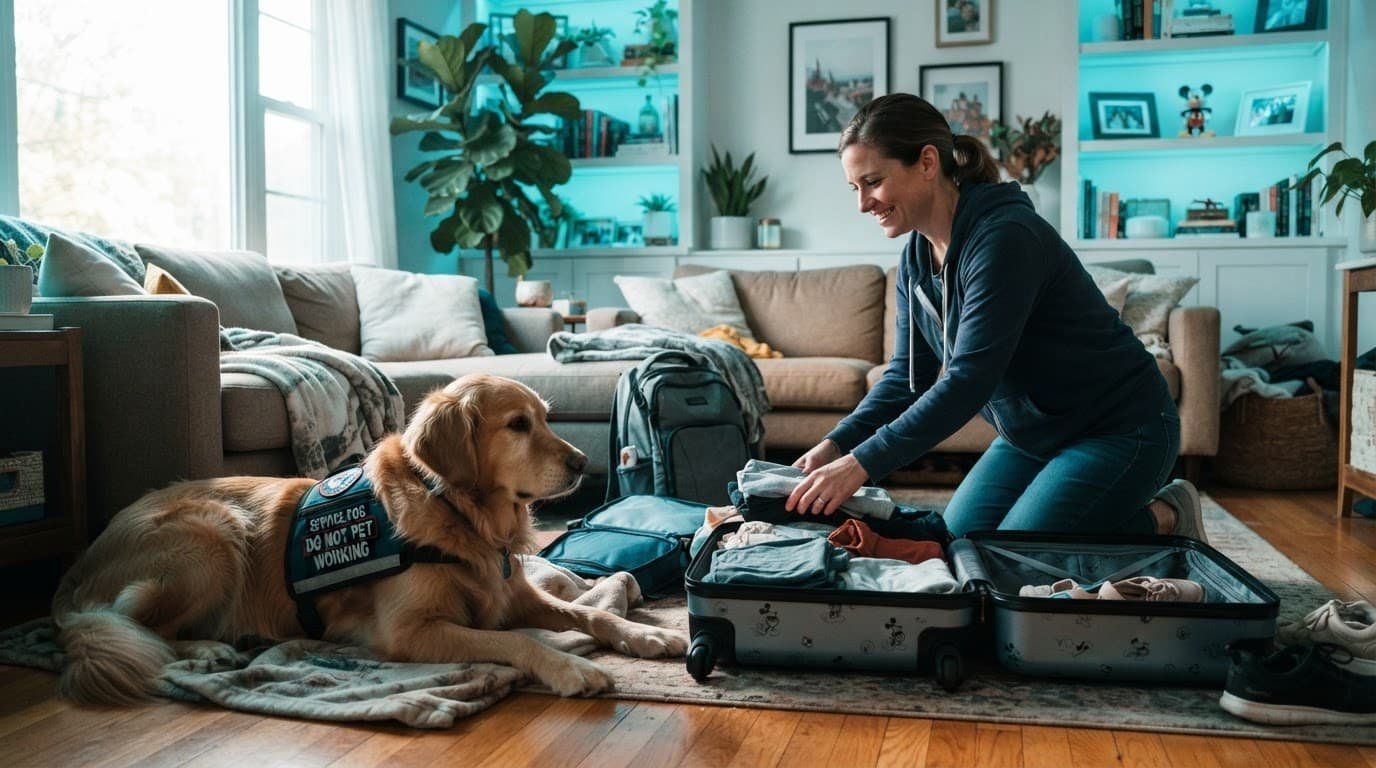
Rides, transportation, and Rider Switch options
Many Disney attractions can accommodate a service dog. Your dog may stay on the floor near your feet when space allows and the attraction is appropriate.
Some rides cannot safely take dogs because of their vehicles, motion, restraints, drops, loud effects, or evacuation procedures. Ask a Cast Member at the attraction entrance before joining the queue. Don’t wait until you reach the loading area to find out.
Disney offers families a few options when a dog cannot ride:
- One adult can stay with the dog while the rest of the group rides, then use Rider Switch when available.
- Your party can skip that attraction and choose a nearby option that works for everyone.
- At select attractions, ask whether a portable kennel is available and whether it fits your dog’s needs.
A portable kennel isn’t the right choice for every dog or handler. Your service dog may need to remain close for disability-related tasks. A Cast Member won’t provide dog handling or care while you ride.
Your dog may travel with you on Disney buses, boats, the monorail, and the Disney Skyliner. Build in extra time for loading, unloading, and busy transportation periods. The crowds on a bus after fireworks may be harder for both your child and your dog than a slower return to the resort.
A ride is never worth pushing a working dog past its training or pushing a child past their limit.
Relief areas, meals, and Florida heat
Each of the four theme parks at Walt Disney World has designated service animal relief areas. Check the My Disney Experience app for the closest active location. Ask a Cast Member after entering Magic Kingdom, EPCOT, Hollywood Studios, or Animal Kingdom.
Don’t depend on an old online map. Construction, festivals, and route changes can affect which location is easiest to reach that day. It helps to make your first stop early, before your dog is tired or distracted.
Disney also allows the animal to use open outdoor areas for relief when the handler cleans up afterward. This service-animal relief overview is a useful reminder to carry waste bags, wipes, and a small hand-sanitizer bottle in your park bag.
Plan stops around your dog’s normal routine. A good rhythm may include one after arrival, another before lunch, one during an afternoon break, and one before leaving the park. Your service dog may need more frequent water and rest in Florida heat.
Pavement can become uncomfortable quickly in the afternoon. Use shaded paths where possible. Bring a collapsible bowl and water, and only use paw booties if your dog already wears them comfortably at home. New booties in a loud park can create another problem.
Food and beverage locations need planning, too. Your dog must stay on the floor, even during a long table-service meal. Choose an end seat or a table with extra floor space when available. Practice a quiet settle cue before vacation, especially around dropped fries, stroller wheels, and people walking past.
Water areas have added restrictions. Your dog can’t enter pools, fountains, or water features. It also needs to stay at least four feet from water on wet decks and pool areas.
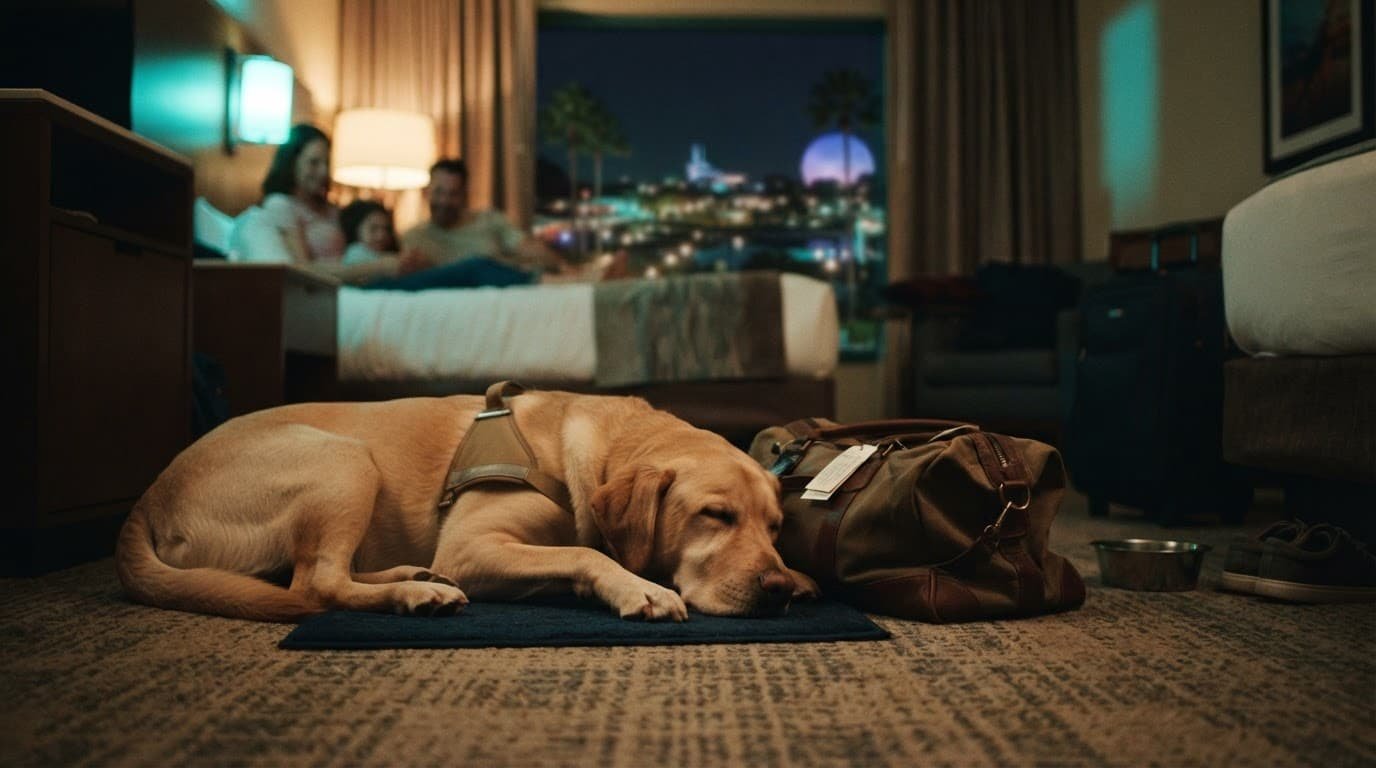
Prepare for crowds, fireworks, and sensory overload
A dog can be fully trained for daily life and still find Disney difficult. Crowds move unpredictably. Fireworks are loud. Character parades, sudden music, rolling carts, and screaming children can test even a steady dog.
Practice in busy but familiar places before your trip, including areas where crowds move around you. Work on loose-leash walking, settling under a table, ignoring dropped food, moving through narrow spaces, and responding to cues around noise. Keep training sessions short and positive.
At Disney, avoid the tightest bottlenecks when crowds gather. Main Street, U.S.A. before an evening show and the exit after a nighttime show can feel packed. Narrow pathways can also fill with crowds after a parade. Take a slower route, pause in a quieter area, or leave before fireworks, ahead of the final rush.
Your child and service dog both need real breaks. A shaded bench, indoor attraction, quiet table, or resort reset can be a better choice than trying to fit in one more ride.
Don’t ask the dog to solve every hard moment. Headphones, familiar snacks, a comfort item, visual supports, and simple choices still matter. Keep devices, charging cords, and headphones together in one pouch. Your phone may hold tickets, maps, mobile food orders, DAS return times, and family messages, so a portable charger belongs in every park bag.
Build a flexible Disney plan for your family
Disability Access Service, or DAS, is separate from Disney’s other disability services and from service-animal access. Autism is not automatic approval for DAS, and a letter from a licensed healthcare professional does not guarantee DAS approval. Disney looks at how a disability affects a guest’s ability to wait in a conventional queue.
Lightning Lane Multi Pass is also separate from DAS and costs extra. It can help if your family has a few must-do rides, but a day packed with return windows can become another clock to watch. A calmer schedule, nearby attractions, snack breaks, and a midday hotel break at a Disney Resorts property often work better.
For more support with park routines, breaks, DAS planning, and sensory needs, keep the Disney World with Autism Guide PDF on your phone or explore the Amazon version of the guide before your trip.
Choose one or two morning priorities. Staying in the same land when possible leaves room to adjust when crowds or energy levels change. Let your child know the next simple step, such as, “We are going to get water, take the service dog outside, then choose a ride.” Clear steps feel easier than a full day of unknowns.
Frequently Asked Questions
Can my psychiatric service dog enter Disney World?
Yes, if the dog is individually trained to perform disability-related tasks. Comfort, companionship, or emotional support alone does not meet the service-animal definition used for park access.
Does Disney require a vest or documentation for a service dog?
No, Disney does not require a vest, identification card, certificate, medical record, or letter from a healthcare professional. If the dog’s work is not obvious, Cast Members may ask only whether the dog is required because of a disability and what task it has been trained to perform.
Can my service dog go on Disney rides?
Many attractions can accommodate a service dog, but some rides cannot safely do so because of their vehicles, motion, restraints, or evacuation procedures. Ask a Cast Member at the entrance, and discuss Rider Switch or other options if the dog cannot ride.
Where can my service dog relieve itself at Disney World?
Each of the four theme parks has designated service-animal relief areas, which you can find through the My Disney Experience app or by asking a Cast Member. Disney also allows open outdoor areas when the handler cleans up, but service animals cannot enter pools, fountains, or water features.
Is DAS automatically approved for an autistic guest with a service dog?
No, DAS and service-animal access are separate, and autism does not guarantee DAS approval. Disney considers how a disability affects the guest’s ability to wait in a conventional queue, and a healthcare professional’s letter does not guarantee approval.
A Disney Day That Respects Your Family’s Needs
Disney World service dog rules are intended to support safety and comfort for every Guest. A trained service dog, a realistic park plan, and regular breaks can make a major difference.
You don’t need to see every show or ride every attraction for the trip to feel successful. The best Disney day is one where your child feels supported, your dog can work safely, and your family leaves with good memories.