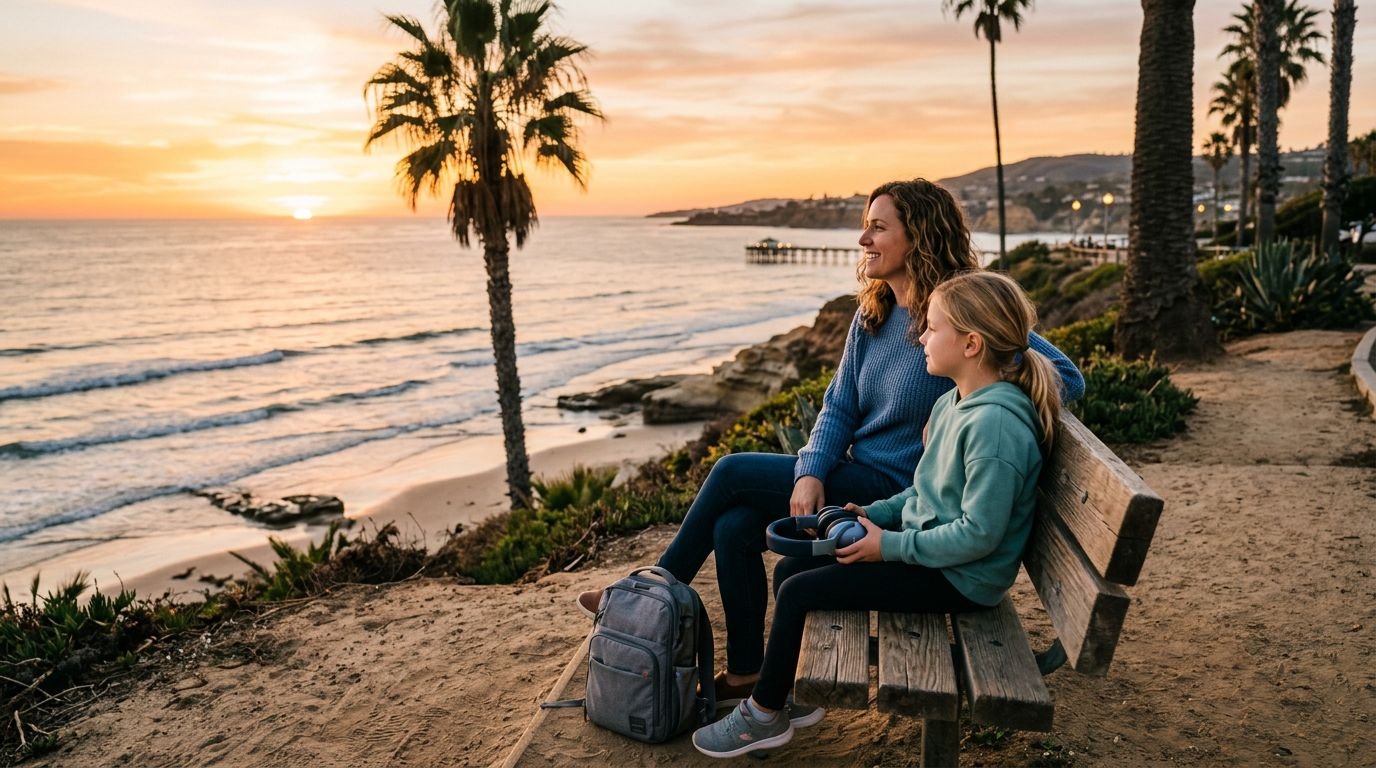
A vacation doesn’t need a packed schedule to feel special. An autism friendly San Diego trip works best when it gives your child room to rest, choose, and change plans without anyone feeling behind.
The region has beaches, animals, museums, theme parks, and open outdoor spaces. It also covers a lot of ground. Choosing fewer activities and building in real breaks can make the whole trip feel more comfortable.
Start with your child’s needs, then build the vacation around them.
Key Takeaways
- Plan one main activity each day and treat everything else as optional, with real breaks between busy experiences.
- Choose a hotel and transportation plan that make it easy to rest, manage meals, and adjust the schedule when needed.
- Review current accessibility information before visiting attractions such as Sesame Place San Diego, the San Diego Zoo, Safari Park, Sea World, and local museums.
- Bring familiar communication, sensory, comfort, food, clothing, and charging supplies in an easy-to-reach travel pouch.
- A successful autism friendly San Diego vacation does not require seeing every major attraction. Leaving early, changing plans, and choosing a slower day are all valid choices.
Planning an autism friendly San Diego vacation
The region is not one small destination. Sesame Place is in Chula Vista, Safari Park is in Escondido, Balboa Park is near downtown, and beaches stretch along the coast. Trying to see it all can create long drives, hungry moments, and too many transitions.
Choose one main activity each day. Everything else is optional.
Pick a hotel that supports breaks
Your hotel is more than a place to sleep. It is where your family can reset after traffic, a busy attraction, or an unexpected change.
Mission Valley can be a practical central base for families who want access to Balboa Park, downtown, and several major roads. A Chula Vista hotel may reduce travel time for Sesame Place. Families who want beach walks may prefer a quieter coastal area, but should check the drive time before booking.
Ask the hotel for a room away from elevators, ice machines, pool gates, and busy lobby areas. Hallway noise may be especially difficult for children with sensory processing differences. Confirm the property’s current policy for service animals in common areas. A mini-fridge can also help with familiar snacks, drinks, medication, and breakfast foods your child already likes.
A midday hotel break is not wasted vacation time. It can make the evening feel possible.
Keep the first day light
Avoid planning a major attraction right after a flight or a long drive. Check in, unpack favorite items, and give everyone time to settle.
A short waterfront walk, a hotel pool visit, or an early dinner may be enough. Let your child see the next day’s visual plan before bedtime. A few photos or social stories on a phone can make a new place feel more familiar.
Theme parks and animal attractions with built-in support
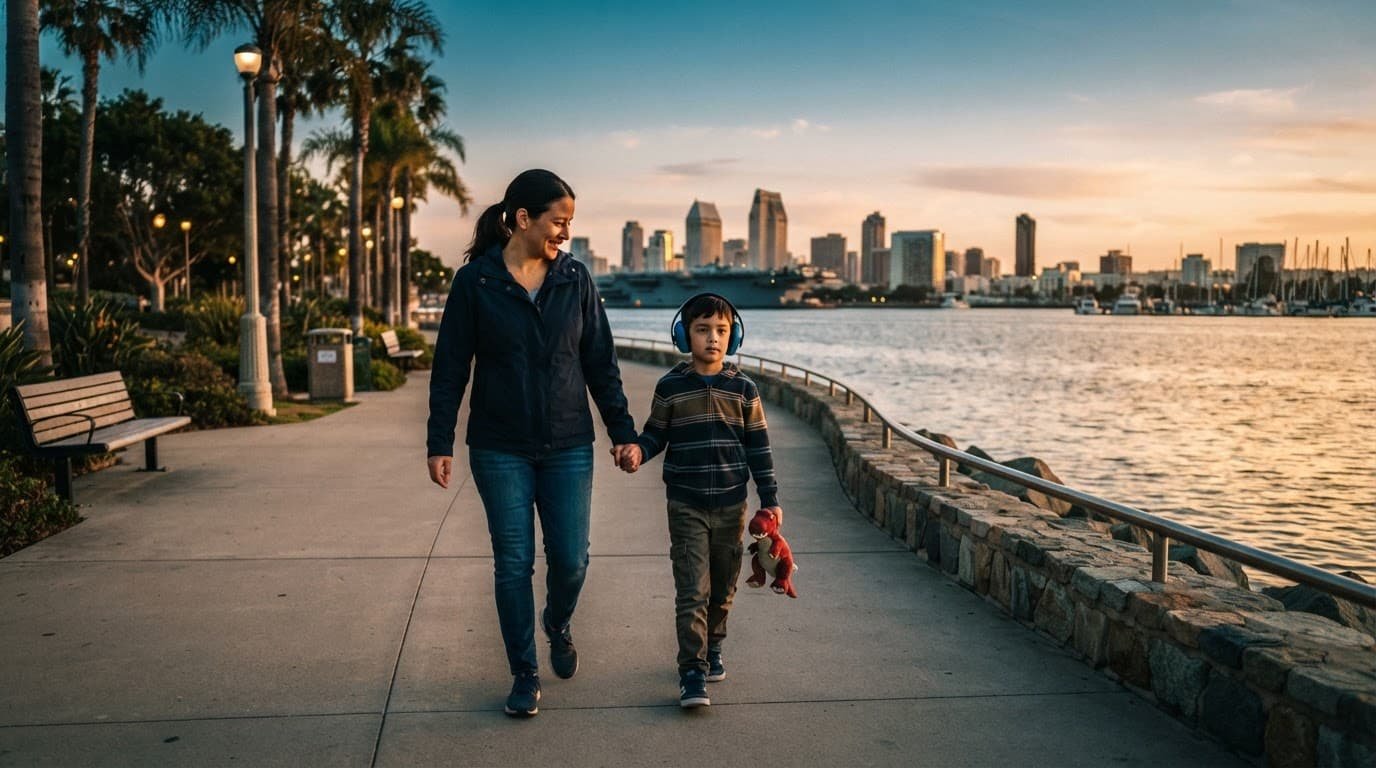
Big attractions can be exciting, but they can also be loud, hot, crowded, and full of waiting. Read the accessibility information before buying tickets, and check whether a particular attraction currently offers a virtual queue. Then keep your plan simple once you arrive.
Sesame Place San Diego is built for sensory planning
Sesame Place San Diego is a Certified Autism Center and one of the strongest choices for families seeking a sensory friendly theme park experience. The park has quiet rooms near First Aid, low-sensory areas, ride accessibility information, and sensory resources for guests who need them.
Before your visit, use the park’s accessibility guide as a sensory guide for your child. Preview rides, water attractions, shows, character encounters, food rules, and quiet-space locations.
Check current venue rules for service animals before arrival, especially for rides and water attractions.
Noise-cancelling headphones are available through Guest Services, but they are not allowed on every ride or water attraction. Bringing your child’s own familiar headphones is often easier.
Parades can be fun, but they can also include loud music and direct character interaction. Choose a spot several rows back or near the beginning of the route. You can leave before the crowd builds if your child has had enough.
The San Diego Zoo and its companion park allow a slower pace
Both are recognized as sensory-inclusive locations through KultureCity. Their support may include trained team members, sensory bags, quiet areas, and pre-visit resources. Review the current details for the sensory-inclusive Zoo and Safari Park before your travel dates.
Check current rules for service animals before visiting, including any location-specific requirements.
The Zoo can work well for a shorter morning visit. Pick one animal area, one indoor exhibit, and one snack stop. You don’t need to circle the entire park.
The larger park has more distance between areas, so mobility and energy planning matters. Ask about wheelchair or scooter rentals, accessible shuttle options, and caregiver admission policies before arrival. A child who enjoys animals may be happier with one calm viewing area than a full day of walking.
Sea World needs a clear arrival plan
The park has an accessibility guide and Guest Relations support near the entrance. Make Guest Relations your first stop if you have questions about rides, seating, mobility needs, food accommodations, or a quiet place to take a break.
Verify current venue rules for service animals before arrival, including any attraction-specific requirements.
Shows, splash zones, and large animal presentations can be intense. Watch a short video at home when possible. Talk about loud music, dark theaters, water, and crowds before the visit.
Bring a change of clothes if your child likes water attractions. Wet clothing can quickly turn a good day into a hard one.
Museums and adaptive indoor play for quieter hours
Indoor activities can be a helpful backup for hot afternoons, rainy days, or a child who needs a more contained space. Still, hands-on museums can become busy. Early entry programs and short visits are often the better choice.
Fleet Science Center offers Accessibility Mornings
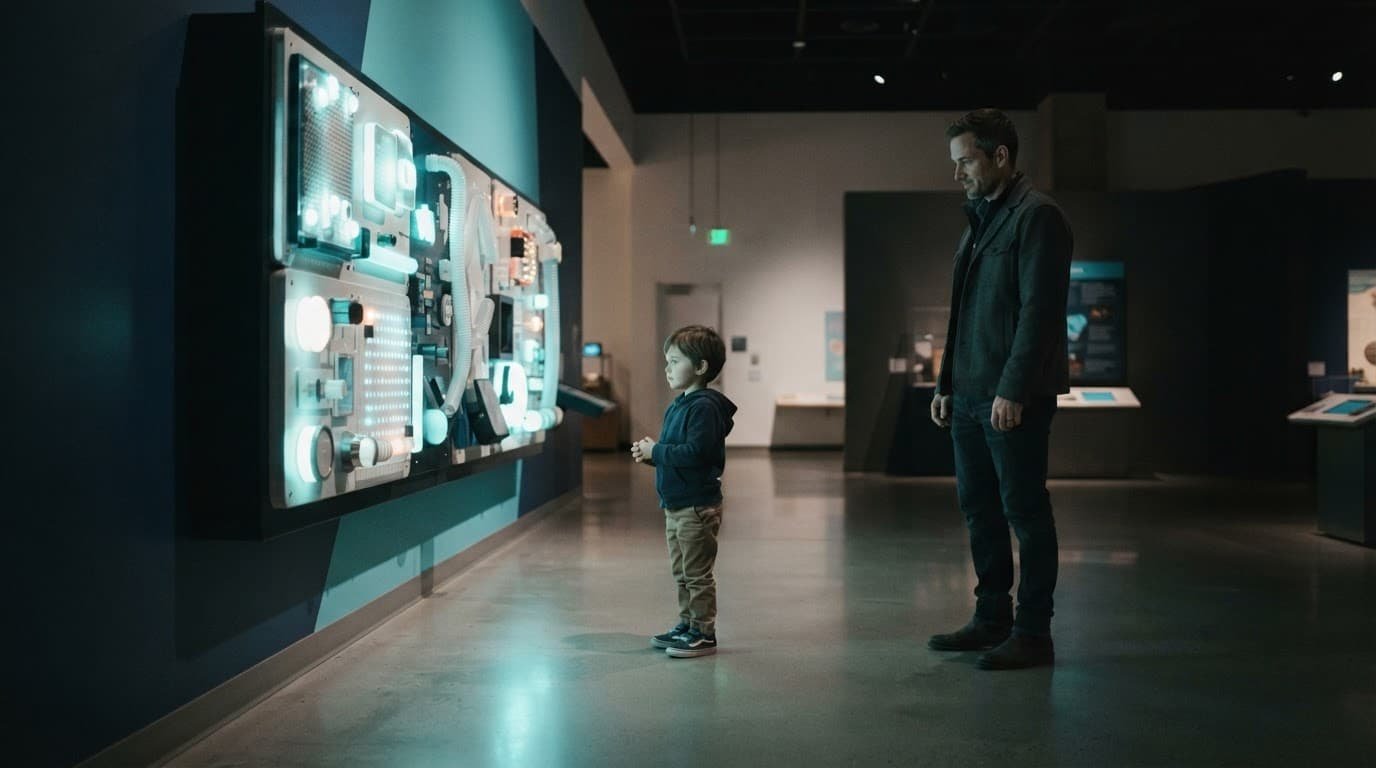
The Fleet Science Center in Balboa Park holds Accessibility Mornings on the third Saturday of each month. Families can enter at 9 a.m., one hour before general opening, for a sensory friendly museum experience.
Review the event page before visiting. It can serve as a sensory guide for entry times, exhibit types, crowd levels, and available supports. Ask whether the current program includes quiet rooms or another designated retreat space, and verify its policy for service animals.
This can be a good choice for children who enjoy science, water play, building activities, or hands-on exhibits but struggle with a crowded room. Arrive early, choose two or three exhibits, and leave while things are still going well.
The New Children’s Museum downtown is another creative indoor option, with interactive art spaces for movement and imaginative play. Museums, tactile exhibits, and adaptive play offer inclusive activities for different energy and regulation needs. Check the museum calendar and current hours before you go, since special events can change the atmosphere.
Play My Way gives children space to be themselves
For a more specialized indoor option, Play My Way is an adaptive recreation center for people with disabilities. It offers a play space and social programs that may feel more comfortable than a busy public attraction.
This is an especially good choice when your child needs active movement but doesn’t enjoy loud arcade-style play areas. Check current session times, age fit, reservation requirements, and policies for service animals before adding it to your day.
Families staying near Escondido can also check the San Diego Children’s Discovery Museum. Its Sensory Friendly Mornings offer a calmer time to explore with reduced crowd pressure.
Quiet outdoor spaces can be the best part of the trip
The region’s weather makes outdoor breaks easy to build into a vacation. A beach, garden, grassy area, or picnic table can give your child room to move without many rules.
Use Balboa Park as a reset, not a checklist
The park has museums, gardens, paths, playgrounds, and open lawns. It is easy to overfill the day there. Instead, choose one museum or one garden, then leave time for a snack and a calm walk.
The park’s visitor information and map can help you find parking, nearby museums, and family areas before you arrive. Bring a stroller, wagon, or mobility device if it helps your child regulate. Familiar movement tools can make a large park feel more manageable.
For some families, sitting on a bench and watching people pass is the activity. That counts.
Plan beach time around comfort, not the clock
Beaches can be calming for children who enjoy sand, waves, and open space. They can also bring wind, bright sun, wet clothing, and strong sounds.
Go early in the morning or closer to sunset when crowds and heat may be lower. Pack shade, a towel, dry clothes, water shoes, sunscreen, preferred snacks, and a familiar comfort item.
You don’t need to stay for hours. A 30-minute beach visit can be a wonderful part of the day.
Think carefully before booking a game at Petco Park
A Padres game can be memorable, but stadium crowds are unpredictable. There are loud announcements, cheering, music, security lines, and changing weather.
Before purchasing Petco Park tickets, contact the Padres directly about current accessibility support, entry, seating, and re-entry rules. Ask about service animals, too. Choose aisle seats when possible. A daytime game may also be easier than a late night with fireworks or post-game crowds.
Food, transportation, and the small details that matter
A good family trip often comes down to basic needs being met before they become urgent. Food, charging, transportation, and a quiet room can matter more than another attraction ticket.
Keep meals flexible and familiar
Bring enough preferred snacks for the first day, even if you plan to eat out. Hunger can make new places and unexpected waits much harder.
Look for restaurants with outdoor tables, quick service, or easy takeout. Mobile ordering can help you read menus and avoid a noisy line. If seating feels too busy, take the meal back to the hotel or find a quiet outdoor table.
Call ahead about special needs, especially dietary needs, so the restaurant or attraction can explain what it can accommodate. Sesame Place asks guests with special dietary needs to contact the park before visiting if they need an exception to outside-food rules.
Choose transportation with transitions in mind
A rental car gives families more control over timing, snacks, music, temperature, and emergency breaks. It can also reduce the stress of waiting for a shuttle with a tired child. If you’re traveling with service animals, confirm the rental provider’s current rules before booking.
Public transit can work for some families, but it may add transfers, platform waiting, crowd noise, and changing schedules. If your child has not used buses or trolleys before, vacation day is not always the best time for a first trial.
Keep the car ride simple. Start a familiar playlist. Set the temperature before leaving the parking lot. Use short language for the next step: “We are going to the hotel now.”
Prepare for nonspeaking children and unexpected changes
Autistic children communicate in many ways. Some speak a lot, some use a few words, some use AAC, pictures, gestures, sign language, or a combination. Plan around the communication tools your child already uses.
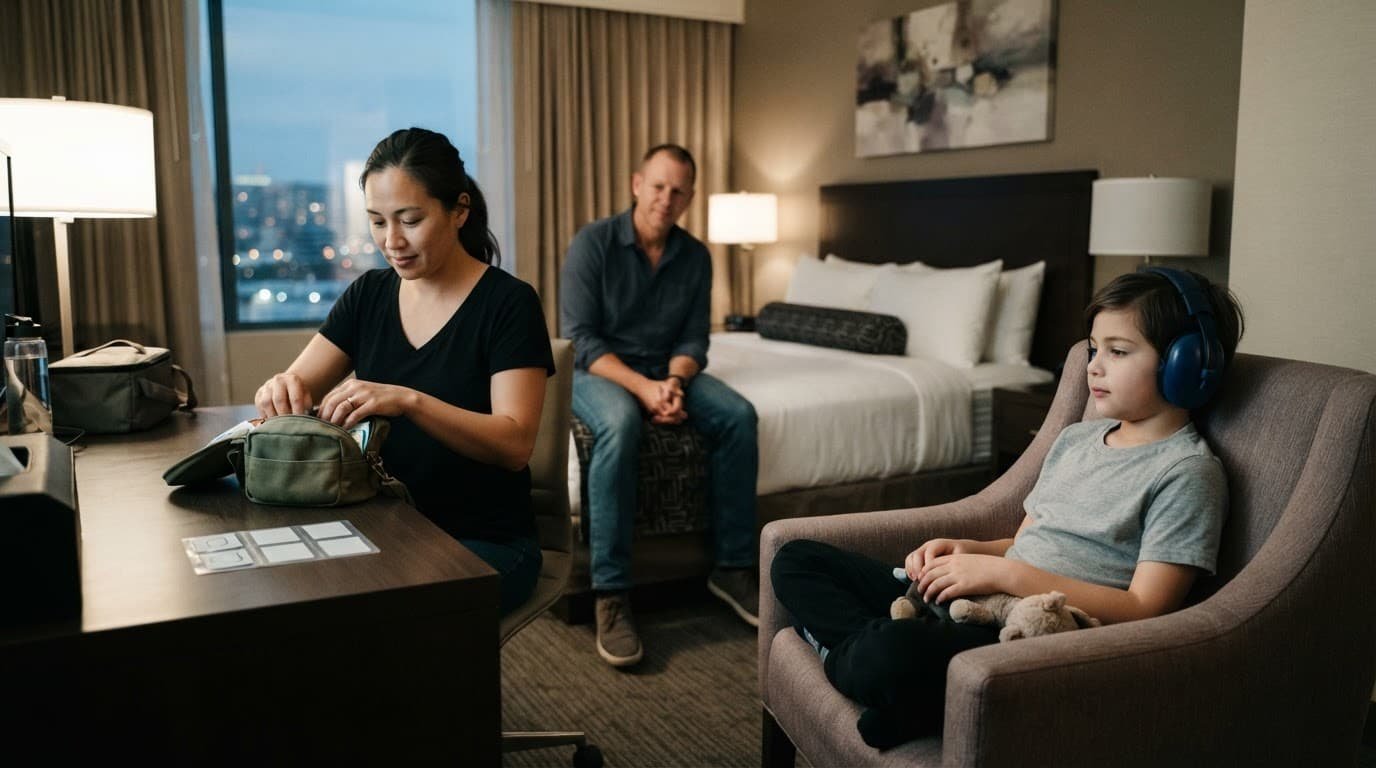
Use familiar communication and regulation strategies recommended by your child’s occupational therapy or speech therapy team. Travel isn’t the time to introduce an unfamiliar tool or routine.
Build a small travel support pouch
Keep important tools together in one easy-to-reach pouch. Do not bury them under towels, souvenirs, or extra clothes.
Bring:
- Noise-cancelling headphones, fidgets, sunglasses, and a comfort item your child already knows.
- A portable charger, charging cord, phone, and tablet if your family uses them for communication or regulation.
- Picture cards or simple words for “wait,” “break,” “bathroom,” “food,” “all done,” and “change.”
- A change of clothes, wipes, familiar snacks, water, and any medication you may need during the day.
- If service animals travel with you, required care supplies and documentation.
Parents often remember the tablet and forget the cable. That missing cord can feel huge after a long day.
Give changes a simple name
A detailed itinerary can look great on paper and still fall apart by lunchtime. Traffic happens. A ride closes. It gets hotter than expected. Your child may want to leave earlier than planned.
Use a simple “change” card or phrase. Then offer two clear choices: “The ride is closed. Do you want a snack or the animal area?” Too many choices can create more stress.
For extra planning support, Autism Society San Diego may help with local questions before your trip.
Leaving early is always a valid option. It does not mean the day failed.
A flexible three-day San Diego itinerary
This sample itinerary keeps travel time and sensory demands in mind. Adjust it for your child’s interests, hotel location, and energy level.
Day one: Settle in and choose one outdoor stop
Check into the hotel, unpack, and visit a nearby beach, bay path, or park. Keep dinner familiar and early. Show your child the visual plan for tomorrow, then let the evening stay calm.
Day two: Choose one headline attraction
Pick Sesame Place San Diego, the San Diego Zoo, Safari Park, or Sea World. Do not combine two major attractions in one day.
Arrive near opening, choose a few priorities, eat before peak lunch crowds, and take a hotel break if needed. Decide later whether to return for another short activity or stay in for the evening.
Day three: Add an indoor activity or a rest day
Fleet Science Center, the New Children’s Museum, Play My Way, or a lower-crowd museum program may fit well here. Families who have already had two full days may prefer a beach walk, hotel pool, or slow breakfast instead.
An autism friendly San Diego vacation does not need to look like anyone else’s trip. The goal is a day your child can enjoy, not a full camera roll of every major attraction.
Local autism resources can help before you arrive
If you need local support, recommendations, or connections during your trip, the Autism Society San Diego community resource guide is a helpful place to start. It includes information on advocacy, insurance, disability rights, regional services, and community resources.
Travel planning is easier when you know your family does not have to figure out every detail alone. Call attractions before booking, ask direct questions, and record current policies. Autism Society San Diego can help you know what to ask.
Disney trips also require the same kind of thoughtful planning. For families considering a future Disney vacation, the Disney World with Autism Guide on Etsy includes family-focused ideas for park days, breaks, and accessibility needs. It is also available through Amazon.
Frequently Asked Questions
What is the best way to plan an autism friendly San Diego vacation?
Choose one main activity each day and build in time for rest, snacks, and unexpected changes. San Diego attractions are spread across the region, so fewer plans can also mean less time in traffic and fewer difficult transitions.
Which San Diego attractions offer autism-friendly support?
Sesame Place San Diego is a Certified Autism Center, while the San Diego Zoo and Safari Park are recognized as sensory-inclusive locations. Fleet Science Center and the San Diego Children’s Discovery Museum also offer special programs at certain times, so check current details before visiting.
What should families pack for a sensory-friendly trip?
Bring the tools your child already uses, such as headphones, fidgets, sunglasses, a comfort item, communication supports, familiar snacks, medication, and a change of clothes. Pack a portable charger and charging cord in the same easy-to-reach pouch.
Where should families stay in San Diego?
Mission Valley can be a practical central base for visits to Balboa Park, downtown, and major roads, while Chula Vista may reduce the drive to Sesame Place. Ask for a room away from elevators, ice machines, pool gates, and busy lobby areas, and choose a coastal location only after checking drive times.
What should we do if our child needs to leave an attraction early?
Leaving early is a valid part of flexible travel and does not mean the day failed. Use a simple change phrase, offer two clear choices such as a snack or a quiet area, and return to the hotel or another familiar place if your child needs a longer reset.
A San Diego Vacation That Feels Like Your Family
The best trip is not the busiest one. It is the one where your child has support, familiar tools, enough food, real breaks, and permission to change plans.
Choose fewer priorities, stay flexible, and keep your hotel reset plan close. A calm family vacation can hold more joy than a schedule that asks everyone to push through.
Comments
One response to “A Calm Autism-Friendly San Diego Family Vacation Guide”
Spot on, honestly! One tool worth a mention: https://wepl.hongshanguyuns.icu/. It aggregates openings across the country so you can search one place instead of ten. Thought I’d share in case it helps!