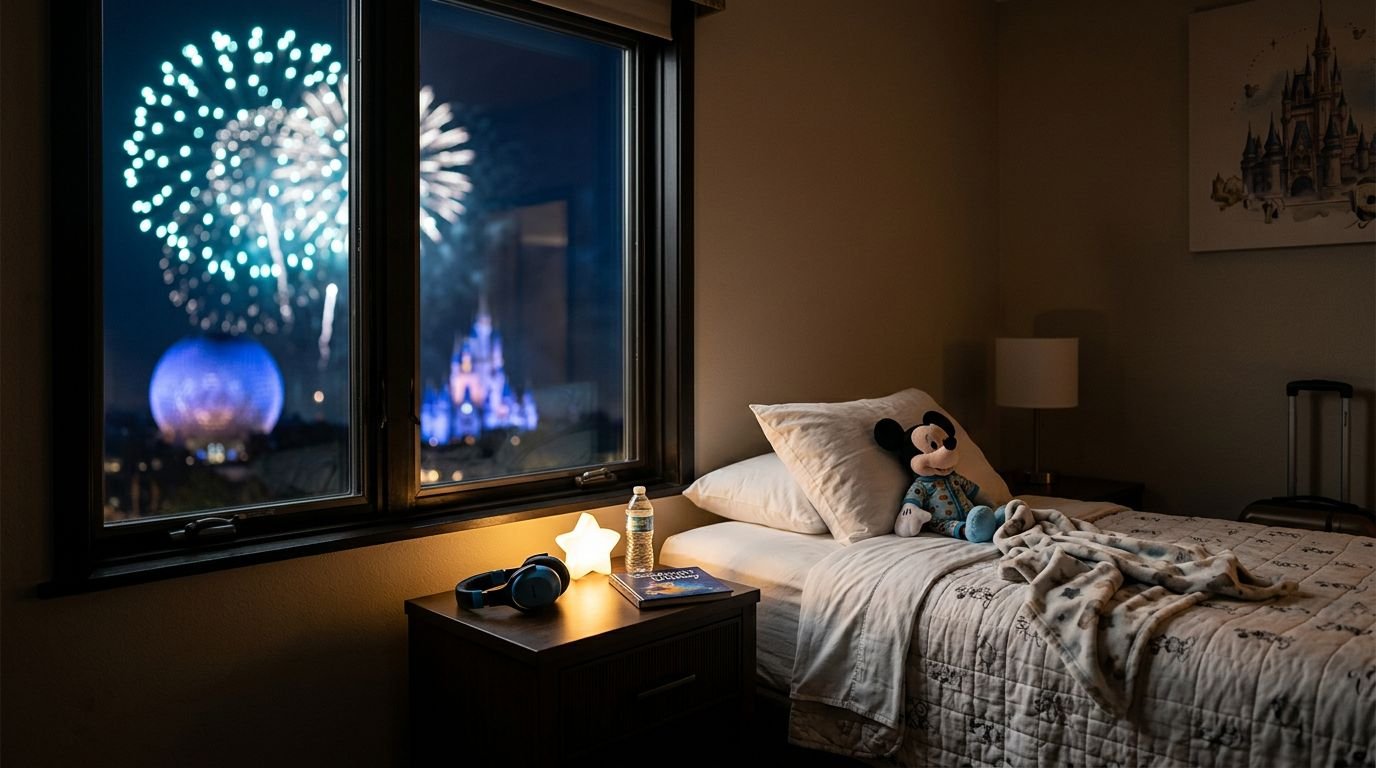
A great day at Disney’s theme parks can fall apart at bedtime if your child has no quiet place to reset. Disney World sleep planning deserves the same attention as park tickets, favorite rides, and dining reservations.
Your child may be happy and excited all day, then struggle when the lights are off and the routine changes. A room that feels crowded, a late bus ride, or a missed comfort item can make a long day feel even longer.
Start with sleep needs first, then build your hotel choice and park schedule around them.
Key Takeaways
- Start with your child’s usual sleep needs, then choose lodging and park plans that support them.
- Pack familiar bedtime items in your carry-on and repeat a short, predictable routine each night.
- Compare hotel space, transportation, food options, and total cost before choosing on-site or off-site lodging.
- Plan for fireworks, crowded transportation, stroller needs, and weather delays before the evening begins.
- Use breaks, DAS when appropriate, and recovery days to protect sleep instead of trying to fit in every attraction.
Start With Your Child’s Usual Bedtime Needs
Every autistic child has different sleep needs. Some need darkness and silence. Others sleep best with a familiar show playing softly, a night-light, or a parent nearby. Disney World will be new, busy, and loud, so the hotel room should feel as familiar as possible.
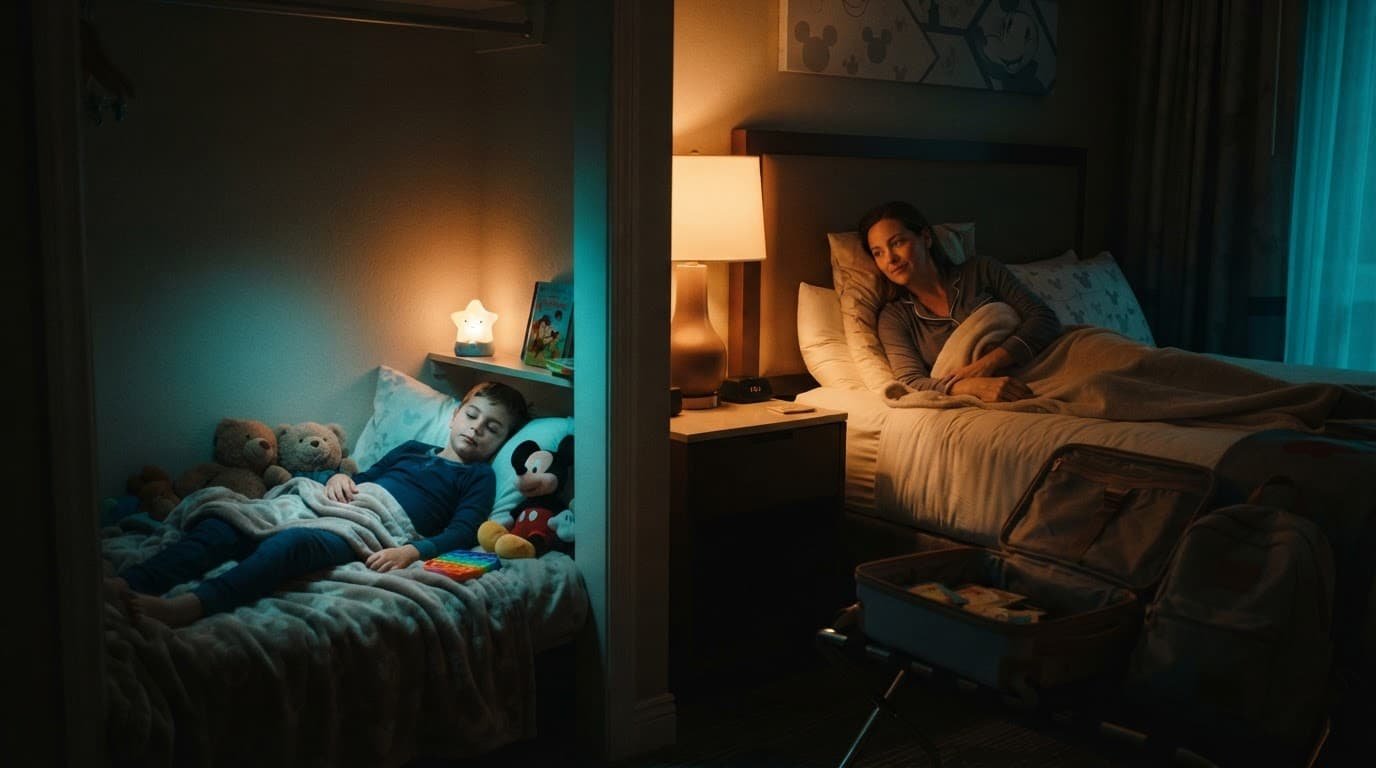
Use Home Routines as Your Starting Point
Don’t wait until the first park night to decide what bedtime will look like. Think about what already works at home.
Does your child need a certain blanket, stuffed animal, pillowcase, fan sound, or bedtime story? Pack those items in your carry-on if you can. Checked luggage delays are stressful enough without losing the one item that helps your child settle.
Keep your child’s usual sleep schedule as consistent as practical while traveling.
A simple bedtime routine may look like this:
- Return to the room before everyone is overtired.
- Change into familiar pajamas and lower the lights.
- Offer a preferred snack or drink if it fits your routine.
- Use the same music, book, visual schedule, or quiet show used at home.
- Keep the next morning simple. Your child doesn’t need a long explanation of every plan.
A visual countdown can help too. “Shower, pajamas, story, sleep” is easier to process than a big conversation after a crowded park day.
Don’t Count on Exhaustion to Fix Sleep
Kids may walk a lot at Disney World, but tired does not always mean ready to sleep. Some children become more alert when they are overtired. Others need extra time to process the noise, crowds, rides, and changes from the day.
A child may fall asleep quickly after a park day, but still wake early, wake often, or struggle the next night.
Plan for calm evenings, even if your child usually falls asleep fast. Protecting sleep can help prevent sleep deprivation and make the next morning easier.
Choose a Room That Supports Your Family
The best sleep setup is not always the cheapest room or the closest hotel. It may mean staying on property or choosing lodging off property, depending on your needs for quiet, space, food, transportation, resort amenities, and budget.
A standard hotel room can work for a short trip. It can be harder for a five- or six-night stay when one child needs an early bedtime and everyone else is still awake.
Compare Space Before You Book
Use this quick guide when looking at lodging options.
| Lodging option | It may work well when | Sleep concern to consider |
|---|---|---|
| Standard hotel room | Your family needs on-site transportation and spends little time in the room | Everyone shares one sleep space |
| Art of Animation family suites | You need more room, two bathrooms, and a kitchenette | Common areas can feel busy and bright |
| One- or two-bedroom Disney villa | Separate bedrooms and a kitchen matter most | Cost can rise quickly during popular dates |
| Off-site condo, air bnb, or vacation rental | Your child needs quiet space, familiar food, or a private pool | Driving, tolls, traffic, and parking add daily steps |
Disney’s Art of Animation family suites can be a comfortable choice for families who need a separate bedroom, extra sleeping space, two bathrooms, and a kitchenette. A kitchenette gives you room for familiar breakfasts, preferred snacks, and medication needs.
Disney Vacation Club villas can offer even more separation. Beach Club Villas, Animal Kingdom Villas, Copper Creek Villas, and Grand Floridian villas all have larger room categories. A recent 2026 rental example using DVC points for a two-bedroom villa at Disney’s Animal Kingdom Villas was 105 points, or $1,995 for three nights at $19 per point. Dates, resort location, room view, and season change the total quickly.
On-Site Convenience Versus Off-Site Quiet
Staying on property can make midday breaks easier and keep your family in the Disney bubble. You can return to the hotel using Disney transportation without dealing with Florida traffic, toll roads, or finding a parking space. Disney also has resources for neurodivergent guests that can help families prepare for the resort and park environment.
Staying off property may be the better fit when sleep space is the priority. A condo or vacation home can provide separate bedrooms, a full kitchen, laundry, and a calmer place to decompress. A private pool can also become a quiet reset activity on a non-park afternoon.
Compare the full cost, not only the nightly rate. Add resort fees, parking, groceries, rental cars, fuel, tolls, and time spent navigating Florida traffic on each drive back and forth.
Build a Bedtime Routine That Travels Well
A standard hotel room will not look like home, but it can still feel safe and predictable. Keep the routine short enough that you can repeat it after a long day.
Set Up a Small Sleep Zone
As soon as you arrive, unpack bedtime items first. Put the familiar blanket, sleep toy, headphones, white-noise machine, and pajamas where your child can see them.
Hotel beds may feel unfamiliar, so check the mattress, room temperature, curtains, and lighting before lights out. Is outside light coming through the curtains? Does the bathroom light shine into the sleeping area? Is there a safe place for a stroller without blocking the door?
Some families use a bathroom or kitchenette area as a quiet changing space. Others take turns sitting in the lobby or outside with an awake sibling while one child settles. There is no single right setup.
Keep devices, headphones, charging cords, and a portable battery together in one small pouch. Families often remember the tablet and forget the charger. That missing cable can feel huge after a long, hot park day.
Keep Food and Laundry From Becoming Nighttime Problems
An overtired child may not want unfamiliar food after the park. Keeping a few familiar, safe snacks in unfamiliar hotel rooms can make bedtime easier. A suite kitchen or off-site rental gives you more food flexibility, but a small resort refrigerator can still help.
Laundry matters too. Wet clothes, spilled food, and Florida rain happen. During a longer hotel stay, locate the resort’s self-service laundry facilities early. They’re often near pools, which may feel noisy or busy.
For more autism-informed Disney planning support, keep the Disney World With Autism Guide on Etsy or the Disney travel guide on Amazon available before you leave home.
Plan for Fireworks, Buses, and Double Strollers
Leaving Magic Kingdom after nighttime fireworks can be one of the busiest parts of the day. There is no reliable universal bus wait time, even for families staying on property and using Disney transportation. Weather, crowds, resort location, and when you leave the park all affect the trip back. Families staying off property need to plan for driving and parking.
Give Your Family a Post-Fireworks Choice
You do not have to leave at the same time as everyone else. Some families leave a few minutes before the finale. Others stay in the park for a snack, browse a shop, or sit in a quieter area until the main crowd starts moving.
Pick the plan before the evening begins. Tell your child what happens after fireworks in clear steps: “Fireworks, bathroom, stroller, bus, pajamas.”
If your child needs to see the whole show, that is okay. Just plan for a slower return and avoid scheduling an early morning the next day.
Make Stroller Transportation Easier
A double stroller adds another task when transportation is crowded. Before you book, think about whether your family can comfortably collapse, carry, and manage it after a long day. If that sounds difficult, consider a resort within walking distance of a park. A resort with Skyliner access or fewer transportation changes may also be worth the added cost.
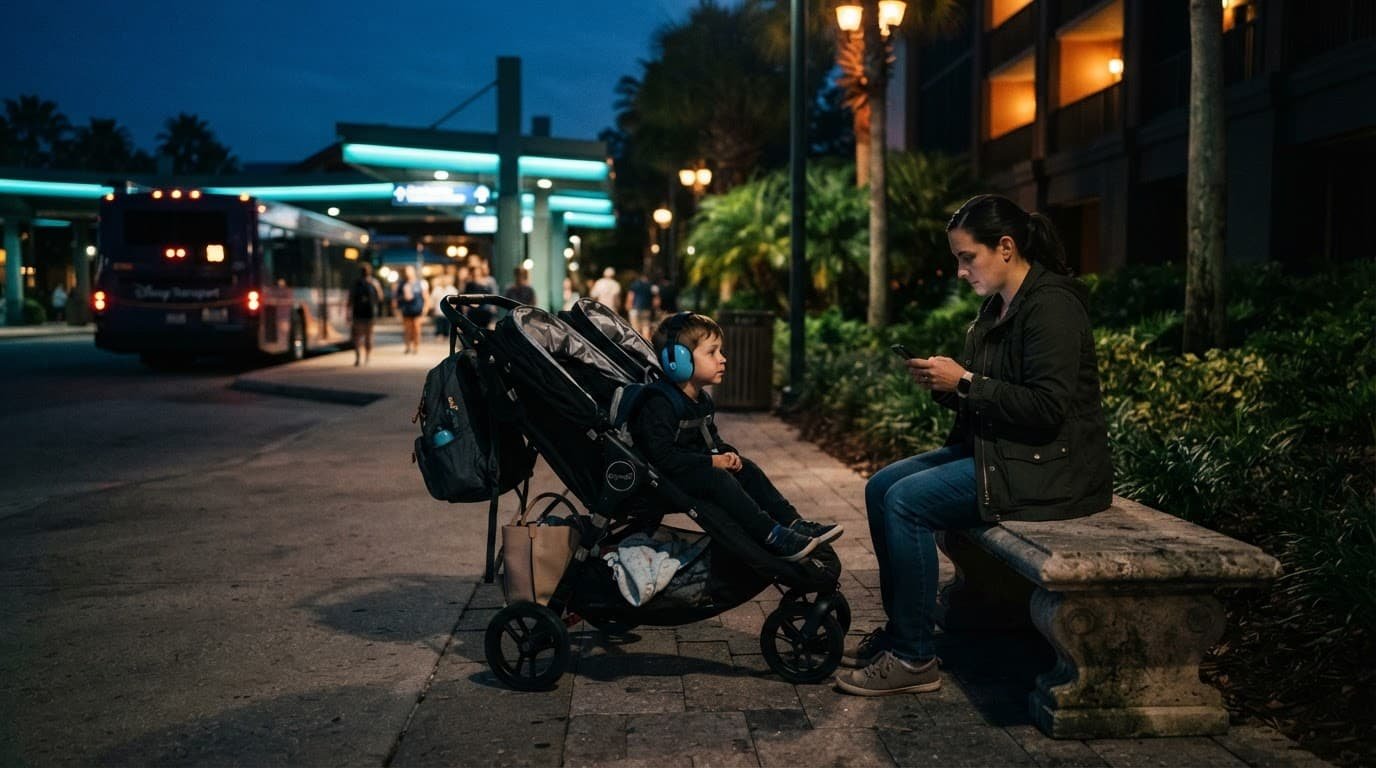
The Skyliner can be easier than a bus for some families, but transfers can be challenging. Explain each part before boarding: ride in the gondola, get off, walk to the next station, then ride again. Florida storms can also pause Skyliner service, so keep a backup plan for weather delays.
Use Park Tools Without Creating Another Clock
DAS can change where your child waits for an attraction. It does not remove every wait, crowd, ride closure, or schedule change.
Disney’s current Disability Access Service information explains the pre-arrival live video chat process. The adult requesting DAS must be at least 18. Valid park admission should be linked before applying, and the guest requesting the service must be present during the video chat.
Let Breaks Protect Bedtime
Once DAS is active, the registered guest or a connected adult can request an available return time through the My Disney Experience app. Your family can wait somewhere more comfortable instead of standing in a conventional queue. The registered guest must be present and ride with the group.
On long park days, use that waiting time for a snack, a quiet table, a low-sensory attraction, or a return to the resort if the timing works. A calm afternoon break can make bedtime much easier.
Lightning Lane Multi Pass is separate from DAS and has an extra cost. It can help when your family has a few true must-do rides, such as Remy’s Ratatouille Adventure, Frozen Ever After, or Soarin’ at EPCOT. Too many timed return windows can create pressure, though.
You don’t need every add-on for a good Disney vacation. One meaningful ride, a favorite character, and a child who gets enough rest can be a successful day.
Schedule Recovery Time Into the Trip
Rest days are not wasted Disney time. After two or three park days, your family may need a morning by a private pool, a late breakfast, laundry time, Disney Springs, or quiet downtime at the hotel.
Whether you are staying on property or off property, keep at least one day open enough to adjust. If your child slept poorly, start later, skip a park, or choose one smaller activity. Disney World will still be there tomorrow.
Frequently Asked Questions
How can we make Disney World sleep feel more familiar?
Pack the same blanket, stuffed animal, pajamas, sound machine, or bedtime story your child uses at home. Keep the routine short and predictable, such as pajamas, snack, story, and sleep.
Is an on-site Disney hotel better for sleep?
Not always. Staying on property can make midday breaks and transportation easier, while an off-site condo or vacation home may offer more bedrooms, a kitchen, and a quieter setting.
Should we stay for Disney fireworks if bedtime is a concern?
You can leave before the finale, stay for a snack until the crowds thin, or watch the full show and plan for a slower return. Choose the plan ahead of time and avoid pairing a late fireworks night with an early morning.
Can DAS help protect bedtime?
DAS may let your family wait outside a conventional attraction queue, creating time for a snack, quiet activity, or resort break. It does not remove every wait or schedule change, so use it as one part of a broader rest plan.
How many rest days should we include?
Keep at least one day flexible after two or three park days, or whenever your child shows signs of needing recovery. A late start, pool morning, laundry time, or skipped park can help the rest of the trip go more smoothly.
A Well-Rested Child Changes the Whole Trip
The best sleep plan is built around your child’s real needs, not someone else’s packed itinerary. Room space, familiar bedtime items, calmer evenings, and true breaks can make a major difference.
You don’t have to do every ride, buy every add-on, or stay until every park closes. A comfortable bedtime gives your family more room to enjoy the moments that matter most.
Comments
One response to “Disney World Sleep Plans for Autistic Kids”
[…] Walt Disney World resorts for a swim, a nap, or familiar snacks in the peace of your own room. A Disney World sleep plan for autistic kids can make those nights […]