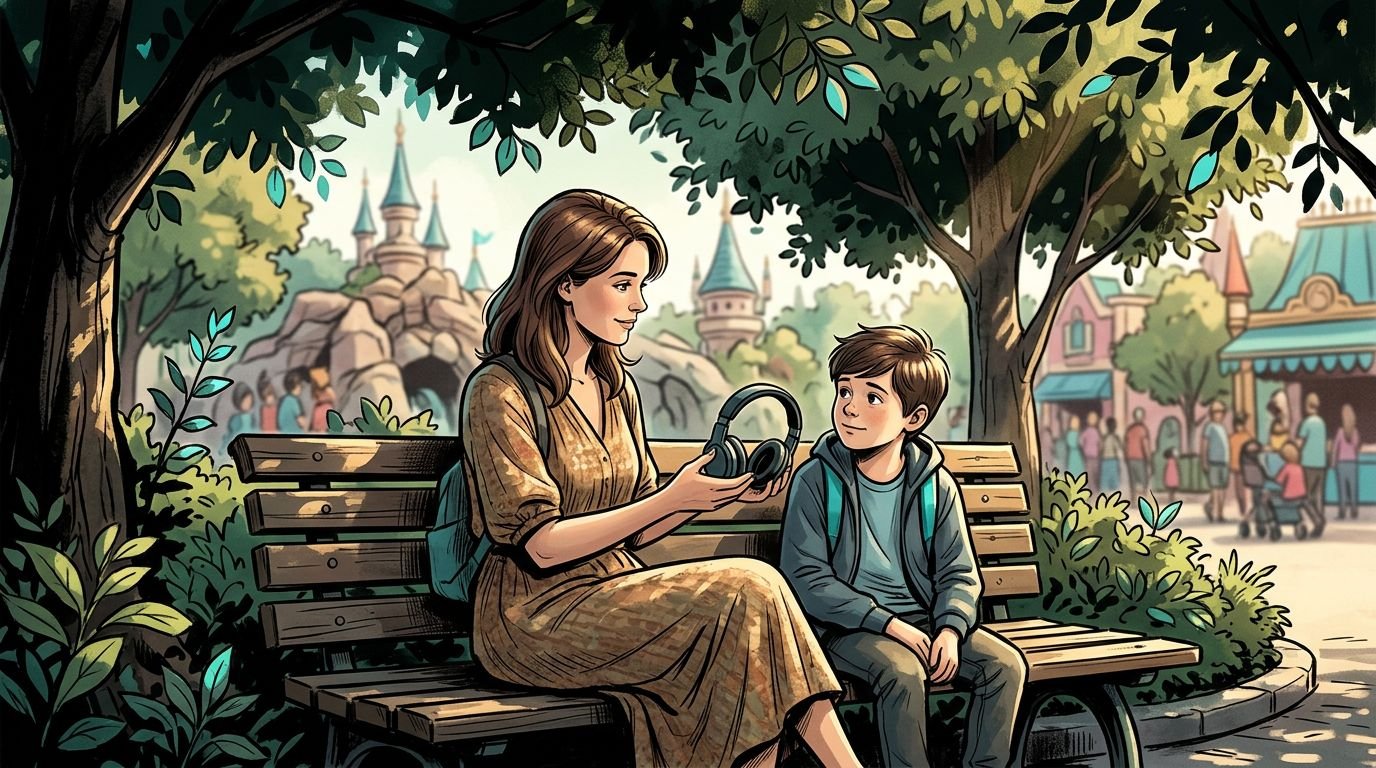
A Disney day is often filled with joy, but the loud, bright, crowded, and unpredictable environment can quickly lead to sensory overload. For autistic guests and sensory-sensitive children, taking a quiet break is not a wasted part of the day. Instead, it is often the essential step that makes the rest of the experience possible.
Disney World Quiet Spaces
The best Disney World quiet spaces are not always clearly marked on a park map. They may be a shaded path, an indoor attraction with a calm pace, or a bench tucked away from a busy parade route. Knowing where to pause before your family actually needs a break can take a significant amount of pressure off everyone involved.
Key Takeaways
- Quiet areas at Disney World, whether you are visiting Magic Kingdom, EPCOT, Hollywood Studios, or Animal Kingdom, are usually tucked away from parade routes, busy walkways, and attraction exits so you can decompress from crowds.
- A quiet space does not need to be completely silent. Shade, seating, lower crowds, and room to breathe can be enough to reset.
- Each park has calmer paths, gardens, trails, and indoor locations that work well for sensory breaks.
- Keep headphones, comfort items, water, snacks, and a portable charger easy to reach to ensure you are prepared for transitions.
- Ask Guest Relations or a Cast Member for current sensory resources and the nearest lower-stimulation option if you are struggling to find a calm spot.
What Makes a Good Sensory Break at Disney World?
Disney World is designed to keep guests moving at all times. Music plays in every land, strollers pass by constantly, and Cast Members make frequent announcements. Even a seemingly quiet corner can become crowded in just a few minutes.
That does not mean your family cannot find relief. It means it helps to approach sensory management in a practical way. Look for secluded seating areas that offer fewer people, shade, a comfortable place to sit, and an easy exit if your child needs to leave the area quickly. Additionally, you can utilize the Baby Care Centers located in each park, which provide a private and quiet resource for families in need of a calmer environment.
A sensory break might consist of five minutes on a bench or 30 minutes inside an indoor show. Sometimes, the best strategy is returning to one of the Walt Disney World resorts for a swim, a nap, or familiar snacks in the peace of your own room. A Disney World sleep plan for autistic kids can make those nights calmer.
A break is not falling behind. It is part of a Disney plan that fits your child.
Before your visit, review Disney World’s services for neurodivergent guests. Disney provides helpful planning suggestions and information about available accommodations, though procedures and locations can change.
It also helps to talk to your child about what a break may look like before you arrive. Keep the explanation simple: “If the park feels too loud, we can find a quiet spot, have a snack, and decide what comes next.” A small, predictable plan gives your child more control when the sensory input of the day feels like too much.
Magic Kingdom Quiet Spaces for a Reset
Magic Kingdom often feels like the busiest park because the walkways are narrow, parades draw large crowds, and many families stay through fireworks. Finding a calm spot at Magic Kingdom may take a little patience, especially in the middle of the day.
Tomorrowland can be helpful when your family needs to sit down without leaving the park. The seating areas near the Tomorrowland Transit Authority PeopleMover and Tomorrowland Terrace can be much calmer between meal rushes. The PeopleMover itself is also a gentle, seated attraction with a steady pace that offers a chance to be off your feet while navigating the park.
Fantasyland is busy, but the paths near the Tangled-themed restrooms can offer a small break from the main walkways. This area is popular, so do not count on it being empty. Still, it can be useful for a quick drink, a bathroom visit, or a comfort-item reset.
Liberty Square and the area near the exit of the Haunted Mansion can also feel less intense when parades are not passing through. This section serves as a great transition spot that offers lower stimulation away from the main hub. Just stay aware of parade timing, because the entire area changes once people begin lining up.
For a longer indoor reset, consider attractions with a slower pace, such as Carousel of Progress. These air-conditioned locations allow your family to sit in comfort, lower the stimulation, and regroup before choosing the next step in your day.

Magic Kingdom also has plenty of quiet moments if you stop trying to cross the park for every ride reservation. Keep nearby attractions together. A calm family is more important than racing from Tomorrowland to Frontierland and back again.
EPCOT Has More Room to Spread Out
EPCOT is physically large, which can be tiring, but the extra space gives families more options for a lower-sensory break. The park’s vast gardens, water views, and wider paths can feel like a genuine relief after a busy morning of touring.
The World Showcase is often the best place to slow down when you need to escape the Florida sun. The gardens in the United Kingdom pavilion offer plenty of benches and greenery, while the Canada Pavilion provides peaceful, shaded paths near beautiful waterfalls. The back areas of the Morocco Pavilion also serve as a perfect shaded retreat, offering quiet corners away from the main thoroughfare.
The American Adventure is another useful option for a sensory reset. The lobby provides ample indoor space, and the long theater show gives guests a seated, air-conditioned break. If your child does not enjoy the performance, even a few minutes inside the building can help them regulate before heading back outside.
The area near Journey Into Imagination with Figment is also generally less crowded than the front entrance. The spaces near the water and the landscaped paths provide a great spot to enjoy some fresh air without needing to make a long walk back to your hotel.
Keep in mind that EPCOT can become overwhelming when your plans require you to move back and forth across the park. Popular attractions like Remy’s Ratatouille Adventure, Frozen Ever After, and Soarin’ Around the World are spread far apart. To keep your day manageable, remember to build in extra walking time, frequent bathroom stops, and a quiet snack break between your scheduled experiences.
Hollywood Studios and Animal Kingdom Calm Areas
Hollywood Studios has several high-energy areas, especially around Toy Story Land and Star Wars: Galaxy’s Edge. Both lands can be exciting, but the sounds, crowds, and visual effects can add up quickly.
For an indoor reset, Walt Disney Presents is often a good choice. It has exhibits, seating, and a calmer pace than most attractions. The theater presentation may also give your family a longer chance to sit and cool down.
Grand Avenue can feel quieter than the main entrance area, especially when you move away from the busiest dining times. These transition areas offer a valuable buffer zone for guests who need a break from the hustle of the park. The Muppet Vision 3D area may be helpful for some families, but the show itself has loud moments. Use the courtyard or nearby seating if your child needs space without committing to the attraction.
At Animal Kingdom, the walking trails can be a better option than a crowded shop or covered walkway. The Maharajah Jungle Trek and Gorilla Falls Exploration Trail have shaded paths, animals to watch, and a slower rhythm. Animals can make unexpected sounds, so bring headphones if noise is a concern.
The area around the Tree of Life has beautiful trails and benches, though it can become busy near showtimes. Discovery Island paths farther from the main entrance often give you a better chance to sit without feeling surrounded. Additionally, the quiet walkway leading from Pandora to Africa is an excellent, often overlooked spot to rest and recharge away from the dense crowds.
Animal Kingdom is also a park where heat can make sensory stress worse. Plan a midday break before everyone reaches their limit. Water, shade, and dry socks can make a bigger difference than another ride.
Pack for Breaks Before You Need One
The right park bag should make a reset easier, not turn into another thing to manage. Bring only what your child uses and tolerates at home. When planning your visit, remember that staying at Walt Disney World resorts can be a game changer, as being on-site allows for easy mid-day breaks. Many families find that accommodations like the Wilderness Lodge or Disney Vacation Club villas offer a quieter environment that helps children recharge away from high-traffic areas.
A few items can make Disney World quiet spaces more comfortable:
- Noise-canceling headphones or ear defenders for fireworks, crowds, and loud attraction areas.
- A familiar fidget, small stuffed animal, favorite hoodie, or other comfort item.
- Sunglasses or a hat for bright Florida sun and visual overload.
- Familiar snacks, refillable water bottles, and any medication your child may need.
- A portable charger for the My Disney Experience app, mobile food orders, maps, and family communication.
Your phone does a lot during a Disney day. A dead battery can turn a small change into a stressful moment. Keep the charger accessible, not buried under ponchos and souvenirs.
For parents who want more support before the trip, the Disney World With Autism Guide on Etsy and the Disney World With Autism Guide on Amazon can help you plan around your child’s sensory needs, park routines, DAS questions, and realistic break times.
DAS, Guest Relations, and Knowing When to Leave
The Disability Access Service, often called DAS, is distinct from the need for quiet spaces. If a guest is approved, DAS may provide an attraction return time instead of requiring the guest to remain in a traditional, crowded queue. It does not bypass security screening, and it certainly does not replace the need for regular sensory breaks. Regardless of your DAS status, every family should plan time to rest and recharge throughout the day.
Disney’s DAS policies can change, so check the current process before your vacation begins. At Walt Disney World, guests should be prepared to discuss the specific functional challenges of waiting in a conventional queue. The registered guest must be present and ride with the party.
Guest Relations and Guest Experience Team Cast Members are excellent resources when you are unsure what to do next. Ask them for current sensory resources, quieter areas nearby, stroller-as-wheelchair tags, companion restrooms, or even suggestions for secluded seating areas where you can step aside for a moment of calm.
Do not wait until your child is fully overwhelmed to leave an area. Watch for the early signs that are familiar to your family. It may be covering ears, moving faster, going quiet, repeating questions, refusing food, or becoming upset over a small change.
Leaving the park early is also perfectly acceptable. A hotel pool, a quiet room, or a familiar show can be the right choice for your family. Disney World will still be there tomorrow, and ensuring everyone remains comfortable is the best way to enjoy your vacation.
Frequently Asked Questions
Are there official “quiet rooms” located inside the Disney World parks?
Most parks do not have designated “sensory rooms” labeled on maps, though every park features Baby Care Centers that offer a private, climate-controlled environment for families. Cast Members are also available at Guest Relations to direct you to the nearest low-stimulation area based on current crowd levels.
How can I tell if my child is reaching sensory overload?
Watch for early behavioral shifts such as covering their ears, avoiding eye contact, or becoming uncharacteristically withdrawn or irritable. Recognizing these subtle cues early allows you to head to a quiet space before a full meltdown occurs.
Can a DAS pass help reduce sensory input during my day?
While the Disability Access Service (DAS) helps you avoid waiting in long, traditional queues, it does not replace the need for sensory breaks. You should still proactively plan quiet time throughout your day to ensure your child remains regulated despite the overall stimulation of the park environment.
Is it better to leave the park for a break or stay inside?
This depends entirely on your child’s needs and how quickly they recharge. Sometimes a 20-minute break in an indoor theater show is enough, but if the park environment remains too intense, returning to your resort for a nap or a swim is often the most effective way to reset for the evening.
A Calmer Disney Day Is a Better Disney Day
The goal is not to experience every attraction or stay until the final fireworks show. Instead, the goal is to build a Disney vacation where your child feels safe, supported, and able to enjoy the moments that truly matter.
By prioritizing your family’s needs, identifying reliable Disney World quiet spaces early in your trip, and leaving room for spontaneous changes, you can lower the stress for everyone involved. Planning your day with these retreats in mind ensures that you have a sanctuary ready before your child feels overwhelmed. Ultimately, finding the right Disney World quiet spaces is the key to a successful trip, allowing you to create a calmer Disney day that leaves your whole family feeling refreshed and ready for more magic.
Comments
2 responses to “Disney World Quiet Spaces for Autism Families: Park-by-Park”
[…] have a 60-minute DAS return time, then use that hour for a sit-down meal, a low-sensory break in a quiet zone, or a visit to a low-wait attraction. Never "just wait" for your DAS time to start; use […]
[…] can be busy with medical patients and may not always have space available. Consider identifying other quiet spots, such as Baby Care Centers or lower-stimulation attractions, to ensure you always have a place to […]