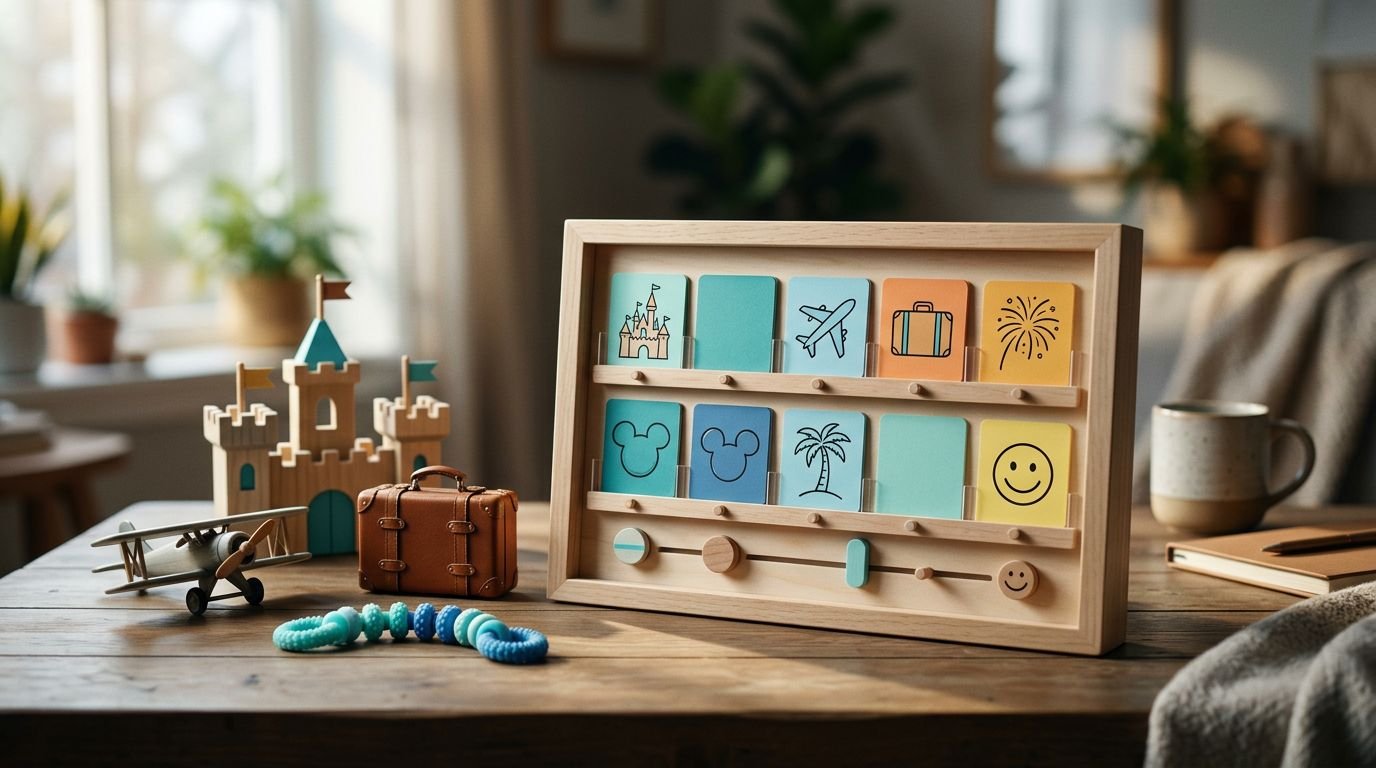
A Disney trip can be exciting, but the waiting can feel big. When planning a Disney vacation, days, weeks, and changing plans may bring more questions than answers, especially for neurodivergent families.
A Disney countdown autism routine gives your child something they can see, touch, and understand. It turns a far-away vacation into small, predictable steps. Start early, keep it simple, and make the countdown fit your child’s needs.
Key Takeaways
- A visual countdown makes the time before a Disney vacation easier to understand.
- Use photos, icons, or simple drawings that your child already recognizes.
- Keep the calendar focused on major events, not every possible detail.
- Practice parts of the trip before travel day, including security, flights, managing long lines, and hotel arrival.
- Leave room for changes, sensory breaks, and a slower park schedule.
Why a Visual Countdown Can Make Disney Feel More Manageable
Many children understand pictures faster than a spoken explanation. For autistic children, visiting busy theme parks can sometimes lead to sensory overload. Saying, “We leave for Disney in three weeks,” can feel unclear. A calendar with a clear path toward the trip makes the timing more concrete.
A visual countdown also gives you a calm way to answer repeated questions. Instead of explaining the full trip again, you can walk over together and point to today’s square. Then you can say, “Today is Tuesday. We have four more sleeps until we fly.”

The goal isn’t to build a picture-perfect craft. The goal is to help your child feel prepared. A paper calendar on the fridge can work. So can a dry-erase board, a poster board, or a simple visual schedule on a tablet.
Visual tools can support routines and transitions at home, too. Duke Center for Autism and Brain Development includes visual schedules in its travel preparation toolkit, which is a helpful reminder that a familiar support can travel with your family.
A countdown works best when it shows what is coming next, not every detail that might happen during the trip.
Some children want to see the entire month. Others do better with a seven-day countdown. Watch how your child responds. If seeing 30 days creates more worry, begin closer to departure.
Supplies That Keep the Countdown Clear and Flexible
You don’t need expensive materials. Choose supplies that are easy to change if plans shift. A trip calendar should feel helpful, not permanent.
A simple setup may include:
- A monthly calendar, poster board, dry-erase board, or printed countdown page
- Painter’s tape, Velcro dots, magnets, or sticky notes
- Printed photos or simple icons for the airport, hotel, pool, park, meals, and bedtime
- A marker for crossing off each day
- A small envelope or box for surprise items, such as a new park fidget or travel snack, alongside essentials like packing familiar snacks
Use photos whenever possible. A photo of your own suitcase, family car, favorite headphones, or hotel pool can be easier to understand than a generic clip-art image. For children with sensory processing disorder, familiar and concrete images provide vital reassurance before a major trip.
Keep the images calm and easy to read. Avoid filling every square with bright colors, extra words, and tiny details. One picture and one short phrase are enough. For example, use a plane picture for “Fly to Disney” or a bed picture for “Sleep at hotel.”
If your child uses a visual schedule at school or home, keep the same style. Families can also research destination accommodations, such as disability services, well in advance to ensure a smooth trip. The Autism Helper shares useful ideas for making a travel schedule portable. Familiar routines can make an unfamiliar destination feel less overwhelming.
Build a Disney Countdown Autism Routine Step by Step
A Disney countdown autism routine should follow the way your child processes time and change. There is no one calendar that works for every family. Begin with the biggest moments, then add details only if they help.
Start with the departure date
Put the travel day at the end of the calendar. Use a clear visual, such as a plane, car, or luggage icon. If your family is driving, show the car and explain that the ride may include rest stops. For children who are prone to eloping, you can also add a visual reminder about holding hands or wearing a safety harness in busy parking lots.
Count backward from that date. Younger children may only need a countdown of five to 10 days. Older children may enjoy marking off a whole month. Some families begin with monthly reminders, then switch to a daily calendar during the final two weeks.
Let your child cross off each completed day. Pulling off a Velcro number, adding a sticker, or moving a marker gives the countdown a clear finish to each day.
Add the moments your child needs to know about
Don’t build a full Disney itinerary into the first version. The calendar should show the major transition points first.
Include items such as:
- Packing favorite clothes and comfort items
- Going to the airport or starting the drive
- Flying or riding in the car
- Checking into the hotel
- Visiting the first park
- Taking a pool or rest day
- Going home
For some children, the hotel room is a major unknown. Add a photo of the resort, if available, or a simple image of a bed and bathroom. Explain that the room is where everyone can rest, eat familiar snacks, and have quiet time.
A child who worries about security may need a separate visual sequence. Keep it short: “Walk to security. Put bag on belt if asked. Walk through scanner. Get bag. Go to gate.” Practice the words before travel day.
Include a few favorite Disney moments
A countdown should feel positive without creating pressure. Add one or two things your child is looking forward to, such as swimming, riding a favorite attraction, seeing a parade from designated quiet areas, or eating a familiar breakfast.
Avoid promising that every ride, character, or show will happen at an exact time. Weather, crowds, ride closures, and energy levels can change the day. Instead of saying, “We will ride this at 10:00,” say, “We will try this ride when our family is ready.”
That language protects the plan without making your child feel misled.
Make changes visible, not surprising
Plans change. A delayed flight, afternoon rain, or a tired child can change what the day looks like. Use a small “change” card, a question-mark card, or a simple “Plan B” picture.
When something changes, show the original card and replace it with the new one. Say what is changing, what is staying the same, and what happens next.
For example: “The outdoor ride is closed because of rain. We are still at the park. Next, we will eat lunch and choose an indoor ride.”
This gives your child a clear anchor during a hard moment.
Practice the Routine Before You Leave
The countdown becomes more useful when it leads into real practice. During the final week, use the calendar to prepare one small part of the trip each day.
You might pack noise-cancelling headphones and a favorite fidget on one day. Another day, try on the shoes your child will wear in the parks, or explore the My Disney Experience app together to look at ride photos and map out sensory-friendly quiet zones. A short drive with a tablet, snacks, and a seatbelt routine can help prepare for a longer travel day, and you can even practice wearing a Sunflower Lanyard to get used to the feel of disability recognition items before heading out.
Talk about what belongs in the carry-on. Keep medications, chargers, headphones, comfort items, familiar snacks, and a change of clothes easy to reach. A child who relies on a device or music for regulation needs those items available, not buried in checked luggage.
It also helps to discuss the park day honestly. Disney is fun, but it can be loud, hot, crowded, and full of waiting. Show a simple sequence such as: breakfast, bus, security, park, ride, snack, break, hotel.
A visual schedule used at home can build confidence with transitions and independent tasks. Bring a smaller version in a pouch or save the images to your phone for use at the parks.
Connect the Countdown to a Flexible Disney Park Plan
Your child doesn’t need to see a packed attraction list. Most families have a better day when they choose a few priorities, stay in one general park area, and take breaks before everyone reaches their limit.
Add break icons to your countdown and your daily visual schedule. These may include a snack, quiet indoor show, resort pool, stroller walk, hotel rest, or headphones break. A break isn’t a failure. It is part of the plan.
If your child may use Disability Access Service, explain it in simple terms. DAS is not immediate access to rides. Eligible guests receive a return time for a virtual wait so they can wait outside the regular line, which is different from a standard Lightning Lane. Disney reviews requests individually, and a diagnosis alone does not guarantee approval. Check current Disney policies before your trip because procedures can change.
Your phone will likely hold park maps, mobile food orders, return times, reservations, and family messages. Put a portable charger on the calendar’s packing-day square. It is one of the most practical items in a Disney park bag.
A calm schedule often matters more than adding every paid option. One missed attraction is easier to handle than a child who is hungry, overwhelmed, or finished for the day. For expert guidance when visiting Disney World, consider consulting an experienced Disney travel agent who understands sensory needs and has real-world autism and special-needs travel planning experience.
For more practical preparation ideas, the Disney World with Autism Guide includes support for park planning, sensory needs, and flexible Disney days. Families who prefer Kindle reading can also find the Disney autism travel guide on Amazon.
Frequently Asked Questions
How far in advance should I start a visual Disney countdown for my autistic child?
It depends on how your child handles time and anticipation. Many families find that starting five to ten days before departure works best, while older children may enjoy marking off a full month.
What type of visuals should I use on the countdown calendar?
Use simple, concrete images that your child already recognizes, such as actual photos of your bags, the family car, or the hotel. Avoid cluttering the squares with too many colors, words, or tiny details to prevent sensory overload.
How can I handle changes to the plan once the countdown has started?
Use a small change card or question-mark icon to replace the original picture when plans shift. Explain clearly what is changing, what stays the same, and what will happen next to provide a steady anchor for your child.
Make the Countdown Part of the Memory
A Disney countdown autism calendar is not only about reaching departure day. It is a powerful way to show your child that new experiences can be prepared for one step at a time, offering essential support for children with special needs.
Keep the routine simple, use visuals your child understands, and build breaks into every part of the trip. Your family’s best Disney day may not follow the original plan, but it can still feel safe, enjoyable, and full of special moments.