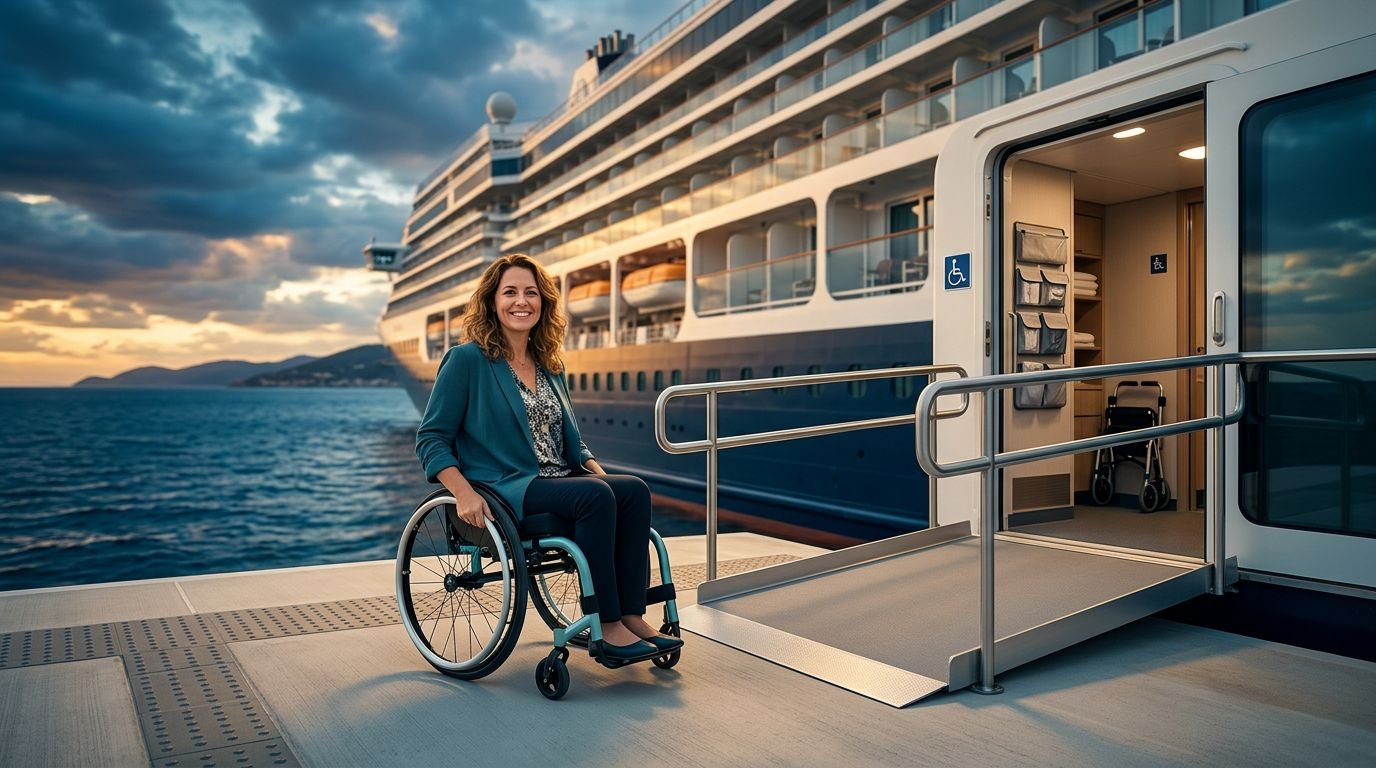
A cruise should feel like a break, not a string of last-minute questions about doorways, oxygen, or getting ashore. The right ship and cabin can make a huge difference before you even unpack.
Good planning gives you time to confirm the details that affect your comfort, safety, and energy. Wheelchair users, travelers with medical needs, caregivers, and families all deserve a vacation that feels enjoyable, not overwhelming.
Start with the cabin, the itinerary, and the support your family will need each day. A travel agent can compare cabin layouts and itineraries. An accessibility team can answer questions about daily assistance, equipment, and onboard access.
Key Takeaways
- Book accessible cabins early and confirm the actual cabin layout, doorway width, bathroom features, equipment space, and charging options before paying a deposit.
- Discuss oxygen, medication, mobility equipment, and other medical needs with the cruise line’s accessibility or special needs department well before final payment.
- Review every port, tender transfer, transportation route, and shore excursion for accessibility instead of relying on labels such as “easy” or “accessible.”
- Make embarkation, sensory needs, service animal requirements, travel insurance, and backup plans part of your preparation so the cruise can stay comfortable when plans change.
The Right Cabin Makes a Comfortable Cruise
Your stateroom is more than a place to sleep. It is where you charge equipment, manage medication, shower, rest, and reset after a busy port day.
Accessible cabins are limited, so book as early as possible. For holiday sailings, school breaks, and newer ships, start looking 9 to 12 months ahead. If you’re planning later, a travel agent can ask about cancellations and waitlists.
Fully accessible cabins and ambulatory cabins are different
A fully accessible cabin is built for a guest who uses a wheelchair or scooter. It often includes wider paths, more turning room, lower storage, and a roll-in shower.
An ambulatory accessible cabin is usually for a traveler who walks but needs features such as grab bars, a shower seat, or fewer bathroom barriers. It may not have enough room for a full-time wheelchair or scooter.
| Feature | Fully accessible cabin | Ambulatory accessible stateroom |
|---|---|---|
| Interior space | Built for wheelchair movement | Built for guests with limited mobility |
| Bathroom | Often includes a level-entry shower | May include grab bars or a shower seat |
| Mobility device use | Usually allows room to turn and park | May be too tight for regular device use |
Each cruise line uses different labels and layouts across its fleet. An accessible stateroom may look different from one ship to another. Review the cabin description, deck plans, and ship details before paying a deposit. A travel agent can confirm the cabin number, layout, and equipment. Royal Caribbean’s accessibility guidance shows why you should check the actual ship, not only the brand name.
Ask about the details that affect daily comfort
Before you book, ask for answers in writing about:
- Whether the cabin is wheelchair accessible, including doorway width, bathroom entry, shower threshold, and clear space beside the bed.
- Whether your mobility equipment, including a motor scooter, fits inside the cabin and can charge there safely.
- The cabin number, nearby elevator, route to dining, and distance to the medical center.
- Whether the balcony door has a raised threshold.
- What equipment is already in the room and what you must bring or rent.
A cabin can be called accessible and still be the wrong fit for your needs. Compare the dimensions of accessible cabins with your own needs. The small details matter.
Plan Medical Needs Before Final Payment
Do not wait until final payment to discuss oxygen, dialysis, refrigerated medication, CPAP machines, mobility devices, or other medical needs. Call the cruise line’s accessibility or special needs department with advance notice when comparing sailings. A travel agent can relay medical documentation requirements, but you should still verify policies directly with that department.
A cruise ship medical center can help with emergencies. It is not a replacement for your usual oxygen supplier, specialist, or medical equipment plan.
Confirm oxygen and equipment policies early
If you use oxygen, ask what type of concentrator is allowed, how much battery backup is needed, what paperwork is required, and which delivery vendors are accepted. The special needs department may request your prescription, supplier information, device details, and a completed special needs form. The cruise line may impose documentation or equipment requirements, so ask what applies before booking.
Holland America’s accessibility information explains that guests needing routine oxygen must make their own arrangements. It also limits oxygen deliveries to approved providers.
Many cruise lines work with companies such as Special Needs at Sea for wheelchairs, scooters, oxygen supplies, mobility equipment, and other approved items. Ask your travel agent to confirm approved oxygen or equipment suppliers. Verify the full cost before booking, including delivery, pickup, damage coverage, and port-day restrictions.
Keep medications and documents easy to reach
Carry medications in their original labeled containers. Keep them in your carry-on, never in checked luggage. Pack extra medication for delays, along with a current medication list, prescribing doctor’s contact information, and copies of prescriptions.
If medication needs refrigeration, ask about the cabin refrigerator before you sail. Do not assume it will keep medication at the required temperature.
Put charging cords, headphones, portable batteries, and communication devices in one labeled pouch. Families often remember the tablet or phone and forget the charging cable. That small detail can become a big problem during a long travel day.
Choose an Itinerary That Works for Your Mobility Needs
A beautiful itinerary is not always an accessible itinerary. Good accessible cruise planning includes reviewing each port of call and how you’ll get from the ship to shore. Then consider transportation, movement around town, shore excursions, and your return when tired.
A ship that docks at a pier is usually easier than one that anchors offshore and uses tender boats. A travel agent can help compare itineraries with pier access and those that use tender boats.
Tender ports need extra attention
At a tender port, guests board a smaller boat to reach shore. This can be difficult or impossible for some wheelchair users, scooter users, and travelers who cannot safely transfer.
Weather, waves, boat design, and crew safety decisions can change the plan quickly. A shore excursion ticket doesn’t guarantee that your mobility equipment can go with you.
Before booking, ask the cruise line about every tender port on your itinerary. Ask whether a manual wheelchair, power chair, or scooter can be transferred safely. If the answer is unclear, treat that port as optional rather than building the whole trip around it.
A tender port can be a wonderful day at sea if going ashore would create stress, pain, or an unsafe transfer.
Check the full shore excursion route
Don’t book an excursion because it’s labeled “easy” or “accessible.” Ask what that means for your needs. A travel agent can check transportation, terrain, and excursion limitations before you book.
For shore excursions, find out about:
- Lift-equipped transportation and the wheelchair weight limit.
- Distance from the vehicle to the attraction entrance.
- Cobblestones, hills, sand, stairs, and uneven paths.
- Accessible restrooms and time for medical or bathroom breaks.
- Whether you can remain in your own wheelchair during the outing.
Sometimes the best port day is a short accessible outing, a nearby café, or time on the ship while crowds are lower.
Make Embarkation Day Easier
Embarkation day can be loud, crowded, and tiring. There are luggage drop-offs, security lines, check-in desks, photos, elevators, announcements, and a lot of people moving at once.
A little advance planning helps your first few hours feel calmer.
Request pier assistance before you travel
If you need terminal assistance, give the cruise line advance notice. A travel agent can record your request and help confirm terminal procedures, but this doesn’t guarantee assistance.
For example, Royal Caribbean’s pier assistance policy asks guests to contact the line 30 days before sailing for boarding and departure help. Ask whether priority boarding is available for your sailing.
Terminal assistance does not mean you will have mobility equipment available for the whole cruise. Bring or rent the device you need for daily use.
Arrive with enough time for check-in, but do not pack the morning with extra errands. Keep your medication, chargers, identification, mobility-device keys, and medical documents in one easy-to-reach bag.
Learn a small part of the ship first
You do not need to learn every deck on day one. Find your cabin, the closest elevator, accessible restroom, dining room, guest services, and a quiet place to sit.
Ask the accessibility team where your scooter can be parked and charged. Keep hallways and exit routes clear. If you use a power chair or scooter, check the deck plans before heading to a show, pool, or specialty restaurant.
A pool lift, accessible seating, theater spaces, and companion seating can vary by ship. Ask early, especially for popular shows and activities, and confirm the pool lift’s availability and transfer requirements.
Plan for Sensory, Autism, and Developmental Needs
Accessibility is not only about ramps and bathrooms. A large cruise ship can be loud, bright, busy, and full of changes. Sail-away parties, buffets, announcements, ports, elevators, and packed theater shows may feel overwhelming for some travelers.
A slower plan is still a successful cruise.
Build familiar breaks into each day
Choose a few priorities instead of trying to do every activity. Group plans by ship area so your family isn’t going back and forth across multiple decks.
A quiet cabin location can help. Ask about staterooms away from late-night venues, elevators, crew doors, and high-traffic areas if noise is a concern. A travel agent can request a lower-traffic room or help identify a sailing with a suitable routine.
Pack familiar snacks, headphones, comfort items, and a simple visual plan for port days. Let everyone know what happens next: breakfast, pool, lunch, rest, then dinner. Clear next steps can make changes easier to handle.
Consider staff-supported cruise programs
Autism on the Seas offers staff-assisted support on select sailings for guests with autism and other cognitive, intellectual, and developmental disabilities. Services may include respite support, private activities, and help with onboard routines.
These services need to be arranged well before sailing. They’re not automatically included with a cruise reservation, and offerings can vary by sailing.
If your cruise includes a Disney World stay before or after sailing, the Disney World with Autism Guide PDF and the Amazon guide include practical ideas for visual planning, park breaks, and flexible family days.
Carry a Backup Plan and Understand Your Rights
Travel days do not always go as planned. Flights can be delayed, luggage can be slow to arrive, and a port may change because of weather.
Keep a printed copy of your itinerary, cabin number, emergency contacts, medication list, and accessibility contact details. A paper backup helps when your phone battery dies or Wi-Fi isn’t working.
Review travel insurance and cancellation rules carefully
Travel insurance may help when a covered illness, injury, or interruption affects your trip. It doesn’t make every nonrefundable booking flexible.
Read the travel insurance policy before you buy it. A travel agent can help compare policy details, but can’t replace reading the policy yourself. Check emergency medical coverage, medical evacuation coverage, pre-existing condition rules, cancellation reasons, documentation requirements, and deadlines.
Also review the cruise line cancellation policy for each traveler. Confirm refund deadlines before final payment. This matters when one traveler has a health condition and the rest of the group may still want to travel.
Prepare service animal paperwork and speak up when needed
Major operators often allow trained service animals, but documentation rules can vary by itinerary and port. Ask about vaccination records, health certificates, import requirements, onboard relief areas, and whether the animal can go ashore at every destination.
A service animal may be welcome on the ship but restricted by a foreign port’s animal-entry rules. Get those answers before booking flights and shore excursions.
For qualifying European routes, the EU ship passenger rights rules protect travelers with disabilities and reduced mobility from added booking costs based on their needs. Port-entry rules, safety requirements, and vessel design can still limit what a carrier can provide.
If the cruise line refuses boarding or an accommodation, ask for the reason in writing. Keep names, times, receipts, photos, and copies of every message.
Frequently Asked Questions
How early should I book an accessible cruise cabin?
Accessible cabins are limited, so booking 9 to 12 months ahead is helpful for holiday sailings, school breaks, and newer ships. If you are booking later, a travel agent can ask about cancellations and waitlists.
What should I ask about an accessible stateroom?
Confirm the cabin number, doorway width, bathroom entry, shower threshold, clear space beside the bed, and whether your mobility device fits and can charge safely. Review the actual ship’s deck plans and cabin details because layouts and accessibility labels vary across a cruise line’s fleet.
Can wheelchair and scooter users go ashore at every port?
No. Tender ports may make boarding difficult or unsafe, and weather or crew decisions can change access even when an excursion is available. Ask whether your specific wheelchair or scooter can be transferred safely, and treat unclear ports as optional.
When should I discuss medical equipment and oxygen needs?
Contact the cruise line’s accessibility or special needs department before booking or final payment. Ask about approved equipment, oxygen suppliers, battery backup, forms, prescriptions, delivery costs, and any restrictions that apply to your sailing.
What can make embarkation day easier?
Request terminal assistance in advance and keep medication, chargers, identification, mobility-device keys, and medical documents in one easy-to-reach carry-on bag. After boarding, learn the route to your cabin, the closest elevator, dining room, accessible restroom, guest services, and a quiet place to rest.
A Comfortable Cruise Begins With Honest Questions
The best cruise isn’t the one with the longest list of ports or the biggest ship. It’s the one that gives your family room to rest, move comfortably, and enjoy time together.
Accessible cruise planning works best when you book early, ask direct questions, and get important answers in writing. Your vacation should fit your family, not force your family to fit the vacation.