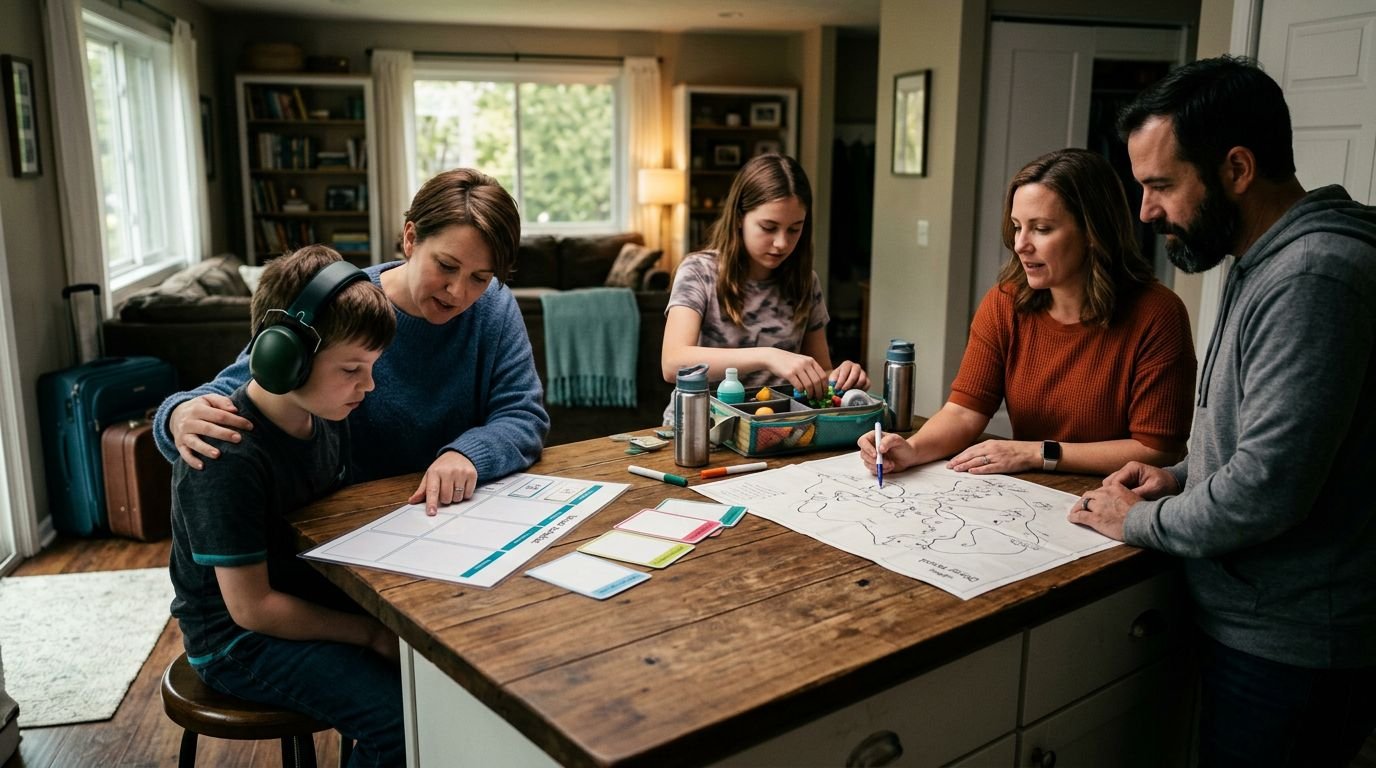
A Disney World trip can bring out every family’s hopes, worries, and opinions at once. For a blended family, that can mean different routines, parenting styles, sibling needs, and pressure to make the family vacation feel fair.
A calm Disney plan doesn’t need a perfect color-coded schedule. It should support your autistic child and account for needs associated with autism spectrum disorder. It also gives every adult a clear role and leaves room to change course when the day gets hard.
Start with a few meaningful priorities, then build the rest around your family’s real needs.
Key Takeaways
- Start planning at home with simple previews, visual schedules, familiar tools, and realistic expectations for your child’s age and support needs.
- Make adult roles, sibling priorities, budget limits, and non-negotiables clear before arriving so everyone knows how to respond when plans change.
- Review current DAS procedures before your trip, but remember that DAS changes where your child waits; it does not remove crowds, heat, walking, closures, or the need for breaks.
- Build flexible park days around one or two meaningful priorities, planned recovery time, familiar food, sensory supports, and a calm exit plan.
- A successful Disney vacation does not require doing everything. Protecting rest and adjusting the plan can help the whole blended family enjoy the trip together.
Start your vacation planning at home
The best park days usually begin well before the flight or drive to Orlando. Early preparation helps neurodivergent children understand where they are going, who is coming, and which routines may change.

Build a simple preparation timeline
A long, detailed explanation can feel overwhelming. Use short conversations, photos, videos, and a visual schedule to preview unfamiliar sensory experiences, including sounds, crowds, rides, and transitions.
| When | Focus on |
|---|---|
| 6 to 9 months before | Choose dates, set a budget, and discuss sleep, food, transportation, and comfort needs. |
| Up to 60 days before | Review current DAS registration details, link tickets, and choose the parks that matter most. |
| 2 weeks before | Practice using headphones, a stroller, comfort items, and the travel-day routine. |
| Final 48 hours | Pack familiar snacks, medications, chargers, and a low-tech communication backup. |
Match the plan to your child’s age
Toddlers may need their normal nap rhythm and a familiar stroller. School-age children often do well with picture schedules, a few simple choices, and clear warnings before transitions.
Teens may want more control. Let them help choose quiet breaks, favorite rides, food stops, and a private signal that means, “I need to leave now.” Giving an older child an exit plan can reduce stress before it starts.
Get every adult on the same page
A blended-family trip goes better when adults decide the basics before arriving at the park gate. This clarity can reduce anxiety and stress for children and caregivers.
Children can feel tension quickly, especially when one adult wants to keep going and another sees signs of overload.
Agree on the non-negotiables
Talk through what happens if your child needs to leave a ride queue, skip fireworks, return to the hotel, or change the plan without warning. Decide who takes the lead during a difficult moment.
Keep the plan simple. One adult stays with the child who needs support. The other adult stays with siblings, handles food, or changes the next reservation.
Use the same words with your child when possible. “Break now” and “we can try again later” are easier to process than a long family discussion in a crowded walkway.
Make room for siblings, too
Siblings may be excited, disappointed, tired, or embarrassed. They need individual attention and shouldn’t be expected to supervise or advocate for their brother or sister.
Give each child one clear vacation wish. Maybe one wants to meet a character. Another wants a pool afternoon. A teen may want a favorite coaster. Those wishes don’t all need to happen on the same day.
Fair doesn’t always mean identical. It means each family member knows their needs matter.
Set a Disney budget with breathing room
Disney World is expensive, and a packed itinerary can lead families to spend money on upgrades they don’t truly need. Start with the big costs, then keep a small backup amount for the things that make a hard day easier.
Include these categories in your family budget:
- Park tickets, including whether one park per day fits better than Park Hopper tickets.
- Hotel, flights or driving costs, parking, tolls, and airport transportation.
- Meals, grocery delivery, familiar snacks, and any dietary needs.
- Stroller rental, mobility equipment, sensory supports, and optional paid ride services.
- A backup fund for a ride-share, a quiet meal at the resort, rain gear, or a schedule change.
Write down who is paying for what before deposits are due. This avoids awkward conversations when one household has a different budget than another.
Spend on what lowers stress
A one-park-per-day ticket is often easier for an autistic child than adding Park Hopper tickets. Changing parks can mean more security lines, transportation, walking, and decisions.
Lightning Lane Multi Pass is also separate from DAS. It can help when your family has a few true must-do attractions. It can also add another clock to watch. Don’t buy every add-on because it sounds like the full Disney experience.
A slower day with shade, snacks, and real breaks can be worth more than an extra reservation.
Choose a hotel that supports recovery
Your hotel room is not only a place to sleep. It is where everyone can reset after crowds, heat, noise, and a long day of holding it together. Use it for cooling down, reducing noise, eating familiar food, or separating bedtime routines.
Disney resort hotels can make midday breaks easier because you stay inside the Disney transportation system. Still, transportation can be crowded and unpredictable, so compare routes and realistic travel time for a midday return before booking.
Disney’s accessibility services for Guests with disabilities can help families compare available supports before travel.
Think about the room, not only the resort theme
Disney’s Port Orleans Resort, French Quarter may suit families who want a smaller resort layout and manageable walks. Disney’s Art of Animation family suites can help larger families with extra sleeping space, two bathrooms, and a kitchenette.
For a traveler with special needs, an off-site hotel or vacation rental may offer a full kitchen, a quieter setting, a private vehicle, or more separation at bedtime.
Ask about elevator access, space for a stroller, refrigerator needs, walking distance to food, and a room location away from busy common areas. Those details matter after a long park day.
Understand Disability Access Service before you arrive
Current Disney World autism planning should include a careful review of Disability Access Service, often called DAS. Disney describes DAS as a queue accommodation for Guests with developmental disabilities, including autism, who can’t wait in a conventional line for an extended time.
Some third-party planning resources use the phrase DAS pass, but Disney’s current materials generally call the accommodation DAS.
Review Disney’s current Disability Access Service policy before your trip. Procedures can change.
Register before the park day
Advance DAS registration is handled through a live video chat. Disney currently allows registration up to 60 days before your park visit, including the day you visit. The Guest who needs DAS must be present for the video chat.
The adult handling registration must be at least 18 years old. Have your tickets linked in My Disney Experience before you begin. Keep the conversation honest and focused on why a standard queue isn’t workable for your child.
Use return times with realistic expectations
After entering the park, the registered Guest or an adult linked to their account can request an available DAS return time in the My Disney Experience app. Your party can hold one DAS return time at a time.
DAS changes where your child waits. It doesn’t remove heat, crowds, walking, ride closures, or the need for breaks.
The DAS Guest must be present and ride with the group. Return times aren’t immediate entry. They’re based on the attraction’s current standby wait.
If the app is confusing or plans change, ask cast members, visit a Guest Experience Team location, or stop by Disney Guest Services. You don’t have to solve every problem in the middle of a busy walkway.
Pack a park bag that is easy to use
A bag full of good intentions won’t help if headphones are buried under ponchos and snacks. Keep the items your child uses most in the same place every day.
Bring headphones or ear defenders your child already knows, water, sunscreen, ponchos, medication, wipes, comfort items, familiar snacks, and a low-tech communication backup. A photo card that says “break,” “bathroom,” “food,” or “all done” can help when words are hard.
Your phone may hold park tickets, maps, mobile food orders, DAS return times, and messages between adults. If your family uses magic bands, check them before leaving, but phones, tickets, chargers, and backup communication tools may still be needed. A portable charger and charging cable belong in the park bag.
For more practical support, keep the Disney World with Autism Guide PDF handy before your trip, or choose the Disney World autism guide on Amazon for another planning resource.
Build a flexible park day, not a packed one
A detailed Disney schedule can look great at home and fall apart by lunchtime. Florida heat, storms, ride closures, hunger, and tired feet can change the day fast.
Good Disney World autism planning gives your family a few priorities without turning every hour into an appointment.
If you use ride reservations, leave open time between timed commitments. A flexible schedule gives your family room to adjust.
Give each day one clear win
Choose one or two experiences that would make the day feel successful. That may be a favorite ride, a character meeting, a parade, or a family photo.
Once that happens, everything else is a bonus. This takes pressure off when your child wants to leave early or gets excited about something that was never on the plan.
Stay in one area of the park for a while. At Magic Kingdom, spend the morning in Fantasyland or Tomorrowland instead of racing back and forth. EPCOT is much larger than it looks, so avoid booking rides that send your family across the park repeatedly.
Plan breaks before they are needed
Check expected crowd levels before choosing park days or deciding whether an early start is worthwhile.
Early entry can make the morning hours easier. It only helps if your child’s sleep and morning routine can support it.
Schedule a hotel break, a long indoor meal, or quiet time in a shaded area before your child reaches their limit. Leaving the park early is not a failed Disney day. It is a decision that protects the rest of your vacation.
Manage sensory overload with a calm exit plan
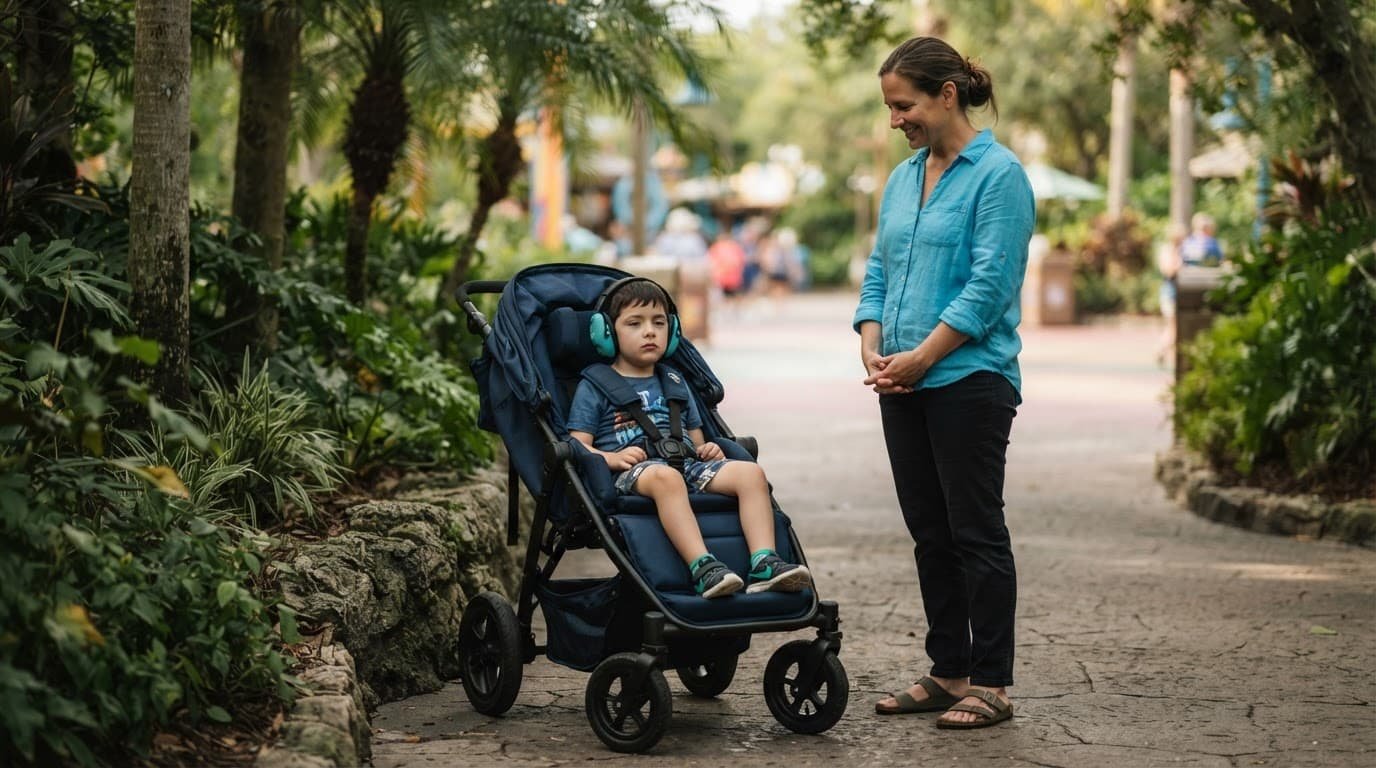
Sensory overload can build slowly, then hit all at once. Bright sun, loud music, crowds, ride motion, unfamiliar smells, and waiting can stack up faster than adults realize.
Preview high-intensity attractions
No ride is automatically wrong for every autistic child. Still, some experiences bring stronger motion, darkness, noise, flashing effects, sudden drops, or tight restraints.
Guardians of the Galaxy: Cosmic Rewind, TRON Lightcycle / Run, Space Mountain, Mission: SPACE Orange, and nighttime spectaculars can be intense. Haunted Mansion and Pirates of the Caribbean may also be difficult for children who dislike darkness, loud sounds, or unexpected scenes.
Watch point-of-view videos at home and read attraction details in the app. Preview sensory experiences such as darkness, motion, noise, flashing effects, smells, restraints, and unexpected scenes. Start with one new experience, then let your child’s reaction guide the next choice.
Disney’s accessibility overview lists several queue and attraction-access options that may help your family.
Respond early, not perfectly
Watch for changes in body language, repeated questions, pacing, covering ears, silence, or frustration. Offer a break before you reach the point of no return.
Move to shade, lower your voice, offer water, and use familiar words. Skip the explanation until your child is calm. One adult can take the child to a quieter space while another adult handles siblings and plans the next step.
Make food feel familiar and low-pressure
Food can become a major stress point when a child has allergies, sensory needs, or a limited list of preferred foods. A Disney trip does not need to become a week of food battles.
Pack familiar snacks that travel safely. Look at menus before the trip, then save a few realistic counter service (quick-service) options in the My Disney Experience app.
Mobile Order can be helpful because you can review choices away from the line and choose a pickup time when your child is ready. If a dining room feels too loud, take the meal to a quieter outdoor table or back to your resort when possible.
Tell restaurant staff about food allergies and dietary needs. Keep familiar breakfast items in your room if mornings are easier with predictable food.
A character buffet can be fun, but it may also bring noise, crowds, uncertain food choices, and unexpected interaction. Review the menu and setting before booking, and remember that it’s optional, not a required part of a Disney trip.
Choose the right stroller and protect against elopement
A stroller can be a comfort item, a mobility tool, a shade break, and a safe place to regroup. The right choice depends on your child’s size, support needs, stamina, and safety needs.
Bring your own or rent a special needs stroller
Bring your own stroller if your child relies on its familiar fit, positioning, harness, or comfort. A standard park stroller may work for a small child who only needs an occasional ride, but it may not meet the needs of an older child.
A special needs stroller rental can make sense when you don’t want to fly with a larger device. Check the stroller’s size, weight limit, storage needs, hotel door access, and transportation plan before reserving.
If you use a special needs stroller as a mobility device in attraction queues, ask Guest Relations about a stroller-as-wheelchair tag. Disney also offers information about accessing attraction queues and options such as Rider Switch.
Create a simple safety plan
Take a current photo of your child each morning. Use an identification bracelet, card, or tag if it feels comfortable for your child and family.
Choose a meeting point in each park. Teach your child to look for a Cast Member name tag if they become separated. If your child uses AAC, gestures, pictures, or limited speech, keep a short support card in the park bag.
Decide which adult walks in front and which adult stays behind when your group moves through crowds. A clear adult role can prevent confusion when everyone is tired.
Resort days are part of the vacation
A full day away from the theme parks can make the rest of the trip better. After two or three park days, plan a slow morning, pool time, laundry, a familiar meal, or quiet time in the room.

A resort-only day may work better than forcing another early start. Let siblings swim. Let your child rest with a familiar show or comfort item. Use quiet time for recovery, extra sleep, laundry, replenishing snacks, and talking about the next park day.
Disney Springs can be an option for some families, but it can also be busy. A quiet hotel afternoon is more than enough when your family needs it.
Frequently Asked Questions
When should we start planning a Disney World trip for an autistic child?
Begin with simple preparation several months before the trip, including choosing dates, discussing routines, and setting a budget. In the weeks before travel, practice with headphones, comfort items, strollers, visual schedules, and the travel-day routine.
How does DAS support Disney World autism planning?
Disney’s Disability Access Service can help Guests with developmental disabilities who cannot wait in a conventional queue for an extended time. Review the current policy and registration process before traveling, and remember that return times still involve walking, crowds, heat, ride closures, and waiting elsewhere.
Should we plan a full park day or take breaks?
A flexible day with one or two meaningful priorities is usually easier than a packed itinerary. Schedule hotel breaks, quiet meals, shade, or an early exit before your child reaches their limit.
What should a blended family decide before visiting the parks?
Adults should agree on who supports the autistic child, who handles siblings, and what happens if someone needs to leave a queue or return to the hotel. Give each child a vacation wish, because fair does not always mean that every family member does the exact same thing.
What should we pack for a Disney park day?
Pack familiar headphones or ear defenders, snacks, water, sunscreen, medication, comfort items, ponchos, chargers, and a low-tech communication backup. Keep frequently used items easy to reach, and bring identification or a support card if your child may need help communicating.
A Disney Trip That Fits Your Family
The goal isn’t to ride everything, stay through fireworks, or prove every dollar was used perfectly. It’s a family vacation everyone can enjoy together.
A calm plan works best when you choose fewer priorities, protect rest time, and let every adult support the same plan. That supports your autistic child, siblings, and caregivers alike. A calm family is worth more than a packed itinerary.
Comments
One response to “Disney World Autism Planning for Blended Families”
Appreciate the details here. Came across theplayerhub.shop recently and it lines up well with this.