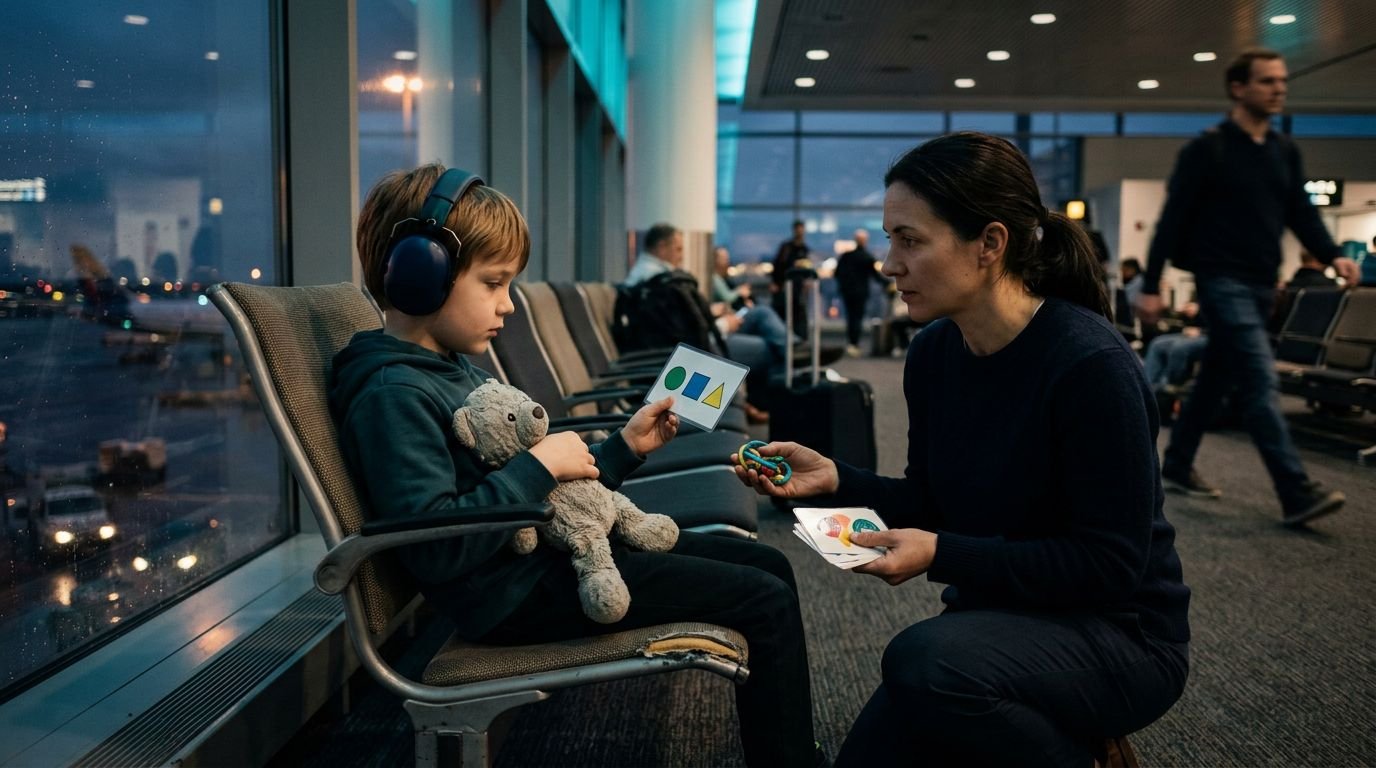
The travel delays autistic child families remember most rarely involve the clock alone. They often involve noise, hunger, changing plans, missed routines, and not knowing what happens next.
Delays are hard for every family. For an autistic child who depends on predictability, a gate change or cancelled flight can feel much bigger than “we have to wait.”
You can’t prevent every delay, but a realistic, flexible autism air travel plan can give your child comfort, clear information, and a calmer place to reset. In the U.S., TSA Cares can answer airport screening questions before you leave.
Key Takeaways
- Explain delays with short, honest updates and avoid promises about times the airline has not confirmed.
- Give the wait a clear visual shape with small steps, familiar routines, sensory supports, and simple choices.
- Prepare before travel by requesting assistance early, practicing the travel story, and packing essential comfort items in your carry-on.
- During cancellations or overnight delays, focus first on reducing overload, then arrange rebooking, lodging, food, medication, and transportation support.
- Use familiar strategies across airports, trains, road trips, and Disney travel, while allowing flexibility when plans change.
How to Respond When an Airport Delay Changes the Plan
The first announcement matters. Your child will often look to you before understanding the words on the airport screen.
Keep your voice calm and give only the information you know. Avoid promises like, “We will leave soon,” if the airline hasn’t confirmed a new time.
Start with facts, not promises
Try a short script such as: “Our plane is delayed. We are staying at this gate for now. First we will sit, then have a snack, then I will check for the next update.”
That is enough. You don’t need to explain weather systems, crew schedules, or airline policies while your child is already overwhelmed.
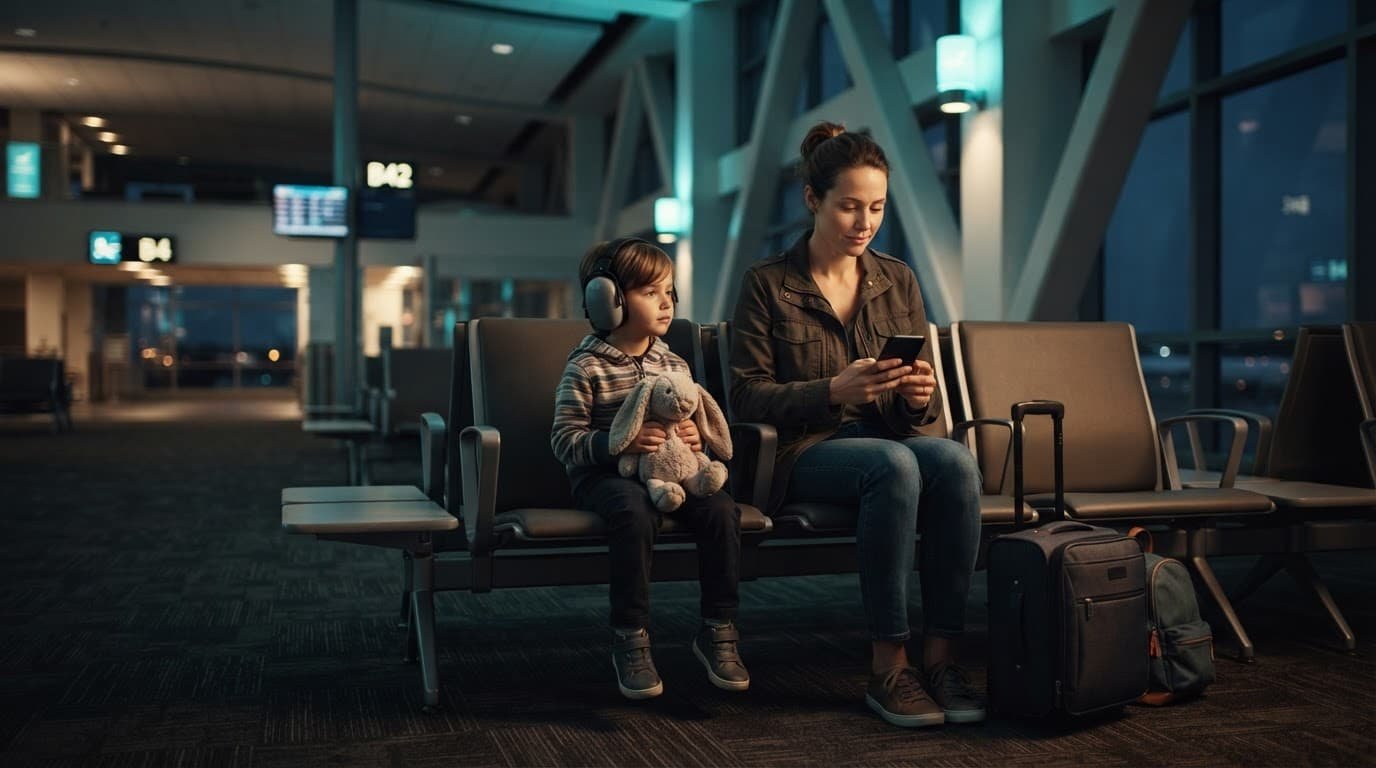
If two adults are traveling, let one focus on your child while the other speaks with the airline or checks the app. If you are traveling alone, help your child settle first. Noise-cancelling headphones, a favorite show, or a familiar snack can buy you the few calm minutes you need to get information.
Give the delay a visual shape
A long wait feels less scary when it has a beginning, middle, and next step. Use a visual schedule in a notes app, printed card, or simple paper plan:
“Check the board. Sit in our quiet spot. Bathroom or snack. Hear the next update.”
A sensory room can offer a quieter place to reset, but availability varies by airport. Use a “change” card if your child already uses visual supports or strategies from ABA therapy. Follow it with two clear choices, such as “headphones or music?” or “sit here or walk by the window?”
A delay is not practice for waiting longer. It is a new plan that needs to be explained in small pieces.
Meltdowns, shutdowns, or refusal aren’t bad behavior. They can signal sensory overwhelm or show that the situation has become too much. Lowering demands often supports emotional regulation better than trying to reason through every detail during distress.
Prepare for Airport Delays Before You Leave Home
Good travel preparation starts before travel day. When planning autism air travel, choose flight times that fit your child’s usual rhythm when you can. A direct flight may be easier than an itinerary with a layover, but every family is different.
Think about your child’s hardest part of travel. Is it the early wake-up? Security? Waiting at the gate? Loud boarding announcements? Build your preparation around that one challenge first.
Book special assistance early
Request special assistance through the airline or travel agent as early as possible. Many airports ask for at least 48 hours’ notice. Explain what support would help, such as extra time at the security checkpoint or help with a long walk. Ask about priority boarding and clear guidance during a connection.
U.S. families can contact TSA Cares with screening questions. Write down the confirmation number and save relevant TSA Cares contact details in your phone and carry-on. It is also smart to call again a few days before travel.
Airport services vary. Heathrow’s non-visible disabilities support includes its Flight Ready Programme for autistic travelers and families. The free familiarisation tours let families see parts of the airport routine before a flight day.
Practice the story when everyone is calm
A social story should be short, honest, and familiar. If your child already uses ABA therapy, rehearse established supports rather than introducing a new program. Read it before the trip, not only at the gate.
Try language like: “Sometimes planes wait. The board may change. My adult will tell me the next step. I can ask for headphones, a snack, a break, or my tablet.”
Airport familiarisation visits and mock-flight programs can also help. Some airports offer walk-through visits that cover check-in, security, and boarding steps. Search your departure airport’s website, then check the Sunflower airport and airline directory for participating locations.
Ask for Help Without Sharing Every Detail
You don’t need to share your child’s full medical history with every staff member. Planning autism air travel is easier when you explain what helps autistic passengers, rather than sharing a full diagnosis.
Tell staff what helps your child, not only their diagnosis. For example: “My child may not answer questions when stressed. Please speak to me first.” Or, “Gate changes are difficult. Could you tell us if there is a quieter place to wait?”
If your child already uses ABA therapy for communication or transitions, briefly describe that familiar routine.
If you already carry medical documentation, it may support a request, but you don’t need to share a full medical history. For U.S. screening questions, TSA Cares can explain the screening process and support options. It is separate from assistance arranged through your airline or airport.
Use the Hidden Disabilities Sunflower thoughtfully
The Hidden Disabilities Sunflower is a lanyard or card that lets staff know a traveler may need extra time, patience, or support. It doesn’t guarantee priority access, a quiet room, or a faster line. It can make it easier to ask for help without repeating personal details all day.
In the United States, Seattle-Tacoma International Airport’s program offers Sunflower lanyards for travelers with non-visible disabilities, including autism. Detroit Metro Airport also explains its Sunflower support, which is another reminder to check each airport before you travel.
Give the flight crew one clear message
Once you board, quietly tell a flight attendant about any support your child may need. Keep it simple.
You might say, “My child has autism and may become distressed by sudden changes or loud announcements. We have headphones and comfort items. Please let me know if a delay affects our layover or plans change before a general announcement, if possible.”
Priority boarding can be helpful for some children because the cabin is quieter. For others, it means sitting in a confined space longer. Ask for it only if it works for your child.
Pack a Sensory Kit That Works During a Long Wait
Your carry-on bag should hold supports that are hard to replace. Checked bags can be delayed, and an unfamiliar terminal is no place to discover a charger or medication is missing.
Keep important items in one small pouch or backpack pocket. Families often remember the tablet and forget the cable.
Choose familiar items over new distractions
A bag full of new toys can create more stimulation. Bring the items your child already knows and uses at home. Choose familiar supports that fit their sensory sensitivities and make sensory overwhelm more manageable during a long wait.
- Pack noise-cancelling headphones or ear defenders that your child has worn before.
- Bring familiar snacks, an empty refillable water bottle, and any safe foods your child depends on.
- Include a favorite fidget, soft blanket, hoodie, stuffed animal, or comfort item.
- Download shows, music, games, and communication apps before leaving home.
- Keep a portable charger, charging cord, and communication device together.
- Carry prescription medication in its original labeled container, with extra doses if your care team recommends it.
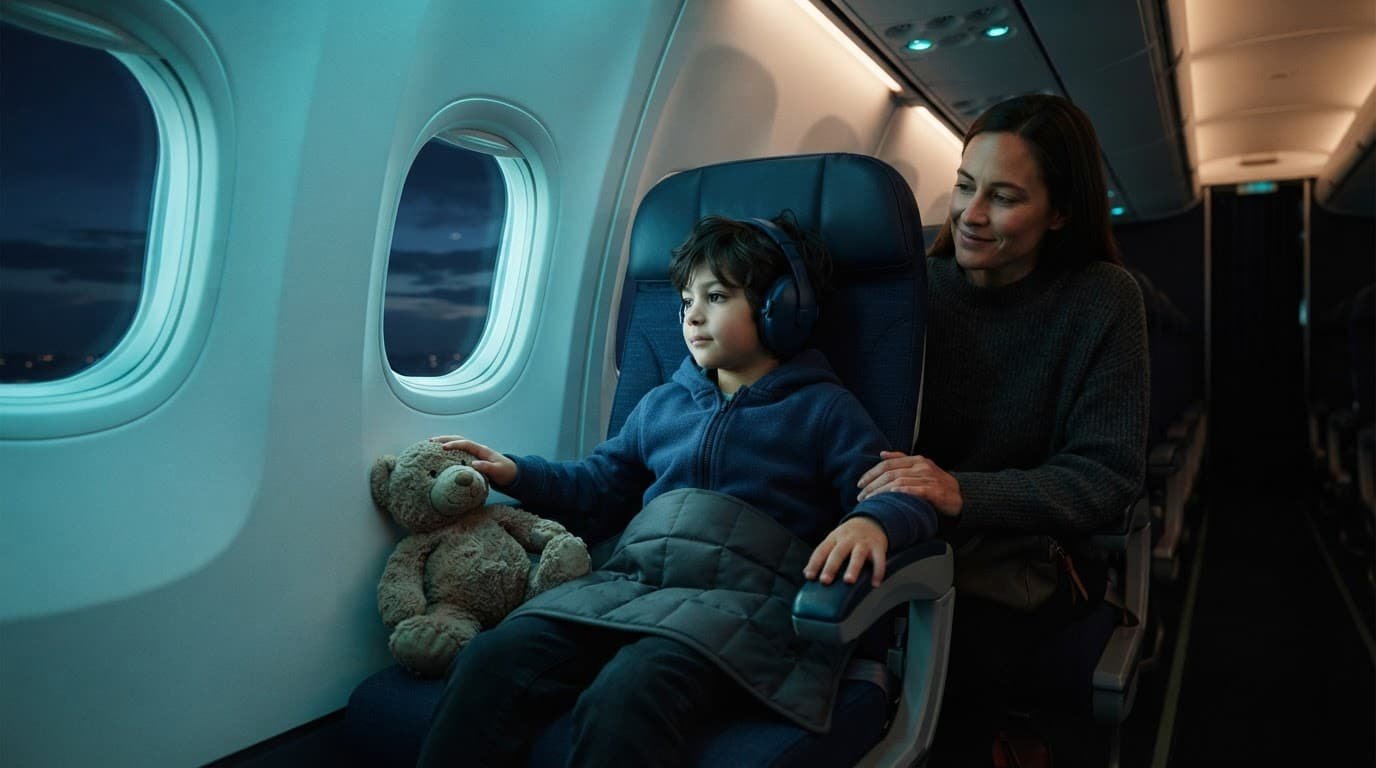
A weighted lap pad can be comforting during a flight or long gate wait if your child already uses one. If they use a familiar tool or routine in ABA therapy, pack that too. Don’t introduce either support for the first time during travel.
Handle Cancellations and Overnight Delays One Step at a Time
The travel delays autistic child families face can become harder after a cancelled flight. A missed connection can also turn into an overnight stay. This is when a basic plan protects everyone from rushed decisions.
Start by moving away from the busiest counter area if possible. Find a quieter seating area, get water and food, and let your child reset before making new arrangements.
Focus on the first 20 minutes
The first 20 minutes are about reducing overload, not solving every detail.
Take a screenshot of the delay or cancellation notice. Check the airline app, but don’t have every adult refreshing screens at once. Too many voices and updates can make a hard moment worse.
Tell your child only what is confirmed. “We are not flying tonight. We are finding out where we will sleep. You can have your headphones while I make the plan.”
If your child already uses a first/then routine through ABA therapy, use that familiar format now.
If your child uses AAC, pictures, gestures, or a communication card, keep that support easy to reach. It can say “break,” “all done,” “food,” “bathroom,” or “quiet,” which may help when words are hard.
Make an overnight plan that protects routines
Ask the airline about the next available flight and flight times. Check whether checked bags will transfer and what hotel or meal support may be available. A revised itinerary may add a long layover or change your family’s routine. Ask how previously requested special assistance will carry over to the new itinerary.
Then work through these steps in order:
- Confirm the new flight before leaving the airport, if possible.
- Choose lodging that gives your family room to rest, not only the lowest available rate.
- Keep medications, sensory items, pajamas, chargers, and comfort items with you.
- Set one simple next-morning plan, such as breakfast, airport, security, then gate.
Before accepting a refund or cancelling anything, ask the airline to explain your rebooking choices. A refund may be the right answer, but it doesn’t solve the immediate problem of getting your family home or to your destination.
Use the Same Plan for Train and Road-Trip Delays
Trains, buses, and road trips bring different challenges, but the basics stay the same. Prepare for food, bathroom breaks, communication, charging, and a place to reset.
On a train, tell the conductor early if your child may need support during a missed connection or platform change. Ask whether there’s a quieter waiting area or a less-busy carriage.
For a road-trip delay, pull over somewhere safe when stress is rising. A rest area, quiet parking lot, or hotel lobby may be better than pushing through traffic while everyone feels overwhelmed.
Keep a small travel kit within reach, not buried in the trunk. Familiar music, a hoodie, snacks, a tablet, and a charger can make an unexpected stop more manageable. If your child already uses a low-demand routine or transition strategy from ABA therapy, include its familiar materials without introducing anything new.
Bring the Same Flexibility to Disney Travel
Disney trips can have their own delays. Flights run late, rental-car lines move slowly, buses fill up, weather pauses transportation, and rides close without warning.
A flexible Disney day works better than a schedule packed with must-do times. If your child already uses a transition routine from ABA therapy at home, it may help when transportation, weather, or ride plans change. Build in breaks whenever the day starts to feel too demanding. Lightning Lane Multi Pass is separate from DAS, and it can be helpful for a few priority rides. It can also add another clock to watch. Buy it only when it makes your day easier.
Keep a portable charger, headphones, communication supports, and comfort items together in one park pouch. Your phone may hold tickets, maps, mobile food orders, return times, and family messages.
For more support with calmer Disney planning, breaks, accessibility needs, and flexible park days, explore the Disney World with Autism Guide on Etsy or the Amazon edition of the guide.
Frequently Asked Questions
What should I say to my autistic child during a travel delay?
Use short, honest language that explains what is known and what happens next. For example, say, “Our plane is delayed. We will stay here, have a snack, and check for the next update.”
How can I help my child manage sensory overload at the airport?
Move to a quieter area when possible and offer familiar supports such as headphones, a comfort item, a snack, or a favorite show. Lower demands and avoid trying to reason through every detail while your child is distressed.
What should I pack for an unexpected airport delay?
Keep medication, communication devices, chargers, sensory items, comfort objects, familiar snacks, and water-access supplies in your carry-on. Choose items your child already uses rather than introducing new tools during travel.
Should I request special assistance before flying?
Yes, contact the airline or travel agent as early as possible and ask what support is available for security, long walks, boarding, connections, and gate changes. U.S. families can also contact TSA Cares with questions about the screening process.
What should I do if a flight is cancelled overnight?
First, move away from busy areas, help your child reset, and confirm the airline’s rebooking and hotel or meal options. Keep medication and sensory supports with you, then create one simple plan for the next morning.
A Calm Plan Gives Your Child Something Steady
Travel delays will still happen. Your child doesn’t have to face each change without familiar tools, clear words, and a trusted adult beside them. If ABA therapy is part of your child’s support, familiar strategies from that team may also help during a wait.
The travel delays autistic child families face become easier to manage when you focus on the next small step, not the whole disrupted trip. A snack, a quiet corner, a charged device, and one honest explanation can carry your family farther than a perfect itinerary ever could.