
Boston can be a wonderful family trip, but it can also bring crowds, walking, traffic, unexpected noise, and many transitions in one day. You don’t need to see every historic site or book every attraction for the vacation to feel special.
An autism friendly Boston vacation works best when the plan fits your child’s, teen’s, or adult traveler’s real needs. This matters for travelers on the autism spectrum and families supporting a traveler with special needs. Sensory processing differences may make quiet mornings, familiar snacks, or flexible plans especially important.
Start with comfort first for an autism welcoming approach, then build the Boston memories around it.
Key Takeaways
- Plan an autism friendly Boston vacation around your family’s actual energy, sensory, mobility, communication, and food needs rather than trying to see every attraction.
- Choose one main attraction and one flexible activity each day, with recovery time, quiet breaks, and a late-start option built into the schedule.
- Confirm current accessibility details, sensory-friendly programs, transportation updates, parking rules, and event schedules directly with each venue before visiting.
- Pack familiar supports such as headphones, snacks, water, comfort items, chargers, AAC backups, and mobility equipment that your traveler already uses.
- A successful Boston trip can be short and flexible: helping your traveler feel comfortable and heard matters more than a packed itinerary.
Start With the Version of Boston Your Family Enjoys
A full itinerary can look great on paper and still feel like too much by lunchtime. Boston has plenty to offer, but your family doesn’t need to prove anything by rushing across the city.
Choose a pace that keeps the day sensory friendly for your family, with room for rest, food, and changes of plan.
Pick two daily anchors
Give each day one main attraction and one flexible activity. A museum morning and a quiet waterfront walk may be enough. Add a second major stop only if everyone still has the energy for it.
Ask each traveler what would make the day feel good. One child may want the aquarium. A sibling may want a cannoli in the North End. An autistic teen or adult may prefer a bookstore, hotel downtime, or a walk near the Charles River.
All of those choices count.
Put recovery time on the calendar
A break is not something you squeeze in after sensory overload. Put it in the plan before you leave the hotel.
Build in time to return to your room, sit in a calmer café, ride in the car, or find an outdoor bench. Avoid booking every meal and ticket around a fixed schedule.
A Boston day feels easier when your family has one clear next step, not six places they are supposed to be.
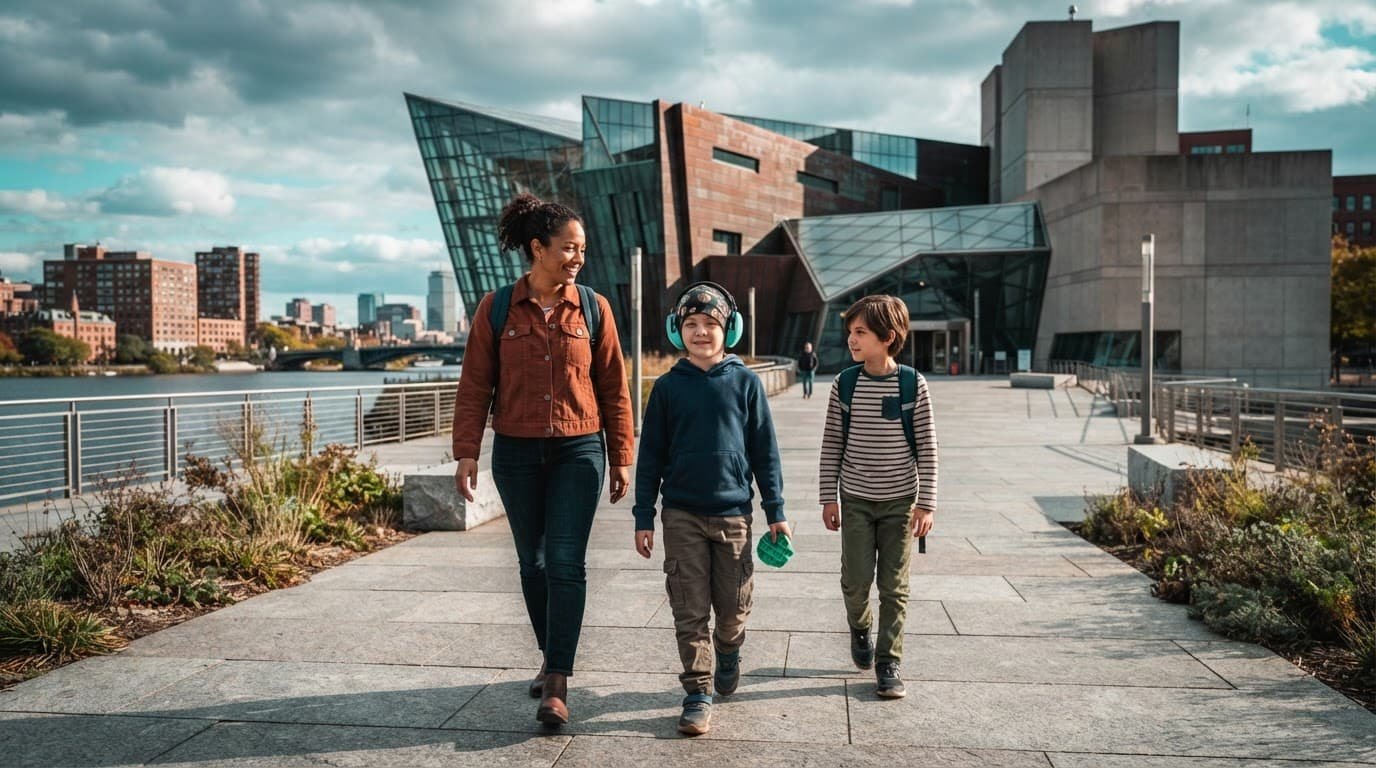
How to Plan an Autism Friendly Boston Vacation Around Transportation
Boston is walkable in many areas, but cobblestones, steep sidewalks, busy intersections, station changes, and weather can become tiring quickly. Pick one neighborhood or attraction area each day instead of crossing town several times.
Families with special needs, wheelchair users, adaptive stroller users, and public transit riders should check the MBTA accessibility information before leaving the hotel. The page includes elevator updates and the Elevator/Escalator Hotline, 617-222-2828, but elevator status can change quickly.
| Attraction area | Lower-stress arrival idea | Helpful detail |
|---|---|---|
| Seaport and Boston Children’s Museum | Drive, use a taxi, or arrive through South Station | Keep the walk short and predictable |
| Museum of Science | Use Science Park/West End or Lechmere when transit fits | Confirm elevator status that morning |
| Museum of Fine Arts | Use the accessible Museum of Fine Arts Green Line stop | Avoid relying on Symphony Station during its rebuild |
| Waterfront and aquarium area | Plan a drop-off point before arrival | Leave time for a quiet Harborwalk break |
If you drive to Boston Children’s Museum, remember that the museum does not run its own garage. It validates parking at several nearby garages, but you must pull a physical parking ticket at entry. App-based and QR-code parking cannot be validated.
Traffic, construction, and train changes happen. Keep the first hour of your day light. A flexible Boston plan has room for a late start.
Boston Children’s Museum Offers a Calmer Way to Visit
The museum is a strong choice for younger children who like hands-on play, movement, art, water activities, and exploring at their own pace. It can also get loud and busy during standard admission hours.
The museum’s Morningstar Program, officially presented as Morningstar Access, gives children on the autism spectrum and children with other special needs time in the museum with far fewer visitors. This sensory friendly visit can create a more autism welcoming museum environment. Pre-registration is required, and attendance is capped at 100 guests.
Use the Morningstar Program when the date works
A session is worth building your vacation around if it lines up with your travel dates. A lower crowd level can make a huge difference for children who struggle with noise, waiting, or unexpected close contact.
Before your visit, confirm your Morningstar Program registration and ask about current sensory supports, accessibility tools, and quiet rooms. You can also request social stories or a sensory map to help your traveler know what to expect.
Make arrival simple
Pack a small snack, refillable water bottle, headphones, and one comfort item. Tell your child the first step only: “We will park, walk inside, and find the entrance.”
Once you arrive, don’t rush to every exhibit. Let your child lead when possible. A favorite space may be enough for the whole visit.
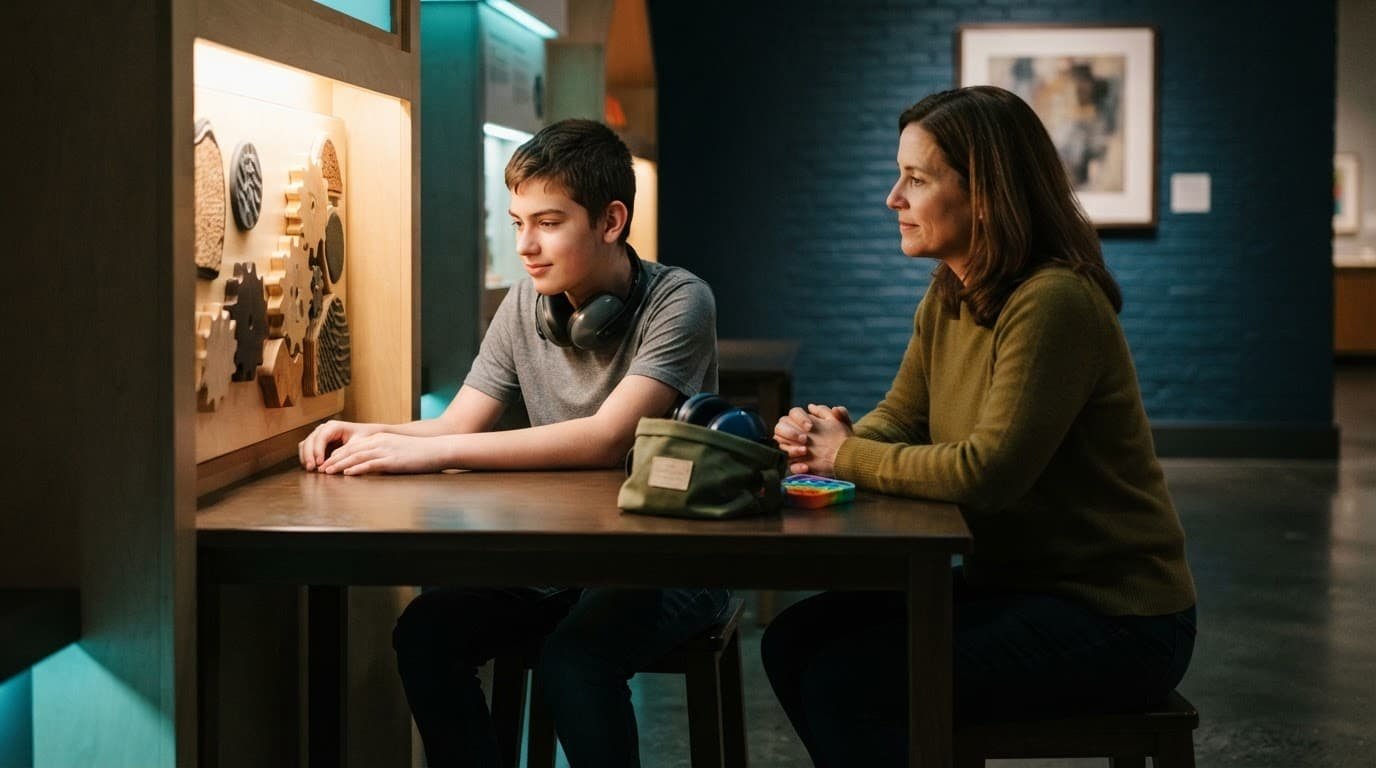
Museums That Let Curiosity Set the Pace
Museums work well when your family can choose how long to stay. You can step out of an exhibit, take a snack break, and change direction without losing the whole day.
That flexibility matters more than seeing every floor.
Plan around quiet times at the Museum of Science
The Museum of Science has designated quiet times for visitors with developmental disabilities, autism spectrum needs, neurological differences, and sensory concerns. Check the current calendar for labels such as sensory sensitive Sundays. Verify whether that program currently exists and is scheduled. Designated quiet times may create a more sensory friendly visit, but dates and times can change.
Bring headphones or ear defenders if sound is hard for your child. Large exhibits, school groups, live demonstrations, and theater-style experiences can feel exciting for one traveler and overwhelming for another.
Before choosing exhibits, identify quiet zones and nearby exits. Choose a few exhibits, demonstrations, or galleries that fit your traveler’s sensory processing preferences, rather than trying to see the whole building. The planetarium or a busy live presentation may be a great fit, or it may be a simple “not today.”
Families willing to travel outside central Boston may also consider Discovery Museum, a smaller, hands-on alternative. Check current hours, distance, and accessibility details before you go, because accommodations can vary.
Take a slower approach at the MFA
The Museum of Fine Arts can work well for travelers who enjoy art, space to move slowly, and a quieter indoor activity. Go early if possible. Pick a small part of the collection and plan a break before anyone is tired.
Don’t rely on old online posts for current autism programs, sensory bags, or special events. Call or check the museum’s accessibility page before your visit for current autism welcoming policies or supports. A little advance planning protects the day from disappointment.
Aquarium and Zoo Visits Need Extra Planning
Animals can be a wonderful vacation memory. The New England Aquarium and other animal attractions can also bring crowds, dim rooms, strong smells, loud children, food lines, and unpredictable wait times.
Plan these stops with a clear exit plan.
Visit the New England Aquarium with realistic expectations
The aquarium has offered sensory friendly hours, including an event in 2026. Those offerings are date-specific, so check the current schedule directly before making them a core vacation plan.
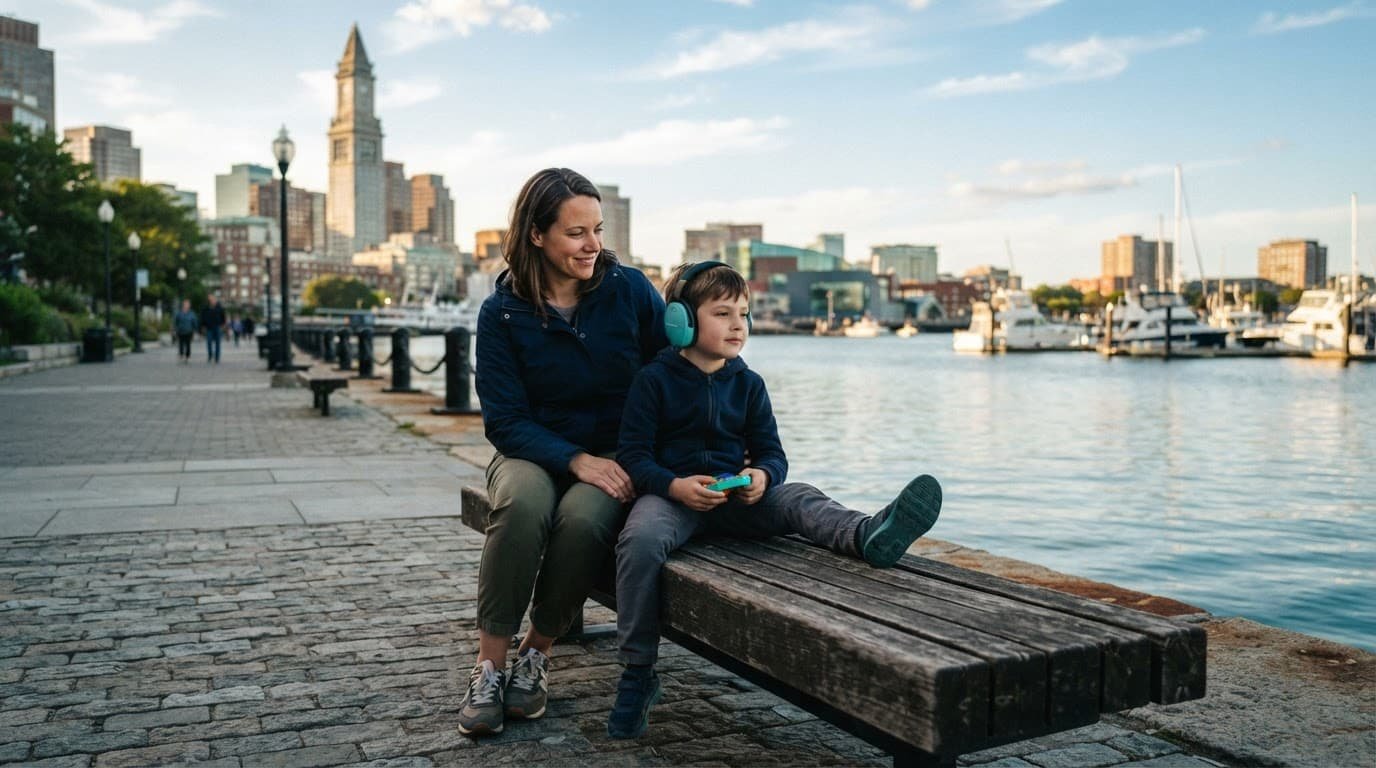
Even on a regular day, you can make the visit easier. Arrive near opening, choose a short route, and take breaks outside along the Harborwalk. The waterfront gives families a calm place to reset before heading back inside or moving on.
Confirm Zoo New England details before booking
Franklin Park Zoo and Stone Zoo can be good outdoor options when your child needs room to move. Still, don’t assume sensory bags, a quiet room, or a sensory inclusive event is available on your date.
Call ahead and ask about current autism welcoming accommodations, crowd patterns, accessible paths, food options, exits, and re-entry policies. A short zoo visit is still a successful zoo visit.
Sensory-Friendly Swimming in Greater Boston
A pool can be one of the best ways to reset during a city vacation. Water gives many travelers movement, pressure, and familiar play. It can also feel safer and calmer during a sensory friendly session with fewer swimmers and lower noise.
Greater Boston has options worth checking before your trip.
JCC Greater Boston sensory swim hour
JCC Greater Boston’s sensory swim hour is a free Saturday program from 3 to 4 p.m. for all ages. It supports autistic swimmers and people on the autism spectrum with other sensory needs.
Advance registration is required. The sensory swim hour is limited to 10 participants, which may help families seeking a smaller group.
Before visiting, confirm that the listed tactile resources are still provided, including pool toys, fidgets, therapy noodles, kickboards, and water-resistant headphones.
That small group size may be especially helpful for a child who finds standard open swim too busy. Contact JCC Greater Boston to confirm current registration and schedule details before you go.
BCYF adaptive pool programs
Boston Centers for Youth & Families also offers Adaptive Open Swim, where pool activities and distractions are reduced so families can enjoy time together.
BCYF also has structured adaptive swim lessons. Locations and schedules can change, so contact the program before travel. These options can support children, teens, and adults who need a more comfortable start in the water.
Sensory-Friendly Movies and Live Performances
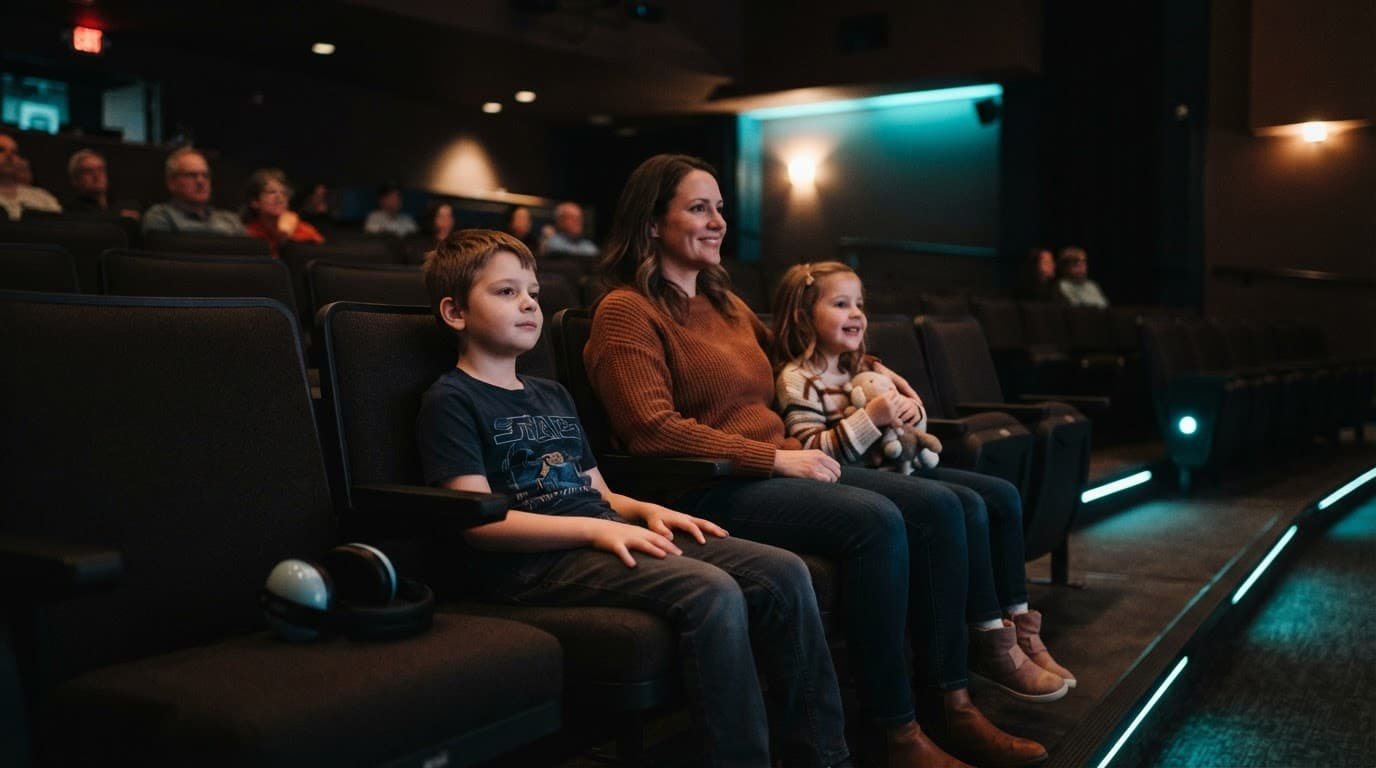
A regular theater environment may include dark rooms, loud trailers, crowded aisles, and strict expectations about sitting still. Sensory-friendly events offer a different experience. Families can usually use headphones, move when needed, and take a break without feeling judged.
Search for sensory friendly films by date and venue, then confirm the exact event details.
Ask about the screening setup
Some Greater Boston sensory-friendly screenings are hosted by autism organizations, community venues, O’Neil Cinemas, Showcase Cinemas, or the Autism Welcoming Center in Natick. Event schedules change often.
Before buying tickets to sensory friendly films, ask about dimmed lighting and reduced volume. Also confirm whether outside snacks are allowed, re-entry is permitted, and quiet rooms are available. These choices create an inclusive environment where children can use headphones, move, take breaks, or re-enter without judgment.
AMC offers sensory-friendly film programs in some markets. Check the local Boston-area listing before assuming a show is available. Families can also check KultureCity for venue-specific sensory tools or policies, but offerings vary by location.
Put Boston Ballet on your holiday calendar
Boston Ballet’s Sensory Friendly Nutcracker is a relaxed performance scheduled for Friday, December 4, 2026, at 1:30 p.m. The performance runs one hour and 20 minutes, including a 20-minute intermission.
The program is designed for guests who are neurodiverse, have sensory sensitivities, or are on the autism spectrum. This relaxed performance may include lobby quiet spaces and more flexible theater expectations. Confirm current details before attending.
Boston Symphony Orchestra has also offered sensory inclusive family concerts. Check the current schedule for BSO or Boston Pops events instead of assuming every concert has the same accommodations.
Pack Tools That Help Your Family Communicate and Reset
A good day bag is not about carrying more stuff. It is about keeping the right items easy to find when the day gets busy.
Keep your most important supports together and in the same place each day.
Show the next step, not the whole day
Use a simple visual schedule on your phone or on paper. It can say: breakfast, train, museum, snack, hotel. Let your child cross off each step or choose between two options.
For AAC users, keep the device charged and bring a low-tech backup with common choices such as “break,” “bathroom,” “hungry,” “all done,” and “help.” Teens and adults may prefer texting, typing, sign language, gestures, or a direct plan discussed before leaving.
Keep one small support pouch
A small pouch can hold the supports that fit your traveler’s sensory processing needs and familiar routines:
- Noise canceling headphones or ear defenders your traveler already uses.
- A charging cable and portable battery for phones, AAC devices, and tablets.
- Familiar snacks, water, medication, wipes, and a comfort item.
- A fidget or hoodie that helps with waiting and busy spaces.
Families often remember the device and forget the charging cord. Put both in the same pouch before every outing.
Plan for mobility needs in advance
If your child uses a stroller as a mobility device, bring the option that supports their body, routine, and safety. Travelers with special needs may require a stroller, wheelchair, transfer support, or service-animal accommodation, so don’t choose a standard rental only because it seems easier.
Ask attractions about accessible entrances, elevators, transfer needs, wheelchair seating, and service-animal policies before your visit. A simple question before the trip can prevent a hard moment at the door.
Choose a Hotel That Makes Breaks Possible
Where you sleep shapes the entire trip. A lower room rate may not feel like a savings if the hotel is far from your planned attractions, has a noisy lobby, or leaves no room for familiar food.
Look beyond the hotel photos.
Ask for the details that matter
Call before booking and ask about refrigerator access, microwave availability, bed setup, elevator access, accessible bathroom features, parking, and whether you can request quiet rooms away from elevators, ice machines, traffic, and busy common areas.
Families with special needs can also ask whether the hotel has autism welcoming policies, staff awareness, and a workable place to take breaks.
A suite, kitchenette, or separate sleep space can help when siblings have different bedtimes. A room near the lobby may be convenient, but a room near an elevator, ice machine, or busy street may not be the best fit for your traveler.
For eligible local families, Boston Family Days may offer access to cultural institutions. Review current rules before making plans around it.
Keep food flexible
Bring familiar breakfast foods and snacks when possible. A hungry child in a crowded restaurant often has less patience for a new menu, long wait, or loud room.
You don’t need every meal to be a Boston food experience. One special restaurant can be enough. Pizza in the hotel room, a grocery-store breakfast, or the same safe snack every afternoon can make the rest of the day easier.
If Disney is also on your family’s travel list, the Disney World With Autism Guide PDF on Etsy and the Disney guide on Amazon offer practical ideas for visual planning, park breaks, and family travel support.
Frequently Asked Questions
What makes Boston autism friendly for families?
Boston offers museums, pools, movies, performances, zoos, and other attractions with sensory-friendly or adaptive options. These programs vary by venue and date, so families should confirm current accommodations before building a day around them.
How many activities should we plan in one day?
Start with one main attraction and one flexible activity, then add more only if everyone still has energy. Schedule hotel downtime, quiet breaks, or outdoor time before sensory overload occurs.
What should we pack for an autism friendly Boston trip?
Bring familiar snacks, water, noise-canceling headphones or ear defenders, a comfort item, medication, chargers, and a portable battery. Families using AAC or mobility supports should also bring a low-tech communication backup and the equipment their traveler already relies on.
Should we use public transportation or drive in Boston?
Either option can work, but cobblestones, crowds, construction, station changes, traffic, and weather may affect the day. Check MBTA elevator updates before traveling, or plan a predictable drop-off and parking route when driving; remember that Boston Children’s Museum parking validation requires a physical parking ticket.
A Boston Vacation That Feels Like Your Family
The best autism friendly Boston trip is not the one with the most tickets, photos, or miles walked. It is the one where your traveler feels heard, supported, and comfortable enough to enjoy the moments that matter.
Choose fewer priorities, confirm accommodations directly, and keep your plan flexible. A calm family memory is always worth more than a packed schedule, helping the whole trip feel autism welcoming.
For more ideas, see our autism friendly NYC family vacation guide.