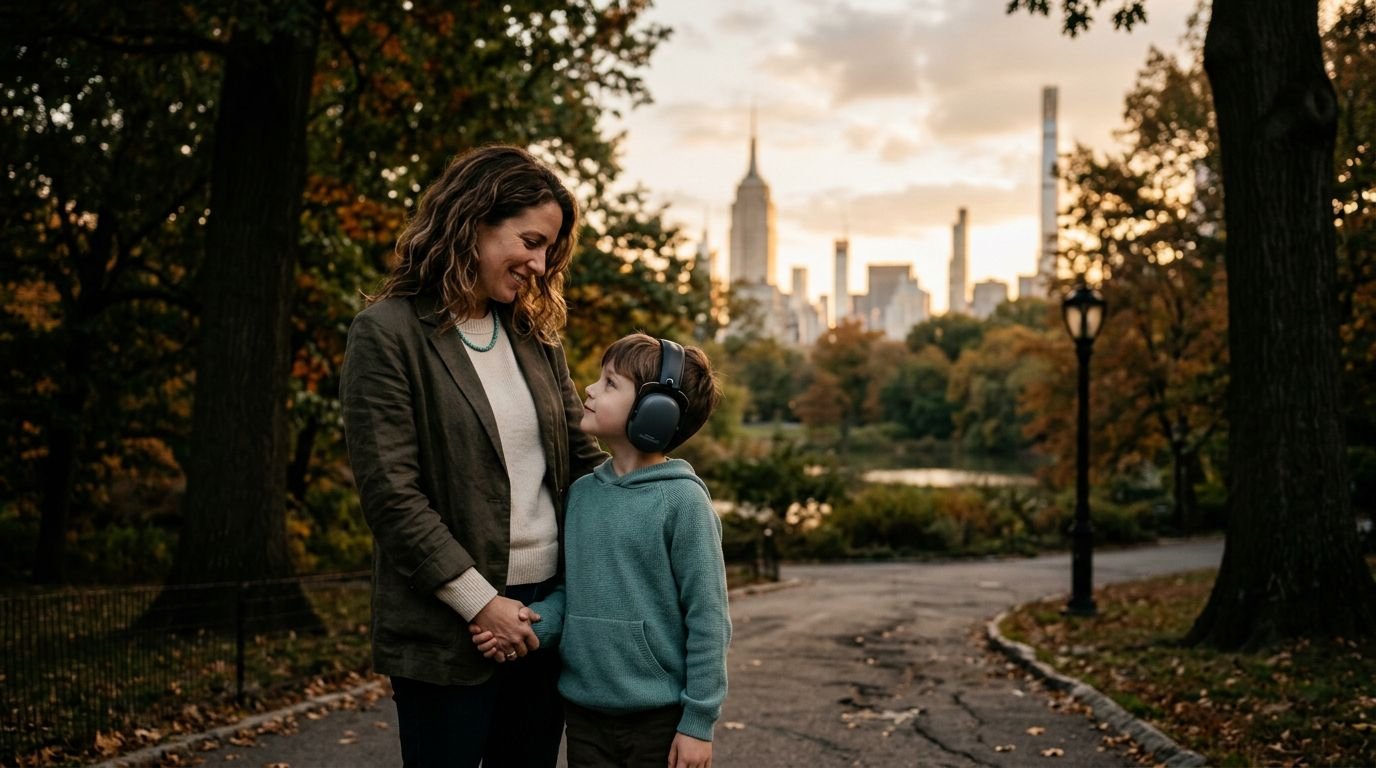
New York City can be exciting, but it can also feel loud, crowded, and full of surprises. A family trip doesn’t need to include every famous stop to feel special.
With the right hotel, a realistic plan, and room for breaks, an autism friendly NYC vacation can feel more comfortable for your child and easier for you. Plan around your child’s sensory processing profile, communication style, mobility needs, and tolerance for crowds. Neurodivergent children don’t all need the same supports, and noise, lighting, transitions, or unexpected changes can affect each child differently.
Start by planning fewer activities, with more time around each one, and treat these ideas as starting points, not guarantees.
Key Takeaways
- Plan fewer activities each day, with hotel breaks, flexible timing, and backup options for weather, crowds, fatigue, or unexpected changes.
- Choose a hotel near your family’s main priorities and ask about quiet rooms, accessibility features, refrigerators, microwaves, elevators, and mobility needs before booking.
- Check current accessibility information, sensory programs, reservations, admission rules, and event details directly with museums, Broadway venues, parks, the MTA, and the Staten Island Ferry.
- Pack familiar sensory supports, snacks, communication tools, medications, chargers, weather layers, and backup clothing in an easy-to-manage day bag.
- Let your child’s sensory, communication, mobility, and energy needs set the pace; a successful trip is measured by comfort and good memories, not by the number of attractions completed.
Start With a Smaller New York City Plan
NYC is not a place where families need to pack every hour. Subway delays happen. Rain happens. A favorite museum exhibit may take longer than expected. Those moments are easier when your schedule has breathing room.
A flexible itinerary can support children with different energy levels, communication needs, and sensory sensitivities. Check travel times, ticket rules, weather, restroom locations, and cancellation policies before leaving.
Choose one main activity for the morning and one flexible option for later. A sensory friendly city day might include one attraction, a break, and an optional outdoor activity. Your afternoon choice might be a park, a snack stop, a short walk, or hotel downtime.
Pick two daily priorities
A good city day may include a museum and Central Park. It may include a Broadway performance and a quiet dinner near your hotel.
Avoid building a plan around five timed tickets across different neighborhoods. Long walks, street crossings, security lines, and busy sidewalks can add up quickly.
An optional Staten Island Ferry outing may provide open-air views when weather and crowd levels are suitable. It isn’t guaranteed to be quiet. Check current schedules, boarding procedures, elevator access, and crowd conditions first.
Ask each morning: What are the one or two things that matter most today? Everything else is optional.
Build in a reset before it is needed
Don’t wait until your child is overwhelmed to look for a quieter space. Plan one before lunch and another before the afternoon activity.
A hotel break is often worth the travel time. It gives your child a familiar space for preferred foods, quiet play, a change of clothes, or a nap. It also gives caregivers a chance to reset.
Choose a Hotel That Makes Breaks Easier
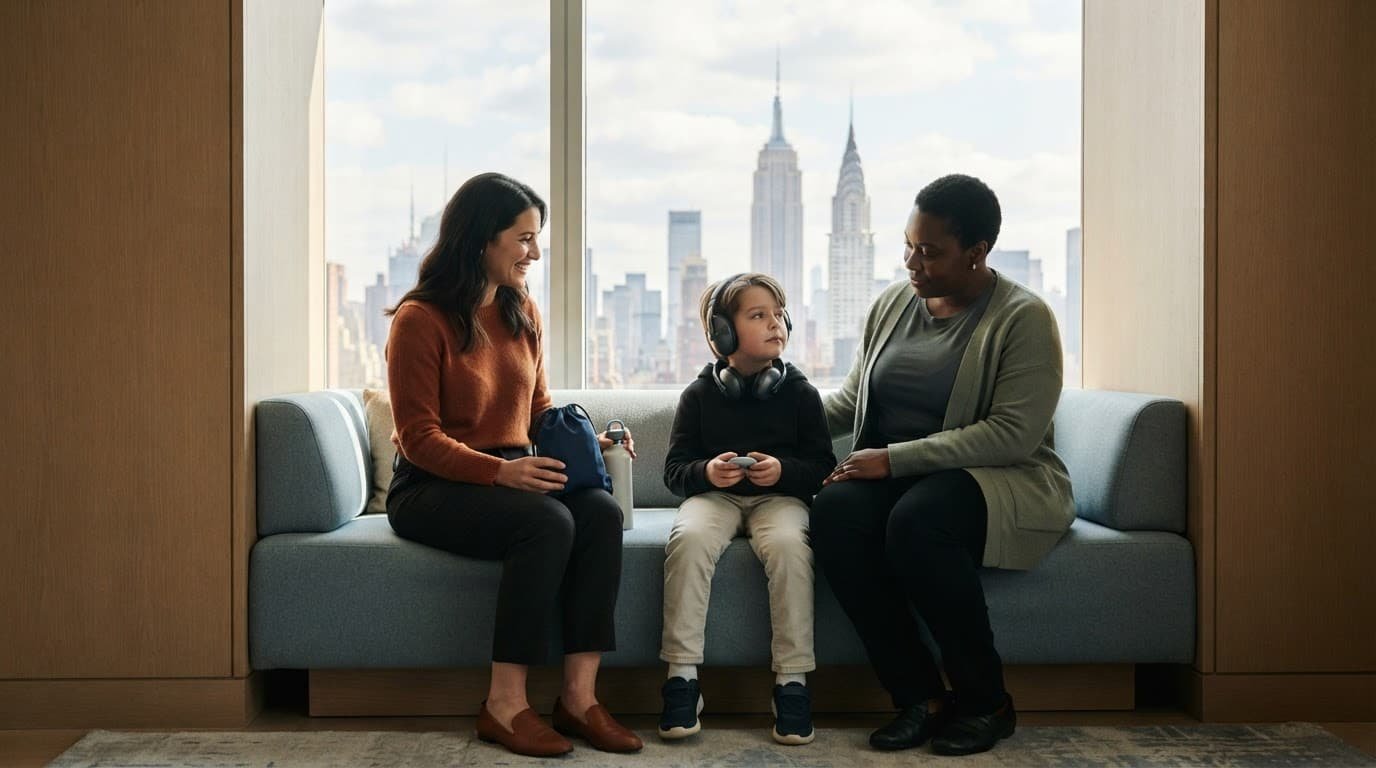
Your room is more than a place to sleep. It is where your family can decompress after a busy sidewalk, loud restaurant, or crowded attraction.
Look at the real location before booking. A hotel that appears close on a map may still involve several blocks, a difficult intersection, or a busy station entrance.
Stay near your daily plans
Choose the neighborhood closest to your family’s actual priorities, rather than the one with the most family friendly venues. Families who want museums and Central Park may prefer the Upper West Side, Upper East Side, Midtown West, or a hotel near Columbus Circle.
These areas can reduce the number of subway rides needed for popular Manhattan attractions. Brooklyn can be a good fit if the Brooklyn Children’s Museum, Prospect Park, or the New York Transit Museum are high on your list.
The Transit Museum offers inclusive access programs and sensory-friendly events that can be a nice option for children who enjoy trains.
Ask practical questions before you book
Start with the hotel’s current accessibility page for published details on room dimensions, bed configuration, accessible bathroom features, and elevator reliability. Then call or email to confirm child-specific needs, including refrigerator or microwave availability, luggage storage, and whether a mobility device can be brought into the room.
A room in a less busy part of the hotel can support decompression and may feel sensory friendly, although hotels don’t all use that label. Ask whether quiet rooms are available, or whether your room can be placed away from the ice machine, lobby, elevator, or busy street.
Requests aren’t guaranteed, but it’s always worth asking.
Use a Visual Schedule for City Days
A city vacation can bring many changes, and a picture plan can help children who benefit from predictability see what comes next. Offer it rather than impose it, since some children may prefer objects, photos, a communication device, or a short verbal preview.
You don’t need a complicated binder. A few pictures on your phone, printed cards, or familiar objects can be enough. Use photos of the hotel, subway, museum, snack break, park, and dinner.
Preview the outing at home
Show your child photos of the museum entrance, security area, train platform, or theater before the trip. Many venues have maps, visitor guides, and social narratives online, and some list sensory-friendly hours on their current schedule. Verify dates, reservations, age limits, and accommodations directly with the venue.
Keep the language simple. “First subway, then dinosaurs, then snack, then hotel.” A child does not need every detail at once.
Use a three-part outing plan
Families can use a prepare, support, and recover sequence, sometimes discussed in applied behavior analysis, as an optional planning concept.
Before leaving, explain the plan and pack familiar comfort items. During the outing, offer simple choices such as “bench or walk?” Afterward, schedule a preferred activity or quiet time.
A change card can also help. If rain cancels the park or a museum line is too long, show “change” and offer two next choices.
A flexible visual schedule works better than a perfect schedule that cannot change.
Autism Friendly NYC Museums Worth Planning Around
Museums can be a good choice because they offer indoor bathrooms, places to sit, and clear activity options. Still, each museum has busy areas, louder galleries, and different entry procedures.
For an autism friendly NYC museum day, follow a sensory friendly plan. Arrive close to opening, choose a few exhibits, and leave before everyone is worn out.
Before visiting, check each museum’s current accessibility information and event calendar. Confirm admission rules, bag policies, elevator status, restroom locations, and reservation requirements.
American Museum of Natural History and The Met
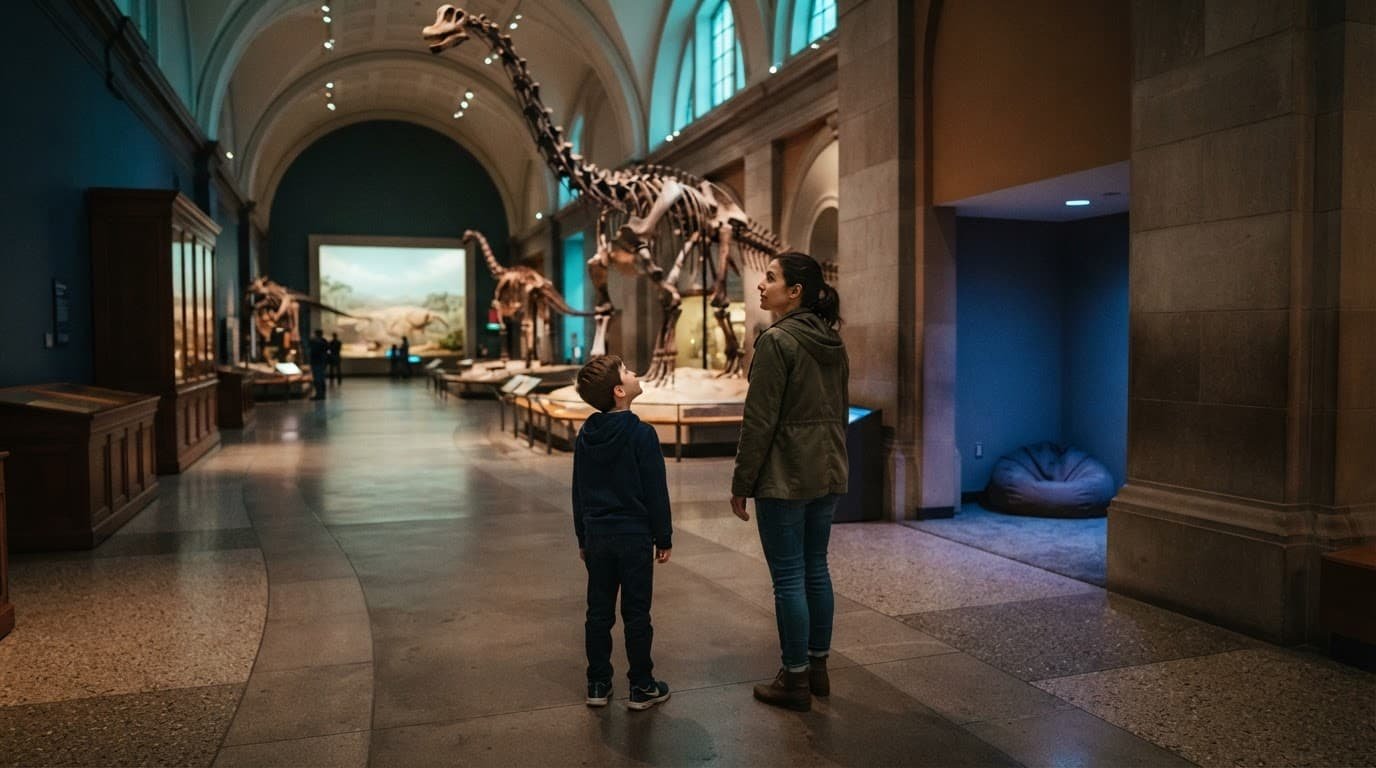
The American Museum of Natural History is popular for a reason. Dinosaurs, ocean life, space, and animal halls give children clear interests to follow. Current visitor materials list a dedicated sensory space and other supports, but reconfirm them before your trip. Review the museum’s current sensory resources for visitors before you go.
The Metropolitan Museum of Art is large, so don’t try to cover it all. Choose one wing or a few galleries. Review its map for quieter areas, quiet zones, and more stimulating spaces, but don’t treat them as guarantees of low stimulation. Its access programs include multisensory activities for visitors with autism spectrum disorder and developmental disabilities.
The Museum of Modern Art is another large option. Check its current accessibility information and sensory programming before planning a visit.
Brooklyn Children’s Museum, Intrepid Museum, and the Whitney
Play is often expected at this children’s museum, which can make it easier for younger children. Ask at admissions whether sensory kits are available, what they contain, and how checkout works. Depending on current supplies, they may include fidget toys, headphones, and feelings flash cards. Community Access Thursdays run from 2 p.m. to 5 p.m., but confirm current hours before going.
Current materials for the Intrepid Museum list sensory bags, a social narrative, and a sensory guide that explains sound levels around the ship. Its large open decks may feel easier than a packed indoor attraction, but wind, engines, alarms, and crowds can still be intense. Some areas are louder, and stairs may limit access.
The Whitney Museum of American Art offers access programs that may support neurodivergent children and families. Select Neuro-Inclusive Family Fun events may include early gallery access, fidgets, and noise-canceling headphones. These special events need advance planning, so review the event details and reservation rules before visiting.
Plan a Broadway Day Around Autism Friendly Performances
Broadway can be a wonderful family memory, but traditional theater rules may not fit every child. The Theatre Development Fund, also called TDF, offers adapted performances for people with autism, sensory and communication disorders, learning differences, and developmental disabilities.
These performances differ from standard shows through relaxed audience expectations and planned support. Neurodivergent children and their families can respond to individual needs without the same pressure to stay silent and seated.
What is different at a TDF performance?
Each production works with TDF, so confirmed accommodations vary by show and theater. A sensory friendly format may include adjusted sound, lighting changes, faint house lights, flexible seating, a nearby break area, and trained staff or behavior specialists. These options can help children with sensory sensitivities, but every child responds differently.
The TDF Autism Friendly Performances calendar is the best place to confirm the current schedule, ticket-release process, theater entrance, seating, break-room location, and age or ticket requirements. Recheck any 2026 dates before booking, since schedules and details can change.
Some tickets may be sold only through TDF. Buy early when a performance fits your travel dates.
Make the theater plan simple
For Broadway shows, eat before the performance if possible. Arrive early enough to locate restrooms, exits, seating, and the break area. Let your child know it’s okay to leave the seat and return.
Times Square itself can be intense. Review Times Square accessibility information before arriving, and make a backup plan with a quieter entrance, an alternate route, or a taxi or rideshare after the show.
Make the NYC Subway More Manageable
The subway is efficient public transportation, but a taxi or rideshare may be easier for some families. Platforms can be hot, loud, crowded, and unpredictable. Wheelchair and stroller users may also face stairs, narrow spaces, and uncertain elevator access.
Use it when it makes sense. A short taxi or rideshare may be better after a hard morning or before an important reservation.
The Staten Island Ferry can be a scenic backup, but boarding, crowds, weather, and engine sounds may still be challenging. Check the current ferry schedule, accessible boarding information, and service alerts before relying on it.
Plan the route before you leave the hotel
Open the route on your phone while you are still in a calm space. Screenshot the station name, train letter or number, direction, and exit street.
Choose routes with fewer transfers when possible. Save a backup route that avoids multiple transfers. A slightly longer ride may be easier than changing platforms twice with a tired child.
The MTA does not have elevators at every station. Wheelchair and stroller users should use the MTA’s accessible-station map and check elevator status on the day you travel. Service changes can happen with little notice.
If an elevator is out or the platform is too crowded, pause the plan. Wait for the next train, exit at another accessible station, or switch to a taxi or rideshare. Changing plans is a practical choice, not a failure.
A route with one transfer and a working elevator is often easier than the fastest route with three platform changes.
Give your child a clear subway job
Some children feel better when they know their role. Your child might hold the subway card, watch for the stop on the map, carry a fidget, or choose the music in their headphones.
Stand away from the platform edge and wait for a less-crowded car when you can. If platform noise is hard to tolerate, use headphones or wait for a quieter train. If the train is packed, it is okay to let one go and take the next.
Find Free and Low-Sensory Outdoor Time
Parks give families a break from ticket lines, indoor noise, and crowded lobbies. Central Park and other outdoor spaces can provide a low-cost recovery break or backup when plans change.
Outdoor areas aren’t always calm. Traffic, sirens, events, weather, uneven surfaces, playground sounds, and crowds may still be challenging. Treat each location as a recommendation, not a confirmed fit.
Choose one entrance and one short plan, such as a path, playground, picnic, or bench break. You don’t need to cross the entire park for the visit to feel worthwhile.
Look for sensory-friendly playgrounds
NYC Parks lists playgrounds with sensory-friendly spaces for children with autism spectrum disorders. A playground labeled sensory friendly may still be busy, so evaluate the setting in person.
Dinosaur Playground at West 97th Street and Riverside Drive is one option near the Upper West Side. Hell’s Kitchen Park Playground has ground-level play features and auditory and tactile play options.
In Lower Manhattan, Sol Lain Playground has sensory-friendly features, benches, accessible restrooms, and drinking fountains. Before departure, use NYC Parks to verify current hours and seasonal closures.
Check accessible restrooms, drinking fountains, transfer surfaces, ground-level equipment, and sensory features there, too. Have a backup for rain, extreme temperatures, or an unexpected event.
Return to the hotel, use a quiet indoor space, or substitute a short neighborhood walk.
Keep outdoor plans low-pressure
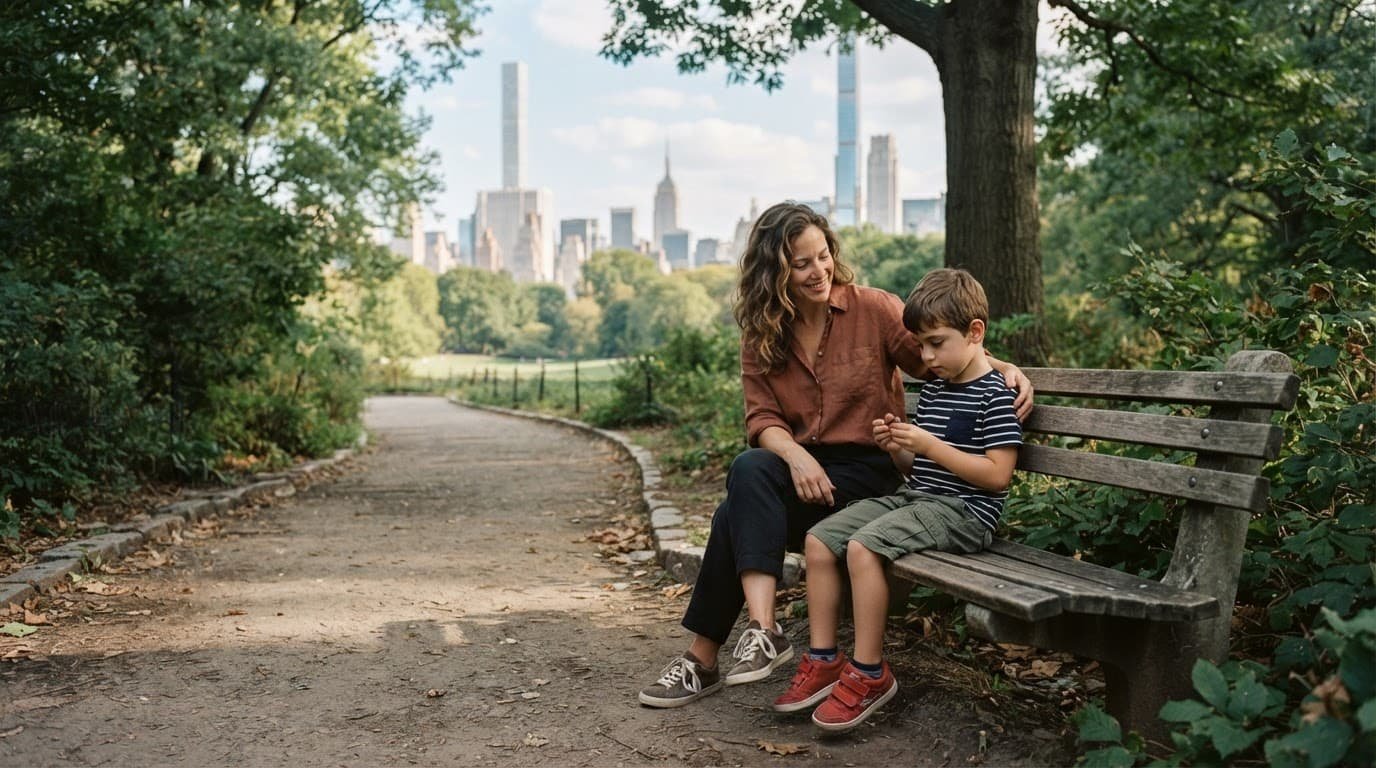
Take snacks, water, and a light layer. Sit down when your child wants to watch people, squirrels, boats, or passing carriages. You don’t need to turn every park visit into a long walk.
A riverside stroll can be a calmer choice than another indoor attraction. The Staten Island Ferry is another optional open-air alternative.
Check the weather, boarding demand, restroom access, and whether a quiet place to wait is available before choosing it.
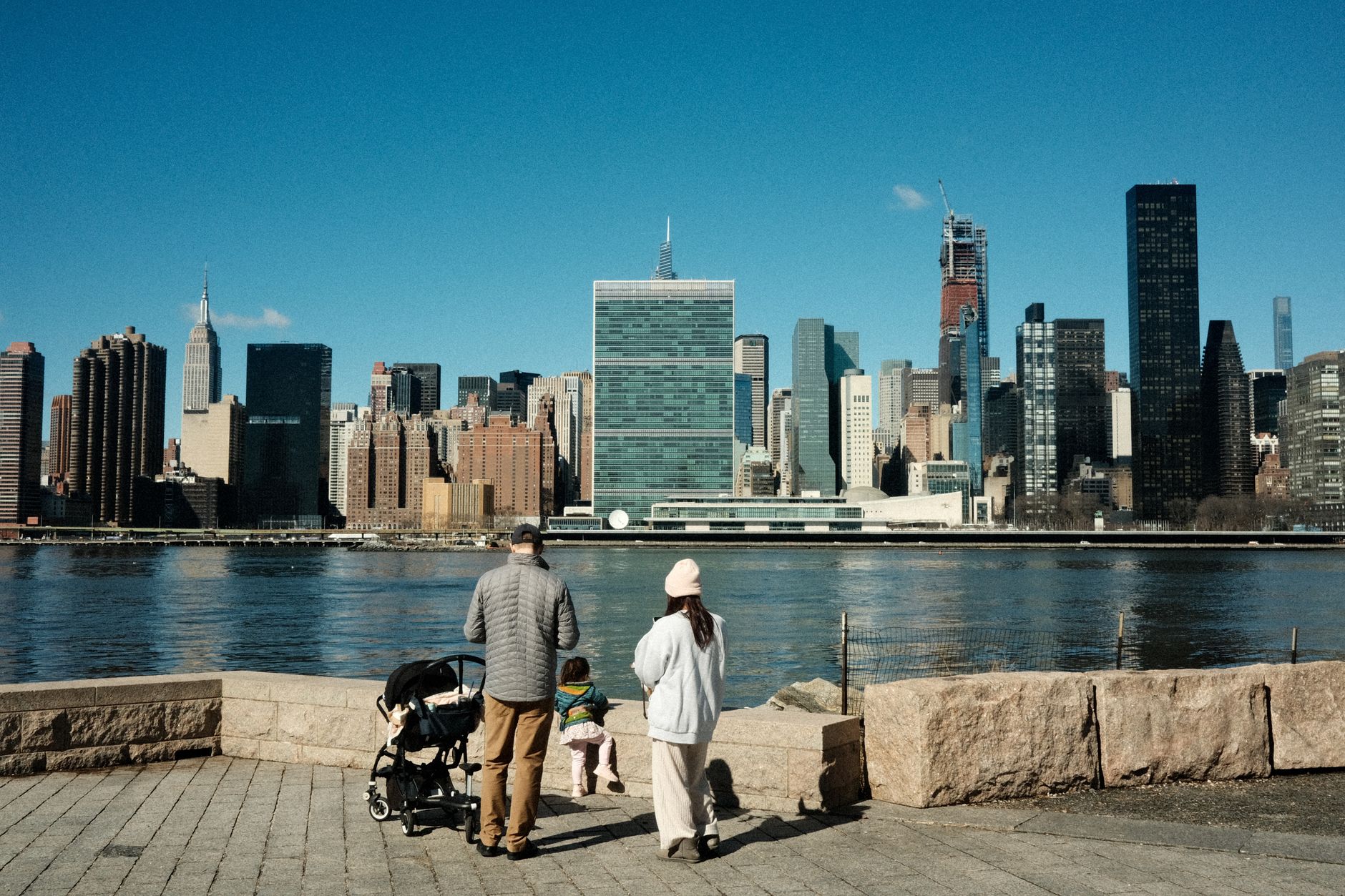
Photo by Ian Ramírez
Pack a Sensory-Friendly NYC Day Bag
NYC days can be long. Keep essential supports in one bag that an adult can manage easily. If two adults are traveling, divide key items between both bags.
Use the same pouch or pocket for devices, chargers, and communication tools each day. Label medications and communication equipment clearly, and pack a low-tech backup in case a device fails or loses power. Families often remember the tablet and forget the cable.
Bring items your child already knows and uses, along with supplies for sensory, medical, weather, and mobility needs:
- Noise-canceling headphones, tested before travel, or ear defenders if tolerated.
- Familiar fidget toys, a comfort item, or a small preferred toy.
- Familiar snacks, a refillable water bottle, and sunscreen.
- Medications, wipes, toileting supplies, and an extra shirt or change of clothes.
- A portable charger, cable, communication device, and printed visual schedule.
- A small ID or contact card, weather layer, and supplies for mobility equipment when relevant.
Trip Rescue Shop has practical travel items, including strollers, comfort supplies, and cleaning products for unexpected sick-on-vacation moments. These supplies can support your plans, but they aren’t a substitute for venue research or medical planning.
Keep Food, Restrooms, and Downtime Simple
Food is often one of the hardest parts of a city vacation. Hunger, fatigue, sensory sensitivities, and communication needs can make wait times and unfamiliar menus harder to manage.
Bring preferred snacks even if you plan to eat out. Review menus before arriving, including allergy procedures, restroom access, seating options, reservation policies, and expected noise levels. Grocery delivery or a hotel kitchenette, if available, can provide familiar breakfasts, safe foods, and late-night snacks without requiring a child to try unfamiliar food.
Choose easy meal times
Eat lunch early or late to avoid the busiest rush. Fast-casual restaurants, food halls, and takeout can support a sensory friendly meal with more control over seating, lighting, smells, and wait time.
Ask for a quieter table, and use a short written request if explaining needs is difficult. If a restaurant feels too loud, take the food back to the hotel. There is no rule that says every vacation meal has to be eaten in a restaurant.
Protect the afternoon break
Many families can handle a busy morning better than a busy evening. Plan the hotel return before everyone is exhausted.
Keep backup snacks or a familiar meal available. They can help if a meal is missed, delivery is delayed, a restaurant is closed, or sudden noise makes eating there impossible. Use the break for showers, screen time, familiar food, laundry, or a quiet activity. Pack enough clothing to avoid doing laundry in a busy hotel space if it would take away from needed downtime.
Add a Disney Autism Guide to Future Travel Plans
If your family is planning more than one destination, familiar planning tools can help on a future Disney trip. Slower schedules, real breaks, preferred snacks, and a charged phone can make park days easier.
The Disney World with Autism Guide on Etsy includes practical ideas for park days, breaks, and accessibility planning. You can also find the guide on Amazon. It doesn’t guarantee access or accommodations, so check Disney’s current policies and supports directly before your trip.
A successful vacation isn’t measured by the number of attractions completed. It’s measured by the memories your family has room to enjoy.
Frequently Asked Questions
What makes New York City more autism friendly for a family vacation?
A smaller itinerary, a convenient hotel, scheduled breaks, and familiar sensory supports can make the city easier to manage. Families should also plan around their child’s communication style, sensory profile, mobility needs, and tolerance for crowds.
Which NYC attractions offer sensory-friendly or inclusive programs?
The American Museum of Natural History, The Met, the Brooklyn Children’s Museum, the Intrepid Museum, the Whitney Museum, and the New York Transit Museum may offer sensory resources or inclusive programs. Availability, hours, supplies, and reservation rules can change, so confirm details directly with each venue before visiting.
Are there autism-friendly Broadway performances in NYC?
TDF offers adapted performances for people with autism, sensory and communication disorders, learning differences, and developmental disabilities. Accommodations vary by production and may include adjusted sound and lighting, flexible seating, nearby break areas, and relaxed audience expectations.
How can families make the NYC subway easier for an autistic child?
Review the route before leaving the hotel, choose fewer transfers, screenshot important station details, and check elevator status on the day of travel. Headphones, a clear subway role, a backup route, and the option to use a taxi or rideshare can provide additional flexibility.
What should families pack for an autism friendly NYC day?
Bring tested headphones or ear defenders, familiar snacks and comfort items, medications, toileting supplies, extra clothes, a communication device, chargers, and a visual schedule. Pack a low-tech backup for important devices and divide essential supplies between adults when possible.
Final Thoughts
New York City can work well for autistic children when the trip respects your family’s real needs. Choose a convenient hotel location, plan accessible transportation, schedule breaks, check venues in advance, and keep a backup plan.
The best autism friendly NYC vacation is not the busiest one. It’s the one where your child’s needs set the pace, your family has options, and everyone comes home with good memories.
Comments
One response to “Autism-Friendly NYC Family Vacation Guide for a Calmer Trip”
[…] For more ideas, see our autism friendly NYC family vacation guide. […]