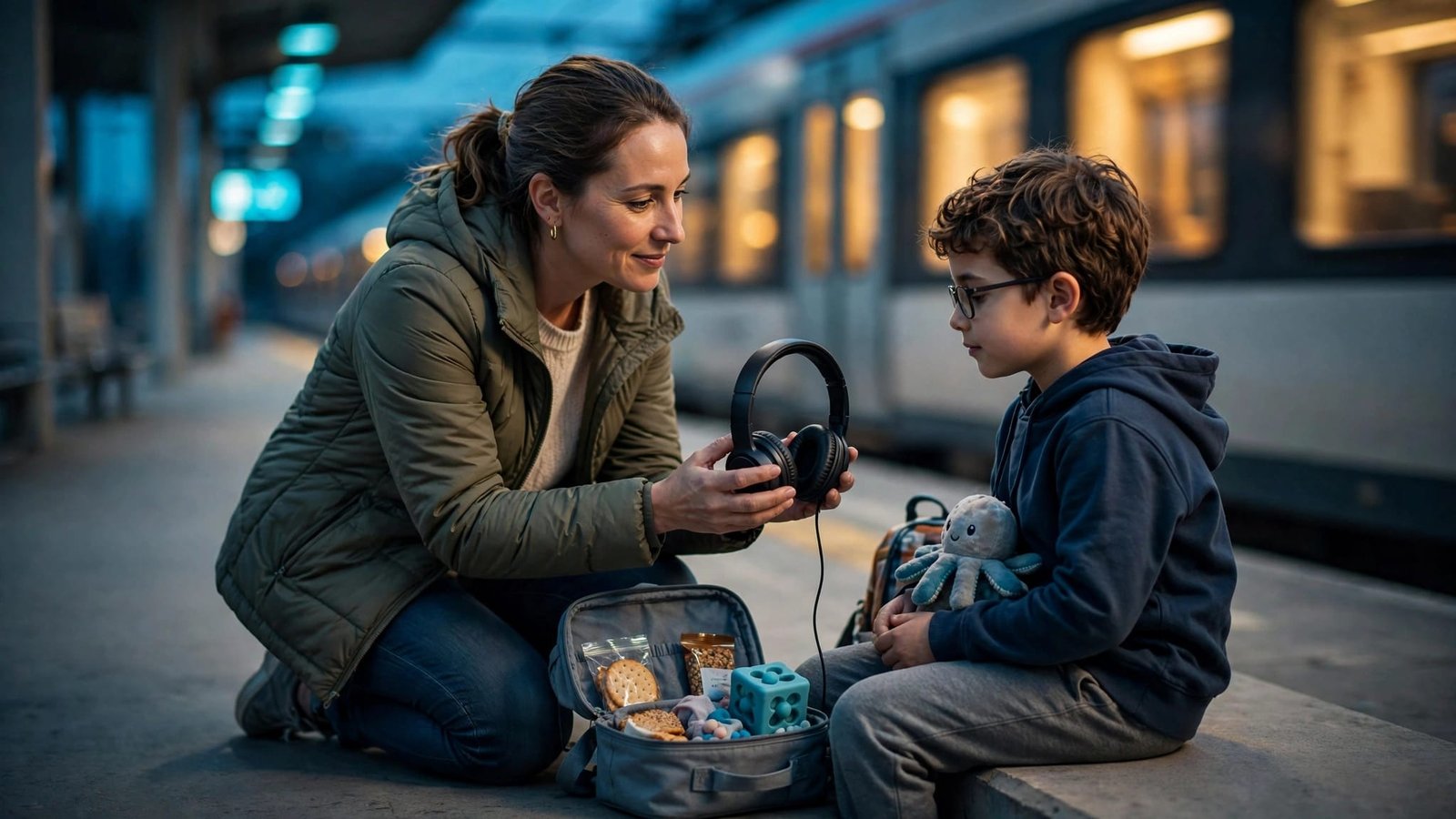
A train trip can be a comfortable family adventure when the plan fits your child’s needs. Sensory-friendly travel adapts the day to your child rather than treating the trip as a test of endurance. Children with sensory processing differences may respond differently to noise, crowds, movement, and change.
Trains can offer more space than a car, fewer restrictions than an airport, and more flexibility than other forms of public transportation. Still, platforms, loud announcements, crowded aisles, and schedule changes can feel like a lot. A little preparation can make the whole trip feel more manageable.
Key Takeaways
- Plan around your child’s sensory needs, strengths, routines, and likely stress points.
- Choose direct routes, suitable travel times, reserved seats, and assistance options to reduce surprises.
- Pack a sensory travel kit with headphones, familiar snacks, comfort items, communication tools, medication, and backup clothing.
- Arrive early, break the station visit into small steps, and make bathroom, food, movement, and reset breaks part of the plan.
- Delays and changes are easier to manage when adults use calm, simple explanations and focus on one next step.
Why Trains Can Feel Easier for Some Autistic Families
Train travel isn’t always quiet or comfortable, but it can be an option for families seeking sensory-friendly travel. Compared with flying or driving, public transportation by train can give families more control. You can usually move around, visit the restroom when needed, bring familiar food, and look out the window together.
There is more room to reset
A child who needs movement may be more comfortable on a train than in a car seat for hours. Many trains have space to stand, stretch, walk a short distance, or switch seats if the area is calm.
You also do not have the same security routine, gate process, and long time seated in one place that comes with many flights. That does not mean trains are quiet. It means there are often more ways to take a break.
The route can be easier to explain
A simple travel story and visual sequence can make a big difference:
- We drive to the station.
- We wait for the train.
- We find our seats.
- The train moves.
- We get off at our stop.
Use photos of train stations, the train, and your hotel when possible. A child does not need every detail at once. They only need to know what happens next.
Start With Your Child’s Travel Needs
No two children travel the same way. One child may love the sound and movement of a train. Another may feel upset by a sudden announcement or a busy boarding line.
Think about the hard parts before booking. Is it waiting? Noise? Hunger? Unfamiliar bathrooms? Changes in routine? Knowing the biggest stress points helps you make a better plan.
Notice sensory triggers without judgment
Common train travel sensory triggers include bright station lights, screeching brakes, strong food smells, crowded platforms, loudspeaker announcements, and people moving close by.
Some children also struggle with body awareness during motion because of sensory processing differences. Rocking movement may feel calming for one child and upsetting for another. Heat, thirst, motion sickness, and bathroom needs can make sensory sensitivities harder to manage. When several needs go unmet, sensory overload can build quickly.
Write down what helps at home, school, or in stores. Autistic children may need different supports, and those same strategies often work while traveling.
Build around strengths too
Does your child love schedules, maps, vehicles, snacks, music, or watching scenery pass by? Bring that interest into the trip.
A child who likes trains may enjoy tracking stops on a simple printed route. A visual schedule can show what happens next without listing every detail. A child who loves a favorite show may be happy with downloaded episodes and headphones. A familiar routine can make an unfamiliar place feel less overwhelming.
The goal is not a perfect train day. The goal is a trip where your child feels safe, supported, and heard.
Book Autism-Friendly Train Travel With Fewer Surprises
The booking stage is where you can prevent many stressful moments. Choose the most direct route you can afford, even if a cheaper option has more connections. Journey planner apps can help you compare routes and check accessibility information.
A transfer may look simple on paper. In real life, it can mean passing through ticket barriers, finding a new platform, and boarding another train quickly in an unfamiliar station.
Pick times that fit your family
Mid-morning or early afternoon departures may be easier than a rushed early morning trip. Off-peak hours may help you avoid the busiest departures, but stations and trains can still be busy. Avoid booking close to nap time, bedtime, or the time your child usually eats.
Look at the arrival time too. A late arrival can feel harder when everyone is tired and trying to find transportation or check into a hotel.
If you have a choice, book a train with fewer changes. One longer ride is often easier than two short rides with a busy station transfer in the middle.
Reserve seats when available
A seat reservation removes one uncertainty for your child and helps your family choose seats together. Consider what your child prefers.
A window seat can provide a calming visual focus. An aisle seat can feel better for a child who needs room to stand. Seats near a restroom may help some families, while others may prefer a quiet carriage or a quieter section farther away. Availability and policies vary by operator.
For families traveling in the United States, Amtrak has accessible travel reservation information for autistic travelers and others with disability-related needs. Call before travel if your family needs help choosing an accessible seat or space.
Ask for Assistance Before You Leave Home
You do not have to figure out every step alone at the station. Across the public transport network, rail systems often support autistic travelers and passengers with visible and non-visible disabilities.
In the United Kingdom, Passenger Assist through Great Western Railway can help with meeting your family, getting to the platform, boarding, connections, and getting off the train. The service asks for at least two hours’ notice when possible.
Tell staff what would help
You do not need to share your child’s full medical history. Keep the request short and practical.
You might say, “My child has autism and may need extra time during boarding.” Or, “We need help finding the correct platform because unexpected changes are difficult.”
Ask about:
- Early or calmer boarding options when they are available.
- The best place to wait before the train arrives.
- Help with a tight connection or unexpected platform changes.
- Whether someone can help your family navigate ticket barriers.
- Elevator locations and accessible restrooms.
- Whether staff can let you know before a major change.
The National Autistic Society’s train and bus guidance also explains that some eligible travelers in England may qualify for a Disabled Persons Railcard, which can reduce ticket costs.
Recognized accessibility or autism-support programs, such as the Autism Friendly Award, can make assistance easier to identify. Information from the National Autistic Society can help you find them, but accommodations still vary by station and train.
A hidden disability lanyard may help
Some families use a sunflower lanyard or another discreet identifier. It can signal that someone in the group may need patience or assistance.
A lanyard is never required. Your child does not need to wear something that makes them uncomfortable. It is simply one option for families who feel it could make communication easier.
Make the Train Station More Predictable
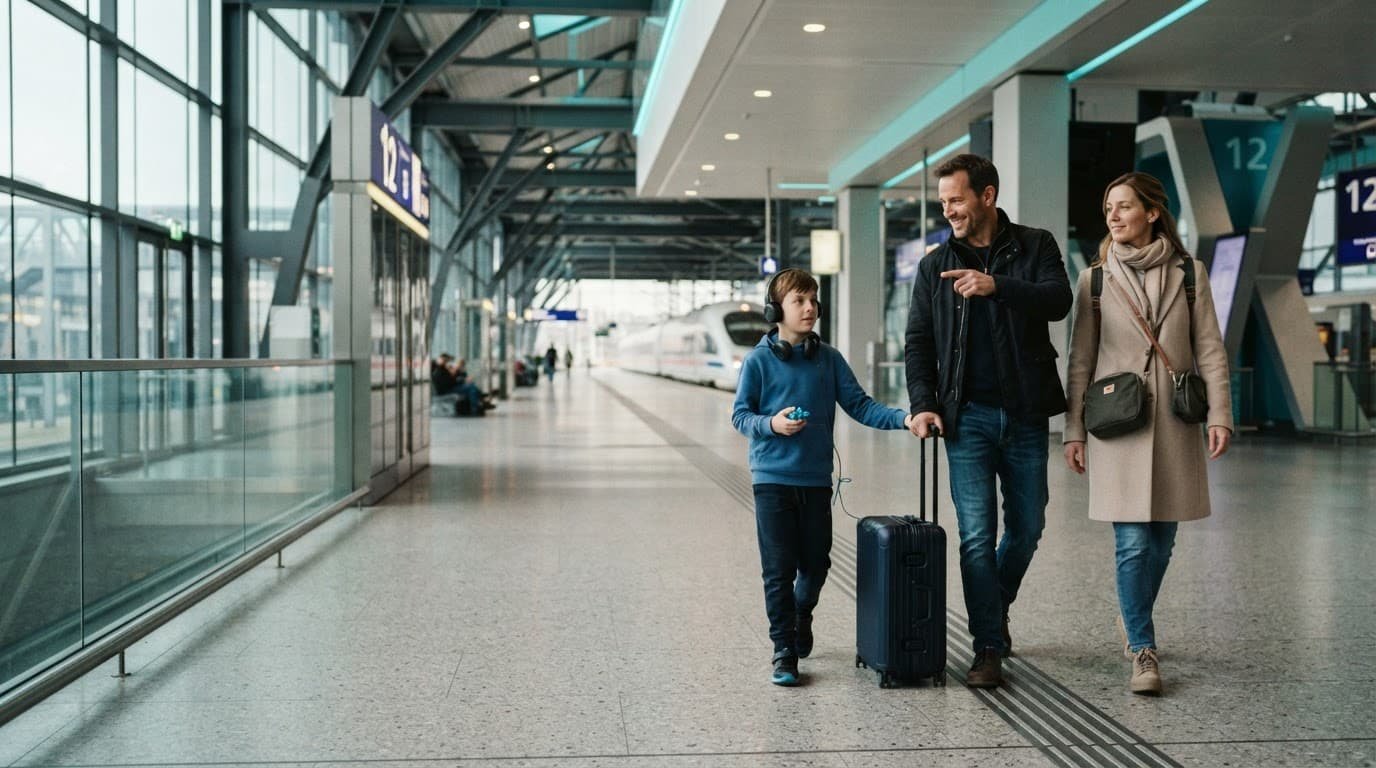
Arriving early is not about standing around longer. It gives your family time to find the restroom, buy a drink, locate the platform, navigate ticket barriers, and settle before boarding starts.
Aim for enough time to handle one unexpected problem without panic. For many families, that may mean arriving 30 to 45 minutes early at a familiar station, and longer at large or unfamiliar train stations.
Walk the route in small steps
Break the station visit into short tasks. First, find the bathroom. Next, find the platform. Then choose a calmer place to wait.
Do not keep moving just because there is time. If your child finds a bench away from the crowd and starts to regulate, stay there until it is time to board.
If possible, show your child the departure boards from a distance. Explain that the platform number may change. Use simple language: “Sometimes the train leaves from a different place. We will check together.”
Prepare for loud announcements
Station speakers can be sudden and sharp. Noise-canceling headphones or ear defenders can help before your child becomes overwhelmed.
Great Western Railway has earned a National Autistic Society Autism Friendly Award. The Autism Friendly Award reflects autism-focused resources, but it doesn’t guarantee identical support at every location.
Even at a station without formal autism-friendly programs, staff can often point you toward a quieter waiting area.
Pack a Sensory Travel Kit You Can Reach Fast
Keep the important items in one small backpack or pouch. This supports sensory-friendly travel when your child needs a break. Do not bury headphones under snacks, jackets, and extra clothes. When a child is getting overwhelmed, you need to find support items quickly.
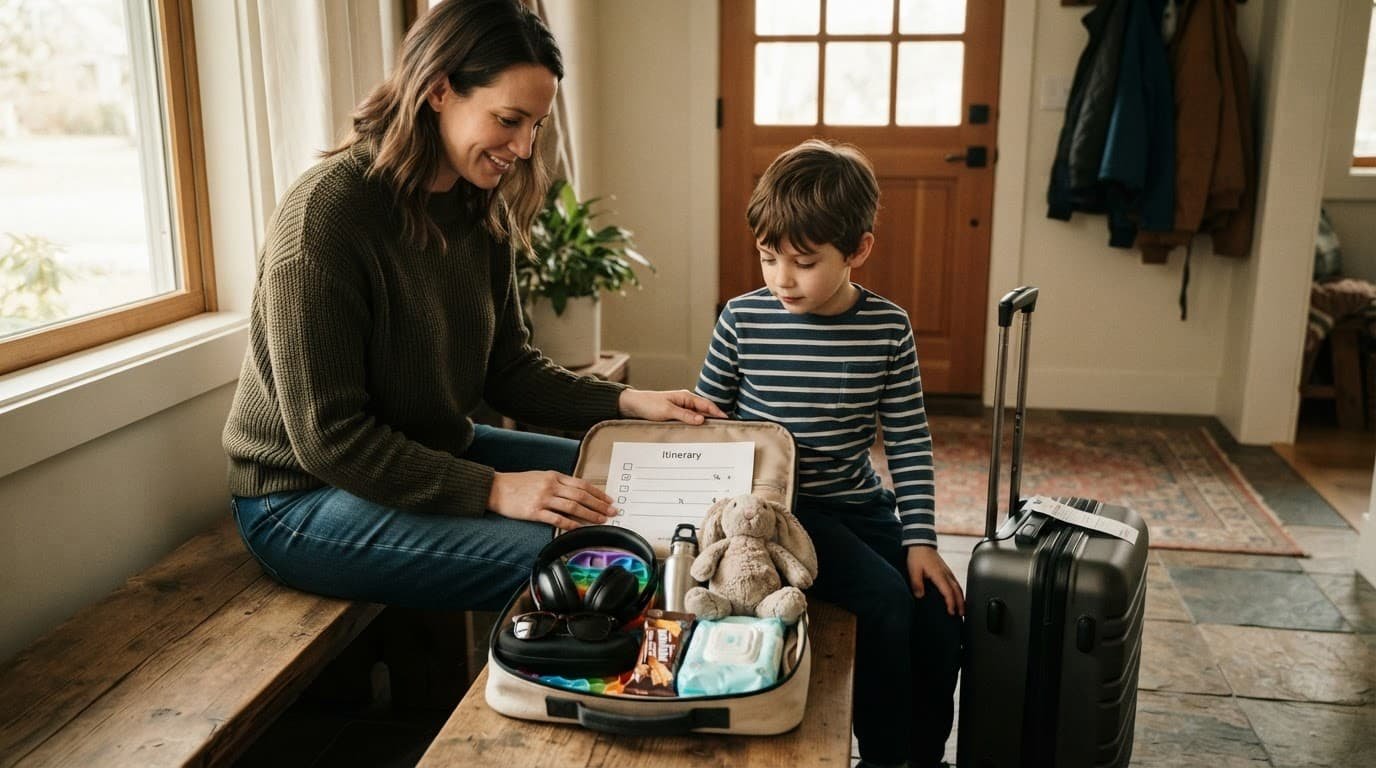
A helpful sensory travel kit may include:
- Noise-canceling headphones or ear defenders.
- Sunglasses or a hat for bright platforms and windows.
- Familiar snacks and a refillable water bottle.
- A comfort item, stimming toys, a chewy, or a weighted lap pad if your child uses one.
- Wipes, hand sanitizer, tissues, and a small change of clothes.
- Medication, medical supplies, and a written medication list.
- A charged tablet, communication device, portable battery, and charging cable.
- A low-tech communication backup, such as picture cards or a short needs card.
Families often remember the tablet and forget the charging cable. Keep both in the same pouch every trip.
For extra travel basics, Trip Rescue Shop has practical family travel items, including strollers, cleaning supplies, and items that can help when someone gets sick away from home.
Choose a Seat That Supports Your Child
The right seat can change the feel of the ride. Once you board, get settled before opening snacks, devices, and bags. Too many decisions at once can make boarding harder.
Think about noise, motion, and exits
Seats near train doors may have more foot traffic and boarding noise. Seats near restrooms may bring more people past your row. A middle-of-car seat may feel calmer for some families.
A seat reservation can keep you near a caregiver, close to an easier exit, or facing your preferred direction of travel.
A child who worries about getting off may feel better sitting where they can see a parent easily. If motion sickness is a concern, look for a forward-facing seat when available.
Keep your bag under the seat or in one easy location. A crowded seat area can make a child feel boxed in.
Use movement before frustration builds
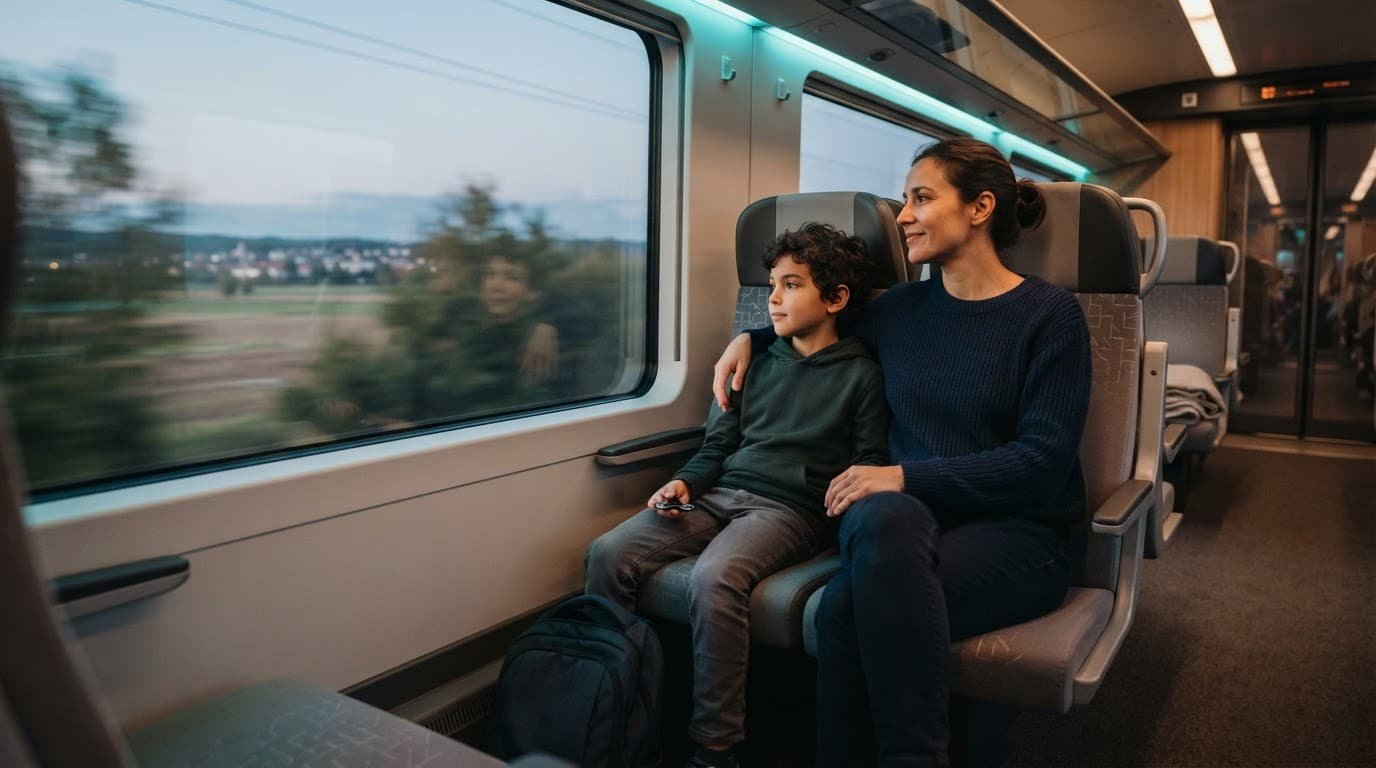
Do not wait for a full sensory overload before offering a reset. A quick walk to the restroom, a drink of water, or standing by the door area for a moment may help.
If your child is stimming, humming, rocking, using headphones, or watching a familiar video, those supports may be helping them stay regulated. You do not need to stop a safe coping tool because another passenger looks curious.
Keep Food, Bathroom Breaks, and Comfort Simple
Travel days aren’t the best time to introduce new foods or routines. Bring foods your child already eats, along with familiar drinks.
Station restaurants can have long lines, unfamiliar smells, and limited choices. A familiar snack can keep a small hunger problem from becoming a major stressor.
Plan for bathroom needs early
Use the restroom before boarding, even if your child says they don’t need to go. If helpful, show them where the train restroom is once you’re onboard.
Some children dislike train bathrooms because they’re small, loud, or move with the train. Let them know that’s okay. Offer a calm bathroom break at a station stop when the timing works.
Bring wipes, extra underwear, disposable bags, and a change of clothing. This isn’t negative planning. It’s family travel peace of mind.
Make meals a break, not another task
Keep food choices simple. A familiar snack, water, and a quiet activity may be enough for a short trip.
For longer rides, pack more food and drinks than you think you’ll need. Delays happen. Food carts may not have familiar options, and some trains don’t offer food service at all.
Handle Delays and Schedule Changes Calmly
Late trains or platform changes can be the hardest part of autism-friendly train travel, especially in busy train stations. You cannot control every change, but you can prepare your family for what happens next.
Use a simple phrase ahead of time: “Sometimes travel plans change. When they change, we will check the departure boards, ask for help with ticket barriers, and choose the next step.”
Do not overload your child with explanations
When a delay happens, adults often start talking quickly. Rushed explanations can increase travel anxiety and uncertainty, so keep the message short.
Say, “The train is late. We are still safe. We will sit here and have a snack.” Then offer a concrete activity.
Avoid promising an exact time unless you have confirmed information. A new delay can feel worse after a promise is broken.
Create a reset plan before travel day
Decide how your family will respond if your child needs a break. Choose a signal, a picture card, or a phrase such as “quiet break.”
Your reset plan may include headphones, water, a comfort item, a familiar video, or a short walk with one caregiver. If you are traveling with more than one adult, agree ahead of time who stays with luggage and who supports your child.
A delay is easier when your child hears one calm plan instead of several worried conversations.
Help Staff and Fellow Passengers Support Your Family
Most people want to help, but they may not know what your child needs. A brief explanation can ease pressure.
You might say, “He is overwhelmed by the noise, but he is safe.” Or, “She uses her headphones to stay comfortable.”
You don’t need to apologize for your child’s disability, stimming, communication style, or need for a break. These can be important supports that help your child feel safe.
Ask for space when you need it
If someone is crowding your child or engaging when they need quiet, use clear words: “Thank you, but we need some space right now.”
Train staff can be a helpful first point of contact if your family needs a quieter place to wait, boarding assistance, or support during a disruption.
A warm interaction can also help a child feel safer during a new experience.
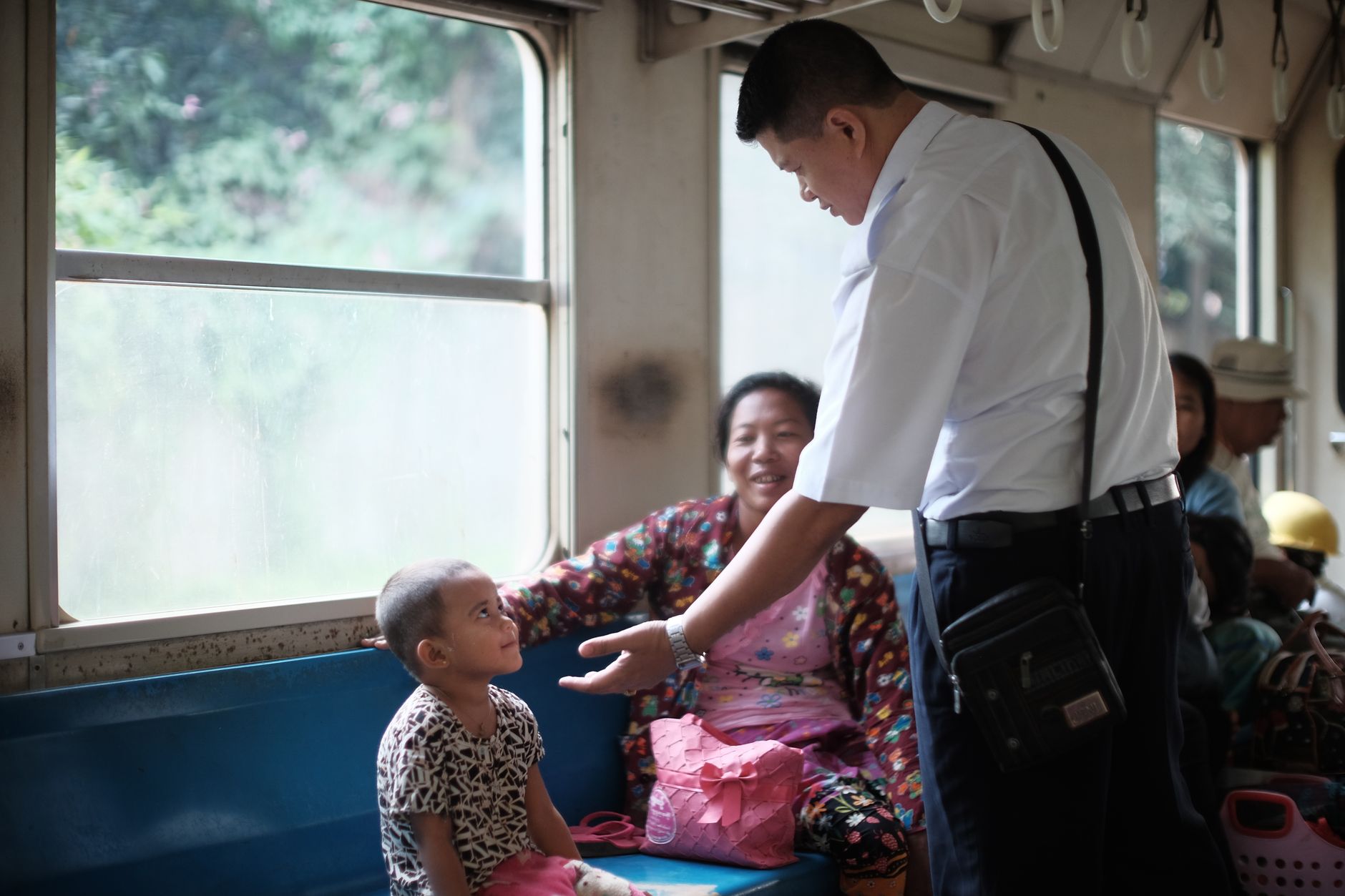
Photo by SAM MAJID
Add Train Travel to Your Disney Planning
A train trip can be part of a bigger family vacation, including a Disney trip. Treat the ride as its own part of the vacation plan, not just transportation you have to get through.
Bring the same supports you would use for a park day. For sensory-friendly travel, pack headphones, safe snacks, a charged device, communication tools, wipes, and a backup outfit. A portable charger is especially helpful when your phone holds tickets, hotel details, maps, public transportation information, and family messages.
For more support with sensory needs, breaks, and accessible Disney planning, families can find the Disney World with Autism Guide on Etsy or the Disney autism travel guide on Amazon.
A slower travel day can set the tone for the rest of the vacation. You do not need to arrive at your destination already exhausted.
Frequently Asked Questions
How can I make train travel easier for my autistic child?
Start by identifying your child’s biggest triggers, such as noise, crowds, waiting, hunger, or unfamiliar bathrooms. Use familiar supports, a simple visual sequence, and a flexible plan that includes breaks.
What should I pack for an autism-friendly train trip?
Pack noise-canceling headphones or ear defenders, familiar snacks and drinks, a comfort item, communication tools, medication, wipes, and a change of clothes. Keep these items in one easy-to-reach bag, along with a charged device and its charging cable.
Should I reserve seats on the train?
Reserve seats when available so your family knows where you will sit and can stay together. Consider whether your child would do better with a window seat, an aisle seat, a seat near the restroom, or a quieter area.
Can train staff help autistic passengers?
Many rail systems offer assistance with platforms, boarding, connections, ticket barriers, and unexpected changes. Contact the train operator before travel, explain the practical support your family needs, and ask about notice requirements.
What should we do if the train is delayed or the platform changes?
Keep the explanation short: tell your child what changed, reassure them that they are safe, and give them one clear next step. Use your reset plan, such as headphones, a snack, a familiar video, water, or a quiet place to wait.
A Better Train Trip Starts With a Flexible Plan
A more manageable train journey starts with a clear plan and permission to change it. Plan a seat reservation when you can, pack familiar supports, arrive with extra time, and ask for help before you’re in crisis mode.
One missed connection or unexpected delay doesn’t ruin the trip. Preparation reduces uncertainty, but realistic planning helps you adapt when train travel changes. A calm adult, a comfort item, and one simple next step can bring the day back to a place your child can handle.