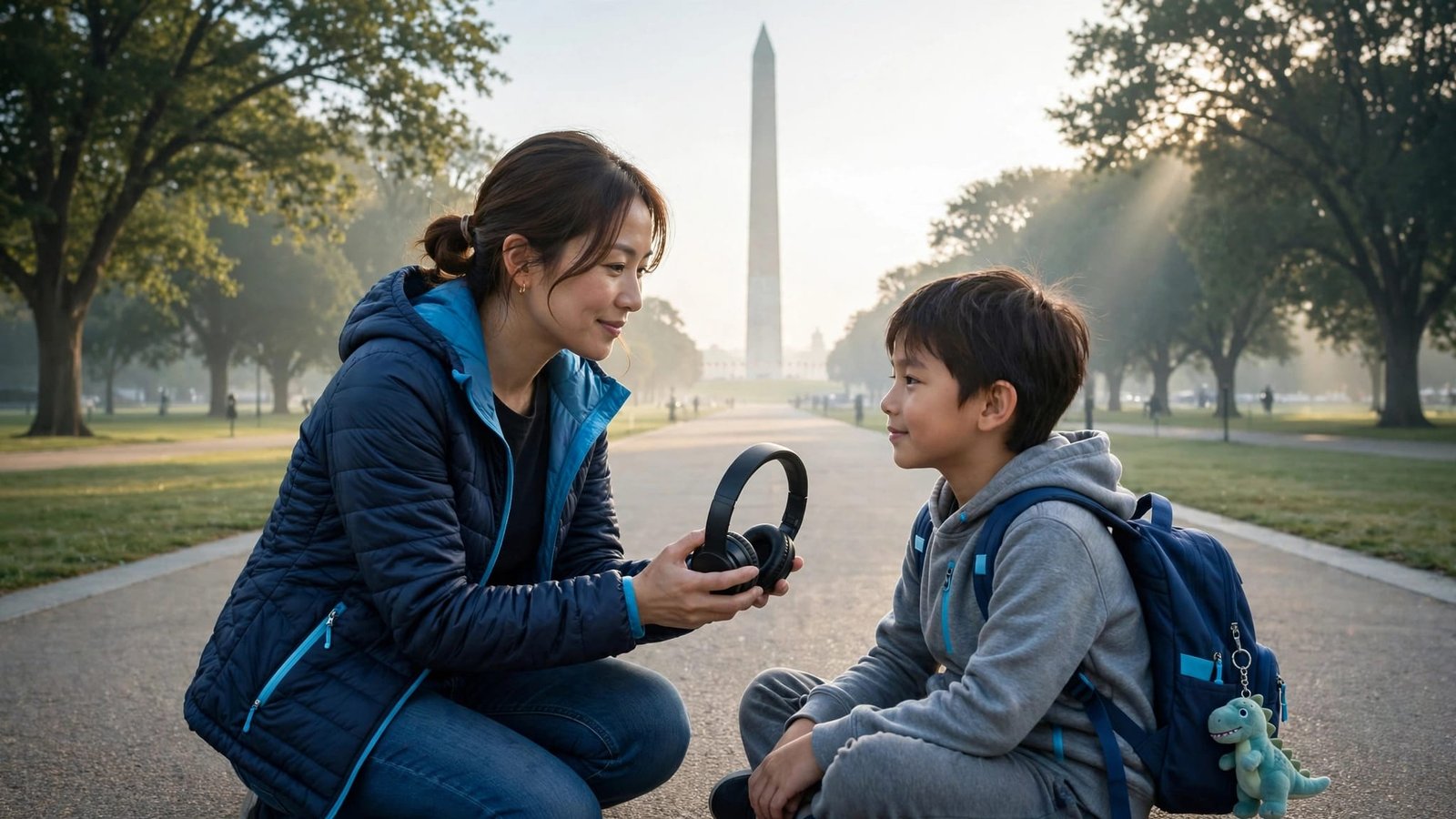
A Washington, DC trip can be exciting, busy, loud, and full of changes. An autism friendly Washington DC vacation can feel different for each traveler because sensory sensitivities affect responses to noise, crowds, transitions, and uncertainty.
Autistic individuals may have different preferences and needs, as can people with sensory processing disorders. You do not need to see every museum, monument, or show to have a meaningful trip. A calm child, a rested parent, and one great memory are enough. Start with a plan that leaves room for real life.
Key Takeaways
- Plan fewer daily priorities and leave room for breaks, schedule changes, and your child’s energy level.
- Choose a hotel that supports downtime, familiar food, early bedtimes, and easy transportation when possible.
- Prepare for museums, transportation, performances, and other attractions with visual schedules, social stories, comfort items, and current accessibility information.
- Sensory-friendly performances, museum programs, movie screenings, sensory bags, and quiet spaces can make outings more manageable, but supports vary by date and venue.
- Verify hours, reservations, sensory adjustments, transportation conditions, and accessibility policies with official sources before you travel.
Planning an autism friendly Washington DC family vacation
Washington, DC has many free museums, wide open spaces, and family attractions. It also has security lines, crowds, traffic, long walks, and busy Metro stations. The goal isn’t to avoid every challenge. It’s to make challenges feel more manageable.
Pick fewer daily priorities
Choose one main attraction each morning. Add one smaller activity if everyone still has energy. A packed schedule can look good on paper, but it can become stressful before lunch.
Ask your child what matters most. It may be dinosaurs, spy gadgets, a favorite snack, trains, or seeing the Lincoln Memorial. Let that answer shape the day.
A successful DC vacation doesn’t depend on checking off every landmark. It depends on making room for your child to feel safe, heard, and included.
Prepare for the parts that are hard to see
Review pre-visit materials, such as attraction photos, maps, menus, calendars, and route information. Tell your child what comes next in short steps: “We will ride the train, walk into the museum, have a snack, then decide what to do next.”
Bring a visual schedule if changes are difficult, but it isn’t necessary for every child. A phone note with photos can work well. A social story can preview transportation, museum entry, security, and breaks. So can a simple printed card with “hotel,” “Metro,” “museum,” “lunch,” and “break.”
Choose a hotel that makes breaks possible
Your hotel is more than a place to sleep. It gives your family space to reset after a museum, change wet clothes, eat familiar food, and enjoy quiet time after a long day.
A room near a Metro station may reduce driving and parking stress. A hotel with a refrigerator can help with familiar breakfasts, preferred drinks, medication storage, and snacks.
Ask the hotel the questions that matter
Before booking, ask about the actual room setup and confirm the hotel’s current policies. Check bed types, elevator access, nearby street or ice machine noise, refrigerator availability, and the distance from the room to the lobby.
You can request a quieter room away from elevators. Hotels may not be able to guarantee a specific room location, but asking is still worthwhile.
Families who need more space may prefer a suite, an extended-stay hotel, or a vacation rental with a kitchenette. Separate sleep areas can make a big difference when one child needs an early bedtime.
Build in hotel time without guilt
A midday return is not wasted vacation time. It may help your family enjoy dinner, an evening monument view, or another outing the next day.
Plan one slower afternoon after two busy sightseeing days. Use it for swimming, laundry, a favorite movie, room service, or no plans at all.
Getting around DC with less transportation stress
Walking is part of a Washington, DC vacation, but it does not have to be the whole vacation. Plan transportation before the day begins, especially if your child becomes upset during unexpected route changes.
Metro can be useful for families who enjoy trains and predictable stops. Rush hour can bring crowds and noise, so avoid the busiest commute times when possible. Before traveling, check the official WMATA site for service changes, elevator status, and transfer information.
Check elevators before leaving the hotel
WMATA says all Metrorail stations have elevators, but outages can change the route you planned. Check Metro accessibility information before heading out, especially if you use a stroller, wheelchair, or mobility device.
Give your child a simple preview before boarding with a visual schedule. Show how many stops you will ride, whether you need to transfer, and what the station may look like when you get off. Confirm the route and any planned transfers on WMATA before leaving the hotel.
If trains are too much one day, use a rideshare, taxi, or private car. Plan these alternate transportation options before travel when possible. A transportation change is not a failure. It is a reset.
Consider MetroAccess early if it fits your needs
Visitors who cannot use accessible rail or bus service may qualify for temporary MetroAccess service, but eligibility and visitor procedures must be confirmed with WMATA. Rides also require advance reservations.
This option is not right for every family, but it can help travelers with disabilities who need door-to-door transportation. Read the rules before you book your vacation so you are not trying to solve transportation needs after arrival.
Smithsonian museums offer free time and flexible choices
The Smithsonian museums are one of the best parts of a DC family trip. You can enter for a short visit, take a break outside, and return another day without feeling like you wasted an expensive ticket.
Not every museum will fit every child. Pick a theme that feels interesting, look for possible quiet areas before entering, and leave before everyone is worn out. Availability differs by museum, and large spaces can still be bright, crowded, and noisy for children with sensory sensitivities.
Look for museum programs and accommodations
The Smithsonian’s accessibility programs include support for visitors with disabilities and family programs that respect sensory processing and cognitive differences. Check for pre-visit materials, such as maps, entrance details, security expectations, and program information. Review a social story only when that museum provides current materials.
Access Smithsonian lists Morning at the Museum as a sensory-friendly program for families. It is currently listed as on hiatus, so check the current Access Smithsonian calendar. Confirm hours, reservations, and accessibility information on official Smithsonian pages.
Many Smithsonian locations offer free manual wheelchairs on a first-come basis. Assistive listening devices and other accommodations may also be available. Contact the museum before your visit to ask about support, accommodations, and whether it currently offers sensory friendly hours.
Choose one museum, not the entire Mall
The National Museum of Natural History may be a good fit for children who love animals, fossils, and gems. The National Air and Space Museum can be exciting for travelers who enjoy planes, rockets, and hands-on displays.
The National Museum of the American Indian has accessible entrances, elevators, and nearby Metro access. It can be a good choice when your family wants a museum visit without trying to cover the full National Mall.
Pack water, snacks, noise canceling headphones, and a comfort item. Museums can feel calm at first, then become overwhelming when school groups arrive.
The International Spy Museum needs a slower approach
The International Spy Museum is popular with older children, teens, and adults who enjoy missions, codes, gadgets, and interactive exhibits. It can also feel more stimulating than many traditional museums.
Sounds, screens, shadows, and hands-on activities are part of the experience. That can excite one child and overwhelm another.
The museum recommends noise canceling headphones or earplugs for visitors with sound sensitivity. It also suggests visiting during shoulder hours or quieter weekdays, especially during the off-season. If current visitor materials are available, use them to build a social story before your visit.
Watch for neurodivergent community days
The museum hosts special neurodivergent community programs on select dates for autistic visitors and neurodivergent individuals. Participants can have different sensory needs, so review the details for each program.
These programs may offer a more comfortable way to visit, but dates and registration details change. Don’t assume sensory sensitive days are offered regularly; verify current neurodivergent program dates and registration requirements directly with the museum. Check the International Spy Museum’s official calendar for date-specific adjustments, ticket rules, and exit or break options before purchasing regular admission tickets.
If you visit on a standard day, set a short goal. Try one gallery, one mission, or one favorite exhibit. You can always leave while the experience is still positive.
Sensory-friendly performances at the Kennedy Center and Ford’s Theatre
Live performances can be a wonderful family memory. They can also bring darkness, applause, loud music, crowds, and long periods of sitting. Sensory friendly performances can offer more flexibility for autistic individuals, people on the autism spectrum, and some travelers with developmental disabilities.
The Kennedy Center is at 2700 F Street NW and offers sensory-friendly performances for people with autism, sensory sensitivities, and cognitive or learning disabilities.
What changes at a sensory-friendly show?
At some sensory friendly performances, sound levels may be lower, house lights may stay on, and intense lighting effects may be reduced. These adjustments vary by show, as can audience movement, seating, quiet spaces, and break procedures.
The Kennedy Center may provide a social story and sensory map to help families prepare. Review the show-specific social story before arrival, when available. Ask whether quiet areas or movement space are available for your specific performance.
Call the Kennedy Center accessibility office at 202-416-8727 if you have questions about an upcoming performance. Ask about the exact show, seating, quiet rooms, and arrival or break procedures before purchasing tickets.
Ford’s Theatre offers select sensory dates
Ford’s Theatre has held sensory-friendly performances and museum experiences for guests with sensory needs, and families traveling with someone with developmental disabilities may benefit from advance information. Review Ford’s Theatre accessibility updates and contact the theater to verify the exact performance before purchasing tickets.
Don’t assume all accessible shows include the same sensory changes. Ask what is adjusted for the date you’re considering, including lighting, sound, audience movement, seating, and break procedures.
Sports, movies, and active family fun
A sports game or movie can be easier than a full museum day because the outing has one clear focus. Still, crowds, announcements, bright screens, and long lines can build quickly.
Choose an event because your child will enjoy it, not because it is on a typical DC vacation list.
Capital One Arena and Audi Field sensory supports
Capital One Arena is a KultureCity-certified sensory-inclusive facility. Families can ask Guest Services about borrowing sensory bags with noise canceling headphones, fidget tools, and other helpful items.
Audi Field also has sensory bags available at the main Guest Services location near Gate A. Its sensory room is on the rooftop of the Heineken Tower near Gate A.
Programs and access details can change by event, and certification as a sensory-inclusive facility doesn’t guarantee identical supports. Call before game day to verify whether sensory bags are available and what they contain. Ask whether the sensory room is open, and confirm checkout requirements, event policies, and current schedules.
KultureCity also shares information about sensory accessibility and inclusion at public venues.
Find a sensory-friendly movie screening
AMC offers sensory-friendly films with lower sound, brighter lights, and freedom to move, dance, or make noise. Family-friendly screenings are generally held on the second and fourth Saturday of each month, but local schedules can change.
Alamo Drafthouse also offers Alamo for All screenings, with lights up, sound down, and a more relaxed expectation around movement and talking. Check the local theater calendar before you go.
A movie can be a good late-afternoon option after a busy morning. Bring fidget tools and headphones anyway. Even a lower-volume screening may still feel loud during previews.
Meals, breaks, and a travel bag that works
Food can become the hardest part of a vacation when a child is hungry, tired, or facing unfamiliar choices. Families preparing disability-related or special needs supports should figure out lunch early.
Keep familiar snacks with you. Granola bars, crackers, fruit snacks, applesauce pouches, and preferred drinks can help. They can bridge the gap when a restaurant is crowded or the menu does not work.
Make meals flexible
Eat lunch early or late to avoid the busiest time. Quick-service meals offer more control, letting you review the menu and choose quieter seating.
Outdoor tables may be easier than loud dining rooms. If your child has safe foods, buy them at a grocery store after arrival. A familiar breakfast can start the day on a calmer note.
Do not force a restaurant experience because it was part of the plan. A picnic near the Mall or dinner back at the hotel can be a better choice.
Pack the items your child already uses
A travel bag should hold comfort, safety, and backup supplies. Keep the most important items in the same place every day.
Some venues offer sensory bags, but availability varies, so bring the items your child already uses.
- Bring noise canceling headphones, fidget tools, a comfort item, familiar snacks, water, wipes, sunscreen, and medication.
- Keep a portable charger and charging cable together because your phone may hold maps, tickets, and family messages.
- Pack an extra shirt, socks, and a small cleanup kit for spills, illness, or an unexpected change of clothes.
- Consider a stroller or mobility option if long walks lead to fatigue, even for an older child.
You can find travel basics, strollers, and cleanup supplies at the Trip Rescue Shop. The right supplies do not make every hard moment disappear, but they can make recovery faster.
A realistic three-day DC itinerary for families
A flexible itinerary gives your family choices without filling every hour. Use this as a starting point, and make a visual schedule your child can check throughout the day. Adjust it around your child’s interests and energy.
Before finalizing, confirm current attraction hours, museum ticket requirements, performance dates, and movie schedules.
Day one: Settle in and keep it simple
Arrive, check into the hotel, and unpack comfort items first. Review a social story about the hotel or first outing.
Take a short walk near your hotel, find a grocery store, and choose an easy dinner.
If everyone has energy, visit one outdoor monument after dark. The Lincoln Memorial, Washington Monument grounds, or the White House area can be viewed from outside without committing to a long activity.
Day two: One museum and a real break
Visit one Smithsonian museum early in the morning. Leave before lunch, even if you have not seen everything.
Eat somewhere quiet, return to the hotel for downtime, then decide if an evening walk or a screening of sensory-friendly films feels right. It is okay if the answer is no.
Day three: Choose your family’s main event
Book the International Spy Museum, a Kennedy Center sensory-friendly performance, a sports event, or another attraction your child has been looking forward to.
Keep the rest of the day open. This is also a good day for souvenirs, a favorite snack, or revisiting one museum exhibit your child loved.
Extra support for future autism-friendly travel
The planning skills that help in Washington, DC can support autistic individuals on any family vacation. A visual schedule, portable charger, familiar food, flexible expectations, and room for breaks matter at museums, airports, resorts, and theme parks. Families traveling with someone with developmental disabilities may also benefit from checking access details before leaving home.
If Disney World is also on your family’s travel list, the Disney World With Autism Guide on Etsy shares parent-focused ideas for park days, accessibility needs, and calmer breaks. The guide is also available through Amazon.
You do not need every paid add-on, every attraction, or every reservation to make a trip special. A plan is helpful when it supports your family, not when it becomes another source of pressure.
Frequently Asked Questions
What is a sensory-friendly performance?
A sensory-friendly performance may include lower sound levels, brighter house lights, reduced lighting effects, and more flexibility for movement or breaks. Adjustments vary by show, so ask the venue what will change for the specific performance.
Does the Kennedy Center offer sensory-friendly performances?
Yes, the Kennedy Center offers sensory-friendly performances for people with autism, sensory sensitivities, and cognitive or learning disabilities. Review the show-specific information and contact the accessibility office at 202-416-8727 with questions about seating, quiet areas, and break procedures.
Does Ford’s Theatre offer sensory-friendly events?
Ford’s Theatre has held select sensory-friendly performances and museum experiences. Dates and accommodations can change, so contact the theater and confirm the exact sensory adjustments before purchasing tickets.
How can families prepare for a sensory-friendly show?
Review a social story, sensory map, seating information, and arrival instructions when they are available. Bring familiar supports such as noise-canceling headphones, fidget tools, and a comfort item, and ask about quiet spaces or movement areas in advance.
What should families do if an outing becomes overwhelming?
Leave early, return to the hotel, or switch to a quieter activity without treating the change as a failure. A flexible plan with familiar snacks, transportation alternatives, and scheduled downtime can help everyone recover and enjoy the rest of the trip.
Final thoughts
An autism-friendly DC trip starts with permission to slow down. Choose fewer attractions, prepare for transitions, carry familiar supports, and protect your family’s time to rest.
The monuments will still be there tomorrow. Your family’s comfort comes first, and that is what makes space for the memories you came to make.
Hours, sensory programs, accessibility policies, reservations, and transportation conditions can change. Verify them on official websites before travel.