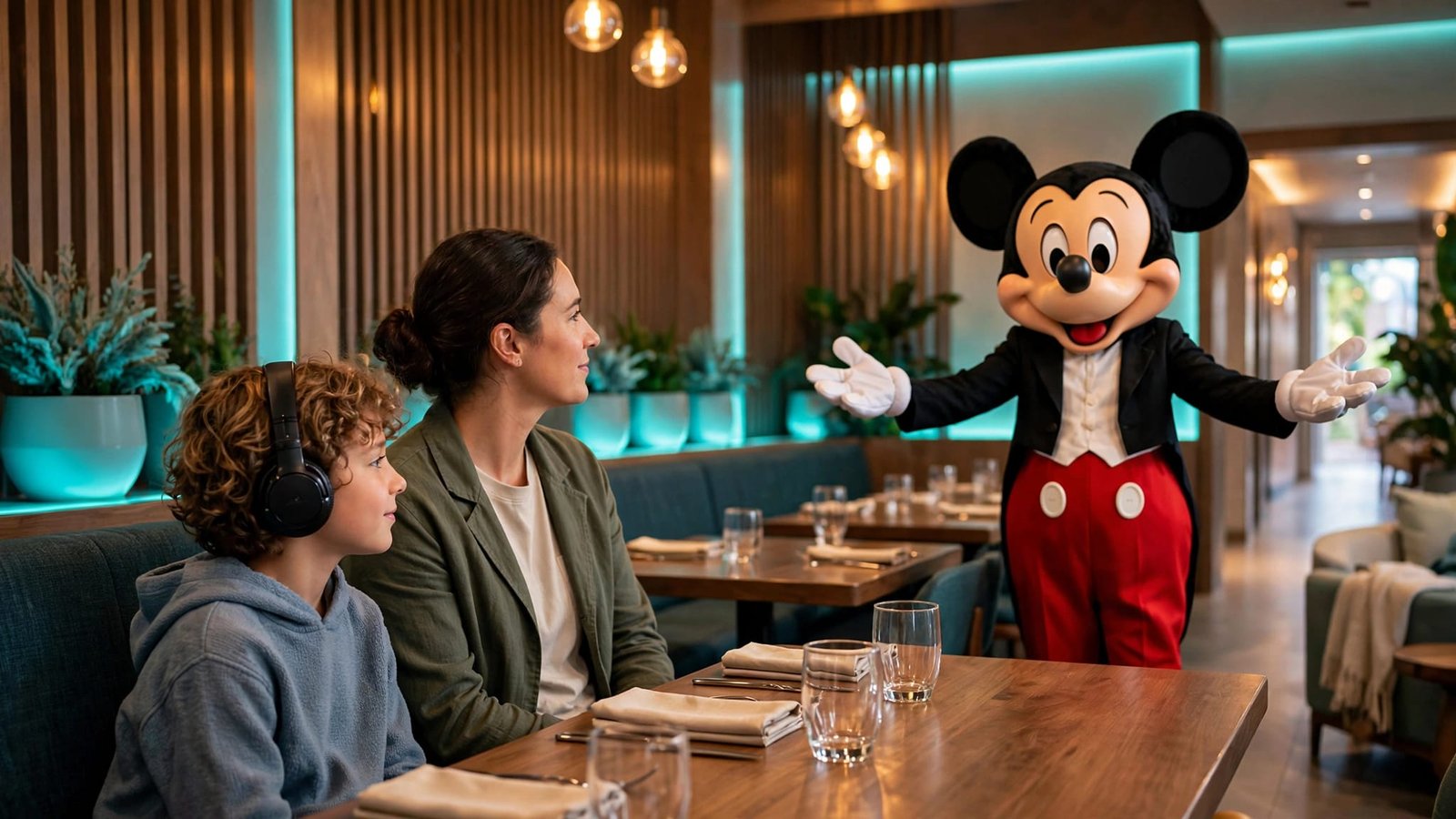
A character meal can become a happy Disney memory, but it may not suit every child. At Walt Disney World, surprise hugs, high-fives, loud music, or a close approach can quickly feel like too much.
Disney character dining autism planning works best when personal space is part of the plan from the beginning. Character meals may offer a calmer alternative to traditional character meets, but preferences should be shared before the visit.
Unless your family communicates those preferences, hugs, high-fives, and close approaches may happen. Staff and characters may not be able to guarantee a completely touch-free experience, so Disney character dining autism planning should include choice, personal space, and a safe exit plan.
This guide focuses on Walt Disney World. Disney Cruise Line policies and experiences can differ, so don’t assume the same approach applies onboard.
With the right restaurant, a simple request, and room for breaks, the experience can feel more predictable. The goal isn’t perfect photos or forced excitement, but a meal your child can leave safely.
Key Takeaways
- Plan Disney character dining autism needs before arrival, and clearly request no hugs, high-fives, touching, or close approaches when possible.
- Character meals provide a table and home base, but they can still include music, crowds, clapping, dishes, and unexpected movement.
- Let your child choose how to participate: wave, watch, take a photo from a distance, use an autograph, or say “all done.”
- Choose restaurants based on space, noise, lighting, food options, travel time, and how long your child can comfortably sit.
- Bring familiar sensory and communication supports, and make a break and exit plan before the meal. DAS supports attraction queues, not restaurant access or character interactions.
Why Character Dining Can Feel Easier Than Park Meets
Traditional park character meets are hard for many families. You wait in a busy space, the line moves in small steps, and the actual interaction can feel rushed. Your child may not know when the character will reach them or what that character will do. Sensory issues can make that uncertainty harder, especially when sound, crowding, lighting, movement, or unexpected approaches are involved.
Character meals change the setting. Your family has a table, a seat, food, and a familiar home base. Characters come through the dining room one at a time.
A table gives your child more control
At a meal, your child can stay seated, hold a comfort item, wear headphones, or step outside with a caregiver. They don’t have to stand in a long line while people crowd behind them. These choices may create an autism-friendly setup for some families, but the experience won’t work the same way for everyone.
You can also choose what happens during character meets. Your child can watch. Wave. Or decline to participate. A photo from a few feet away, a character autograph, or a thumbs-up can still be a real Disney moment.
The goal is not to make your child act excited. The goal is to give them a character experience that feels safe.
There is still sensory input to plan for
Character dining isn’t quiet. There may be music, clapping, birthday celebrations, dishes, crowds, and characters moving around the room. Your table is the predictable part, but it doesn’t eliminate that activity. After a busy morning at Animal Kingdom, a seated meal may feel easier than another queue. The room can still be active.
Review Disney’s neurodivergent guest services before your trip. It’s a helpful starting point, but verify current information with Disney before visiting.
Disney Character Dining Autism Requests Start Before You Arrive
Do not wait until a character is standing beside the table. Communicate before character meets begin, use plain words, and repeat the request at check-in. This is practical preparation, not a promise of a completely touch-free experience.
When you book, add a note if the reservation system gives you that option. Then call the restaurant or Disney dining line closer to your trip if you want to discuss your family’s needs. On the meal day, ask the Cast Members at the host stand to relay your request.
When the interaction begins, speak directly to the character or character attendant when possible. Cast Members can support your plan, but they can’t control every movement in a busy room.
Use clear words about touch
You don’t need to share your child’s full medical history. A short request is enough.
You can say:
- “My child enjoys characters, but please no hugs, high-fives, or touching.”
- “A wave and photo from a little distance would be perfect.”
- “Please let us know before the character comes to the table.”
- “My child may keep headphones on and may not respond right away.”
Your child can keep headphones on, avoid eye contact, decline a photo, or say “all done.” They don’t need to perform excitement for the interaction to count.
Ask whether the host can alert your server and the character attendant. Sharing the request gives the team a chance to support you, even though it can’t guarantee every interaction will follow the plan.
Give your child a simple choice
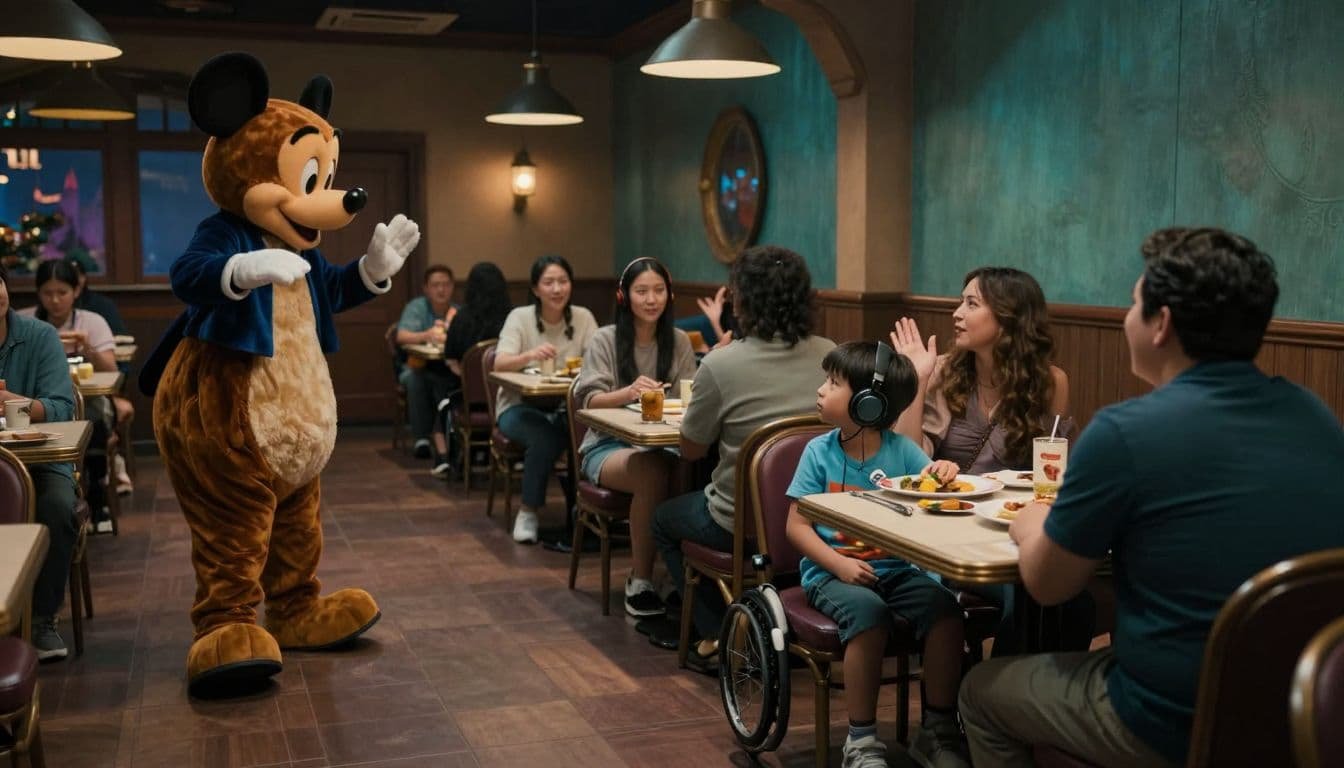
Before the meal, decide on two or three options together. These choices can guide character meets without adding pressure.
For example, your child can choose:
- Wave from the chair.
- Take a picture with the character standing back, or decline the photo.
- Say “all done” and let the character move to the next table.
A small visual card can help if words are hard in the moment. One side can show “wave.” The other can show “no thank you.” Practice using it at home first.
Character Dining Restaurants With More Breathing Room
There is no single best Disney restaurant for every autistic child at Walt Disney World. A potentially autism-friendly fit for some families may feel loud or unfamiliar to another child. Disney doesn’t guarantee a particular noise level, table location, or interaction style.
Compare space, lighting, food choices, travel time, and how long your child can sit. Travel matters after a Magic Kingdom day or a busy Animal Kingdom morning. Quick-service meals can reduce sitting time, while table-service dining offers a home base but requires a longer stay.
Disney character dining reservations are in demand. Disney says guests can book select dining experiences 60 days before arrival, and Disney Resort hotel guests may book for more of their stay at that point. Dining reservations and park reservations are separate, so check both with Disney. Choose one priority meal instead of filling every day with timed character meals.
Garden Grill at Epcot
Garden Grill is often a strong choice for families who want a more contained table experience. At Epcot, the restaurant slowly rotates, and many tables feel tucked into booth-style seating. The movement is gentle, but it is still movement, so consider whether your child finds it calming or unsettling.
Restaurant character meets differ from park character meets because guests usually stay seated. The layout affects approach distance, so compare this interaction style with your child’s usual tolerance for character meets. Characters come to your table, making no-touch requests easier, but visits aren’t guaranteed; family-style service avoids repeated buffet trips.
Cape May Cafe at Disney’s Beach Club Resort
Cape May Cafe offers a character breakfast in a bright, open dining room. At Cape May Cafe, the buffet lets children see choices before eating, which can help picky eaters who prefer familiar foods. Families with picky eaters should review the current menu and speak with Disney about allergies or dietary needs, rather than assume a gluten-free menu is available or suitable.
The room can get busy during peak breakfast time. An early reservation at Cape May Cafe may help, and an edge table can keep you out of the middle of the action. Buffet character meets can involve more movement than table visits, so compare that style with your child’s usual tolerance.
Chef Mickey’s is fun, but louder
Chef Mickey’s at Disney’s Contemporary Resort is convenient and full of Disney energy. Monorails pass nearby, music plays, and the restaurant has a big open feel.
This may be a great fit for a child who loves an active atmosphere. For a child who startles at sudden sound, bring hearing protection and have a break plan ready, and don’t choose it only because it’s popular.
Keep Sci-Fi Dine-In as a backup meal
Sci-Fi Dine-In is not character dining, but it can be a smart choice after a busy day at Hollywood Studios. The car-style tables face a movie screen, which reduces pressure for eye contact and conversation.
After Animal Kingdom, compare the transportation demand with a meal closer to your hotel or park. Sometimes the best plan includes one character meal and one lower-demand table-service meal, and your child doesn’t need characters at every meal for the trip to feel magical. Verify current menus, character lineups, reservation windows, operating hours, and transportation details before the trip.
Prepare for the Meal at Home
The first time your child sees a six-foot character should not be at a crowded Disney restaurant. Familiarity helps. Watch short videos of character meets, look at photos from past character meets, and talk through the steps in the same order they will happen.
For picky eaters, preview a menu photo and identify one familiar food. If Cape May Cafe is on your plan, look at its location and review the meal sequence. For an Animal Kingdom day, preview the restaurant plan alongside the park schedule.
Tell your child: “We will check in. We will sit at our table. We will eat. Characters may come by. You can wave, take a picture, or say all done.”
Build a short preview, not a long lecture
Keep the preview simple. A familiar, child-led, sensory-friendly approach can feel more manageable than a long lecture. Too much information can feel like pressure.
Talk about the sounds they may hear. Explain that characters do not talk in regular words. Show them where headphones will go. Let them choose a familiar fidget, hoodie, or comfort item for the park bag.
It also helps to show your child a photo of the specific characters expected at the meal. Disney schedules and character lineups can change, so treat the preview as preparation, not a promise.
Pack what already works at home
Disney is not the place to test a brand-new sensory tool. Bring the items your child knows and uses.
A practical dining bag may include:
- A pair of noise-canceling headphones or ear defenders.
- A small fidget or comfort item.
- A familiar backup snack or accepted food for picky eaters, if it fits your family’s dietary needs.
- A communication device, picture cards, or a low-tech backup.
- A portable charger for the My Disney Experience app.
These familiar items support the plan, but they can’t guarantee that the meal will avoid every sensory challenge.
For optional, practical planning support, our Disney World with Autism Guide on Etsy includes family-focused ideas for park days, breaks, dining, accessibility, and communication supports. You can also find the guide on Amazon.
DAS Helps With Rides, Not Restaurant Access
Disability Access Service, usually called DAS, is for attraction queues. It doesn’t book dining reservations or shorten restaurant waits. It also doesn’t reserve, shorten, or control character meets or create a no-touch character visit.
Disney’s current Disability Access Service information explains the eligibility rules for Walt Disney World. They focus on guests who can’t tolerate a conventional attraction queue because of a developmental disability, including autism spectrum disorder. A diagnosis alone doesn’t guarantee approval. Because these rules can change, check Disney’s official guidance before traveling.
Know the current DAS basics
An adult age 18 or older must complete registration for a child or another guest. Disney currently offers live video chat registration up to 60 days before the first park day. Ask Cast Members where to find current instructions, but remember that in-person registration isn’t available.
If approved, DAS usually includes the registered guest and up to three companions. The registered guest must be present and ride with the group. You can request an attraction return time in the My Disney Experience app, then wait somewhere more comfortable.
Accessibility procedures on Disney Cruise Line may differ. Don’t transfer DAS assumptions between a cruise and the parks without checking current guidance.
DAS changes where your child waits for an attraction, whether you’re visiting Animal Kingdom or another park. It doesn’t remove every wait or guarantee a calmer overall day. Disney’s attraction queue access guidance has the latest details before you leave home.
A stroller tag may help between meals and rides
If your child uses a stroller as a mobility device, ask Guest Relations about a “stroller as a wheelchair” tag. It can allow the stroller to stay with your child in attraction queues where appropriate.
This tag is different from DAS. It doesn’t apply to restaurant seating or character interactions. Still, having the stroller available as a familiar safe space can support regulation while moving through the resort.
Make Space for a Break Before It Becomes a Meltdown
A good dining reservation doesn’t mean your child must stay for the whole meal. If sound, movement, waiting, or a close character approach leads to sensory overload, step outside. Your family hasn’t failed. You’re responding to what your child needs.
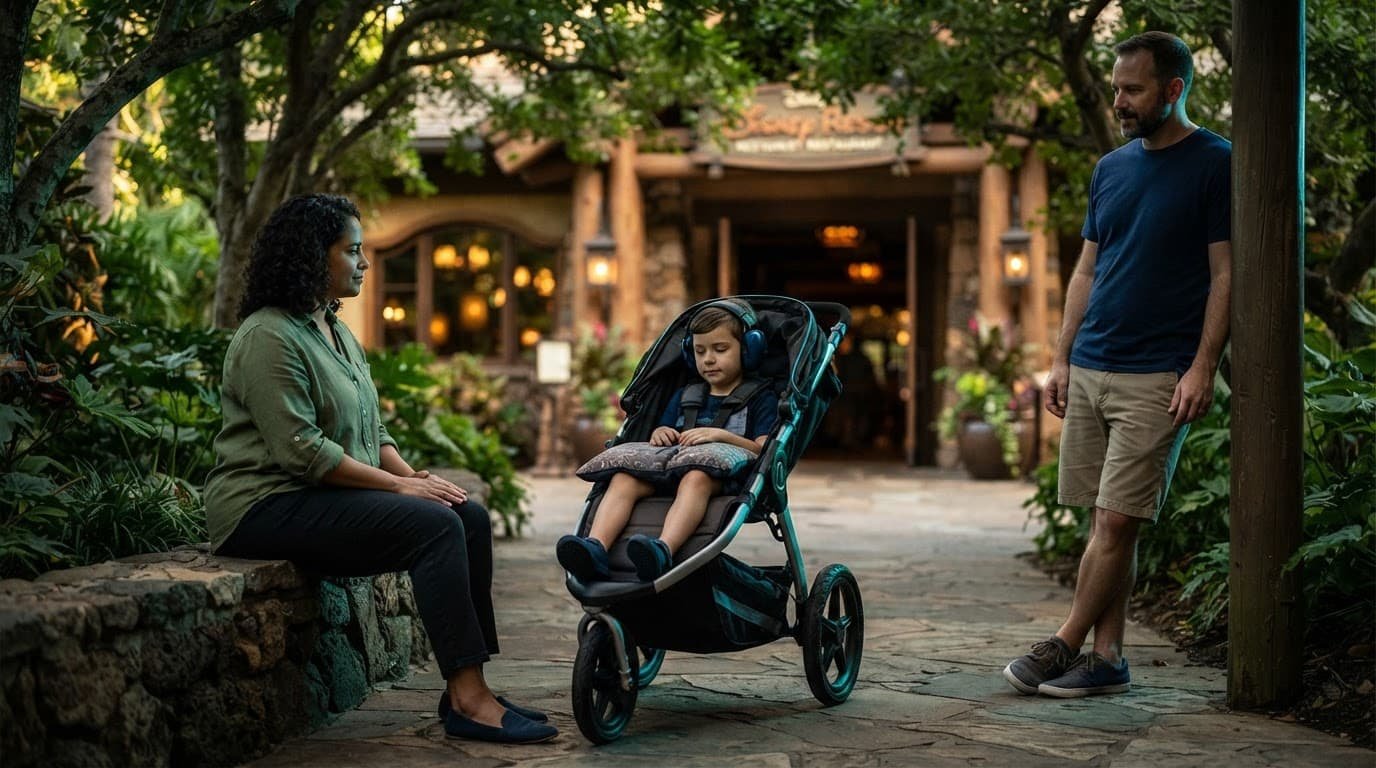
You can leave before or during character meets when your child signals no, all done, or distress. Plan downtime breaks before you sit down, especially after a long day at Animal Kingdom. Look for an outdoor bench, resort lobby area, quiet walkway, or a place away from the restaurant entrance.
Use a calm exit plan
Choose one adult who can leave with your child without a big discussion. Keep the other adult at the table if that works for your family. This helps siblings finish their meal and keeps the exit simple.
Ask for the check early if your child may be nearing their limit. You can also tell restaurant staff that you need help packing food or that your child needs space. Staff requests can help, but character behavior may vary, so they can’t guarantee a completely touch-free or interruption-free meal.
A buffet meal may let you eat at your own pace, but it can also create more movement and noise. Family-style meals reduce buffet trips, yet they require more time at the table.
Your travel bag matters here too. Trip Rescue Shop has practical travel items, including stroller supplies, comfort needs, and cleaning products for those unexpected sick-on-vacation moments.
Frequently Asked Questions
Can I request a completely touch-free character meal?
You can ask restaurant staff and character attendants for no hugs, high-fives, touching, or close approaches. Disney and its Cast Members may support the request, but they cannot guarantee that every interaction will be completely touch-free.
What should my child do during a character meal?
Your child can wave, watch, keep headphones on, take a photo from a distance, get an autograph, or decline the interaction. They do not need to make eye contact or act excited for the experience to count.
Which Disney character dining restaurant is best for an autistic child?
There is no single best restaurant for every child. Compare the restaurant’s noise level, layout, lighting, food choices, travel time, and interaction style with your child’s needs and usual tolerance.
Does DAS help with Disney character dining?
No. DAS is designed for eligible guests who cannot tolerate a conventional attraction queue, and it does not shorten restaurant waits or control character visits. Check Disney’s current official guidance before your trip because accessibility procedures can change.
What should I pack for a character meal?
Bring familiar items your child already uses, such as headphones, a comfort item, a fidget, communication supports, and an accepted backup snack when appropriate. Avoid testing a brand-new sensory tool at Disney, and plan where you can take a quiet break if the meal becomes too much.
A Disney Meal Should Feel Safe and Enjoyable
A Disney meal doesn’t need to produce perfect photos. Success can look different at different character meets, depending on your child’s comfort and choices.
An autism-friendly choice isn’t an official Disney label. For your family, it may simply offer control, space, and a trusted adult ready to step away.
Adjust the plan to the day’s schedule, whether you’re visiting Animal Kingdom or choosing a quieter meal. Tell restaurant staff and characters or attendants about no-touch preferences when possible. Disney can’t promise every interaction will be touch-free.
Verify current Walt Disney World details before you go, including whether Cape May Cafe still fits your plans. Dining and accessibility details may differ on Disney Cruise Line, so check its guidance separately.
During character meets, success may mean a hug, a wave, watching from a distance, or declining altogether. Both count.