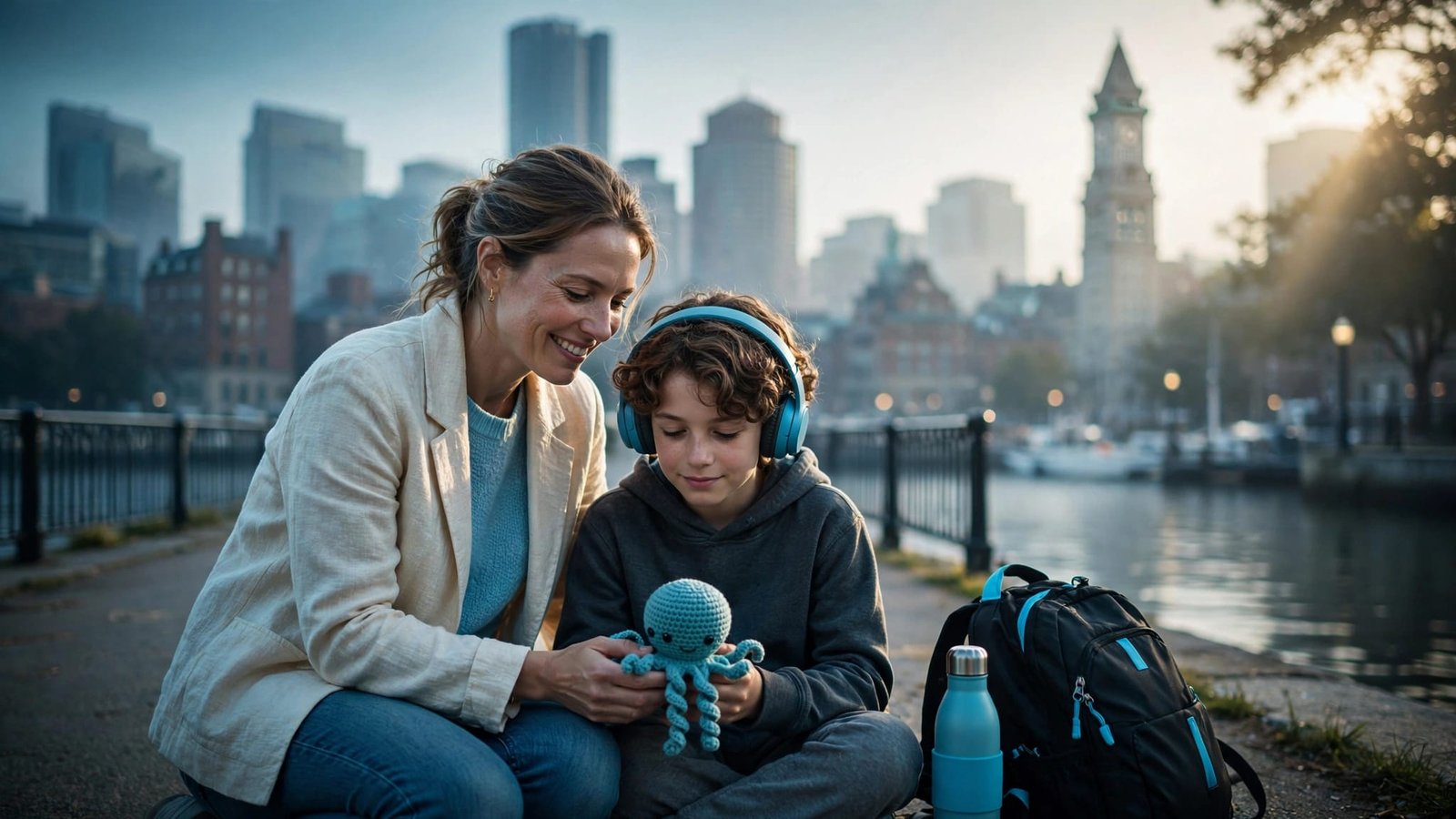
Boston can be busy, loud, and full of surprises. It can also be a wonderful place for children, teens, and adults to make family memories. A thoughtful plan leaves room for breaks, familiar food, and changing moods.
An autism-friendly Boston vacation does not need a packed schedule. One main activity a day, a comfortable place to reset, and a backup plan can help, but they’re options, not rules. Travelers on the autism spectrum may have different preferences and support needs.
Start with a flexible plan, then let your family’s sensory processing needs guide the day. Communication, mobility, food, and rest needs can vary from person to person.
Key Takeaways
- Plan one main activity each day, with a familiar meal, a planned break, and a backup option.
- Check museums, aquariums, zoos, theaters, hotels, and transportation providers for current accessibility and sensory-support details before traveling.
- Pack familiar foods, headphones, comfort items, communication tools, medication, chargers, and identification information in an easy-to-reach day bag.
- Choose flexible bookings and transportation routes that reduce transitions, crowds, uncertainty, and walking when possible.
- An early hotel return, skipped attraction, or quiet evening can be a successful part of an autism-friendly Boston vacation.
Start Your Autism-Friendly Boston Vacation With Less on the Schedule
Trying to see all of Boston in one weekend can turn a fun trip into a long list of transitions. This vacation guide starts with fewer transitions. Pick a few places your child, teen, or adult traveler may truly enjoy.
Choose a hotel close to one daily priority. The Seaport works well for Boston Children’s Museum (Boston Childrens Museum in some searches). The Waterfront can make the New England Aquarium easier. A hotel near a T station can help if your family plans to use public transit.
Plan one big thing each day
A morning museum visit and a quiet afternoon at the hotel can be a full day. You don’t need to add a tour, shopping, and dinner across town.
Show the day’s single priority, meal, break, and backup option in a visual schedule or another format the traveler already uses. Choose one attraction, one familiar meal option, and one calm outdoor space. If the attraction goes well, you can add more. If it doesn’t, you already have permission to head back.
Ask your hotel the right questions
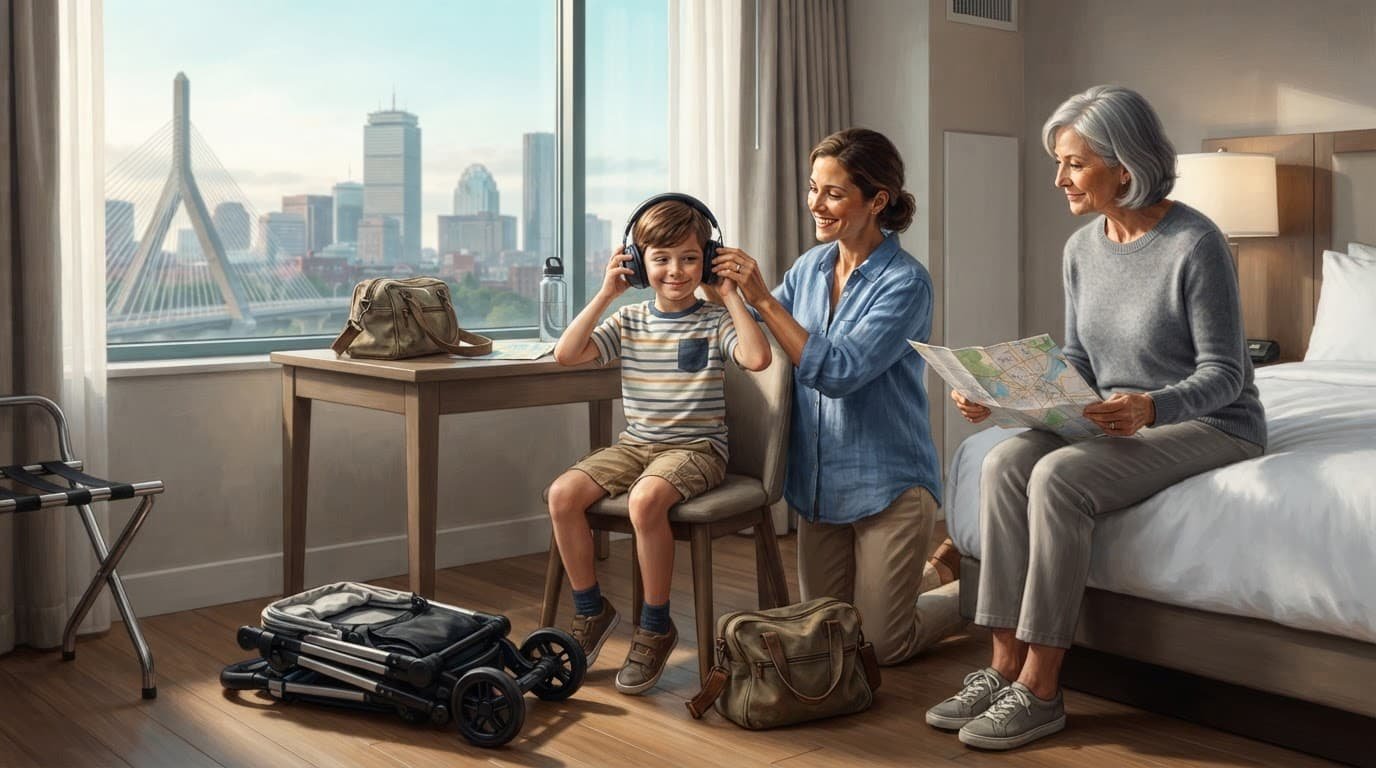
Before booking, ask about elevator access, room refrigerators or kitchenettes, stroller or wheelchair storage, and distance from noisy common areas. Ask whether a quieter room location is available, too.
Travelers on the autism spectrum may value different room features, so ask about accommodations directly rather than assume. A lower-floor room can sound convenient, but it isn’t automatically quieter if it’s near an ice machine, busy elevator, or lobby.
If your child uses a stroller as a mobility device, check the room layout and whether there is space to store it. A suite, kitchenette, or separate sleep area may be worth more than a fancy view.
Sensory-Friendly Museums for Boston Families
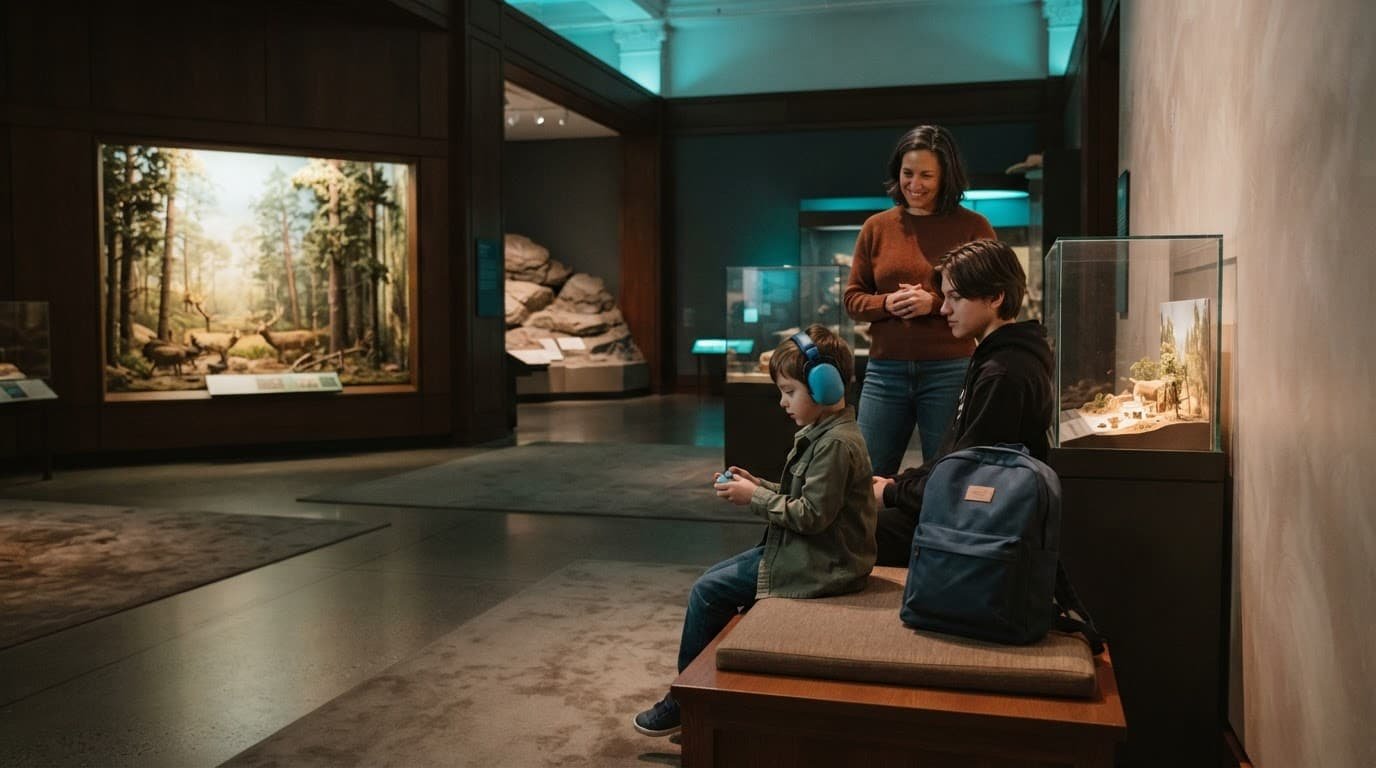
A vacation guide for Boston families can include museums with bathrooms, seating, and indoor activities when weather changes. Still, every museum can have bright lights, groups, and busy moments.
Check each museum’s official 2026 calendar or accessibility page for sensory-friendly hours, if listed. The Museum of Fine Arts may also be an option if its current official accessibility information confirms suitable tactile resources.
Call ahead with questions about quiet rooms, stroller access, timed admission, or your child’s specific needs. A five-minute phone call can save a difficult arrival.
Use Boston Children’s Museum’s Morningstar access option
The Morningstar Program at Boston Children’s Museum, often searched as Boston Childrens Museum, supports lower-crowd visits. It’s intended for children on the autism spectrum, as well as children with disabilities or other special needs.
Check the official page for the current 2026 registration process, guest limit, payment steps, masking guidance, and accessibility details. Confirm this information before choosing a date.
Arrive a little early so your child can see the entrance, bathrooms, and first exhibit before choosing where to begin. Check current elevator access to all three floors, which may help with wheelchairs, adaptive strollers, and tired travelers.
Make a Museum of Science plan before arrival
The Museum of Science offers a lot, but some areas may feel more intense. The Omni Theater, 4-D Theater, Planetarium, and Theater of Electricity can include darkness, loud sound, flashing effects, or larger crowds.
Bring noise-canceling headphones even if your child doesn’t always use them. Lights, sound, darkness, and crowds affect sensory-sensitive children differently, and sensory sensitivities can vary from one visit to the next.
Check the official accessibility source for current 2026 sound, lighting, strobe, crowd, restroom, elevator, and assistive-listening details. Ask about assistive listening at the Information Desk and the accessible family restroom on Green Wing Level 2.
Keep the first visit simple. Choose a few exhibits, skip high-stimulation shows unless your traveler wants them, and leave before everyone reaches their limit.
Plan a Calm Visit to the New England Aquarium
The New England Aquarium is exciting, but it can also be crowded, dim, and full of echoing sounds. Timed tickets are important, especially during school vacations, weekends, and rainy days. Check the aquarium’s official 2026 policies for tickets, sensory support, restrooms, wheelchairs, and admission before relying on these details.
The good news is that the aquarium has practical sensory supports, but check that they remain available in 2026. Its sensory kits may include noise-canceling headphones, fidget tools, picture communication cards, and a KultureCity VIP lanyard. Families may hear these kits called sensory bags, so ask staff to confirm current contents and borrowing procedures, including weighted lap pads.
Know where to take a break
Ask staff whether a sensory cool-down space is available in the lower West Wing. Also ask whether the first-aid room can be used as a quiet private space during your visit.
Ask about these spaces when you arrive, not after your child is already overwhelmed. Knowing where to go makes a hard moment easier.
Family and companion restrooms are listed on Level 2, and an adult changing table is listed on Level 1. Visitors using their own wheelchairs may receive free admission, and ticketed guests can ask about wheelchair rentals. Confirm restroom locations, changing-table access, wheelchair rental availability, and free-admission policies directly with the aquarium.
At the aquarium, the giant ocean tank is not the only attraction. A quiet corner, a snack, and a slower walk around the exhibits may be the part your child remembers most.
Zoo New England Gives Families More Outdoor Space
For children who need room to move, Franklin Park Zoo or Stone Zoo may feel easier than an indoor attraction. For some visitors on the autism spectrum, open paths and animal viewing can offer more choices. Outdoor crowds, heat, animal sounds, and uneven paths can also be challenging.
Both zoos have offered sensory bags with hearing protection, fidget tools, and verbal cue cards. They may also have designated quiet zones and Headphone Zones.
Before your visit, download the free KultureCity app. It can show sensory features at each zoo and includes Social Stories for both Franklin Park Zoo and Stone Zoo.
Details can change, so check the zoos’ official information and the app before you go. Confirm the current 2026 certification, bag contents, zone locations, borrowing fee, pickup point, and photo ID requirements.
For a separate day trip, Discovery Museum in Acton is roughly 40 minutes west of Boston by car. Check its official 2026 accessibility calendar before planning around a sensory program.
For other family ideas, this roundup of sensory-friendly Boston attractions can help you compare options by interest and location. Use it as a comparison tool, then confirm any accommodation directly with the attraction.
Use the MBTA Without Adding Extra Stress
Boston’s subway system, called the T, can save time and walking. It can also bring crowded platforms, unexpected elevator outages, loud trains, and quick transfers.
As you plan each day in your vacation guide, choose the route that minimizes distress and uncertainty. The fastest option isn’t always the easiest one for your family.
A direct bus or subway trip may work better than several rushed connections. If transit feels like too many unknowns, use rideshare, a rental car, or a taxi for harder parts of the day.
Confirm accessible rides in advance when possible, and ask about an accessible vehicle if your family needs one. With a rental car, check parking and drop-off options near each destination before leaving. The best transportation choice helps your family arrive calm.
Check elevators before leaving the hotel
If you use a wheelchair, adaptive stroller, or have luggage, check MBTA accessibility information each travel morning. Review current station pages, accessible-route guidance, service alerts, T-Alerts, and any shuttle substitutions.
The MBTA lists elevator and escalator outages through its station information and service alerts. If it remains current, the Elevator/Escalator Hotline is 617-222-2828.
Don’t assume an elevator will be working because it worked yesterday. Have one backup station or route in mind before you leave.
Give yourself more time than the map says
A map app can tell you the fastest route. It can’t tell you when your child needs a bathroom, wants to stop, or needs headphones before entering a busy station.
Avoid tight connection times, and allow extra time for transitions. A direct trip that takes longer may be easier than a faster route with two transfers.
If you’re using rideshare or a taxi, choose a pickup point away from the busiest entrance when possible. If your family is staying near the Aquarium, walking along the waterfront may feel calmer than using the T for a short distance.
Find Food That Feels Familiar and Manageable
Vacation meals can become stressful when a traveler has food allergies, strong food preferences, or a limited safe-food list. Boston has plenty of restaurants, but you don’t need to make every meal an adventure.
Look at menus before you leave the hotel. Save screenshots of a few meal choices on your phone. This helps when a restaurant has weak cell service or someone needs to see options before walking inside.
Write down your allergy plan, including ingredients to avoid and questions for restaurant staff. Note nearby grocery stores and pharmacies, too. These backups help if a restaurant closes, transportation is delayed, or a safe food goes missing.
Keep breakfast predictable
Choose a hotel with breakfast your family can use, or book a room with a refrigerator. Pack familiar shelf-stable foods, then pick up fruit, yogurt, milk, or other basics after arrival.
A familiar breakfast can make an unfamiliar day feel more manageable. It also gives you time to decide if an attraction feels right that morning.
Ask simple allergy questions
When ordering, ask whether staff can help with the ingredients that matter to your family. For serious allergies, ask about cross-contact and shared cooking surfaces, rather than relying on an online menu alone.
For selective eaters, it’s okay to order plain food. A simple plate of pasta, fries, chicken, rice, or a snack from your bag can prevent a bigger problem later. Don’t pressure anyone to try unfamiliar foods. You’re on vacation, but a person’s safe food is still safe food.
Build in Boston Breaks Before Sensory Overload Hits
A flexible itinerary is not an empty itinerary. It is a plan with breathing room. Give your family one clear first activity, then leave the rest of the day open.
Boston Common, the Public Garden, Christopher Columbus Waterfront Park, and quieter spots along the Harborwalk can offer a reset, though parks may be busy at peak times. Weather, events, construction, or crowds can change the best option. Bring a snack, sit down, and let the day slow down.
This vacation guide uses a simple structure: one morning activity, a planned break, an optional afternoon, and a nearby dinner.
| Time of day | A family-friendly plan |
|---|---|
| Morning | One main attraction with timed entry |
| Midday | Familiar lunch and a planned reset |
| Afternoon | Optional park or second activity, or return to the hotel |
| Evening | Simple dinner close to the hotel, then an early night if needed |
Use a picture-based plan or familiar comfort routine, while keeping each choice optional. The afternoon doesn’t need to be productive. A hotel pool, favorite show, nap, or comfort item can make tomorrow easier.
If distress or a meltdown begins, reduce demands and move to a safer, lower-stimulation area. Offer communication and comfort tools, then allow recovery time. Treat the response as communication, not misbehavior.

Look for Relaxed Performances and Sensory-Friendly Events
Boston has theater, concerts, holiday shows, and family events throughout the year. Some organizations offer adjusted sound and lighting, flexible audience expectations, and access to quiet areas.
A relaxed performance usually reduces sound and lighting intensity. It may also allow movement, casual audience responses, and easier breaks. Verify sensory-friendly films and sensory-friendly events through current 2026 theater, cinema, or event-organizer calendars. Boston Ballet’s current calendar can confirm whether a sensory-aware family program is available.
Schedules change each season. Before booking any Boston Ballet production, verify the specific date, sound, lighting, seating setup, and exit policies directly with the venue.
Ask these questions before buying tickets
Call the box office and ask if the event is labeled sensory-friendly, autism-friendly, or offered as a relaxed performance. Ask about loud sound effects, strobe lighting, late seating, and whether guests may move around or leave the auditorium.
Ask about quiet rooms, a lobby, or a nearby low-stimulation area. Availability varies by venue, so confirm what families can use during a break.
Also ask about crowd capacity, re-entry after a break, and accessible restrooms. Confirm companion seating, ticket exchanges, and whether a support person needs a ticket.
You can also ask for aisle seating near an exit. That small detail can make a big difference when your child needs a break quickly.
A show doesn’t have to be a required vacation memory. If your traveler is done after the museum, declining the show or leaving early is a successful accommodation choice. A quiet evening can still be a successful day.
Pack a Travel Day Bag You Can Manage Alone
A good travel bag is not about bringing everything. It is about carrying what matters without digging through a heavy backpack on a crowded sidewalk.
Keep your child’s most-used items in the same place each day. Familiar routines can help when the location is new.
Bring a small pouch with:
- Noise-canceling headphones, a fidget, and one comfort item your child already uses.
- Snacks, water, wipes, sunscreen, a change of clothes, and allergy details.
- Medication in original labeled containers, along with dosing and prescribing information. Pack enough for delays, plus a backup supply if medically appropriate.
- A communication device, charger, caregiver contact information, and a low-tech AAC backup, such as printed cards or a notebook.
- A portable battery and charging cables for phones, tablets, and headphones.
Families often remember the tablet and forget the cable. That one small item can matter after a long day.
Before you leave, agree on a calm response if your child has a meltdown or becomes distressed. Reduce stimulation, protect privacy, identify the caregiver, and contact emergency services only during an actual safety or medical emergency.
For crowded attractions, make a simple identification and reunification plan. Keep a contact card accessible, choose a meeting spot, and use a plan that respects your child’s communication style if they move away from the group.
Keep medication and communication tools easy to reach. It can also help to identify a nearby pharmacy or urgent-care option before the day begins.
For more ideas about using familiar tools during stressful moments, sensory tools for self-regulation can be a helpful resource.
You can also find travel basics in the Trip Rescue Shop, including strollers, travel supplies, and practical items for sick days away from home.
Make Booking Choices That Give Your Family Options
Choose refundable hotel rates when the price difference makes sense. Flexible booking helps travelers on the autism spectrum because illness, fatigue, weather, schedule changes, or access needs can affect any trip. It doesn’t assume those factors will apply to every family.
Before buying tickets, read each attraction’s official 2026 change and cancellation rules. Check ticket-transfer policies, late-arrival procedures, and weather-closure updates. If online details aren’t clear, contact the venue directly and document its answer.
Keep confirmation numbers, venue responses, and event details in one folder on your phone. Having everything together makes last-minute changes easier to manage.
If Disney is also part of your family’s travel plans, the Disney World With Autism Guide on Etsy and the Amazon edition are optional third-party planning resources. They aren’t official Boston or venue accessibility guidance.
An autism-friendly Boston vacation works best when plans support your child instead of asking your child to keep up with the plan.
Frequently Asked Questions
What makes a Boston vacation autism-friendly?
An autism-friendly Boston vacation leaves room for sensory needs, familiar foods, rest, and changing plans. One main activity, a comfortable reset space, and a backup option can make the day more manageable.
Which Boston attractions offer sensory supports?
Boston Children’s Museum, the New England Aquarium, Franklin Park Zoo, and Stone Zoo have offered programs or tools for visitors with sensory needs. Availability and details can change, so check each attraction’s official 2026 accessibility information before visiting.
How can families prepare for sensory overload in Boston?
Plan breaks before distress begins, bring headphones and familiar comfort items, and identify quiet or lower-stimulation spaces at each attraction. If a traveler becomes overwhelmed, reduce demands, offer communication and comfort tools, and allow recovery time.
What should families pack for an autism-friendly Boston trip?
Pack noise-canceling headphones, a fidget or comfort item, familiar snacks, water, medication in labeled containers, communication tools, chargers, and allergy information. A simple identification and reunification plan can also help during crowded outings.
Is public transportation a good choice for an autism-friendly Boston vacation?
The MBTA can be useful, but crowded platforms, loud trains, transfers, and elevator outages may add stress. Check service alerts and elevator information each morning, allow extra transition time, and use a direct route, rideshare, taxi, or rental car when that feels easier.
A Boston Trip That Feels Good for Your Family
The best Boston vacation isn’t the one with the most photos or longest attraction list. This vacation guide measures success by how well children, teens, and adults can eat, rest, regroup, and enjoy the day.
Choose one main activity at a time. Check access details before travel, and keep comfort tools close. An early hotel return, skipped attraction, or quiet evening can all count as a win.
Calm memories last longer than a packed schedule.