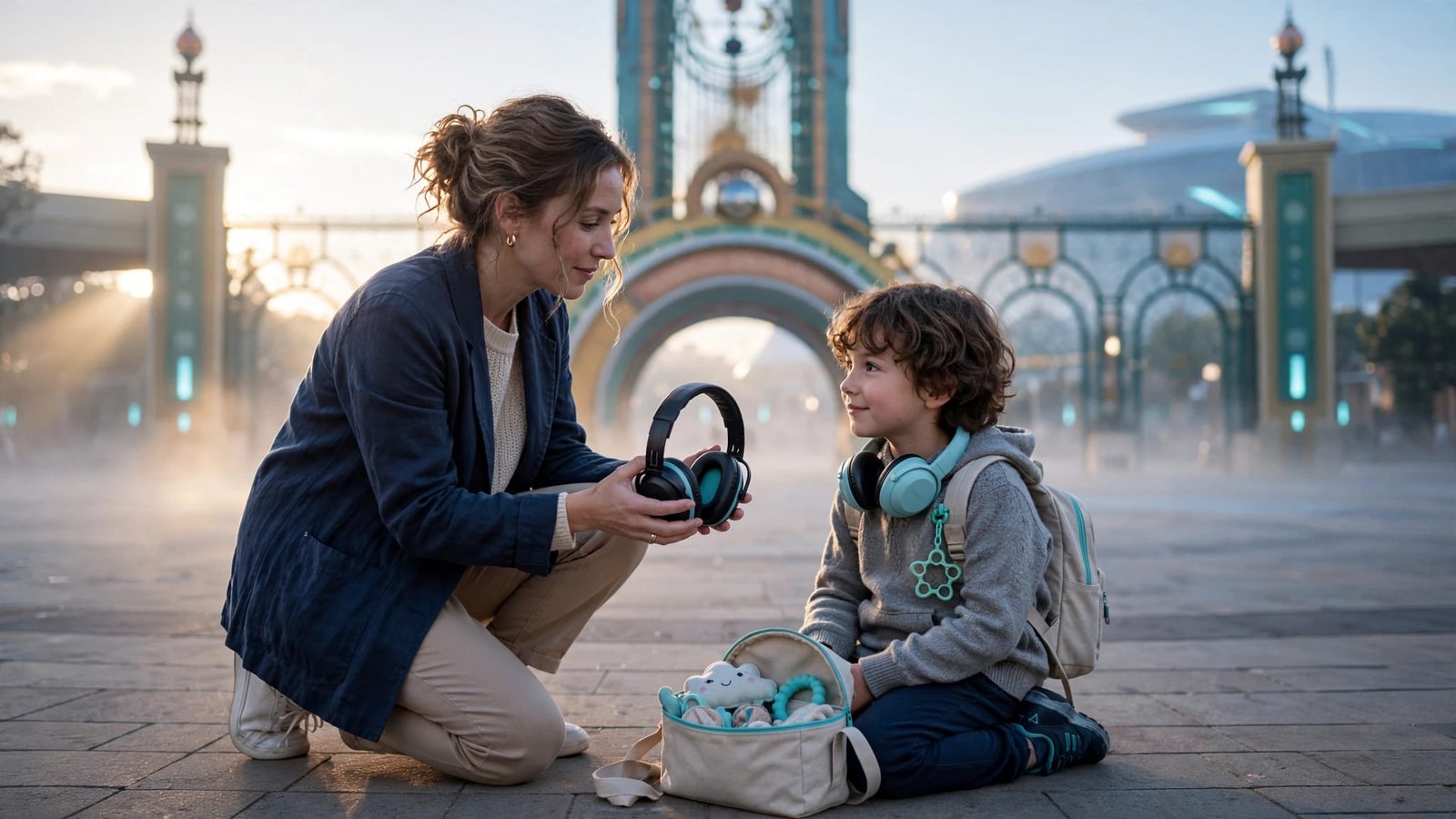
A first park day can feel exciting, loud, busy, and full of unknowns. Epic Universe autism planning works best when you start with your child’s sensory needs, not a long list of rides.
Before you arrive at Epic Universe, complete accessibility pre-registration and prepare communication and comfort supports. Plan breaks in advance, but remember that autism-related support varies by traveler. Your goal isn’t to promise a universally quiet or easy experience.
Plan for a flexible first visit to Universal Orlando, not a day spent completing every attraction. Leave room to adjust for weather, crowds, hunger, ride closures, or changing energy levels.
Key Takeaways
- Start with your child’s individual sensory, communication, safety, food, and mobility needs rather than assuming autism affects every traveler in the same way.
- Complete the IBCCES Accessibility Card pre-registration early if your child may need an attraction queue accommodation, and confirm the current process with Guest Services.
- The Attraction Assistance Pass changes where your family waits; it does not eliminate waiting or guarantee access to a specific ride.
- Plan quiet breaks, familiar foods, bathroom stops, sensory supports, and a flexible schedule before distress builds.
- A successful first visit may include only one or two lands, an early hotel return, or leaving before the park closes.
Start With Your Child’s Needs, Not a Diagnosis
Autism looks different for every child, teen, and adult. One traveler may need help with waiting. Another may need a stroller for safety, a predictable meal, a quiet place, or clear warning before a dark ride.
Your observations and practical barriers matter more than a diagnosis label. Write down the situations that are hardest before you book. Consider sensory sensitivities involving noise, lighting, crowds, heat, smells, and unpredictability. Also note close lines, unfamiliar food, ride restraints, and changes in plans.
Universal Orlando’s accessibility information page is the best place to begin. Review the current official accessibility guide for information relevant to cognitive disabilities, remembering that autistic guests have different disability profiles. Verify current services, documentation rules, park hours, communication supports, and accessibility offerings on official sources. If IBCCES is part of the process, begin pre-registration early, then review the guidance again close to your travel dates.
Make a simple support plan
Keep the plan short enough that another adult can understand it quickly. Use this short preparation checklist:
- Calming tools and sensory needs
- Safe foods and medication timing
- Bathroom needs and identification
- Communication methods
- What helps when your child needs to leave an area
- A change-of-plan script, such as, “The plan changed. We can take a break and choose what happens next.”
A phone note works well, but bring a paper copy too. Phones lose battery, service can be slow, and a printed plan is easier to share during a stressful moment.
Tell your child what to expect
Use photos, park maps, videos, or a simple visual schedule before you travel. Explain the day in small steps: hotel breakfast, security, one ride, snack, quiet break, lunch, then choose what happens next.
Don’t promise a perfect schedule. Say, “We have a plan, and we can change it if we need to.” That gives your child a clear expectation without making a missed ride feel like a problem.
Epic Universe Autism Support Starts Before You Arrive
For families who need help with attraction queues, Universal Orlando uses the IBCCES Accessibility Card, often called an IAC. It isn’t a park ticket. It’s part of the pre-registration process for guests requesting an attraction queue accommodation.
Complete pre-registration through the IBCCES Accessibility Card website before your visit, and confirm the current application timing there. The application may ask about your traveler’s needs and supporting information. Requirements can change, so check the current guidance before submitting.
After the process is reviewed, Guest Services may contact you to discuss the accommodation that fits your traveler’s needs. Pre-registration or approval doesn’t guarantee a specific pass, attraction, or ride outcome.
Bring practical details to the conversation
Be ready to explain what happens in a standard standby line. Keep it focused on the actual barrier.
For example, you might say: “My child cannot remain safely in a long, enclosed line when the wait is unpredictable. We need a way to wait in a quieter space and return when it is time.”
You don’t need to make the conversation sound formal or ask for a “disability pass.” That phrase isn’t necessarily Universal’s current official name, and outdated online advice may describe a “disability pass” differently. Clear, honest details are enough. Mention elopement concerns, panic in crowded switchbacks, sensory overload, communication difficulties, or other real needs that affect waiting.
Attraction Assistance Pass versus other help
The Attraction Assistance Pass, or AAP, is for guests whose disability prevents them from waiting for extended periods in a typical queue. It changes where your family waits, not whether you wait at all.
A Guest Assistance Pass is an older phrase many families still use. At Universal, ask about the current Attraction Assistance Pass process and any other accommodations that may fit your child.
Guests who only need an accessible queue, a mobility device, or a return option where available may not need an IAC. Ask Guest Services which option applies to your family.
A queue accommodation is most helpful when it protects your child’s ability to enjoy the next part of the day, not when it becomes another schedule to manage.
Use the Digital AAP Without Watching Your Phone All Day
When this accommodation is offered, use the process introduced earlier through the Universal Orlando app. The current workflow can change, so confirm the day’s instructions before leaving the service location.
The app may let you select an attraction, manage party members, and request a return time. Rely on the options shown in the current app, not older screenshots or online advice.
The displayed return time reflects the posted standby line wait. If a ride shows a 40-minute wait, use that window for a snack, bathroom break, quieter walk, or familiar spot.
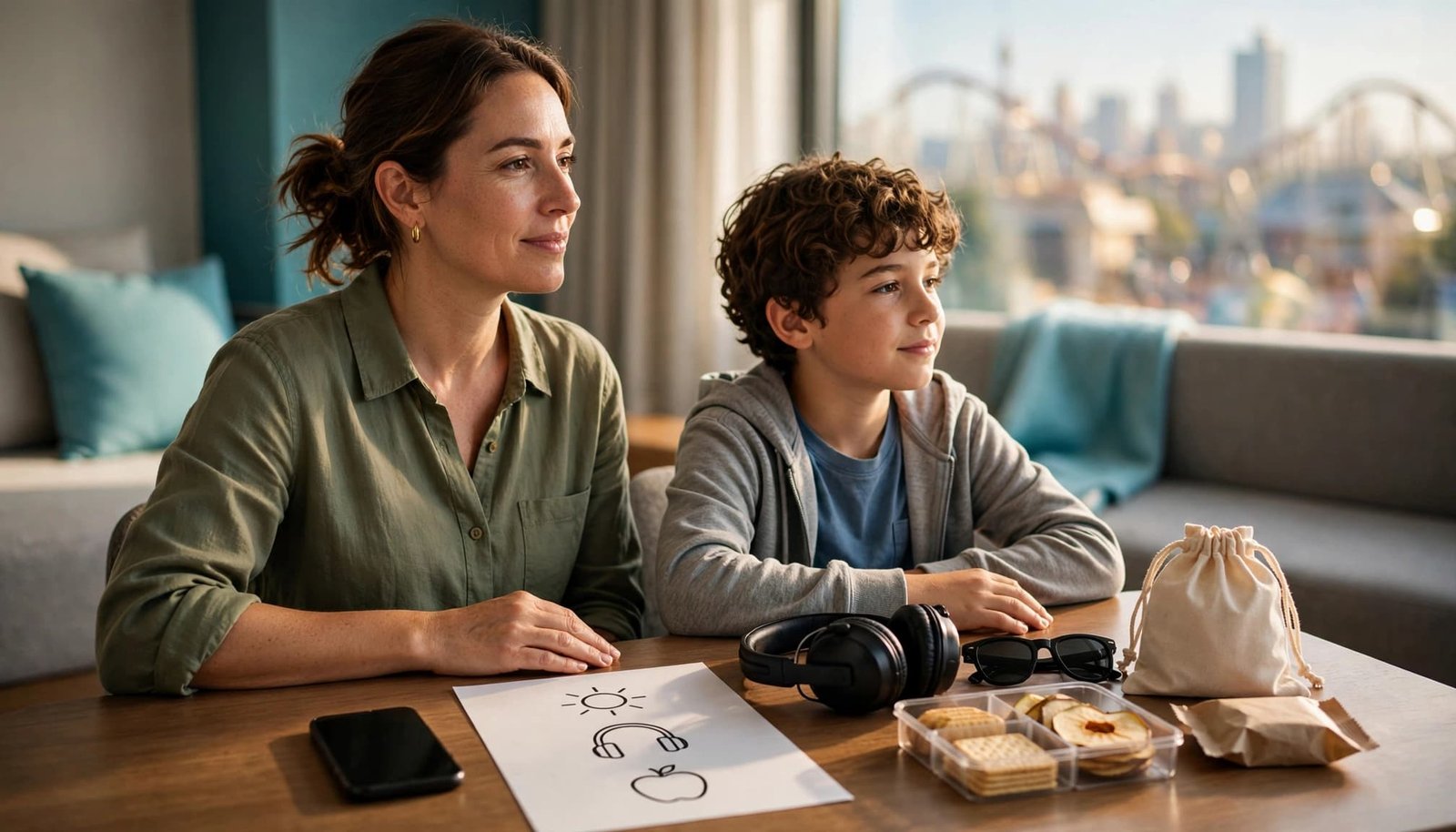
Keep the system simple
Don’t assume the app supports one active request, fixed buffer periods, or the same rebooking rules on every visit. Some attractions may use a Return-to-Queue process instead of the app, so ask Team Members how that ride-specific procedure works.
If the return time changes or isn’t available, check the app’s current instructions before rebooking. A Return-to-Queue procedure may follow different steps, so confirm what to do at that attraction.
On arrival day, fully charge your phones and carry a portable battery. Keep screenshots or paper backups of tickets, plans, and key instructions. Ask Guest Services for a demonstration before leaving.
If the app freezes or the information looks wrong, step away from crowds before troubleshooting. Then ask for help rather than trying to solve it in a busy walkway.
Check Universal’s official guidance before leaving home, then review Universal’s Attraction Assistance Pass guidance as optional third-party background. Completing pre-registration earlier doesn’t remove the need to confirm the day-of process.
Know the Sensory Feel of Each Epic Universe Land
Epic Universe is built around immersive worlds. That can feel magical for some guests and intense for others. For children with sensory sensitivities, sound, lighting, characters, crowds, and visual movement can change fast between lands.
Plan your first visit around one or two lands your child already loves. There is no need to cross the entire park before lunch.
Super Nintendo World can feel busy fast
Super Nintendo World is bright, active, and full of game-like sounds. Expect music, sound effects, animated details, interactive areas, and guests moving around with Power-Up Bands.
It may be a favorite place for a Nintendo fan. It may also become too much when it gets crowded. Arrive early if it’s a priority. Take in the land slowly, choose one attraction or activity, and identify an exit before your child needs one.
Don’t assume your child will want to try every interactive element. Looking around, taking photos, or enjoying one ride can be enough.
Ministry of Magic combines 1920s wizarding Paris with the British Ministry of Magic. Its featured attraction, Harry Potter and the Battle at the Ministry, has a 40-inch minimum height requirement. Check Universal’s official attraction information for current descriptions, posted warnings, queue status, and effects such as motion or sound. Before entering Ministry of Magic, decide whether the environment and wait fit your child’s energy level. A quiet outdoor transition or leaving the land is a family strategy, not a guaranteed park-provided service.
Dark Universe needs a gentler introduction
Dark Universe has a darker mood, dramatic scenery, spooky characters, and areas that may feel more intense after sunset. Some travelers love the monster theme. Others may find the visuals, sound effects, or surprise moments uncomfortable.
Walk through the entrance area first. Let your child decide if they want to keep going. If they’re unsure, choose an outdoor snack break or a calmer attraction in another land instead.
A first trip isn’t the time to push through a ride that feels scary. You can always come back another day.
Plan Quiet Breaks Before Your Child Needs One
A quiet break is not a reward for getting through a hard moment. It is part of the park day.
If current official Universal Orlando information lists a Quiet Room, check its location, hours, and capacity. Ask Guest Services at Epic Universe about access rules and other sensory-support options.
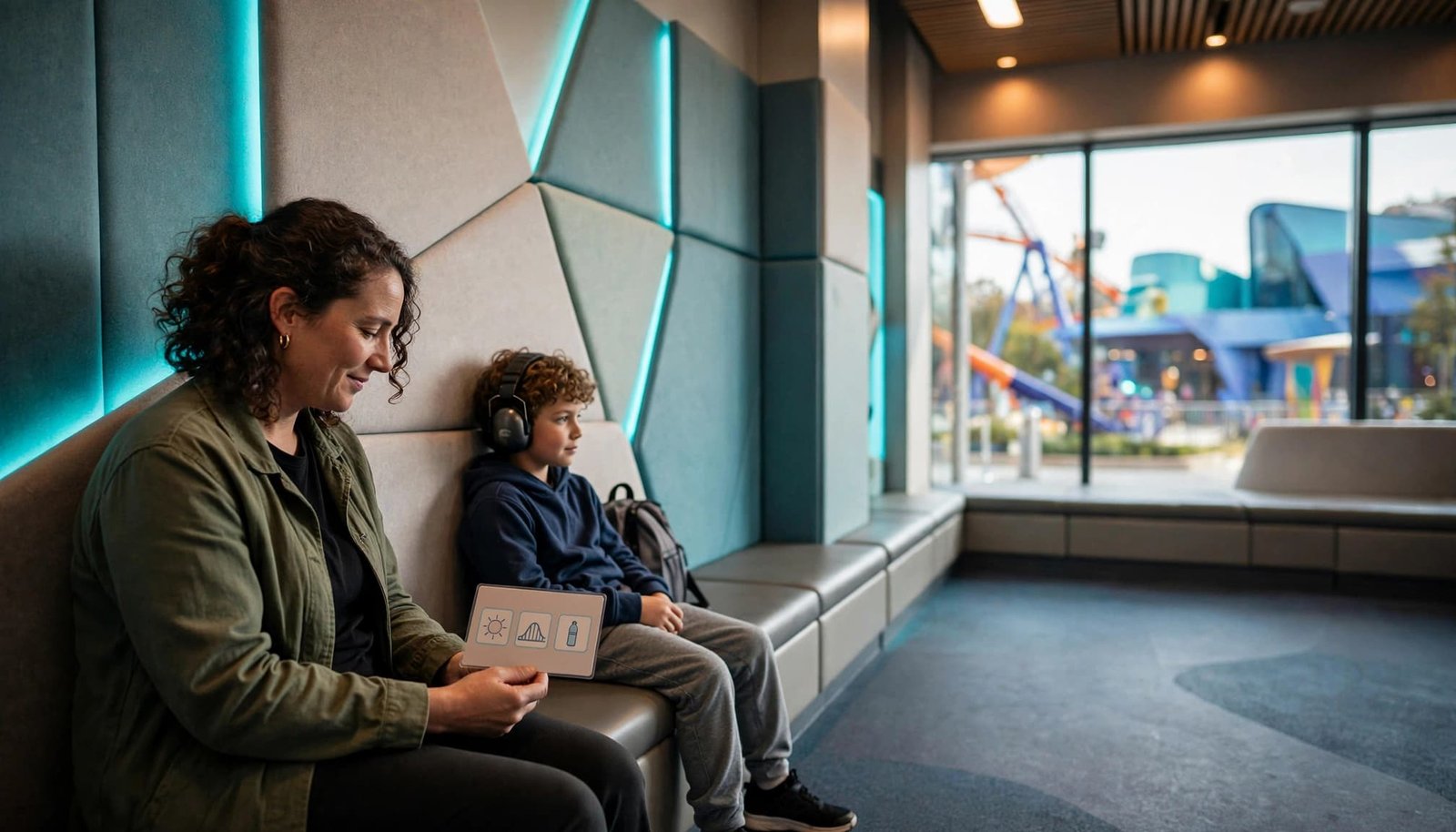
You can also make your own quiet moments. A quiet bench, less-busy dining area, hotel lobby, or hotel room can be your family’s break. It doesn’t need to be an official quiet facility.
If a planned break may interrupt a queue, ask whether a verified Return-to-Queue option can support your family. Availability may vary by attraction.
Before the day gets difficult, use this break checklist:
- Pause early, before distress builds or behavior becomes unsafe.
- Choose shade or air conditioning, with a clear exit route.
- Plan bathroom access and hydration before settling in.
- Keep safe food and needed medication within reach.
- Bring communication tools, including visuals or a device.
Pack supports your child already knows
The best park bag isn’t filled with new items bought for vacation. Pack around your child’s sensory needs, using what already works at home, school, appointments, or other outings.
A few helpful items may include:
- Noise-reducing headphones, sunglasses, fidgets, and a familiar comfort item.
- A portable charger, charging cord, cooling supplies, water, wipes, and ponchos.
- Safe snacks, medication, a visual or low-tech communication backup, identification, and spare clothing.
For optional travel supplies unrelated to official accessibility guidance, you can find practical items such as stroller accessories, portable travel supplies, and sickness clean-up basics at the Trip Rescue Shop. The shop doesn’t replace current park information or accessibility guidance. Keep the bag light enough that one adult can manage it while staying close to your child.
Strollers, Mobility Needs, and Ride Logistics
A stroller can be much more than a place to sit. For some autistic children, it provides a safe, familiar space during long walks, crowded areas, and transitions between lands.
If your child needs a stroller for disability-related reasons, ask Guest Services about a stroller as wheelchair tag when you arrive. A standard stroller rental or personal stroller doesn’t automatically have the same access.
That stroller as wheelchair tag doesn’t guarantee your child can remain in it for the entire attraction. It also doesn’t override ride-specific transfer or restraint rules.
Ask about queue re-entry and Child Swap
Universal Orlando attraction queues are designed to be accessible, but an accessible queue isn’t necessarily sensory-friendly. Each ride has different loading areas, evacuation procedures, transfer needs, restraint rules, and height requirements.
Check current official accessibility materials, then verify ride-specific details with Team Members. Read the ride warning signs and ask whether Return-to-Queue is available before entering a long line.
Attractions may also offer Child Swap, which lets one part of the family wait with the non-rider while the others ride. Adults can then switch without repeating the full wait. Ask at each attraction how this process works, since procedures can vary.
Confirm the specific attraction’s Return-to-Queue instructions before committing to the queue. Procedures may differ from what you used at Disney or another theme park.
If one adult leaves with a non-rider or a child who needs a break, repeat the agreed Return-to-Queue plan with the remaining adult.
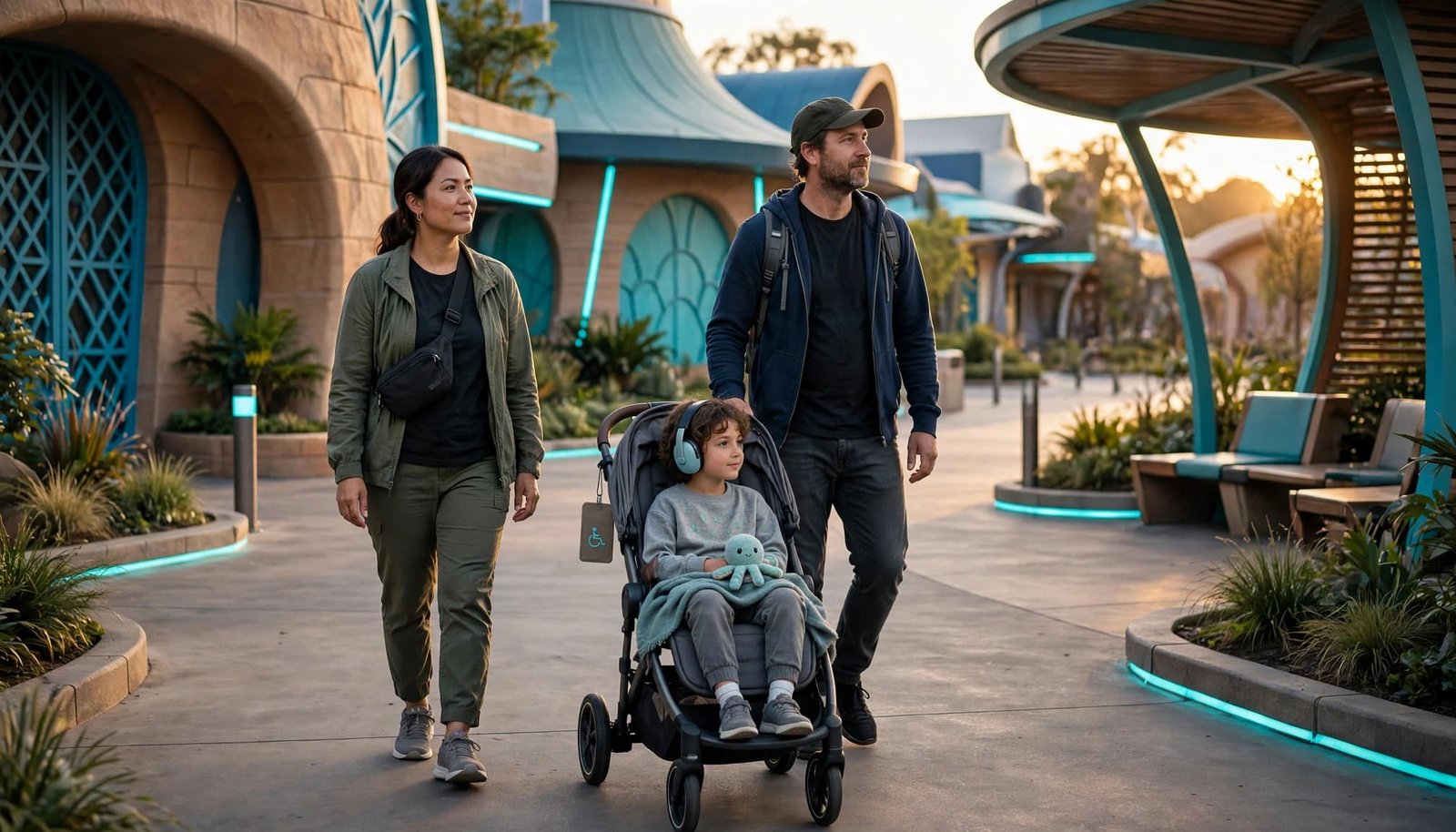
Keep your transition safety plan simple. Take a current photo each morning and assign an adult for every transition. Use identification tools your family already trusts, review boundary reminders, and make a plan for separation or elopement risk.
Build an Epic Universe Day Around Energy Levels
A good Epic Universe plan has enough structure to feel safe and enough flexibility for real life. Hunger, weather, ride closures, bathroom needs, and tired feet can change the day.
Before leaving, check Universal Orlando for current park hours, early-entry rules, transportation, mobile ordering, and attraction availability. On arrival, confirm the hours and entry rules again. Choose your first land only after checking your child’s energy. Identify indoor and shaded breaks, then set a hotel-return decision point.
For most first-time families, one park day is enough. Keep the theme park as the day’s main commitment unless your child handles busy days well. Don’t add extra transportation, late dinners, or another major attraction outside the park.
A low-pressure first-day rhythm
After checking current park hours and early-entry policies, start with one priority land at Epic Universe. The first hour may still be busy, so use it for a favorite ride or a calm walk through the area.
Plan an early snack and bathroom stop, even if nobody asks yet. If waiting in a queue becomes difficult, ask whether a Return-to-Queue plan can help. Use that time for a snack, bathroom break, or sensory reset. Then choose a second nearby activity or request an AAP return time. Check whether the attraction currently offers a virtual queue or reservation system. Review its rules, since it differs from the Attraction Assistance Pass.
Leave room for a midday hotel break if your resort location makes that realistic. If returning to the hotel feels like too much, use a longer indoor meal, a quiet room, or a shaded rest instead.
If weather changes, a ride closes, or a return time is lost, pause before choosing the next activity. Hunger, heat, or escalating distress may call for an indoor or shaded break, food, water, or an earlier hotel return. After a closure or unexpected change, ask what Return-to-Queue option or next step is available.
The afternoon is for easy choices. Repeat a favorite attraction, explore one new area, or leave early. Your family has not failed if the day ends at 3 p.m.
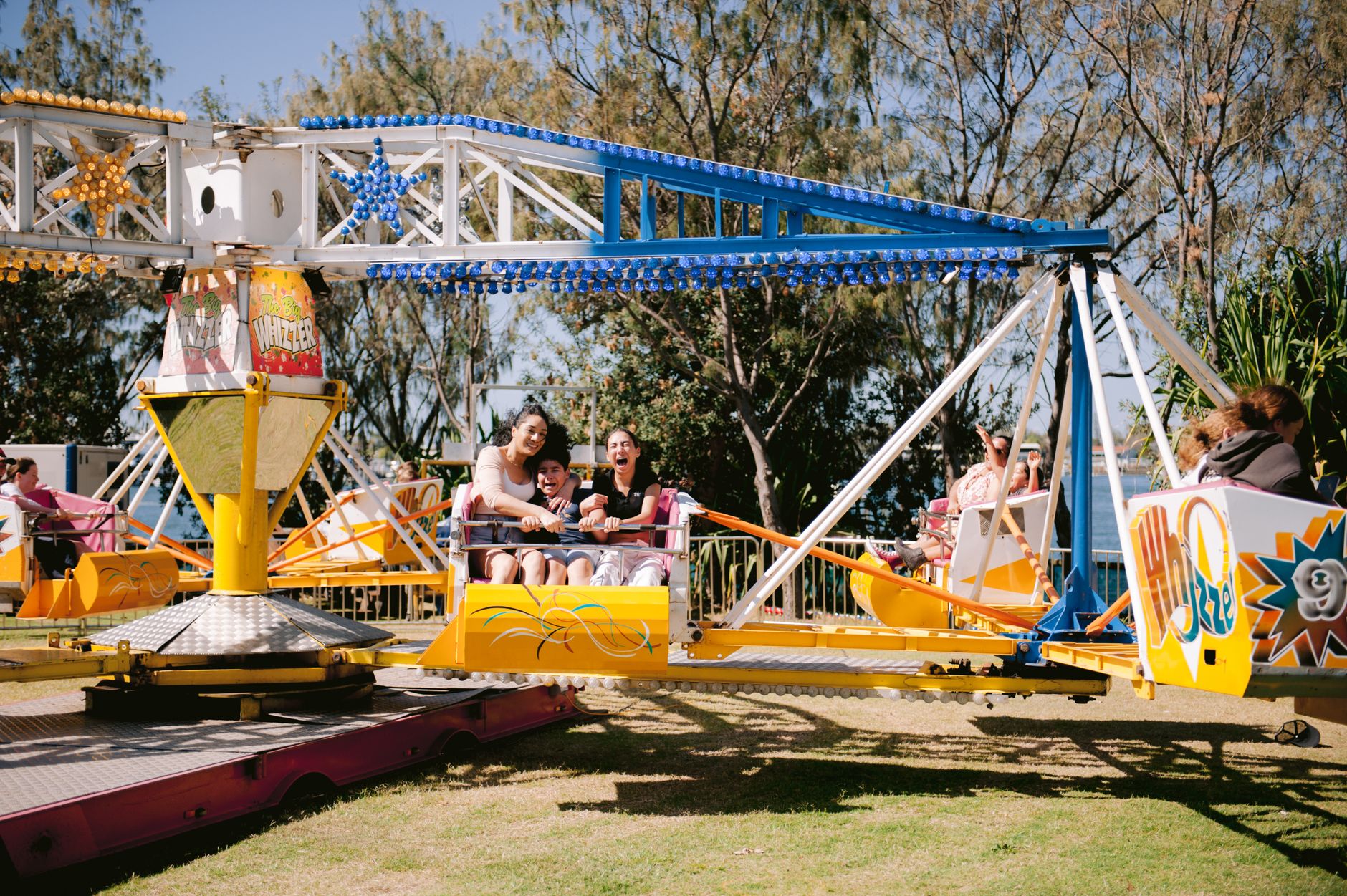
Photo by Rohi Bernard Codillo
Choose a Hotel That Makes Breaks Possible
Where you sleep affects every Epic Universe morning and every hard afternoon. A less expensive hotel may not feel like a bargain if transportation, long walks, and late returns drain your family.
Universal Helios Grand Hotel is located within the Epic Universe resort area and offers hotel guests an exclusive entrance to the park. Current hotel information also lists complimentary transportation to other Universal theme parks and CityWalk. Review the current Helios Grand Hotel details before booking, since entry privileges and benefits can change.
Some premier hotel benefits can include Express Pass access at Universal Studios Florida and Islands of Adventure. Families should verify whether that product is valid at Epic Universe. It doesn’t replace an accessibility accommodation or guarantee a sensory-easy experience.
Ask the questions that matter to your family
Before reserving any hotel, ask about details that affect your family’s reset. Is the room close to an elevator, with space for stroller storage? Can you request a quieter room? Is there a refrigerator or kitchenette for safe foods and medication? How long is the actual trip to Universal Orlando? Could your family realistically return for a midday reset?
An off-site hotel can still be a good choice when it offers more room, kitchenette access, familiar breakfast, or a calmer setting. Compare the full route, including waiting and loading time, not only the map distance.
If Disney is also part of your vacation, the Disney World With Autism Guide on Etsy and the Amazon guide edition offer family-focused ideas for breaks, accessibility planning, and flexible park days. These are paid third-party resources, not official Universal guidance.
Food, Communication, and Small Changes That Add Up
Theme park hunger can arrive quickly. A tired child may not wait through a long line or accept an unfamiliar meal.
Before your trip, check Universal Orlando for current menus, mobile-order rules, allergy information, dining hours, and reservation requirements. Pick two or three locations with safe foods your child is likely to eat. Save them in the app or write them down.
Plan meals before hunger becomes urgent. Try an early lunch, a later lunch, familiar snacks, and regular water breaks. Keep medication on its usual schedule, with water and any required food.
Have a backup if your preferred restaurant is full or a mobile order fails. Choose a nearby location, carry a familiar snack, and ask a Team Member about current options. Mobile ordering can shorten one line, but it doesn’t guarantee a quiet dining area.
Build in bathroom stops before meals, rides, and long waits. If heat, bathroom urgency, or sensory overload changes the plan, pause instead of pushing through. If a ride team confirms a Return-to-Queue option, one family member can follow the verified queue-return procedure while another handles a meal, bathroom break, or sensory reset.
Keep communication between adults simple. Decide:
- Who monitors the app
- Who carries medication and sensory tools
- Who watches your child during transitions
- Who communicates with Guest Services or Team Members if plans change
A detailed plan can help, but it should never feel like a test. The goal is a comfortable day with good memories, not a perfect attraction count.
Frequently Asked Questions
What is the best way to plan an Epic Universe visit for an autistic child?
Start with your child’s specific sensory, communication, safety, and energy needs. Build a flexible plan around one or two priority lands, familiar supports, planned breaks, and realistic expectations rather than trying to complete every attraction.
How can families request an autism-related queue accommodation at Epic Universe?
Families requesting an attraction queue accommodation generally begin with the IBCCES Accessibility Card pre-registration process. After review, Guest Services may discuss an appropriate accommodation, but approval does not guarantee a specific pass, attraction, or ride outcome.
Does the Attraction Assistance Pass let guests skip ride lines?
No, the Attraction Assistance Pass changes where a guest waits rather than removing the wait. Return times may reflect the posted standby wait, and some attractions may use a different Return-to-Queue process.
Are there quiet places for sensory breaks at Epic Universe?
If current Universal Orlando information lists a Quiet Room, ask Guest Services about its location, hours, capacity, and access rules. Families can also use a shaded bench, less-busy dining area, hotel lobby, or hotel room as a break space.
Should we bring a stroller for an autistic child?
A stroller can provide a familiar, safer space during long walks, crowded areas, and transitions. If it is needed for disability-related reasons, ask Guest Services about a stroller as wheelchair tag, while remembering that ride transfer and restraint rules still apply.
Final Thoughts on Your Epic Universe Visit
The best Epic Universe autism plan starts with verified pre-arrival steps. Complete the IAC process early if a queue accommodation may help. Confirm current accessibility procedures with Guest Services, and follow the attraction-specific Return-to-Queue procedure confirmed during your visit.
Bring familiar sensory and communication supports, and plan food and bathroom breaks. Protect recovery time, then change plans or end the day when needed without treating it as failure. Epic Universe will still be there for another visit, and your family can enjoy it one calm step at a time.