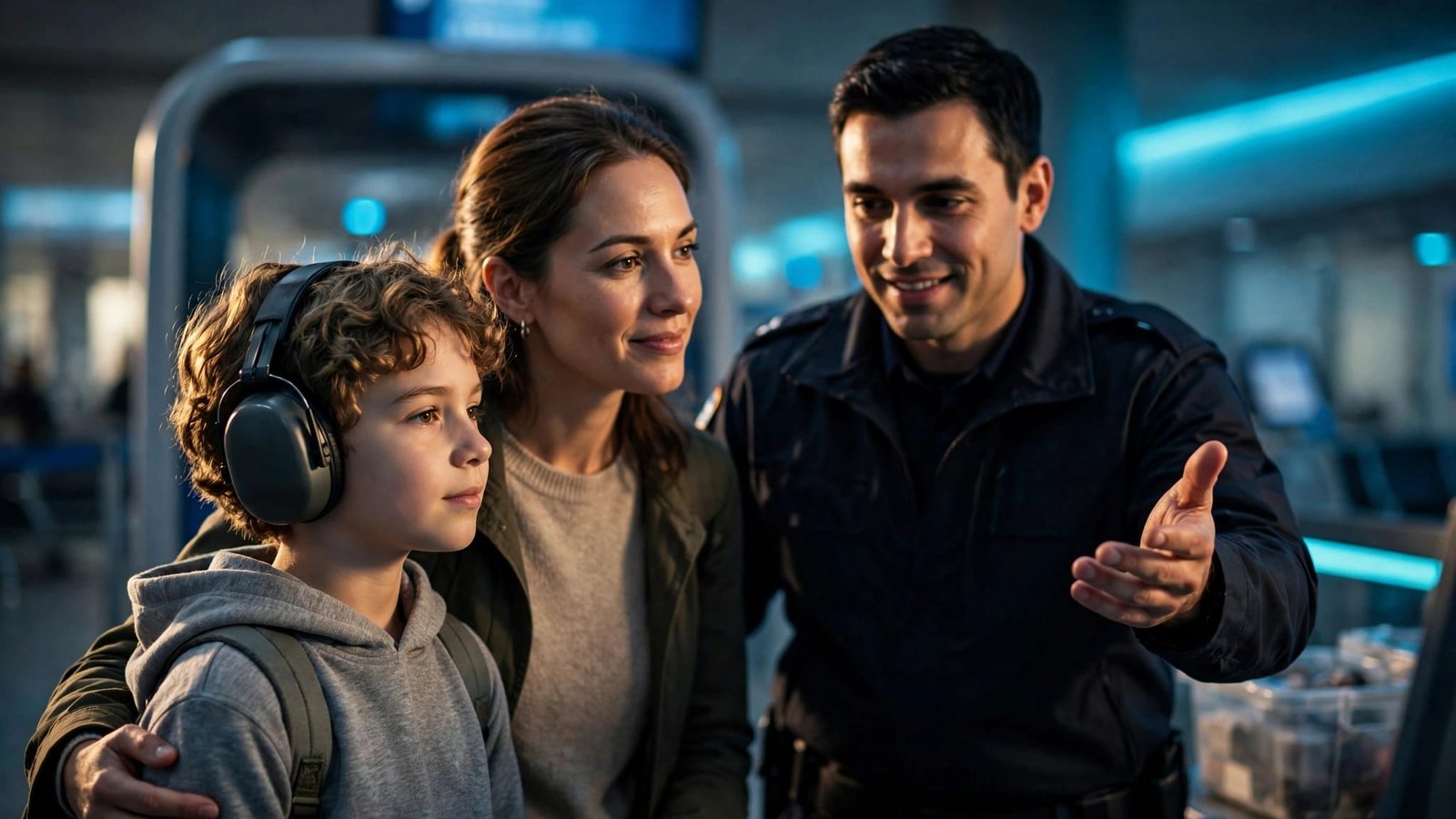
Airport security checkpoints can feel like the hardest part of a family travel day. Bright lights, loud announcements, queues, and changing directions can create uncertainty.
For some autistic travelers, sensory needs, communication preferences, and transitions can make air travel challenges harder to manage. Planning support can help families understand and prepare for the screening process. It doesn’t remove screening or guarantee a shorter wait, specific accommodation, or particular result.
A little planning can make family travel feel more manageable by turning an uncertain process into smaller steps.
Key Takeaways
- TSA Cares is a free pre-travel assistance service that helps travelers with disabilities, medical conditions, or other screening-related needs understand the process and communicate support requests.
- Contact TSA Cares at least 72 hours before departure when possible, and provide specific information about communication preferences, sensory needs, medical items, dietary needs, and requested assistance.
- A passenger support specialist may help explain procedures and facilitate communication, but TSA Cares does not guarantee a shorter wait, priority lane, specific screening method, or particular outcome.
- Prepare at home with a simple visual plan, familiar comfort and communication items, accessible medication and snacks, and extra time for breaks or unexpected changes.
- At the checkpoint, explain your traveler’s needs clearly, tell officers about medical items before screening, and ask for a supervisor or an available quieter area if communication or the plan breaks down.
How TSA Cares Support Works for Autistic Travelers
TSA Cares is a free pre-travel assistance service for travelers with disabilities, a medical condition, or other circumstances that may affect screening. Autistic travelers, parents, and caregivers can use it to discuss sensory needs, communication needs, medical items, and dietary needs.
The service helps travelers understand the security screening process and communicate support needs. Every traveler remains subject to TSA screening. Support requests don’t guarantee a specific outcome.
What TSA Cares can help with
When you contact the service, share the details that matter for your traveler. If your child has nonverbal autism, explain whether they use AAC, gestures, writing, or caregiver support to communicate. Also mention a diagnosed sensory processing disorder, unexpected touch, rapid verbal directions, extra processing time, or a loud queue.
If available, a passenger support specialist, often called a PSS, may meet your family at the checkpoint. A PSS may explain procedures and facilitate communication. A PSS doesn’t replace screening, and neither a PSS nor a request guarantees a specific outcome.
TSA also offers a helpful video about screening travelers on the autism spectrum. Watching it with your child can make the equipment and steps feel more familiar. Treat it as preparation material, not a guarantee of what will happen.
Contact TSA Cares at least 72 hours ahead
Current TSA guidance encourages travelers to contact the service at least 72 hours before departure. If your trip is sooner, contact the program as soon as possible.
Call the special assistance hotline at 1-855-787-2227, with relay service available through 711. This is the program’s phone contact channel, not an emergency service. You can also submit a request online.
Families can ask about available travel accommodations and screening assistance, but no specific support is guaranteed.
Have these details ready:
- Your travel itinerary, including dates, airline, departure airport, and flight information.
- The support you are requesting, such as a PSS or extra explanation during screening.
- Any medical items, mobility equipment, dietary needs, food, formula, nutrition requirements, or sensory concerns.
- The best way for officers to communicate with your traveler.
The TSA Passenger Support page confirms the current 72-hour guidance and explains how to ask for checkpoint assistance.
The service is most helpful when the request is clear. “My child has autism” is a starting point. “My child needs one instruction at a time and may need headphones until screening begins” gives the team something practical to work with.
Build a Predictable Plan Before You Leave Home
A successful airport day usually starts at home, not at the terminal. Talk through the trip in simple pieces, reviewing only the next few parts of the travel itinerary at a time. Don’t give every detail at once.
Use the same words you plan to use on travel day. “First we park. Then we bring our bags inside. Then we go through security. After security, we find our gate and have a snack.”
Before leaving, keep a printed or digital boarding pass available if the airline uses one. Separately, verify current identification requirements for each traveler.
Use short social stories
Social stories can use photos, drawings, or simple sentences on a phone. Keep them honest rather than treating them as a literal promise. Airport security isn’t always quiet or fast. Tell your child that the order or timing can change, while an adult explains the next step.
Try a short sequence like this:
- We arrive at the airport with our bags.
- We show our ID and walk to security.
- An airport worker may ask us to put bags on a belt.
- We may walk through a scanner or get another type of screening.
- We collect our bags, then go to our gate.
A visual schedule shows the order of events without promising exact timing.
If possible, look at photos of your departure airport online. Show your child a picture of the terminal, parking area, and security entrance. Familiar images can help reduce the surprise.
Pack comfort items where you can reach them
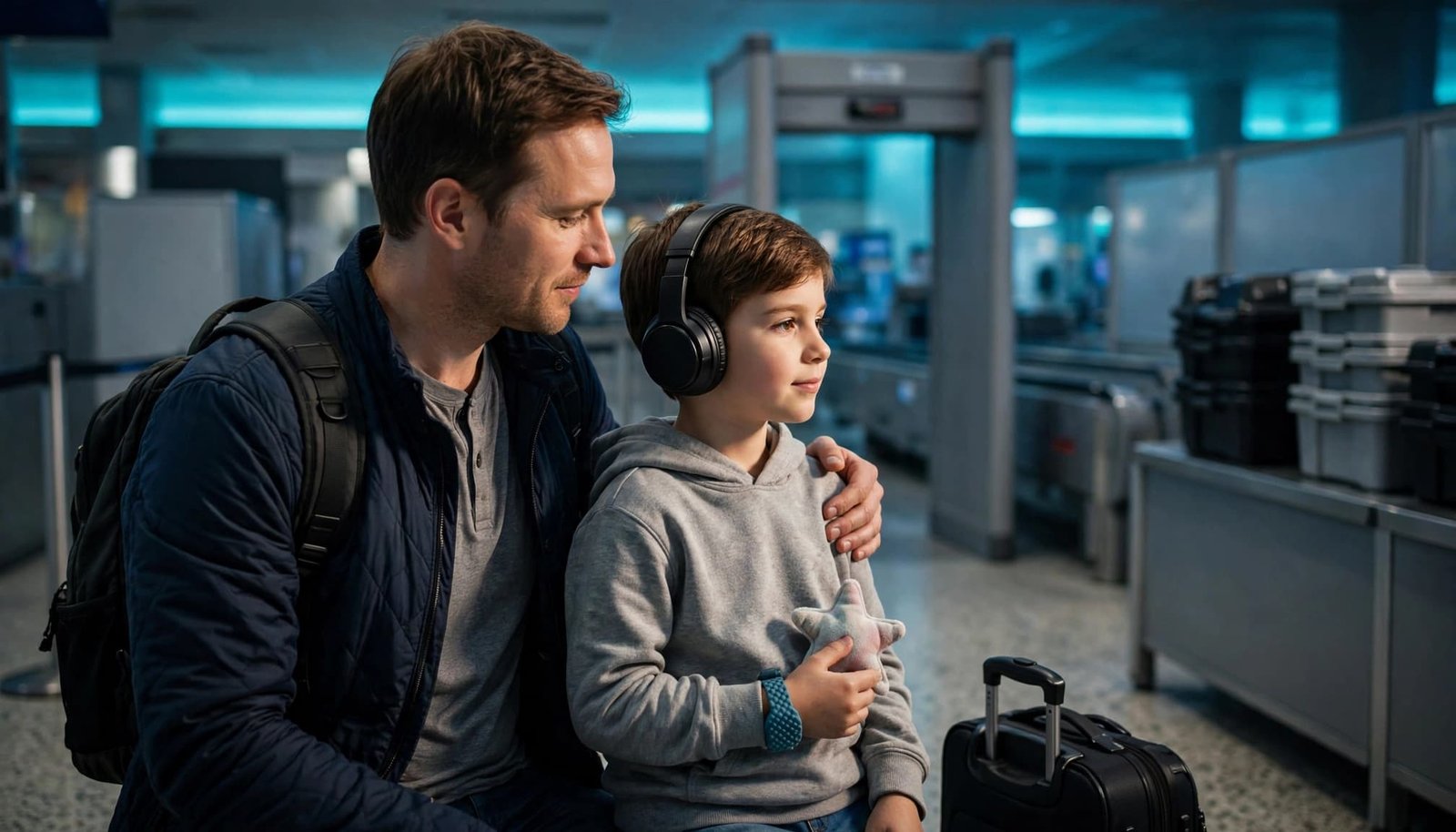
Keep comfort, communication, medication, and essential sensory items in one easy-to-grab pouch inside an accessible carry-on bag. Essential medication, AAC equipment, chargers, and regulation supports shouldn’t be packed only in checked luggage.
Pack familiar headphones, a favorite fidget, a hoodie, and a comfort item. Ask the traveler what helps, rather than assuming a particular comfort item will work.
Add familiar snacks, formula, or other foods that fit the traveler’s dietary needs. Include medication, a charging cord, and a portable charger. Families often remember the tablet but forget the cable.
If you use permitted tracking devices for checked bags, follow airline and battery rules.
A printed visual schedule is also helpful when a phone battery is low or a child doesn’t want to look at a screen. Bring a low-tech communication backup if your traveler uses AAC, picture cards, gestures, or sign language.
What to Do at Airport Security Checkpoints
Arrive earlier than you normally would. At an airport checkpoint, extra time helps when your family needs a bathroom break, snack, or quiet moment before the security line.
When you reach the checkpoint, tell the first TSA officer that you made a TSA Cares request. Have your confirmation details ready on your phone, and ask where to meet the PSS if one is available. The request doesn’t guarantee a priority lane, expedited screening, or a way to bypass the queue.
Start with a simple explanation
You don’t have to share your child’s full medical history in a busy line. A short explanation is enough.
You can say: “We made a request for a passenger support specialist. My child is autistic and needs clear, one-step directions. We may need extra time.”
If your traveler uses limited speech or is nonspeaking, you can explain these needs for them. Don’t pressure them to speak or answer.
Another option is a tsa notification card. You can print one and hand it to an officer if speaking feels difficult in the moment.
It can communicate a disability or medical need during the security screening process. It does not exempt a traveler from screening or guarantee a particular screening method.
It can make communication easier and reduce the need to repeat personal information in front of other travelers.
Headphones, shoes, and screening equipment
For some travelers, noise-cancelling headphones can help while waiting, but an officer may require them removed or inspected separately. Prepare your traveler for that possibility before leaving home.
Tell your child: “You can wear your headphones in line. A worker might need to check them. We’ll get them back right away.”
Some travelers can walk through a metal detector or body scanner. Others may need a pat-down or alternative screening method when appropriate, subject to TSA procedures and officer direction.
A parent or caregiver may be able to stay close and help explain what is happening. Whether they can remain beside the traveler during each screening step depends on checkpoint procedures and officer direction.
TSA may offer a quieter or more private screening location when appropriate, but it isn’t guaranteed. Ask calmly whether one is available for your traveler.
Food, Medication, and Medical Items Through Security
Food can be more than a convenience during travel. Familiar snacks may support dietary needs, help a selective eater, prevent hunger-related distress, or provide a safe option during delays. For some travelers, a medical condition may make medication, formula, cooling packs, or medical nutrition essential.
Solid foods like crackers, granola bars, dry cereal, sandwiches, and many packaged snacks can generally go through security in a carry-on. Keep them together so an officer can inspect the bag easily if needed.
Handle liquids and medicine differently
The usual carry-on liquid limit applies to drinks, gels, creams, and similar items. Medically necessary liquids, medications, nutritional formula, and creams over 3.4 ounces may be allowed in carry-on baggage. Tell the officer before screening and follow directions for separate inspection.
For medical travel, keep prescriptions and related supplies together in a clear bag or pouch. Tell the officer before screening begins if your bag contains liquid medication, formula, syringes, feeding supplies, pumps, or ice packs.
The TSA Cares information page is a good place to review current assistance information before packing. Rules and screening procedures can change, so check TSA.gov again close to your departure date.
Keep ice packs and frozen gel packs fully frozen when you arrive at the checkpoint. If they’re slushy or partly melted, TSA may need to screen them as liquids.
Don’t wait until the bag is on the belt to explain a medical item. Let the officer know before screening begins. A simple statement works: “This bag has medically necessary liquid medication and cooling packs.”
When the Checkpoint Plan Changes
Airport experiences can vary. Busy mornings, staffing levels, equipment issues, queues, or local checkpoint setups may change the process. An assistance request can support communication, but it doesn’t control those conditions or the final screening decision.
Stay focused on the next step. Your goal isn’t to get through security exactly like another family did. Your goal is to get your traveler through safely and with as much comfort as possible.
Ask for support if communication breaks down
Ask for a Supervisory TSA Officer if your TSA Cares request is delayed or unavailable. You can say, “The passenger support specialist hasn’t arrived. Can we speak with a supervisor about the best screening option for my child?”
Keep your voice calm and brief. Describe concrete access needs, such as help understanding the next step, rather than reducing distress to behavioral challenges.
If you need a pause, ask whether your family can step aside, if permitted. A quieter or private area depends on airport and TSA operations, so it isn’t guaranteed by the request. Use that time for headphones, a visual “break” card, or a familiar show on a device.
If plans change, keep medication, communication tools, comfort items, and food accessible during flight delays.
Give your child an easy way to communicate
Choose a simple phrase, picture, or hand signal before travel day. It might mean “break,” “headphones,” “too loud,” or “all done.”
Don’t force your child to explain their needs to a stranger. A caregiver can speak for them. The airport isn’t the place to practice independence when the situation already feels too big.
After security, take a reset before heading to the gate. Find a quieter seat, refill water bottles, offer a snack for the traveler’s dietary needs, and explain only the next one or two steps.
Practice Flying Before the Big Trip
Some airports host rehearsal events for autistic travelers and families. These events may include check-in, security screening, waiting at the gate, boarding a plane, and sometimes sitting on an aircraft before returning to the terminal.
The Arc’s Wings for Autism and Wings for All programs bring families, airports, TSA teams, airlines, and disability organizations together for practice events. These are community or airport opportunities, not TSA Cares services, and they don’t replace checking current airport procedures.
Look for a local airport rehearsal
A local flight rehearsal program may be listed on your airport website, local Arc chapter page, autism organization website, or disability-support group page. Availability varies by airport and month, so check for upcoming dates early.
A rehearsal lets your child see unfamiliar parts of flying without the pressure of a real departure time. It also helps parents identify where difficult moments may happen.
Photos from a rehearsal and social stories can help your traveler preview check-in, the checkpoint, waiting, boarding, and returning home.
For a Disney trip, the Disney World with Autism Guide on Etsy and the Amazon edition of the guide are optional commercial planning resources, not official TSA information. They include practical ideas for sensory breaks, familiar foods, communication, and flexible park days.
Your carry-on and vacation bag matter too. Visit Trip Rescue Shop for travel basics, including strollers, comfort items, and cleaning supplies for unexpected sick days away from home.
Frequently Asked Questions
What is TSA Cares?
TSA Cares is a free pre-travel assistance service for travelers with disabilities, medical conditions, or other circumstances that may affect screening. It can help families understand the checkpoint process and communicate support needs, but every traveler must still complete TSA screening.
How far in advance should I contact TSA Cares?
Current TSA guidance encourages travelers to contact TSA Cares at least 72 hours before departure. If your trip is sooner, call 1-855-787-2227 or submit a request online as soon as possible.
Can TSA Cares guarantee a passenger support specialist or faster screening?
No. A passenger support specialist may be available to explain procedures and facilitate communication, but a request does not guarantee a PSS, priority lane, shorter wait, private screening area, or specific screening method.
What should I tell TSA about an autistic traveler?
Share concrete support needs, such as one-step directions, extra processing time, limited speech, AAC use, headphone needs, or sensitivity to unexpected touch. You can also use a TSA notification card, but it does not exempt the traveler from screening or guarantee a particular result.
Can medication, formula, and special foods go through airport security?
Medically necessary liquids, medications, nutritional formula, and some related supplies may be allowed in carry-on baggage, even when they exceed the usual liquid limit. Keep these items accessible and tell the officer before screening so they can be inspected according to current TSA procedures.
A Calmer Start to Your Vacation
TSA Cares can be part of a simple plan: contact TSA early, explain your traveler’s needs, pack familiar comfort items, and allow extra time. Preparation can reduce uncertainty, but checkpoint conditions and screening decisions may still vary.
Security may feel unfamiliar, but it doesn’t have to define the travel day. Clear communication, realistic expectations, and a family plan can support your traveler’s comfort, dignity, and safety. They can also help everyone reach the gate with more energy for the trip ahead.
Comments
One response to “TSA Cares Autism Support: A Calmer Airport Security Plan”
[…] more practical details, review our TSA Cares support for autistic travelers before […]