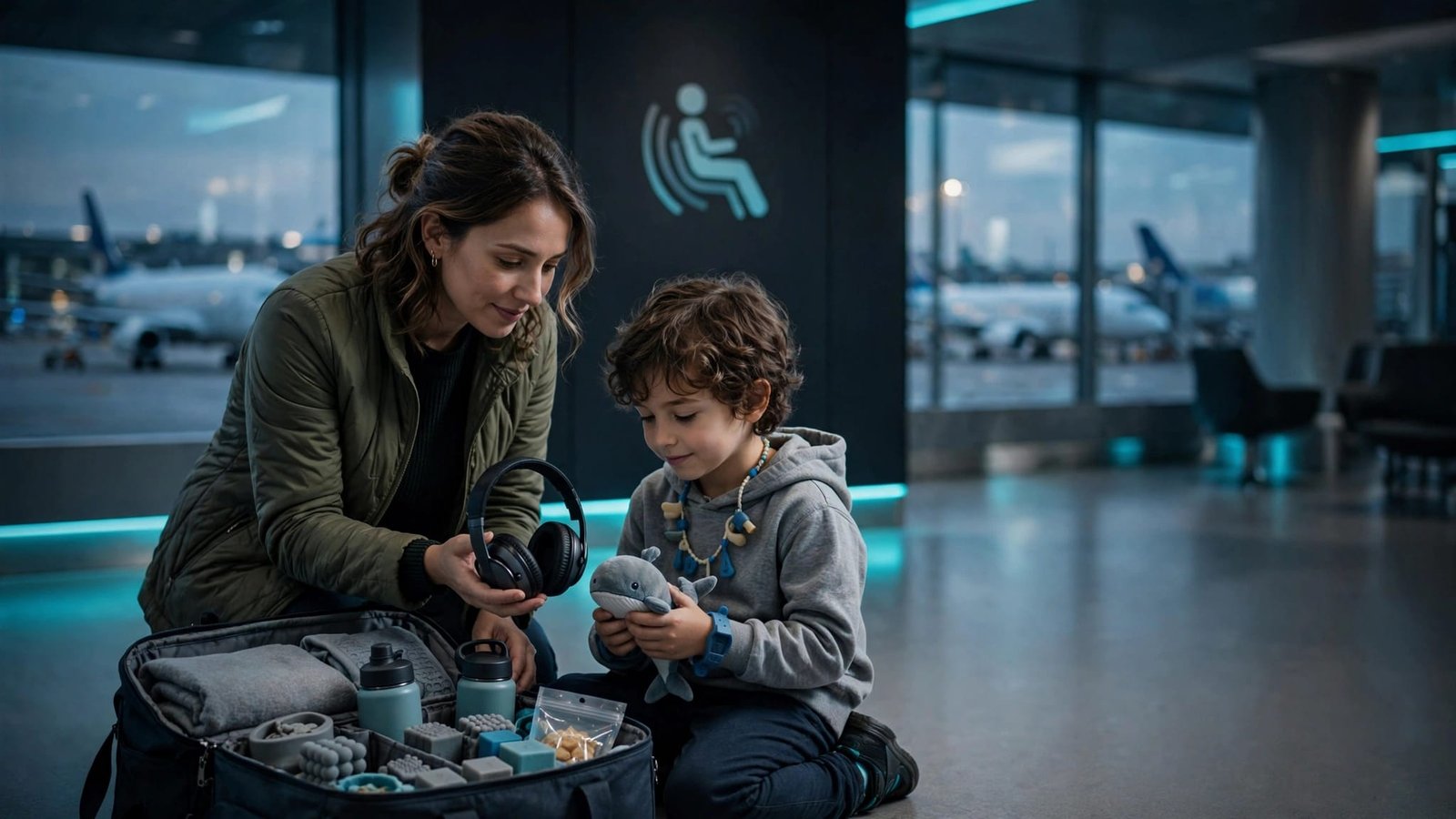
A layover can turn a manageable flight into a long day of noise, hunger, waiting, and sudden changes. An autism friendly airport plan gives your family more choices when the connection does not go exactly as expected.
You cannot control a delayed plane or a gate change. You can pack familiar supports, plan your route, and know where to ask for help before stress builds.
A sensory-friendly travel plan prepares you for uncertainty while adapting to your child’s communication, sensory, eating, mobility, and safety needs.
Key Takeaways for a Calmer Layover
- Build extra time into every connection, especially when your child needs bathroom breaks, food, movement, or time to reset.
- Keep medication, snacks, headphones, comfort items, communication devices, and chargers in your personal item.
- Check your connecting airport before you leave home. Look for current accessibility information and available autism support, including sensory rooms, quiet areas, communication assistance, trained staff, and details about the Sunflower program.
- Tell staff what helps your child. A short request is often better than sharing a full medical history.
- Prepare for changes with a simple backup routine: snack, bathroom, quiet break, then check the next update.
A successful layover does not mean your child loved every part of the airport. It means your family had enough time, support, and space to get through it together.
What Makes an Autism Friendly Airport Easier?
An autism friendly airport is not always a silent or uncrowded airport. Large travel hubs can be busy and unpredictable. Useful autism support may mean clearer communication or extra processing time. It may also mean a quiet area or help locating services, rather than a universally calm airport.
Amenities vary widely. Check the airport’s current accessibility page, then verify policies directly with the airport before every trip.
Clear support and predictable steps
Helpful airports offer social stories, visual guides, trained customer service teams, and staff who understand that some travelers need more time. A child who uses AAC, gestures, writing, or limited speech may need a parent to speak first.
Simple language can lower pressure. “We are going to the next gate. Then we will have a snack” is often easier than a long explanation about airline operations.
Sensory breaks when things feel too big
Quiet spaces, sensory rooms, lower-traffic seating areas, and family restrooms can give your child a chance to regroup. These spaces may have soft seating, lower lighting, tactile activities, or room to move.
Do not assume every airport has a dedicated room. Look at the airport map, ask an information desk, or contact the airport or airline about assisted travel before arrival.
Plan the Layover Before You Leave Home
A connection is easier when it is part of your autism travel story from the beginning. Add it to the same visual schedule you use for the flight, hotel, and vacation plans.
For families heading to Orlando, these Disney World autism planning strategies can also help you build short visual steps around travel day. Airport maps, visual schedules, social stories, and current accessibility pages are useful pre-travel resources.
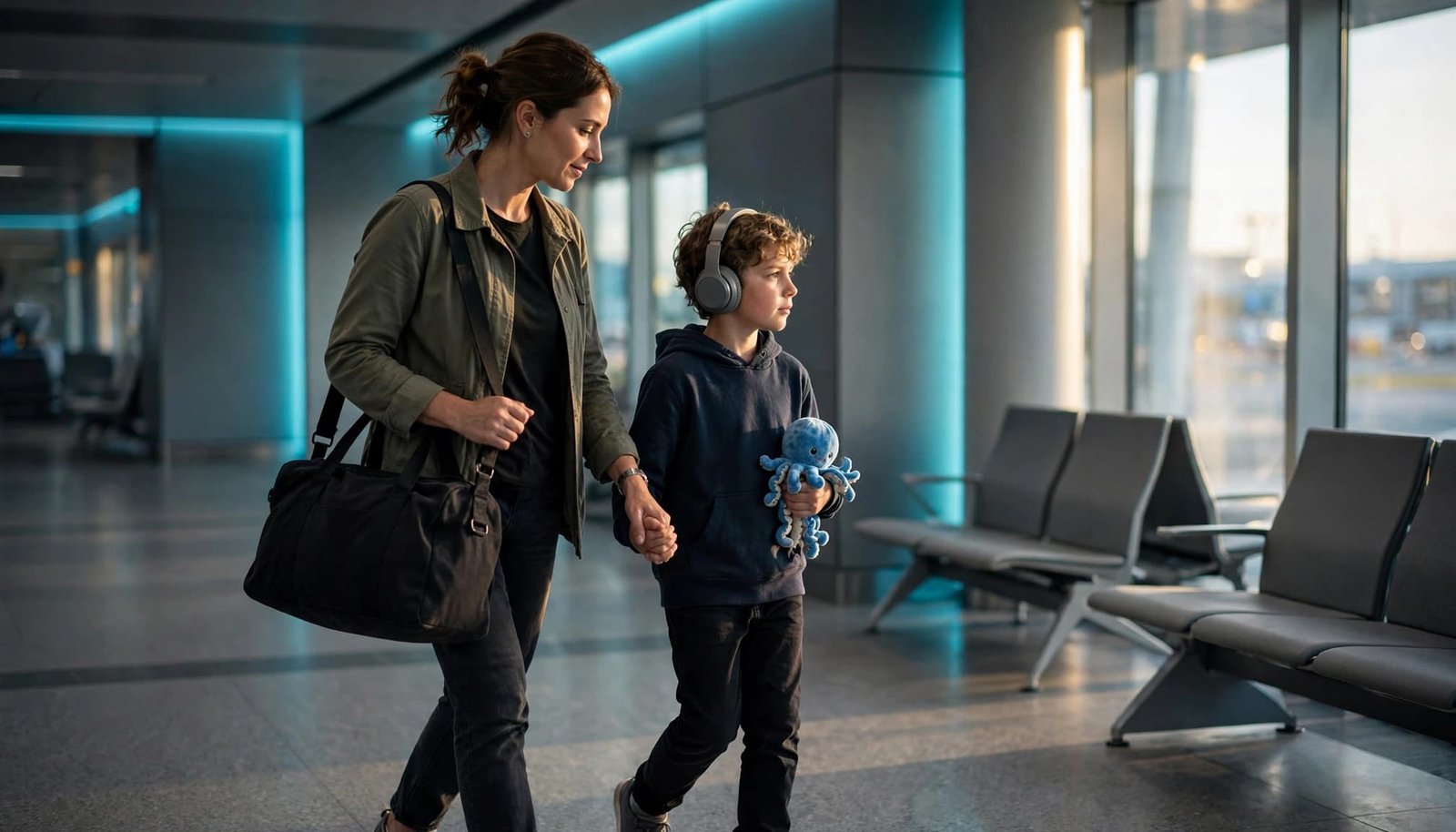
Make a short travel sequence
Keep the plan short. Your child doesn’t need every detail of a long travel day at once.
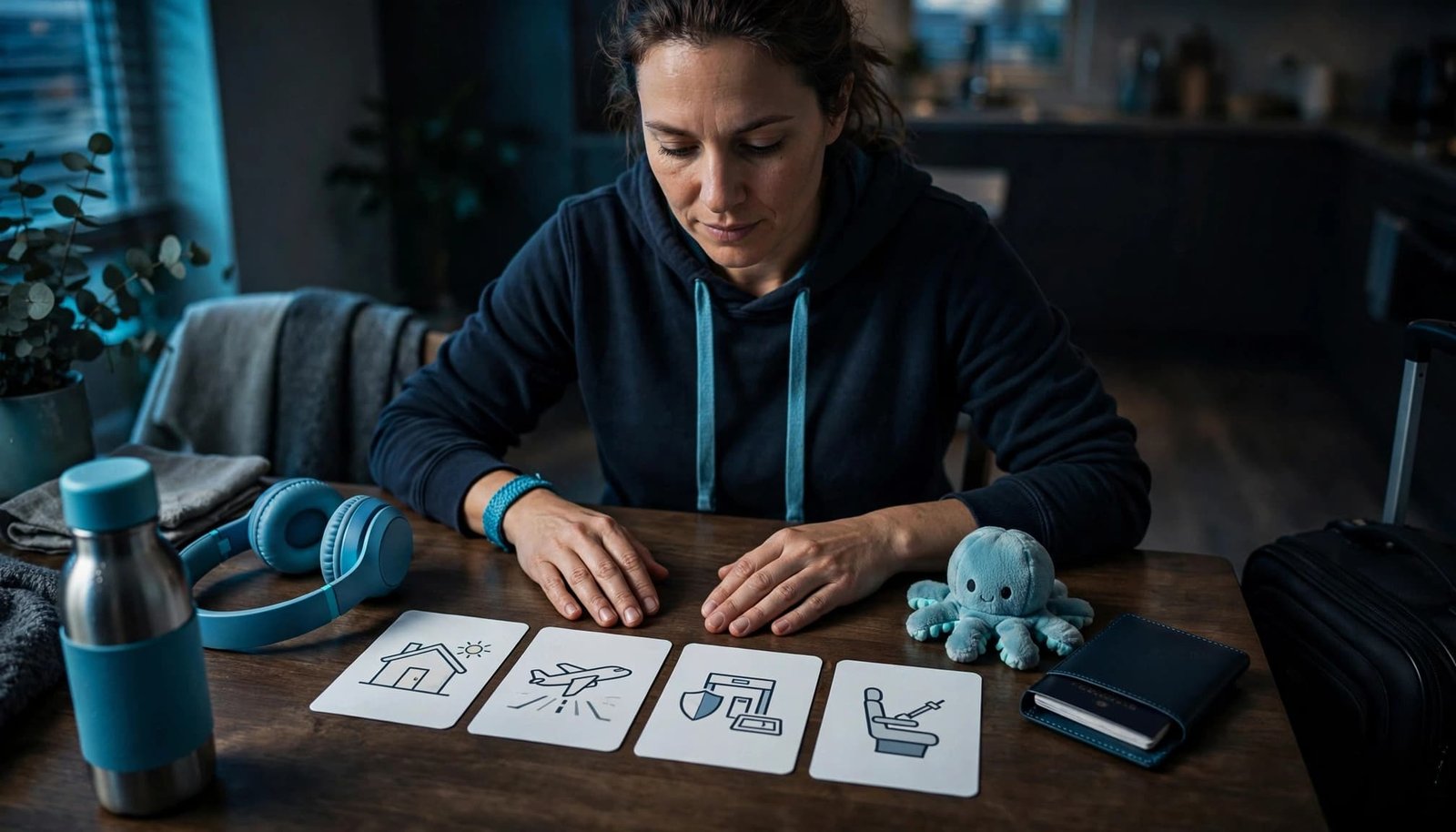
Try a sequence such as:
- Get off plane.
- Walk to next gate.
- Use bathroom.
- Eat a snack.
- Take a quiet break.
- Wait for boarding.
- Get on next plane.
Reviewing this sequence ahead of time may reduce travel anxiety for some children. Keep preparation flexible, and don’t turn it into a demand.
Use photos of the airport, pictures of a plane, or simple icons if those work better for your child. Review the plan when everyone is calm, not for the first time during a delay.
If your child already works with a care team, applied behavior analysis may offer familiar transition strategies. It’s not required and should never replace your child’s own communication or regulation preferences.
Choose a connection that gives you breathing room
A 40-minute connection may work for a business traveler with one backpack. It may not work for a family managing a stroller, medication, mobility needs, a bathroom stop, and sensory overload.
Before departure, ask the airline or airport about assisted travel and other available help. This can clarify support during transfers, waits, and gate changes.
When booking, look at terminal changes, airport size, and whether you’ll pass through large travel hubs. Allow time for terminal transfers, bathroom breaks, food, movement, and a chance to reset.
International connections often require customs or passport control, so they generally need more time than domestic ones. A longer layover can feel less exciting on paper, but it may give your family room to breathe.
Practice With Airport Dress Rehearsals
Some airports host practice events where families can experience check-in, security, waiting at a gate, boarding, and sometimes sitting on an aircraft. There is no pressure to catch a real flight.
Wings for Autism and Wings for All programs from The Arc help families and travelers with disabilities rehearse what to expect at an airport. Event dates, registration rules, airport locations, and age requirements vary across travel hubs. Verify current details before recommending a program.
What a rehearsal can teach your family
A dress rehearsal can show families which parts of the airport experience may challenge autistic travelers, including their child. It can also clarify what assisted travel support to request. The challenge may be the security bins, a loud boarding announcement, the walk through the terminal, or a tight plane seat.
Take pictures when permitted. Those photos can become part of your child’s visual schedule before the real trip.
Practice at home when no event is available
You can still rehearse the routine at home. Put a backpack on a chair, place a few items in a bin, walk through a doorway, and practice sitting with headphones for a few minutes.
If your child already works with an applied behavior analysis provider, you may ask whether familiar visual or transition supports can be adapted for the airport. No child needs these supports to participate.
Keep it low-pressure. The goal is familiarity, not perfect behavior.
Make TSA Security Less Stressful
The airport security process is often the least predictable part of flying with autism. There may be lines, loud equipment, close personal space, changing directions, and unexpected touch.
For a U.S. departure, review TSA Cares before you travel. TSA asks travelers to contact the program at least 72 hours before their flight when possible. Verify current requirements directly with TSA, your airline, and the airport. TSA support is separate from airline and airport services, so ask those organizations about their own options.
Share the support your child needs
Tell TSA what would help. Describe the travel accommodations your child needs. You might say, “My child has autism and needs one-step directions, extra time, and a parent nearby.”
If your child uses a communication device, gestures, or caregiver support, mention that. Explain sensitivity to loud sounds, touch, fast instructions, or separation from a comfort item. If you already work with an applied behavior analysis provider, ask about practicing a familiar transition routine before travel.
A Passenger Support Specialist may be available to explain the process and support communication during assisted travel. Every traveler still completes the required security screening. Assistance doesn’t promise a particular lane, shorter wait, or screening result.
Keep the checkpoint routine simple
Explain the process before entering the line: bags go in bins, some items may need to come out, we walk through the screening area, then we collect our things.
If you’re traveling with another adult, give each person a role. One adult can manage bags, documents, and your boarding pass, while the other stays focused on your child. After screening, your family can move to a quieter departure lounge or gate area if available. Familiar snacks can make a long line easier, while some children prefer noise-cancelling headphones, other sound supports, or no headphones.
For more practical details, review our TSA Cares support for autistic travelers before departure.
Find Sensory Rooms and Quiet Spaces
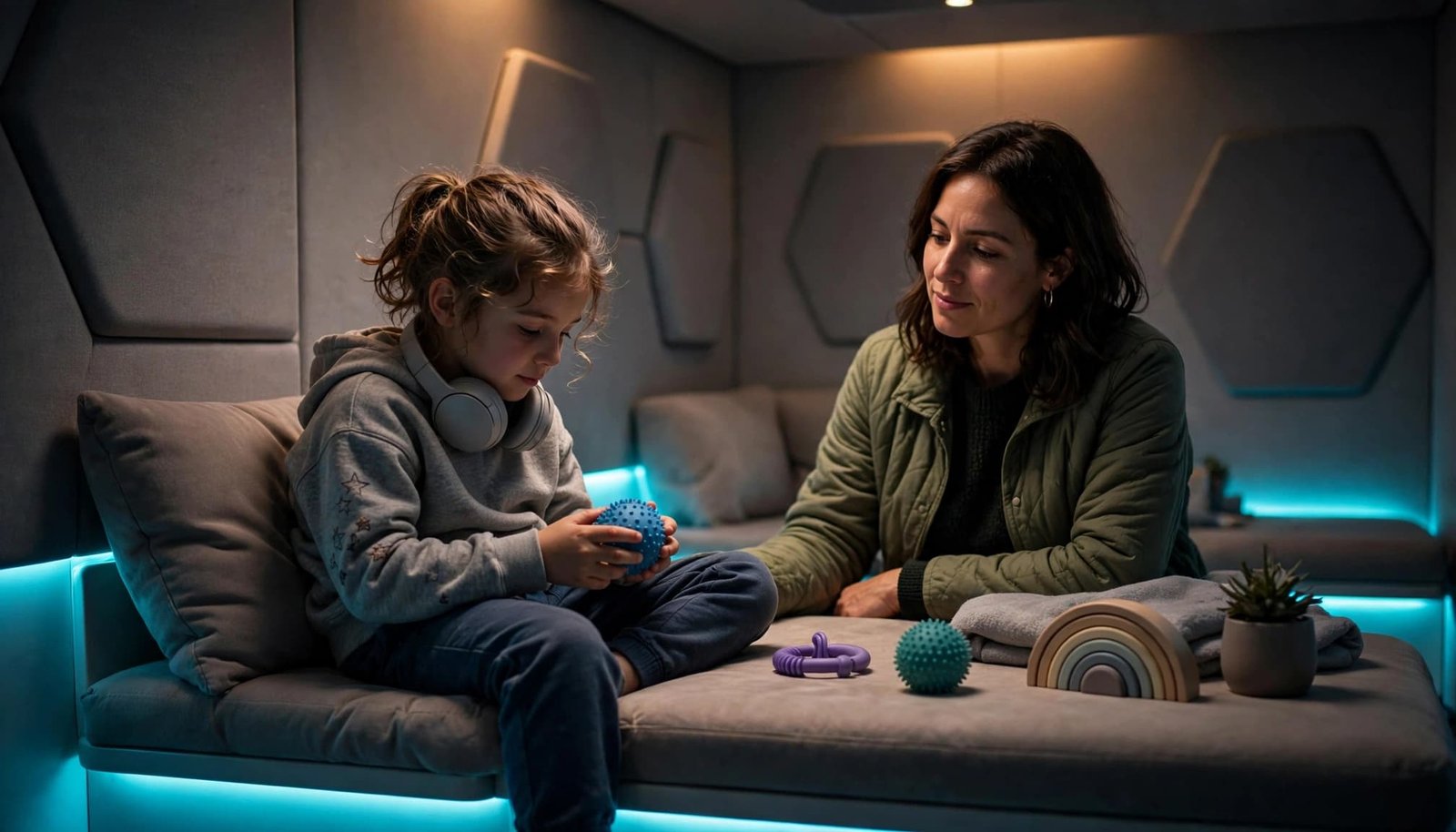
A sensory room is one possible form of autism support, not a guarantee that your child will instantly feel better. It offers a place to lower demands, reduce sensory input, and take a break before the next transition.
Check whether the room is before or after security. That detail matters during a tight connection, especially at major travel hubs where terminals and access rules can vary.
Presley’s Place at Pittsburgh International Airport
Pittsburgh International Airport’s Presley’s Place was designed with input from autistic people. It has included soft furniture and colorful bubble towers, according to NPR’s look at the Pittsburgh sensory room.
Features, access, and hours can change, so check Pittsburgh International Airport’s current page before your layover.
Seattle-Tacoma’s sensory support
Seattle-Tacoma International Airport offers sensory rooms for travelers who feel overwhelmed or overstimulated. The airport also offers a social story and resource guide that can help families prepare before arrival.
Review Seattle-Tacoma’s current airport information before relying on the room during your connection.
Even without a sensory room, ask information or accessibility staff about assisted travel. They can help you find an appropriate reset area, such as a low-traffic gate, family restroom, or quieter hallway. A short reset may be enough to help your child handle the next flight.
Use the Hidden Disabilities Sunflower Thoughtfully
The Hidden Disabilities Sunflower is a voluntary lanyard or card. It lets trained staff know that a traveler may have a non-visible disability. For autistic travelers, it can signal a need for assisted travel, more time, or support.
Autism is one of many conditions included in the program.
What the Sunflower lanyard can do
A sunflower lanyard can make it easier to ask for help without repeating private details all day. It can support a request for clearer directions, extra processing time, or patience. These travel accommodations depend on airport policies and staff, and the lanyard doesn’t create them automatically.
The Hidden Disabilities Sunflower airport directory can help you check participating airports worldwide. Seattle-Tacoma, Minneapolis-Saint Paul, Dallas Fort Worth, Vancouver, and other major airports have offered Sunflower support.
What it cannot promise
The lanyard is not a fast pass. It does not provide an exemption from screening, passport control, customs, or boarding procedures. It does not guarantee priority boarding, a quiet room, or a shorter line.
Each airport handles the program differently, and support can vary among travel hubs. For example, Dallas Fort Worth explains its own Sunflower lanyard program and how travelers can request support. Always verify each airport’s current participation, pickup location, and procedures directly with the airport before you go.
Handle Gate Changes and Delays One Step at a Time
For many autistic children, the hardest part of a delay isn’t the extra minutes, but sensory overload from sudden routine changes, loud announcements, hunger, and uncertainty. A delay can increase travel anxiety when the next step is unclear. Distress communicates a need for support, not bad behavior.
Your child will often look to you before they understand the airport screen.
Give short, honest updates
Avoid saying, “We will leave soon,” unless the airline has confirmed that. A better script is: “Our plane is delayed. We are staying at this gate for now. First we will eat. Then we will take a break. I will check for the next update.”
That gives the wait a shape. You don’t need to explain weather, staffing, or airline policies during distress.
Reset before solving every travel problem
If a flight is canceled or a gate changes, move away from the crowded departure lounge or customer-service counter, if safe and practical. Find water, food, a bathroom, and any needed medication, then look for a quieter place to sit. Stay with your child and maintain line-of-sight.
Ask staff about safe waiting areas during cancellations or gate changes. Explain what concrete autism support would help. One adult can handle rebooking while the other helps your child settle.
If your child already uses a familiar strategy developed with an applied behavior analysis provider, you may use it. Don’t introduce a new approach during the disruption.
Keep medication, a change of clothes, safe foods, wipes, chargers, comfort items, and communication supports in your carry-on. Visit Trip Rescue Shop for practical travel supplies, including strollers and cleaning supplies for when sickness hits on vacation.
Make the Boarding Plan Fit Your Child
Priority boarding can help some families. It gives you more time to settle, store bags, and get familiar with the seat. For other children, extra time sitting on a crowded plane feels harder.
Some families may prefer to stay in the departure lounge until later boarding instead. If your child benefits from assisted travel, ask the airline about boarding or seating support in advance.
There is no single right answer.
Tell the cabin crew one clear message
Once you board, quietly share a brief message with a flight attendant. You could say, “My child has autism and may be distressed by loud announcements or unexpected changes. We have headphones and comfort items. Please let us know about a delay or plan change early if possible.”
You are not asking the crew to solve everything. You are giving them useful context.
Choose the seat and routine carefully
A window seat may reduce people moving past your child. An aisle seat may make standing up or using the restroom easier. Think about what your child does best.
If your child already uses a familiar transition routine from an applied behavior analysis provider, consider using it during boarding. Keep it optional and child-specific.
Download shows, music, games, and communication apps before leaving home. Keep noise-cancelling headphones, snacks, and chargers within reach. Do not introduce a new sensory tool for the first time at the airport.
Plan International Layovers With Extra Care
International connections can add passport control, customs, security screening, terminal changes, unfamiliar food, and language differences. Large travel hubs may also require terminal transfers, trains, or long walks. For autism travel, a connection that looks comfortable on an itinerary can disappear fast.
Build in more time than you think you need.
Confirm each airport’s rules
TSA Cares helps families prepare for U.S. screening. It does not arrange airline assistance, foreign airport support, customs help, accessible transportation, or hotel rooms during an overnight delay.
Contact the airline and each airport directly about travel accommodations, special assistance, terminal transfers, long walks, gate changes, and boarding procedures. Also ask about meals, sensory spaces, overnight disruptions, and the Sunflower program if your child plans to wear a lanyard.
Ask how support works for autistic travelers and whether assisted travel follows a different process. If your child already works with a provider using applied behavior analysis, ask whether familiar transition supports can be practiced before departure.
Keep travel day flexible
Avoid scheduling a big activity immediately after a long international flight if your family can help it. A hotel check-in, familiar food, a shower, and sleep may be the better plan.
Our international travel checklist for autistic children can help you plan flights, transfers, food, sleep, safety, and flexible days without packing every hour.
Frequently Asked Questions
Can TSA Cares help my autistic child get through security?
TSA Cares can help families prepare for screening and communicate support needs before a U.S. flight. Contact the program at least 72 hours ahead when possible. Screening still applies to every traveler.
Share concrete needs, such as extra processing time, one-step directions, AAC use, limited speech, sensitivity to touch, or a parent staying nearby. TSA Cares doesn’t guarantee a specific lane, shorter wait, exemption, or screening result.
Should we use a sunflower lanyard during our layover?
It can be helpful if your connecting airport recognizes the program. The lanyard is voluntary and part of the hidden disabilities sunflower program, which may let staff know your child needs more time, patience, or clear communication.
It doesn’t guarantee special treatment. Check your specific airport before travel day.
What should I pack for an airport delay?
Keep essential items in your carry-on: medication, documentation, chargers, a communication device, water-access supplies, familiar snacks, headphones, wipes, spare clothes, and comfort items.
Choose things your child already uses at home. Airport travel isn’t the time to test new fidget toys or an unfamiliar snack.
Can a Disney autism guide help with airport planning?
Yes, optional planning resources can help make the travel day part of the vacation, especially when your family is flying to Orlando. The Disney World with Autism Guide PDF on Etsy and the Amazon edition of the guide include practical ideas for sensory breaks, familiar foods, communication, and flexible Disney days.
A Layover Plan That Gives Your Family Room to Breathe
The best autism-friendly airport layover plan is not a perfect schedule. It is a flexible routine built around your child’s communication style, sensory needs, hunger, energy, safety, and comfort items.
Plan the connection, ask for help early, and verify current airline and airport policies. Leave room for a reset without judging your child or family if the itinerary changes. More time and fewer demands can make all the difference.
Leave a Reply