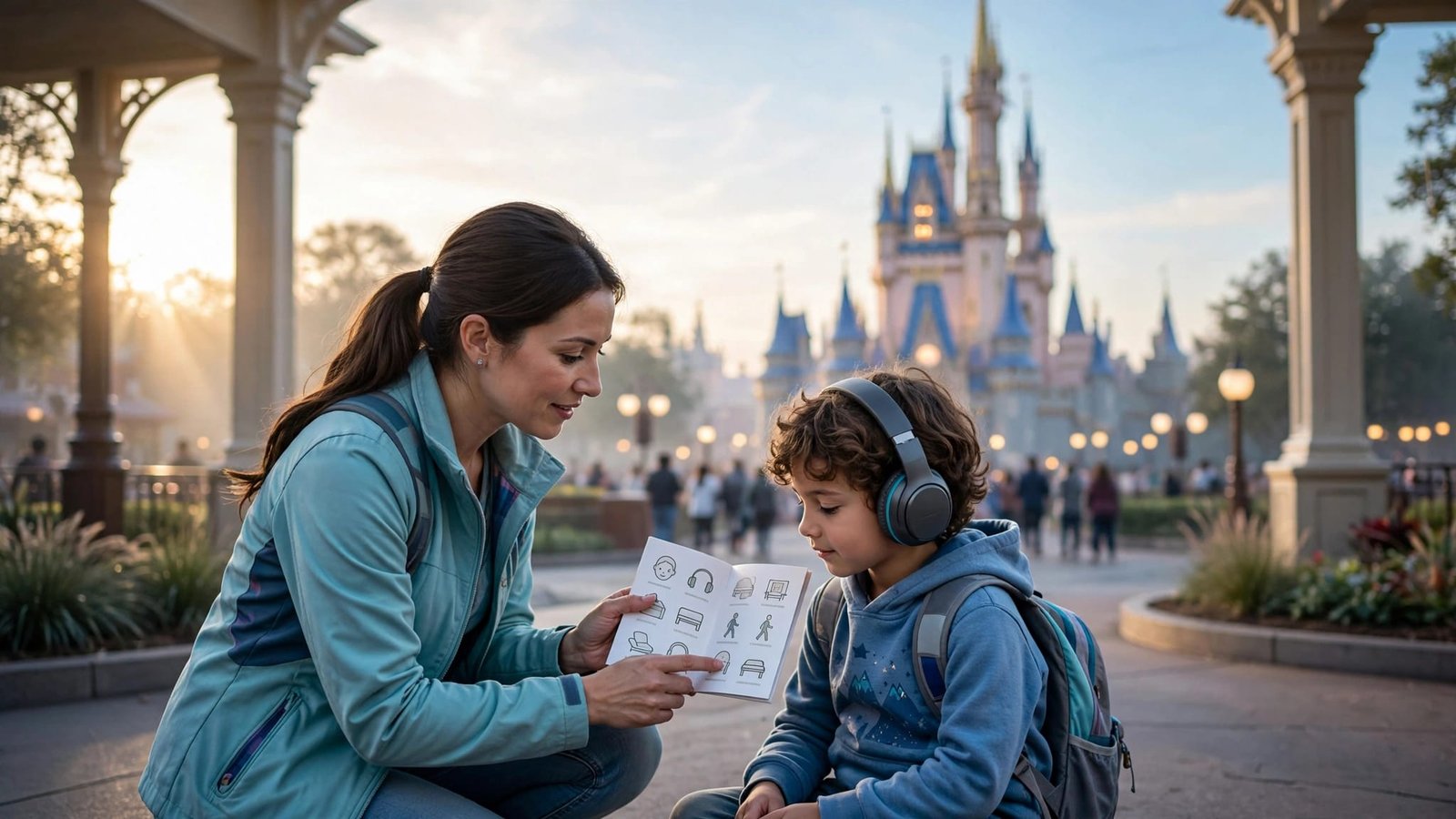
A Disney day can be full of happy moments, but crowds, sounds, heat, and changes can feel like a lot. A short social story gives your child a simple picture of what may happen before they reach the park entrance feeling unsure.
You don’t need a perfect schedule or a packed ride list. At Walt Disney World Resort, plan around your child’s communication style, sensory needs, and comfort level. Flexibility matters more than completing every attraction.
Start small, practice at home, and leave room for breaks. That is how Disney World can feel more familiar and manageable for your family.
Key Takeaways
- A social story works best when it uses simple language, real photos, and routines your child already understands.
- Plan for the full trip, including the airport, hotel, transportation, security, meals, and park entry.
- Disney’s Disability Access Service, known as DAS, may help some eligible guests with autism and cognitive disabilities who cannot tolerate a traditional attraction queue. Eligibility depends on disability-related needs and isn’t automatic, so verify current Disney information before traveling.
- Bring familiar foods, sensory tools, communication supports, and a clear safety plan.
- A slower day with one favorite ride and a hotel break can still be a wonderful Disney day.
Why This Preparation Can Help at Disney World
Disney theme parks are exciting, colorful, busy, and loud. For some children with sensory processing disorder or neurodivergent disabilities, crowds, noise, heat, and unpredictability can cause anxiety and distress. A prepared story gives your autistic child a chance to learn about the trip in a calm, familiar place.
Predictability Can Reduce Big Feelings
Social stories can provide structure and routine without promising that every moment will go exactly as planned. Weather changes, rides close, and crowds happen. For families planning around autism and cognitive disabilities, this approach helps explain the main parts of the day.
Read the story a few times before your trip. Use it again in the hotel room or while waiting for transportation. Disney also shares information about services for guests who are neurodivergent, which families can review before arrival.
Keep the Story Focused on Your Child
Some children want lots of details. Others do better with a short plan: breakfast, bus, one ride, snack, break, hotel. Start with what already works at home.
Use words your child knows. If they say “all done” instead of “I need a break,” use “all done” in the story. If they use AAC, picture cards, or gestures, include those supports.
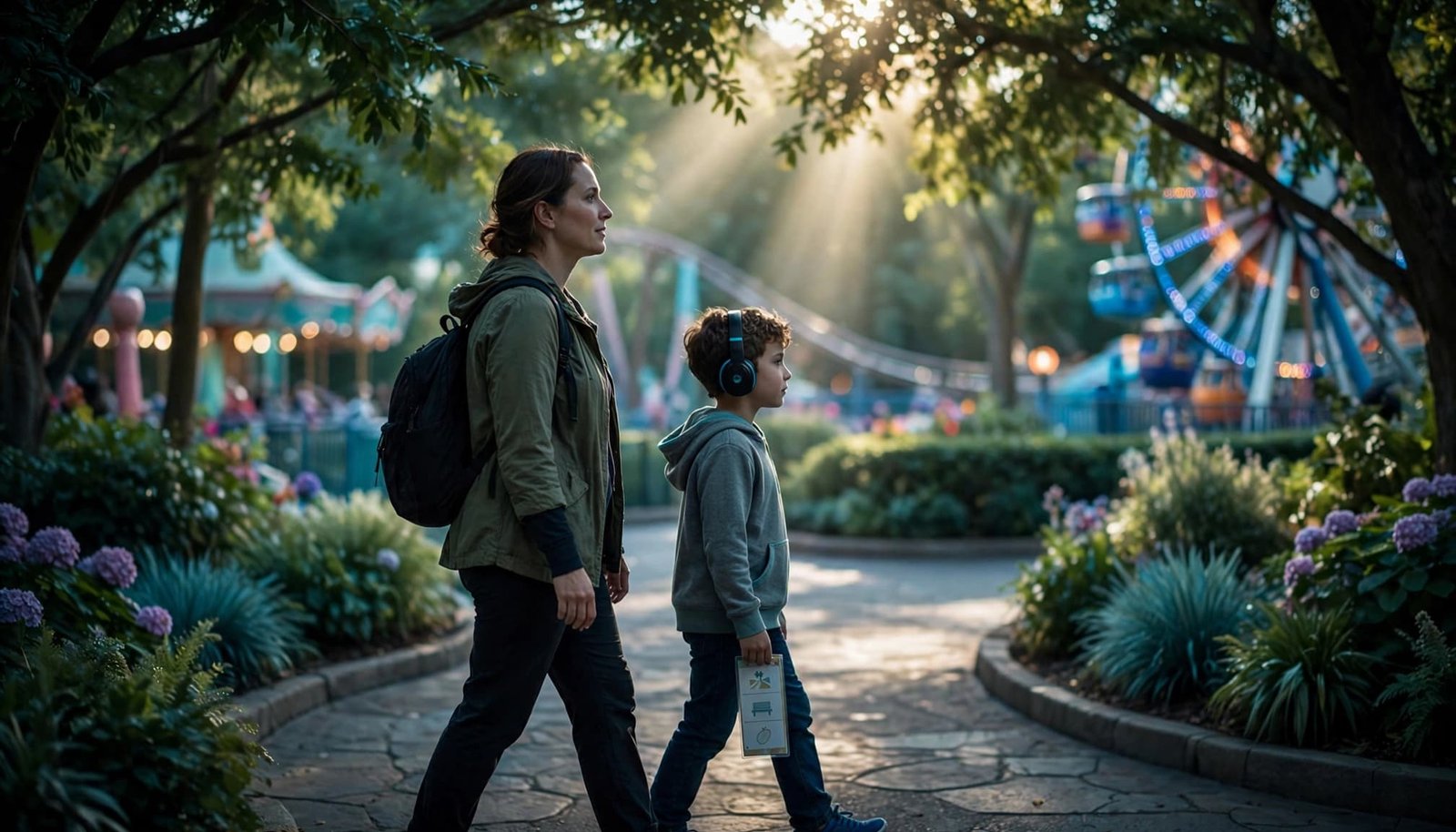
A Ready-to-Use Disney World Social Story
You can read this story as written, then change details to fit your family. Add your resort name, favorite foods, transportation plan, and photos of your child when possible.
I am going on a trip to Disney World with my family. Disney World can be exciting, busy, and sometimes loud. My family will help me.
Before we leave, I will pack my comfort items, snacks, and headphones. I can bring things that help my body feel calm.
We may travel by car, airplane, bus, monorail, Skyliner, or boat. There may be waiting, noises, and other people. I can ask for help or take a break.
When we get to our hotel, we will check in and see our room. I can rest, eat, swim, or play before going to a park.
At the park, we will go through a bag check and enter through the gate. There may be crowds. I can stay close to my grown-up.
We will choose one or two things to do. I don’t have to ride every ride. I can say “yes,” “no,” “break,” “help,” or “all done.”
Some rides are dark, loud, fast, wet, or have surprises. My grown-up will help me decide if a ride feels right for me.
We will eat snacks, drink water, and take breaks. A break is part of our Disney day.
If something changes, my grown-up will tell me what is happening next. We can choose another ride, have a snack, go back to the hotel, or try again later.
When it is time to leave, we will go back to our hotel. I can rest after a big day. My Disney trip can be fun even if we do fewer activities than other families.
Parents can turn this sequence into itinerary cards with simple pictures or words.
Read only one or two parts at a time if the full story feels too long. The goal is comfort, not memorization.
Personalize the Story Before You Travel
A general Disney World social story is a helpful starting point. Social stories become more meaningful when paired with your family’s own photos and routines.
Add Photos and Visual Schedules
Take screenshots or print photos of your Disney Resort hotel, transportation, park entrance, and one or two attractions. Watch ride-through videos together before the trip. Your child can see darkness, water, loud sounds, sudden movement, enclosed spaces, or characters before deciding what feels comfortable.
Keep visual schedules short. A page full of exact times can create more pressure. A few picture cards or itinerary cards often work better.
Practice Transitions and Changes
Practice the parts of travel that may feel hard. Travel preparation can include wearing headphones in a busy store, taking a short bus ride, or walking through a parking garage. Use a countdown and predictable language to provide structure and routine when it is time to leave a preferred activity.
Prepare a backup choice for each must-do plan. You can say, “If the train is closed, we can get a snack or look at the castle.” Clear choices feel better than “We will see what happens.”
For more family-centered preparation ideas, the Disney World with autism guide shares practical strategies for sensory needs, breaks, and flexible park days. Families seeking individualized help can also consult a Certified Autism Travel Professional.
Disney Accessibility Support and DAS
Disney has services for guests with autism and cognitive disabilities, as well as some guests with neurodivergent disabilities, but policies can change. Review the official information before your trip and choose the supports that fit your child’s real needs.
How Disability Access Service Works
Disability Access Service may help guests with developmental disabilities, including autism and cognitive disabilities, when a traditional queue is difficult to tolerate. DAS is not a front-of-the-line pass. It provides a return time comparable to the current standby wait.
Because procedures, timing, eligibility, and app options can change, verify the details directly with Disney before your trip. Under Disney’s current process, registration may be available by live video chat up to 60 days before your park visit. The guest requesting DAS must be present, and the adult completing registration must be at least 18. After entering the park, families may request a DAS return time in the My Disney Experience app. Guest Relations and Guest Experience Team locations can help families without a mobile device.
A party may hold one DAS reservation at a time. That limit is another reason a flexible day works better than trying to do everything.
Other Helpful Queue Options
Depending on your family and attraction, Disney may also offer Rider Switch, Single Rider, or Attraction Queue Re-Entry options. Ask a cast member if you’re unsure what may work in the moment.
Disney doesn’t promise formal quiet rooms in every park. Ask guest services about respite areas or other lower-stimulation options that may currently be available when your child needs a reset. Disney’s accessibility services information also lists planning resources and contact details.
Pack for Sensory Comfort and Safety
A Disney bag isn’t about bringing everything. It should support regulation, communication, and safety without overwhelming parents, with a few items that make hard moments more manageable.
Bring Familiar Supports
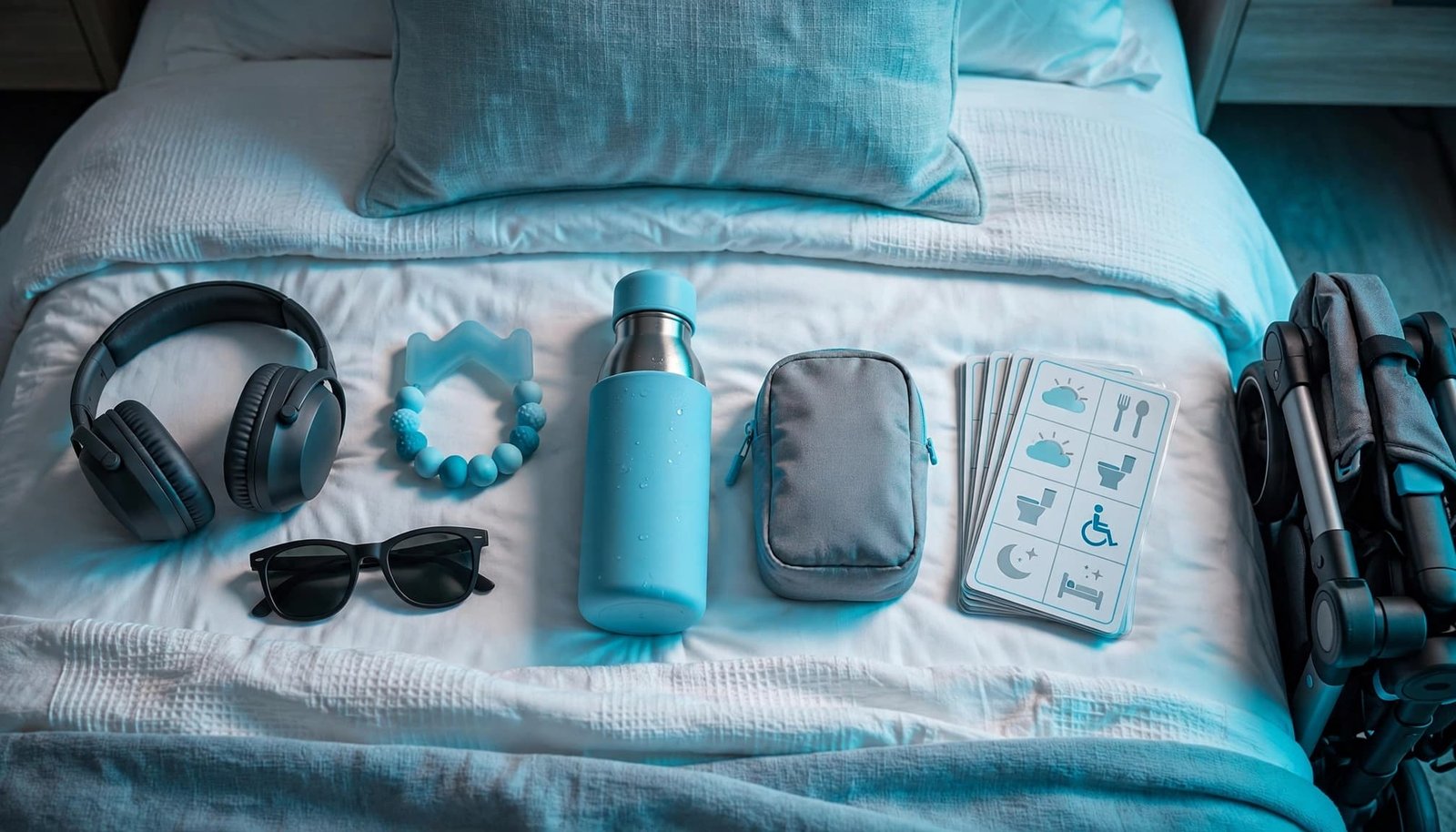
Noise-canceling headphones, sunglasses, a comfort item, fidget toys, a charged AAC device, and low-tech communication cards can help, depending on your child’s needs. Children with autism and cognitive disabilities may benefit from different supports. Pack a portable charger and a backup communication option in case a device loses power.
Familiar snacks and drinks can take pressure off meal times. Florida heat, waiting, and long walking days can be hard on everyone. Water, preferred foods, medication, cooling towels, and an extra shirt can help your family reset. Before traveling, know how you’ll handle medication and medical needs. Also know where to find current information about health care services during travel.
Make Safety Plans for Elopement and Reunification
If your child may leave suddenly when stressed, take a current photo each morning and keep it on every adult’s phone. Decide on a meeting point before entering the park. Assign caregiver roles, and make sure each adult knows who is watching which child.
An ID card, wearable identification, or communication card can share a caregiver phone number and helpful information. Teach your child that Disney Cast Members wear name tags and can help if you become separated. If separation occurs, contact the other adults, return to the meeting point, and ask Cast Members for help.
A safety plan works best when every adult knows it before anyone feels overwhelmed.
For travel basics beyond the parks, Trip Rescue Shop has family travel supplies, including strollers and practical items for sick days away from home.
Helpful Disney Autism Guide Options
Planning is easier when you can review support ideas before booking every detail. K&S The Travel Crusaders offers travel planning shaped by firsthand family experience, real-world special-needs travel planning, and Kellie’s B.A. in Child Development. Some families may also choose optional planning support from a Certified Autism Travel Professional.
Keep a Guide Handy Before and During Your Trip
The Disney World with Autism Guide PDF is an accessibility planning guide with practical ideas for DAS preparation, sensory tools, park breaks, and flexible daily plans. It’s helpful for families who want a PDF resource to read at their own pace.
You can also find the Disney World with Autism ebook. Both guides offer planning support for families seeking guidance tailored to autism and cognitive disabilities. They are planning resources, not substitutes for confirming current Disney procedures through official Disney sources.
Get Help With the Details
Your resort, transportation, ticket days, food needs, mobility supports, and rest plans all matter. Thoughtful vacation planning can make a midday break more realistic, especially when your hotel is close to transportation or has an easy room layout.
For help building a vacation around your child’s needs, Disney World autism planning can include support for sensory concerns, communication needs, mobility, food restrictions, and elopement planning.
Frequently Asked Questions
How early should we start using social stories?
Start several weeks before the trip when possible. Read a small part at a time, then add photos and visual schedule cards as the trip gets closer. Bring the story with you for travel day and park mornings.
Can my autistic child automatically get DAS?
No. Disney reviews DAS requests based on a guest’s disability-related need to avoid a conventional queue. An autism diagnosis alone doesn’t guarantee approval. Check Disney’s current registration rules before you travel.
What if my child gets overwhelmed at the park?
Move away from the immediate activity if you can. Anxiety and distress may ease with water, a snack, headphones, a comfort item, or a simple choice. Your next step may be a quiet table, a hotel break, or leaving for the day.
Build the Disney Day Your Family Needs
At theme parks, the best Disney day isn’t measured by ride count, fireworks, or how late you stay. It is measured by whether your child feels safe, supported, and included.
A Disney World social story gives your family a calm place to begin. Pair social stories with sensory supports, a flexible plan, and permission to change course when your child needs it.
Leave a Reply