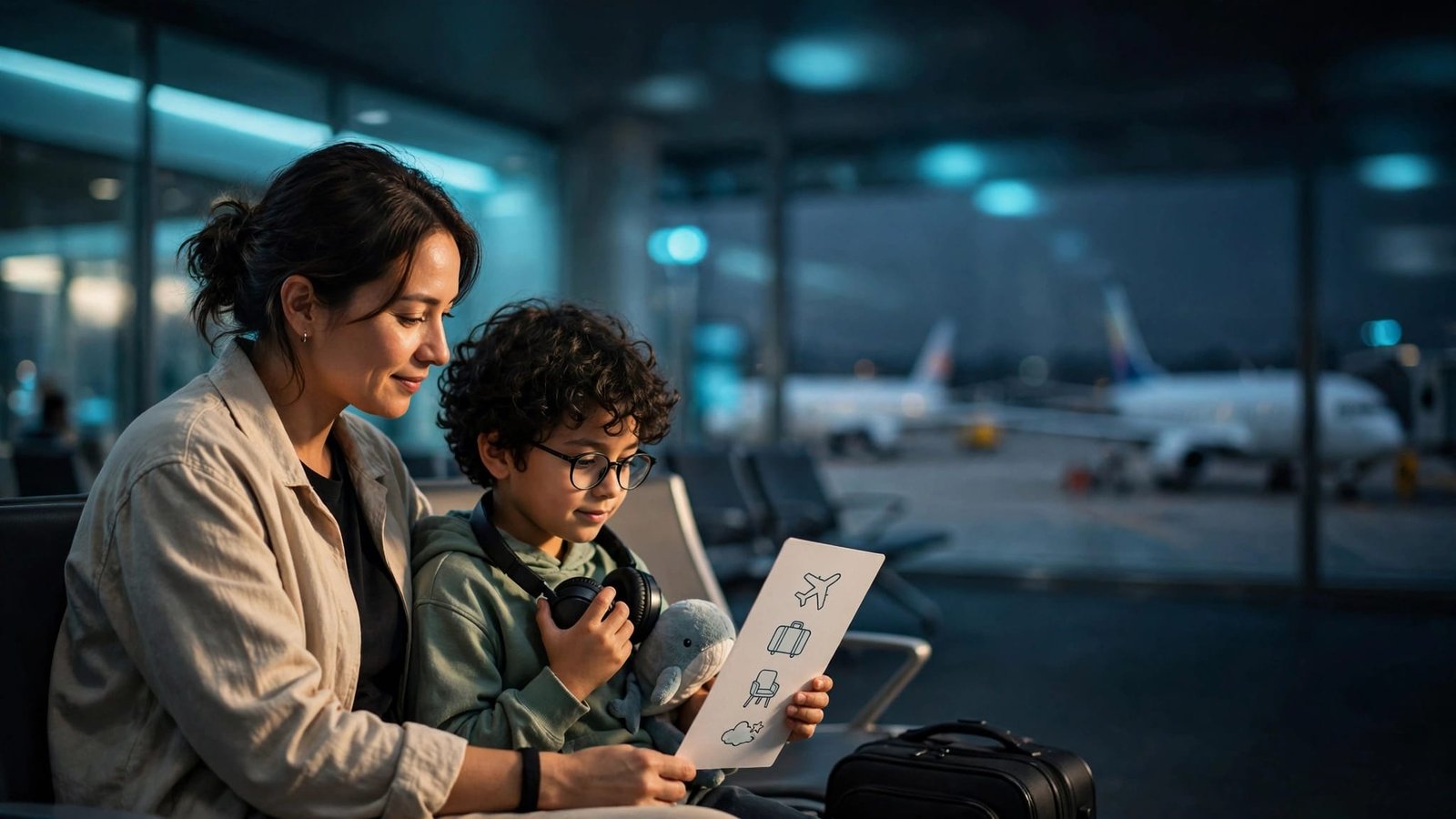
A family vacation can feel exciting right up until a changed bedtime, long airport day, and missed nap make everything feel too big. Autism-friendly jet lag planning gives your child more predictability before, during, and after a time-zone change.
Your child doesn’t need to love flying or sleep perfectly for the trip to go well. They need familiar supports, predictable daily routines, thoughtful flight preparation, and adults ready to slow down when the day gets hard.
Start with your child’s usual sleep needs and sleep patterns, then use vacation planning to build practical autism travel supports around them.
Key Takeaways for a Calmer Travel Day
- Keep sleep and wake times as steady as possible before you leave, especially for trips across several time zones. Protecting familiar sleep patterns can make the transition easier.
- Use a short visual schedule or social stories to preview the airport, plane, hotel, sleep, and first activity.
- Contact TSA Cares at least 72 hours before a U.S. departure if travel accommodations may help. Your child doesn’t have to manage security screening without support.
- Plan flight preparation in advance. Pack familiar food, comfort items, communication tools, and sensory supports for a more sensory-friendly travel experience.
- Treat the first day at your destination as a recovery day, not a day to rush into big plans. Weekend recovery sleep or extra rest after travel can be reasonable.
- Build in breaks without guilt. A hotel reset, quiet meal, or early bedtime can protect the next day and familiar daily routines.
A slower first day is not lost vacation time. It gives your child a chance to settle into a new room, new sounds, and a new sleep routine.
Understanding Autism-Friendly Jet Lag and Sleep Changes
Jet lag happens when your child’s circadian rhythm is still following home time, even after the family reaches its destination. Their biological clocks may remain aligned with home time while meals, light, activities, and bedtime follow destination time. These cues can gradually shift the circadian rhythm, but the change may disrupt familiar sleep patterns.
For autistic children who depend on routines, that shift can feel bigger than it looks on a travel itinerary. Their developmental level, understanding of time, flexibility, and communication needs can all affect how the schedule change feels.
Social jet lag is different from travel jet lag
Social jet lag is the difference between sleep timing on school days and weekends. It is measured by comparing the sleep midpoint.
For example, a child who sleeps from 8 p.m. to 6 a.m. has a sleep midpoint around 1 a.m. If weekend sleep moves to 10 p.m. through 8 a.m., the sleep midpoint shifts to 3 a.m. That is about two hours of social jet lag.
Unlike social jet lag, travel jet lag follows a time-zone change. A 2025 study of children with autism spectrum disorder ages 2 to 3 found that greater social jet lag was associated with more pronounced core symptoms. This does not prove that sleep changes cause symptoms. It does show why regular sleep patterns can matter for some young children.
Why routine changes can feel so hard
Sleep duration and sleep timing are different. A child may spend the same number of hours in bed but still feel unsettled when sleep happens at a new time.
Sleep loss can lower a child’s ability to manage noise, waiting, hunger, communication demands, and unexpected changes. The airport may already bring bright lighting, crowds, close personal space, and loud announcements.
Add a new bedtime, a hotel room, and a busy first day, and the demands can pile up fast. Autism-friendly jet lag planning works best when you reduce demands before your child is already worn down.
Start With Your Child’s Usual Sleep Pattern
Before changing anything, look at what works at home. Write down usual wake-up time, nap timing, bedtime routine, favorite sleep items, and early signs of fatigue. These sleep patterns provide a useful starting point.
The National Sleep Foundation recommends 11 to 14 hours for children ages 1 to 2, 10 to 13 hours for ages 3 to 5, and 9 to 11 hours for ages 6 to 13. These age-based sleep duration ranges are general guidance, not a test your child has to pass. Your child’s developmental level and individual needs also matter. Total sleep duration doesn’t capture sleep quality or timing.
A study of the youngest children with autism spectrum disorder found sleep insufficiency on more than 80% of both weekday and weekend nights in that study group. Sleep insufficiency is different from simply sleeping at a different local time. Many autistic children already deal with sleep disturbances at home. The study did not show that sleep changes cause or worsen every child’s core symptoms.
If bedtime is already difficult, don’t turn travel preparation into another big project. Let current sleep patterns guide your travel plan. A large gap between school-day and weekend timing may reflect social jet lag and weekend recovery sleep. Consider how much schedule change your child’s developmental level can understand or tolerate.
Keep changes small. Persistent or severe concerns may warrant clinical assessments with your pediatrician or a qualified pediatric sleep clinician. Established behavioral interventions may be worth discussing with a clinician, but don’t start an unfamiliar intervention immediately before travel. Consult a qualified clinician before using melatonin, changing medication, or making major sleep changes.
Prepare for the Time-Zone Change Before You Leave
A long international trip may call for some sleep preparation. A domestic trip with a one-hour difference may need almost no adjustment. Start by reviewing your child’s usual sleep patterns at home.
Your child’s developmental level, flexibility, communication, and tolerance for change should guide the plan. Developmental level and current sleep patterns also help determine whether a pre-trip shift is worthwhile.
Make small shifts, not sudden changes
If your child handles schedule changes well, move bedtime and wake-up time by 15 to 30 minutes every few days before departure. For an eastbound trip, shift earlier to gradually advance the circadian rhythm. For a westbound trip, shift later.
Small changes give the body clock time to adjust without disrupting sleep. Don’t shift bedtime so far that it reduces your child’s total sleep duration or sleep opportunity.
Keep bedtime routines familiar. Use the same pajamas, book, music, blanket, or communication-device routine at home and away. Consistent daily routines can make the first destination bedtime feel less unfamiliar.
Protect the usual nap window when possible. Skipping a nap to “make them tired” can create an overtired child who has an even harder time settling later.
Use a visual schedule and social stories
Show your child the trip in short steps. During flight preparation, you might use photos of the airport, airplane, hotel, rental car, and first activity. Keep it simple:
- Drive to airport.
- Go through security.
- Fly on plane.
- Get bags.
- Go to hotel.
- Eat a snack.
- Sleep at hotel.
Review the schedule when everyone is calm. If your child uses visual supports at school or home, use the same style for travel. A picture of a bed and the words “sleep at hotel” may work better than a long explanation.
For a child who benefits from practicing travel steps, pair the visual schedule with brief social stories. You can act out walking through security, sitting on the plane, or carrying a small backpack. Carrying or pushing a bag may provide heavy work, but it should be safe, adult-supported, and stopped if your child doesn’t find it regulating.
Families heading to Walt Disney World can also use our Disney World autism guide to prepare for airport travel, sensory needs, and flexible park days.
Make the Airport and Flight More Manageable
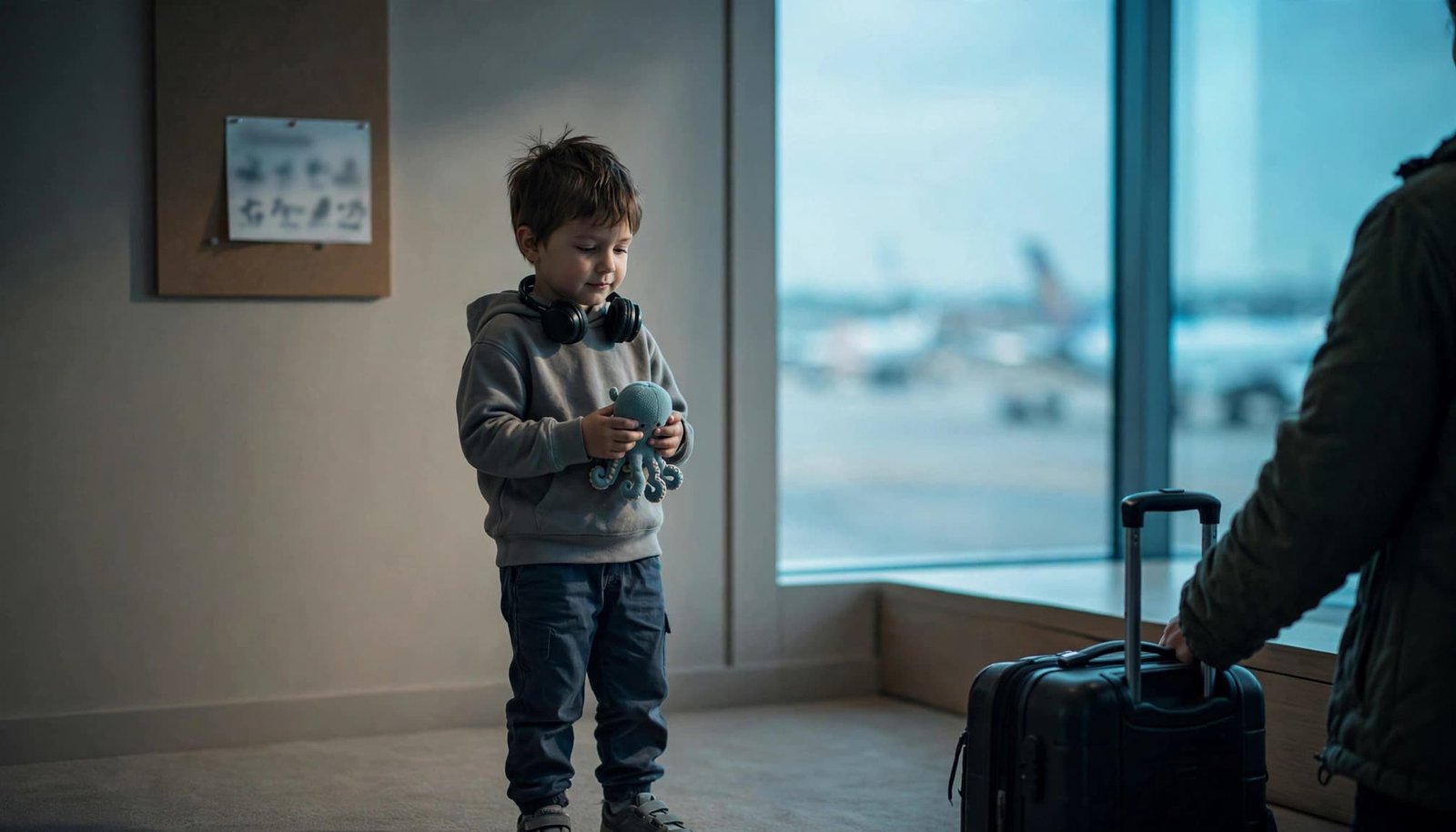
Travel day is not the time to test new headphones, snacks, fidgets, or communication tools. Bring what your child already knows and trusts. That is the heart of sensory-friendly travel, matching your child’s known preferences rather than choosing one universal product.
Good flight preparation also includes assigning adult roles, packing accessible bags, and previewing the screening process.
Ask for TSA support before screening
For U.S. departures, TSA Cares helps travelers with disabilities, medical conditions, and other circumstances that can make screening harder. TSA asks families to contact the program at least 72 hours before travel when possible.
Review TSA Cares support and screening options before you leave. You can explain which travel accommodations may help your child, such as extra time, clearer instructions, a parent staying close, or support with medical supplies.
These accommodations can be part of individualized autism travel planning. You don’t need to share every private detail. A simple statement can help: “My child has autism and may need extra time during screening.”
If you are traveling with another adult, decide on roles before reaching security. One person can handle bags and boarding passes while the other stays focused on your child.
Choose supports that match your child
Some children want noise-cancelling headphones. Others prefer no headphones and shouldn’t be pressured to wear them. Some children feel calmer with a favorite show downloaded ahead of time. Others need a simple snack, a comfort item, or a quiet place to sit.
Movement can also help. A walk through a quieter part of the terminal, carrying a small backpack, or pushing a rolling bag with adult support may provide the heavy work your child already uses for regulation. This kind of heavy work may help some children regulate, but it should never be forced.
Keep important items in one easy-to-reach bag:
- Familiar snacks and water-access supplies
- Medication and medical documentation, if needed
- Headphones, sunglasses, or a hat
- A comfort item, sensory toys, and spare clothes
- A charged tablet, AAC device, charger, and portable battery
- Wipes, tissues, and cleaning supplies for quick messes
Sensory toys may help one child, while a comfort item, tablet, AAC device, or simple snack works better for another.
Our Trip Rescue Shop has practical travel items, including stroller needs and supplies for unexpected sickness on vacation.
Protect Sleep After You Arrive
Your child’s sleep patterns may include odd wake times during the first few days. Match explanations and flexibility to your child’s developmental level.
That doesn’t mean the vacation is ruined. Keep the first 24 hours gentle, and respond to temporary sleep disturbances one small need at a time. These changes differ from social jet lag, which describes the recurring gap between school-day and weekend timing.
Follow destination time without pushing too hard
Offer meals and bedtime on local time as much as your child can tolerate. Daylight, movement, and meals during local daytime provide cues for the circadian rhythm.
Observe your child’s response and sleep patterns instead of forcing a fixed schedule. The circadian rhythm may need several days to adjust.
Don’t keep an exhausted child awake for hours just to force a new bedtime. Adequate total sleep duration matters alongside a local bedtime. A short rest may be the better choice.
Avoid scheduling the biggest attraction, show, or excursion on arrival day. Choose one low-demand plan, such as a hotel pool, short waterfront walk, easy dinner, or time in the room with familiar activities.
Set up a calm hotel reset space
Unpack the items your child uses most right away to support familiar daily routines. Put pajamas, comfort items, snacks, communication tools, and toiletries where your child can find them.
Close curtains if outside light is distracting. Use a familiar sound machine if that is part of home bedtime. Ask for a room away from elevators, ice machines, and busy common areas when possible.
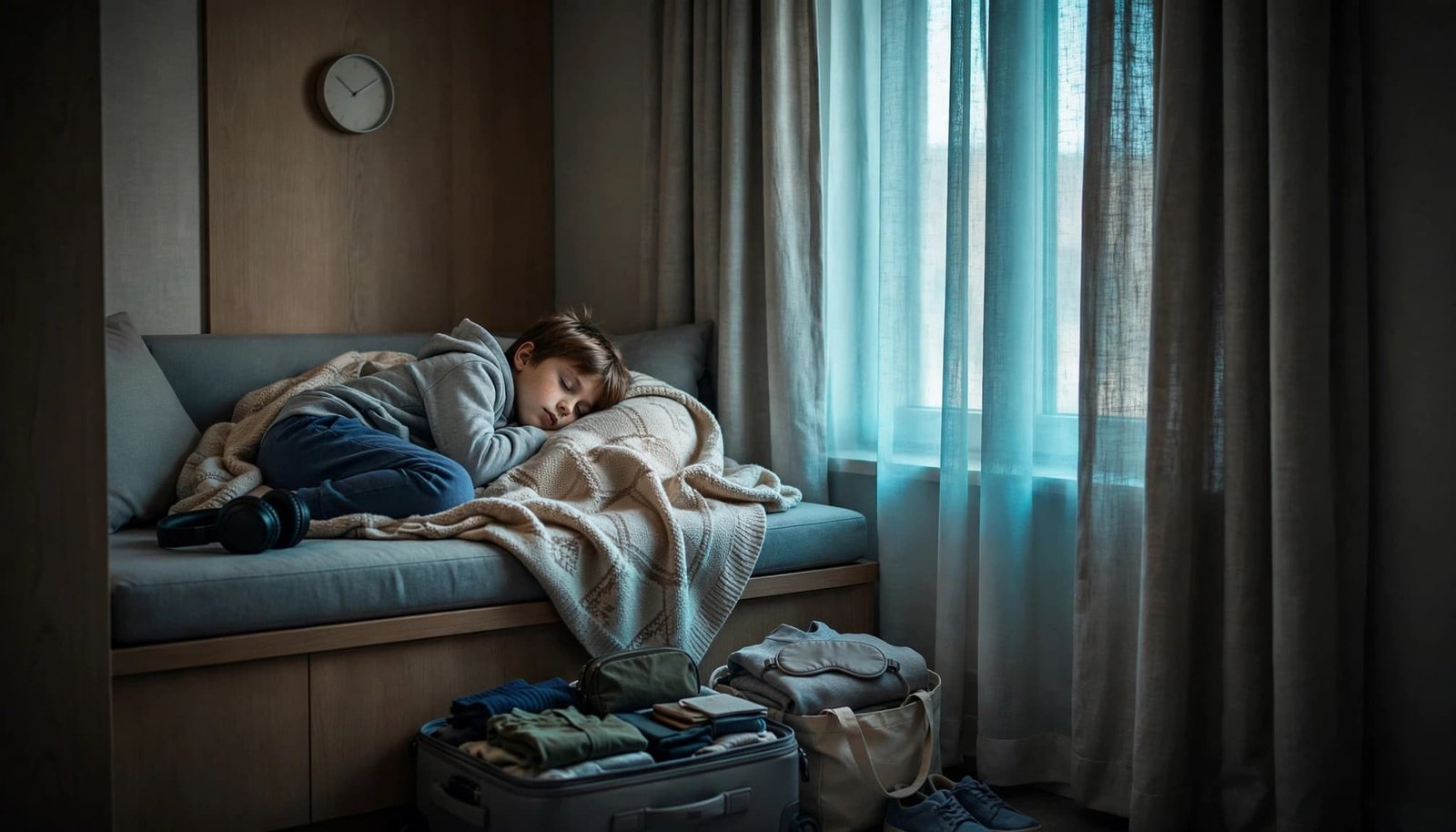
A hotel break is a successful vacation choice. It can give your child enough recovery time to enjoy tomorrow.
Plan Disney Days Around Recovery, Not Pressure
Disney World can be exciting, loud, crowded, hot, and full of changing plans. A long flight and a park day back-to-back can be too much, especially if your child’s sleep patterns changed in transit or at the hotel.
Keep the first park day flexible
Choose a few priorities instead of trying to do every ride. As part of your vacation planning, build in time for food, shade, bathrooms, quiet areas, and leaving early if needed.
Our guide to flexible Disney World park days for families can help you build a plan with room for rest. Disney’s Disability Access Service procedures can change, so check current details before your trip.
For more individualized autism travel preparation, the Disney World With Autism Guide PDF on Etsy includes practical ideas for sensory breaks, communication, and calmer park days.
Keep familiar routines in the plan
Bring easy breakfast foods, familiar snacks, and a portable charger. Predictable food and rest cues can support daily routines and make a park day more manageable.
A child who wants cereal, crackers, yogurt, or one favorite snack is not ruining the vacation. They are choosing food that feels safe.
Give your child a clear end point for the day. “We will ride two rides, eat lunch, take a break, and go back to the hotel” can feel more manageable than an open-ended park day.
You can also find the Disney autism travel guide on Amazon for support with sensory planning, flexible days, and Disney travel preparation.
Frequently Asked Questions
Should we preboard the plane with an autistic child?
It depends on your child. Preboarding gives some children time to settle into their seat before the cabin fills. Others find waiting on the plane harder and do better boarding after the main rush.
Boarding order is one possible travel accommodation, so choose it according to your child’s regulation needs. Social stories can preview waiting, boarding, seatbelt use, and the cabin, but they should be individualized rather than assumed to help every child.
Ask the airline about its current preboarding process. Choose the option that fits your child, not the option that sounds best on paper.
JetBlue has participated in autism and disability mock-flight events in some locations. Availability changes by airport and event, so check current airline accessibility information and local airport programs before making plans.
What if my child cannot sleep after travel?
Keep the room calm, offer familiar comforts, and lower expectations for the next day. After crossing time zones, a temporary mismatch between your child’s circadian rhythm and local time can cause social jet lag.
Look at your child’s usual sleep patterns and overall sleep duration across several nights. Don’t judge the entire trip by one difficult night.
Contact your child’s pediatric care provider if sleep disturbances become severe, last beyond the trip, or create safety concerns. A qualified clinician can advise on pediatric sleep and whether clinical assessments are needed. Consult them before using melatonin or changing any medication.
Use your family’s usual clinician-guided plan, including established behavioral interventions, rather than trying a new strategy during vacation. For additional ideas that may fit into an established bedtime routine, these sensory sleep strategies for children offer practical options, but they aren’t medical treatment.
A Vacation That Respects Your Family’s Rhythm
Autism-friendly jet lag planning isn’t about controlling every minute of a family vacation. It is about protecting familiar sleep patterns, daily routines, comfort, communication, and recovery time when travel changes the day.
K&S The Travel Crusaders brings firsthand family travel experience and Kellie’s B.A. in Child Development to autism travel planning for families with real support needs. Familiar tools and flexible vacation planning can make room for rest during a family vacation, without requiring a perfect itinerary. Give yourself permission to slow down, communicate differently, take a hotel break, or revise the itinerary.
Leave a Reply