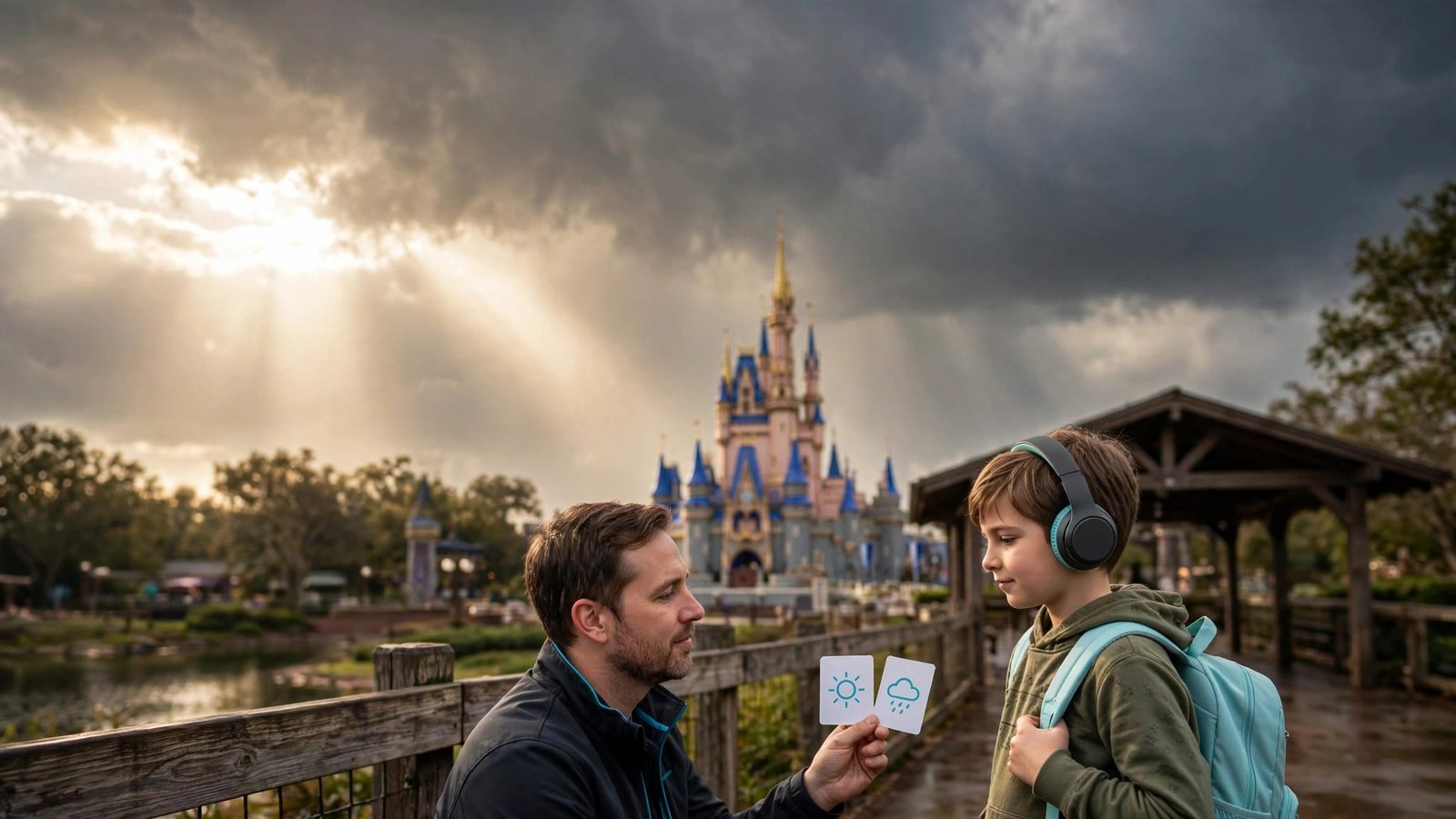
A Disney World day can look perfect on paper and still change before lunch. A ride may close, rain may move in, or your child may suddenly need to leave a busy space. That doesn’t mean the day failed.
A thoughtful plan gives your family room to change direction without feeling like everything is ruined. The goal isn’t to do every ride. The goal is to help your child feel safe, comfortable, and included while your family makes happy memories together.
Start with a plan, then make room for a backup plan in your vacation planning.
Key Takeaways
- Define success by your child’s comfort and one or two meaningful experiences, not by how many attractions you complete.
- Prepare visual schedules, communication supports, familiar food, sensory tools, and a simple “change” plan before your Disney World trip.
- Create backup options for sensory overload, weather, ride closures, hunger, and early returns to the resort.
- Review current Disney information about DAS, stroller tags, Rider Switch, and other accessibility services because eligibility, procedures, and policies can change.
- Ending a park day early is a valid choice. Resting can help protect your child’s comfort and make the next day easier.
Define What a Successful Disney Day Looks Like
Disney World has four major theme parks, long walks, loud music, changing weather, and plenty of people. Trying to fit it all in can turn a vacation into a race.
Before your trip, decide what success looks like for your child and family during this family vacation. Sensory sensitivities can make noise, heat, crowds, or long walks harder for some children. It may be riding one favorite attraction, meeting a character, eating a familiar snack, or watching the parade from a comfortable spot.
Give each day one clear win
Choose one or two must-do experiences per park day. Everything else is a bonus.
A child who loves Toy Story may be happiest after Toy Story Mania! and a calm lunch. A child who loves animals may have a wonderful Animal Kingdom day after Kilimanjaro Safaris and time on the walking trails.
Once your main goal happens, the pressure comes down. You don’t need to keep pushing through heat, crowds, or sensory overload to prove the day was worth it.
A successful Disney day is not measured by closing time. It is measured by how supported your family felt.
Choose one park per day when possible
Park Hopper tickets can sound flexible, but switching parks adds transportation, security lines, walking, and more decisions. For some families, one park per day may be easier, especially when crowd levels and transitions are concerns.
Magic Kingdom can fill a full day at a slower pace. EPCOT is much larger than it appears on a map. Hollywood Studios can get crowded early, and Animal Kingdom often feels hotter because of its outdoor paths.
Pick a park, stay in one general area for a while, and leave room for bathroom breaks, shade, snacks, and a change of plan.
Disney Autism Planning Starts Before You Arrive
The most helpful work happens before your first park morning. Start early with travel planning. Don’t try to solve every detail from a hotel room before your Disney World trip.
Disney’s accessibility services page is a good starting place for current information. Policies, requirements, and procedures can change, so verify current details directly with official Disney sources close to your travel dates.
Prepare for the parts that may change
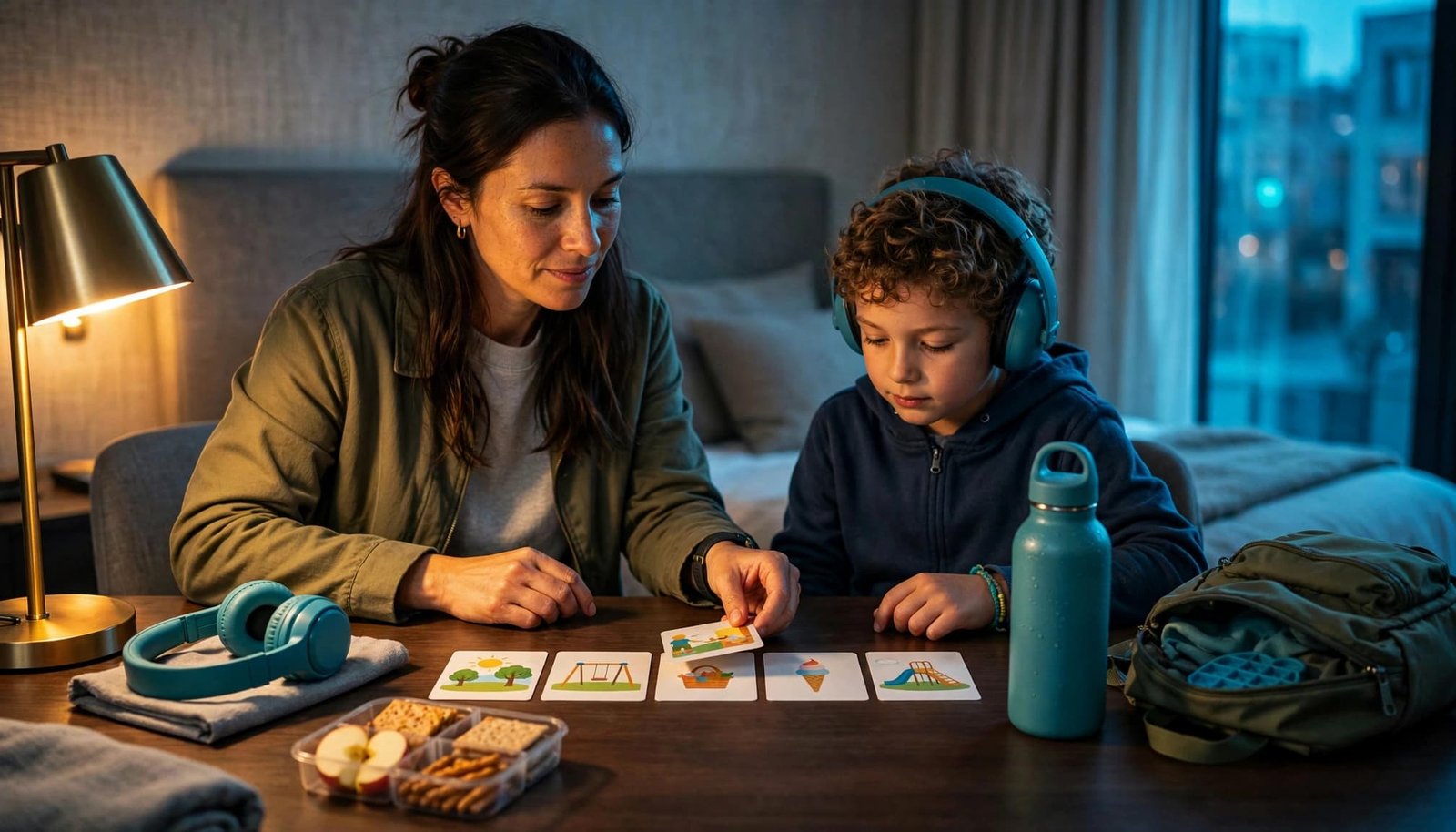
Watch ride videos together if your child likes knowing what comes next. Look at photos of the resort, transportation, park entrance, and favorite attractions. Consider sensory sensitivities when previewing sounds, crowds, or other parts of the day. A simple visual schedule and other sensory supports can make the day feel more predictable.
Keep the language short:
- “We will ride the bus, go through security, and enter Magic Kingdom.”
- “We may wait, take a snack break, or ride something.”
- “If it gets too loud, we can go back to the hotel.”
Families traveling with someone who has cognitive disabilities may also use these tools for communication, transitions, and predictability.
A schedule should be a guide, not a promise. Add a “change” card or a picture that shows an alternate activity to the visual schedule. That way, a ride closure does not feel like the entire day has disappeared.
Pick a resort that makes breaks easier
Your hotel is more than a place to sleep. It may become your best backup plan.
An on-site Disney Resort hotel can make midday breaks easier because you’re closer to Disney transportation. A smaller resort layout may feel more manageable for some families. A family suite or villa can help when your group needs more sleep space, a kitchenette, or separate areas for early bedtimes.
If your child needs familiar food, support for dietary restrictions, medication storage, a special needs stroller, adaptive equipment, or room-location support, call before booking. Ask the resort’s guest services team direct questions about available support. Confirm what the resort can provide instead of assuming a request is guaranteed.
Understand DAS, Strollers, and Rider Switch
Accessibility services can help with some of the hardest parts of a park day. They don’t remove all wait times, crowds, or unexpected changes. Still, knowing which options may fit your family can make a big difference.
Disability Access Service requires careful planning
Disney’s Disability Access Service information explains current registration methods and eligibility standards. Verify those details and current accessibility services and procedures through Disney’s official information before traveling, because they can change.
Disney may use live video chat for registration under its current process. An autism spectrum disorder diagnosis or cognitive disabilities alone don’t determine eligibility. Individual disability-related needs and Disney’s current procedures matter.
If approved, DAS may provide your child with another place to wait instead of remaining in a physical line. That waiting time might be used for a snack, a bathroom break, a quiet corner, or time in the stroller. Keep your phone charged, since the My Disney Experience app may hold tickets, return times, maps, mobile food orders, and family messages.
Ask about a stroller as a wheelchair tag
A stroller can be much more than transportation. For some autistic children and teens, it can provide a safe, familiar space for containment, fatigue, and sensory regulation.
Disney may approve a “stroller as a wheelchair” tag for some guests who use a stroller as a mobility device. If approved, the stroller may be permitted in some queue lines. Approval and use depend on Disney’s current process, so check Disney’s current attraction queue access guidance before traveling. Ask Disney guest services or Guest Relations to verify current options, queue procedures, and stroller-tag policies.
A standard Disney stroller may work for a younger child who needs an occasional break. An adaptive or special-needs stroller may be a better fit if your child needs more support, positioning, size, or a familiar setup.
Use the Rider Switch program when someone cannot ride
The Rider Switch program may help when one child cannot ride because of height, comfort, medical needs, or personal preference. One adult waits with the child while others ride. Then the waiting adult may be able to ride without going through the full line again.
Disney’s Rider Switch service explains the current process for the Rider Switch program. Speak with cast members at the attraction entrance with your full party present. This may help siblings enjoy an attraction while one caregiver stays with the child who needs a different plan.
Build Three Backup Plans for Every Park Day
You do not need a backup for every minute. You need a few simple choices that work when the day turns.
Think of it as having three doors open. When one closes, your family can walk through another one.
Backup plan for sensory overload
Notice the early signs of sensory overload. Your child may become quieter, more active, frustrated, tearful, or unable to choose as noise levels change. Do not wait for a full meltdown before taking a break.
Ask a Cast Member or Guest Relations about quiet break areas, since locations and availability vary. First Aid locations are available in the parks, but may not meet every need. A shaded bench, quieter outdoor table, shop, or hotel break may also work.
Noise-reducing headphones, a familiar show, sunglasses, a fidget, and cold water can be useful sensory supports. Sometimes the best next step is returning to the resort. That is not giving up. It is taking care of your child.

Backup plan for rain, heat, and ride closures
Florida weather changes fast. Rain can send crowds into shops and indoor attractions. Heat, crowding, and changing noise may affect a child with sensory sensitivities sooner than expected.
Keep ponchos, cooling towels, dry socks, sunscreen, water, and a small towel in your park bag. If a ride closes, offer two clear choices instead of a long discussion: “We can get a snack or ride the carousel.”
A short list of nearby backup options helps when everyone is tired:
| Park problem | Simple backup |
|---|---|
| A ride closes | Choose a nearby attraction, snack, or character stop |
| Rain starts | Find an indoor attraction or take an early meal break |
| Your child needs a break | Use headphones, find a less busy space, or return to the resort |
| Everyone is hungry | Mobile order familiar food before the situation gets harder |
The backup does not have to be exciting. It only needs to help your family reset.
Pack for Communication, Food, and Real Life
A well-packed bag prevents small problems from becoming bigger ones. Keep it light enough that one adult can carry it while supporting a child.
Keep communication supports within reach
Do not bury your child’s communication device under ponchos and snacks. Put devices, headphones, a charger, and a low-tech backup in one small pouch.
For some children with cognitive disabilities, AAC, gestures, sign language, or picture cards can help when words are hard to find. Consider cards for “wait,” “break,” “all done,” “food,” “bathroom,” and “change,” plus a short note explaining your child’s communication methods.
A portable battery is not an extra at Disney. It is a park-bag essential. Families often remember the tablet and forget the charging cable.
Familiar food can protect the whole day
Mobile ordering can make meals easier because you can review the menu and order from a quieter spot. If your child has safe foods or dietary restrictions, check menus before your trip and save a few reliable choices.
Bring familiar snacks even if you plan to buy meals in the parks. Hunger and sensory overload often show up together. For families managing food allergies as well, these Walt Disney World food allergy tips can help with practical questions before travel.
Travel needs can change quickly. Trip Rescue Shop has practical travel items, including stroller supplies and cleaning products for those unexpected sick-on-vacation moments.
Be Careful With Timed Add-Ons
Paid options can be useful, but you don’t need every Disney add-on for a meaningful trip. More reservations don’t always create a calmer day.
Lightning Lane Multi Pass is separate from DAS
Lightning Lane Multi Pass is a paid service that may provide return windows for participating attractions. It’s separate from DAS and Disney’s accessibility services. Buying it doesn’t change separate eligibility decisions.
It may be worth considering if your family has a few true must-do rides and can manage timed plans. At EPCOT, attractions such as Remy’s Ratatouille Adventure, Frozen Ever After, or Soarin’ may be important to your family. Check the My Disney Experience app and official Disney sources for current prices, availability, attraction eligibility, and service timing rules before buying.
Don’t buy it because you feel like you should. A packed schedule can become another clock to watch. If your child needs frequent breaks or gets upset when plans shift, fewer timed commitments may be the better choice.
For practical support, consider the Disney World with Autism Guide on Etsy and the Disney autism travel guide on Amazon. Both offer planning ideas and practical support for park days and sensory breaks, but neither guarantees access or accommodations.
When the Day Ends Early, Let It End
Some park days will be shorter than planned. Your child may be tired after two rides. A bus ride may feel like too much. A favorite attraction may be enough for the day, and that can still be a meaningful family vacation.
Don’t keep moving just because you paid for a ticket. Go back to the hotel, order dinner, swim if that feels good, watch a familiar show, or rest in the room.
A calm evening can protect tomorrow. Disney World isn’t going anywhere, and your child doesn’t need to experience it the same way as anyone else.
Frequently Asked Questions
What should I do if my child becomes overwhelmed at Disney World?
Watch for early signs of sensory overload and take a break before the situation becomes harder. Try headphones, a quieter space, a snack, a shaded area, or a return to the resort if your child needs more time to reset.
Does an autism diagnosis automatically qualify someone for DAS?
No. An autism spectrum disorder diagnosis or cognitive disability alone does not determine DAS eligibility. Review Disney’s current official information and explain the individual disability-related needs that affect your child in attraction queues.
Can I use a stroller as a wheelchair at Disney World?
Disney may approve a “stroller as a wheelchair” tag for some guests who use a stroller as a mobility device. Ask Guest Relations or Disney guest services about the current approval process, queue procedures, and where the tagged stroller may be used.
What are good backup plans for a ride closure or bad weather?
Keep two simple choices ready, such as a nearby attraction, familiar snack, indoor activity, or early meal break. Ponchos, cooling items, dry socks, water, and a short list of nearby options can make the change easier.
Is it okay to leave the park early?
Yes. A shorter park day can still be a successful and meaningful family experience. Returning to the hotel for dinner, rest, or a familiar activity may help your child recover and enjoy the rest of the vacation.
A Flexible Plan Makes Room for Good Memories
Good Disney autism planning starts with realistic expectations, a few priorities, sensory preparation, and current official information about accessibility services. Tailor your plan to your child’s needs, including cognitive disabilities, rather than diagnosis-based assumptions.
Your plan can change when the weather changes, when a ride closes, or when your child needs a break. That flexibility is not a missing piece of the vacation. It is the support that helps your family enjoy it.