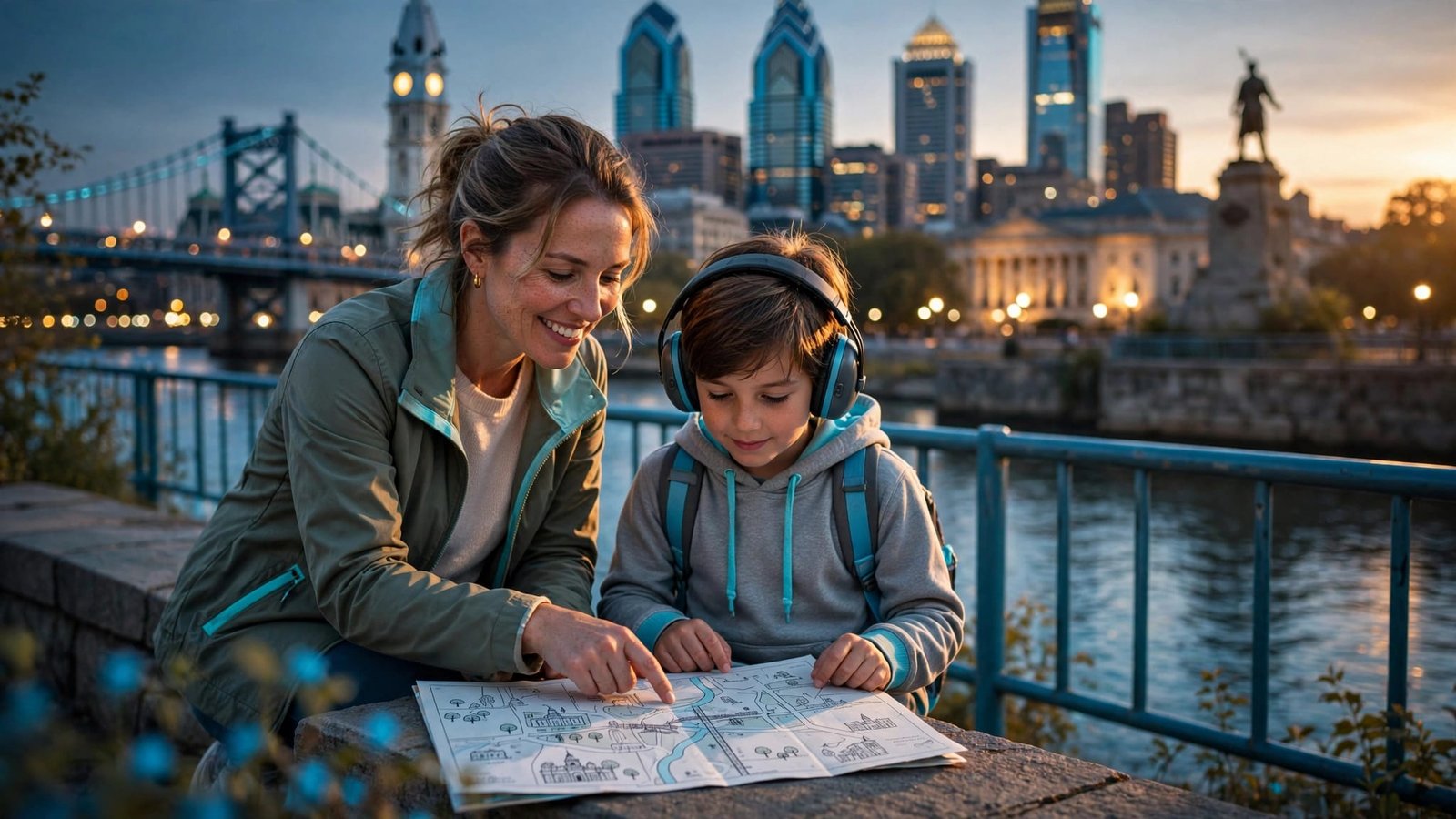
A first visit to Philadelphia can feel like a lot. Busy sidewalks, big museums, historic sites, restaurants, transit, and a long list of things your family “should” see can create pressure before you even leave home.
An autism friendly Philadelphia vacation doesn’t need a packed schedule to be meaningful. It needs a comfortable hotel, a few good choices, familiar supports, and enough open time to change plans without feeling like the day is ruined.
Attraction schedules, sensory offerings, transportation access, and hotel policies can change. Check current details before you go.
Use this guide as a starting point, then shape each day around your child’s individual support needs.
Key Takeaways
- Build the trip around your child’s individual sensory, communication, food, mobility, and routine needs rather than trying to see every Philadelphia attraction.
- Choose a convenient hotel with a quiet room, useful features, and enough space for regular breaks, familiar foods, and comfort items.
- Plan one main activity per day, use sensory-friendly programs and venue supports when available, and keep outdoor play or a hotel reset as flexible backups.
- Prepare for transportation changes, long waits, meltdowns, weather, and early exits by carrying familiar tools, snacks, medication, and a simple support plan.
- Confirm current accessibility details, sensory offerings, schedules, ticket rules, and cancellation policies directly with hotels, attractions, and transportation providers before you go.
Build an Autism Friendly Philadelphia Vacation Around Your Child
An autism spectrum disorder diagnosis can involve different communication styles, sensory preferences, and routines. Every autistic child experiences travel differently. Some children love museums and hands-on play. Others need outdoor space, short visits, or a reliable hotel break between activities.
Before choosing tickets, write down your family’s biggest travel needs. Note which settings may feel sensory friendly for your child.
- Think about your child’s sensory processing needs, including noise, crowds, smells, lighting, food textures, waiting, and bathroom access.
- Decide what helps your child reset, using social stories before the trip if useful. Helpful tools may include headphones, a stroller, a favorite snack, a tablet, or a quiet walk.
- Choose one or two must-do experiences per day, not six or seven.
- Plan for an early return to the hotel if everyone needs it.
A flexible plan is not a backup plan. It is the plan.
The best family vacation days often have one main activity, one easy meal, and enough time to rest before anyone reaches their limit.
Make a short support plan before you travel
A one-page travel plan can make arrival day easier. Include your hotel address, reservation numbers, medication details, emergency contacts, food needs, and a short note about what helps during a hard moment.
If your family already uses ABA therapy or another regular support, coordinate travel routines with that provider when helpful. Therapy isn’t required for a successful vacation.
Bring essential items in your carry-on, not in checked luggage. Medication, communication devices, chargers, headphones, familiar snacks, a change of clothes, and comfort items should stay with you.
A small delay bag can turn a missed connection or long wait into something manageable. Families often pack the tablet and forget the charging cord. Keep both in the same pouch.
Choose fewer priorities and better backup choices
Philadelphia has enough to fill a week, but you don’t have to do it all. Pick an indoor backup close to your hotel, including indoor playgrounds for weather or regulation breaks. Confirm hours, accessibility, and sensory conditions before relying on one. Pick an outdoor spot where your child can move around. Know where you can get a quick meal without a long wait.
If a museum visit ends after 45 minutes, that is still a successful visit. Your child got to experience something new, and your family listened when it was time to leave.
Choose a Hotel That Makes Breaks Easy
Your hotel is more than a place to sleep. It is where your family can regroup after a crowded attraction, change clothes after a spill, eat familiar food, and enjoy a quiet evening.
Center City, the Benjamin Franklin Parkway area, and parts of Old City can reduce travel time to major attractions. Still, a hotel that looks close on a map may involve loud streets, steep walks, or difficult crossings.
Review the selected hotel’s official accessibility and services page before booking. An official Philadelphia lodging or visitor-resource page can also help with location comparisons. Room categories and accessibility features vary by property, so confirm the exact room configuration in writing.
Don’t assume a hotel is autism-specific unless the property officially documents that program.
Ask for a quiet room before arrival
Call the property after booking and ask for a room away from elevators, ice machines, vending areas, pools, housekeeping closets, and busy streets. Request a lower-traffic floor if that helps your child.
Ask the hotel to confirm blackout curtains, a refrigerator, microwave access, in-room climate control, and laundry options. A refrigerator can help with familiar foods, drinks, and some medications.
If you need an accessible room, confirm the actual bathroom and room features directly with the property. Ask whether it has a roll-in shower or tub, visual alarms, wider pathways, and enough turning space for an adaptive stroller or mobility equipment.
Keep arrival day light
Don’t plan a major attraction right after a flight or long drive. Check in, unpack a few comfort items, find the nearest pharmacy or grocery store, and let your child learn the room.
A simple first evening might mean room-service food, a casual meal nearby, or takeout in the hotel room. That quiet start can make the next day much easier.
Make Philadelphia Transportation More Predictable
Philadelphia is walkable in many areas, but walking isn’t always the easiest choice for a family managing sensory needs, weather, bags, or a tired child.
If you use SEPTA, choose direct routes when possible. One longer ride is often easier than two transfers through unfamiliar stations. Before leaving the hotel, review SEPTA’s official accessibility information, elevator status, service alerts, and fare or visitor guidance. Verify your specific route shortly before travel, especially if you use a wheelchair, adaptive stroller, or large luggage.
All SEPTA buses are accessible, but crowds and waiting can still be difficult. Give yourselves extra time. A map app can’t account for a needed bathroom break, a snack stop, or a child who needs to sit down before entering a station.
For families who need door-to-door support, SEPTA Access is the area’s ADA paratransit service, but it isn’t automatic for every visitor. Eligibility or advance visitor registration may apply, so review SEPTA’s official instructions and contact the agency well before your trip.
Rideshare or a rental car can also make sense for a few farther destinations. Check the cost and plan for pickup time, parking, and car-seat needs. Build the expense into your budget if it gives your family a calmer start and finish to the day.
Start With Sensory-Friendly Philadelphia Museums
Museums work well because they give families structure, bathrooms, climate control, and a natural stopping point. The key is choosing the right museum for your child’s interests and visiting at a lower-crowd time.
Weekday mornings are often easier than weekends. A scheduled sensory friendly program may be even better, but tickets can be limited. Check the current calendar before building your trip around one.
Please Touch Museum for hands-on play
The Please Touch Museum is a strong first choice for younger children who learn through movement and play. It has familiar kid-focused exhibits, room to explore, and less pressure to be quiet than a traditional museum.
The museum’s accessibility resources include pre-visit guides, Quiet Zones, free Quiet Kits, and staff trained in autism sensitivity. Wheelchairs are available at the Admissions Desk, and the building is stroller and wheelchair accessible. Verify current offerings by date, since they can’t guarantee every visit will feel comfortable.
Its Play Without Boundaries program is designed for families who need a calmer museum experience. Check dates, ticket rules, and current hours before purchasing. The museum has occasional closures and modified schedules.
The Franklin Institute and Academy of Natural Sciences
The Franklin Institute is a good fit for children who enjoy science, trains, space, and hands-on exhibits. Its accessibility information explains that sensory backpacks are available at the Ticketing Desk. The backpacks include sensory alert guides, noise-reducing headphones, sunglasses, fidgets, and weighted items.
The Academy of Natural Sciences is another easy Parkway option, especially for dinosaur fans and animal lovers. Its Sensory-Friendly Mornings offer smaller crowds, lower noise, quiet spaces, and helpful staff. Dates, capacity, ticket rules, and access to those areas can change, so check the calendar before planning around one. Reserve early when a date lines up with your vacation.
Do not try to visit both museums in one day. Choose the one that matches your child’s strongest interest.
Plan a Calmer Day at the Philadelphia Zoo
The Philadelphia Zoo gives kids room to move, but crowds, heat, animal smells, and long walks can add up. Arrive early, choose a short route with a few favorite animals, and leave before the day becomes too much.
The zoo has been a KultureCity sensory-inclusive venue since 2025. The zoo’s accessibility guidance outlines sensory supports and accommodations, but families should confirm current details before visiting.
Ask for sensory tools at the entrance
Sensory bags have included noise-canceling headphones, fidget tools, and verbal cue cards. Ask about current availability and checkout instructions at the entrance or before your visit.
Review the map and route information before arrival. Identify bathrooms, food areas, shaded spaces, and a quieter route back to the entrance. A child doesn’t need to see every animal for the trip to count.
Keep the day outdoor-focused
Bring water, sunscreen, extra clothes, wipes, and a familiar snack. Philadelphia weather can shift quickly, and heat or rain may make sensory needs harder to manage.
A stroller may help even if your child rarely uses one at home. It offers a familiar seat, carries supplies, and gives tired legs a break. For travel gear, cleaning supplies, and practical family items, the Trip Rescue Shop has options to help you prepare before departure.
Sesame Place Is Worth an Overnight Plan
The park is in Langhorne, outside the city. It can be a wonderful choice for Sesame Street fans, but it isn’t a quick add-on to a busy Philadelphia sightseeing day.
The park is a certified autism center and offers the official Park Sensory Guide to help families understand how rides, shows, and spaces may affect sensory processing. This is a venue certification, not a guarantee that every ride, show, or day will suit every child. Review the current Sesame Place accessibility guide before buying tickets.
Use the sensory guide before choosing rides
Use the sensory guide to compare sound, motion, lighting, water, and waiting conditions. Pick a few rides and character experiences your child may enjoy. Let the rest be optional.
The park also has a Ride Accessibility Program. It may require advance completion of the current IBCCES Accessibility Card process, so review the current rules before arrival. Don’t wait until your child is already overwhelmed to learn how the program works.
Find the low-sensory spaces early
The park lists a Low Sensory Room in the Family Care Center, with adjustable lighting, seating, and sensory toys. It has also identified quiet spaces, including quiet rooms near Big Bird’s Rambling River.
Noise-canceling headphones may be available at the Family Care Center or Welcome Center, while supplies last. Verify availability before arrival, and find these locations before your first ride. Knowing where to go can lower stress for everyone.
If food allergies are part of your plan, contact the park ahead of time. It asks families to reach out before arrival to discuss meal choices and allergy needs.
Add Performances and Play Without Pressure
Philadelphia has arts options for families who want a slower evening or an indoor break. Sensory friendly performances can be a better fit than a standard show because families can move, make noise, or leave freely when needed.
Ensemble Arts Philly, which includes the Kimmel Center, provides sensory-friendly kits for some performances. These sensory kits may include noise-canceling headphones and other sensory tools. Resources may be performance-specific or limited, so confirm the exact event before assuming they’re available.
Look for flexible performance options
Relaxed performances typically have lower sound and lighting, quiet areas, flexible house rules, and trained staff. The Philadelphia Orchestra also offers sensory-friendly experiences for select programs.
Schedules change by season. Before buying tickets, ask whether the specific production offers relaxed performances, then verify its house rules with the Kimmel Center box office or venue calendar. A shorter daytime event may work better than an evening show after a full sightseeing day.
Save playground time for a real reset
Don’t treat outdoor play as filler between bigger attractions. Inclusive playgrounds can provide the regulation break your child needs most.
Smith Memorial Playground is a popular option for families near Fairmount Park. Check current hours, weather closures, accessibility details, and parking before you go. If a museum feels like too much, keep Smith Memorial Playground as a backup. For rainy days, consider indoor playgrounds, but confirm hours, accessibility, crowd levels, and sensory conditions first.
Make Food Breaks Part of the Plan
Hunger and long restaurant waits can turn a good day around quickly. Keep meal times predictable when possible, and do not feel pressure to choose the most famous restaurant nearby.
Choose an early lunch or early dinner. Ask for a quieter table away from speakers, the kitchen, or the main entrance. If your child has food allergies or a limited list of safe foods, call ahead with direct questions about the menu, cross-contact policies, seating, and sensory conditions.
Bring shelf-stable foods your child already accepts. A few familiar snacks can save the day when a menu looks appealing to everyone else but does not work for your child. It is also okay to leave early if the setting becomes too much.
Chuck E. Cheese in Northeast Philadelphia has offered Sensory Sensitive Sundays on the first Sunday of each month. When scheduled, the program may open early with dimmed lights, lower sound, and fewer flashing effects. Check the business’s official page before relying on it, since the schedule, hours, lighting, sound, and location details can change. It is not near every visitor hotel, and nearby indoor playgrounds may offer a backup for weather or waiting time, but verify their details first.
Prepare for Meltdowns, Delays, and Changed Plans
A hard moment on vacation doesn’t mean the trip has failed. It means your child needs support, and the schedule can wait.
If your child becomes overwhelmed, move away from the main walkway. Find a bench, quiet corner, lobby, open outdoor space, or return to the hotel. Use the tools that already work at home. This isn’t the time to test a new reward system or force one more attraction. An early exit is a valid plan.
Keep one adult focused on the child and one adult focused on logistics when possible. Too many people talking at once can add to the stress.
Travel insurance may help when a covered illness, delay, or interruption affects your trip. It doesn’t make every nonrefundable ticket refundable. Before purchasing, review the official terms for covered reasons, exclusions, documentation, deadlines, and whether accessibility-related changes qualify.
Also read official hotel and attraction cancellation policies before booking. These policies are separate from travel insurance and may address illness, delays, accessibility-related changes, deadlines, and nonrefundable tickets differently. A lower price isn’t always the better deal if you lose the full amount when your child gets sick or travel plans change.
A Simple Three-Day Philadelphia Family Itinerary
You do not need to follow this exactly. Use it as a calm starting point.
Day 1: Arrive, settle into the hotel, find a grocery store or pharmacy, and have an easy meal. If everyone feels good, take a short walk near the hotel.
Day 2: Visit Please Touch Museum or The Franklin Institute in the morning. Return to the hotel for lunch, rest, swimming, or screen time. Choose takeout or a relaxed dinner.
Day 3: Go to the Philadelphia Zoo early, or choose the Academy of Natural Sciences during a Sensory-Friendly Morning. Keep the afternoon open for a playground, hotel break, or an attraction your child asks to repeat. If Sesame Place is a priority, make it a separate overnight or full-day plan.
Other options can match your child’s interests and energy. Adventure Aquarium and LEGOLAND Discovery Center are outside central Philadelphia, so check official pages for travel time, operating dates, accessibility, and sensory offerings before going. The National Constitution Center and Philadelphia Museum of Art are optional interest-based choices, not required stops. Indoor playgrounds can also provide a flexible weather or reset option.
If Disney travel is also on your family’s list, the Disney World With Autism Guide on Etsy and the Amazon edition of the guide offer more family-focused ideas for sensory needs, breaks, support tools, and park-day planning.
Frequently Asked Questions
What makes a Philadelphia trip autism friendly?
An autism friendly Philadelphia trip is flexible, predictable, and built around your child’s support needs. Choose fewer activities, schedule regular breaks, bring familiar tools and foods, and use sensory supports offered by hotels and attractions when they fit your family.
Which Philadelphia attractions offer sensory-friendly supports?
Please Touch Museum, The Franklin Institute, the Academy of Natural Sciences, the Philadelphia Zoo, Sesame Place, and some Ensemble Arts Philly performances offer sensory tools, quiet spaces, reduced-crowd programs, or other accessibility supports. Offerings and schedules can change, so check each venue’s official information before planning your visit.
Where should families stay in Philadelphia?
Center City, the Benjamin Franklin Parkway area, and parts of Old City can make it easier to reach major attractions. The best hotel is one that offers a quiet room, convenient transportation, familiar food storage, and the specific accessibility features your child needs.
How many activities should we plan each day?
One main activity and one easy meal is often enough, especially for a first visit. Keep the afternoon or evening open for a hotel break, playground time, swimming, screen time, or an early return if your child reaches their limit.
What should we do if our child becomes overwhelmed?
Move away from crowds and use the tools and routines that already help at home. Find a quiet space, return to the hotel, or end the activity early; a changed plan or early exit does not mean the vacation has failed.
Final Thoughts on Your Philadelphia Family Trip
A successful Philadelphia vacation is measured less by ticket stubs or completed landmarks than by whether your family felt supported, rested, and able to enjoy time together.
Choose attractions with supports that fit your child, protect hotel downtime, and bring familiar tools. Give yourselves permission to leave early when needed.
Your autism friendly Philadelphia trip can be full of new memories without asking your child to push past their limits. Before departure, verify current attraction accommodations, hotel features, transportation status, and cancellation rules.