A late flight doesn’t have to ruin the first day of a family vacation. For autism parenting, arrival-day decisions should prioritize sleep, familiar routines, and regulation, while thoughtful vacation planning keeps choices manageable.
A calm arrival night protects your child’s energy before you enter a park, making the next morning feel possible instead of overwhelming.
Start by treating arrival day as a travel day, not a park day.
Key Takeaways
- Treat a late arrival as a travel day, not a park day, and prioritize sleep, familiar foods, comfort items, and a simple hotel routine.
- Choose a resort room and setup that make recovery easier, with enough space, familiar supports, and manageable access to food and transportation.
- Review Disney’s current Disability Access Service requirements and registration process before your park visit; DAS eligibility is not automatic and procedures can change.
- Keep the first park morning flexible by choosing one area, a few meaningful priorities, real food and sensory breaks, and an easy way to return to the resort.
- Prepare a simple safety and reset plan for wandering, sensory overload, weather, illness, ride closures, and early exits.
Make the arrival night simple and low-pressure
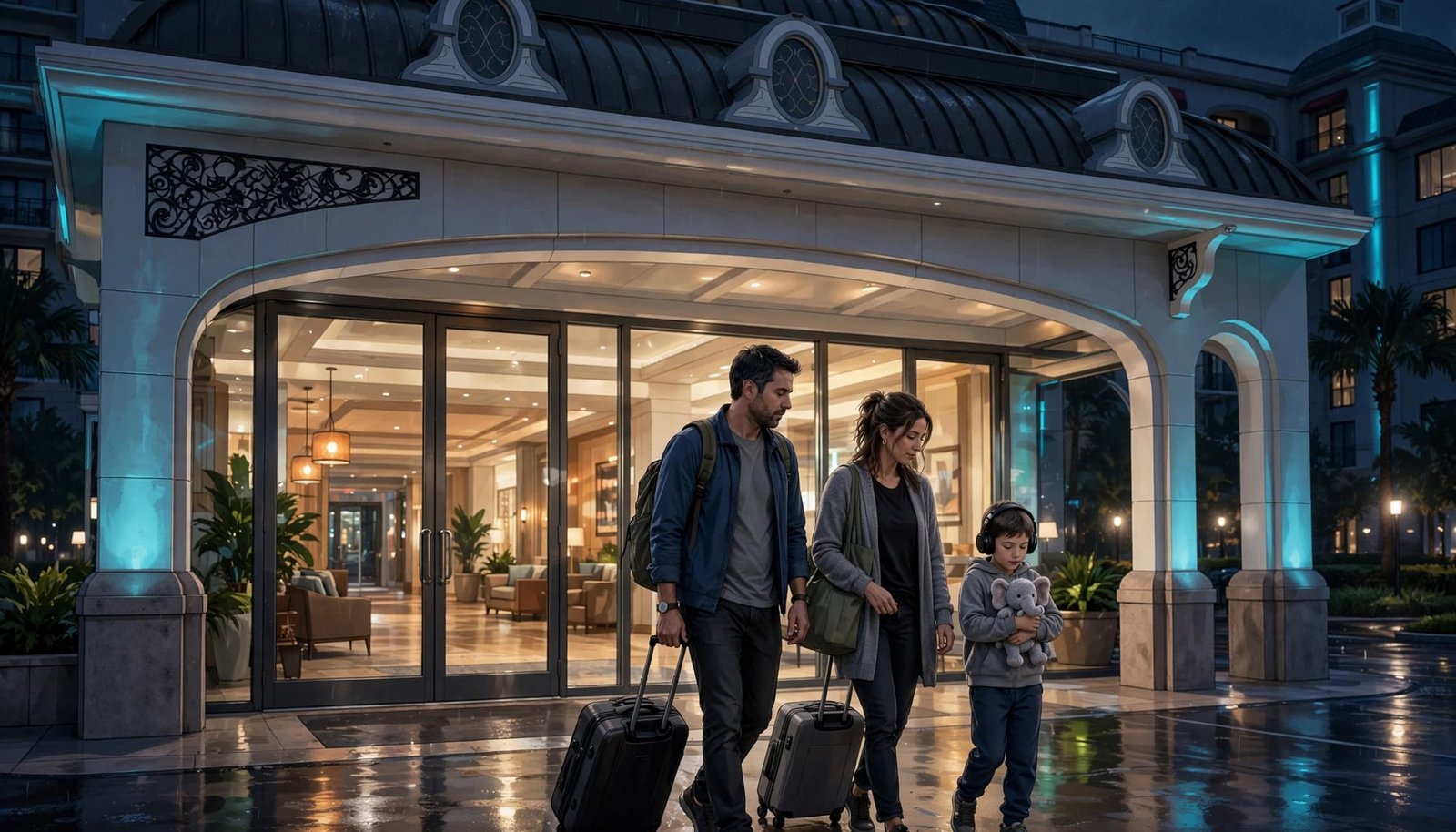
Late-night arrivals can bring bright airport lights, missed meals, crowded transportation, and tired adults. Your goal isn’t to start the vacation with excitement. Your goal is to get everyone safely into bed.
Pack one bag for the first 12 hours
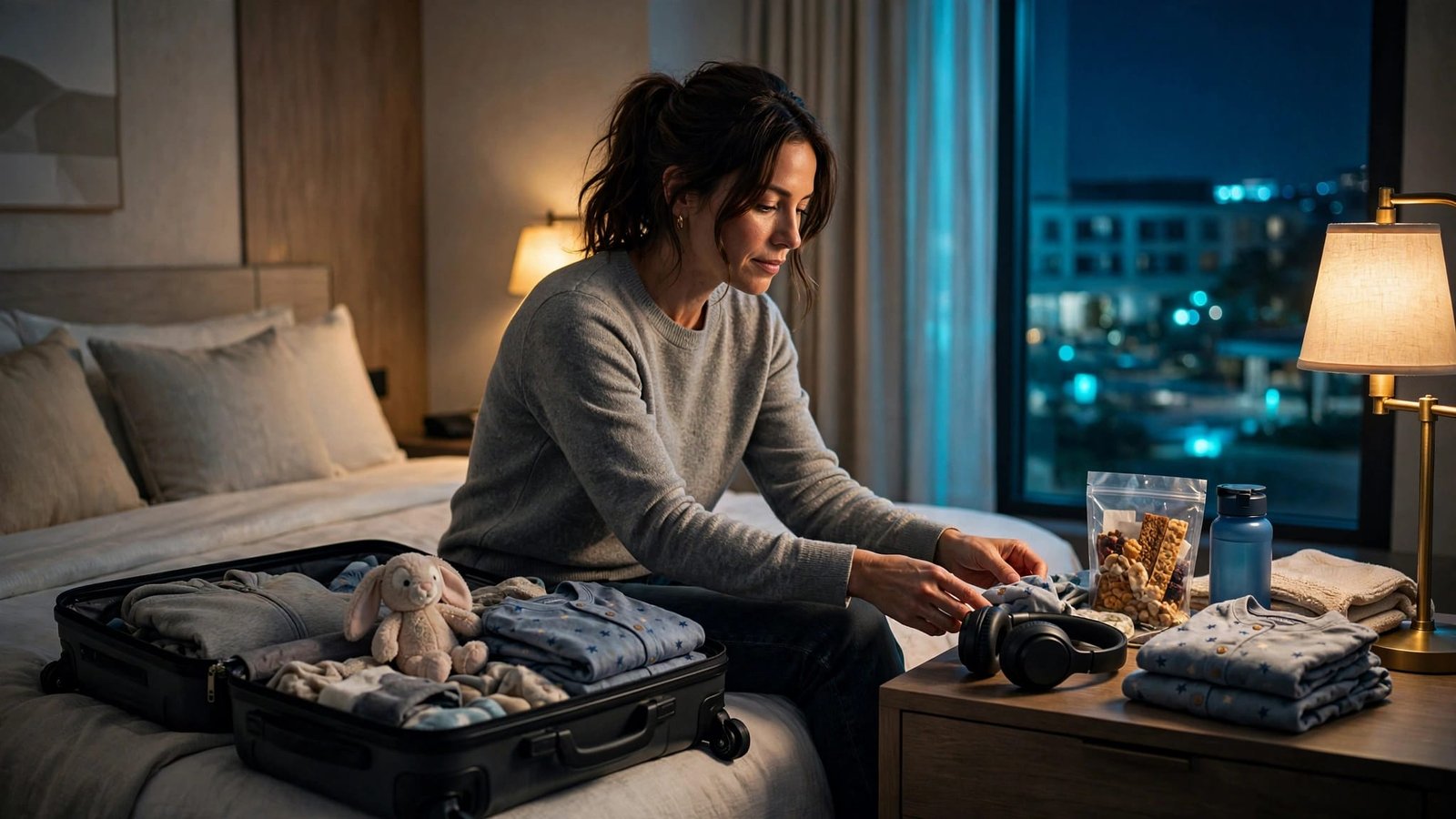
Keep a small delay bag with you, not in checked luggage. Pack medications and accepted snacks first. Add water, chargers, headphones, communication supports, and one familiar comfort item.
Your child might not want a full meal after a long flight. That’s okay. Bring foods they already accept. A familiar granola bar at midnight is better than trying to find a new meal in an unfamiliar place.
Put charging cords and devices in one pouch. Families remember the tablet and forget the cable more often than they expect.
Tell your child what happens next
Use a short, clear plan before landing: “We get our bags. We ride to the hotel. We go to our room. We sleep.”
Don’t add tomorrow’s park schedule yet. Tomorrow can wait.
If you rent a car, confirm the company’s current toll policy before leaving Orlando International Airport. Florida toll roads are common, and surprise rental fees aren’t a fun souvenir. Set the temperature, turn on a familiar playlist, and make the hotel ride part of the calm-down routine.
A successful late arrival isn’t about getting settled fast. It’s about removing the next unexpected decision.
Let your Disney Resort hotel know you expect to arrive late. Confirm late-arrival procedures, after-hours entry, luggage help, and any accessibility request directly with the hotel. Availability and assistance aren’t guaranteed, so review Disney’s accessibility services information for current support options before travel.
Choose a resort room that makes recovery easier
Where you sleep affects every part of your trip. A cheaper room can cost more if it means long transportation rides, crowded mornings, or no place for your child to reset. Compare Disney resorts by room layout, building location, transportation distance, and recovery space, rather than price alone.
Pick space over a packed schedule
Families who need more room may prefer a suite, a vacation rental, or a room with separate sleeping areas. When available, Disney’s Art of Animation Resort family suites include a bedroom, additional sleeping space, two bathrooms, and a kitchenette.
That extra space can help when one child needs an early bedtime and another is still awake. A kitchenette also makes familiar breakfasts, safe snacks, and late-night food much easier.
Disney’s Port Orleans Resort, French Quarter can be a comfortable choice for families who want a smaller layout. The walk to food, buses, and the pool is manageable for many guests. If swimming is part of recovery, review current pool rules, supervision expectations, and flotation equipment for pool safety. Check resort maps, transportation, walking distances, and room requests before booking; specific buildings are subject to availability.
Make the room feel familiar quickly
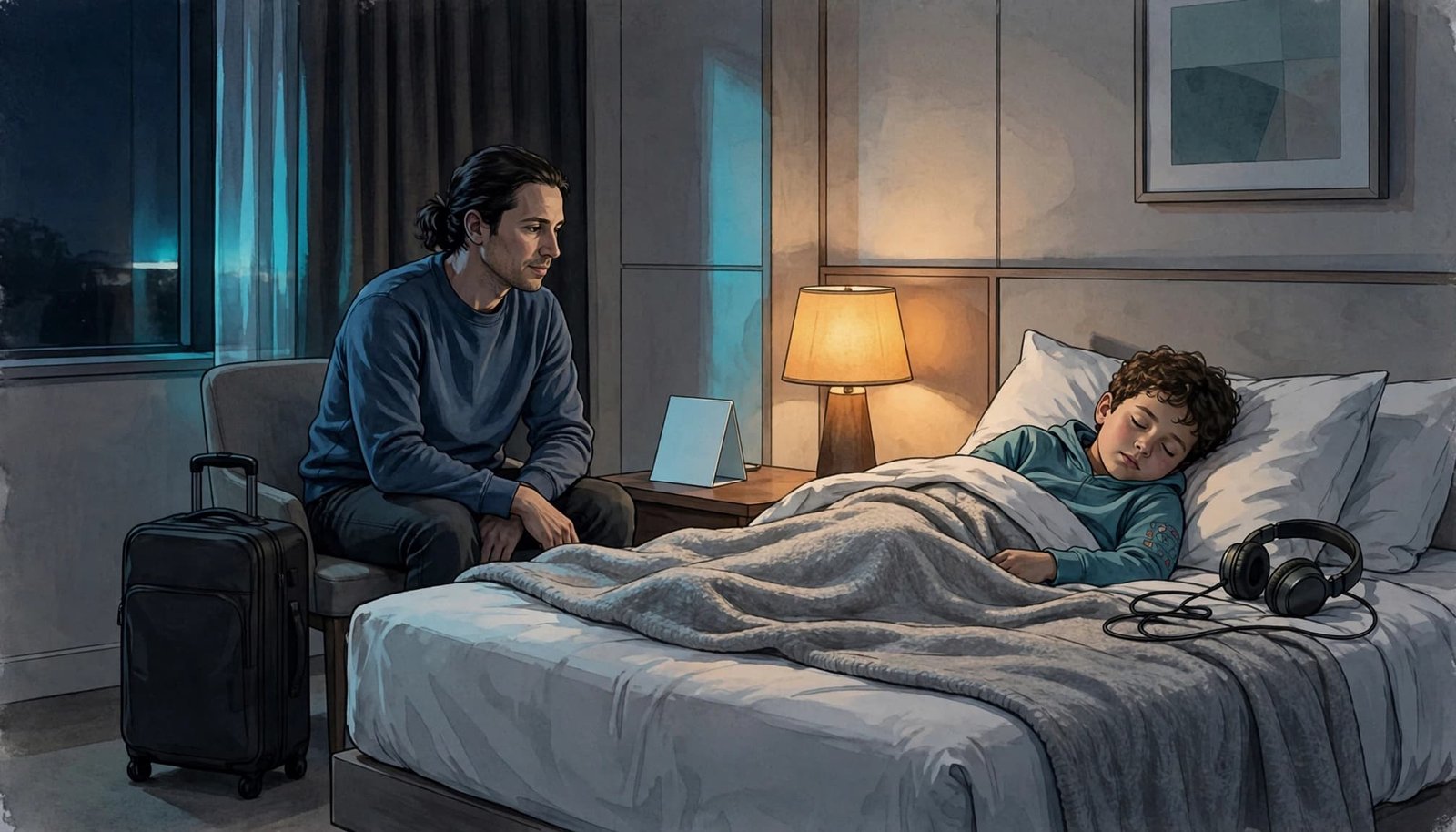
Don’t unpack the whole suitcase at 1:00 a.m. Set up only what your child needs for sleep. Put out pajamas, a favorite blanket, white noise, a familiar stuffed animal, or a night-light.
Keep luggage closed and walkways clear. A cluttered room can feel like one more thing to process after a hard travel day.
Families bringing a special needs stroller should ask about storage, elevator access, and accessible transportation routes before choosing a building. A stroller can be more than transportation. If your family uses a special needs stroller, it can be a familiar, secure place to sit when the day becomes too much.
Handle DAS before your park day begins
For many families, Disney World autism planning includes learning about Disability Access Service, often searched online as a “DAS pass.” It offers a different way to wait when a conventional queue isn’t manageable for an extended period.
Apply for Disability Access Service in advance
Disney says the program is intended for guests with a developmental disability, including autism, who cannot tolerate a standard line for a long time. Approval isn’t automatic for guests with autism spectrum disorder; Disney determines eligibility under its current criteria. It doesn’t guarantee immediate boarding or access to every attraction, but an approved guest receives a return time generally comparable to the current standby wait.
Advance registration is handled through live video chat with a Cast Member. Guests who don’t register beforehand can ask about current in-park registration options at Guest Relations. An adult must complete the registration, and a parent or guardian must participate for a guest under 18; the guest who needs the service must be present.
Disney currently allows advance registration up to 60 days before a park visit. Live video chat hours, the exact registration window, eligibility rules, and procedures can change, so review Disney’s current Disability Access Service details before your trip.
Know what DAS does, and what it doesn’t do
Once DAS is active, the registered guest or an adult connected to their account can request one attraction return time at a time through the My Disney Experience app. After using that return time, you can request another, subject to availability. The registered guest must be present when the return time is used and must ride with the group.
Your phone may hold tickets, maps, mobile food orders, messages, and DAS return times. A portable battery isn’t an extra item. It belongs in the park bag.
DAS is separate from Lightning Lane Multi Pass. It’s a paid option with scheduled arrival windows for eligible attractions, subject to availability, and prices vary by date and park. It may help if your family has a few true must-do rides, but it can also add another clock to watch. Don’t buy every add-on because it sounds like the right Disney choice.
Give the first park morning room to breathe
A late arrival and an early rope-drop morning at the Disney theme parks usually don’t mix. You don’t need to prove your family can do Disney the way someone else does it.
Start later if sleep was rough
Let your child sleep. Eat breakfast in the room if that feels easier. Then choose one park, one area, and one or two meaningful priorities.
Magic Kingdom can feel more manageable when you stay in one section for a while, though crowd levels vary. Fantasyland has several attractions close together, plus places to pause for a snack or bathroom break. EPCOT is beautiful but large. A plan that sends you back and forth between Soarin’, Frozen Ever After, and Remy’s Ratatouille Adventure can wear everyone out.
Build a realistic first day around these basics:
- Choose one main attraction, one familiar quick service meal, and one quiet return-to-resort option.
- Watch ride-through videos at home so your child can preview darkness, loud effects, drops, or sudden movement. Videos can’t predict every sound, smell, crowd, or motion experience.
- Keep headphones, sunglasses, a comfort item, snacks, and communication supports easy to reach.
- Leave before your child reaches their limit, not after.
For more practical park-day support, the Disney World With Autism Guide on Etsy can serve as an optional planning resource with ideas for breaks, accessibility needs, and flexible planning. It isn’t an official Disney source or a guarantee of DAS eligibility or accommodations.
Use food breaks as real breaks
Where available, mobile ordering can reduce the stress of standing in a long food line. Check the My Disney Experience app for current availability and menus before ordering. When your child is ready, order ahead, then use a sensory friendly pause at a quieter outdoor table or return to the room if the seating area feels too loud.
Bring familiar snacks even if you have dining reservations. Hunger and sensory overload often show up together, making an early exit a reasonable choice.
Plan for safety without turning the trip into worry
Busy parks require a simple safety plan. This is especially important for children who wander, bolt, use limited speech, or become disoriented in crowds.
Create a clear elopement plan
Before entering the park, build a simple elopement prevention plan. Take a current photo of your child, then use an ID bracelet, temporary tattoo, or card with your phone number and any communication needs. Practice what your child should do if they cannot find you.
Save current Disney guest services information and note the nearest Guest Relations location before entering the park. Guest Relations or a Cast Member can explain current procedures if questions come up.
Choose an easy phrase such as, “Find a Cast Member.” Show your child what Cast Members look like before the trip if that helps.
Talk with every adult in your group about who watches your child during rides, bathroom breaks, pool time, and transportation. Never assume someone else has it covered.
Use a stroller when it supports your child
A special needs stroller can help with walking, fatigue, safety, and sensory regulation. If your child’s stroller is used as a mobility device, ask Guest Relations about a “Stroller as a Wheelchair” tag.
Disney explains that eligible guests may use a tagged stroller in some attraction queues where appropriate. The tag depends on Disney’s criteria and Cast Member guidance, and it doesn’t guarantee access to every queue or attraction. Review Disney’s stroller and queue access guidance before your visit.
Keep your park bag manageable. You may need one hand free to guide your child, hold a hand, or quickly move to a quieter area.
Prepare for changes, delays, and sick-day moments
Disney days can change quickly. A ride may close, a storm may move in, or your child may be done after two attractions. For many families, autism parenting means leaving early, skipping an attraction, or making the day a recovery day. None of those choices means the vacation failed.
Have a reset plan before you need it
Choose a return-to-resort option before leaving the hotel. Options may include a bus, ride share, rental car, or walking. Confirm current routes and operating hours in the My Disney Experience app or official Disney sources, because availability can change.
Give your child a simple “change” plan: “That ride is closed. We can pick a snack, sit down, or choose another ride.” Two clear choices are easier than a long explanation.
If you need help in the park, speak with a Cast Member or visit Guest Relations. You don’t have to solve every issue while standing in a busy walkway.
Pack for the things nobody plans for
Florida heat, rain, spills, and stomach bugs can happen, so bring wipes, zip-top bags, extra clothes, water, ponchos, and cleaning supplies. Pack verified safe foods that match your child’s established dietary needs. Check labels and current Disney dining information before relying on allergy friendly choices.
The Travel Rescue Shop has practical travel items, including stroller supplies and cleaning products for those unexpected sick-on-vacation moments. A prepared bag can turn a stressful surprise into a short pause.
For another planning resource you can keep on your phone or Kindle, see the Disney autism travel guide on Amazon. It isn’t a substitute for current official Disney guidance.
Frequently Asked Questions
Should we visit a Disney park after arriving late at night?
Usually, it is better to treat the arrival day as a travel day and protect everyone’s sleep. A later, flexible first park morning is often more manageable than forcing an early rope-drop start after a difficult night.
How can we make a late-night hotel arrival easier for an autistic child?
Pack a small carry-on with medications, accepted snacks, headphones, communication supports, chargers, and one familiar comfort item. Tell your child the short sequence—get bags, ride to the hotel, enter the room, and sleep—without adding the next day’s schedule.
Can an autistic child automatically receive Disney’s Disability Access Service?
No. Disney determines eligibility under its current criteria, and having autism spectrum disorder does not automatically guarantee approval. Review the current requirements and registration process, including advance live video chat and available in-park options, before traveling.
Should we bring a special needs stroller to Disney World?
A special needs stroller can support mobility, fatigue, safety, and sensory regulation. If it is used as a mobility device, ask Guest Relations about a “Stroller as a Wheelchair” tag and review Disney’s current queue guidance; the tag does not guarantee access to every attraction.
What should we do if our child becomes overwhelmed in the park?
Use a planned reset option, such as a quiet break, a snack, a less crowded area, or returning to the resort. Leaving early, skipping an attraction, or changing the day into a recovery day is a reasonable part of flexible Disney World autism planning.
A calmer arrival creates a better Disney vacation
A late-night arrival doesn’t need a packed plan. It needs a quiet room, familiar supports, a simple morning, and permission to slow down.
The strongest Disney World autism planning choice is often the easiest one: protect sleep and keep expectations realistic. When possible, let your neurodivergent child set the pace. A successful family vacation can include rest, changed plans, or an early return to the room. The memories still count, even when the schedule changes.