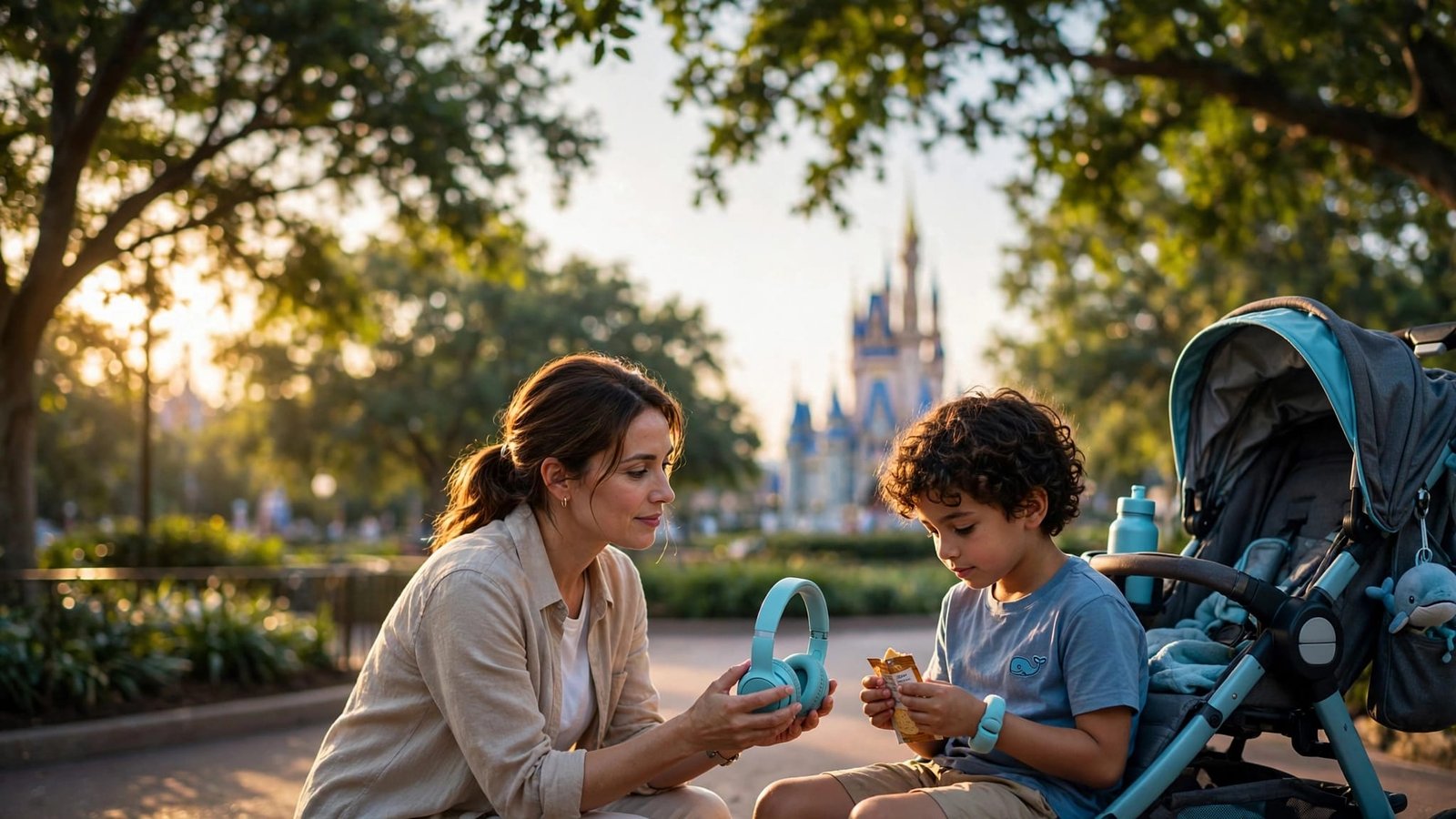
A Disney day does not have to mean racing from ride to ride until everyone is worn out. Disney with autism can be fun, comfortable, and full of good memories when the day fits your child’s real needs.
The goal isn’t to do everything at Disney World or visit all the theme parks. Good vacation planning focuses on a few moments your family enjoys, without turning the park into a test of endurance.
A low-walking plan gives your child breaks, familiar foods, and quiet moments before sensory overload builds, while respecting sensory sensitivities. Children with cognitive disabilities or other needs can enjoy flexibility, reset early, and make memories on a Disney vacation.
Key Takeaways
- Plan around one meaningful goal, two nearby priorities, and your child’s energy level instead of trying to complete every attraction.
- Reduce walking by staying in one park, grouping rides and meals by location, and scheduling a real midday reset before sensory overload builds.
- Review Disney’s current policies for DAS, stroller-as-wheelchair tags, Rider Switch, and Lightning Lane Multi Pass because eligibility, procedures, and availability can change.
- Pack familiar sensory supports, safe foods, communication tools, medication, and weather essentials, and make an elopement plan before entering the park.
- Leave room for early exits and changing plans; a successful Disney day is one where your child feels safe, comfortable, and included.
Start With One Clear Win for the Day
Before choosing rides, decide what a successful day looks like for your child. Maybe it’s meeting Mickey, riding the PeopleMover, seeing animals at Animal Kingdom, or eating a favorite snack in a calm spot.
Once that one special moment happens, the rest of the day feels like a bonus.
Pick one park and stay there
Park hopping can sound flexible, but it may add walking, security screening, transportation waits, and transitions. For some children, staying in one park and choosing fewer priorities can also mean less time waiting in line.
Before finalizing plans, check current official Disney maps, app information, and transportation guidance. Park-entry rules and operating details can change.
Magic Kingdom offers enough attractions for a full day without requiring another park. EPCOT is beautiful but larger than it looks on a map. Hollywood Studios may feel crowded quickly. Animal Kingdom has wide paths and beautiful shaded areas, but walking between lands can still add up.
Choose the park that best fits your child’s interests and energy level. You don’t need to visit all four parks for a meaningful Disney vacation.
Choose two priorities, not ten
Pick one main activity for the morning and one flexible choice for later. Keep the options close together when possible.
For example, a Magic Kingdom morning might include Fantasyland, a snack, and a calm indoor attraction nearby. Don’t plan Fantasyland, Frontierland, and Tomorrowland around tight return times unless your family loves a fast-moving day.
A good Disney day isn’t measured by how many rides you complete. It’s measured by whether your family still feels okay when it’s time to leave.
Build a Low-Walking Plan for Disney with autism
The best low-walking days group food, attractions, and breaks by area to limit transitions for children with sensory sensitivities. Start in one section of the park, enjoy what is nearby, and avoid backtracking for every ride, character, or reservation.
A flexible park day leaves room for a different answer at 11:00 a.m. than it had at 8:00 a.m.
Group rides, food, and breaks by location
At Magic Kingdom, spend the morning in Fantasyland if your child loves gentle rides. Attractions like “it’s a small world,” Under the Sea, and Prince Charming Regal Carrousel are close together. Choose a nearby attraction or break rather than crossing the park for shorter ride lines.
At EPCOT, plan by neighborhood. Frozen Ever After and Remy’s Ratatouille Adventure are both popular, but they are not close to Soarin’. Trying to do every major ride before lunch can create a long, tiring day.
Use the My Disney Experience app to check current wait times and food options, but remember both can change. Choose a nearby attraction, break, or resort return instead of a long stretch of waiting in line.
Plan a real midday reset
A reset is not standing in a crowded store for ten minutes. It’s a planned pause with water, food, shade, headphones, a comfort item, or a return to the hotel, taken before fatigue escalates into sensory overload.
If you stay at a Disney Resort hotel, leaving the park after lunch may be easier. A hotel room gives your child a familiar space to rest, change clothes, watch a downloaded show, or have quiet time before returning.
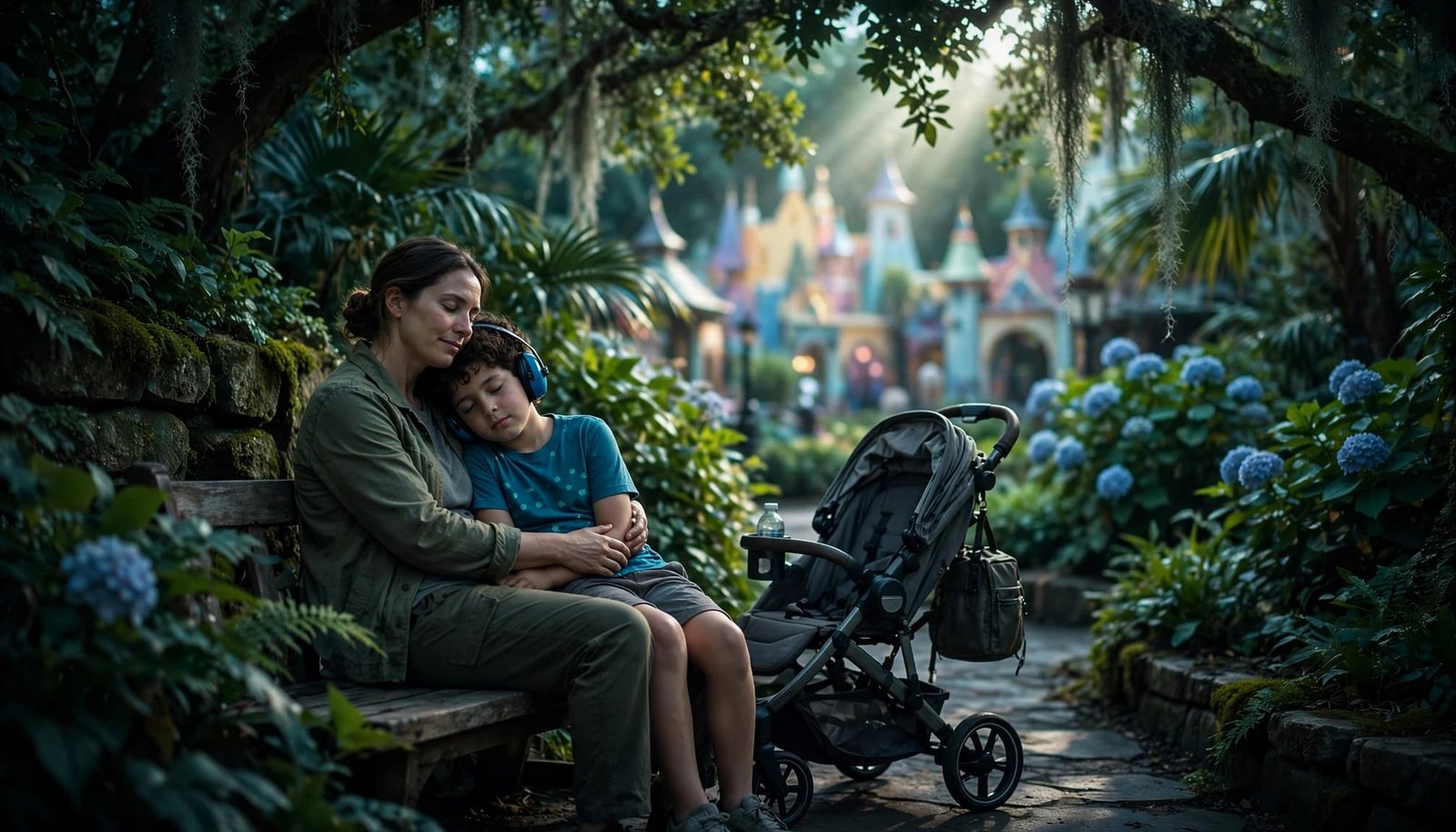
If going back to the resort feels like too much, choose a lower-stimulation break in one of the park’s quiet areas, such as a shaded bench, a quiet outdoor table, or a less-busy walkway. Locations and availability can vary, so ask a Cast Member where you can regroup; First Aid can also help when you need assistance or a calmer place.
Understand DAS, Strollers, and Other Access Tools
Disney’s Disability Access Service supports guests with developmental disabilities, including autism, who cannot wait in a conventional queue for an extended period. An autism spectrum disorder diagnosis alone doesn’t guarantee approval. Disney evaluates the guest’s queue-related needs under its current policy. Families supporting guests with cognitive disabilities can describe those needs during the request.
It doesn’t provide instant ride access. Instead, it gives your family a return time similar to the current standby wait, when available. Your child can spend that time elsewhere rather than waiting in line. Availability, participating attractions, party requirements, and app procedures can change.
Families may call this a DAS pass, but Disney’s official service name is DAS. Review Disney’s current Disability Access Service information before travel because rules and procedures can change.
Register for DAS before your trip
Disney currently offers pre-registration online through a live video chat, generally 2 to 60 days before a park visit. If you don’t register in advance, ask Guest Relations whether same-day registration is available when you arrive.
The registered guest must be present for the video chat. Once you’re inside the park, the registered guest or a linked adult can request an available return time in the My Disney Experience app. Party requirements and app steps can change, so check the current instructions before traveling.
Usually, your party can hold one return time at a time, then request another after riding if available. Keep your phone charged because it may also hold tickets, park maps, mobile food orders, and family messages.
Ask about stroller-as-wheelchair and Rider Switch
If your child uses what families call a special needs stroller, ask Guest Relations about current accessibility options. Disney’s guest services team can explain the stroller used as a wheelchair option and stroller-as-wheelchair tag.
Disney’s queue access guidance explains that this option can help children who need their stroller for mobility or to carry required medical equipment.
When approved, the tagged stroller can stay with your child in attraction queues where a wheelchair would be allowed. A special needs stroller isn’t automatically permitted in every attraction queue.
Rider Switch is another helpful option when one child cannot ride or wait outside alone. One adult rides while another stays with the child. The second adult can then ride without waiting in line again from the beginning. Ask cast members at the attraction entrance, and keep the whole group together when requesting it.
DAS, Rider Switch, Lightning Lane Multi Pass, and stroller tags are different tools. A DAS pass isn’t Lightning Lane Multi Pass, and families of guests with cognitive disabilities may need different supports. You don’t need every option for a good day.
Pack for Sensory Needs and Safety
Your park bag should make hard moments easier. It does not need to hold every possible item. It needs to hold what your child reaches for when noise, heat, crowds, hunger, or changes feel too big.
Families with special needs may bring individualized supports that make transitions easier. Pack for sensory sensitivities, comfort, communication, and Florida weather without filling the bag with unnecessary extras.
Keep important supports in the same place every day. A small pouch for headphones, charging cords, communication tools, and comfort items saves time when everyone is already stressed.
Bring familiar supports, not random extras
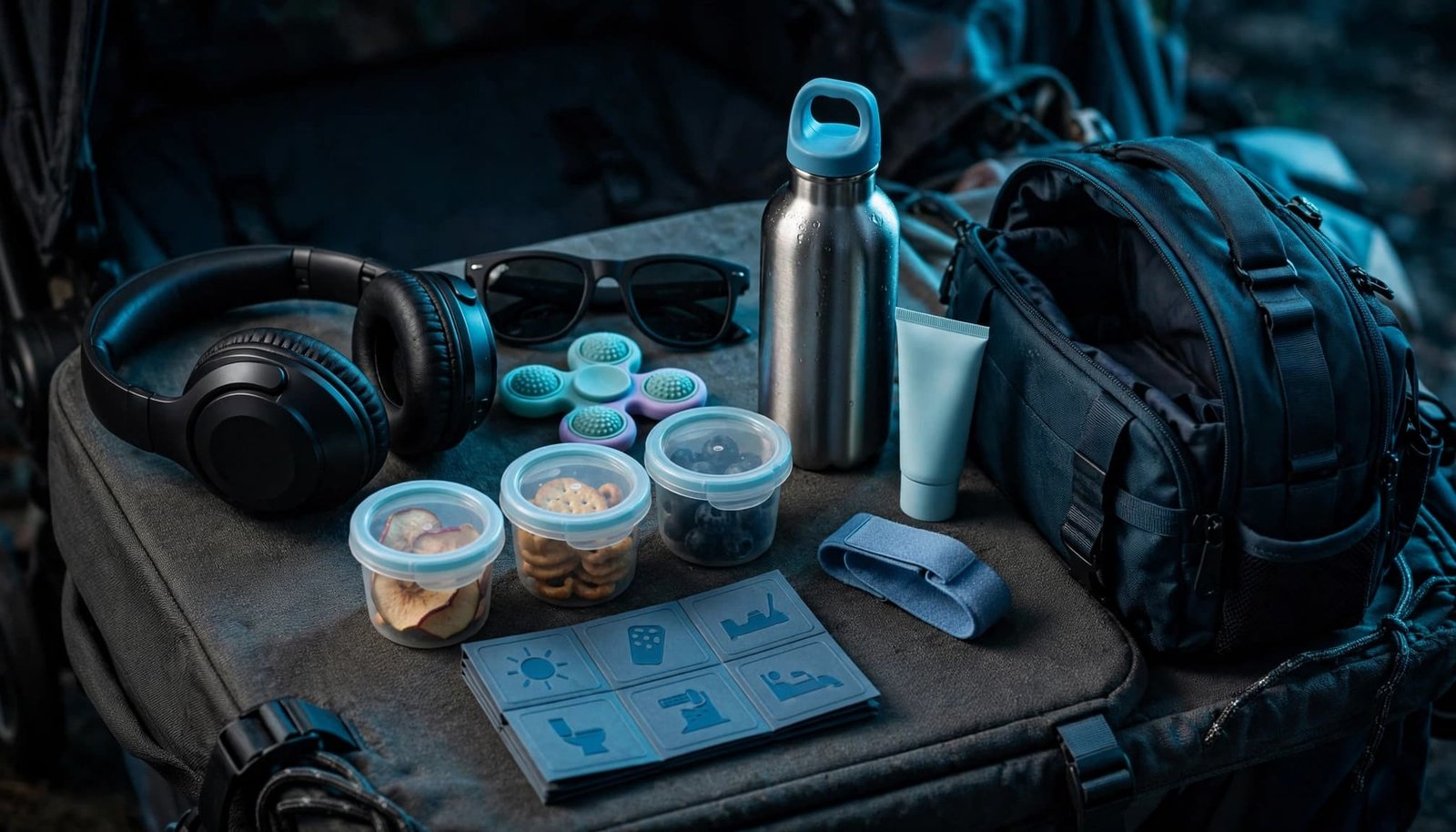
A practical Disney park bag may include:
- Noise-reducing headphones for parades, fireworks, indoor shows, and loud ride queues.
- A portable charger and charging cable for the My Disney Experience app, AAC device, and phones.
- Familiar snacks, gum, chewy items, or safe foods that work for your child.
- Sunglasses, sunscreen, a hat, cooling towel, and refillable water bottle for Florida heat.
- A fidget, comfort item, visual schedule, or low-tech communication cards.
- A full change of clothes, wipes, medication, and any medical supplies your family uses daily.
Keep noise-reducing headphones easy to reach during loud queues, shows, parades, or fireworks. If your child uses a special needs stroller, ask Disney about the current stroller-as-wheelchair process before your visit. Don’t assume approval or access rules will stay the same.
Make an elopement plan before entering the park
Crowds can make separation and elopement risks feel scary. Make a simple plan before the trip, then practice it at home.
Take a current photo of your child each morning. Decide which adult is responsible for watching your child during transitions. Identify quiet areas or lower-traffic places where your family can regroup.
Use an identification bracelet, temporary tattoo, or card with your phone number if that works for your family. Talk through a simple rule: if your child gets separated, they should look for a Cast Member.
Point out Cast Member name tags when you enter the park so the plan feels familiar. Keep responsibility for supervision with the adults, rather than placing it on your child.
Whether your child has cognitive disabilities, uses AAC, gestures, sign language, or limited speech, carry an easy-to-understand communication card. You do not need to share private medical details. A simple note can help when words are hard to find.
Keep Food Simple and Flexible
Hungry, tired children don’t need a long restaurant experience. They need food they recognize, a place to sit, and adults who aren’t rushing.
Quick-service meals often work well for families with different sensory and food needs. Review official menus in the app, check operating hours, and contact Disney Dining about current dietary accommodations before booking.
Use mobile order to avoid another line
Mobile Order may reduce time waiting in line for food pickup, but it won’t eliminate every possible delay. Choose familiar meals when possible, and don’t feel pressure to order the most expensive item or try something new.
If a busy indoor seating area feels too loud, look for an outdoor table or take food back to the resort. Pack snacks as a backup because mobile order pickup times can fill early during busy lunch hours.
A character buffet can be wonderful for some children and overwhelming for others. Check each official listing before booking Chef Mickey’s or Hollywood & Vine. Confirm the current format, operating hours, and allergy procedures, including whether each is still a character buffet. Confirm dietary accommodations directly, rather than assuming every location can meet every request. If your child prefers predictable meals and less activity, a quieter quick-service meal may be more sensory friendly.
Choose a resort that supports breaks
During a Disney World trip, your hotel is more than a place to sleep. Nearby or familiar resort hotels can help your child reset after fireworks or rain. They can also provide familiar breakfast food and rest between park days.
Ask about room location, elevator access, refrigerator space, transportation, and the distance to food courts or buses. A smaller resort layout may be easier for some families. Art of Animation family suites can help when you need extra sleep space, two bathrooms, and a kitchenette.
Don’t pack too light if familiar clothing helps your child feel comfortable. Laundry can take time and energy. At many Disney resorts, costs and timing can change, but one wash-and-dry load may cost around $7 to $8 and take more than an hour, including moving and folding clothes.
Be Careful With Timed Add-Ons
Lightning Lane Multi Pass is a paid service separate from DAS. It may help when your family has a few must-do rides and can manage scheduled return windows. In limited circumstances, it may reduce time waiting in line, but it doesn’t guarantee access or reduce sensory stress.
It is not required for a successful vacation.
Buy it only when it lowers stress
At EPCOT, Lightning Lane Multi Pass may help if Remy’s Ratatouille Adventure, Frozen Ever After, and Soarin’ are important to your family. At another park, it may create more pressure than it removes.
Too many return windows can turn the day into a clock you’re always chasing. A ride closure, snack break, meltdown, or slow walk can make those times feel stressful.
Check Disney’s official information and the app before purchasing. Prices, booking rules, eligible attractions, and return times can change. Disney’s neurodivergent guest services page also lists current queue tools and planning support.
Choose paid extras because they help your child, not because they sound like something every Disney family should buy.
Have a Plan for Hard Moments
Even a well-planned Disney day can change quickly. Rain starts. A ride closes. Someone gets sick. Your child may want to leave after one attraction.
That does not mean the day failed.
Use simple choices during sensory overload
When your child is overwhelmed, use fewer words. Offer two clear options: “Headphones or outside?” “Snack or hotel?” “One more ride or all done?”
Don’t explain the entire schedule in that moment. Move away from the crowd first. Find shade, water, a seat, or a familiar item. Then decide what comes next.
A visual schedule can help with changes, but leave open spaces in it. Show your child that “break” and “all done” are valid parts of the plan.
Give yourself permission to leave early
Fireworks aren’t required. Closing out the park isn’t required. Riding every headliner isn’t required.
Your family may have a great morning, return to the resort for a long break, and decide you’re done for the day. That’s a successful Disney day when it protects your child’s comfort.
For step-by-step support, the Disney World with Autism Guide on Etsy and the Amazon ebook edition include practical ideas for park days, accessibility needs, sensory breaks, and flexible planning.
For travel basics that are easy to forget, Trip Rescue Shop has practical items for family travel, including stroller supplies, comfort items, and cleaning products for unexpected sick-on-vacation moments.
Frequently Asked Questions
Does Disney offer support for autistic children?
Disney’s Disability Access Service may support guests with developmental disabilities who cannot wait in a conventional queue for an extended period. Approval is based on the guest’s queue-related needs, not an autism diagnosis alone, and current procedures should be confirmed before travel.
How can we plan a low-walking Disney day?
Choose one park, select a few priorities, and group attractions, food, and breaks in the same area. Staying flexible and returning to the resort or a quieter space for a midday reset can help prevent fatigue and sensory overload.
Can a stroller be used as a wheelchair at Disney World?
Some children may qualify to use a tagged stroller in attraction queues where a wheelchair would be allowed. Ask Guest Relations about the current stroller-as-wheelchair process, because a special needs stroller is not automatically permitted in every queue.
What should we pack for a Disney day with autism?
Bring familiar snacks, headphones, communication tools, comfort items, medication, a change of clothes, water, and sun or cooling supplies. Keep the most important supports easy to reach so they are available during loud, crowded, or unexpected moments.
Do we have to stay for fireworks or visit every park?
No, fireworks, park hopping, and completing every attraction are not required for a meaningful Disney vacation. Leaving early, taking a long resort break, or spending the day in one park can be the best choice for your family’s comfort.
A Disney Day That Fits Your Family
A low-walking Disney day is built around your child, not the park map. Choose one goal, stay in one area at a time, take breaks early, and keep plans flexible.
Disney with autism can still be full of magic. A successful Disney vacation isn’t about completing every theme park attraction. The best memories come when your child feels safe, comfortable, and included, making the day a meaningful family vacation.
Leave a Reply