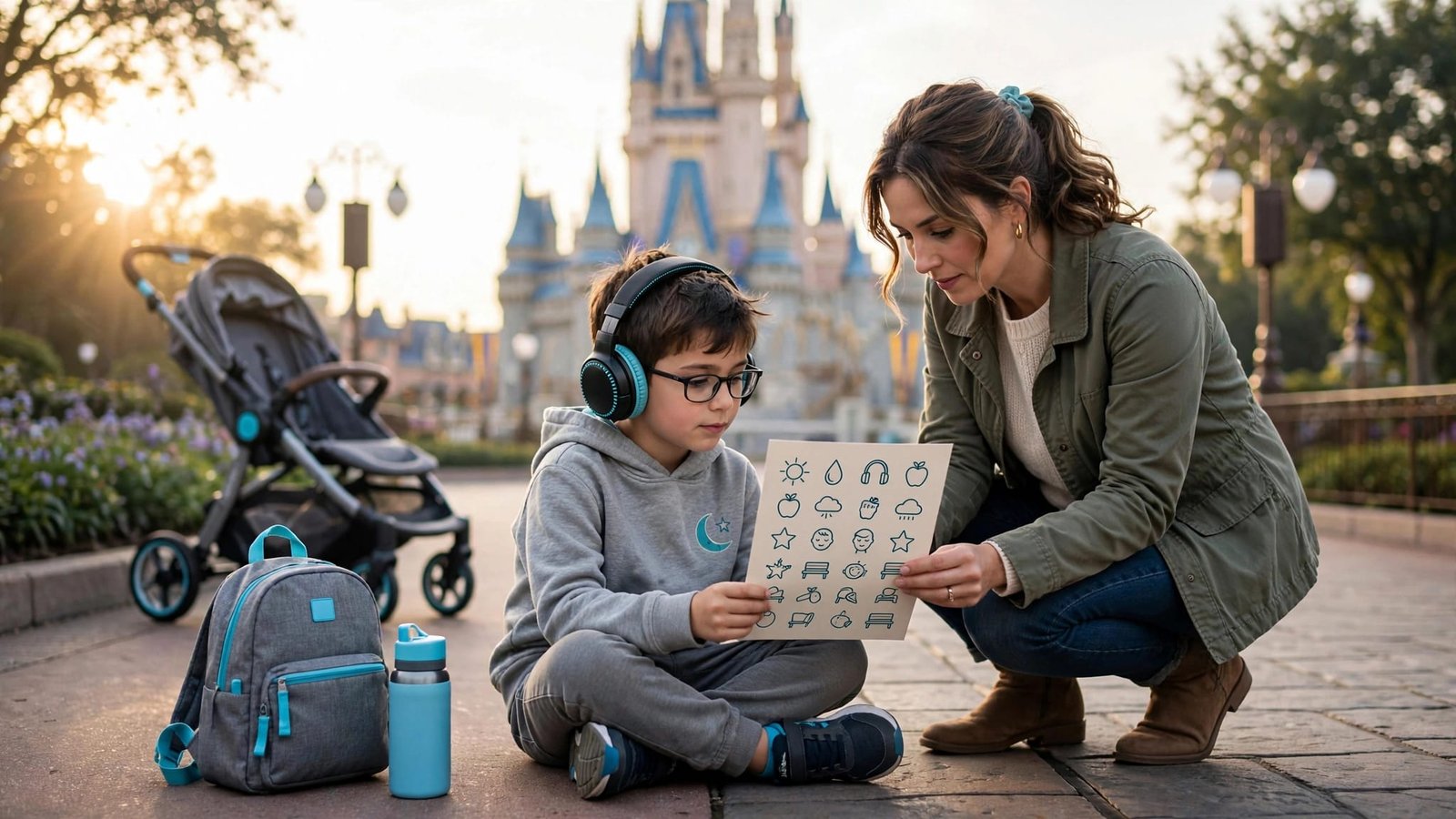
A Disney trip can be exciting, but it can also feel loud, crowded, hot, and full of surprises. A good Disney autism guide helps families affected by autism spectrum disorder prepare before reaching the park entrance with bags, tickets, and an anxious child.
Your child does not need to do every ride, stay for fireworks, or follow anyone else’s vacation plan. A guide can support preparation, but it cannot predict every child’s needs or promise a stress-free trip.
Before buying an ebook, look for practical help that fits your child’s real needs, not a picture-perfect Disney schedule.
Key Takeaways Before You Buy
- A helpful ebook should cover sensory preparation, breaks, food, transportation, park days, and accessibility options in one easy place.
- Disney’s Disability Access Service, or DAS, may help eligible guests who can’t tolerate a conventional attraction queue. It doesn’t provide immediate ride access.
- The best plan stays flexible. One favorite ride, a calm lunch, and pool time can make a successful Disney day.
- An ebook is a planning tool, not official Disney policy. Check Disney’s current rules before your trip, since policies can change.
What Should a Guide Include for a Disney Trip?
A guide should reduce the number of details you have to hold in your head. It should help you make choices before the trip, then give you something useful to check when plans change.
The Disney World autism guide for Walt Disney World is built around flexible park days, sensory preparation, DAS information, and realistic family planning. It is based on real family experience. Kellie also has a B.A. in Child Development.
It should start with your child’s needs
There is no single plan that works for every child. One child may love the movement, music, and character experiences. Another may enjoy one ride, then need a long break away from crowds.
A useful ebook helps you review sensory experience details, including noise, heat, bright sunlight, waiting, food preferences, communication needs, and stamina. It should also remind you to notice early signs that your child needs a reset.
Your plan can be simple: breakfast, transportation, one favorite attraction, snack, break. That may be enough for a good morning at Magic Kingdom, EPCOT, Disney’s Hollywood Studios, or Disney’s Animal Kingdom Theme Park.
It should be useful before and during travel
A Disney ebook should not be something you read once and forget. Keep it on your phone, print the pages that matter most, or share it with grandparents and other adults traveling with you.
The Amazon ebook edition is an option if that format works better for your family. The Disney World With Autism Guide PDF on Etsy gives families practical ideas for sensory needs, park bags, visual tools, accessible planning, dining reservations, and breaks.
Use the ideas that fit to make your plan more autism friendly for your particular child. Skip the ones that do not. Your child does not need every suggestion for the guide to be helpful.
DAS Questions Parents Need Answered
Many parents buy a Disney autism guide because they have questions about Disability Access Service, which Disney abbreviates as DAS and families often call a DAS pass. DAS can be helpful, but it is only one part of a comfortable park day.
It does not replace rest, familiar foods, a stroller, a quiet hotel room, or a plan for leaving early.
How does DAS registration work?
Disney says DAS is for guests with a developmental disability, such as autism, who cannot tolerate waiting in a conventional queue for an extended time. An autism diagnosis alone does not guarantee approval for a DAS pass.
An adult age 18 or older completes the registration process. The guest requesting DAS must be present during the conversation, although a parent or guardian can assist a minor.
Disney currently offers video chat registration up to 60 days before a park visit, including the day of the visit. Video chat hours are 7:00 AM to 8:00 PM Eastern Time. Review Disney’s current DAS information before travel, since requirements can change.
During the conversation, explain the actual barrier. Describe what happens when your child waits in a crowded, enclosed line. Be honest about panic, sensory distress, difficulty standing close to others, or a tendency to leave the queue suddenly.
Does DAS mean we skip every line?
No. DAS isn’t a front-of-the-line pass or the same as Lightning Lane, so check current Lightning Lane rules separately. Approved guests receive a return time similar to the current standby wait, not automatic boarding. Your family can spend that time in a more comfortable setting instead of inside the physical queue.
DAS also does not reserve meals, shorten restaurant waits, or create special character meet-and-greet access. It is an attraction queue accommodation.
A return time still includes walking, heat, crowds, ride closures, and transitions. Build your whole day around your child’s needs, not DAS alone.
For more family-focused help, the Disney Disability Access Service guide explains the difference between a return-time accommodation and immediate ride access.
Plan for Sensory Needs in Every Park
Disney theme parks have bright lights, music, crowds, strong smells, movement, weather, and long walking days. Any one may be manageable, but several at once can contribute to sensory overload, especially in places such as Animal Kingdom.
A good Disney autism guide helps you prepare for the full environment, not only ride queues.
Review attraction sensory details first
Disney provides sensory experience details for many attractions. Check the attraction-specific sensory experience details for darkness, motion, sounds, lighting effects, scents, special effects, tactile elements, and fast or slow movement.
Look at those details with your child in mind. Height requirements and popularity aren’t enough information. A child may be tall enough for an attraction but uncomfortable with darkness, loud sounds, drops, or close seating.
Watch ride videos together if that helps your child. Talk through what they may see, hear, and feel. Avoid promising that every ride will go exactly as planned, because weather, crowds, and operations can change.
Build breaks before your child reaches the limit
Don’t wait for a meltdown before taking a break. Schedule rest time after a busy ride, before a parade, or after lunch. A snack in the shade, a slower shop, a calm hotel room, or pool time can change the whole day.
There isn’t an official list of guaranteed quiet zones in every park, and available lower-traffic locations can vary by day. Ask a Cast Member, Guest Relations, or staff at a Guest Experience location about quiet areas and other lower-traffic options.
Bring equipment and supports your child already knows and accepts. Noise-canceling headphones, sunglasses, comfort items, familiar snacks, and a charger can all make hard moments easier.
Make Park Days Flexible, Not Packed
Trying to fit every attraction into one day creates pressure for everyone. A flexible rhythm gives your child room to set the pace.
Choose one or two priorities each morning. Everything else is a bonus. If a priority offers Lightning Lane access, check current options before deciding whether it fits your day. Lightning Lane products and policies can change, so treat them as optional queue-planning choices, not replacements for sensory breaks.
Use a visual schedule with room to change
A visual schedule can make transitions feel more predictable. Use simple words, photos, icons, or a note on your phone. Keep it short enough that your child can understand what happens next.
Try a plan like “breakfast, bus, one ride, snack, hotel break.” If the next step changes, update the schedule together. A changed plan can still feel more manageable when your child knows what replaces it.
Avoid building an hour-by-hour itinerary around rides across the park. At EPCOT, for example, attractions can be far apart. Extra walking and rushing can use up energy before your family reaches the experiences that matter most. Use the same flexible approach at Animal Kingdom and Hollywood Studios, adjusting priorities to your child’s energy.
Think about dining before you are hungry
Disney dining reservations generally open 60 days before your vacation. Look at menus early and save a few reliable choices in the My Disney Experience app. Ask about dietary accommodations in advance. Not every preferred food or request will be available.
Choose restaurants for the sensory experience, not only the theme. Character meals can be wonderful for children who enjoy the activity. They can also include music, applause, frequent movement, and surprise interactions. Consider how busy the restaurant may feel during peak times.
Quick-service meals may give your family more control. You can choose a quieter table, step outside if needed, and move at your child’s pace. Pack familiar snacks when possible, especially if your child has preferred foods or limited safe foods.
Extra Supports That Can Make a Big Difference
DAS isn’t the only Disney accessibility option worth understanding. A guide should explain the tools that may support your child throughout the day.
Layered support often works better than relying on one accommodation.
Can a stroller stay with my child in queues?
A Stroller as Wheelchair tag may allow an eligible child to use a stroller as a mobility device and keep it in attraction queues. This can help a child who needs the familiar seat for regulation, safety, fatigue, or medical equipment.
Confirm current eligibility and procedures with Guest Relations when you arrive. Bring the stroller your child is comfortable using, rather than assuming a rental will feel the same.
If you need travel items before leaving home, Trip Rescue Shop has practical vacation supplies, including strollers and cleaning supplies for those unexpected sick-on-vacation moments.
How does Rider Switch help families?
Rider Switch can help when one person in your group wants to ride and another guest cannot or doesn’t want to. One party rides first while the other waits outside the queue with the child. The waiting party may then board without standing in the regular queue again.
Lightning Lane and DAS support different queue-planning needs, and neither guarantees a particular boarding outcome. Your full party must be present at the attraction entrance before using it.
Lightning Lane availability and attraction procedures can change. Speak with the Cast Member there, because procedures can vary.
For families planning around autism and additional support needs, Disney World planning for multiple disabilities can help you think through strollers, breaks, transportation, and DAS together.
Questions Parents Ask Before Buying the Ebook
Will an ebook tell me exactly what my child will need?
No guide can predict every need. It should help you ask better questions and prepare for common stressors. Your child’s sensory profile, communication style, favorite foods, and energy level should shape the final plan.
Is the ebook official Disney guidance?
No. A family planning ebook offers practical ideas and real-world preparation, but it isn’t official Disney guidance. Disney makes current eligibility decisions for the DAS pass. Lightning Lane is a separate queue option, so always check Disney’s current information before your visit.
Should I buy the guide before booking my hotel and tickets?
Yes, if possible. Reading early can help you decide how many park days feel realistic and whether you need a rest day. It can also help you choose a dining style, consider dining reservations, and decide how close you want your hotel to the parks.
Does a Disney autism guide help if my child is a teen?
Yes. Teens may need support with crowds, waiting, transportation, food, social expectations, and schedule changes too. Include them in choices about rides, breaks, dining, and when to leave the park.
What if our park day falls apart?
It doesn’t mean the trip failed. A favorite snack, a quiet afternoon at the resort, one ride your child loved, or an early bedtime can still become part of a good family memory.
A Comfortable Disney Trip Looks Different for Every Family
The right family guide doesn’t pressure your family to do more. It offers options, clear information, and permission to slow down when your child needs it.
A successful Disney day may include several rides. It may also mean a shorter visit to Animal Kingdom, a calm meal, and time by the pool. Comfort and connection matter more than an attraction count.
Leave a Reply