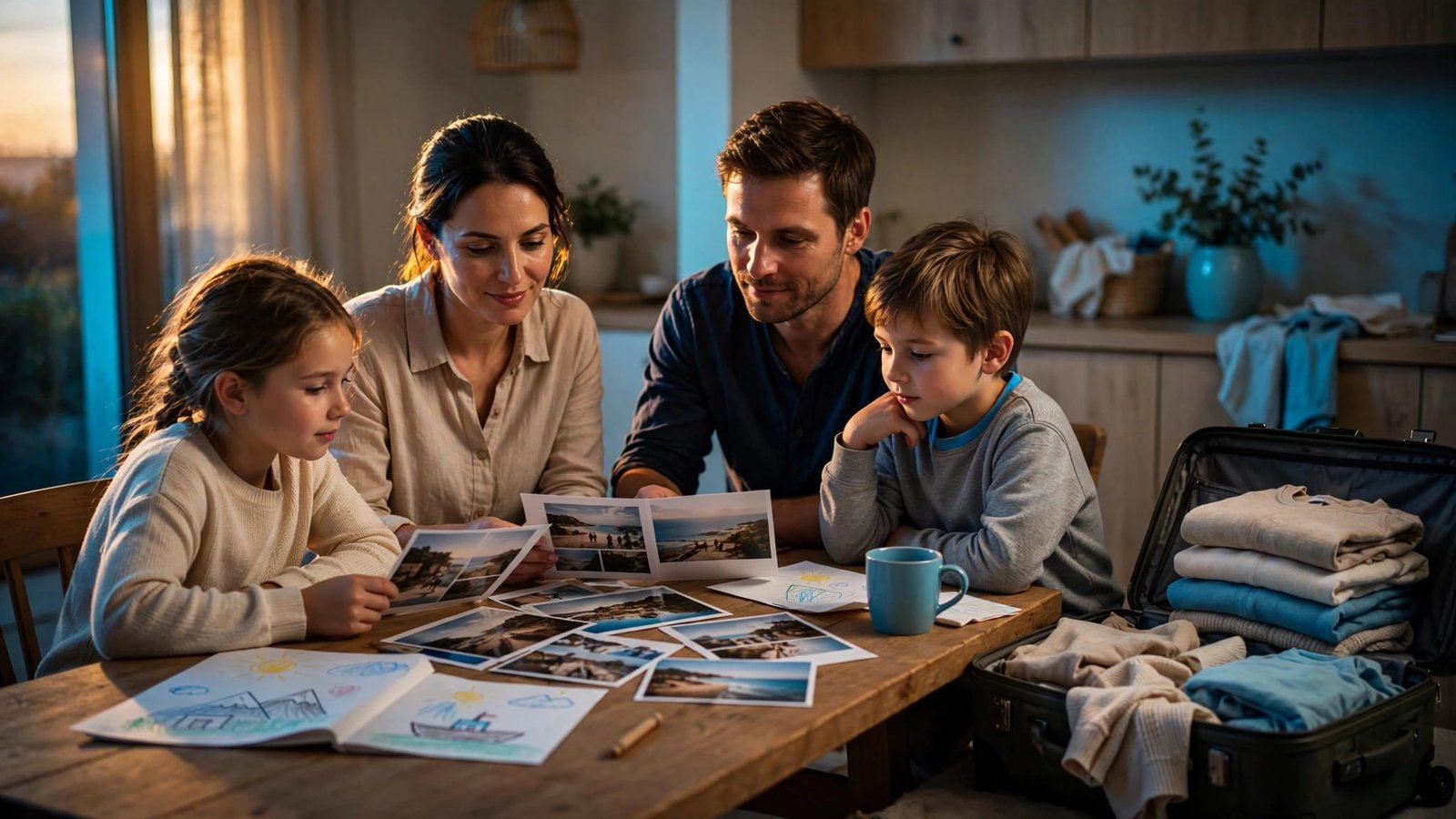
Coming home from a trip can bring tired bodies, full suitcases, big feelings, and a lot of laundry. A family trip debrief gives everyone a simple way to talk about what happened without turning the vacation into an assignment.
You don’t need a long meeting or a perfect scrapbook. A calm conversation helps your family notice which shared experiences felt enjoyable, difficult, or meaningful.
A short conversation can support family bonding while helping you avoid repeating the same stress later.
Key Takeaways
- Give everyone time to rest before asking them to talk about the trip.
- Keep the conversation short, simple, and free of blame.
- Let children share through talking, photos, drawing, or a quiet one-on-one chat.
- Save practical notes about packing, food, hotel rooms, breaks, and transportation.
- Treat breaks, early exits, and changed plans as useful information, not trip failures.
- For autistic and neurodivergent children, record the supports that helped your family feel more comfortable.
Start Your Family Trip Debrief With Rest
The best post-trip debrief is a form of preventive care, not something to start in the car while everyone is hungry and exhausted. Get home, unpack the urgent items, eat familiar food, and let everyone settle back into their own space.
A family vacation can be wonderful and still be tiring. Kids may need a quiet afternoon before they can explain what they loved or what overwhelmed them.
Choose recovery before reflection
Pick a time that feels low-pressure. That may be dinner the next night, a weekend breakfast, or a short walk together.
For some families, 15 to 20 minutes is plenty. Let everyone know there are no wrong answers and nobody has to speak first. The goal is not to judge the trip. It is to learn from it.
A break taken before overload is not lost vacation time. It often protects the rest of the day.
This matters for every family, especially when a child had a hard time with crowds, sleep changes, waiting, food, or unfamiliar places.
Give people more than one way to share
Not every child wants to sit in a circle and talk. A younger child may want to show a favorite photo. A teen may rather text a few thoughts or talk privately with a parent later.
Bring out a few photos, a souvenir, or the trip map. Let those items start the conversation naturally. You might hear more from a child while looking at a photo than by asking, “How was the trip?”

Use This 20-Minute Family Trip Debrief
A simple structure keeps the conversation calm. You do not need to cover every day, meal, ride, and delay. Focus on the moments your family will want to remember or handle differently next time.
Begin with the good moments
Start with easy questions. Ask each person to choose one favorite memory, one funny moment, and one thing that surprised them.
Try prompts like these:
- “What was the best part of the trip for you?”
- “What is one moment you want to remember?”
- “What did you try that you had not done before?”
- “What made you feel happy or comfortable?”
A quick “highlight reel” works well when attention is limited. Each person can share one favorite moment in 30 seconds, then move on.
Talk about hard moments without blame
After the good memories, ask what felt difficult. Keep your voice neutral. A missed reservation, a long airport line, a loud restaurant, or a rainstorm is not anyone’s fault.
You can say, “What made that part hard?” instead of, “Why were you upset?” That small change gives children room to explain what they needed.
If someone does not want to answer, let it go. The conversation should feel safe, not like a family performance review.
Finish with one useful adjustment
End with one or two practical notes for the next trip. Treat these notes as preventive care by noticing patterns early, not as a list of rules.
Maybe your child needed more snacks in the car. Maybe the hotel pool helped everyone reset. Maybe a less demanding itinerary would have worked better.
Write down only what matters. A family does not need a page of rules after every vacation.
Reflection Questions That Fit Different Ages
Good reflection questions are open enough for honest answers and simple enough for tired travelers. Pick a few. You do not need to ask every question in one sitting.
Questions for children and teens
Use the words your child understands. Younger kids may answer with pictures, choices, or a thumbs-up and thumbs-down.
- What was your favorite part of the trip?
- Was there anything you did not like?
- When did you feel calm and comfortable?
- When did you need a break?
- What food did you like having away from home?
- What was hard about sleeping, riding in the car, flying, or staying in a hotel?
- Did anything feel too loud, busy, bright, or crowded?
- What would you want to do again?
- What would you skip next time?
- Is there something you wish the grown-ups knew?
Teens may have stronger opinions about privacy, social pressure, money, and independence. Give them space to share those thoughts without immediately fixing the problem.
Questions parents can answer privately
Parents need their own reflection time too. You may notice patterns that your children cannot put into words yet.
Think about what helped your family move through the day. Was it a familiar breakfast? A stroller? A quiet hotel room? A planned midday break? Did one adult carry too much of the travel-day work?
For Disney trips, keep notes about communication tools, comfort items, medication, mobility needs, and recovery time. Our guide to Disney World autism planning can help you build future park days around what your child actually needs.
Help Everyone Transition Back Home
The return home can feel strange after a major trip. Even after a positive summer vacation, the house may feel familiar while routines seem dull, school approaches, and everyone remains tired.
That feeling can be stronger after international travel, long stays away, or a short-term mission trip. Some travelers call this reverse culture shock. Reflecting and journaling after travel can help people make sense of the change without forcing a big conversation.
Return to familiar routines slowly
Start with the basics. Sleep, familiar meals, quiet play, regular medications, and time at home can help everyone reset.
Avoid scheduling every catch-up activity in the first day or two. Your child may need time before returning to school, sports, appointments, or crowded activities.
A simple visual plan may help: unpack, rest, eat dinner, take a bath, and sleep in your own bed. Familiar next steps make the transition feel more manageable.
Watch for feelings that need more support
A difficult day after travel doesn’t always mean something is wrong. Still, listen if a child keeps bringing up a scary moment, has trouble sleeping, withdraws for a long time, or seems unable to return to regular routines.
Family conversation is helpful, but it isn’t the right tool for every need. The emotional side of re-entry can be more intense after major life changes or stressful travel experiences. After global missions, returning home may involve emotional processing and spiritual growth alongside practical routines.
Save the Details That Will Help Next Time
Your travel memories can fade quickly after the laundry is done. A few notes from each travel destination can make future vacation planning feel much easier.
Keep the system simple. Use your phone notes app, a shared family document, or a paper notebook near your travel supplies.
Update your packing list with real lessons
Write down what you ran out of, what stayed untouched, and what you wished you had close by. This is especially helpful for snacks, wipes, extra clothes, chargers, medicine, headphones, comfort items, and cleaning supplies.
Keep essential items where adults can reach them quickly. Do not bury the things you may need during a hard moment under everything else in the trunk.
For strollers, travel gear, cleaning supplies, and other practical items that can save a vacation day, visit the K&S Travel Rescue Shop. The right item is not about packing more. It is about having what your family uses when it matters.
Keep photos and notes without making it homework
Choose a few pictures that tell the real story of the trip. Include the big moments, but also the hotel breakfast, the quiet walk, the funny car ride, or the pool break everyone needed.

You do not need to print every photo or finish a scrapbook by Sunday night. A small album or folder can be enough. Let each child choose one photo they want to keep.
Make Special-Needs Travel Notes Part of the Plan
Family travel with an autistic or neurodivergent child can reveal useful support needs. The goal isn’t a perfect vacation. It’s a trip with more comfort, flexibility, and shared time.
What worked for one child may not work on the next trip. Your family’s own observations matter more than a generic packing list or a busy itinerary.
Record the supports that helped
Make a short note about sleep, food, crowds, transportation, noise, waiting, bathrooms, and hotel space. Did your child use headphones? Did familiar snacks prevent a hard moment? Was a break before lunch better than waiting until everyone was upset?
You may also notice that one main activity per day was enough. Once your family’s priority happened, everything else was extra.
For more Disney-specific support, our Disney autism planning worksheets include space for travel-day needs and recovery ideas. They can help you carry real lessons forward without creating a rigid schedule.
Let siblings have their own memories too
Siblings may have loved parts of the trip that felt hard for someone else. Ask what they want to do again. Let them choose a favorite photo, snack, souvenir, or future wish that reflects their shared experiences.
Fair doesn’t always mean everyone does the same thing. It means every person has moments where they feel included, heard, and cared for.
Kellie Neff’s B.A. in Child Development and firsthand experience traveling as autism parents shape our practical resources for real family trips. For extra Disney planning support, you can find the Disney World with Autism Guide on Etsy or the Disney autism guide on Amazon.
What Mission Trip Debriefs Can Teach Family Travel
A missionary family or short-term mission team may use a more structured debriefing process after a short-term mission trip. Travel can bring intense emotional, cultural, and spiritual experiences. Groups such as TCK Training, Le Rucher, and TEAM are often part of those conversations.
Your family vacation doesn’t need the formality of family debriefing retreats or counseling-style sessions. Still, there are a few helpful lessons worth bringing home.
A mission experience can support spiritual growth, broaden a family’s global vision, and invite reflection on a shared cultural experience.
Keep the structure simple
A calm check-in can prevent small problems from becoming repeated travel stress. You can ask what worked, what felt hard, and what your family wants to remember.
Periodic post-trip debriefing can include a focused topic or an open conversation. For family travel, both options work. Choose the one that fits the day.
Respect different timelines
One child may want to talk on the drive home. Another may need a week. One parent may be ready to plan the next trip while the other is still sorting laundry.
Do not rush the emotional processing. Keep the invitation open. A simple “I am here if you want to talk about the trip later” can mean a lot.
Frequently Asked Questions
When should we do a post-trip debrief?
Wait until everyone has eaten, rested, and had time to settle in. Many families do best within a few days of coming home, but there is no deadline.
What if my child does not want to talk?
Offer another way to share. Look at photos, draw a favorite memory, take a walk together, or ask one simple question later. Do not force an answer.
Should we talk about meltdowns or difficult moments?
Yes, but keep it calm and practical. Focus on what made the moment hard and what support might help next time. Avoid treating the child as the problem.
A Better Trip Starts With What You Learned
A family trip does not need to be perfect to be meaningful. The missed plans, quiet breaks, favorite snacks, and unexpected wins all tell you something about what your family needs.
A calm family trip debrief helps you keep the good memories while making the next adventure feel more comfortable, supported, and enjoyable for everyone.
Leave a Reply