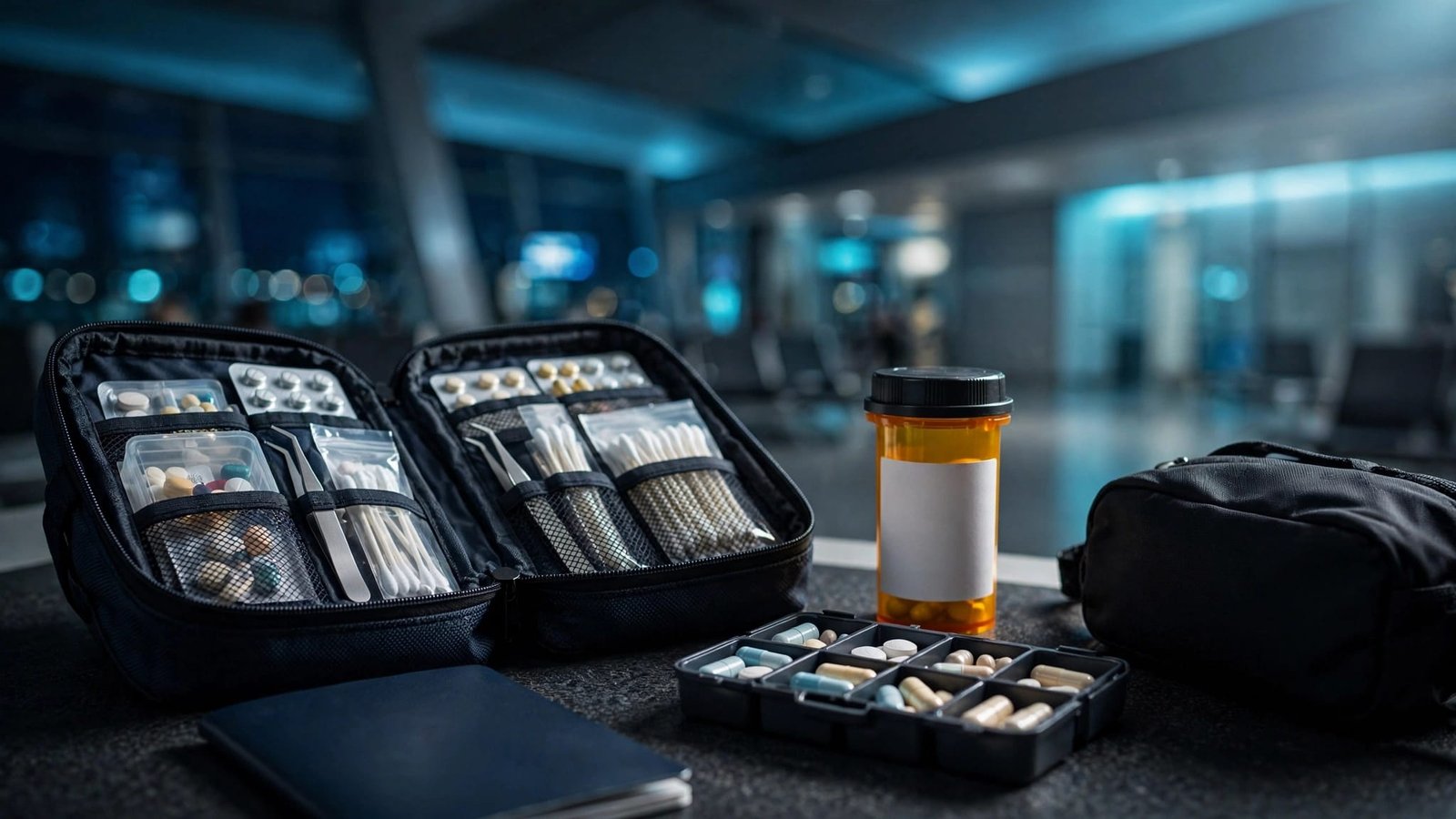
International travel is much easier when your medication plan is ready before your suitcase is packed. If you need to travel with prescription medication, your goal is simple: keep it legal, protected, easy to reach, and available if plans change.
A prescription that is routine at home can have different rules in another country. Add a delayed flight, a checked bag that doesn’t arrive, or a major time change, and small details matter fast.
Start early, keep your important items together, and give yourself a backup plan.
Check Country Rules Before You Book
Airport security rules and a country’s medication laws are not the same thing. Screening approval doesn’t guarantee legal entry at your destination.
Check every country on your itinerary
Check the destination country’s custom regulations and import limits, plus the rules for every transit country. This matters even if you don’t plan to leave the airport during your connection.
Review guidance from the U.S. State Department’s medicine and health guidance, the relevant embassy or consulate, customs authority, health ministry, and airline. Rules can change, and they may cover over-the-counter medications as well as prescriptions.
ADHD medicines, sleep medicines, opioids, and other controlled substances may be restricted or prohibited. Ask whether the medicine has a different controlled-substance classification, quantity limit, permit requirement, or customs declaration rule.
Don’t wait until you reach the airport. Contact the embassy or consulate if the rules are unclear. Ask whether you need medical documentation, translated documents, advance approval, or an import certificate.
Give controlled medications extra attention
Carry only the amount you need for the trip, plus a reasonable supply for delays if your health care provider confirms it’s medically appropriate.
Bring the original pharmacy container, a copy of the prescription, and a letter from your prescriber. The letter should list the medication’s generic name, your medical need, dose, and contact information for the office.
A medication that is legal in the United States is not automatically legal at your destination or during a connection. Verify current requirements with official authorities, rather than treating this information as universal legal advice.
How to Travel With Prescription Medication in Your Carry-On
Essential medication belongs in your carry-on luggage, not in checked baggage. Checked bags can be delayed, lost, exposed to heat or cold, or sent to the wrong airport.
The CDC’s guidance for traveling abroad with medicine recommends bringing enough medication for your entire trip, plus extra doses for delays.
Keep original containers and records together
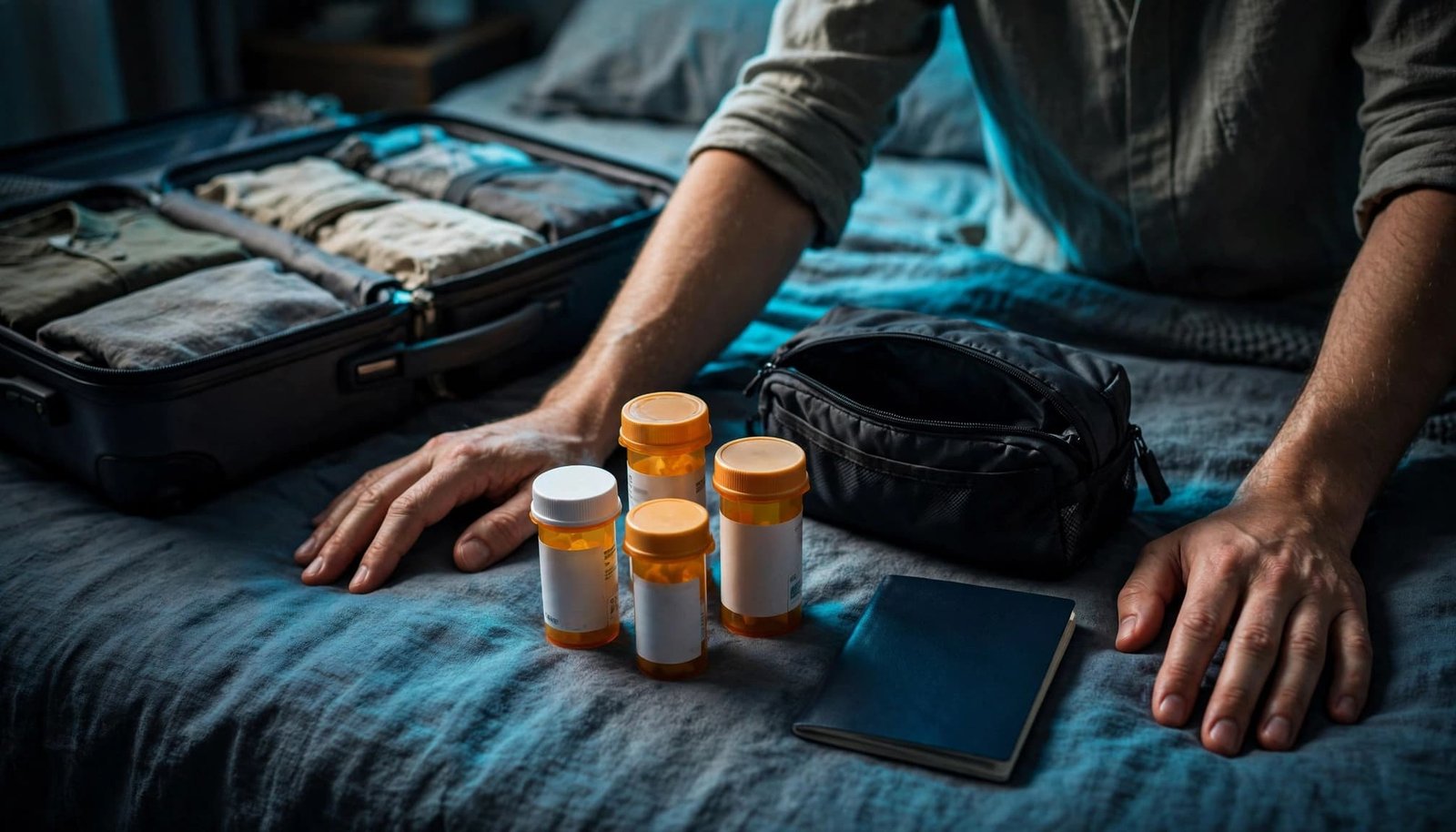
Use original containers whenever possible, especially pharmacy-labeled containers. Don’t transfer all your medication into an unlabeled organizer for an international flight.
Keep the prescription bottles with your medication, even if you use a small daily pill organizer during the trip. Keep prescription labels intact and readable. Original packaging helps airport staff, customs officers, pharmacists, and clinicians identify what you have.
Keep a paper folder and a secure digital backup with:
- A current medication list with names, doses, and schedules.
- Copies of prescriptions, with each medication listed by brand and generic name.
- Your prescriber’s contact information and pharmacy details.
- Insurance information, allergies, and important care instructions.
- A provider letter for injectables, controlled substances, or medical devices.
Leave a copy with a trusted person at home too. If medication goes missing, those records can save time.
Pack a few extra days, not just exact doses
Flights get canceled. Weather changes plans. A cruise return can be delayed. Pack a reasonable buffer for travel delays instead of exact doses only. Ask your pharmacy team and health care provider how much extra medication makes sense for your trip.
Keep medication and medical supplies, such as syringes, cooling materials, or devices, in one easy-to-reach pouch inside your personal item or carry-on. Keep a full-day supply accessible rather than placing it in checked baggage. You don’t want to dig through several bags while a security line moves behind you.
For families traveling with children, add familiar snacks, headphones, comfort items, chargers, and communication supports to the same travel-day plan. Special needs travel planning can help families build a trip around routines, accessibility needs, and realistic backup options.
Handle Airport Security With Less Stress
For U.S. departures, give yourself extra time at the airport, especially with medical equipment, cooling supplies, liquid medication, or feeding supplies. Confirm procedures with the relevant airport and airline before travel.
At a U.S. TSA checkpoint, tell the officer about medically necessary items before screening begins. A short, clear statement works well: “I have medically necessary liquid medication and cooling supplies in this bag.”
Medically necessary liquids can exceed 3.4 ounces
Under applicable TSA procedures, medically necessary liquid medications may exceed the usual 3.4-ounce or 100-milliliter limit. This can include creams, gels, and similar items.
They may need separate security screening. Keep them accessible and remove them when asked. Declare liquid medications at the start of screening, as explained in the TSA travel guidance. Other countries may use different limits and procedures, so check their current requirements.
You don’t need to announce every tablet or capsule. Still, keeping all medication together makes screening easier if an officer needs to inspect the bag.
Keep cooling packs ready for inspection
Keep cooling packs with your medication, and explain their purpose before the bag goes on the belt. This is especially important when cooling packs are frozen, slushy, or partly melted.
If you have a device, syringes, a pump, batteries, feeding equipment, or other medical supplies, keep them together in your carry-on. Ask your airline about device-specific battery rules before travel day.
Bring a Clear Plan for Injectables and Medical Devices
Insulin, EpiPens, injection medications, feeding equipment, pumps, and other medical devices need extra preparation. These items are common medical needs, but airport security or customs may have questions.
Carry a provider letter when it may help
A doctor’s note isn’t required for every medication. It can help explain a legitimate medical need during airport security or customs questions.
Ask your health care provider to write the letter on office letterhead. Include your name, the generic medication name, dose, device or supply description, medical reason, and office contact information.
A provider letter can be especially useful for controlled substances, injectable treatments, or unfamiliar equipment. Carry a copy of the prescription and relevant medical records when appropriate.
Make the letter simple and direct. It should explain the need without sharing more private medical information than necessary.
Pack supplies for the full travel day
Don’t put a full day’s dose or needed medical supplies in checked baggage. Your personal item should hold medication, backup doses, syringes, alcohol wipes, device chargers, batteries, and device-specific accessories.
Airline battery and equipment rules may be separate from TSA and customs requirements. Check with the airline before departure, especially when traveling with pumps or other medical devices.
If you are traveling with a child, decide which adult is responsible for the medication pouch at each point of the trip. Write it down if several caregivers are traveling together.
A dependable plan doesn’t rely on one person remembering everything while managing passports, luggage, and tired travelers.
Protect Temperature-Sensitive Medication
Temperature-sensitive medications need a plan based on the product and manufacturer. Insulin and other medicines may have different storage requirements. Some must not freeze, while others shouldn’t sit directly against a cooling pack.
Ask your pharmacist or prescribing clinician for medicine-specific travel instructions, and review the official product instructions before you leave. Your health care provider can also explain replacement steps if the medication is damaged or lost.
Use the right cooling method
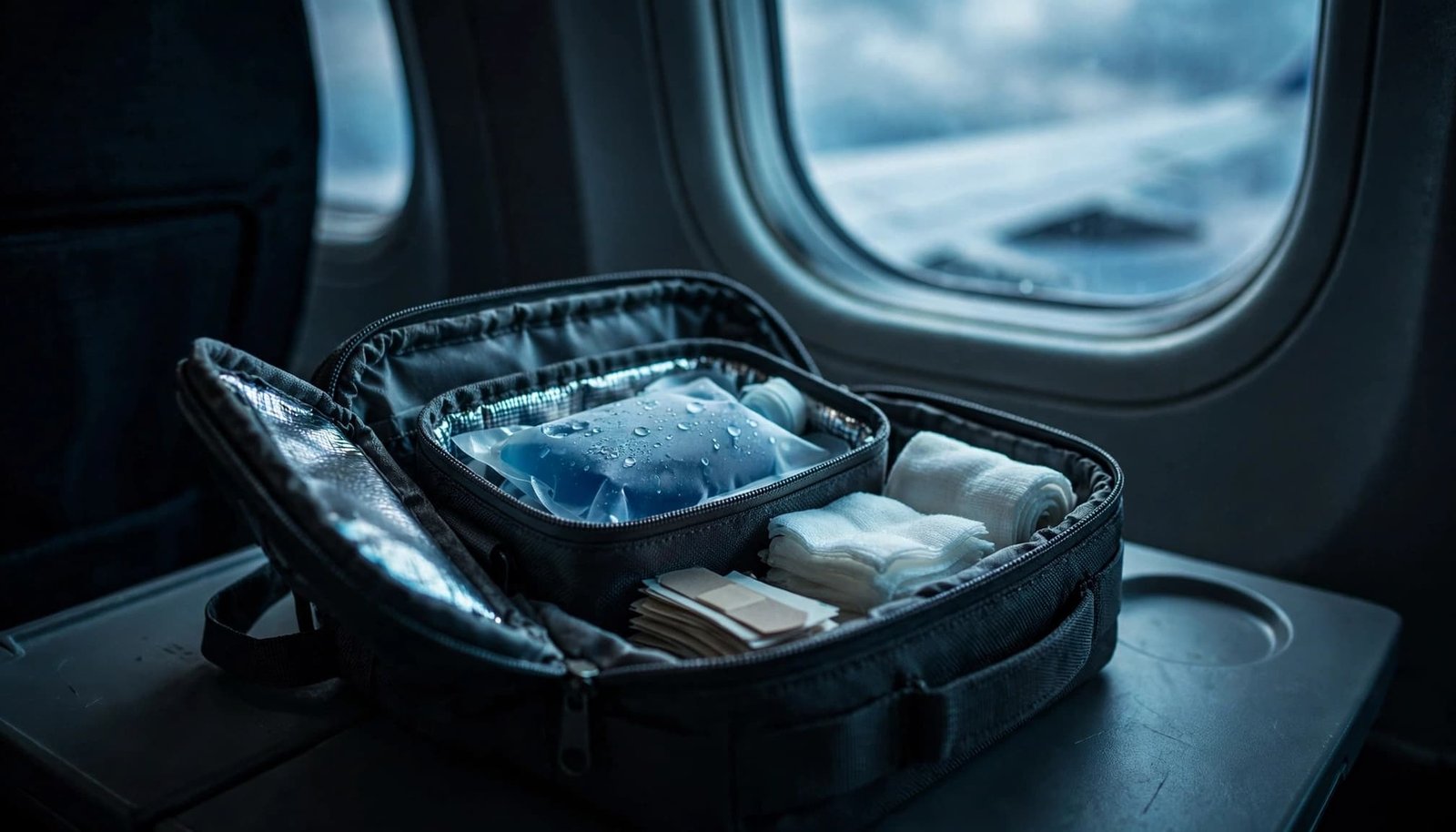
An insulated medication case, cooling packs, or an approved insulin cooling case may work if compatible with the medication. Never use a cooling method that could freeze medicine that must stay above freezing.
Keep medication out of direct sunlight, hot cars, exterior bag pockets, and checked storage. If your medication has a strict temperature range, a small thermometer in the cooling case gives you useful information.
Don’t assume hotel cooling is medication-safe
For temperature-sensitive medications, don’t rely on a hotel beverage cooler or guess at a safe temperature. It may be fine for drinks but may not maintain stable conditions for medicine. Contact the hotel before arrival and ask whether a medical refrigerator is available.
Keep a small supply with you even if the hotel agrees to store the rest. Room delays, transportation waits, and staffing changes happen.
If medication may have overheated or frozen, don’t decide on your own that it is safe to use. Check the manufacturer’s instructions or call your pharmacist for confirmation.
Plan for Time Zones and Travel Delays
Time zone changes can affect daily medication schedules. This is especially important for insulin, seizure medication, blood thinners, steroids, and other medicines where timing matters.
Follow the time since your last dose
The CDC advises travelers to ask a health care provider how to adjust medication timing. The right plan depends on the medicine, dose, dosing interval, and your health condition.
Write down a personalized plan before you travel. For time zone changes, include your departure time, arrival time, last dose, next dose, local time, and first few doses after landing.
Ask what to do if a delayed flight or connection changes the schedule. Set phone alarms, but keep a printed copy too. A dead battery or no signal shouldn’t leave you guessing about an important dose.
Build time into your itinerary
Avoid booking a packed first day when you’re crossing several time zones. Give your family time to eat, rest, hydrate, and settle into a new schedule.
This matters even more for travelers with autism, developmental disabilities, chronic illness, or medical routines that can’t shift quickly. A steady first day can make the rest of the vacation feel more comfortable.
What to Do if Medication Is Lost or Delayed
Lost medication is stressful, so first get somewhere safe and assess whether you need urgent medical care. Then use your written list and prescription copies to confirm the medication’s exact name, dose, and generic name.
Contact your prescriber, travel insurance assistance line, and a local licensed health care provider or pharmacy. Ask about an emergency refill, but don’t assume one is available in every country. Contact the airline or baggage service if your medication was lost with checked baggage.
Your records may help local professionals understand your needs, but they don’t guarantee replacement. Contact the destination embassy or relevant health authority when required, and verify current local rules before obtaining medication.
Don’t change your dose or use a substitute without professional advice. This includes over-the-counter medications, which may have import, ingredient, or replacement restrictions.
Don’t wait until you are out of medication
If your medication pouch is missing, begin making calls right away. Keep receipts and written notes about what happened, including any travel delays and conversations with providers.
For controlled substances, replacement may require extra local documentation or a medical evaluation. Your original medication records and provider letter are especially helpful.
Lost medical supplies, such as syringes, device accessories, or cooling materials, may also require a local replacement. Ask a licensed professional what can be obtained safely and lawfully.
A little extra medication, packed separately in your carry-on, can provide time to solve the problem. Keep it with your records rather than in a suitcase.
Keep travel-day support items close
Travel days can be long, messy, and unpredictable. A small travel health kit with medication records, basic supplies, chargers, snacks, and permitted nonprescription items can make a hard day easier.
For practical extras such as stroller needs and supplies for unexpected sick-on-vacation moments, visit Trip Rescue Shop.
Key Takeaways
- Keep essential medicine, medical equipment, and backup doses in carry-on luggage, separate from checked baggage.
- Use original pharmacy-labeled containers and carry prescription copies with generic medication names.
- Check medication rules for every destination and transit country before departure. Verify current requirements with official embassy, customs, health ministry, TSA, and airline sources.
- Tell airport security about medically necessary liquids, cooling packs, and medical supplies before screening.
- Ask your prescriber about controlled substances, injectables, temperature storage, and time-zone dosing.
- Pack a printed medication list and a backup plan for delays, loss, or damage.
Frequently Asked Questions
Are prescription medications allowed in carry-on and checked luggage?
Prescription medication can usually travel in carry-on luggage, and essential medication should stay there. Carry-on access protects you if checked baggage is delayed or exposed to extreme temperatures. Check the rules for your destination, transit countries, airline, and current authorities. TSA approval doesn’t automatically establish customs legality abroad.
Do liquid medications have to follow the standard 3-1-1 rule?
Medically necessary liquid medications may receive different TSA screening treatment when declared. Tell the TSA officer before screening and keep them ready for separate inspection. Requirements can vary by airport and destination, so check current guidance before departure.
Should I bring a doctor’s note for insulin or EpiPens?
A doctor’s note can help explain injectable medications, syringes, EpiPens, insulin, pumps, and related medical supplies. It isn’t universally required and doesn’t replace permits or documentation required by the destination country. Check airline rules and current entry requirements before traveling.
What should I do if medication is lost, delayed, damaged, or confiscated?
Contact your health care provider, insurer, local licensed medical service, and pharmacy as soon as possible. Ask the airline about delayed baggage and contact the relevant embassy or health authority for destination-specific guidance. An emergency refill may not be available abroad, and controlled medicines can have additional restrictions.
Can a Disney trip need extra medication planning?
Yes. Long park days, heat, resort transfers, and changing routines can affect medication plans. Families who want added support can use the Disney World with Autism guide or find the guide on Amazon for practical planning ideas.
A Calm Medication Plan Starts Before Departure
When you travel with prescription medication, preparation is more than packing a few bottles. It is checking country rules, protecting your supplies, and knowing what you will do if plans change.
Keep the medication close, keep the paperwork clear, and ask your care team for advice that fits your exact prescription. A prepared carry-on can protect both your health and your vacation.
Leave a Reply