Disney can be exciting, colorful, loud, and full of surprises. For an autistic child, the hardest part may not be the ride. It may be leaving the hotel room, going through security, waiting for transportation, or changing plans after a favorite attraction closes.
A Disney autism ebook gives your family a calm place to practice those moments before you reach Walt Disney World. The goal isn’t a perfect park day. It’s a calmer, more flexible family vacation with more comfort, more choices, and fewer stressful unknowns.
Key Takeaways
- Start preparing before you book every detail, so your resort, transportation, and park plans fit your child’s real needs.
- Practice small transitions at home with visual schedules, timers, ride videos, and familiar comfort items.
- Plan one or two priorities per park day, then leave room for breaks, snacks, and a change of plan.
- Disney’s Disability Access Service may help eligible guests wait outside a conventional attraction queue. It is not a front-of-the-line pass.
- A quiet break, an early exit, or a pool afternoon still counts as a wonderful Disney vacation day.
Start With Your Child’s Real Needs
A Walt Disney World trip has many transitions before you even reach Magic Kingdom or EPCOT. There is travel day, hotel check-in, security, buses, monorails, meals, crowds, rides, bathrooms, weather, and returning to the room.
Think about what is hard for your autistic child at home and on regular outings. Is it waiting? Leaving a preferred activity? Wearing headphones? Trying new food? A busy parking lot? Those answers should shape your Disney plans.
Make a simple sensory profile
Write down what helps your child stay regulated. Include favorite snacks, safe foods, communication supports, preferred clothing, calming activities, and the early signs that a break is needed.
Also write down what makes a reset easier. Some children need movement. Others need shade, quiet spaces, cold water, a familiar video, or a few minutes in the stroller. Keep this list with your travel documents.
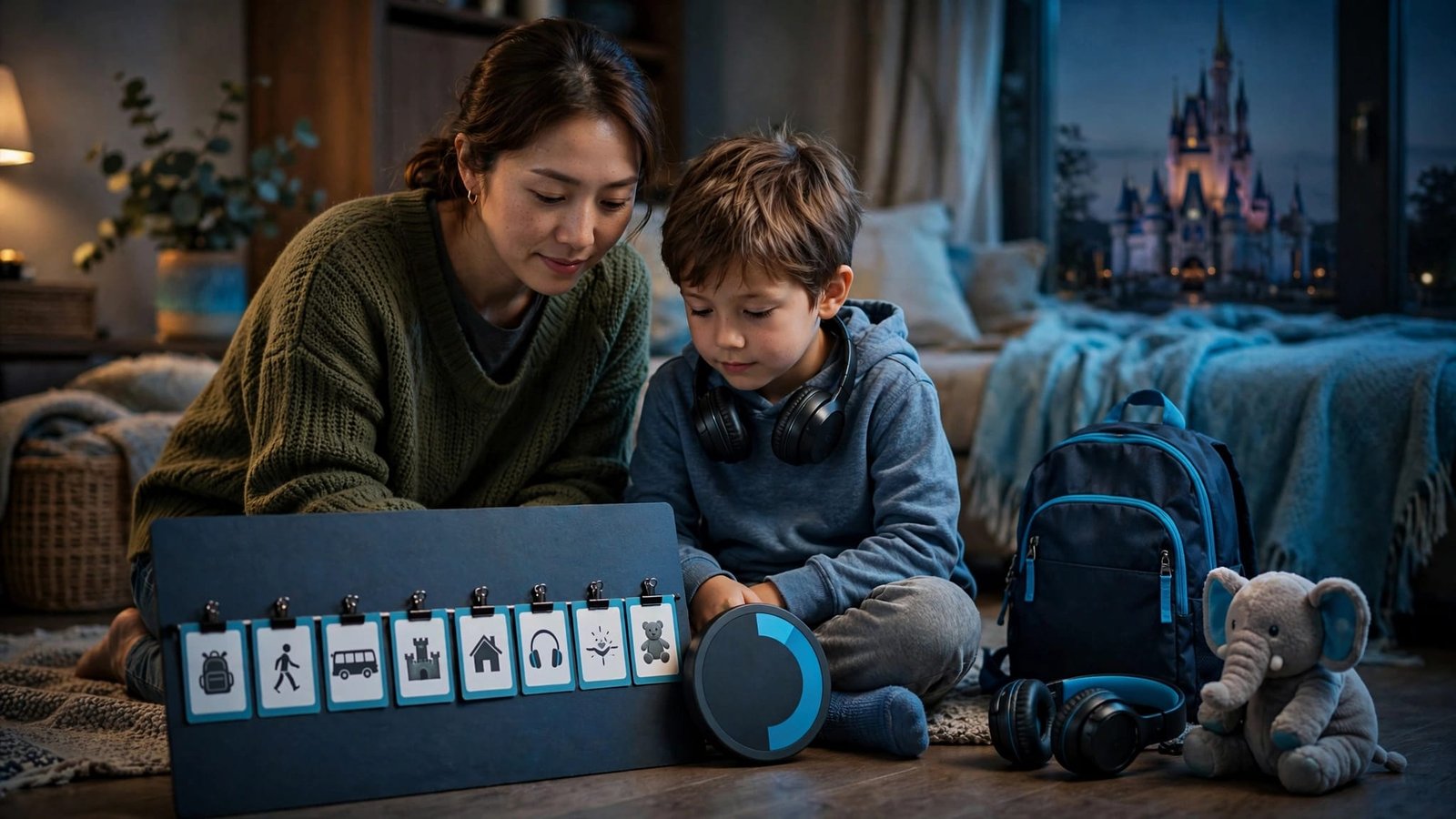
Create a one-page visual schedule showing your child’s most important routines and available break options. Keep it simple, individualized, and useful for travel planning.
If your family is balancing mobility needs, food restrictions, anxiety, communication needs, or elopement concerns along with autism, Disney autism planning for multiple disabilities can help you think through the full trip.
Pick a good-day goal
A good Disney day might be one favorite ride, a calm lunch, time at the pool, and an early bedtime. That is not a failed day. It is a day that fit your family.
Choose one or two priorities. Maybe your child wants to meet a character, ride a favorite attraction, or see the castle. Once those things happen, the rest is extra.
A break before sensory overload is not lost park time. It can protect the rest of your day.
Practice Disney Transitions Before You Leave
Preparation works best when it feels familiar. Start six to eight weeks before the trip when possible. You don’t need to talk about Disney every day. Short practice sessions can feel safer than one big buildup.

Use a visual schedule and short scripts
Create a simple visual schedule that shows the main rhythm of the day. Use pictures, icons, photos, or short words that match your child’s communication style. Choose only a few cards at first, such as shoes, elevator, breakfast, transportation, park, break, and room.
Begin with one easy transition and gradually add harder ones. Practice for a few minutes, then stop while your child is still comfortable. Don’t force participation. Your child can watch, point, gesture, use AAC, repeat a script, or choose not to respond.
Your schedule may include:
- Wake up, breakfast, shoes, elevator, transportation, park entrance, ride, snack, break, lunch, hotel, and bedtime.
- A picture of the resort room, transportation, security, ticket scan, and pool.
- A card that says “change of plan” with a calming activity that may happen instead.
- A timer or “two more minutes” card for ending a preferred activity.
- A choice card with two acceptable activities, such as snack or quiet time.
Keep the language honest and simple. Try, “First we ride Dumbo, then we get water, then we choose what is next.” Avoid promising every ride, every meal, or fireworks if your child may not be comfortable staying.
Before each practice session, review the visual schedule together. Point to the first card and explain what will happen next. Use the same short words each time, such as, “First shoes, then elevator, then breakfast.” If your child prefers a highly familiar routine, keep the first steps unchanged and practice only one new step.
Build the routine in small steps:
- Practice leaving the hotel or home. Put on shoes, gather a small bag, walk to the elevator or car, and return if needed.
- Rehearse entering the park. Practice walking toward an entrance, pausing for security, showing a bag, and moving through the ticket scan.
- Add a short waiting practice. Stand in a line at home, a store, or a quiet attraction. Start with a brief wait and offer a timer, fidget, or clear end point.
- Practice changing activities. Move from a preferred toy to a snack, from a ride video to a break, or from the playground to the car.
- Schedule a break before your child needs one. Try, “First quiet time, then we decide what is next.” Practice sitting in a calm space, having a drink, or using noise-canceling headphones.
- Rehearse leaving the park. Follow the same route toward transportation, the hotel, or the room. Use a final activity card, such as snack, bus, elevator, or pajamas.
Use first-then language throughout the practice. Give a transition warning before the change, then show the timer or card. For example, say, “First security, then ticket scan, then we choose.” Keep the next step predictable, even when the full day may change.
Rehearse stopping and leaving
Leaving can be harder than arriving. Practice ending a preferred activity at home with a timer and a clear next step. Use the same words you plan to use at Disney.
You might say, “Two more minutes, then we put shoes on and get a snack.” Let your child see the timer. Follow through when it ends, then move to something predictable.
Practice the full leaving sequence in small pieces. End a game, put items away, put on shoes, walk to the door, and move toward transportation. Later, add a short car ride, bus ride, elevator trip, or walk back to the room.
Try the routine during a grocery trip, restaurant visit, playground stop, or walk around the neighborhood. These small practices prepare your family for theme park days without requiring a full outing. The goal is not to make your child love transitions. It is to make the pattern familiar.
If plans change, show the change-of-plan card before giving new information. Say, “That attraction is closed, so first water, then another choice.” Offer two realistic options and accept gestures, AAC selections, spoken words, or no choice yet.
Watch ride videos with a purpose
Ride-through videos can help your child see darkness, loud music, motion, water, enclosed spaces, or sudden effects before the trip. Watch in short pieces and pause when needed.
Pause to discuss what your child notices and what choices are available. Ask, “Would this sound feel too loud?” or “Do you want to try this ride, or pick another one?” Talk about where the ride starts, whether there is a quiet break before boarding, and how your family can leave or skip it.
Your child may enjoy watching a ride and decide not to ride it in person. That is useful information. Practice saying, “Not this one,” then choosing a snack, rest area, or different attraction.
Build a Flexible Disney Park Rhythm
A packed hour-by-hour schedule can fall apart after one late bus, bathroom stop, thunderstorm, or tired child. A flexible schedule gives your family a plan without turning every minute into a deadline.
Think in short blocks: arrive, do one priority, snack, rest, eat, choose the next step. Conditions can vary across theme parks, with heat, crowds, transportation delays, and attraction closures affecting each day differently. Staying in the same land for a while can also reduce unnecessary walking and transitions.
Plan breaks before the hard moment
Midday breaks are helpful because parks are often hotter, busier, and louder later in the day. Returning to the resort for lunch, pool time, a nap, or quiet play may help everyone reset.
Families can build midday breaks into both resort-return plans and in-park reset plans. Find shade, sit for a snack, browse a quieter shop, or take a slow walk away from the busiest area. Let your child’s energy level guide the next choice.
When comparing resort hotels, look at transportation, room setup, food options, pool access, and how easily your family can return for rest. A resort that fits your family is more important than copying another family’s favorite hotel.
Understand Disability Access Service
Disney’s DAS may help guests who cannot tolerate waiting in a conventional attraction queue for an extended time because of a developmental disability such as autism. Disney reviews each guest’s situation individually. A diagnosis alone does not guarantee approval.
If approved, DAS provides an attraction return time so your family can wait somewhere more comfortable than the traditional physical queue. Disney’s current process allows families to choose an attraction return time in the My Disney Experience app. Check the My Disney Experience app before arrival, and review Disney’s official Disability Access Service details because policies and attraction availability can change.
Cast Members can explain current procedures or direct guests to appropriate resources, while Disney makes eligibility decisions directly. DAS is not immediate ride access. It does not cover transportation lines, restaurant waits, weather, heat, ride readiness, or the need for a break. Disney also explains its attraction queue access options for guests who have difficulty with conventional queues.
Pack for Regulation, Not Every Possibility
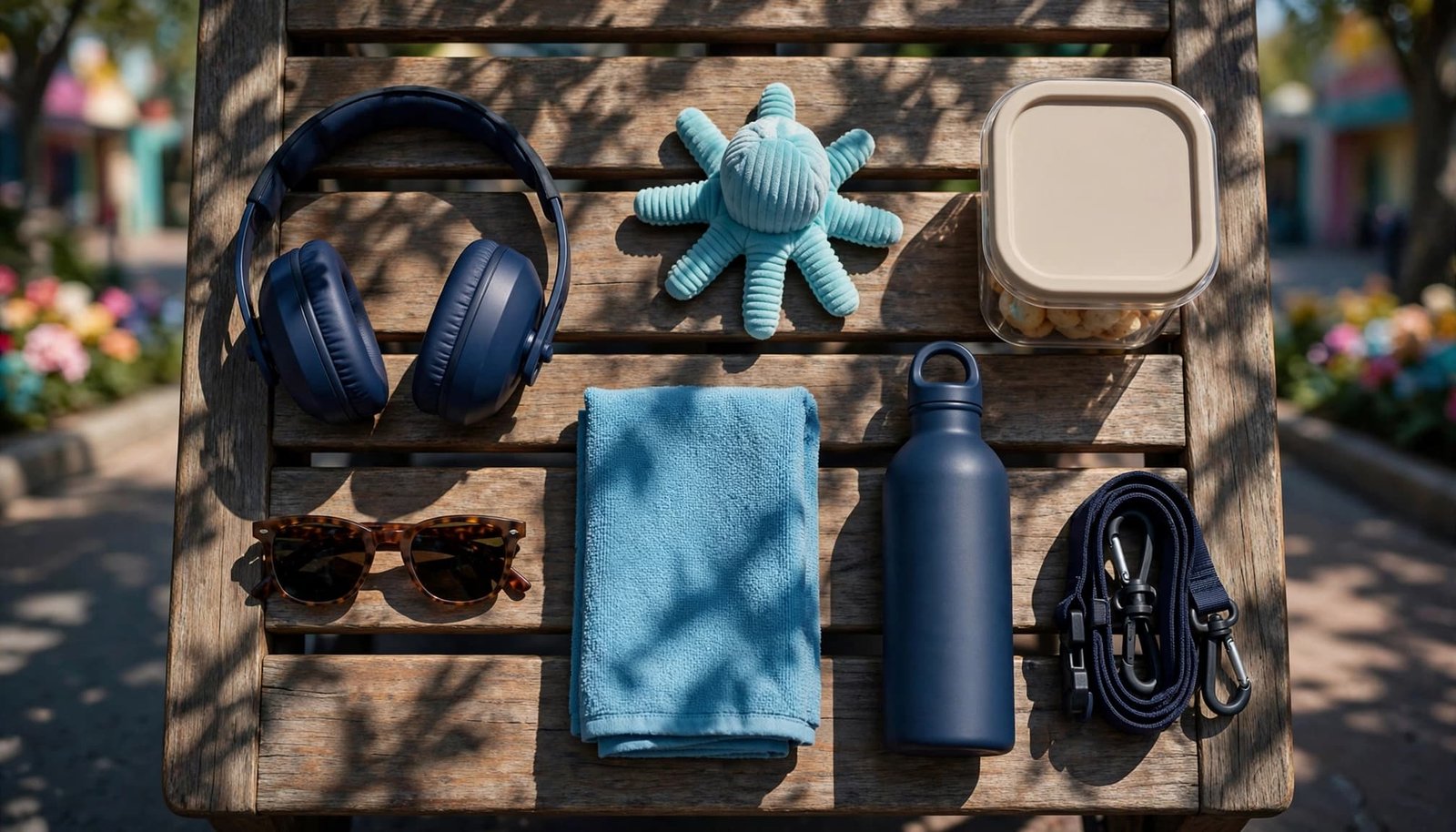
A park bag doesn’t need to hold everything. It needs to hold the items your child already knows and trusts. Test new headphones, cooling towels, fidgets, or clothing before vacation day.
Bring familiar supports
Many families pack noise-canceling headphones, a favorite fidget, preferred snacks, water, sunglasses, comfort clothing, medication, wipes, chargers, and a change of clothes. A communication device and a low-tech backup can also be helpful.
Some families use a sunflower lanyard to communicate an invisible disability. It doesn’t guarantee a specific accommodation, so confirm current policies with the park before your visit.
Put the most-used items where you can reach them quickly. A child who uses a stroller for fatigue or comfort may need their favorite support items in the same place every day.
For strollers, travel organizers, cleaning supplies, and those unexpected sick-on-vacation moments, visit the Trip Rescue Shop. Having the right basics ready can make a difficult moment easier to handle.
Keep the exit plan visible
Choose a simple reset plan before entering each park. It may be, “If it gets too loud, we get water and sit down.” It may be, “If we are all done, we go back to the hotel.”
Tell your child that leaving early is always an option. When a child knows there’s a safe way out, they may feel more comfortable trying something new.
What a Disney Autism Ebook Should Include
Not every guide is useful for every family. A helpful resource should give you room to make the plan your own. It shouldn’t pressure you to follow someone else’s schedule.
Look for printable planning tools
A helpful guide is easy to use during a quiet moment at home. Look for printable visual schedules, transition cards, packing lists, sensory notes, and blank spaces for your child’s preferences.
Start six to eight weeks before your trip. Choose pages that match your child’s communication style, sensory needs, interests, and daily routines. Print or save the visual supports you plan to use.
Practice the main transitions in short sessions. Try leaving the hotel, entering the park, waiting in lines, changing activities, taking breaks, and leaving the park. Repeat the transitions that feel most difficult, without trying to practice everything at once.
Use first-then language and clear transition warnings. You might say, “First hotel, then park,” or, “First shoes, then stroller.” A visual timer, picture card, or familiar phrase can make the next step easier to understand.
Practice flexibility before the trip, too. Change a small part of a familiar routine and offer a calm alternative. Try saying, “The plan changed; first break, then we choose.” Adapt each example to your child’s preferred communication method, tolerance for uncertainty, and need for movement or quiet.
A guide should help you plan for transportation, security, meals, queues, hotel breaks, and changes during the day. It should also remind you to verify current Disney policies with official sources. Use these pages as part of your vacation planning, not as rules you must follow.
The Disney World With Autism Guide PDF on Etsy gives families a resource for DAS preparation, sensory needs, flexible park days, and trip routines. Review the relevant pages before arrival, then bring the printed supports or saved files for easy access.
Choose flexibility over a packed itinerary
A good guide gives you options. It helps you build a backup plan for rain, crowds, tired feet, a closed attraction, or a child who changes their mind.
Keep a paper copy in your room and a digital copy on your phone. It’s easier to check a familiar page than search through social media while standing in a crowded walkway.
Families who prefer an Amazon option can keep the Disney World With Autism guide on Amazon with their trip materials before and during vacation. Either version can support preparation at home and quick decisions in the park.
Get Support Before Travel Day
Disney planning can feel like a lot when you are booking tickets, choosing a resort, thinking about meals, and supporting your child through big changes. You don’t have to figure out every detail alone.
K&S The Travel Crusaders brings firsthand family travel experience, real-world planning support, and Kellie’s B.A. in Child Development to Disney vacations for special needs travelers. Our Disney autism travel planning support is built around your family’s routines, priorities, and comfort level. That accessibility support can include official Disney resources, transportation, sensory needs, and exit options.
Disney’s accessibility services page is a helpful guest services resource for reviewing current pre-arrival options. Disney makes DAS decisions directly with guests and families, so verify current policies with Disney and Cast Members before your visit. If your family uses a sunflower lanyard, treat it as a communication aid, not proof of eligibility or a guaranteed service.
Frequently Asked Questions
Does DAS let us skip all lines at Disney World?
No. DAS is for eligible guests who cannot tolerate a conventional attraction queue for an extended period. It gives a return-time accommodation for participating attractions. It is not a front-of-the-line pass, and it does not apply to transportation or dining waits.
How do we prepare for a Disney schedule change?
Practice a “change of plan” card at home. Pair it with a clear replacement activity, such as a snack, pool time, a familiar ride, or returning to the room. Keep your words short: “That ride is closed. We are getting water, then choosing another ride.”
What should we do if our child becomes overwhelmed?
Move away from the noise and crowd when possible. Offer a familiar support, water, food, headphones, quiet time, or the option to leave. Don’t push through because the schedule says it’s time for the next attraction.
Is character dining a good fit for picky eaters?
It depends on your child. Review menus, seating, noise level, characters, and travel time before booking. Ask about dietary accommodations with Disney or the restaurant in advance, but remember that not every request can be met. Mobile ordering or a counter-service meal can offer more control when your family needs flexible timing and a faster exit.
A Disney Day Can Look Different and Still Be Wonderful
The best family vacation is not measured by ride counts or how late you stay in the park. It is measured by whether your child felt supported and your family had room to enjoy the day together.
Practice transitions before arrival, plan for midday breaks, and keep your expectations realistic and flexible. Comfort comes first, and the memories can follow.
Leave a Reply