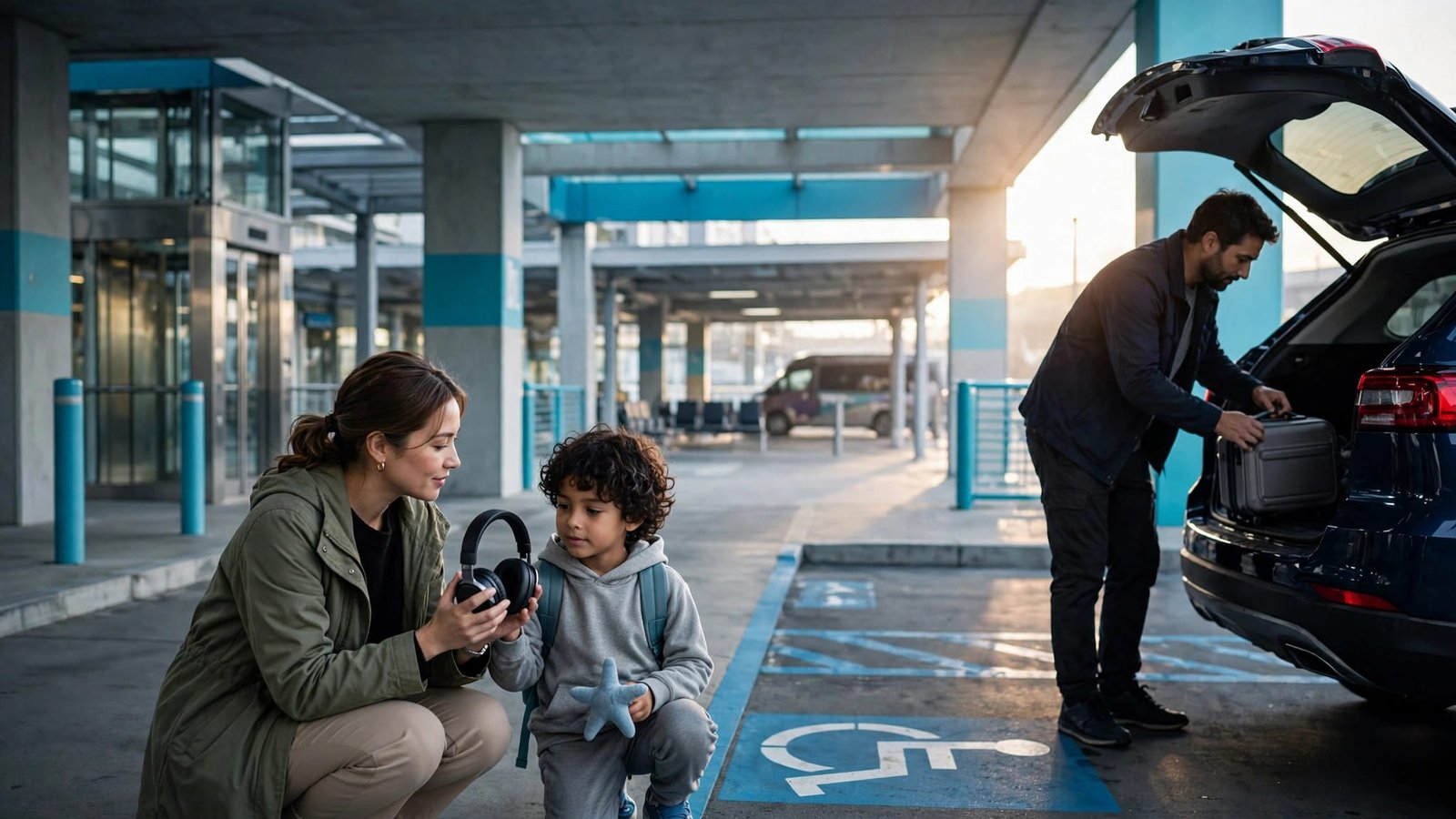
Airport parking can set the tone for your whole travel day. When the lot is confusing, the shuttle is crowded, or the terminal feels far away, it can make a hard transition even harder.
Autism-friendly airport parking is not one special space or service. It is a family plan that matches your child’s sensory needs, walking ability, routine, and comfort level before you arrive at the airport.
A little preparation gives your family more time, more choices, and fewer rushed decisions. Some airports offer familiarisation visits, but availability varies, so confirm options through the official airport website.
Key Takeaways for a Calmer Arrival
- Choose parking based on the full trip from your car to the gate, matching airport transitions to the needs of neurodivergent passengers, not only the daily price.
- Check the exact accessible parking location, elevator access, shuttle pickup point, and terminal entrance before travel day.
- Ask whether the airport offers familiarisation visits, as these preparation programs vary by airport.
- Request airline wheelchair or mobility assistance separately from TSA screening support.
- Contact the appropriate TSA screening support at least 72 hours before a U.S. departure when possible if security screening may be difficult.
- A Hidden Disabilities Sunflower lanyard can support communication when a traveler has non-visible disabilities, but it doesn’t guarantee priority access, fast-track security, or a shorter security line.
- Build in time for a sensory reset after parking, before security, and after security.
- Keep one adult focused on bags and parking while the other stays focused on your child.
Choose Autism-Friendly Airport Parking That Fits Your Child
The cheapest lot is not always the best choice for your family. A low daily rate can come with a long shuttle ride, several stops, loud crowds, and an unfamiliar walk through the terminal.
When choosing autism-friendly airport parking, think about the transition your child can handle best. Some families prefer a terminal garage because they can walk straight inside. Others need a shuttle-ready economy lot with more space and a lower cost.
Terminal garages can reduce transitions
Attached parking garages often give families the most predictable start. You can park, use an elevator, load a stroller or mobility device, and walk into the building.
Before booking, check which terminal the garage connects to. Confirm the walking route, elevator location, parking level, and whether the route is covered during rain or snow.
If offered, familiarisation visits can help your child preview the parking, shuttle, and terminal transition.
If your child struggles with waiting for transportation or unexpected vehicle noise, paying more for a garage may be worth it.
Economy lots need a shuttle plan
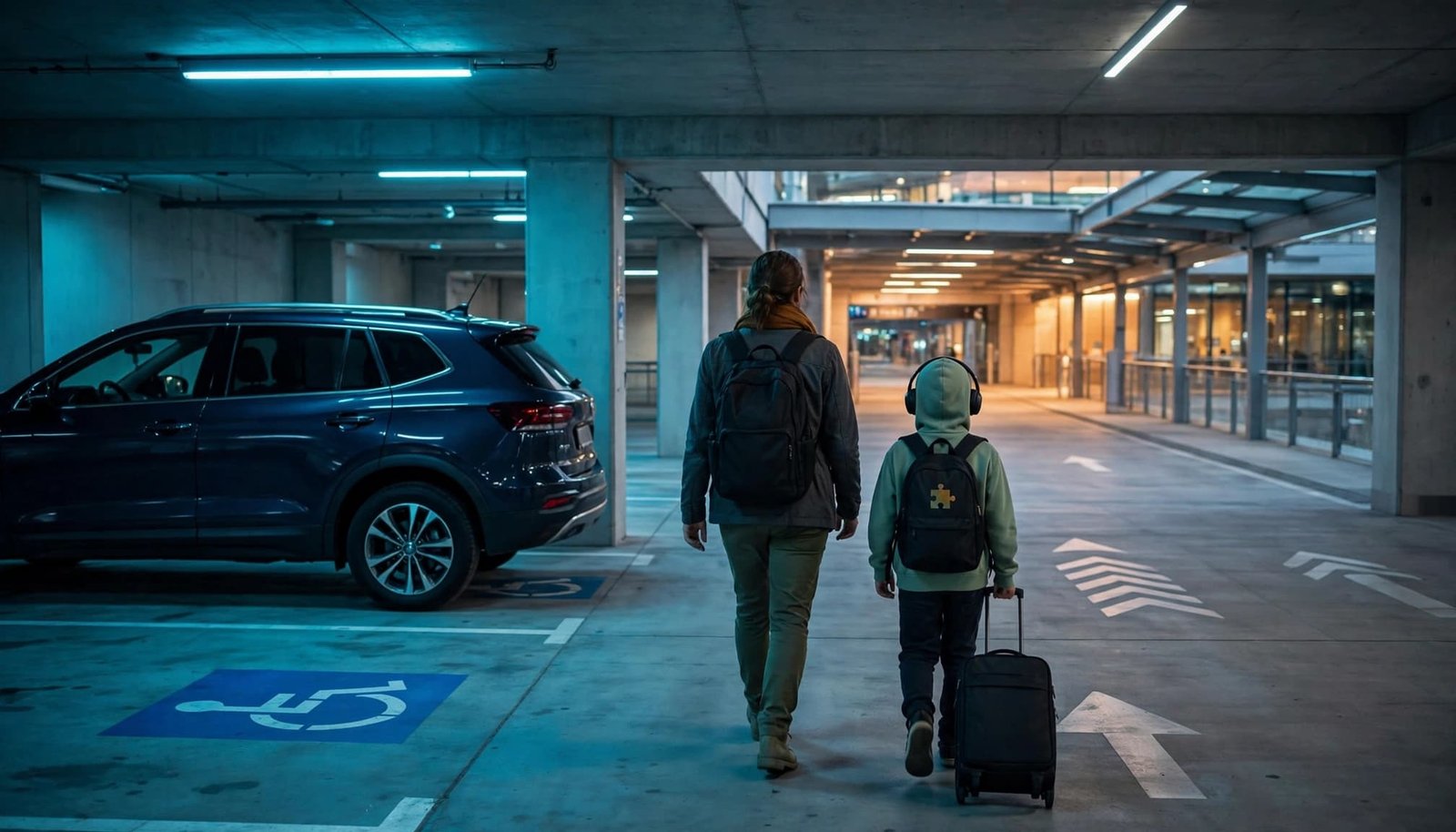
Economy parking can work well when your child enjoys buses or you have extra time. Treat the shuttle as part of your ground transportation plan, since crowded vehicles, delays, or multiple stops can create stress.
Call the airport parking office before your trip. Ask the airport or parking operator about its special assistance team, quieter waiting areas, accessible shuttles, and mobility-device procedures. Ask about shuttle frequency, accessibility, and alternate ground transportation pickup procedures.
A short shuttle ride can feel much longer when a child is hungry, tired, or already overwhelmed by a new environment.
Map the Route From Your Car to the Terminal
Do not leave the car-to-terminal route as a surprise. Look at the airport parking map before travel day and save screenshots to your phone.
Preview the route from your vehicle to the airline check-in hall, then from baggage claim back to the parking shuttle or garage. Compare parking garages by entrance, level, elevator location, and walking distance to the terminal.
If possible, use airport videos, photos, or familiarisation visits to make the route more predictable. Parking availability, permits, payment methods, shuttle routes, and assistance procedures vary by airport and must be verified through official sources.
Confirm accessible parking details early
Verify terminal accessibility, including elevators, curb cuts, entrances, and walking routes. Ask where to find customer assistance inside the garage or terminal if your family needs help.
Ask the airport these simple questions:
- Where are accessible parking spaces located in the garage or lot we are considering?
- Does our state-issued placard or license plate meet the airport’s parking requirements?
- Is there an elevator or curb cut between the parking space and terminal route?
- Is there a companion care restroom near the parking route or terminal entrance?
- Where are service animal relief areas located?
- Can we pay ahead, reserve a space, or use a staffed exit if payment equipment is difficult?
- What happens if accessible spaces are full or a route is temporarily closed?
- Can the special assistance team recommend another entrance, lot, or shuttle?
Save the answers with your flight information. A printed copy can help when phone service is weak inside a garage.
Build in one backup option
A delayed shuttle, a full garage, or a road closure does not mean the trip is ruined. It means you need a backup plan.
Know where the short-term parking garages are located. They may cost more, but they can be a good backup if your child cannot manage an unexpected shuttle ride. Confirm how ground transportation connects the terminal to your vehicle after the return flight.
You can also plan a drop-off option if another trusted adult is traveling with you. Familiarisation visits before travel can help your child understand the backup route.
Leave home early enough for a bathroom break, a snack, or a few minutes in the car before entering the terminal. Those small pauses matter.
Coordinate Airline, Airport, and TSA Support
Airport assistance comes from different groups. Your airline handles wheelchair services and boarding support. The airport may have accessibility staff, passenger services, or a special assistance team. TSA handles security screening.
One request does not cover everything, so contact each group that applies to your family. Ask airport staff about familiarisation visits and other accessibility resources.
Request mobility support through your airline
If your child gets tired from long walks, uses a wheelchair, or needs help getting through a large terminal, request wheelchair services directly through your airline. You can often add the request while booking or by calling before the trip.
Tell the airline what you need at both airports. Ask about curb-to-gate assistance, support between departure gates during connections, and how early to arrive. Check whether help continues through baggage claim.
Some terminal transitions may involve ground transportation or the airport’s special assistance team, so ask who coordinates each part of the route.
Airline staff can also explain preboarding policies. Preboarding helps some autistic travelers settle into a calmer space. Other children do better boarding later, after the line has moved. Choose what fits your child, not what sounds best on paper.
Use TSA Cares for security screening
For flights leaving a U.S. airport, TSA asks families to contact TSA Cares at least 72 hours before travel when possible. You can share practical needs such as extra processing time, one-step directions, AAC communication, medical supplies, sensitivity to touch, or having a parent stay nearby.
Every traveler still completes security screening. TSA Cares does not guarantee a Passenger Support Specialist, fast-track security, a private screening area, or a certain screening outcome.
Keep your explanation simple at the checkpoint: “My child has autism and may need extra time during screening.” One adult can manage bins and documents while the other stays with your child.
Use the Hidden Disabilities Sunflower Lanyard Carefully
The Hidden Disabilities Sunflower lanyard is a voluntary way to show that someone may have a non-visible disability and may need patience, clearer communication, or extra time.
It can be helpful, especially when your child does not speak much under stress or finds it hard to explain their needs. These non-visible disabilities may not be obvious to airport staff. Still, participation is not universal.
Check your airport before buying or wearing one
Look for the program on your departure and arrival airport websites. JFK’s invisible disabilities services include Sunflower lanyards for travelers with non-visible disabilities, including autism.
Ask where lanyards are available and whether airport staff or the special assistance team recognize them in parking areas and terminals. Ask about local support, autism awareness, and accessibility programs such as familiarisation visits. Some airports provide information desks or customer experience staff. Others may have limited participation.
A lanyard is a communication tool, not a pass
A Sunflower lanyard does not let your family skip security, receive automatic priority boarding, or use fast-track security. It simply gives staff useful context before a difficult moment begins. Staff may interpret it as an indication of non-visible disabilities and possible support needs.
The special assistance team may offer clearer directions, extra time, or a quieter waiting option, where available. You do not have to share every private detail. Wearing a lanyard is optional, and it does not disclose your child’s full medical history. A short explanation about what helps your child is often more useful than a full medical history.
Plan a Sensory Reset After Parking
Parking is only the first transition. Your child may need a few minutes to regroup before check-in, security, or boarding.
Pack familiar items that already work at home. Different sensory sensitivities can affect how children respond to noise, lighting, crowds, or busy spaces. Noise-canceling headphones help some children, while others prefer a favorite snack, fidget, tablet, small blanket, AAC device, or comfort item.
Find sensory rooms and quiet spaces ahead of time
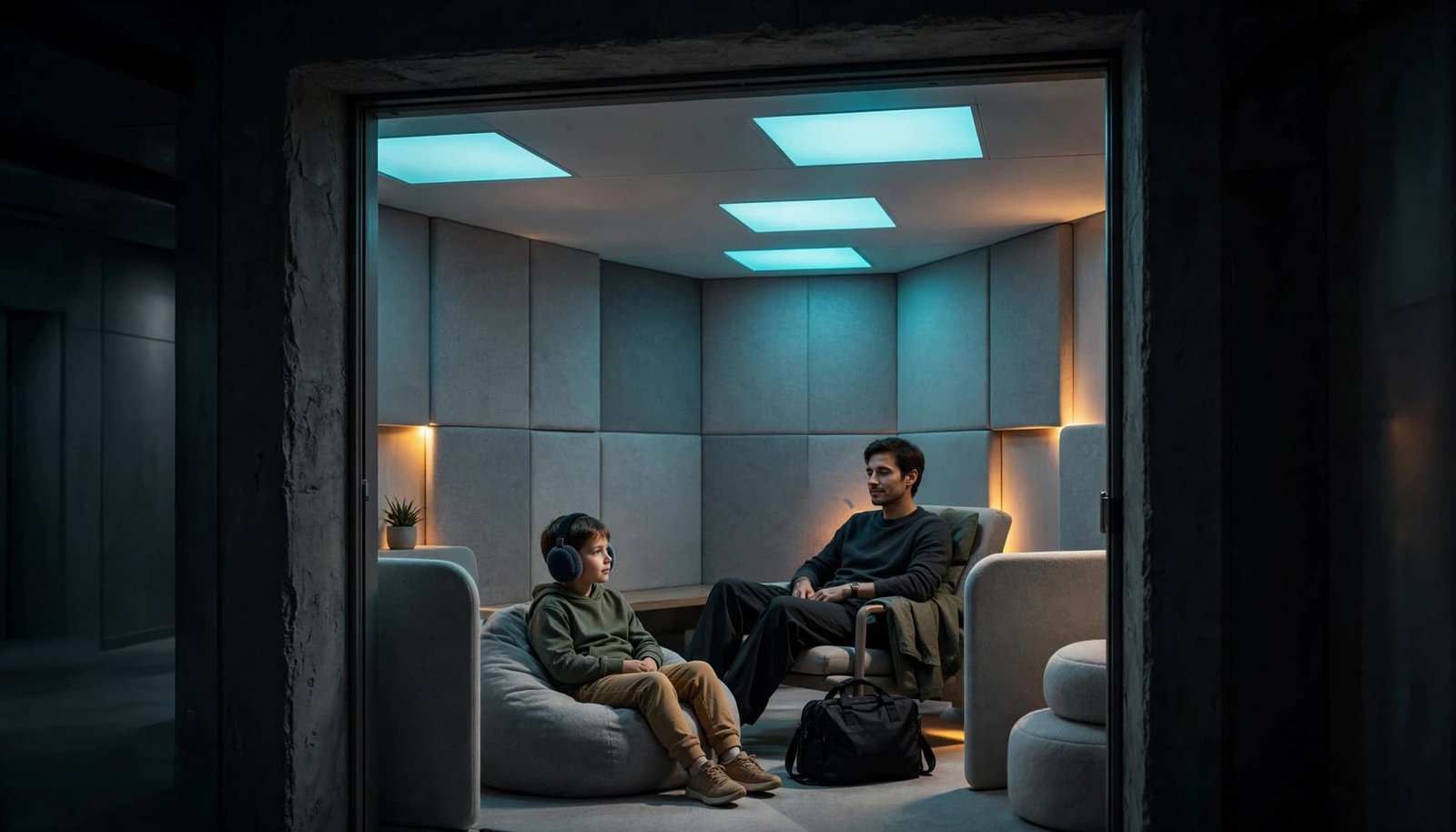
Some major airports offer sensory rooms, but locations and hours can change. Before travel, verify sensory rooms’ locations, hours, and access rules. Check whether the room is before or after security. That detail matters if you need a break right after parking.
If your airport doesn’t have a dedicated sensory space, ask the special assistance team about quiet rooms or a less crowded area.
At Boston Logan, the sensory room is in Terminal E after security near Gate E15 and is open 24 hours a day. Salt Lake City International Airport has a sensory room created with KultureCity support for passengers with sensory needs.
Seattle-Tacoma also offers a social story and sensory resources that can help your child preview the airport routine before travel day.
Practice the airport routine at home
Use short visual guides with honest language. You might say, “We will park the car, walk or ride a shuttle, check our bags, go through security, wait for the plane, and collect our bags at baggage claim.”
Practice when everyone is calm. Watch TSA’s autism screening video together if that feels helpful. It can support autism awareness and make screening feel more familiar.
Some airports offer familiarisation visits or mock-flight events. Other airport-specific preview programs may help your child rehearse the routine. Check your local airport website early.
The goal isn’t perfect behavior. The goal is to make the day feel less unknown.
Pack a Parking-to-Plane Travel Bag
Your carry-on should support the whole airport experience, including the parking lot, shuttle, security line, terminal, and flight. Customize it for your child’s sensory sensitivities and individual needs.
A practical airport bag may include:
- Familiar snacks, water after security, and any needed feeding supplies.
- Medications, medical documents, wipes, and a change of clothes.
- Headphones, comfort items, chargers, and a portable battery.
- A small visual schedule, boarding documents, parking confirmation, and baggage claim and return-to-vehicle details.
- Stroller accessories and cleaning supplies for unexpected sick-on-vacation moments.
- Shuttle, parking, or ground transportation transfer information kept easy to reach.
- The airport special assistance team’s contact information, saved with boarding and parking details.
The Trip Rescue Shop has family travel basics, including stroller items and cleaning supplies that can make a long travel day easier.
For a Disney trip after your flight, the Disney World With Autism Guide on Etsy and the Amazon edition of the guide offer family-focused ideas for sensory breaks, flexible park days, and familiar routines.
Frequently Asked Questions
Is there special autism-friendly parking at every airport?
No. Most airports don’t have parking labeled only for autistic travelers. Families should look for accessible parking spaces, terminal garages, clear pedestrian routes, and shuttle options that match their child’s needs.
Call the airport directly to confirm current locations, hours, accessibility rules, and shuttle procedures. Ask the special assistance team about ground transportation, return routes, and current parking guidance. Airport websites may not answer every question that matters to your family.
Can TSA Cares help my child avoid airport security?
No. All travelers are still screened. TSA Cares can help families understand the process and communicate needs before a U.S. departure. Support doesn’t guarantee fast-track security.
Contact TSA at least 72 hours ahead when possible. Explain what may help, such as extra time, simple directions, medical supply screening, or a parent staying close.
Are sensory rooms available before security?
Some are, but many airport sensory rooms are located after security. Check the exact terminal, room location, hours, and access rules before you leave home.
If there is no sensory room, look for quiet rooms, a quieter gate area, an unused seating area, or a less crowded corner near your terminal. A familiarisation visit can help your child practise the route before travel.
Should we book a garage or economy parking?
Choose the garage if fewer transitions, a shorter walk, and avoiding a shuttle will help your child. Choose economy parking if your child handles shuttle rides well and your family has plenty of extra time.
There is no one right answer. A familiarisation visit can help you compare garage, shuttle, and terminal transitions. Ask the airport’s special assistance team about current procedures, including the route to baggage claim and back to your vehicle. The right choice is the one that gives your family the most comfortable start.
A More Comfortable Start to Family Travel
The best airport parking plan is built around your child’s real needs. Choose the route with fewer surprises, confirm each step, and leave room for a reset when the day feels too big. Optional familiarisation visits may help, but confirm availability through the airport’s official sources.
K&S The Travel Crusaders understands that travel planning is personal. Our firsthand family experience and Kellie’s B.A. in Child Development help us provide special needs travel planning support for families who want a more prepared, flexible vacation. Before departure, save the airport’s special assistance team contact details with your airline and parking information.
A calm parking plan won’t remove every airport challenge or guarantee fast-track security. Before returning home, map the route from baggage claim back to your vehicle. This can give your family more time, more comfort, and a better chance to begin and end the trip together.
Leave a Reply