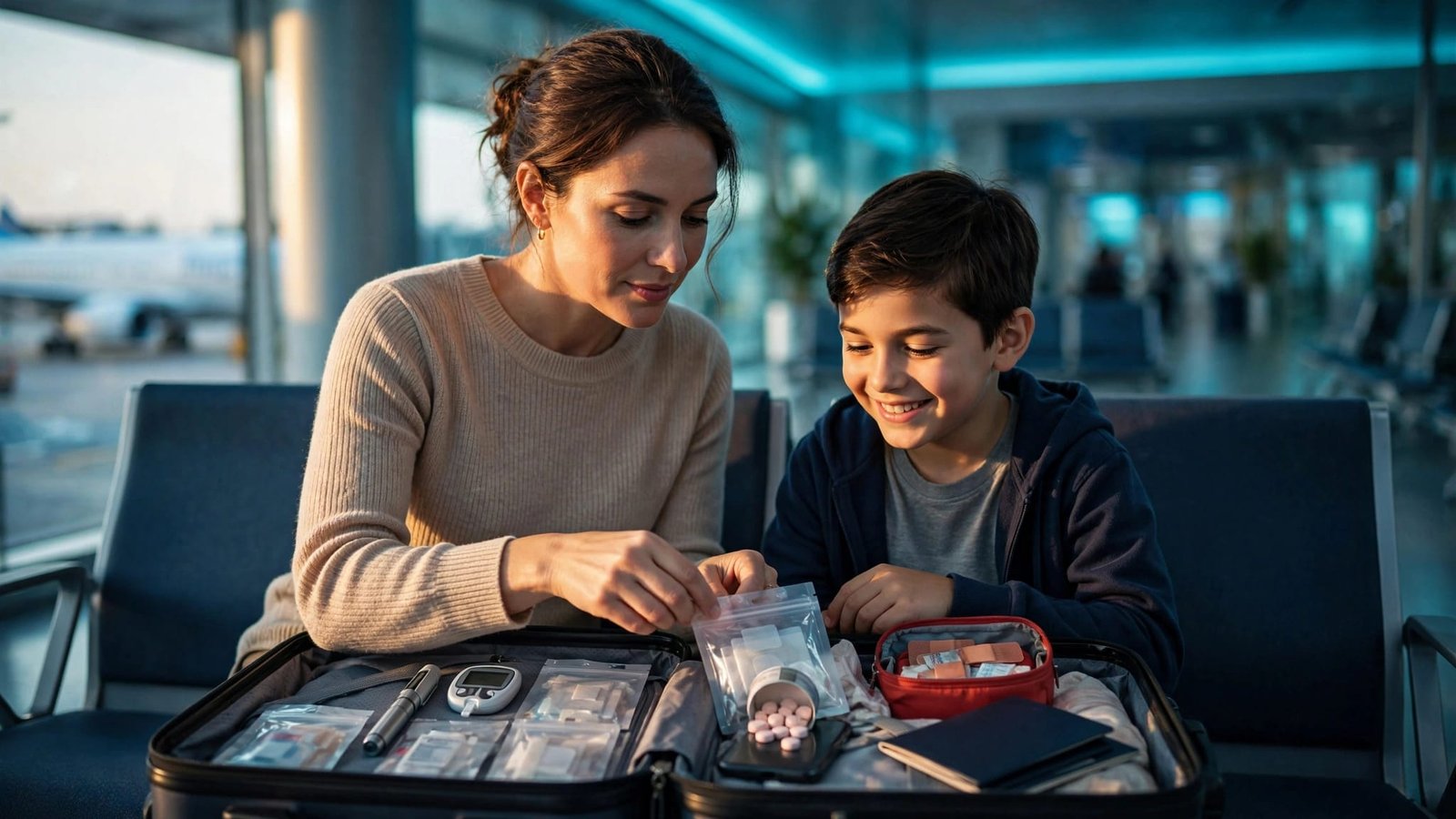
A family vacation should not feel like a medical emergency waiting to happen. With the right plan, type 1 diabetes travel can feel organized, safe, and much less stressful for parents, caregivers, and kids.
The goal is not to pack every possible item or control every part of the trip. The goal is to keep insulin, supplies, food, and a backup plan close by so your family can enjoy the flight, the hotel, and the fun once you arrive.
Key Takeaways for a Smoother Trip
Keep all essential diabetes supplies in carry-on luggage or within reach in the car. Never rely on checked bags for insulin, pump supplies, CGM sensors, fast-acting carbohydrates, or emergency glucagon.
Bring extra supplies for delays, a lost bag, an unexpected overnight stay, or a device problem. Ask your diabetes care team how much extra medication and equipment makes sense for your trip.
Keep medical information in paper form and on your phone. A low battery or poor service should not leave you without prescription details, care-team phone numbers, or insurance information.
A calm trip starts with one simple rule: the supplies your family may need today should always stay with your family.
Start Your Type 1 Diabetes Travel Plan Early
A little planning before departure gives you more room to enjoy the vacation. Start early enough to refill prescriptions, order device supplies, and discuss concerns with your child’s diabetes care team.
Talk With the Diabetes Care Team
Ask about insulin and meal timing, activity and heat, and crossing time zones. Also review ketone testing and sick-day rules.
Discuss low-blood-sugar treatment, glucagon use, backup insulin, and what to do if an insulin pump or CGM fails. This article offers general planning information, but your care team must guide insulin dosing, pump settings, time-zone adjustments, and sick-day decisions.
Keep a written list with insulin names, doses, pump settings, allergies, and emergency contacts. Include the pharmacy, endocrinology office, insurance company, and device supplier. Take photos of prescription labels and pump settings, but carry a printed copy too.
Review travel insurance for diabetes-related medical care, trip interruption, evacuation, and replacement supplies. Policies vary, so don’t assume every situation is covered.
For international travel, check your destination’s medication rules before you leave. A medication that’s routine at home may need extra documentation elsewhere.
Make the Trip Fit Your Family
Choose travel times and connections that make sense for your child’s routine. A nonstop flight may cost more, but it can mean fewer missed meals, fewer rushed bathroom breaks, and less chance of luggage problems.
Build downtime into your plans. A long travel day, a hot theme park afternoon, or a late dinner can affect blood sugar. Families managing diabetes alongside autism, sensory needs, or communication needs may also find that accessible vacation planning for families makes the whole trip feel more manageable.
Pack a Carry-On Diabetes Kit
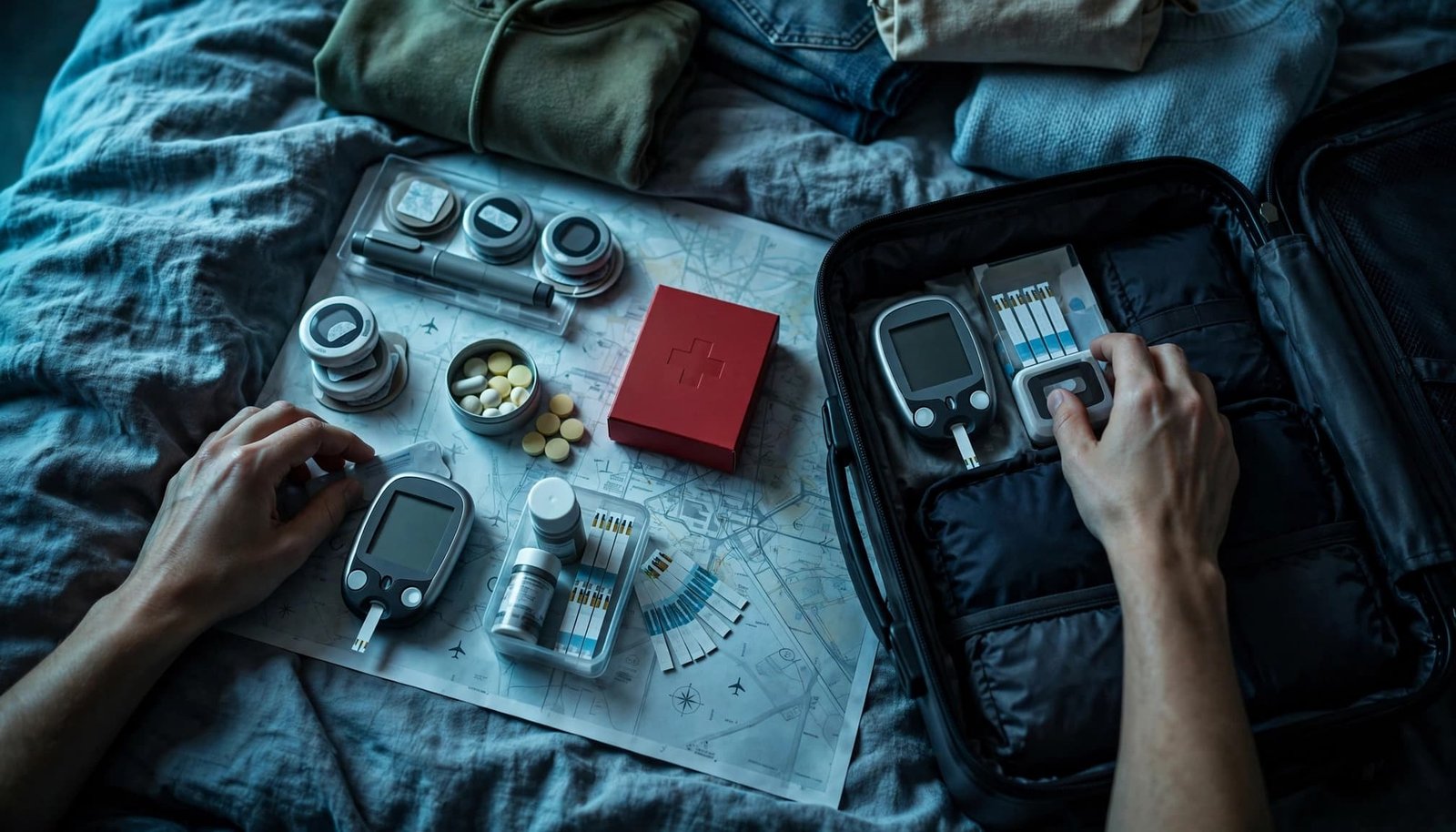
Your complete diabetes kit should stay together in an easy-to-reach pouch, backpack, or medical tote. Keep medical supplies out of separate bags where they could get lost during a busy travel day.
Bring More Than the Exact Amount Needed
Families should pack extra supplies for delays, lost luggage, and device problems. The CDC recommends bringing additional diabetes supplies and keeping them in your carry-on luggage. Their tips for traveling with diabetes also remind families not to place insulin in checked luggage, where bags can be delayed, lost, or exposed to unsafe temperatures.
Use this printable-style checklist when packing:
- Insulin vials, pens, or supplies for an insulin pump, plus backup insulin and a backup delivery method approved by your care team.
- Medical device supplies, including extra infusion sets, reservoirs, tubing, CGM sensors, transmitters, overpatches, batteries, and charging cords.
- A blood glucose meter, test strips, lancets, ketone strips, and an emergency glucagon option kept accessible.
- Fast-acting carbohydrates such as glucose tablets, gel, juice, or candy.
- A written medication list, prescriptions, insurance cards, and care-team phone numbers.
When two adults are traveling, consider dividing backup supplies between two carry-on bags. Keep the day’s insulin and fast-acting sugar in the bag that stays closest to your child.
Protect Insulin From Heat and Freezing
Insulin needs protection from direct sunlight, extreme heat, and freezing temperatures. Ask your pharmacy team about the storage needs for your family’s exact insulin. Some medications should not sit directly against an ice pack.
Use an insulated case, cooling pouch, or gel packs as appropriate for your medication. Check that cold packs are cool, not freezing. Never leave insulin in a parked car, a sunny stroller pocket, or a hotel windowsill.
If Disney World is part of your vacation, review these Disney resort medication storage tips before arrival. Resort beverage coolers may not hold a safe, stable temperature for medication.
Airport Security With Insulin Pumps and CGMs
Airport security can feel intimidating when your child wears an insulin pump or continuous glucose monitor (CGM). A simple plan and extra time can make the checkpoint feel much easier.

Tell TSA Before Screening Begins
Arrive early and tell the TSA officer that your child has type 1 diabetes and carries medical supplies. Keep insulin, snacks, cooling supplies, and device backups together for easy inspection.
TSA allows these devices at TSA checkpoints. Its guidance for insulin pumps and glucose monitors explains that travelers should identify them before screening.
A doctor’s note can be helpful, but it doesn’t guarantee a specific screening process. Keep your explanation short and direct: “My child has type 1 diabetes and wears a pump and CGM. We also have medically necessary supplies and liquid treatment.”
Medical Liquids Can Be Larger Than 3.4 Ounces
Juice, liquid medication, gel packs, and other medically necessary liquids can be allowed in carry-on luggage above the usual 3.4-ounce limit. Tell the officer before screening and be ready for separate inspection.
The American Diabetes Association shares helpful airplane guidance for diabetes supplies, including medications, equipment, and fast-acting glucose options.
Device instructions matter. Each medical device manufacturer may have specific guidance for X-ray equipment, metal detectors, or body scanners. If the manufacturer recommends another screening method, ask the officer calmly before screening begins.
Screening rules and device guidance can change. Check current TSA information and manufacturer instructions before departure.
Handle Flights, Time Zones, and Long Days
A flight day can bring missed meals, delayed boarding, unusual activity, and less sleep. Keep checking blood sugar as often as your care plan recommends, especially if your child is excited, anxious, or eating differently than usual.
Follow your child’s individualized care plan for checking frequency, insulin timing, and responses to unusual activity or meals.
Keep Treatment Within Reach
Do not place your diabetes kit in the overhead bin if you can avoid it. Keep fast-acting carbohydrates, glucose tabs, a meter, snacks, water, and the current insulin supply under the seat in front of you.
Ask the airline whether a medical preboard is available. Policies vary, and medical preboard isn’t guaranteed.
Carry familiar snacks, not only airport food. Food options can be limited after a delay or during a late arrival. A simple snack your child will actually eat is more useful than a complicated plan that falls apart at the gate.
For stroller options, wipes, cleaning supplies, and those unexpected sick-on-vacation moments, visit Trip Rescue Shop. A small cleanup kit can make a long travel day easier.
Adjust Pump Clocks With Care
Changes in cabin pressure during flight may matter for some insulin-delivery devices. Check the device manufacturer’s guidance and your diabetes care team for device-specific instructions, rather than changing settings yourself.
For time changes under two hours, UCLA Health suggests adjusting the pump clock after arrival. For larger changes, its diabetes travel guidelines recommend changing the pump clock in two-hour stages each day until it matches local time.
Your child’s insulin plan may be different. Ask the diabetes care team for instructions before crossing several time zones, especially for international trips. Write the plan down before you leave home.
Plan for Theme Parks, Beaches, and Resort Days
Vacation days can look very different from home. More walking, heat, swimming, unusual meal times, and excitement can all affect blood sugar.
Pack for a Full Day Away From the Hotel
Take a smaller daily diabetes bag when you head to a theme park, beach, excursion, or long sightseeing day. Include insulin, a meter, fast-acting carbohydrates, snacks, water, and the supplies needed for a device issue.
Refill the bag every night. Check battery levels, replace used items, and move the next day’s supplies back into the same easy-to-find place.
At Disney, choose a bag that stays with you during rides and transportation. Plan breaks before everyone is tired. A mid-day hotel break can help with cooling supplies, meals, hydration, and a reset.
Keep Routines Flexible, Not Forgotten
Try to keep familiar meal and sleep patterns where you can. You do not need a perfect schedule, but skipping meals or waiting too long to treat a low can turn a fun day into a difficult one.
If your family is also planning Disney with autism, the Disney World with Autism Guide offers practical support for DAS, sensory preparation, and calmer park days. The same guide is also available on Amazon.
What to Do if an Insulin Pump Fails
Pump failures need quick attention because there is no long-acting insulin working in the background. Keep a backup insulin plan with you every day of the trip.
Check the Basics Right Away
If blood sugar is unexpectedly high, check the infusion site, tubing, reservoir, pump alerts, and insulin supply. Look for a loose cannula, bent tubing, empty reservoir, or a site that has come loose in water or heat.
Follow the manufacturer’s troubleshooting guidance for the medical device and your diabetes care team’s written backup plan. UCLA Health advises using insulin by pen or syringe if available, changing the infusion set and reservoir, and checking blood glucose and ketones every one to two hours when pump failure is a concern. Keep your care-team-approved treatment for hypoglycemia available during any pump or device disruption.
Watch for Ketones and Get Help
High blood sugar with ketones can mean the body isn’t getting enough insulin and may be a warning sign of diabetic ketoacidosis. Use your prescribed sick-day plan and keep ketone strips with your supplies. Ketostix and Precision Extra urine strips are two options listed in UCLA Health’s travel guidance.
Seek urgent medical care if your child is vomiting, has moderate or large ketones, is breathing rapidly, has severe stomach pain, seems confused, or can’t keep fluids down. Know the local emergency number and the nearest hospital before you need it.
Frequently Asked Questions
Can insulin go in checked luggage?
No. Keep insulin, medical devices, pump supplies, CGM supplies, and fast-acting carbohydrates in carry-on luggage. Checked bags can be delayed, lost, or exposed to temperatures that may damage medication.
Are insulin pumps and CGMs allowed through security?
Yes, they’re allowed at TSA checkpoints. Tell the officer before screening begins. Follow your specific device manufacturer’s instructions about scanners, and request an alternative screening method if needed.
How should we prepare for airport security with diabetes supplies?
Keep supplies organized and easy to access. Tell the officer about diabetes devices before screening begins, and allow extra time for questions or alternative screening.
How much extra should we pack?
There’s no one number that works for every family. Bring more than the exact amount your child would use for the planned dates. Ask your diabetes care team what backup amount fits your destination, trip length, and device routine.
How should we manage diabetes across time zones?
Crossing time zones can affect insulin timing and pump-clock settings. Make a plan with your diabetes care team before traveling, rather than changing doses or schedules on your own.
Can we request a medical preboard?
Ask the airline whether medical preboard is available for your family. Policies vary, so confirm the options and requirements before your trip.
Can cabin pressure affect insulin delivery or diabetes devices?
Changes in cabin pressure may affect some devices or insulin delivery systems. Check the device manufacturer’s guidance, and ask your diabetes care team how cabin pressure could affect your child’s equipment.
What should we do if our child is vomiting, has ketones, or may have a pump failure?
Follow your written sick-day and pump-failure plan. Contact your diabetes care team for individualized instructions, and seek urgent care for serious warning signs or if your child can’t keep fluids down. This article can’t provide individual insulin doses, pump settings, or treatment decisions.
A Family Vacation With More Peace of Mind
Type 1 diabetes travel takes preparation, but it does not mean your family has to stay home. Keep the essentials close, plan for a delay or device problem, and give yourself extra time at the airport and on busy vacation days.
The best family trips are not perfect. They are the ones where you have what you need, know what to do next, and still have room to enjoy the memories you came to make.
Leave a Reply