
A hotel room can look perfect online, then leave no space to park a wheelchair beside the bed. For family vacations, a special needs travel agent can help plan around a feeding pump, oxygen concentrator, or other essential equipment. You need answers about every part of the trip.
That means checking how equipment will travel, where it will fit, and whom to call if something changes. The planning starts with what your traveler needs each day.
Start With the Equipment Your Family Uses
The first conversation should be about daily routines, not destinations. A good advisor asks what equipment your traveler uses, when they use it, and what can’t be interrupted. The answers shape flight times, room choices, transfers, and the pace of your days.
Make an equipment profile
Write down each device’s model, dimensions, weight, battery type, charger, and handling instructions. For a wheelchair, include whether it folds, which parts detach, and whether the traveler can safely use a standard airport chair.
For an oxygen concentrator or feeding pump, explain when it must run and what power it needs. Keep clinical decisions with the traveler’s care team. Your advisor can help coordinate the trip around the prescribed plan, but shouldn’t recommend device settings or medical substitutes.
Share the routines behind the equipment
Equipment needs often connect to meals, sleep, medication, and personal care. Does your child need a quiet place for a feeding? Which travel companions will help with meals, supplies, or equipment during the day? Does medication have storage instructions?
You don’t have to share a full medical history with every supplier. Give each one the details needed to arrange its service. Your advisor can keep the broader picture together through special needs travel planning.
Plan the Flight Around Medical Equipment
Flying brings separate questions about screening, onboard use, boarding assistance, and equipment storage. An advisor can help you contact the airline early and keep its answers with your reservation. Don’t assume that permission to bring a device through security means permission to use it in flight.

Check oxygen, power, and screening rules
If the traveler uses a portable oxygen concentrator, check the exact model and its label with the airline before booking. Ask about onboard use, required documentation, advance notice, seating, and battery capacity for the full journey. Build in the airline’s required reserve, not only the scheduled flight time.
The TSA’s medical conditions guidance helps you prepare for screening. The airline sets its own procedures for arrangements on its flights. Policies can differ by carrier, so save the response you receive.
Explain wheelchair handling in writing
Give the airline the chair’s dimensions, weight, battery details, and operating instructions. Request the airport and transfer assistance the traveler needs. The U.S. Department of Transportation’s disability travel guidance explains protections under the Air Carrier Access Act and notes that some services may require advance notice.
Before handoff, photograph the chair from every side. Include controls, footplates, serial numbers, and existing marks. Ask which removable parts can stay with you, and label them. If the chair returns damaged or doesn’t work, report it before leaving the airport and ask for a written record.
Confirm the Room and the Ride
“Accessible” is a useful starting point, but it doesn’t tell you whether your equipment will fit. An accessible travel agency should ask hotels and transportation providers about the features your traveler will use, then get the answers in writing.
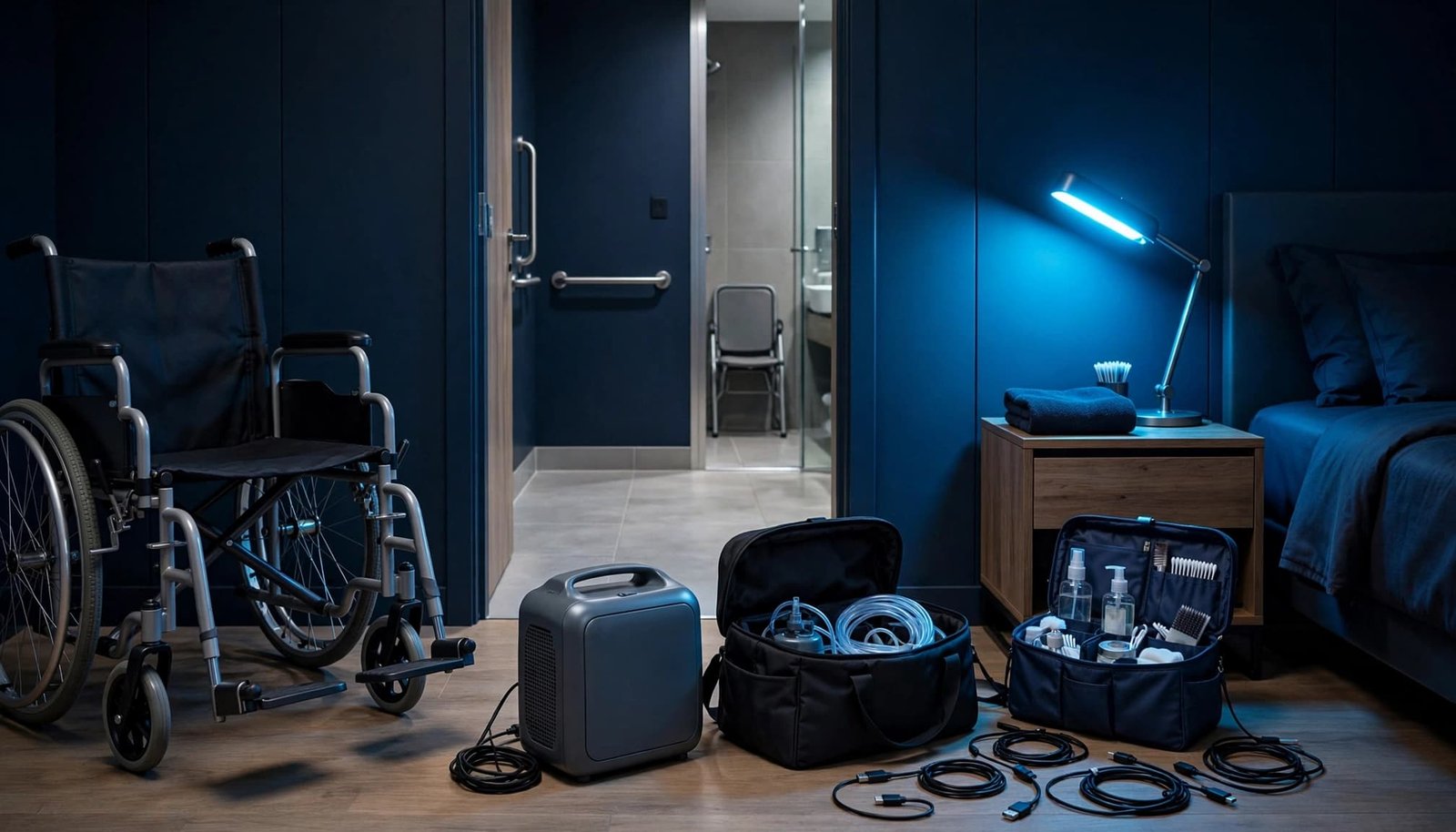
Ask about the room’s usable space
When checking accessible accommodations, measure the doorway, bathroom entrance, shower, and clear space beside the bed. Ask whether a wheelchair can turn in the room and where a pump or concentrator can sit while in use. If equipment must charge overnight, confirm the available outlets and the property’s rules.
For supplies or medication, ask what refrigeration is available. A minibar isn’t automatically suitable for items with strict storage requirements. Follow the care team’s storage instructions and confirm the room setup before final payment when possible.
Match the vehicle to the traveler
For a wheelchair accessible transfer, confirm the vehicle has a ramp or lift, wheelchair securement, suitable seating, and room for luggage and equipment. Ask whether the traveler can remain in their chair or must transfer to a vehicle seat. Confirm the pickup point and who will meet your family.
The route matters, too. A vehicle that works at the airport won’t help if the resort shuttle can’t take the same chair. Have your advisor confirm each leg of the accessible transport separately.
Plan for Delays, Damage, and Daily Care
A comfortable trip needs room for the unexpected. Connections run late. A charger gets packed in the wrong bag. Equipment may need attention after a flight. Planning ahead makes these moments easier to handle.
Keep essentials within reach
Keep medication, prescribed supplies, chargers, important documents, and communication supports where you can reach them. Tell your travel companions where these essentials are packed. Keep copies of prescriptions and device information available. Before travel, ask your care team what backup supplies make sense and whom to contact if equipment stops working.
The airline’s mobility and medical device information is one example of why carrier-specific checks matter. Confirm handling and packing rules with your airline, including what should stay with you.
Know who handles each handoff
Your airline, transfer company, hotel, rental supplier, and tour provider have different jobs. Keep their contact numbers, confirmation details, and after-hours procedures in one place. If a wheelchair rental or replacement device is part of your backup plan, ask whether it meets the traveler’s positioning and support needs.
Check travel insurance before buying it. Ask about equipment damage, rental costs, medical conditions, exclusions, and per-item limits. Get coverage answers in writing rather than relying on the policy’s headline description.
Make the Destination Work for Your Family
Equipment planning shouldn’t stop at the hotel door, especially when comparing accessible destinations. Your advisor also needs to consider daily travel distances, places to take breaks, and whether activities can accommodate your traveler.
Leave room in a Disney day
At Walt Disney World, mobility strollers, wheelchairs, feeding supplies, and regular breaks can shape your route through the parks. On family vacations, resort location and transportation may matter more than fitting in another attraction. For special needs vacations, build in flexibility because equipment and breaks can shape each park day. Our guidance on Disney planning with mobility needs can help you prepare supplies and plan a more flexible day.
If you’re also planning for an autistic child, our Disney World With Autism Guide is available as an Etsy PDF guide and an Amazon ebook. It offers family-focused help with sensory preparation and park plans. Medical equipment decisions should still come from your care team.
For practical items before departure, Trip Rescue Shop carries travel supplies, including strollers and cleaning products for times when someone gets sick on vacation. Choose items that suit your traveler’s established routine.
Check cruise cabins and shore plans
For a cruise, ask about the cabin’s doorways, bathroom, bed space, and safe charging location. Check the route to dining and whether the equipment fits inside the cabin. Contact the cruise line’s accessibility department about oxygen, medical devices, and any forms before committing to a sailing.
Ask how the traveler will get on and off at each port. An accessible ship doesn’t guarantee that every shore excursion or accessible tour can accommodate your equipment or transfer needs.
Choose an Advisor Who Asks Good Questions
The right advisor makes it easier to get clear answers. Ask how travel advisors confirm room details, contact accessibility teams, and handle changes after booking. An accessible travel agency should be comfortable saying when a supplier hasn’t confirmed something yet.
Ask what the service includes
Before paying a planning fee, find out what the advisor or vacation specialist will book and what your family must arrange directly. When comparing disability travel agents, ask about supplier commissions, cancellation terms, equipment rentals, and support if plans change. Request important accessibility answers in writing.
If an advisor advertises a credential, ask who issued it and what it covers. A credential alone doesn’t tell you how they handle a power wheelchair or a child’s feeding schedule. Their questions and follow-through matter more.
Match experience to your traveler
Some agencies focus on independent family trips and custom tailored trips. Others offer group travel, including escorted tours for adults with intellectual or developmental disabilities. If you’re considering a group trip, ask about the staff-to-traveler ratio, personal care, medication procedures, and whether staff can support your traveler’s specific equipment. Ratios and services vary, so get the details for the trip you’re booking.
At K&S The Travel Crusaders, our autism and family travel planning comes from firsthand family experience and real-world trip planning. Kellie also has a B.A. in Child Development. We use that perspective to listen closely to your routines and help plan a trip that fits your family.
Key Takeaways for Your Family
- Start with a written equipment profile and the traveler’s daily routine.
- Confirm flights, rooms, vehicles, and activities against the exact equipment you’ll bring.
- Keep medical decisions with your care team and supplier answers in writing.
- Carry essential supplies and contact details where you can reach them.
Questions Families Often Ask
Can an agent arrange wheelchair-accessible hotels and transportation?
Yes, an agent can research options, make reservations, and ask providers about specific features. Share your chair’s measurements and transfer needs first. Ask the advisor to confirm doorway space, vehicle access, securement, and routes rather than relying on an “accessible” label.
Who manages medication and personal care on a group trip?
That depends on the operator and the services you book. Ask who can provide assistance, what training or authorization they have, and what happens if a staff member is unavailable. Don’t assume that a tour escort provides nursing care or medication administration.
Can an advisor guarantee that medical equipment will be accepted?
No. Airlines, cruise lines, hotels, and transport operators confirm their own requirements. An advisor can help gather those answers and find another option when something doesn’t work. Your clinician should confirm whether the resulting plan meets the traveler’s medical needs.
A Better Trip Starts With Clear Answers
When you travel with essential equipment, the smallest unanswered detail can affect the whole day. Clear confirmations about power, space, handling, and care give your family a plan you can use.
An advisor can help bring those details together. Then you can spend less time chasing answers during the trip and more time enjoying it together.
Leave a Reply