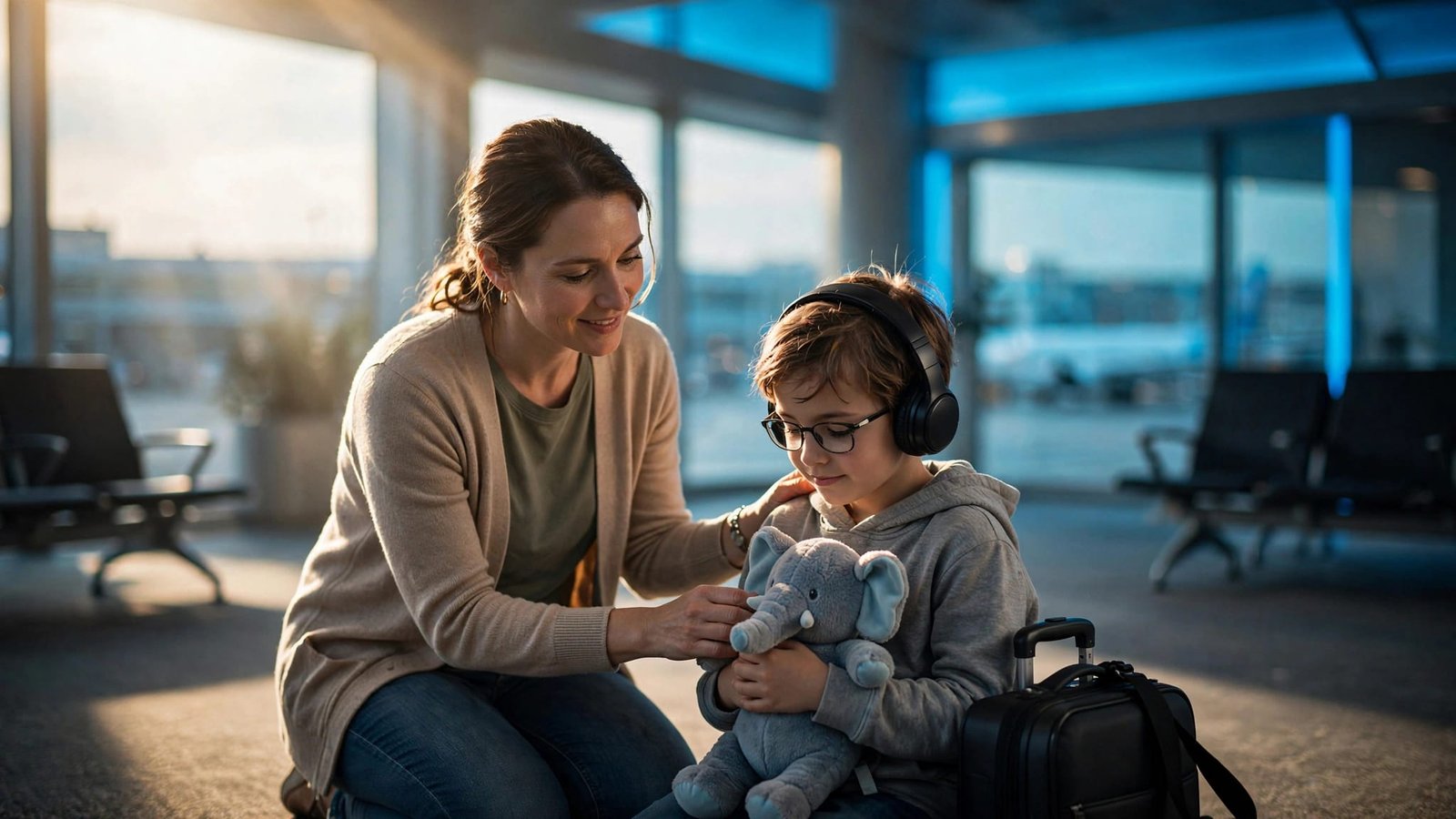
Family vacations can feel exciting until unfamiliar parts start to pile up. New beds, crowded terminals, different foods, and changed plans can make neurodivergent family travel harder for an autistic child with anxiety.
The best autism family travel plan starts with what helps your child feel comfortable and safe. You don’t need a perfect itinerary. You need a manageable trip, familiar supports, and room to change course. Use these autism travel tips to put those pieces together before you leave home.
Key Takeaways
- Build each day around your child’s sleep, food, sensory, and communication needs.
- Preview travel steps with pictures or simple stories, but leave room for plans to change.
- Confirm accommodations directly with airlines, hotels, cruise lines, and attractions before booking.
- Keep comfort items close, schedule breaks early, and budget for a quieter way to travel when possible.
Build an autism family travel plan around your child
One child may love a busy theme park but struggle with the hotel room. Another may enjoy the flight and find restaurant meals difficult. Start with your child’s experience, not a list of popular autism friendly vacations.
Find the parts of travel that take the most energy
Think through a typical day at home. When does your child need food, movement, quiet, or time alone? What happens when plans change? Note early signs of distress and what usually helps, since a child with sensory processing disorder may have specific needs.
Then look at the proposed trip. If sleeping somewhere new is hard, staying in one hotel may be easier than moving between cities. If crowds are the biggest concern, a beach rental with a kitchen may be a better fit for sensory friendly travel than a resort with a packed activity schedule.
Include your child’s strengths, too. A love of maps, trains, swimming, or familiar music can make parts of the trip more enjoyable.
Show what happens next without promising every detail
Visual schedules can show the main steps: drive, security, plane, hotel, dinner, sleep. Photos of the airport or hotel can help your child recognize a place before arriving. Social stories can explain what to do if a line is long or an activity closes.
Keep the schedule flexible. A card marked “break” or “change of plans” gives you a way to explain surprises. Practice using it during a small local outing, when there is less pressure.
Make airports and flights more predictable
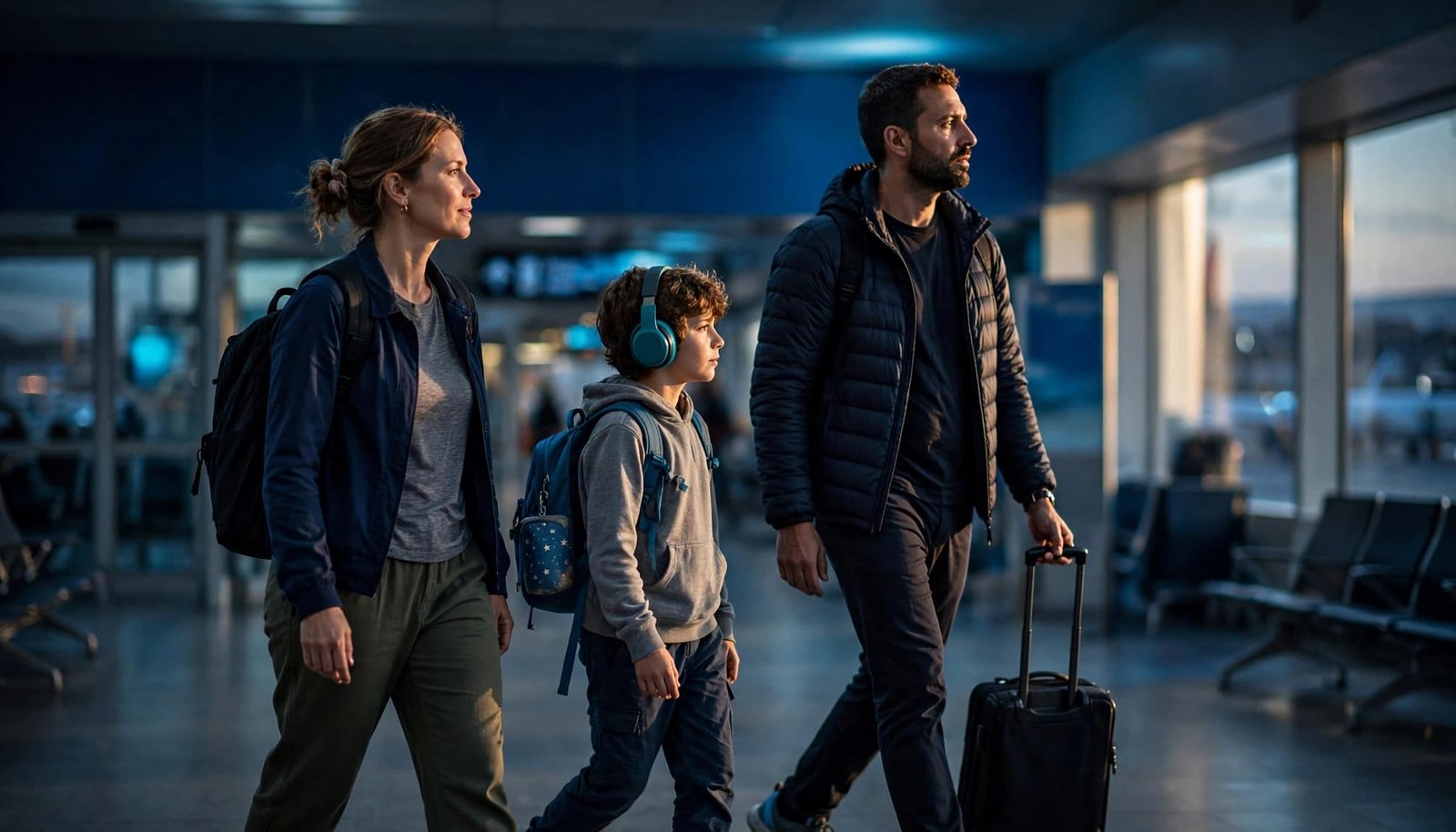
Flying combines several transitions in one day. For accessible travel, prepare for the parking lot, shuttle, security line, gate, and plane, not only the time in the air.
Ask about support before travel day
For a flight departing a U.S. airport, contact TSA Cares for screening assistance at least 72 hours ahead when possible. Explain practical needs, such as extra processing time, clear instructions, sensitivity to touch, or staying near a caregiver. TSA support does not guarantee a faster line or a particular screening outcome.
Before departure, ask the airline or airport about airport special assistance for seating, boarding, medical supplies, and connections. Ask whether assisted travel can cover the route from curb to gate. Early boarding helps some children settle in, while others do better boarding after the aisle clears.
As part of travel preparation, preview security with TSA’s autism screening video. Keep your explanation simple: “We’ll put our bags in bins, walk through security, and pick up our things.” If two adults are traveling, decide who handles bags and who stays with your child.
Choose the route your family can manage
A nonstop flight removes a connection, but a very early departure may disrupt sleep. Compare the whole travel day before buying tickets.
For international trips, allow for passport control, customs, possible additional screening, and longer walks. Ask about airport special assistance and arrange assisted travel between gates or through connections when needed. TSA Cares applies to U.S. screening, not every checkpoint abroad. Keep medications, essential documents, and a change of clothes in your carry-on.
Choose a destination with room to reset
An autism-friendly label can be a useful starting point when looking for inclusive travel options. Your child still needs a place to rest, familiar food, and an easy way to leave when the day feels too big.

Match the trip to your daily routine
These trip shapes offer different kinds of control:
| Trip style | Possible advantage | Ask before booking |
|---|---|---|
| One-hotel beach stay | Fewer daily transitions | Is there a quiet room and access to familiar meals? |
| Theme park vacation | Activities can match a child’s interests | How easy is it to return to the hotel for a break? |
| Cruise vacations | The room travels with you | What support is available on this sailing? |
The right choice depends on your child’s needs, not which trip sounds most impressive. Our comparison of a Disney cruise and Disney World looks at the different routines and sensory demands of each.
Ask what support looks like in practice
Before paying a deposit, ask where quiet rooms are, whether sensory rooms are available, and how meals and food allergies are handled. A travel agent can help you ask providers specific questions. Check cancellation terms and travel insurance options, too.
Beaches Resorts describes its Kids Camps as Advanced Certified Autism Centers with IBCCES-trained staff. A certified autism center designation doesn’t guarantee a good fit, so confirm what it covers. Check the services, hours, and child-care arrangements at the property you’re booking.
Compare theme park and cruise accommodations
Accommodations vary by provider, so compare what each offers for inclusive travel. Check current rules before your trip, and describe what your family needs rather than asking only whether a place is “autism-friendly.”
At Walt Disney World and Universal Orlando
Walt Disney World’s Disability Access Service information describes support for eligible guests who cannot wait in a conventional attraction queue because of a developmental disability such as autism spectrum disorder. DAS is not a front-of-line pass, and a diagnosis alone doesn’t guarantee approval. Review Disney’s current process before leaving home.
For theme park travel, plan the day around breaks, meals, and an easy return to your room. Look for sensory guides as you prepare, and ask a Cast Member about nearby quieter areas or whether sensory rooms are available. Our Disney World autism guide also helps families think through resort choices and sensory needs.
For more detailed park preparation, our Disney World With Autism Guide is available on Etsy as a PDF and Amazon. If Universal is on your itinerary, check its current accessibility information and ask about the needs that matter to your family. Don’t assume its services match Disney’s.
On a Royal Caribbean cruise
Royal Caribbean lists autism-friendly services such as priority check-in, boarding, and departure, dietary accommodations, and flexibility in its Adventure Ocean youth program. Review its autism-friendly ship information, then ask what will be available on your ship and sailing.
Autism on the Seas also offers staffed support on select sailings, which may include respite services and private activities. This staffed program is different from the services available on a regular cruise. Confirm booking requirements and the support your child needs before committing.
Pack for the moments between activities
Your most useful bag is the one you can reach in a line, on a shuttle, or during a flight delay. Pack familiar snacks, any needed feeding supplies, medication, wipes, spare clothes, and communication supports. Keep noise-canceling headphones, chargers, and a preferred comfort item near the top.
Use tools your child already knows. A new pair of headphones may look helpful in a shop but feel uncomfortable on travel day. If your child has allergies or relies on certain foods, check dining options early and carry suitable backup food where permitted.
Our Trip Rescue Shop has travel items ranging from strollers to cleaning supplies for when someone gets sick on vacation. Choose what fits your family’s actual needs rather than packing every possible product.
What should you do when sensory overload hits?
Even a thoughtful plan can’t prevent every hard moment. Crowds, heat, thirst, missed meals, and sudden changes can add up. Decide how you’ll respond before anyone is exhausted.
Notice the early signs
Your child may get quieter, ask the same question repeatedly, cover their ears, or start moving away. Those signs offer useful information. Try familiar supports, then reduce demands. A snack, noise-canceling headphones, water, or a short break may help before distress grows.
Set a meeting point and a caregiver plan if your child may wander. Keep your phone charged and important contact information accessible.
Make the next step small
If distress happens in a park, leave the immediate noise and head toward your planned break spot. Use a few clear words. You can decide whether to return after your child has had time to rest.
On a plane, briefly tell the crew what’s happening and what may help. Follow crew safety instructions, including seatbelt requirements, while reducing light or sound where you can. One adult can speak with staff while another stays focused on the child.
Leaving early can protect the rest of your vacation. You don’t have to make up for a missed activity tomorrow.
Budget for comfort and check respite options
The cheapest room or flight isn’t always the lowest-stress choice. Compare the full trip cost, including transportation, meals your child can eat, and possible extra hotel nights. Check whether travel insurance exclusions and cancellation coverage fit your family’s needs. A room with a kitchen or shorter journey may be worth more than another attraction ticket.
If your family uses respite services, ask your state Medicaid waiver case manager what your plan covers. Medicaid’s home and community-based services guidance covers state-run programs, but eligibility and covered services vary. Don’t assume vacation travel or care during a trip will be reimbursed; travel insurance coverage for extra lodging, care, or disruptions depends on the policy. Military families can ask their Exceptional Family Member Program support office about respite eligibility and rules.
A travel agent can help compare trip costs and ask providers direct questions when planning special needs travel. At K&S The Travel Crusaders, planning with an autism travel agent draws on firsthand family experience, real-world trip planning, and Kellie’s B.A. in Child Development. We help families build plans around comfort, budget, and breaks.
Frequently Asked Questions
Should we use a visual schedule if plans might change?
Yes, if your child finds visuals helpful. One of the most useful autism travel tips is to show the day’s main steps, not every minute. Include a way to show that plans can change, and keep one familiar activity available as a backup.
Is early boarding always better for an autistic child?
No. Some children appreciate time to settle into their seats. Others find it easier to spend less time on the plane before takeoff. Ask the airline what options are available, then choose based on your child’s usual response to waiting.
Do we need a certified destination for a comfortable trip?
No. A certified program may offer helpful training or services, but a quiet room, predictable meals, and flexible days may matter more for your child. A travel agent can help you verify what services a specific property, attraction, or sailing offers. Ask the provider about the support you need.
A vacation that fits your family
Unfamiliar places don’t have to mean a packed schedule and constant surprises. Start with your child’s routines, prepare for the hardest transitions, and choose places where your family can rest.
A comfortable family vacation leaves room for a change of plans. The moments you enjoy together matter more than the activities you complete.
Leave a Reply