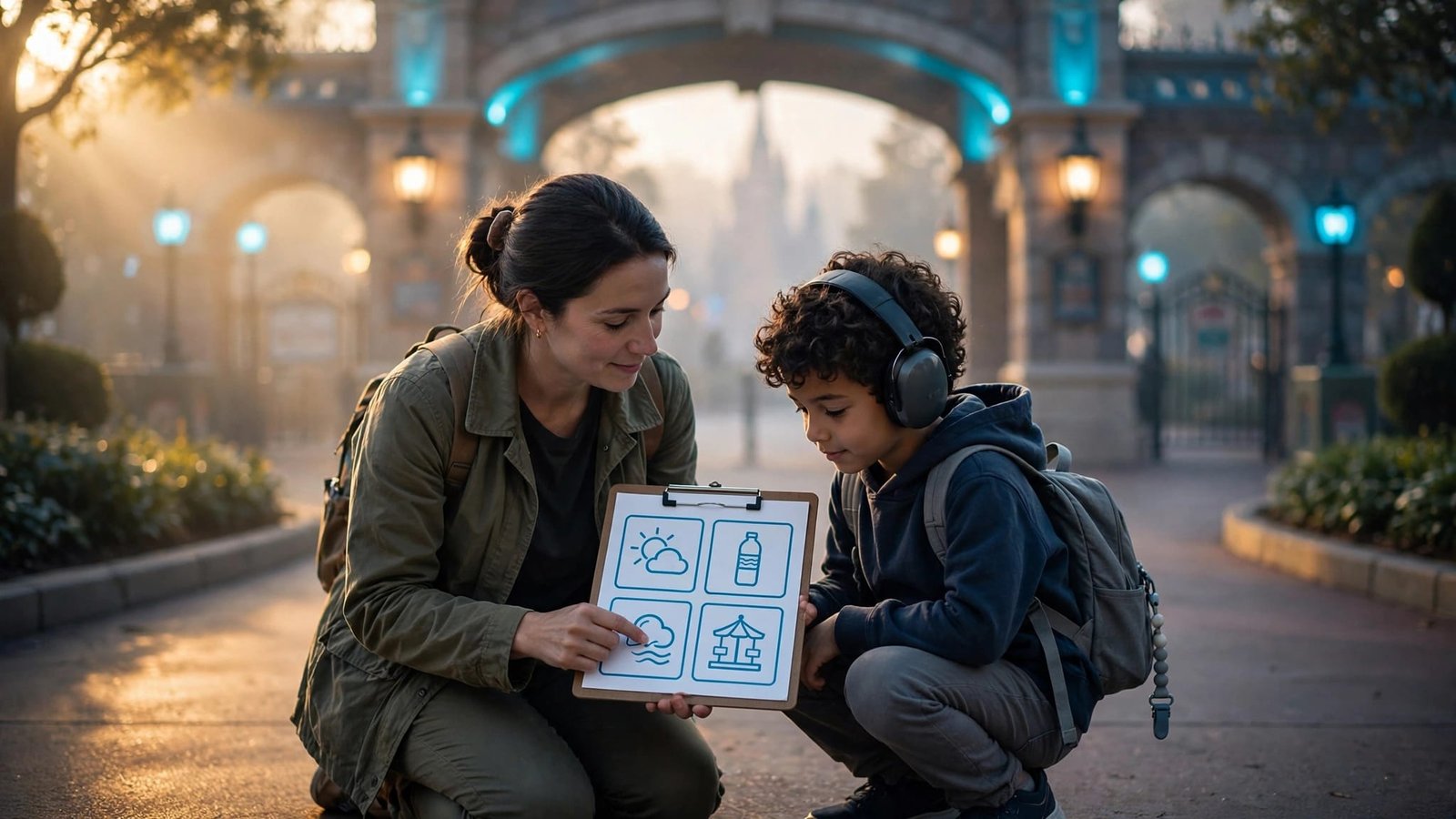
The hardest part of your Disney day may happen before the first ride. If you’re planning Disney with autism in mind, transportation, security, entrance crowds, and a change in routine can all arrive at once.
A calm arrival plan gives your child a familiar path through those first moments and helps shape the first hour of your theme park vacation. It also gives you permission to pause or change course. Start with the parts you can prepare at home, then keep the first hour simple.
Key Takeaways
- Show your child a short visual plan that includes transportation, security, the entrance, and a break.
- Choose one first stop and one nearby place to step away. You can add more later.
- Review Disney’s current accessibility options before travel. DAS isn’t automatic with an autism diagnosis.
- Keep water, snacks, headphones, comfort items, and communication supports easy to reach.
Prepare Your Child Before You Leave Home
Practice the transitions, not only the rides
A ride video can help your child decide whether an attraction feels comfortable. But the morning starts much earlier. As part of your travel preparation, show photos of your resort, bus or Skyliner station, security area, and park entrance. Talk through what might happen if a bag needs to be checked or a line moves slowly.
Try a short visual schedule: breakfast, transportation, security, park entrance, snack, break. Practice following the visual schedule at home, but leave room to change the ride or meal. If your child uses a social story, include a simple plan for waiting and leaving a busy area.
Practice with the actual headphones, stroller, or comfort item you’ll bring. Familiar supports are easier to use when your child has already tried them outside the house. For help turning a guide into a family routine, see how to use an autism guide before a Disney trip.
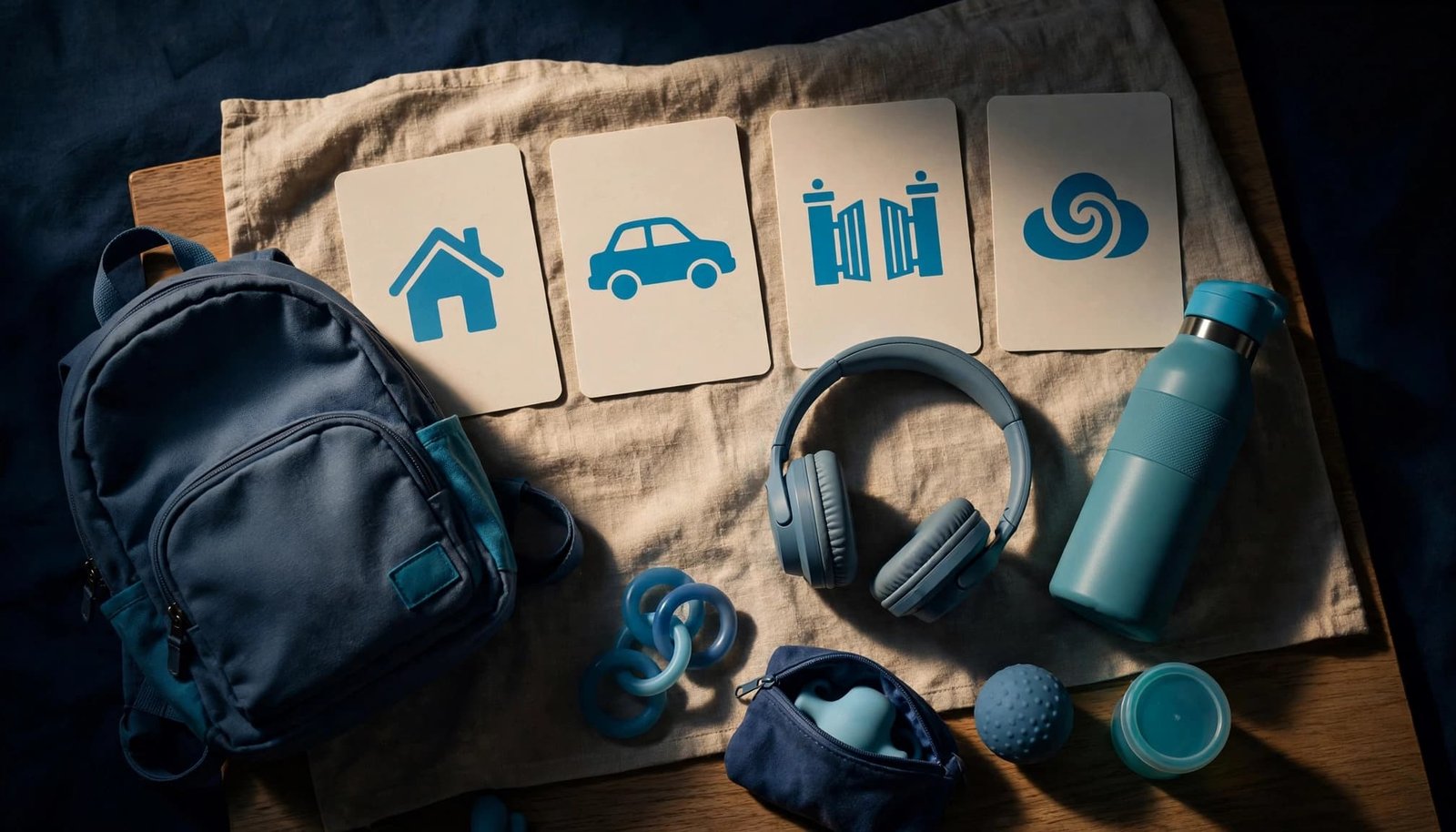
Pack for the first transition
Put the most-used items near the top of your park bag. That might mean noise-cancelling headphones, sunglasses, a familiar snack, water, a portable charger, and a low-tech backup for communication. Don’t make your child wait while you unpack the whole bag to find one item.
If more than one adult is coming, decide who carries the supplies and who stays with your child during a sudden change. Share that plan with grandparents or other caregivers before park day.
Give the First Hour a Simple Shape
Choose an arrival time that fits your child
An early start may work well for your family. It may also mean a crowded rush through transportation and the entrance. A later arrival can feel more comfortable for some children, even if the park is busier by then. Choose based on your child’s sleep, tolerance for waiting, and best time of day.
The night before, check park hours, tickets, transportation plans, and the My Disney Experience app. Set out clothes and pack the bag. Keep breakfast familiar if new foods are hard first thing in the morning.
Pick one first stop and an exit route
Once inside, head toward a familiar attraction, a snack, or a comfortable place to sit. You don’t need to cross the park to reach a popular ride immediately. Give your child a moment to see where they are and what comes next.
Choose a meeting point in case your group separates. Decide how you’ll leave the area if your child needs a break right away. A shaded bench, First Aid, or a return to the resort may fit that plan.
Your first-hour plan should still work if you don’t ride anything.

What Disney With Autism Families Should Know About DAS
Register before your visit if DAS may fit
Disney’s Disability Access Service (DAS) is intended for eligible guests who can’t wait in conventional attraction queues for an extended period because of a developmental disability such as autism. An autism diagnosis alone doesn’t guarantee approval. Disney reviews how the guest’s disability affects their ability to wait in a queue.
Disney’s current process uses a live video chat, with registration available up to 60 days before a park visit. Have your child present and be ready to explain what happens during a long, crowded wait. Check the current procedure before your trip; this DAS registration overview can help you understand the process.
Know what a return time does
If approved, your group can request an attraction return time in the My Disney Experience app after entering the park. What some families call a “DAS pass” is Disney’s DAS. It doesn’t skip the standby wait, which is comparable to the current wait time, but lets your family wait elsewhere. Disney currently limits a registered DAS group to four people total, including the eligible guest.
DAS can make waiting more manageable. It doesn’t remove heat, walking, entrance lines, or the need for breaks. Disney also lists other options in its accessibility services for guests with disabilities. Build your morning around your child’s comfort whether or not DAS is approved.
Ask About Other Queue and Mobility Options
Can your child keep using a stroller?
Disney’s “Stroller as a Wheelchair” tag may be available when a guest with a disability uses a stroller as a mobility device. Ask Guest Relations whether using a stroller as a wheelchair fits your child’s needs. The tag isn’t a general substitute for DAS, and access can vary by attraction.
If stroller use is important to your day, ask about it early instead of waiting until you’re at an attraction entrance. Our Disney stroller tags and accessibility options page can help you organize those questions before travel.
What if someone can’t ride?
With the Rider Switch program, speak to a Cast Member at the attraction entrance. One part of your group rides while the other waits outside the queue with the guest who isn’t riding. Then the waiting adult can ride, with up to two people joining them under Disney’s current procedure.
It’s useful when a sibling wants to ride but your child doesn’t. You can also skip the attraction as a family. Undivided’s Disney disability guide offers a broader look at accommodations if you’re sorting through several support needs.
Plan Breaks Before Sensory Overload
Find possible quiet spots, then check them
Disney lists potential quiet break areas in each of its theme parks, including Center Street at Magic Kingdom, World Celebration at EPCOT, Pixar Place at Disney’s Hollywood Studios, and Discovery Island at Disney’s Animal Kingdom. First Aid is another place to ask about a break in each park.
These aren’t guaranteed quiet spaces. Music, crowds, and nearby activity can change throughout the day. When choosing a spot, consider your child’s sensory needs and look for shade, seating, fewer people, and an easy exit. Ask a Cast Member for a nearby option if your planned location is busy.
Let the schedule remind you to pause
A break doesn’t have to wait for visible distress. Try pausing after two attractions, before lunch, or after a stretch of walking. A snack at a shaded table might be enough. On another day, your child may need the hotel room.
Watch your child’s own early signs of strain. If they use pictures or an AAC device to communicate, keep choices for “break,” “water,” and “leave” available. A return time can wait while you take care of your child.
Keep Heat, Meals, and Changes Manageable
Make the next step smaller on hot days
Florida heat can make an already busy entrance feel harder. Offer water regularly, look for shade, and plan indoor time before everyone is tired. Keep a spare change of clothes if wet clothing or sweat is uncomfortable for your child.
If an attraction closes or a line feels too crowded, use the short visual plan rather than explaining the whole day again. Offer two workable choices: snack or break, another ride or the hotel. Your child still gets a clear next step.
Choose food with comfort in mind
Check menus before park day if your child has a short list of comfortable foods. Consider an earlier meal if lunchtime crowds are difficult, and carry familiar snacks where permitted. A quick-service meal or a quiet table may fit better than a long reservation.
For dietary accommodations, speak with a server, chef, or manager about available options. If a restaurant becomes overwhelming, it’s okay to leave and try a different meal plan. Comfort matters more than keeping a reservation.
Use the Ebook to Make the Plan Your Own
A guide is most helpful when you use it to shape vacation planning around your child. The Disney World With Autism Guide PDF on Etsy covers sensory preparation, DAS, park bags, meals, and breaks. Families can adapt its ideas as an accessibility planning guide, or keep the Disney World with Autism ebook on Amazon handy.
K&S The Travel Crusaders draws on firsthand family experience and real-world travel planning. Kellie Neff also holds a B.A. in Child Development. Use the ideas that fit your family, and confirm current park procedures with Disney before you travel.
Packing can be part of that same plan. At the Trip Rescue travel shop, you can look for travel items ranging from strollers to cleaning supplies for a sick day on vacation. Pack for the support your child uses at home, not for every possible problem.
Frequently Asked Questions
Should we go to a park on resort arrival day?
You can, but you don’t have to. After a flight or long drive, unpacking, eating a familiar meal, and seeing the resort may be enough. A slower first day can make the next morning easier.
What if my child struggles at security or the entrance?
Step out of the main flow when you can and focus on one step at a time. Keep headphones or a communication tool within reach. Ask a Cast Member where you can pause if you need more space.
Does DAS guarantee a calm park day?
No. DAS can help eligible guests who have difficulty waiting in conventional attraction queues. A DAS return time doesn’t address transportation, food, heat, crowded paths, or the need for breaks. Keep the first hour simple even if you have DAS.
What if our first ride doesn’t work out?
Move to your backup choice without treating the change as a failed morning. A snack, short break, or return to the resort can give your child time to reset. Your plan should be flexible enough to make that choice comfortable.
A Calm Start Is a Good Start
The park entrance can bring a lot at once. A familiar visual plan, easy-to-reach supports, and one comfortable first stop give your family room to settle in.
You don’t need to finish a long attraction list to have a good Disney day. Start with your child, take breaks when they’re needed, and let the rest of the day follow.
Leave a Reply