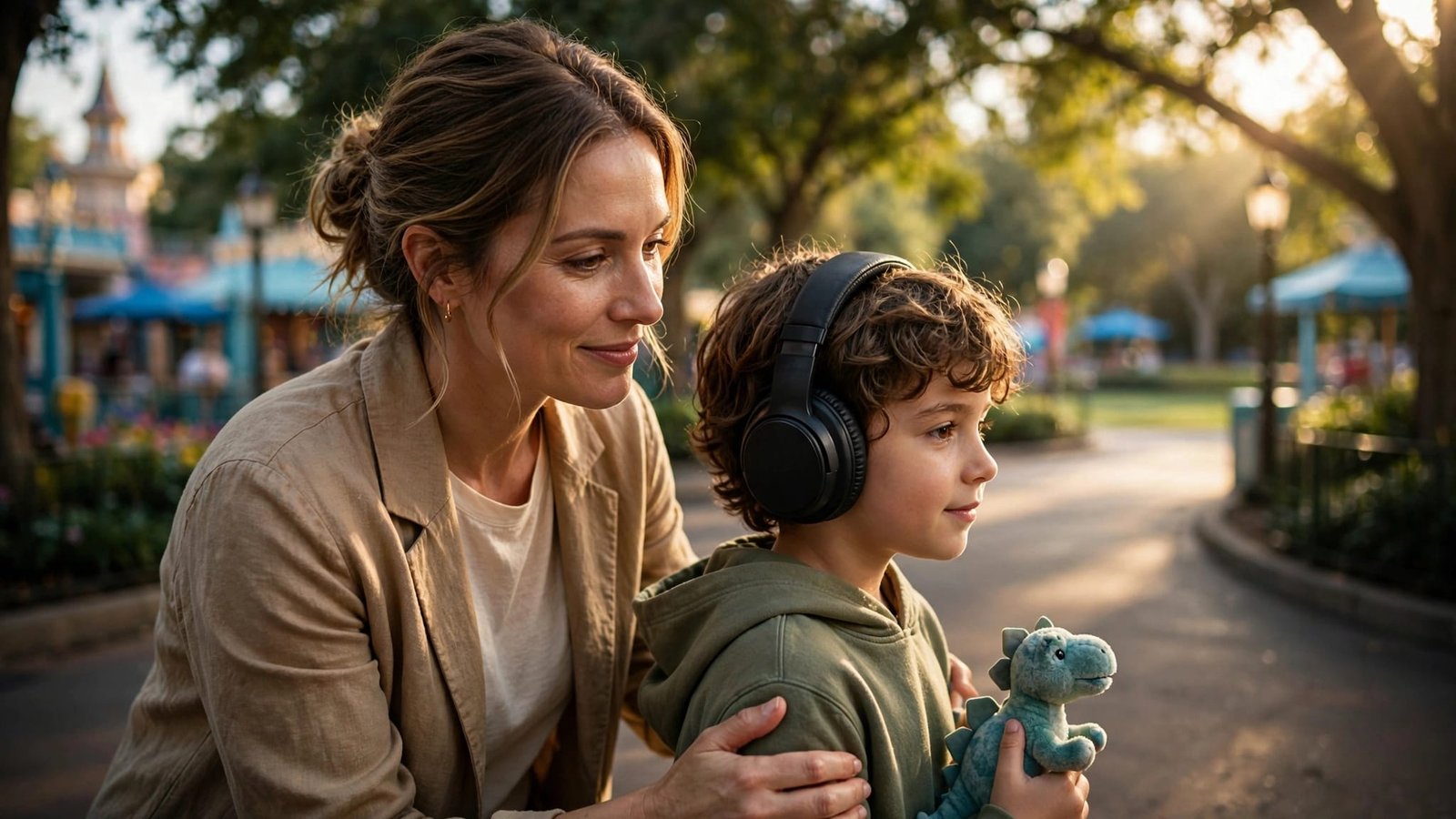
Your child may enjoy a ride one minute and struggle with the noise outside it the next. Every child has individual needs, whether they’re an autistic guest or have a developmental disability. A Disney autism guide can help you prepare for an early exit before you’re standing in a crowded walkway wondering where to go. The most useful plan includes a way to leave calmly, even if you hoped to stay longer.
You don’t need to predict every difficult moment. You need a few choices your family can follow when the day gets loud.
Key Takeaways
- Choose a break spot and a route out of the park before your child needs either one.
- Plan one or two priorities, then leave time for food, rest, and an early finish.
- Check Disney’s current accessibility rules before travel. Disability Access Service (DAS) can help eligible guests with queues, but it doesn’t replace sensory breaks.
- Treat a comfortable departure as part of a successful Disney day.
Turn a Disney autism guide into an exit plan
Leaving the park can be harder than it sounds. Your child may be tired, walkways may be crowded, and the trip back may involve a bus, boat, monorail, or car. Decide what you’ll do while everyone is still comfortable.
Notice the signs that come before overload
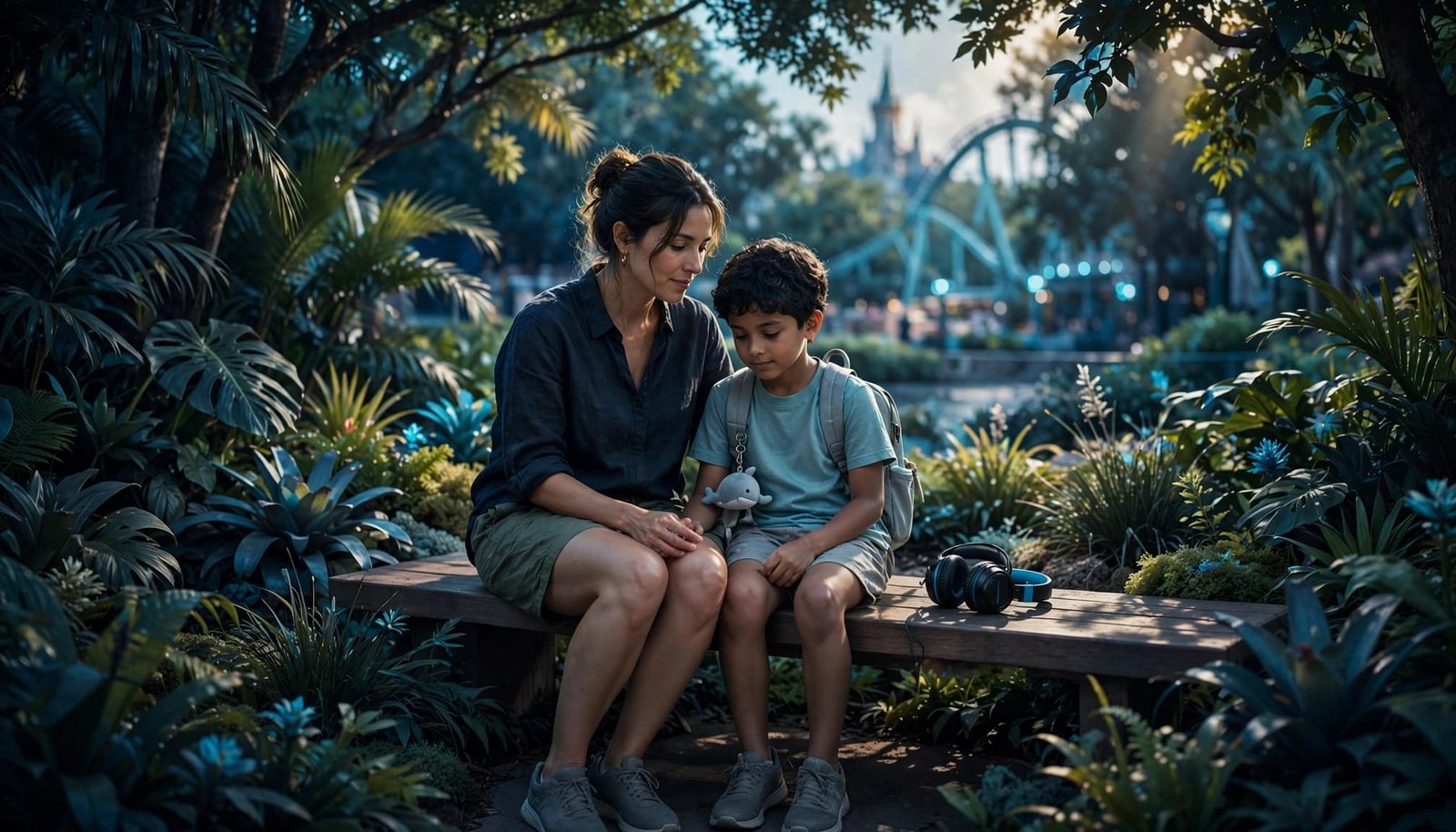
Think about what you see at home or on other outings. Does your child get quieter, cover their ears, ask the same question, or stop accepting choices? Spotting these early cues can help you respond before sensory overload builds.
Share the signs with every adult in your group. Agree that the first sign means it’s time to offer a break. One parent shouldn’t have to persuade the rest of the family while their child is struggling.
Pick a pause point and a way out
For each park visit, choose a lower-stimulation place near your first planned activities. Then check the route from there toward the exit. If your child uses a stroller, decide who will manage it and who will stay close to your child.
Keep the plan simple: pause, offer water or a familiar comfort item, and decide whether to continue or leave. A Lightning Lane plan for attractions doesn’t replace a break or an exit plan. If your group separates, choose a meeting place and make sure each adult knows whom to contact. This flexible Disney World plan for autistic families is an accessibility planning guide that can help you think through those choices before the trip.
Build a day that’s easy to leave early
A packed schedule makes leaving feel like giving something up. A shorter plan gives your child room to enjoy what’s working.
Use a small visual schedule
Show your child the parts of the day that matter most: travel to the park, one favorite activity, food, a break, and the trip back. Photos or simple drawings can help if they’re familiar with them.
Check current Disney information for virtual queue and Lightning Lane options before planning around them. They aren’t guaranteed access, and they don’t need to fill the day. If dining reservations are part of the plan, show them as fixed transitions on the visual schedule.
Include “go back to the room” as a normal option, not a consequence. If plans change, show what comes next instead of explaining a new schedule all at once. You can also watch attraction videos together before travel if knowing what to expect helps your child.
Plan food and your finish time
Choose one or two park priorities. Set a possible finish time before dinner or fireworks if evenings tend to be hard for your child. You can stay longer if things are going well, but no one has to earn an early exit.
Think about dining the same way. A character buffet may delight a child who enjoys surprise visits, but the movement and noise can be tiring for another. Familiar snacks and a flexible meal plan may be a better fit than dining reservations your family feels pressured to keep.
Understand DAS before you count on it
Disney’s Disability Access Service, or DAS, may help a guest whose disability prevents them from waiting in a conventional queue for an extended period. An autism diagnosis or another developmental disability alone doesn’t guarantee approval. DAS provides an alternative place to wait, not immediate access to an attraction.
Register through Disney’s video chat
Disney offers DAS registration through live video chat starting up to 60 days before a park visit. There’s no in-person DAS registration option at the resort. The guest requesting DAS must be present for the conversation.
Before the live video chat, describe what happens when your child waits in a conventional queue, rather than relying on a diagnosis alone. Disney makes the eligibility decision. The usual DAS party limit is four people total, including the registered guest. Check Disney’s current DAS registration rules before your trip, especially if your party is larger or you’re arranging the chat from outside the United States. Ask Guest Relations general access questions, but use the DAS process for registration and eligibility decisions.
Use return times without crowding the day
If approved, the registered guest can request an attraction return time after entering a park, often through My Disney Experience. The return time is based on the current standby wait. Your child must be part of the group using the return time.
Use that wait for a comfortable activity, a snack, or a break. Don’t fill it with another demanding queue. Lightning Lane and virtual queue options are separate from DAS, so verify current details before relying on them. Our Disney Disability Access Service guide has more help for a first visit. If DAS isn’t approved, keep your break and exit plan in place.
Find a quieter stop before heading out
A break area doesn’t have to be silent to help. Look for shade, space to sit, and quiet locations that don’t require crossing a parade crowd. Conditions can change across the theme parks, so have a second option.
Magic Kingdom Park break choices
Disney lists several potentially quieter places around Magic Kingdom Park. In Adventureland, look near Swiss Family Treehouse or the Pirates of the Caribbean restrooms. Companion restrooms can help with practical needs, but aren’t guaranteed sensory break spaces.
In Liberty Square, consider the area behind Ye Old Christmas Shoppe or beside the Hall of Presidents.
Fantasyland options include the area near the Wishing Well and outside Pete’s Silly Sideshow. In Tomorrowland, Disney lists spots near Walt Disney’s Carousel of Progress and between Space Mountain and the Rockettower Plaza Stage. These are places to check, not reserved or guaranteed quiet spaces. Review Disney’s neurodivergent guest resources for current locations before your park visit. You can also ask Guest Relations or the Guest Experience Team for guidance.
Make the final stretch manageable
At EPCOT, Disney’s Hollywood Studios, and Disney’s Animal Kingdom Theme Park, check Disney’s current break-location guidance before your visit. Ask a Cast Member for a nearby lower-stimulation option if the spot you planned is busy.
Remember that reaching the gate isn’t the whole trip home. If transportation lines are part of your route, offer a break before joining one. A Lightning Lane plan won’t keep the route out clear of crowds. Keep headphones and water accessible rather than buried under purchases.
Pack for comfort, not every possible problem
The best sensory kit contains things your child already uses. New tools can add one more unfamiliar experience to a busy day.
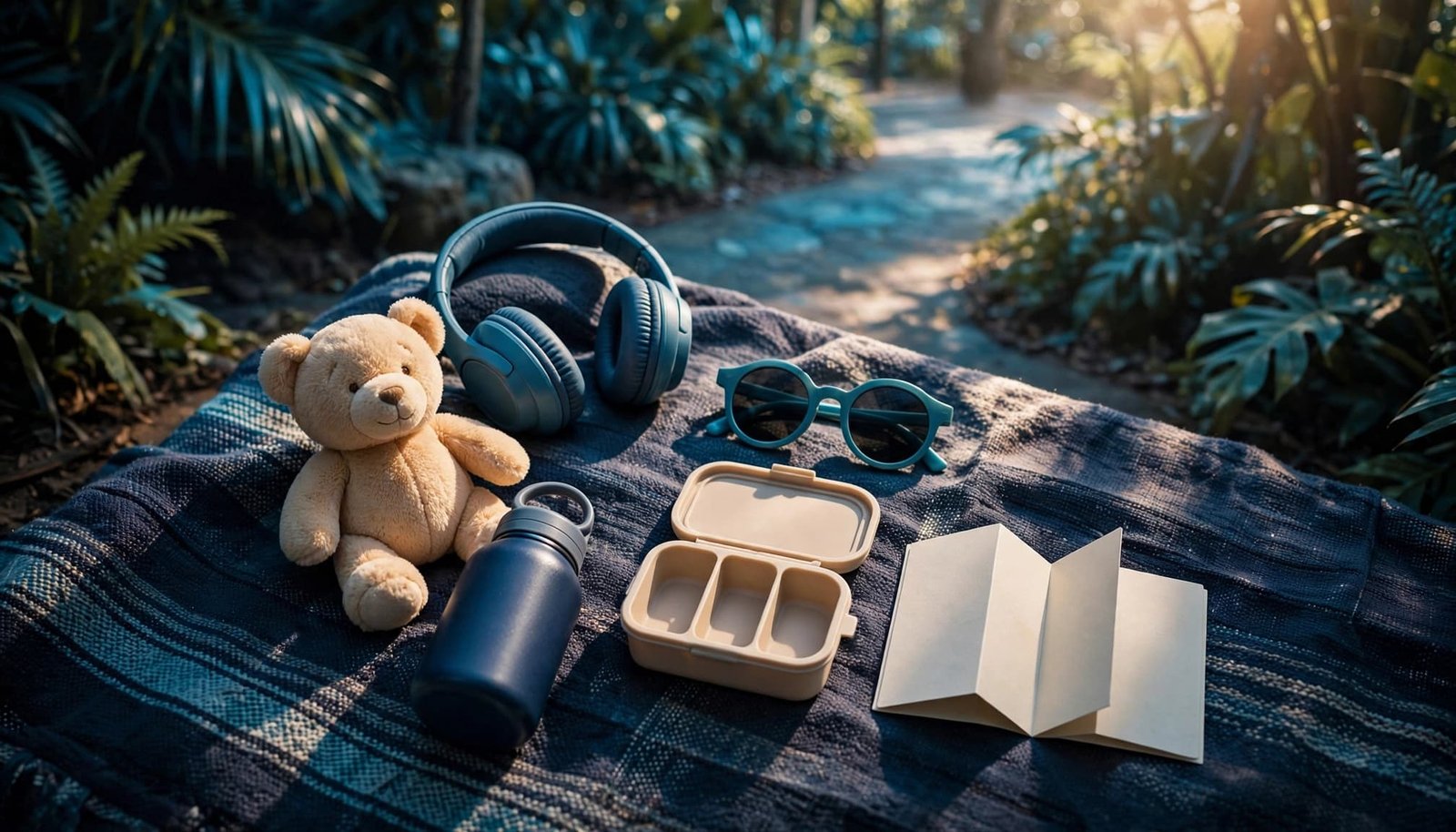
Keep noise-cancelling headphones, sunglasses if helpful, familiar snacks, water, a comfort item, and any communication support within easy reach. Add needed medication and a charged phone or portable charger. If your child uses a visual schedule, save a copy on your phone and carry a version they can use without a screen.
Bring supplies for the ride back, too. A change of clothes or cleaning items may be useful if someone gets sick on vacation. Our Trip Rescue Shop has travel basics, including stroller items and cleaning supplies. Choose what fits your child rather than filling a bag with items you may never use.
Check attractions and other access options
An attraction can look appealing outside and feel different once you’re inside. Across Disney theme parks, darkness, loud sounds, flashing effects, and movement may matter more to your child than a ride’s popularity.
Review sensory details before joining a queue
Disney provides Sensory Experience Details for attractions. Review lighting, sound, motion, and other effects alongside your child’s known sensitivities. A ride-through video may help some children prepare, but it won’t replace your judgment about the full experience.
A virtual queue or Lightning Lane can affect how you approach an attraction. Options and rules can change, so check current guidance with Disney.
When you’re unsure, let one adult check the attraction or ask a Cast Member about a concern. Skipping a ride is easier than trying to recover while everyone is already tired.
Ask about stroller tags and Rider Switch
If your child needs a stroller as a mobility device, ask Disney about its Stroller as Wheelchair accommodation. A qualifying tag may allow the stroller to remain with them in eligible attraction queues. This is separate from DAS, and a regular stroller doesn’t automatically qualify.
Rider Switch may help when a family member can’t or doesn’t want to ride and can’t wait outside the queue alone. Ask a Cast Member how Rider Switch applies to your group before entering. Guest Relations can share current general information, but eligibility and specific accommodations aren’t guaranteed. Disney’s accessibility services guidance is the place to check current queue and ride options.
What should you do when it’s time to leave?
When you notice your child’s early cues, ask fewer questions and reduce noise where you can. Move to your planned pause point, or use a backup if it’s crowded or closed. Offer familiar communication and sensory supports you’ve packed.
State or show one clear next step, such as “We’re going to sit down,” then “We’re going back to the room.” Use spoken words, pictures, or another familiar way to communicate. One adult can stay with your child while the other handles bags or transport. If you miss a connection, pause and work out the next option together.
You don’t have to stop for one last ride or photo, and a planned Lightning Lane return time shouldn’t delay leaving when that’s the better choice. If your child settles after a break, decide together whether staying feels comfortable. If leaving is the better choice, follow your planned route or adjust to a backup. The exit doesn’t need to be rushed, but it helps to keep the next step clear.
Keep planning help close at hand
These planning resources are most useful when adapted to your child’s sensory needs, food preferences, and energy. Our Disney World with Autism Guide on Etsy is an accessibility planning guide in PDF format. You can also find the guide on Amazon. Use either resource for family-focused planning ideas for a visit to Walt Disney World Resort, then confirm current park policies with Disney.
At K&S The Travel Crusaders, Kellie and Steven Neff draw on firsthand family experience and real-world travel planning. Kellie also has a B.A. in Child Development. That personal perspective shapes our approach: make the vacation fit your family, including the option to leave when you’ve had enough.
Frequently Asked Questions
Can DAS guarantee a calm exit?
No. A developmental disability diagnosis doesn’t guarantee DAS approval or a calm exit. DAS addresses eligible guests’ difficulty waiting in conventional attraction queues. Lightning Lane may offer a queue option, but it doesn’t replace sensory breaks, and current rules can change. Your child may still need breaks because of heat, noise, crowds, or the trip back to your hotel. Plan those separately.
What if our planned quiet spot is crowded?
Try your backup location or ask a Cast Member for a nearby lower-stimulation area. Guest Relations may have current information about nearby options, but immediate assistance isn’t guaranteed. Don’t make your child wait in a busy spot while you search for the perfect one.
Can we use a stroller in Disney queues?
A child who needs a stroller as a mobility device may qualify for a Stroller as a Wheelchair tag. Ask Disney about your child’s needs and follow the instructions for each attraction.
Is leaving before fireworks okay?
Absolutely. If late-night crowds or transportation lines are hard for your child, a daytime finish may make the entire visit more comfortable. You can adjust dining reservations and enjoy the parts of Disney that work for your family.
Leave Room for a Good Ending
Your child doesn’t need to reach the end of the park day to have a good one. A calm exit starts with noticing their early signs, knowing where to pause, and being willing to change the plan.
Choose the memories your family can enjoy comfortably. Then make the trip back part of the plan, too.
Leave a Reply