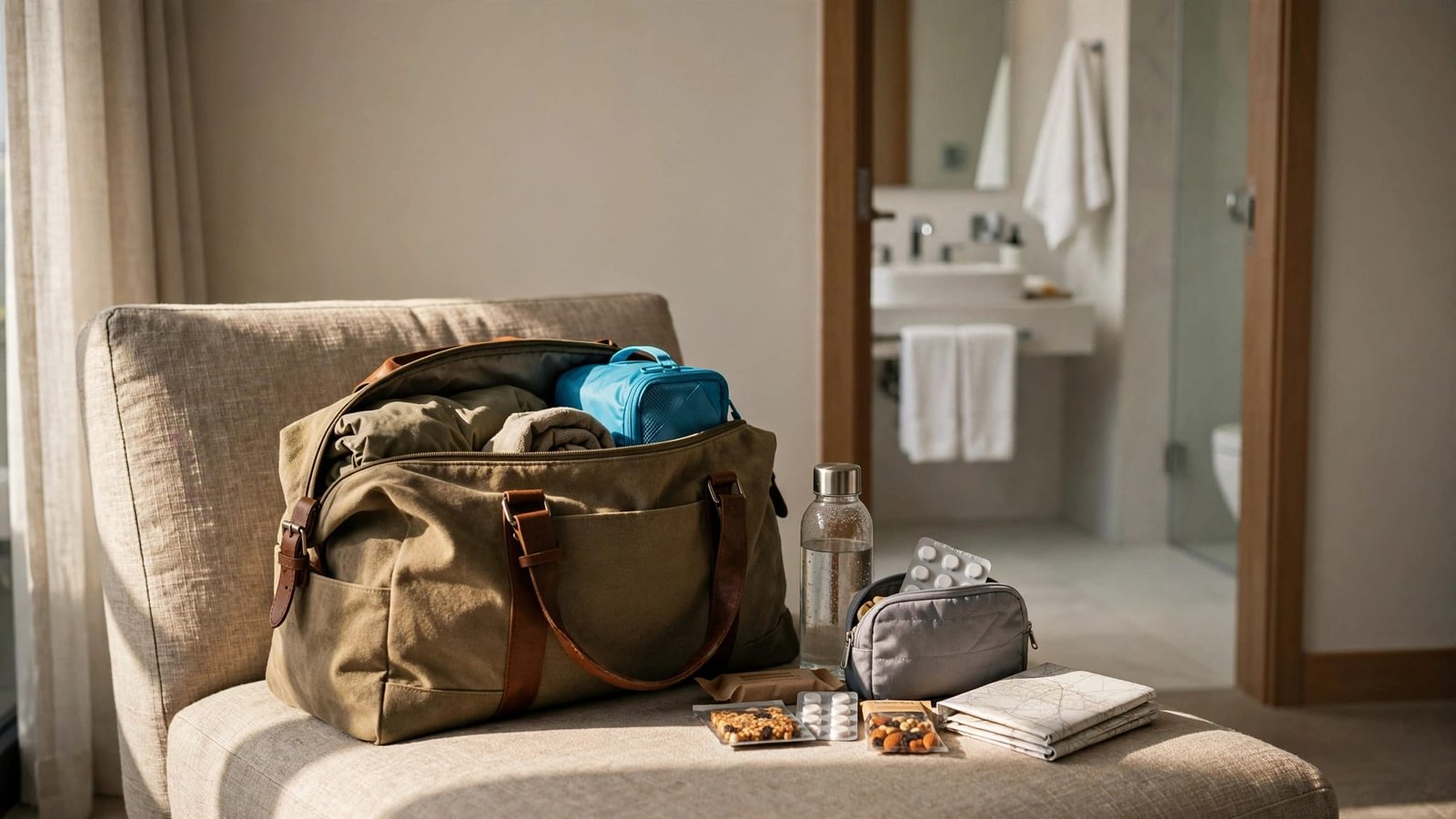
A vacation feels more manageable when you know where the next bathroom is and what you’ll eat. When you’re traveling with Crohn’s disease, those details deserve attention before the attractions and dinner reservations.
Travel preparation helps you plan bathroom access and meals before you go, whether you’re taking a road trip or flying. With a chronic illness, symptoms can vary, and your digestive system may respond differently to changes in routine.
A flexible plan gives you room for familiar meals, medication routines, and unexpected breaks. It can’t promise a symptom-free trip, but it can make changes easier to handle.
Start with your usual care routine, then build a vacation that supports your comfort.
Key Takeaways
- Map bathroom stops and backup options before a road trip, including how to get back to your room.
- Pack familiar snacks, accessible medication, extra supplies, and your care team’s written instructions.
- Confirm insurance coverage and nearby medical care before departure, especially for international trips or cruises.
Your comfort belongs in the plan alongside everything you’re excited to do.
A Care Plan for Traveling With Crohn’s Disease
Talk With Your IBD Team Before Booking
Tell your gastroenterologist where you’re going, how long you’ll stay, and what the trip involves. Mention recent symptoms, active inflammation, planned excursions, and any long flights.
Ask whether your current condition makes the trip reasonable. Review medication timing across time zones, hydration needs, and destination-related vaccines. Some treatments affect which vaccines you can receive, so follow your clinician’s individualized guidance. Ask whether to carry extra medication in case travel delays disrupt your schedule.
The Crohn’s & Colitis Foundation’s IBD travel preparation guidance also recommends identifying doctors near your destination.
Get a Written Symptom Plan
Ask what to do if diarrhea increases, pain changes, or you miss a dose. Save your care team’s number and after-hours instructions.
Don’t assume every change is a flare. An infection, including traveler’s diarrhea, can cause similar symptoms and may need different treatment.
Check before packing loperamide or other symptom medicines. Fever, bloody diarrhea, or suspected obstruction can make self-treatment unsafe.
Plan Bathroom Access Before You Need It

Map Your Route and Backup Stops
As part of travel preparation, save rest areas and reliable stops along the route for a road trip. Add a backup in case a restroom is closed. Keep your supplies in the passenger area, where you can reach them.
For city days, check restrooms near restaurants, museums, stations, and your main activity. Confirm opening hours and whether admission or a purchase is required.
At a theme park, identify restrooms before entering a long queue. Plan a realistic return to the hotel, including transportation waits. A nearby room isn’t helpful if getting there takes an hour.
Use Local Tools Without Assuming Access
The Foundation’s We Can’t Wait app helps locate U.S. restrooms. Canada’s GoHere Washroom Locator App offers another country-specific option.
In the UK, the Great British Toilet Map and a radar key may help. It opens participating locked accessible toilets, not every public restroom. Where recognized, a sunflower lanyard may help communicate a non-visible need, but it doesn’t guarantee restroom access.
A restroom card, key, or app doesn’t guarantee entry. Keep a second option nearby.
Carry a translated request when needed: “I have a medical condition and need a toilet urgently.” You can ask for help without sharing your full medical history.
Make Meals Familiar and Food Safety Practical
Follow Your Own Food Tolerances
There isn’t one vacation diet that works for everyone with Crohn’s disease. Each person’s digestive system responds differently to dairy, fiber, spicy foods, and other ingredients. Follow your established nutrition plan rather than adopting broad restrictions before departure.
Review menus and ask for simple changes. A clear request such as “plain rice, with the sauce served separately” is easier to communicate than a long explanation.
Pack foods you already tolerate. Airline meals and roadside options may not meet your needs, even when you’ve requested a special meal.
A kitchenette or nearby grocery store can make breakfast and snacks easier. Confirm refrigeration if you’re bringing perishable food or prescribed nutrition.
Separate Food Triggers From Infection Risks
A familiar meal can still be unsafe if it’s poorly stored or prepared. The CDC’s travelers’ diarrhea guidance recommends food and water precautions that can reduce the risk of traveler’s diarrhea, though they can’t remove every risk.
Choose thoroughly cooked food served hot. Avoid unpasteurized dairy. Where tap water isn’t safe, use sealed bottled or properly disinfected water, including for brushing teeth. Check how ice is made.
Wash your hands before eating. When soap and water aren’t available, use sanitizer containing at least 60% alcohol.
Carry bottled water and follow your care team’s hydration advice. If your care team approves, oral rehydration packets or electrolyte drinks may help replace fluids lost through diarrhea. They don’t replace medical assessment.
Pack Medication and a Crohn’s Travel Kit
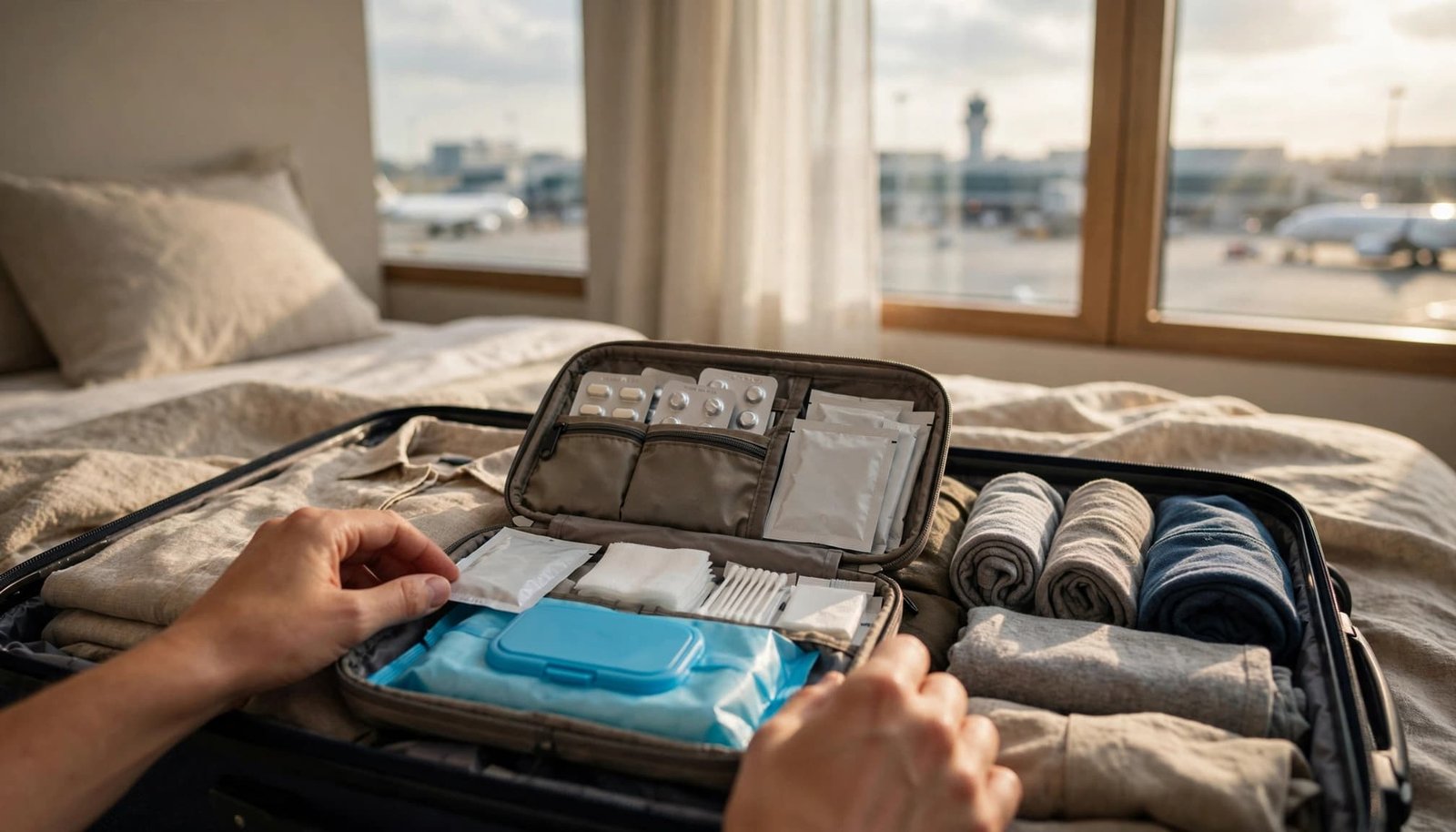
Keep Essentials With You
Carry medication in its original labeled packaging, with enough for the trip and extra medication to cover delays. Check destination and transit-country import rules before traveling internationally.
Bring prescription copies and a clinician’s letter listing generic medication names. Keep paper and digital copies of your medication list, insurance details, and emergency contacts.
Whether you’re flying or taking a road trip, your day bag should hold tissues, wipes, disposal bags, spare underwear, comfortable clothing, and familiar snacks. Refill it each evening.
If you have an ostomy, add a complete change kit and your usual pouch-care supplies. Store backups separately when possible. If your carry-on is gate-checked, remove essential medication and supplies first.
Arrange Biologics Before Departure
For self-injections, ask your pharmacist about the exact product’s storage limits, cooling needs, and permitted time outside refrigeration. Don’t assume every biologic follows the same rules.
Avoid freezing medication or placing it directly against ice packs unless the product’s instructions permit it. Confirm suitable refrigeration with the hotel rather than relying on a minibar.
Crohn’s and Colitis Canada’s air travel guidance for IBD covers medication considerations.
For extended trips, arrange biologic infusions with your treating team well ahead of departure. Confirm the receiving clinic, prescription acceptance, payment, and appointment in writing. Don’t change your dosing schedule yourself.
Choose Transportation and Lodging That Support Breaks
An aisle seat makes bathroom trips easier, although lavatories may be unavailable during takeoff, landing, or turbulence. On a long haul flight, use the airport restroom before boarding and keep your small medical kit within reach.
A nonstop flight can reduce rushed connections, while a road trip lets you plan breaks along the way. On longer journeys, move periodically when safe and ask your clinician about your individual blood-clot risk.
Before booking lodging, ask about the bathroom layout, food options, and distance to transportation. When managing a chronic illness, a kitchenette, private bathroom, and easy room access may matter more than extra amenities.
For cruises, confirm cabin bathroom arrangements, medication-storage options, and medical-supply policies. Ask what the onboard medical center can treat and how care is arranged ashore.
Keep days realistic. One main activity with an easy meal may suit you better than several timed reservations. Traveling with Crohn’s disease is easier to manage when an early return doesn’t create a chain of cancellation fees.
Check Insurance and Know When to Get Help
Confirm What the Policy Covers
Ask whether your regular health insurance covers treatment at your destination. When comparing travel insurance, disclose Crohn’s and review pre-existing-condition exclusions.
Check emergency medical care, medication replacement, trip interruption, and medical evacuation separately. These benefits have different limits and conditions.
Get answers in the policy documents. Save the policy number and 24-hour assistance contact with your reservations.
For travel preparation, IBD Passport’s travel advice offers practical guidance for inflammatory bowel disease, including Crohn’s and ulcerative colitis.
Prepare for Care and Claims
Save the nearest suitable emergency department and a local medical contact before arrival. Remote excursions need a clear plan for reaching care.
Seek urgent assessment for severe or worsening abdominal pain, persistent vomiting, significant bleeding, or an inability to keep fluids down. Fever also needs prompt advice, especially if your treatment suppresses your immune system.
Get emergency help first. Contact the insurer when it’s safe, and ask about approval requirements for ongoing treatment or transport.
Keep itemized receipts, medical records, prescriptions, and cancellation documents. These may be needed for reimbursement. Evacuation coverage doesn’t automatically pay for a preferred trip home.
Give Your Family Useful Jobs and Flexible Options
On a road trip, agree on who carries backup supplies. Decide who can take the children to another activity if you need privacy. A simple message such as “I need 20 minutes at the room” can be enough.
K&S The Travel Crusaders offers personalized planning for families coordinating access needs, routines, and a comfortable pace. Medical decisions stay with your healthcare provider.
If your family is also planning around autism or sensory needs, our Disney planning for multiple disabilities offers family-focused preparation ideas. Our Disney World With Autism Guide is available as an Etsy PDF travel guide and an Amazon autism travel ebook. These support family planning, not Crohn’s treatment.
For strollers, organizers, and cleaning supplies for unexpected sick-on-vacation moments, browse Trip Rescue Shop’s travel supplies. Choose items that support your usual routine.
Common Questions About Crohn’s Travel
Which Destination Is Best for Travelers?
There’s no single best destination for everyone with Crohn’s disease. Compare bathroom access, suitable meals, nearby medical care, medication rules, and the pace of the trip.
A destination with dependable services near your lodging may be more comfortable than an isolated resort. Choose based on your needs, budget, and current health rather than a country’s reputation alone.
Can Travel Planning Prevent a Flare?
Planning can’t guarantee you won’t flare up. It can help you maintain prescribed treatment, avoid known food triggers, protect time for rest, and respond sooner when symptoms change.
Keep plans adjustable and follow your clinician’s instructions. If symptoms worsen before departure, contact your care team rather than assuming you should push through.
A Comfortable Trip Starts With Dependable Options
Knowing where to find a bathroom and a familiar meal can take pressure off your travel day. Accessible medication, clear medical instructions, and backup plans give you more options when circumstances change.
Build the trip around your real routine, with room for rest and privacy. Your vacation can include meaningful experiences without filling every hour.
Leave a Reply