
Traveling with Ehlers-Danlos syndrome is more manageable when you plan rest, mobility support, and medication routines before departure. The most useful EDS travel tips help you protect your energy throughout the journey, including the days after you arrive.
Long walks, heavy luggage, and standing in lines can use up energy before your vacation begins. Build pacing flexibility into the day, with comfortable options and room to change plans.
Key Takeaways
- Request mobility assistance before departure, even if you don’t normally use a wheelchair.
- Keep medication, hydration supplies, snacks, and familiar supports within reach.
- Schedule recovery time as carefully as flights and activities.
- Follow your clinician’s guidance for compression, extra sodium, braces, and medication changes.
Before Booking, Plan the Whole Travel Day
Build Your Schedule Around Your Usual Energy
Choose travel times that fit your most comfortable hours. Nonstop flights reduce transfers, but a long flight still needs a seating and movement plan.
Leave buffer weeks before and after your trip with minimal outside commitments when possible. Before departure, fewer obligations leave time for packing and reduce opportunities for infection. Afterward, they give you space to recover.
Book lodging with nearby meals, dependable elevators, and a manageable route back to your room. An accessible room label doesn’t describe every feature you may need.
Arrange Airport Assistance at Every Stage
If you can’t comfortably walk about a mile or stand for half an hour, request airline wheelchair assistance. Those distances are planning guides, not eligibility requirements. You can request help sooner.
Ask for a wheelchair with an attendant or porter through security, connections, and arrival. Request preboarding if extra time would help you settle safely.
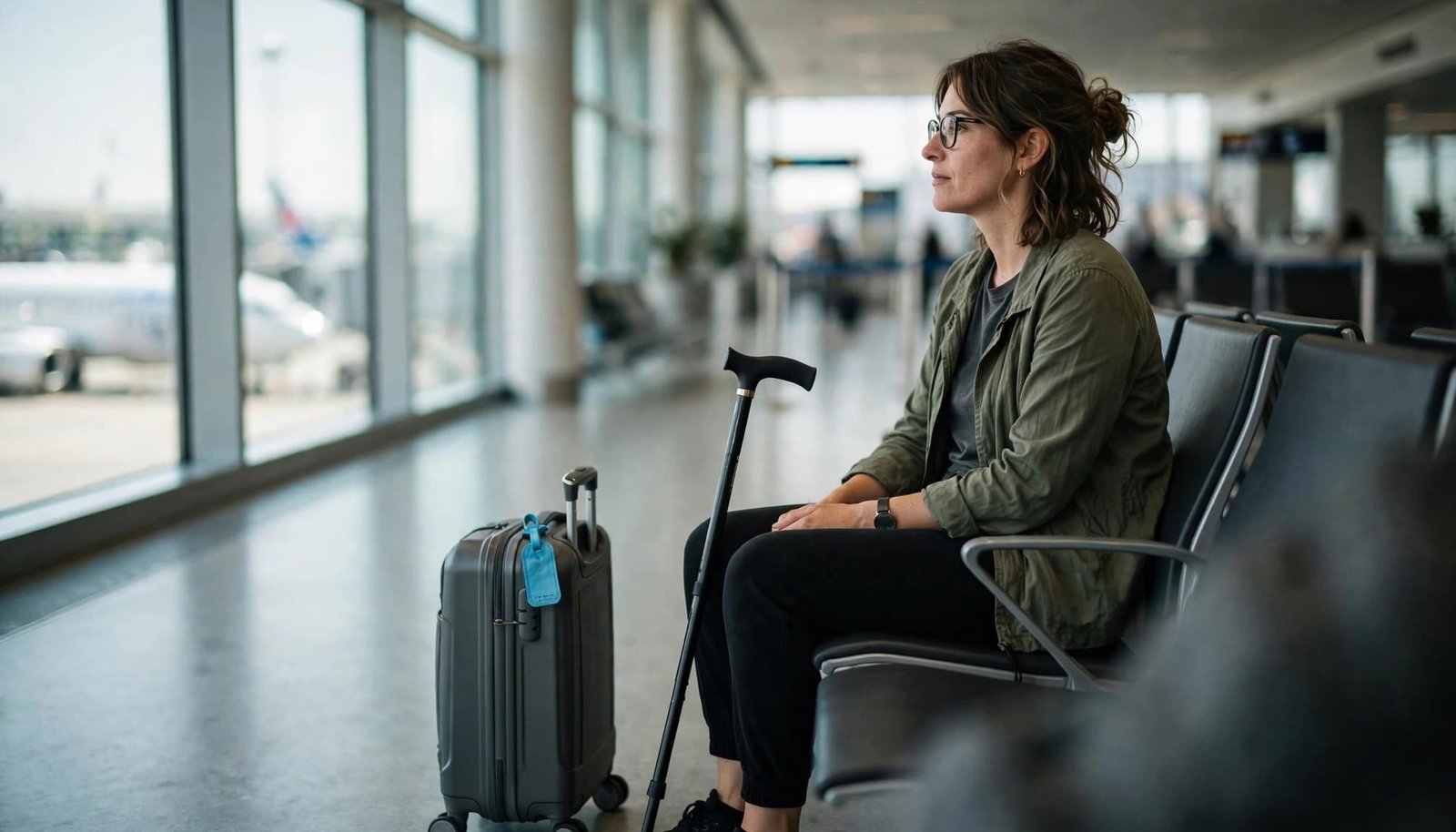
Airline mobility assistance and TSA screening support are separate services. Leave extra time for both.
Arrange accessible transportation after landing, too. Terminal assistance doesn’t include the ride to your hotel. Give companions useful jobs, such as managing your luggage or carrying heavier luggage, so you aren’t handling every task.
Choose Seating and Support That Fit Your Body
Balance Legroom With Easy Access
An aisle seat makes bathroom trips and brief walks easier. A bulkhead can offer more room, but bags usually can’t stay at your feet during takeoff and landing.
A forward seat can shorten the boarding walk. If turbulence bothers you, seats over the wings generally feel steadier. Avoid the toilets and galley if smells, noise, or frequent traffic trigger symptoms.
Don’t choose an exit row unless you’re able and willing to perform its emergency duties.
Bring Familiar Neck and Back Support
Choose a neck pillow that fits your neck length without pushing your head forward. Test familiar neck support while sitting upright before departure.
For long flights, a familiar seat cushion or lumbar support may improve comfort. Keep the seat belt correctly positioned.
A blackout eye mask and noise-cancelling headphones can make rest easier. If your head drops when you sleep, ask your clinician whether a collar is appropriate. Use prescribed neck support as directed rather than trying an unfamiliar brace during the flight.
Pack a Carry-On That Reduces Strain
Keep Prescriptions and Timing Instructions Together
Keep all medication for your trip in hand luggage, plus at least two or three extra days. Ideally, carry a week’s buffer in case delays affect your travel plans.
Use clearly labelled prescription packaging and bring a doctor’s letter explaining your prescriptions and medical supplies. Some destinations prohibit medicines permitted at home, so arrange required controlled-drug permissions before international travel.
Ask your pharmacist for a written schedule that accounts for departure and destination timezones. Set alarms and save the schedule offline. Don’t skip or double doses to match the local clock.
Move sleep and meals toward destination time as soon as practical to limit jet lag. When crossing multiple timezones, change timing only according to your individualized plan. United’s medication guidance also explains onboard medical-equipment considerations.
Keep Everyday Essentials Within Reach
Use a lightweight wheeled carry-on instead of carrying weight on your shoulders. Ask your companion to handle overhead lifting when possible.
Pack familiar snacks, salty foods if permitted in your care plan, electrolyte packets, and an empty water bottle. Keep your most-used items in a small, accessible pouch with an eye mask.
Bring prescribed braces, chargers, emergency contacts, a brief medical summary, and your usual clinician-approved supplies for pain control. Keep essential supplies accessible for the flight. A well-fitting N95 or KN95 is a useful option in crowded terminals. Include hand sanitizer and wash your hands before eating.
Hydration and Compression Need a Personal Plan
Keep Your Hydration Routine Steady
Bring an empty bottle through security and fill it afterward. Sip regularly to stay hydrated rather than waiting until you feel unwell.
Choose still water instead of caffeinated or carbonated drinks, particularly if they worsen palpitations, bloating, or nausea. Avoid alcohol when it aggravates symptoms or interacts with medication.
Electrolytes in packets such as Liquid I.V. can be convenient if they fit your clinician-approved plan. Mix electrolytes as directed. Extra fluid and sodium aren’t suitable for everyone, especially with some heart or kidney conditions.
PoTS UK’s travel guidance recommends attention to hydration, compression, and movement during flights. Our advice for traveling with POTS also covers heat and standing.
Try Compression Before Departure
For a flight over an hour, discuss compression socks with your clinician. EDS alone doesn’t mean everyone needs the same garment or pressure.
For long flights, pack two pairs of compression socks, one for the outbound journey and one for the return. Try them before travel so you know whether they’re comfortable.
For POTS, abdominal or waist-high compression may help pooling that knee-high socks don’t address. Your clinician should choose the pressure and coverage. Don’t assume stronger compression is better.
EDS Travel Tips for Moving While Seated
Set a reminder about every 30 minutes for gentle movement within your comfortable range. Point and flex your feet, make small ankle circles, and march your feet while seated.
These movements activate calf muscles and support circulation. The CDC recommends leg movement during prolonged sitting to help reduce DVT risk.
When the seat-belt sign is off, take a short aisle walk if you’re steady enough. Keep your belt fastened while seated.
If you feel faint, stay seated and alert the cabin crew. Walking the aisle isn’t the right response to feeling faint.
Avoid locking your knees or pushing joints to their end range. Travel stretching and yoga shouldn’t involve hyperextension. Avoid high-impact activity and unfamiliar poses that could strain vulnerable tendons and ligaments.
Seek urgent help for new one-sided leg swelling, chest pain, or sudden breathlessness.
Pace Road Trips and Work Travel
Choose Comfortable Driving Stretches
Check the weather, sunrise times, traffic, and rest stops before choosing a route. A longer route may feel easier if it offers comfortable breaks and fewer difficult roads.

Keep water, medication, snacks, and cooling supplies within reach. Schedule breaks before discomfort builds. Don’t drive if pain, dizziness, or medication-related drowsiness affects your ability to drive safely.
Break gentle walks or hikes into 10- to 15-minute segments, with seated rests. Choose shorter segments if that’s more comfortable.
Leave Space Around Meetings
Work trips can involve long periods of sitting, standing, social demands, and disrupted sleep. A packed schedule may leave little time to recover.
Request seated participation, nearby lodging, and breaks between sessions. Skip optional evening events when you need rest. Avoid scheduling an important presentation right after arrival.
Tell a trusted colleague what practical help you need. A short explanation, such as needing a seated break before the next session, can make it easier for them to help.
Protect Recovery Time After Arrival
Plan at least 24 continuous hours of low-demand recovery after arrival before scheduling activities, with more time if your symptoms require it. Rest can include meals, bathroom trips, and comfortable movement rather than strict bed rest, unless your healthcare team has prescribed it.
After intense activity, schedule a full rest day. Use flexible pacing: keep one main outing as the priority and make additional plans optional.
Watch for early signs of overdoing it, such as increasing pain, dizziness, or difficulty concentrating. Follow your established pain control plan and adapt activity with your healthcare team. Agree on a simple phrase with companions that means it’s time to return to your room.
Our special-needs travel planning can help coordinate accommodations, transportation, and a realistic pace around your medical plan.
For practical supplies, our Trip Rescue Shop carries travel items, including strollers and cleaning supplies for unexpected illness on vacation.
If your family is also planning Disney travel with an autistic child, our guide supports sensory preparation and flexible park days. Choose the Disney World autism PDF guide on Etsy or the Disney autism travel ebook on Amazon.
Frequently Asked Questions
Is Walking Good Exercise for EDS?
Walking can be a suitable low-impact activity when it matches your joint stability, symptoms, and rehabilitation plan. Start with comfortable distances and supportive footwear. Stop before fatigue changes your movement or increases pain.
A vacation isn’t the time to increase your walking target. Mobility aids can help preserve energy for the experiences you value.
Does Flying Affect POTS?
Flying can worsen symptoms through prolonged sitting, standing in queues, heat, disrupted meals, and missed hydration routines. Experiences vary, so build your travel day around your usual management plan.
Airport assistance, accessible supplies, and recovery time can reduce demands. Discuss new or poorly controlled symptoms with your clinician before traveling.
A Comfortable Trip Starts With a Manageable Pace
Your travel plan should fit the energy and mobility you have. Planned assistance, familiar supports, and protected recovery time give you more comfortable choices throughout the trip.
Start with the parts of travel that usually cause the most difficulty. We’ll help you plan vacation details around those needs, with room for rest and flexibility.
Leave a Reply