
Knott’s Corkscrew is the focus of this short from Behind the Turnstiles. It connects two theme park names, Knott’s Berry Farm in California and Silverwood in Idaho.
You can watch the park story below. For families with sensory needs, there’s also a separate consideration: how an attraction’s movement and effects fit your child’s comfort level.
Key Takeaways
- Knott’s Berry Farm opened Corkscrew in 1975. Ron Toomer of Arrow Development designed the prototype, recognized as the first modern steel inverting roller coaster.
- The ride operated at Knott’s Berry Farm from 1975 to 1989, with a chain lift hill, a 90-degree banked turn, and two consecutive corkscrews.
- Silverwood bought the original Corkscrew for $250,000 and opened it in Idaho in 1990. The original ride remains in Athol, Idaho.
- Ride comfort varies by child. A child may enjoy a ride’s movement but feel uncomfortable with loud sounds, unexpected drops, or visual effects.
Knott’s Berry Farm in California
Knott’s Berry Farm is the California park featured in the video about Corkscrew.
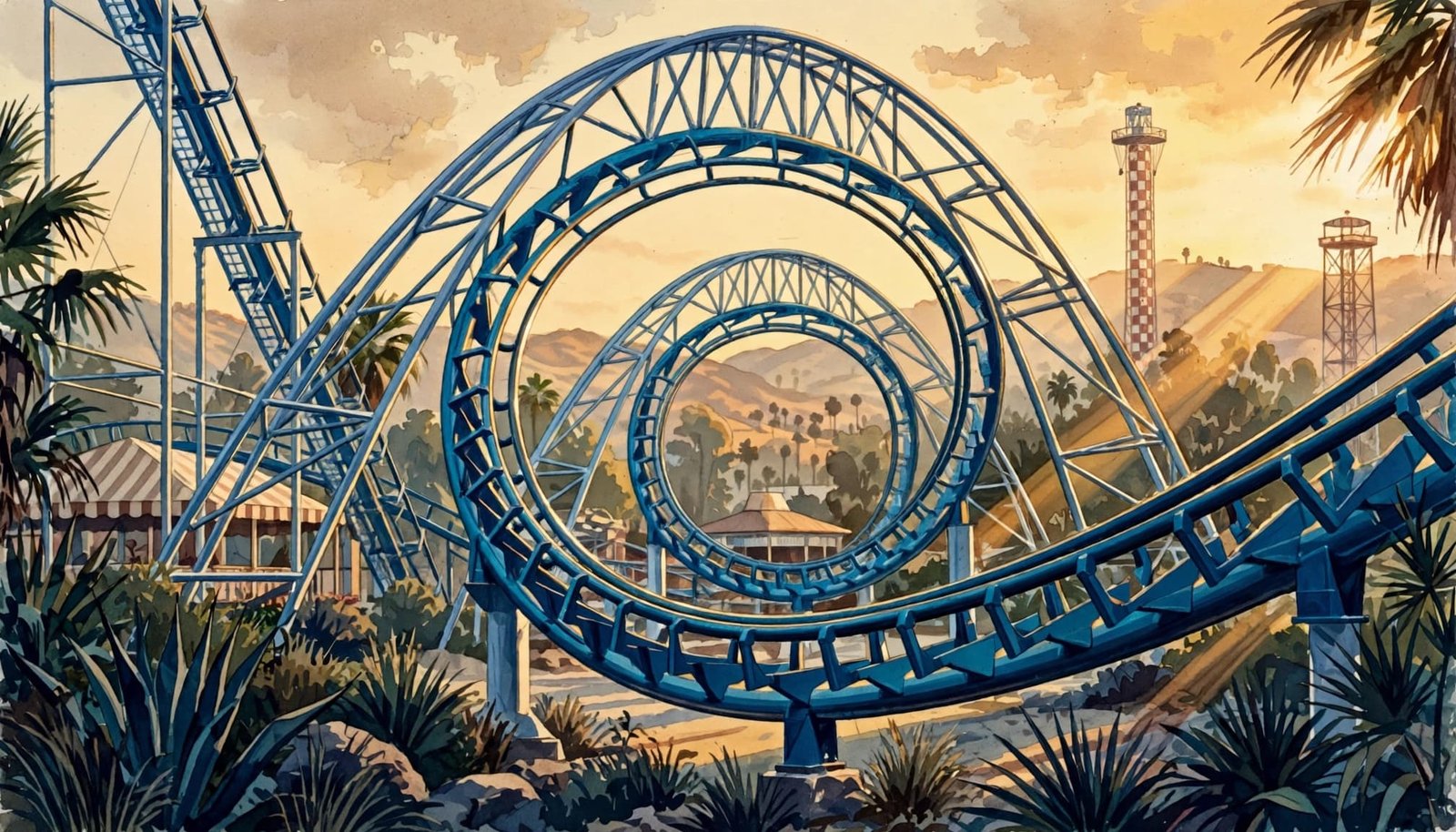
Conceptual coaster illustration, not a historical photograph of Knott’s Berry Farm.
The Knott’s family opened this steel roller coaster in 1975. Arrow Development engineer Ron Toomer designed the prototype, recognized as the first modern steel inverting roller coaster. Arrow Dynamics was Arrow Development’s successor, and similar layouts later appeared as replicas at other parks. The ride operated there from 1975 to 1989.
Riders climb a chain lift hill, make a 90-degree banked turn, and pass through two consecutive corkscrews. This inverting coaster reaches a top speed of 46 mph and can carry 600 riders per hour.
Silverwood in Idaho
Silverwood Theme Park in Athol, Idaho, acquired the original Corkscrew from Knott’s Berry Farm through a $250,000 sale. Silverwood opened the relocated ride in 1990.
The original installation, not one of the replicas, remains in Athol, Idaho. Its chain lift hill and 90-degree banked turn help identify the classic coaster. Aftershock is a separate Giant Inverted Boomerang coaster.

Conceptual illustration of a coaster in a wooded setting, not a photograph of Silverwood.
Ride Comfort Is Different for Every Child
For families traveling with autistic children, sensory preferences are individual. A child may enjoy spinning but feel uncomfortable with loud sounds. Another may enjoy a coaster’s movement but find an unexpected drop difficult.
Familiar characters don’t always mean a calm experience, either. At Disney World, Mickey & Minnie’s Runaway Railway includes unexpected vehicle movement, loud scenes, and strong visual effects.
Attraction downtime is a separate planning concern. Our guide to planning around Disney World ride interruptions covers that part of a park visit.
Our Family Travel Resources
Our ebook, Disney World with Autism: The Complete Family Guide, is available as a PDF on Etsy and on Amazon.
Our family travel shop includes strollers and cleaning supplies, including supplies for times when someone gets sick on vacation.
Frequently Asked Questions
Where is the original Corkscrew roller coaster?
The original Corkscrew is at Silverwood Theme Park in Athol, Idaho. Silverwood opened the relocated ride in 1990 after buying it from Knott’s Berry Farm.
When did Corkscrew operate at Knott’s Berry Farm?
Knott’s Berry Farm opened Corkscrew in 1975, and the ride operated there until 1989. Silverwood later acquired the original coaster.
What does the Corkscrew ride include?
Riders climb a chain lift hill, make a 90-degree banked turn, and pass through two consecutive corkscrews. The coaster reaches a top speed of 46 mph and can carry 600 riders per hour.
Will every child find Corkscrew comfortable?
No. Sensory preferences are individual, and a child may enjoy some movements but feel uncomfortable with loud sounds, unexpected drops, or strong visual effects.
Each Family Has Its Own Comfort Level
Theme park stories and individual ride comfort are different parts of a family’s interest in attractions.
Enjoying one type of movement doesn’t mean every effect will feel comfortable. Your child’s own preferences remain important, even when a ride features familiar themes or characters.
Leave a Reply