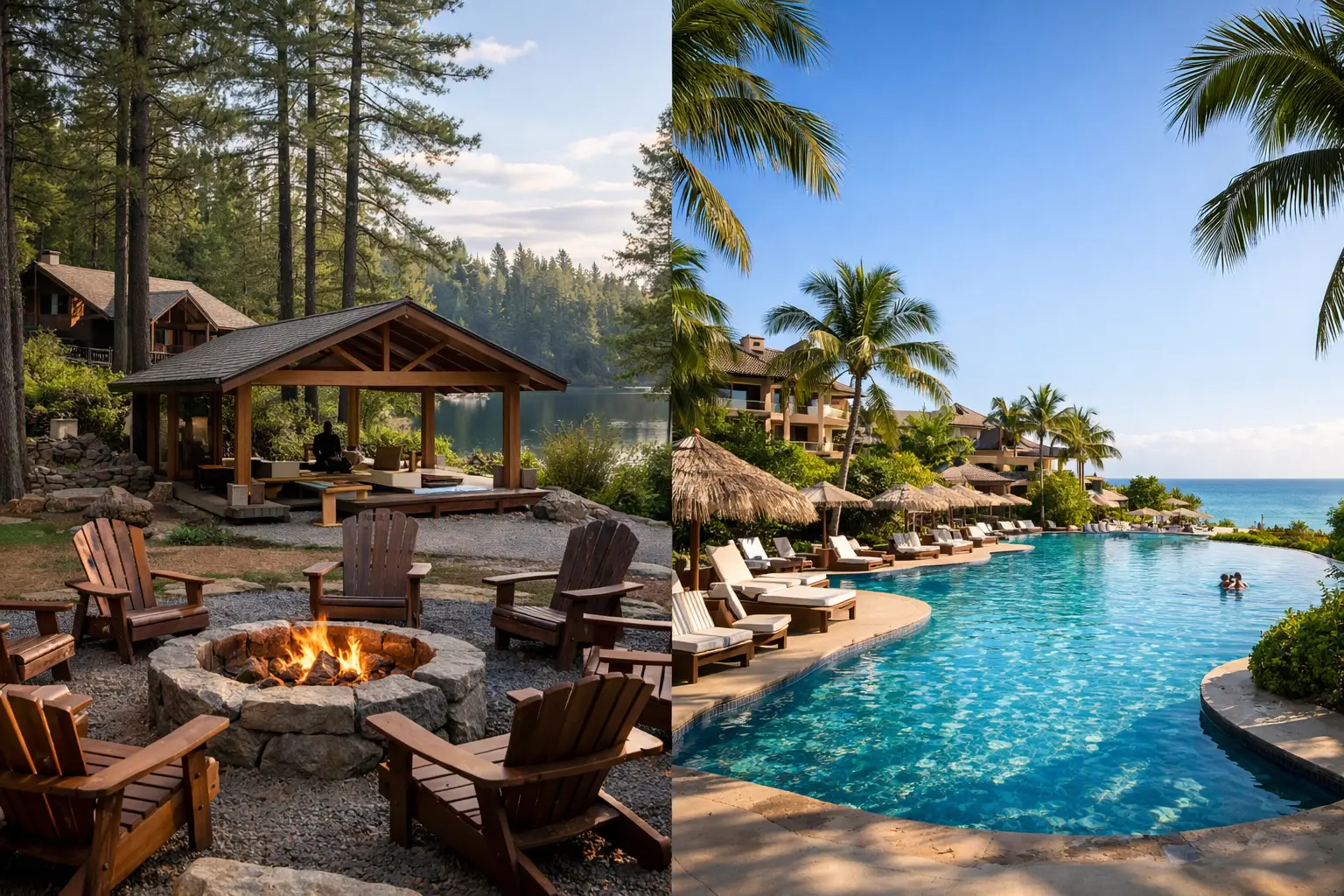
If you are planning a group trip, the retreat venue vs resort question usually shows up right after the budget talk. It sounds simple at first, but the choice shapes everything that follows – your schedule, guest experience, food plan, room setup, privacy level, and how much coordination lands on your plate.
For couples hosting a destination wedding weekend, companies organizing an off-site, schools moving a student group, or families gathering multiple generations in one place, this decision matters more than people expect. The right fit can make the trip feel smooth and purposeful. The wrong one can leave you paying resort prices for a program-heavy event or booking a beautiful venue that does not support your guests the way a resort would.
Retreat venue vs resort: the real difference
A retreat venue is built around gathering with intention. The property may include lodging, meeting space, dining areas, outdoor grounds, and shared activity spaces, but the main point is the event itself. These spaces are often chosen for workshops, team building, wellness retreats, wedding weekends, church groups, student travel, and private celebrations where the group wants a more controlled environment.
A resort is built around hospitality first. It usually offers a wider menu of amenities such as pools, restaurants, bars, spas, kids’ clubs, beach access, concierge support, and optional activities. Resorts are designed to serve individual travelers and groups at the same time, which can be a major advantage if your guests want flexibility and built-in entertainment.
Neither is automatically better. The smarter question is what kind of experience you are trying to create and how much structure your group actually needs.
When a retreat venue makes more sense
A retreat venue tends to work best when your itinerary is the main event. If your group has planned sessions, rehearsals, classes, strategy meetings, wellness programming, or private celebrations, a venue gives you more control over the flow of the trip.
That control matters. You may need everyone in the same room at the same time, private use of common spaces, quieter surroundings, or a setup that supports presentations and breakout groups. In those cases, a resort can feel distracting or too spread out. Guests wander off to the pool, dinner reservations overlap with your schedule, and private time becomes harder to protect.
Retreat venues can also be a better fit for groups that want a stronger sense of togetherness. Because everyone is often staying and gathering in one dedicated setting, the experience feels more connected. This is especially useful for corporate retreats with team goals, wellness groups that want a calm atmosphere, or destination wedding guests who are there to celebrate together rather than scatter across a larger property.
There is a trade-off, though. More privacy often means fewer on-site amenities and less hand-holding. Some retreat venues are highly serviced, but many expect more advance planning around meals, transportation, room assignments, AV needs, and activities. If you want a lot of customization, that can be a benefit. If you want everything packaged neatly on-site, it can create more work.
When a resort is the better call
A resort usually wins when guest comfort, convenience, and choice are top priorities. If your group includes different ages, travel styles, or activity levels, a resort gives people room to enjoy the trip in their own way.
This is why resorts are often the safer option for multi-generational family travel, incentive trips, and wedding groups with varied personalities. Some guests want spa time. Others want golf, beach time, kids’ activities, nightlife, or easy dining options. A resort covers a lot of ground without requiring the organizer to build every detail from scratch.
Resorts also reduce planning pressure in a big way. On-site dining, housekeeping, front desk support, maintenance teams, excursion desks, and transportation partnerships can simplify your workload. For busy planners, that support is not a small detail. It can be the difference between enjoying the trip and managing it the whole time.
The trade-off is that you may give up privacy and program control. Your event might be sharing space with other weddings, conferences, or vacationers. Meeting rooms may come with rental fees and timing limits. Noise levels can be higher. And if your group needs everyone moving together on a fixed schedule, a resort setting can make that harder.
Cost is not as straightforward as it looks
People often assume a retreat venue is cheaper because it sounds more basic, or that a resort is more expensive because it has more amenities. In real planning, it depends.
A retreat venue may have a lower room rate or site fee, but then you add catering, transportation, rentals, staffing, equipment, and activity coordination. Suddenly the budget grows in places that were not obvious at the start. On the other hand, a resort may look expensive upfront, but the rate can include meals, drinks, housekeeping, airport transfers, and entertainment that you would otherwise source separately.
This is where planners get tripped up. The smartest comparison is not nightly rate versus nightly rate. It is total trip cost versus total trip value. Ask what is included, what is required, what is optional, and what your group will actually use.
For example, an executive retreat with structured sessions may get better value from a private venue, even if coordination costs rise, because the environment supports the purpose of the trip. A family reunion may get better value from a resort because everyone can spread out, eat easily, and stay entertained without extra planning.
Think about your group before you think about the property
The retreat venue vs resort decision becomes easier when you stop shopping by photos and start planning around people.
If your guests need simplicity, broad amenities, and minimal decision fatigue, a resort usually performs well. If your group needs privacy, alignment, and dedicated gathering space, a retreat venue is often the stronger choice.
Ask yourself a few practical questions. Is your trip schedule-heavy or mostly free time? Do guests want a shared experience or individual options? Will children be traveling? Does your group need meeting space, quiet hours, or exclusive use? Are you prepared to coordinate extra vendors if the property does not provide everything on-site?
These questions matter because beautiful properties can still be poor fits. A beachfront resort may be perfect for a honeymoon extension after a wedding, but frustrating for a leadership retreat that needs focused attention. A private venue may be ideal for a strategy session, but less comfortable for a mixed-age family group that wants easy dining and built-in fun.
Logistics can make or break the choice
This is the part many travelers underestimate. A property can look perfect on paper and still create stress if the logistics are weak.
With retreat venues, pay close attention to transportation, accessibility, room variety, staffing levels, meal service timing, and technology support. If your venue is remote, that can be a plus for privacy but a challenge for airport transfers, medical needs, and off-site excursions. For school groups and corporate travel, structure and reliability matter just as much as the setting.
With resorts, look beyond the glossy amenity list. Ask how group bookings are handled, whether your rooms will be near each other, what private event spaces cost, and how easy it is to keep your group connected in a larger property. If your event includes private dinners, presentations, or coordinated activities, those details need attention early.
This is one reason travelers work with planning-first agencies like K&S The Travel Crusaders. The property decision is not just about where to stay. It affects contracts, guest movement, meal timing, event flow, and how much stress the organizer carries from start to finish.
So which one should you book?
Choose a retreat venue if your trip has a strong shared purpose and you want privacy, structure, and a more intentional atmosphere. Choose a resort if you want convenience, wider amenities, and a guest experience that feels easy from arrival to checkout.
If you are stuck between the two, that usually means your group needs a hybrid approach. Maybe you want the ease of a resort with dedicated private event space. Maybe you want a retreat venue for the core program and a nearby resort stay before or after. There is no rule saying you have to force one property type to do everything.
The best trips are not built around trends or pretty marketing shots. They are built around the real needs of the people showing up. When you choose the setting that supports those needs, planning gets easier, guests feel cared for, and the trip works the way it was supposed to. That is always the right place to start.