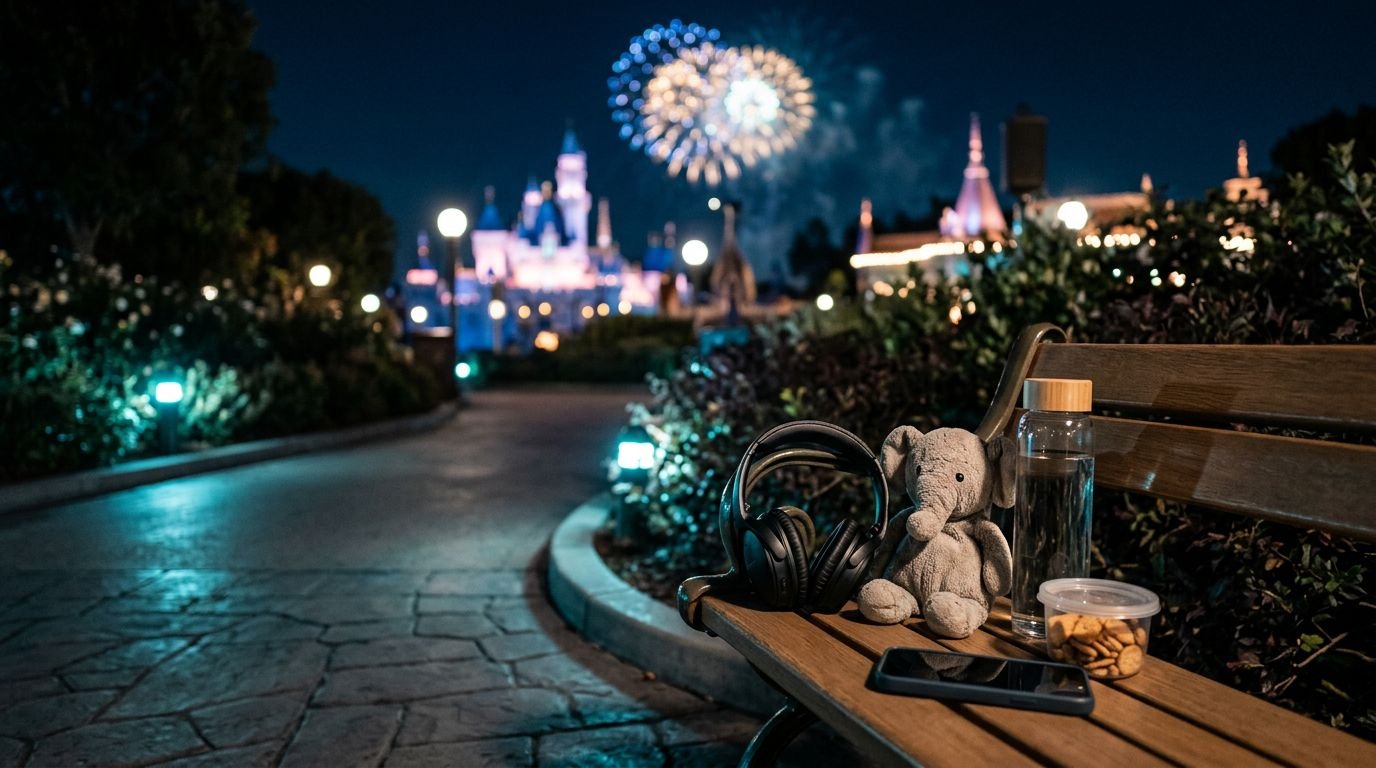
Fireworks can be the hardest part of an otherwise wonderful day spent experiencing the Disney magic. The music gets louder, the crowd gets tighter, and the sky suddenly flashes with sound that can feel impossible to predict.
For autistic kids and sensory-sensitive children, the goal is not to push through a show at all costs. The goal is a Disney evening that feels safe, supported, and manageable for your child.
A little planning before nighttime entertainment begins can protect the fun you already had that day.
Key Takeaways
- A fireworks display may include loud explosions, music, flashing lights, crowd movement, and long waits after dark.
- Decide early whether your family wants to watch, listen from farther away, or skip the show completely.
- Bring familiar sensory supports, including noise-canceling headphones, comfort items, water, snacks, and a charged phone.
- Pick an exit plan before the show begins so you are not making decisions during a stressful moment.
- Disney fireworks and autism planning should always follow your child’s needs, not another family’s vacation schedule, to ensure a truly sensory-friendly experience.
Why Disney Fireworks Can Feel So Overwhelming
A fireworks show is not only about the pyrotechnics. It is often a long build-up of intense stimulation. For children on the autism spectrum, the evening can be particularly challenging.
By evening, many children have already handled transportation, security, crowds, heat, rides, character interactions, unfamiliar food, and a full day of waiting. Their sensory bucket may already be full due to various sensory issues before the nighttime show even starts. The buildup toward sensory overload is often gradual, making it difficult to pinpoint exactly when a child might reach their limit.
Then the environment changes quickly. Pathways become crowded, and Cast Members may direct guests into specific areas. Music begins, lights dim, and the intense, loud noises of a show often comparable to an Independence Day celebration can come from overhead without much warning.
For some kids, the flashing lights are the biggest hurdle. For others, it is the low rumble that comes through the ground and into their chest. Some children are comfortable with the sound but struggle with sound sensitivity or light sensitivity when thousands of people start moving at once after the finale.
A child does not need to watch fireworks to have a successful Disney day.
Your child may love the parade but hate fireworks. They may enjoy fireworks one night and refuse them the next. Both responses are valid. Sensory needs can change based on sleep, heat, hunger, illness, and how demanding the day has been.
Don’t promise fireworks as the grand ending of the vacation before you know how your child feels that evening. Keep it flexible.
Decide Before the Evening Crowd Builds
The easiest time to make a fireworks decision is before the park gets busy for the night. Waiting until the music starts can leave your family rushed and stressed. Keep in mind that Disney park crowds are often much more intense than a standard local Independence Day celebration, so proactive planning is essential.
Talk about the plan earlier in the day using language your child understands. You might say, “Tonight there may be loud lights and booms in the sky. We can watch from a distance, listen with headphones, or go back to the hotel.”
Giving a child choices can help them feel more prepared. Keep the options simple. Too many choices can add pressure.
It also helps to decide what counts as success for your family. Maybe that means watching the first few minutes from a quiet area. Maybe it means seeing the lights from outside the main hub. Maybe it means leaving the park before the crowd gathers.
Consider these questions before you commit:
- Does your child usually tolerate loud sounds, especially when tired?
- Are they comfortable wearing headphones or ear defenders for long periods?
- Would they feel safer watching from a stroller, wheelchair, or familiar spot?
- Is your child more likely to struggle with noise, flashing lights, crowds, or all three?
- Can you quickly enact an escape plan if they need a break?
A park day does not need to end with fireworks to feel complete. An early swim, a favorite snack, a quiet ride back to the resort, or time in the room can be the better choice.
For more family-focused support, the Download our Disney World with Autism Guide (PDF) includes planning ideas for sensory needs, park routines, and Disney accessibility questions.
Build a Sensory Plan for the Fireworks
A good sensory plan is made of familiar items and clear steps. It should not depend on buying something in the park after your child is already overwhelmed.
Bring the tools your child already knows. A brand-new pair of noise-canceling headphones may feel uncomfortable or distracting, even if they are designed for noise reduction. Practice at home first with music, vacuum noise, or a short fireworks video at a low volume.
A small fireworks bag can include:
- Noise-canceling headphones or ear defenders your child has worn before
- Comfort items such as a fidget, small stuffed animal, or favorite hoodie
- Sunglasses or a hat if bright lights are difficult
- Familiar snacks and a refillable water bottle
- A portable charger for the My Disney Experience app and family communication
- Any medication your child may need, carried as directed by their care team
Noise-canceling headphones can soften the experience, but they do not make fireworks silent. Let your child test them before the show begins. If they dislike wearing them, do not turn the equipment into another battle.
Some children prefer to watch a show from a distance with their gear on. Others want to face away from the sky and listen to a familiar video or music through their own device. A comfort item can also give hands and attention somewhere else to go, helping to manage overwhelming sensory input.
Keep your phone charged. You may need it for park maps, mobile food orders, transportation information, return times, or messaging another adult in your group. A dead phone at the end of a long day can turn a hard moment harder.
If you are using Disney’s Disability Access Service, remember that DAS is designed around specific attraction queue needs. Because these services are tailored to different types of sensory processing needs, they do not function as a dedicated fireworks pass. Ask Guest Relations or a Guest Experience Team Cast Member about the current options if you need help with your evening plan.
Pick a Fireworks Viewing Spot With an Easy Exit
The center of the park is not always the right place for autistic kids during Disney fireworks. It can be exciting, but it can also be the loudest and most crowded location.
A better spot is often one that gives your family room to leave. Look for areas near a pathway, a quieter edge of a viewing zone, or a place where you can step away without moving through a wall of people.
At Magic Kingdom, Main Street, U.S.A. and the hub in front of Cinderella Castle can be packed well before the show. The view may be beautiful, but the intensity of the area often tests even the highest crowd tolerance. Some families prefer to watch from a distance, choosing a spot further back near an exit route or a different part of the park altogether.
At EPCOT, viewing locations can vary based on the current nighttime fireworks display and general crowd flow. World Showcase is large, but it can still be difficult to move once people line up around the lagoon. Find a place with a clear route toward the front of the park if a quick departure matters.
At Disneyland Park, the area around Sleeping Beauty Castle and Main Street can also become busy during the nighttime fireworks display. Families staying nearby may decide to leave before the show starts and watch or hear part of it from outside the main crowd, if that feels better for their needs.
The best viewing spot is not always the one with the clearest castle photo. It is the one where your child feels secure.
Before settling in, locate the nearest restroom, quiet indoor space, and exit path. Tell everyone in your group what happens if your child needs to leave. One adult can stay with siblings who want to watch while another takes the child to a calmer area.
Give Yourself Permission to Leave Early
Many families wait because they do not want to disappoint anyone. However, forcing a child to stay when they are struggling can turn a fun night into a sensory nightmare. Staying through distress rarely makes the next fireworks show easier for your family.
If your child starts covering their ears, pacing, crying, shutting down, trying to run, or becoming unusually quiet, respond early. Using these signs for meltdown prevention is much more effective than waiting for a full-blown crisis. You do not need to wait for a total meltdown to justify leaving.
Move away from the loudest area immediately. Offer water and a familiar snack. Use short, calm phrases like, “We are leaving now,” “You are safe,” or “We can go somewhere quieter.”
Avoid asking too many questions in the middle of sensory overload, as your child may not be able to explain what they need at that moment. Your primary focus should be moving to a lower-stimulation space to support their emotional regulation.
Leaving before the finale can be a smart choice even if your child seems fine. The final fireworks bursts are often exceptionally loud, and the crowd exits all at once when the music ends. A five-minute head start can make a major difference in reducing stress.
You can also skip fireworks on purpose and build a different nighttime routine. Ride a favorite lower-wait attraction during the show, have a quiet quick-service meal, return to the resort pool, or watch a familiar movie in your hotel room.
The Download our Disney World with Autism Guide can be helpful when you want a more complete plan for park days, breaks, meals, and sensory-friendly choices.
Practice Makes the Unknown Feel Smaller
A few small practice sessions can help fireworks feel less mysterious. Watch short clips at home to slowly build tolerance to the noise, starting with the sound at a very low level. Let your child control the volume or pause the video whenever they need to.
Create a personalized social story that walks your child through the steps of the evening, from arriving at the park to finding a spot for the show. Using visual aids like a simple schedule can also make the experience feel predictable. Include steps such as dinner, putting on headphones, choosing a fireworks viewing spot, planning an early exit, and returning to the hotel for bedtime. Photos of the park can be especially helpful for children who find comfort in knowing exactly what comes next.
Do not make practice feel like a test. The point is to identify which coping strategies work best for your family. Your child might decide that fireworks are simply not for them, and discovering that before you are standing in a crowded park is incredibly useful information.
Remember that plans can change after dinner, after a nap, or even after one loud attraction. Keep checking in with your child throughout the day without adding unnecessary pressure.
Frequently Asked Questions
Can Disney’s Disability Access Service (DAS) be used to secure a spot for fireworks?
No, DAS is specifically designed to assist with attraction queues and does not provide reserved seating or dedicated areas for nighttime spectaculars. It is best to plan your own viewing strategy by identifying quiet locations or areas with easy exits well before the show begins.
How can I tell if my child is reaching their limit before a meltdown occurs?
Watch for early warning signs such as covering their ears, becoming unusually quiet, pacing, or attempting to leave the area. Responding to these subtle cues by moving to a quieter space immediately is far more effective than waiting for a full-blown crisis.
Is it okay to leave the fireworks show early?
Absolutely, and leaving early is often a recommended strategy to avoid the intense noise of the finale and the stress of the mass exit. Prioritizing your child’s comfort over seeing the very end of the show helps keep the evening manageable and ensures your family finishes the night on a positive note.
What should I do if my child finds fireworks overwhelming despite our planning?
It is perfectly fine to skip the fireworks entirely if your child is struggling. You can create a calm alternative by riding a favorite low-wait attraction, enjoying a quiet snack, or heading back to the resort, as these choices can often lead to a much happier end to your park day.
A Disney Night That Fits Your Child
Disney fireworks can be magical for some autistic kids and completely overwhelming for others. There is no right reaction and no prize for staying until the final boom, especially if your family is reaching their limit for stress tolerance.
The strongest plan gives your family options, familiar sensory support, and permission to leave when it is time. A calm child matters more than a perfect fireworks view. By prioritizing comfort and flexibility, you can navigate the unique challenges of special needs travel while ensuring your vacation remains enjoyable.
A Disney vacation should make room for the moments your child enjoys, even when those moments happen far away from the castle. By knowing your limits and keeping the focus on your family’s needs, you can preserve the Disney magic for the entire duration of your trip.
Ready to Plan Your Calm Disney Vacation?
Let us handle the logistics so you can focus on the magic. Contact us today for expert special needs travel planning.