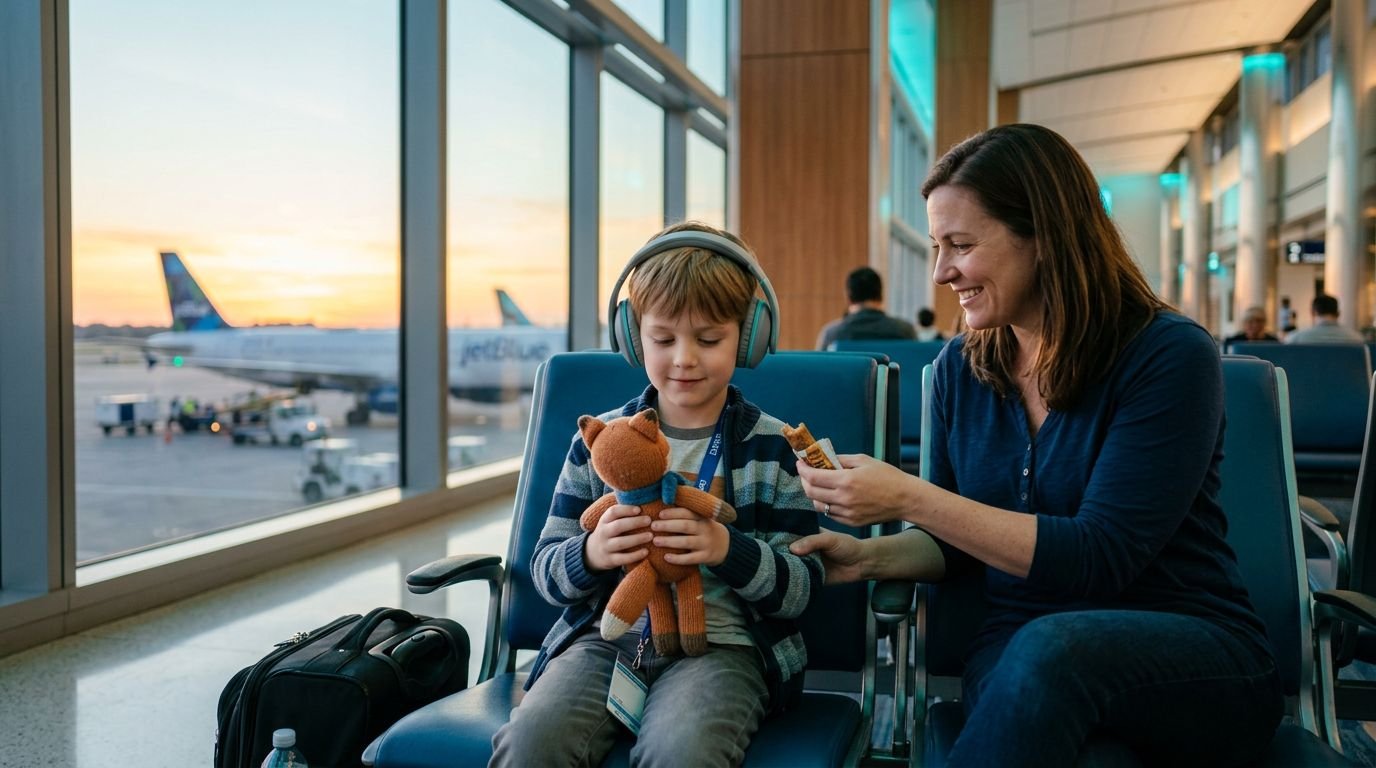
The airport can feel like the hardest part of an Orlando vacation, especially when air travel introduces bright lights, loud announcements, long lines, and sudden schedule changes that can add up fast.
When you are flying with autism, a little preparation can make the day feel more predictable for travelers with autism spectrum disorder. You do not need a perfect airport day. You need a plan that gives your traveler comfort, choices, and time to reset.
Key Takeaways
- Start talking about the airport and plane routine several days before your trip.
- Keep comfort items, medication, noise-canceling headphones, ear defenders, snacks, and chargers in your carry-on.
- Request help through TSA Cares if tsa security screening and disability assistance may be helpful.
- At Orlando International Airport, build in time for a sensory break before security.
- Keep your first Disney day flexible because these travel tips often lead to a better vacation.
Flying with autism starts before you leave home
A smooth travel day begins at home, not at the airport curb. Talk through the trip in simple steps that match the communication style of an autistic child or autistic adults. For many autistic travelers, knowing what happens next reduces the stress of the unknown.
Use photos, a short video, a social story, or a visual schedule on your phone. Keep it simple:
- Drive to the airport.
- Check bags or print boarding passes.
- Go through security.
- Wait at the gate.
- Board the plane.
- Fly to Orlando.
- Get bags and go to the hotel.
Review the plan more than once, but do not turn it into a big lesson. A quick conversation at breakfast or bedtime can work well. If your traveler has flown before, talk about what they liked and what felt hard last time.
It also helps to practice small parts of the trip to manage routine changes. You can do a practice run at home, or look into airport familiarisation programs like wings for autism if they are available near you. Wear headphones for a few minutes. Sit with the seatbelt buckled in a chair. Watch a plane take off on a tablet. Let your traveler choose a comfort item for their backpack.
Your carry-on should hold the things that cannot be replaced easily. Checked luggage can be delayed, and the plane cabin can feel cold or unfamiliar.
Pack a small bag with:
- Noise-canceling headphones or ear defenders your traveler has already used
- A favorite fidget, stuffed animal, hoodie, or soft blanket
- Familiar snacks and a refillable water bottle for after security
- Downloaded shows, music, games, and a charging cord
- Prescription medication and any care items you may need during the flight
- A portable charger, especially if your phone holds tickets and hotel details
Put devices, headphones, and charging cords in one pouch. Families often remember the tablet but forget the charger.
Try not to overpack the day with new items. A familiar snack and a well-loved show can be more helpful than a bag full of surprises.
Make airport security feel less uncertain
Airport security is often the least predictable part of flying with autism. The line may move slowly. A traveler may be asked to remove shoes, empty pockets, or step through a screening machine. There may be intense sensory stimulation from noise, close personal space, and little time to process directions during TSA security screening.
You can prepare your family without making security sound scary. Explain that Transportation Security Administration officers are there to keep travelers safe. Use plain language such as, “We will stand in line, put our bags in bins, walk through a scanner, and pick up our things.”
If your child needs extra support, learn about the TSA Cares program before your travel date. It offers disability assistance and special accommodations for travelers with medical conditions, developmental needs, and other challenges that may affect screening.
You can also submit a TSA Cares assistance request before your flight. Assistance is focused on the security checkpoint, so it is still important to allow plenty of time for check-in, walking through the terminal, and getting settled at the gate.
Tell the officer what may help. You can say your child is autistic, needs extra time, may have trouble with verbal directions, or is wearing a medical device. You do not have to share personal details beyond what helps the screening go more smoothly.
Ask one adult to focus on bags, shoes, IDs, and bins. Let the other adult stay close to the child whenever possible. If you are traveling alone, simplify what you bring through security. Fewer loose items means less pressure when the line is moving behind you.
Plan for Orlando International Airport
Orlando International Airport, also called MCO, can be busy at nearly any time of year. It is especially active during school breaks, holiday weeks, and major Disney vacation seasons, which is common for busy air travel hubs. Give yourself extra time, but do not arrive so early that waiting becomes its own challenge.
Look at your airline’s terminal information before leaving your hotel or rental car. Have boarding passes downloaded, but keep a screenshot too. Airport Wi-Fi and apps do not always cooperate when you need them most.
MCO has a helpful option for families who need a reset before security. Annie’s Space Sensory Room is in Terminal A on Level 3, near the food court. It is a pre-security space designed for travelers with sensory sensitivities and their families.
The room’s location matters. Once you go through security, you cannot return there without going back through the checkpoint. If your family is already feeling overloaded, plan a few minutes in the room before joining the security line. Check current hours and access details before your flight, since airport services can change.
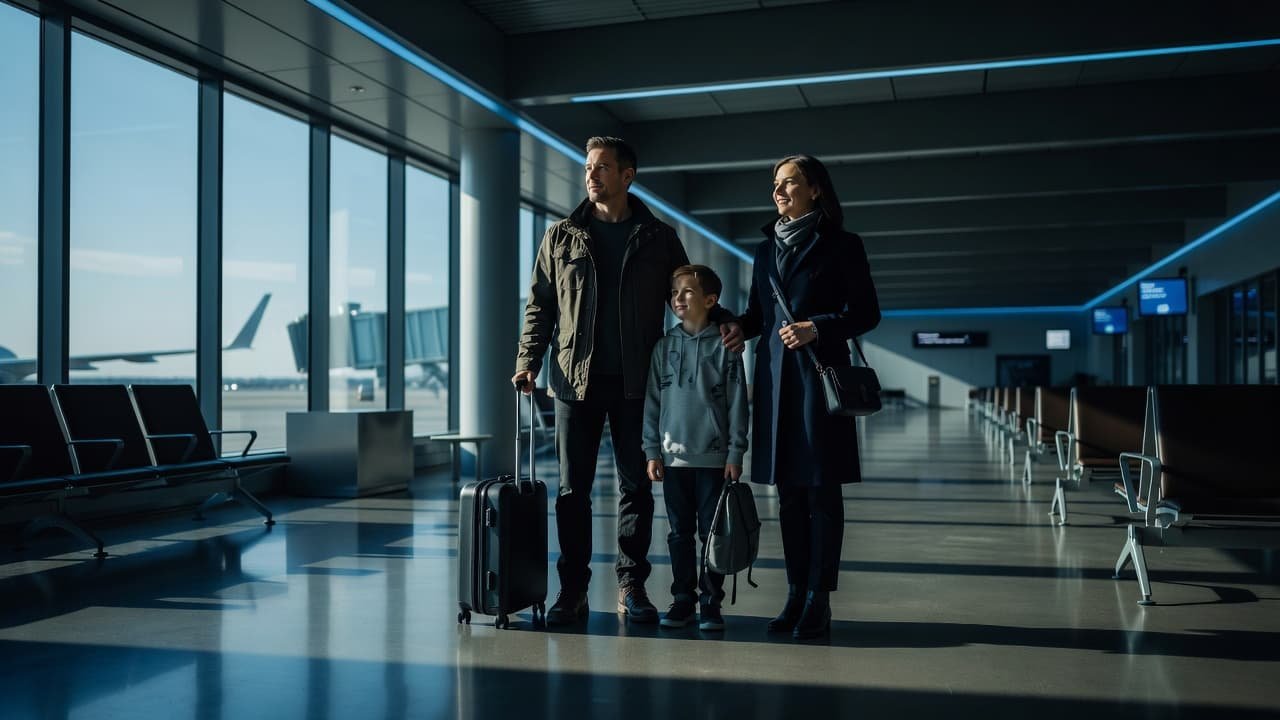
MCO also offers Hidden Disabilities Sunflower Lanyards at airport information booths. The lanyard can let trained airport staff know that a traveler may need extra patience or support. It does not skip lines or replace a TSA screening process, but it can make communication easier.
After security, find your gate first. Then look for the nearest restroom, water station, and quieter seating area. Airports are full of last-minute changes, so having a home base near the gate gives everyone a place to return to.
Boarding and settling in on the plane
The gate area can become louder when boarding begins. Families gather near the line, overhead announcements become more frequent, and people may stand close together. Ask the gate agent about pre-boarding or family boarding if that would help your traveler. Boarding policies vary by airline and flight.
Some autistic travelers feel better boarding early. They have time to find their seat, put away a bag, and adjust before the cabin gets busy. Others do better waiting until the main boarding rush has passed. Choose the approach that fits your child, not the one that sounds best on paper.
A window seat can give some travelers a clear personal boundary and a view outside. An aisle seat may work better if your child needs to stand, stretch, or use the restroom without climbing over another person. Think about your child’s needs before selecting seats.
Once seated, keep the first few minutes low pressure. Offer headphones, a familiar video, music, or a snack. Point out the seatbelt, air vent, and call button. Explain that the plane may make loud sounds before moving and may feel bumpy at times.
You can use short, honest phrases:
- “The engines will get louder before we take off.”
- “Your ears may feel funny. We can chew gum or have a drink.”
- “The seatbelt sign means we stay in our seats for a little while.”
- “If you need a break, you can tell me or show me.”
Do not promise there will be no flight delays, no turbulence, or no crying babies. Plan for the possibility instead. Download extra entertainment. Bring more snacks than you think you will need. Keep one comfort item easy to reach, not buried under the seat.
If a traveler becomes upset or experiences a meltdown, focus on safety and comfort. Lower the stimulation where you can. Use headphones, a quiet voice, familiar music, or a simple reminder of what happens next. Flight attendants handle many family situations and can often offer practical help.
Keep the first Orlando day light
Landing in Orlando is only one part of the transition. You may still need to collect checked bags, pick up a rental car, wait for a ride-share, or travel to your Disney Resort hotel. Using practical travel tips for managing the airport-to-hotel trip can make this transition feel much smoother after a busy flight.
Plan a simple arrival day when possible. A hotel pool, familiar food, early bedtime, or a short walk may be a better choice than racing to a theme park. A vacation does not lose value because you protect your family’s energy.
For Walt Disney World planning support after you arrive, the Disney World With Autism Guide PDF includes family-focused ideas for DAS, sensory needs, and flexible park days. You can also find the Amazon edition of the Disney World autism guide.
A portable charger belongs in your park bag too. Your phone may hold park maps, mobile food orders, transportation details, dining plans, and communication with your group. A charged phone gives you more options when plans need to change.
Frequently Asked Questions
How can I prepare an autistic traveler for the airport before the trip?
Start talking about the trip several days in advance using simple steps, photos, or a visual schedule. You can also practice parts of the journey at home, such as wearing headphones or buckling a seatbelt in a chair.
Can I request special accommodations through TSA for security screening?
Yes, you can learn about and request disability assistance through the TSA Cares program before your flight. This helps make the security screening process more manageable and predictable for your family.
What is Annie’s Space Sensory Room at MCO?
Annie’s Space Sensory Room is a pre-security space located in Terminal A on Level 3 near the food court at Orlando International Airport. It offers a helpful environment for travelers with sensory sensitivities to take a reset before going through the security checkpoint.
Should I board the plane early or wait until the rush passes?
This depends on your traveler’s preferences; some children feel more comfortable boarding early to settle in before the cabin gets busy, while others do better waiting until the main boarding rush has finished.
A calmer flight creates a better start
Flying with autism does not require a strict schedule or a packed bag of special equipment. It calls for clear expectations, familiar supports, and room to slow down when needed. This approach is especially helpful for children and adults with autism spectrum disorder who benefit from predictability and patience during travel.
The goal is not to push through every airport moment. Comfort and flexibility matter more than staying on a perfect timetable. When your family arrives in Orlando feeling supported, the vacation can begin on a much better note.
Leave a Reply