When you travel with autism, flying can be the hardest part of an Orlando vacation, especially when your child thrives on routine and familiar spaces. A busy terminal, security line, gate change, or delayed flight can add up fast.
A thoughtful Orlando airport autism plan gives your family more control before the day begins. You can’t control every airport announcement or weather delay, but you can build in comfort, choices, and extra time for neurodiverse travelers.
Key Takeaways
- Prepare your child for the airport in small, clear steps before travel day.
- Keep sensory tools, medication, snacks, and charging supplies in your carry-on.
- Use MCO accessibility services, including Annie’s Space sensory room in Terminal A.
- Tell TSA and airline staff what support would help your child before stress builds.
- Plan a quiet reset after landing before jumping into Disney parks or other Orlando activities.
Orlando Airport Autism Planning Starts at Home
A good Orlando airport autism plan starts before you zip the suitcase. Show your child photos of the airport, watch a short airport walkthrough, or make a simple visual schedule on your phone.
Keep the schedule short. It may look like this:
- Ride to the airport.
- Check bags.
- Go through security.
- Wait at the gate.
- Get on the plane.
- Fly to Orlando.
- Get bags and go to the hotel.
You don’t need to explain every possible change. Too much information can feel like another big task. Focus on the parts your child needs to know, then remind them that an adult will handle the rest.
Choose travel times that fit your family’s normal rhythm when possible. An early flight may mean a quieter airport, but it can also mean a rushed morning and missed sleep. A later flight may allow for a calmer start, but airports often get busier as the day goes on. The best choice is the one your child can handle.
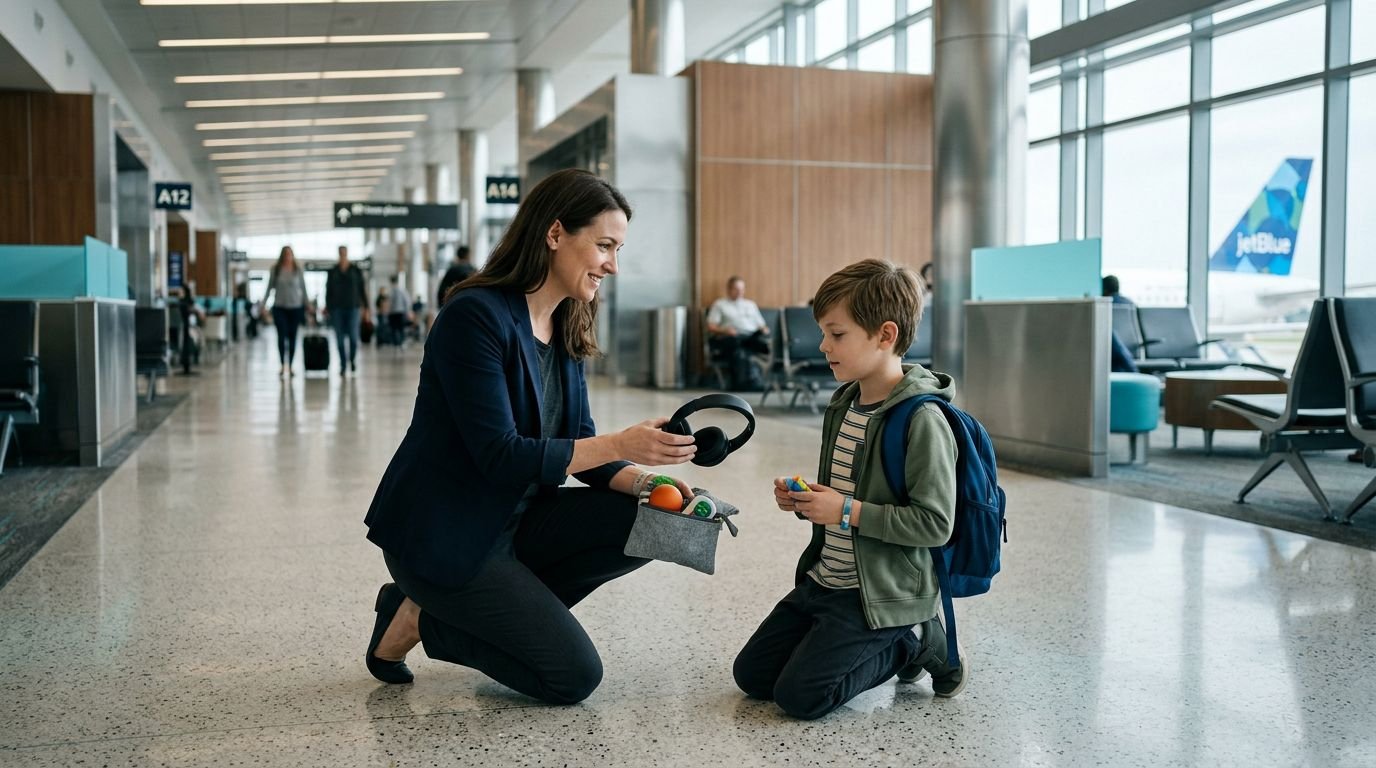
Pack one carry-on bag that is easy to reach. Include familiar snacks, a refillable water bottle, noise-reducing headphones, sunglasses, comfort items to help with sensory sensitivities, wipes, a change of clothes, and any medications your child may need. A tablet with downloaded shows or games can also help during a long wait.
Keep medication in its original container and bring more than you expect to need. Delays happen. Lost luggage happens. Having important items with you takes pressure off everyone.
Your carry-on is not only a bag. It is your family’s comfort kit when the day stops going as planned.
If your child needs a favorite stuffed animal, blanket, fidget, or chewy necklace, bring it. Vacation is not the time to test whether they can go without it.
Plan Your Arrival at Orlando International Airport
Orlando International Airport, also called MCO, is large, busy, and full of families heading to the parks. It can feel exciting, but that excitement can quickly become overwhelming when crowds, rolling bags, announcements, and bright lights pile up.
Check your airline’s terminal information before leaving your hotel or rental car area. MCO has Terminal A, Terminal B, and Terminal C, and knowing where you are headed prevents one more surprise at the curb. If you are driving, look into accessible parking options ahead of time to make the transition smoother.
Give your family more time than you think you will need. Extra time gives your child a chance to sit, eat a snack, use the restroom, or take a break before security. It is far easier to wait at the gate than to rush through a crowded terminal.
Managed with traveler support in mind by the Greater Orlando Aviation Authority, the MCO airport features helpful options for families dealing with sensory overload. Annie’s Space Sensory Room is in Terminal A on Level 3, located in a pre-security area near the food court. It is free to use and is open daily from 7:00 a.m. to 9:00 p.m.
This sensory room gives travelers with autism, ADHD, anxiety, and other sensory needs a quieter place to regroup. It can be a good stop before security if your child is already feeling unsettled.
MCO also participates in the Hidden Disabilities Sunflower Program. Wearing a sunflower lanyard can let airport staff know that a traveler with hidden disabilities may need extra patience or support. It does not provide a fast pass through security, but it can make communication easier.
Make Airport Security More Predictable
Security is often the part families worry about most. There are lines, instructions, bins, noises, and unfamiliar expectations. Your child may need more time to process what is happening, and that is okay.
TSA Cares offers support for travelers with disabilities, medical conditions, and other needs during screening. Before your trip, review TSA Cares guidance for travelers on the autism spectrum so you know what to expect and what support may be available. You can also request additional support services like wheelchair assistance if your child gets tired easily or struggles with long walks through the terminal.
When you reach security, speak up early. Let the TSA officer know your child has autism and may need instructions given slowly, extra personal space, or a parent nearby. You do not need to share private details. A simple sentence is enough.
You might say, “My child has autism and may need a little extra time during screening.”
Talk through the process before you enter the line. Let your child know that shoes, jackets, bags, and electronics may need to go into bins. If headphones or a comfort item need to be screened, tell them that they will get it back.
Some children do better when one adult handles the bags while the other stays focused on the child. If you are traveling with another caregiver, decide on those roles before reaching the checkpoint. It keeps the moment calmer and avoids both adults trying to solve the same problem.
Bring snacks that are familiar and easy to manage. A hungry child in a long security line is not a small issue. It can turn a manageable wait into a hard moment quickly.
Your Orlando airport autism plan should leave room for a reset after security. Find the gate first. Then look for a quieter seating area away from the boarding line, television screens, or loud restaurants.
Build a Calm Gate and Boarding Routine
The gate area can be louder than security. Boarding announcements repeat. People stand up early. Families gather around the line long before their group is called.
Your child does not need to sit in the middle of all that activity. Orlando International Airport and many local businesses have earned designations as a Certified Autism Center to better serve families, but the immediate gate area still presents sensory challenges.
Find a seat with a view of the gate but enough distance from the crowd. Use headphones, a downloaded movie, a familiar game, or a quiet snack. If your child needs movement, take a short walk together and return when boarding gets closer.
Check the airline app and the gate display for changes. Flights to and from Orlando can shift gates or boarding times, especially during busy travel periods. Keep your portable charger in an outside pocket. Your phone may hold boarding passes, hotel details, transportation information, and messages between family members.
Ask the gate agent about preboarding if your child needs extra time to get settled. Airlines have different procedures, but it never hurts to ask. Preboarding can help some families avoid the crowded rush down the jet bridge.
For other children, getting on the plane early means sitting longer in a tight space. If waiting at the gate works better, board later. There is no one right answer.
Bring gum, chewy snacks, or a drink for takeoff and landing if ear pressure is difficult. Explain turbulence in simple language before the flight. You might say, “The plane may bump sometimes, but the pilots know what to do.”
Avoid promising that the flight will be perfect. Instead, remind your child that you have their favorite items, you will stay together, and the plane ride has an end point.
Landing in Orlando Without Rushing to the Parks
Arrival can bring a second wave of sensory overload. Your child may be tired, hungry, excited, and ready to be done with travel. Build that reality into the first day.
After landing, tell your child what happens next. At MCO, many travelers use the airport train system to reach baggage claim or ground transportation. Before you head out to find ground transportation, you can use a companion care restroom to take a quiet break and reset. A simple reminder helps: “We get off the plane, ride the train, get our bags, then go to the hotel.”
If you are renting a car, using a ride-share, or meeting a shuttle, keep the details easy to access. Screenshot confirmation numbers and pickup instructions before the flight. Airport Wi-Fi can be slow when everyone lands at once.
Try not to schedule a packed park day after a flight, even if your tickets are active. A pool break, familiar meal, grocery stop, or quiet evening at the resort may be the better choice. A slower first night is not wasted vacation time. It gives your child a chance to settle into the new room, sounds, and routine.
For Disney planning support beyond the airport, the Disney World With Autism Guide PDF on Etsy shares family-focused ideas for sensory needs, Disability Access Service planning, and calmer park days. You can also find the Disney autism travel guide on Amazon.
A portable charger should stay in your park bag after the airport. Disney days often rely on your phone for maps, mobile food orders, dining plans, attraction return times, and family communication.
Let the Plan Bend When Your Child Needs a Break
A family airport plan should guide you, not trap you. A delay may happen. Your child may refuse the snack you packed. The airport sensory room may be out of the way for your terminal. You may need to change course.
That does not mean the trip is falling apart.
Keep your expectations realistic. Pick a few priorities for travel day, such as arriving safely, staying fed, getting to the hotel, and helping your child feel supported. Everything else can wait.
Your child does not need to love flying for the trip to be successful. They need adults who notice when the day is getting too big and are willing to slow it down.
Frequently Asked Questions
Where is the sensory room located at Orlando International Airport (MCO)?
Annie’s Space Sensory Room is located in Terminal A on Level 3, near the food court in a pre-security area. It is completely free to use and provides a quieter space for travelers with autism or sensory needs to regroup.
Can I request special assistance at security for a child with autism?
Yes, you can use TSA Cares support for travelers with disabilities and medical conditions during screening. Simply speak to a TSA officer early and let them know your child has autism so they can provide appropriate accommodations and extra patience.
Should I preboard the plane when traveling with an autistic child?
It depends on what works best for your child’s routine. Preboarding allows extra time to settle without a crowded jet bridge, while waiting until later avoids sitting too long in a tight space before takeoff.
A Calmer Start to Your Orlando Vacation
The best Orlando airport autism plan is built around your child, not an ideal airport day. Familiar items, clear steps, extra time, and a quiet place to reset can make a real difference.
You are allowed to take breaks. You are allowed to ask for help. You are allowed to skip something that is not working.
A calmer airport day gives your family a better start, and that leaves more room for the Orlando memories you came to make.