
A Disney vacation can be wonderful, but it can also ask a lot from an autistic child, teen, or adult, as well as other neurodivergent guests. Crowds, noise, heat, waiting, travel days, and sudden plan changes can quickly lead to sensory overload.
When parents compare Disneyland vs Disney World autism needs, the best choice usually comes down to pace. Disneyland is compact and easier to do in a shorter visit. Disney World has more variety, more resort options, and more room for rest days, but it also requires more walking and transportation.
The goal is not to see every attraction. The goal is a Disney trip where your family feels comfortable, supported, and able to enjoy the moments that matter.
Key Takeaways
- Disneyland Resort is often easier for a shorter, lower-transportation Disney trip.
- Walt Disney World gives families more parks, resorts, and rest-day options, but it takes more energy.
- Disability Access Services and the DAS pass may help some autistic guests who cannot wait in a standard queue for long periods.
- A quiet hotel room, familiar snacks, mobile ordering, and a flexible plan can matter more than a packed itinerary.
- The right Disney destination is the one that fits your child’s energy, sensory needs, travel tolerance, and your family’s budget.
Disneyland vs Disney World Autism: Start With Your Family’s Pace
Disneyland Resort is in Anaheim, California. It has two parks, Disneyland Park and Disney California Adventure, plus Downtown Disney. Everything sits close together. You can walk between the parks, many nearby hotels, security, and dining.
That compact layout is a major reason Disneyland works well for many autism families navigating park crowds and seeking reliable theme park accessibility. If your child gets overwhelmed, leaving the park for a hotel break may be realistic. You are not waiting for a bus, monorail, Skyliner, or long ride back to your room.
Walt Disney World in Florida is much bigger. It has four theme parks: Magic Kingdom, EPCOT, Hollywood Studios, and Animal Kingdom. There are also water parks, Disney Springs, golf, resorts, and many transportation options.
More options can be great. They also bring more decisions, more movement, and more transitions. A child who loves Disney characters, rides, pools, and familiar routines may enjoy a longer Disney World stay. A child who becomes tired after a big day may do better with Disneyland’s smaller footprint.
Here is a simple side-by-side look at the biggest differences.
| Planning Factor | Disneyland Resort | Walt Disney World Resort |
|---|---|---|
| Number of theme parks | 2 | 4 |
| Park layout | Compact and walkable | Large property with more transit |
| Good trip length | 2 to 4 park days | 4 to 7 nights for a calmer pace |
| Best break option | Midday hotel break | Resort day or longer afternoon break |
| Transportation needs | Often minimal | Buses, boats, monorails, Skyliner, or rideshare |
| Sensory advantage | Fewer transitions | More space and more resort choices |
Neither option is automatically better. The Disneyland vs Disney World autism decision should begin with a simple question: How much activity can your child enjoy before the day becomes too much?
If the answer is “one full park day, then a quiet reset,” Disneyland may feel easier. If the answer is “a slower vacation with rest days between parks,” Disney World may give you more breathing room.
Disneyland Makes Shorter Disney Trips Feel More Manageable
A Disneyland Resort trip can feel less intimidating because the physical space is smaller. You can enter Disneyland Park in the morning, return to a nearby hotel after lunch, and come back later if your child is ready. You don’t have to commit to a full day inside the park.
That flexibility matters. Sometimes a child wakes up ready for rides but reaches their limit after a loud parade, long ride wait times, or a crowded restroom. When that happens, you can easily step away to nearby quiet areas to decompress. A good plan leaves room to change course without turning the whole day into a problem.
Disneyland Park has classic attractions, character experiences, and familiar areas like Fantasyland, Tomorrowland, and Adventureland. Disney California Adventure has Cars Land, Pixar Pier, Avengers Campus, and a different style of entertainment, all of which fit well into a sensory friendly itinerary. You can choose one park per day or use a Park Hopper ticket if switching parks fits your family’s energy.
Don’t buy Park Hopper tickets only because they sound like the “full” Disney experience. For some families, one park per day is easier. It means fewer security lines, fewer decisions, and less pressure to keep moving.
A nearby off-site hotel can be a good choice in Anaheim. Before booking, look at the real walking route. A hotel that looks close on a map may require busy street crossings or a longer walk than expected.
Disney’s Grand Californian Hotel & Spa has a private entrance into Disney California Adventure. Disneyland Hotel and Pixar Place Hotel also keep you close to the parks. These options can cost more, but the time and energy saved may be worth it for some families.
At Disneyland, a hotel break can be part of the park day, not a sign that the day went wrong.
For a first Disney visit, two or three park days may be plenty. Give your family time to travel, settle into the hotel, enjoy a pool break, and leave before everyone is exhausted.
Disney World Offers More Space, But More Transitions
Walt Disney World is often the better fit for families who want a longer vacation and don’t want to repeat the same park experience every day. When evaluating Disney World accessibility across multiple properties, each park has its own mood, attractions, food, and sensory challenges.
Magic Kingdom is often the first choice for younger children and classic Disney fans. It also gets busy quickly, especially around Fantasyland, Main Street, and parade times. Keep your plans close together. If you have a return time in Fantasyland, enjoy nearby rides, get a snack, or find a place to sit. Don’t rush across the park for a second timed plan.
EPCOT is beautiful, but it is much larger than it appears on a map. Frozen Ever After, Remy’s Ratatouille Adventure, and Soarin’ Around the World are not close together. Add time for walking, bathroom breaks, snacks, and quiet moments.
Hollywood Studios can be loud and high-energy. Toy Story Land and Star Wars: Galaxy’s Edge can be exciting, but they may be a lot for a child who is sensitive to sound, crowds, or visual effects. Walt Disney Presents is often a calmer indoor place to sit, cool down, and reset.
Animal Kingdom has lush paths and animal experiences, but heat and long walking distances can still be hard. Plan for shade, water, and a slow afternoon, especially when navigating Animal Kingdom during peak hours and managing the Florida heat.

Photo by Abhishek Navlakha
Disney World transportation can be part of the fun, but it can also be the hardest part of the day. A bus line, a busy monorail platform, or a Skyliner transfer can feel like one more demand after a crowded park.
A paid ride may be worth it when your child is overwhelmed, your family has an early dining reservation, or you need a quieter trip back to the resort. Minnie Van service, booked through the Lyft app, may also be useful for families who want Disney-operated transportation and car seats.
At Disney World, a full non-park day is not wasted money. After two or three park days, pool time, laundry, Disney Springs, sleep, and familiar meals can help everyone enjoy the rest of the vacation.
Understanding DAS for Autistic Disney Guests
Disability Access Services is not a general way to skip every line. It is intended for some guests with developmental disabilities, including autism, who cannot wait in a conventional queue for an extended time.
Disney reviews each guest’s needs individually. Approval is not guaranteed, and families should not assume an autism diagnosis alone qualifies someone for a DAS pass. Be ready to explain the challenges your child or adult family member has while waiting in a standard attraction line.
Disney’s current Disability Access Service information for Walt Disney World explains the program and its eligibility focus. Policies and procedures can change, so always review the current details before your trip.
At Walt Disney World, DAS registration is handled through a video chat interview before arrival. The guest who may use the DAS pass needs to be present during this virtual interview. At Disneyland Resort, families may use advance video chat or visit the accessibility services location outside the parks.
Once your DAS is active, you can request an attraction return time in the My Disney Experience app at Disney World or the Disneyland app in California. Your family waits somewhere else instead of staying in the standby line. You generally hold one return time at a time. After you use it, you can request another.
The registered guest must be present and ride with the group. DAS parties are generally limited to the registered guest plus up to three other people, although Disney may review immediate-family situations differently.
A planDisney explanation of DAS return times can also help families understand the basic process before they arrive.
Keep your phone charged all day. It may hold your tickets, DAS return times, mobile food orders, maps, dining plans, and messages between family members. A portable charger belongs in every Disney park bag.
Lightning Lane is separate from DAS and costs extra. You do not need to purchase it every day. It can help if your family has a few must-do rides and can manage timed return windows. If scheduled times add stress, a slower day with DAS, breaks, and realistic expectations may be the better choice.
Build a Sensory-Aware Disney Day
The strongest Disneyland vs Disney World autism plan is not a list of every attraction. It is a plan that can bend when your child needs something different.
Start with one or two priorities for the morning. Maybe your child loves Peter Pan’s Flight, meeting Mickey, Toy Story Mania!, or Kilimanjaro Safaris at Animal Kingdom. Do those early, then decide what comes next based on energy and mood.
Avoid promising that every favorite ride will happen. Weather, ride closures, long lines, hunger, and sensory overload can change the day quickly, especially when dealing with heavy park crowds. Instead, use simple language, such as telling your child you will ride two things, have a snack, and then see how their body feels.
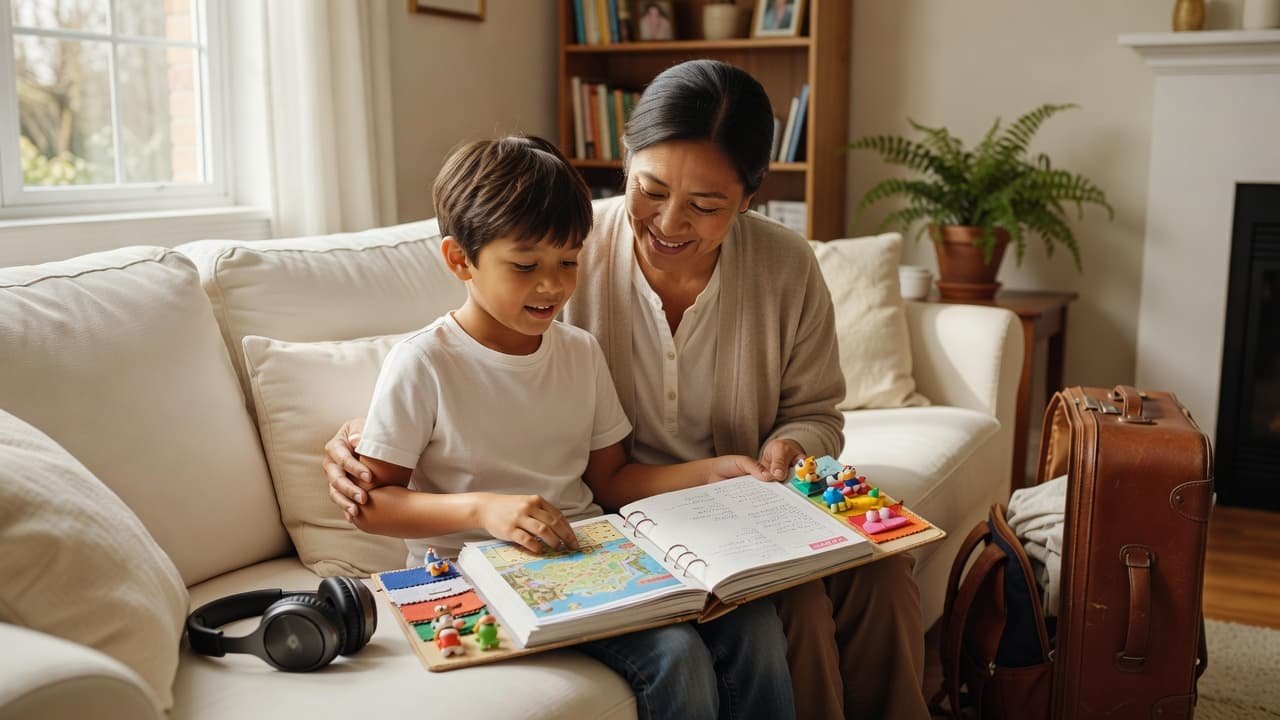
Bring familiar comfort items. New Disney toys are fun, but they do not replace a well-loved hoodie, favorite fidget, soft blanket, stuffed animal, or trusted headphones.
A practical park bag may include:
- Noise-canceling headphones or ear defenders your child already uses
- Familiar snacks and a refillable water bottle
- A favorite fidget or comfort item
- Ponchos, dry socks, and a spare shirt for rain or water rides
- Prescription medication and basic care items
- A portable charger, charging cord, and a small tech pouch
- Downloaded music, shows, or games for waiting and travel time
Do not overpack. A bag that is too heavy can become another source of stress. Keep the items that cannot be replaced easily close to you.
Quiet time does not have to mean leaving the park. Indoor shows, slower attractions, shaded seating, baby care centers, hotel lobbies, and designated quiet areas away from the main thoroughfares can all work. Let your child tell you what helps. Some children need silence. Others need movement, a familiar video, or a short walk away from the crowd.
Hotels, Food, and Familiar Routines Matter
Your hotel is more than a place to sleep. It is where naps happen, wet clothes pile up, medication is stored, and everyone decompresses after a long day.
At Disneyland, off-site hotels can offer value and a short walk. At Disney World, your resort choice affects almost everything. A large value resort may be budget-friendly, but it can mean more walking to buses, food courts, and pools. A resort on the monorail, Skyliner, or within walking distance of a park may reduce transportation stress for families utilizing mobility devices or strollers as wheelchairs.
Ask yourself what your family needs at the end of a difficult day. Is it a quiet room? A suite with more space? A kitchenette? Easy access to familiar food? A pool? A short trip back from the park? The lowest room rate is not always the best fit. You can also contact hotel accessibility services in advance to request specific room locations that minimize walking.
Food is another place where flexibility helps. Mobile ordering can be easier than standing in a loud quick-service line. You can look at menus while your child sits somewhere calmer, place the order when they are ready, and choose a pickup time.
Quick-service meals often work well because they are faster and less formal. If a seating area is loud, take food outdoors or back to the hotel when possible. Pack familiar snacks, especially if your child has limited safe foods or gets hungry at specific times.
A Disney dining plan can be convenient for some families, but it does not fit every trip. It works best when you know you will use the credits. If your family prefers small meals, snacks, or spontaneous choices, paying out of pocket may be less stressful, especially when balancing disability accommodations and unexpected schedule changes.
Budget for a Flexible Trip, Not a Perfect Schedule
Disney trips can add up quickly. Start with the major costs: hotel, tickets, airfare or gas, transportation, and food. Then add parking, baggage fees, airport transfers, tips, souvenirs, rain gear, and any paid services you may want.
Leave a small backup amount for the things that make a hard moment easier, including budget room for unexpected disability accommodations. That might be a rideshare back to the resort, a quiet meal outside the park, replacement headphones, a forgotten medication item, or a last-minute change in plans.
Disneyland can cost less because a shorter trip is realistic. You may need fewer hotel nights, fewer ticket days, and less transportation. Disney World can cost more because it often works best as a longer vacation, but it may give your family more time to rest between parks.
A lower-cost trip that leaves everyone overwhelmed is not a bargain. A slightly longer stay with a resort day may give your family a better experience and help protect the money you spent on tickets.
For parents who want more step-by-step support, the Disney World With Autism Guide PDF serves as an accessibility planning guide that includes practical help with DAS, sensory-aware planning, park days, and flexible routines. You can also find the Disney travel guide for autism families on Amazon.
Frequently Asked Questions
Which destination is better for a first-time Disney trip with an autistic child?
Disneyland is often recommended for a first visit because its compact layout allows for shorter trips and easier hotel breaks. However, if your family prefers a slower pace with built-in rest days, Disney World can work wonderfully with proper planning.
How do I apply for Disability Access Service (DAS) for my child?
At Disney World, DAS registration is completed through an advance video chat interview before your arrival, where the guest requiring the service must be present. Disneyland allows families to use either advance video chat or visit an accessibility services location outside the park gates.
What are the best ways to manage sensory overload during a park day?
Bringing familiar comfort items, noise-canceling headphones, and a portable charger can make a major difference. You can also utilize indoor shows, baby care centers, or quiet hotel breaks to help your child decompress when crowds and noise become too intense.
Choose the Disney Vacation That Feels Comfortable
Making the right Disneyland vs Disney World autism choice is ultimately about respecting your family’s real needs. Disneyland is often easier for a short, compact trip with fewer transportation demands, while Disney World offers more variety for neurodivergent guests who thrive on longer vacations with dedicated rest days and resort time.
Your child does not need to love every ride, stay until fireworks, or follow a perfect schedule for the vacation to be successful. A midday break, a familiar snack, a quiet hotel room, and one joyful attraction can be enough when you factor in your daily energy and Disney World accessibility options.
A calmer family is always more important than a fuller itinerary.