A Disney water park day can be a wonderful break from busy theme parks and traditional itineraries. It can also bring loud music, slippery walkways, crowded wave pools, heat, wet clothing, and a lot of unexpected transitions.
For families navigating autism travel, a successful day at the water parks requires a thoughtful approach. The best plan is not the fullest plan, but rather the one that gives autistic children comfort, choices, familiar routines, and a clear way to leave when they have had enough.
A little preparation can make Typhoon Lagoon or Blizzard Beach feel less overwhelming and much more enjoyable.
Key Takeaways
- Whether you choose disney typhoon lagoon or disney blizzard beach, water parks present unique sensory challenges for children with autism spectrum disorder, especially regarding heat, water noise, crowds, wet clothing, and water park safety.
- Check current operating hours, attraction availability, weather, and height requirements before your visit.
- Bring familiar comfort items, dry clothes, safe snacks, a portable charger in a waterproof pouch, life jackets if needed, and general water safety supplies.
- Plan a shaded rest spot early, then build the day around breaks instead of a long ride list.
- Disability Access Service may be part of your wider Disney plan, but families should confirm current water park procedures directly with Disney before arrival.
Disney Water Parks Autism Planning Starts With the Right Expectations
Disney’s two Orlando water parks have different themes, but both can feel busy and unpredictable. Disney Typhoon Lagoon has tropical scenery, a large wave pool, family raft rides, and water play areas. Disney Blizzard Beach has a snow-melt theme, body slides, tube slides, and family attractions.
The good news is that water parks can feel less structured than a theme park. You are not moving from one ride reservation to another all day. Your family can spend an hour in one area, take a snack break, relax in the shade, and choose the next step when everyone is ready.
That flexibility is especially helpful for autistic children and adults.
Still, flexibility can turn into uncertainty if no one knows what to expect. Show your child photos or videos of the park before the trip, or use social stories to walk through the basics. Talk through the environment: security, changing clothes, walking on hot pavement, wearing a life jacket if needed, and taking breaks.
If your child is sensitive to surprises, make a simple visual plan. It can be as basic as:
- Arrive and find our chairs.
- Change into swimsuits.
- Try one calm attraction.
- Eat a snack.
- Decide what comes next.
Keep the plan short. A long water park schedule can feel like a test instead of a vacation.
A water park exit is not a failed day. Leaving while your child is still regulated can protect the rest of the trip.
Disney may adjust operating calendars, hours, attraction availability, and weather procedures. Check the My Disney Experience app and Disney’s official calendar shortly before your visit. A water park is never the right place to rely on an old itinerary.
When planning your day, remember that water safety requires extra vigilance in crowded aquatic environments. Because open pools and rushing slides can increase drowning risk, establish clear supervision rules early. To help prevent wandering in busy areas, consider using safety tattoos or a waterproof ID bracelet for your child.
Sensory Needs at Disney Water Parks
Water parks have sensory triggers that do not always show up in a standard Disney park day. The sound of rushing water can be constant. Wave pools create sudden noise and motion. Whistles, announcements, music, and excited crowds may all overlap. When children struggle with sensory processing, these combined elements can become overwhelming very quickly.
Then there is the physical side of the day. Sunscreen feels different on the skin. Bathing suits can be uncomfortable. Wet hair, wet shoes, and sand-like pool surfaces may become a problem long before your child is tired of the attractions.
Start with a slower first hour. Walk the park, find family restrooms, locate First Aid, and choose your family’s meeting point. Before you go, check the official sensory guide for the park to spot areas with high stimulation. Let your child see the wave pool or large slides before asking them to try anything.
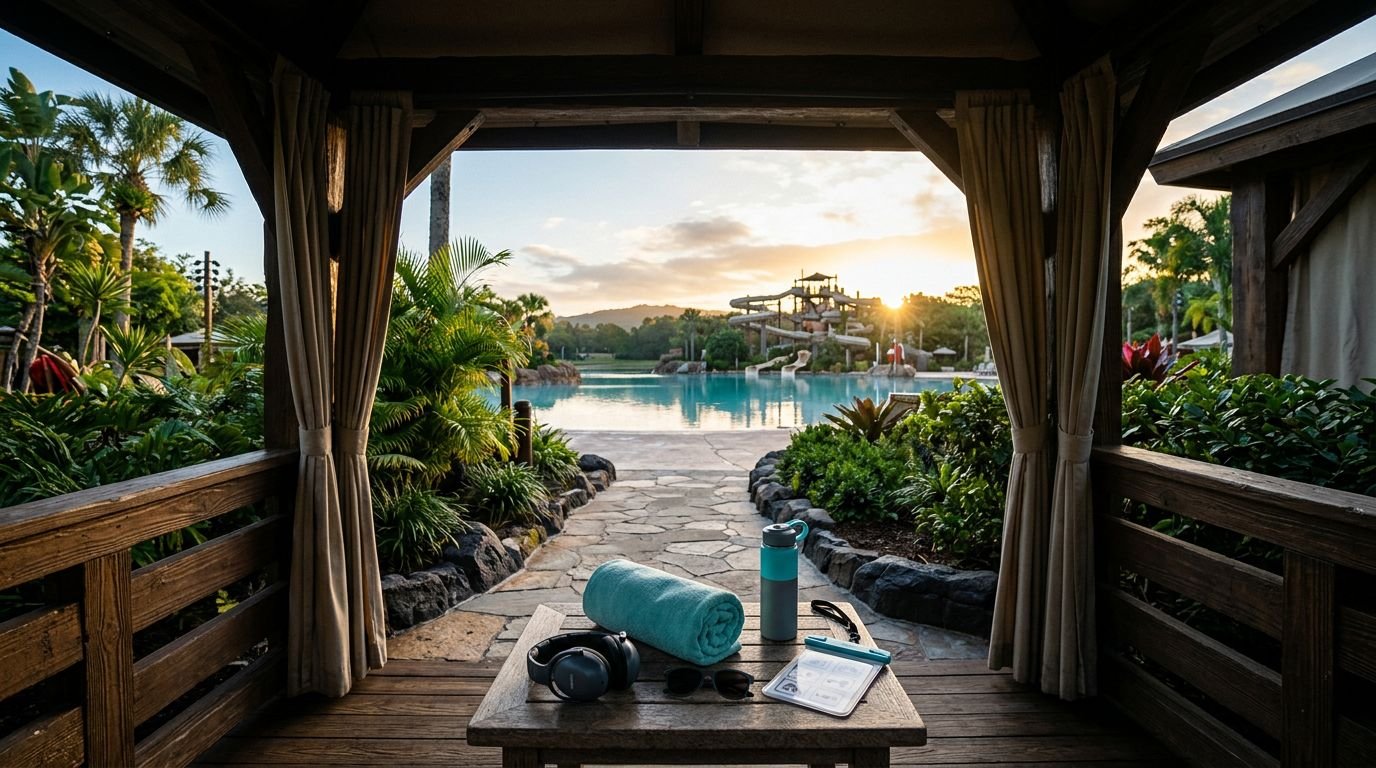
Many families find that a shaded chair area, cabana, or quiet room becomes their home base. You do not need to rent a cabana for a good day, but a reserved shaded space may be worth considering if your family needs a dependable retreat.
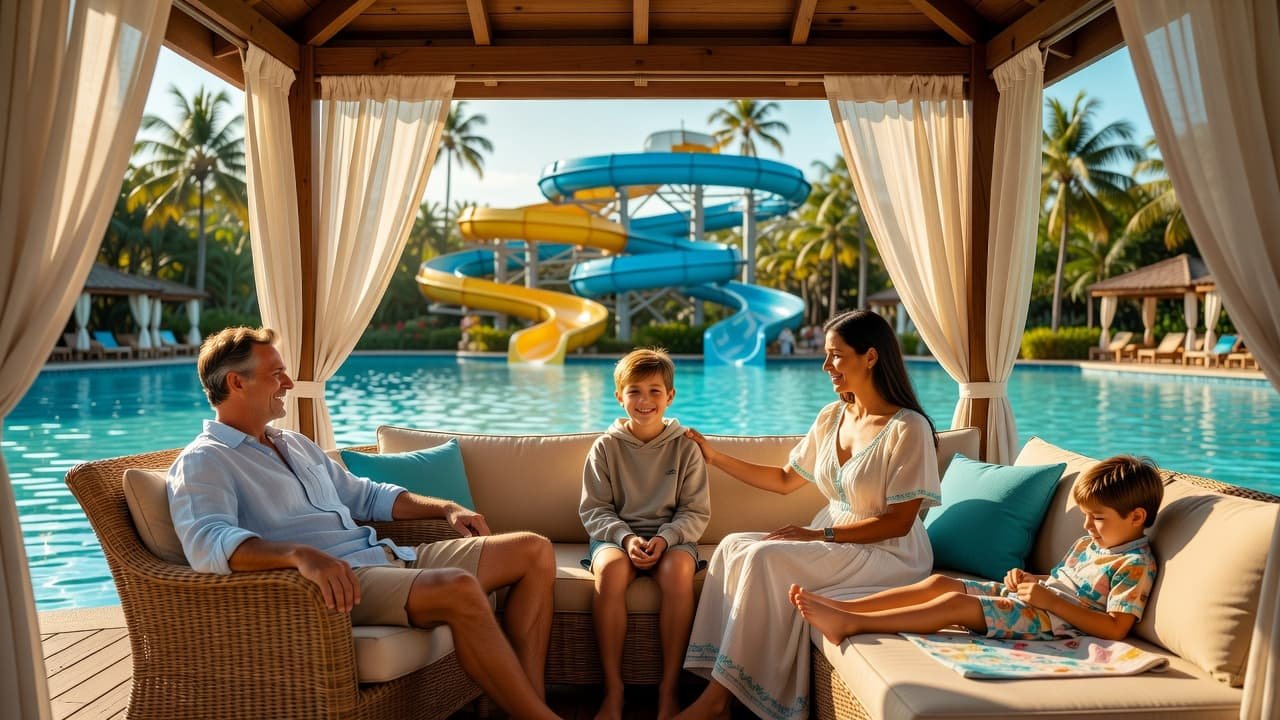
Bring items your child already knows and uses at home or during travel. New sensory tools may sound helpful, but a favorite hoodie or familiar fidget often works better.
Pack a small water park bag with:
- A change of dry clothes, underwear, and socks
- A lightweight towel or soft cover-up for sensitive skin
- Familiar snacks, if they fit your family’s food needs
- Waterproof sandals with secure straps
- Complimentary life jackets to support water park safety and ease anxiety
- Sunglasses, a hat, and sunscreen your child has used before
- Extra gear tailored to special needs for a smoother visit
- A waterproof phone pouch and portable charger
- A comfort item that can stay dry in a sealed bag
Dry clothes can make a bigger difference than families expect. If your child dislikes the feeling of damp fabric, plan a change before lunch or before leaving the park.
Choosing Attractions Without Pressure
You do not need to do every slide. In fact, trying to do everything can make Disney water parks autism planning much harder than it needs to be.
Look at attraction descriptions, height rules, and ride warnings in advance. Talk openly about what may feel intense. A fast enclosed slide, a big drop, rough water, or a crowded pool may be fun for one family member and too much for another.
Start with one lower-pressure activity. A lazy river, shallow play area, or a calm pool can help your child get comfortable with the temperature, noise, and movement. If that goes well, you can build from there. When evaluating options, remember that while other Orlando destinations like Aquatica Orlando and Universal Volcano Bay function as certified autism centers, Disney approaches sensory planning with its own unique layout.
Here is a simple way to think about the day:
| If your child needs… | Try this approach |
|---|---|
| More predictability | Choose one area and stay there longer |
| Less noise | Take breaks before the crowd builds |
| Control over water exposure | Start with a splash area or gentle pool |
| A clear ending | Set a “one more thing” plan before leaving |
| Familiar food | Bring approved snacks and review dining choices early |
A child does not have to ride every major water slide to have a successful park day. Watching a sibling ride, floating in a gentle lazy river, or sitting in the shade with a snack still counts as vacation time for autistic children enjoying various water activities.
Parents also need permission to change plans. If the wave pool is too loud, move on. If the line feels too close or too hot, take a break. If your child wants to repeat the same gentle attraction, that is okay.
What to Know About DAS and Water Park Lines
Many parents ask about Disability Access Service when planning for disney water parks autism needs. DAS is designed for guests with neurodivergent disabilities, including those on the autism spectrum disorder, who cannot tolerate waiting in a conventional queue for an extended period.
Disney’s current Disability Access Service information explains eligibility, the registration process, and how the service works at Walt Disney World. Autism is not automatic approval. The discussion focuses on how waiting in a regular line affects the guest.
DAS registration procedures can change, so review Disney’s current rules before your trip. Your My Disney Experience account, valid tickets, and a charged phone all matter when you are using Disney’s digital planning tools.
Water park procedures can differ from theme park attraction queues. While navigating a ride accessibility program here is unique, families who have visited other regional theme parks or places like universal volcano bay will find that Disney handles things with its own specific procedures. Disney has answered a guest question about using DAS at water parks, but details may change. Confirm your options with Disney before arrival and speak with a Cast Member at the park if you need help that day.
Do not build the entire day around DAS. Water parks often have shorter waits than the most popular theme park rides, but heat and close quarters can make even a short line difficult. Your best tool may be good timing. Arrive early, take a midday break, and return only if your family still has energy.
Remember that DAS does not replace safety rules, entry screening, height requirements, or water attraction restrictions. The registered guest must follow the current Disney policies and ride with the group when using the service.
Food, Hydration, and the Midday Reset
Heat can change a child’s mood quickly. Hunger and thirst can do the same. Water parks make it easy to miss those signals because everyone is focused on swimming.
Plan a food break before anyone reaches the point of frustration. Quick-service meals can be easier than a fixed table-service reservation because you can eat when your child is ready. Review menus earlier in the day, then use mobile ordering if it helps your family avoid standing in another line at popular theme parks.
Ask about allergy-friendly options if your child has food allergies or a restricted diet. You can also keep familiar snacks available for moments when a new meal is not going to work.
A midday reset is often the difference between a good afternoon and a difficult one during autism travel. That might mean sitting in the shade, returning to your Disney resort, changing into dry clothes, or taking a quiet ride back to your room.
You paid for the vacation, but that does not mean every minute must be spent in the water parks. A calmer schedule is often the better value for families navigating special needs.
For more family-focused help with Disney routines, sensory needs, and DAS planning, the Disney World With Autism Guide PDF on Etsy offers practical planning ideas. The guide is also available through Amazon.
Make Room for Your Child’s Version of Fun
Disney water parks autism planning works best when your child has a voice in the day. Let autistic children choose between two reasonable options during water activities, such as deciding whether to float in the lazy river or have a snack. You might also ask if they would rather try one slide or sit in the shade for ten minutes.
Small choices give children control without putting the whole day on their shoulders.
Family balance strategies are just as important here as they are when comparing regional alternatives like aquatica orlando or universal volcano bay, since different properties offer unique environments. Talk with siblings before the trip, too, because one child may want every slide while another needs a quiet space. Adults can take turns so no one feels rushed or left out, and maintaining water park safety becomes easier when schedules are flexible. Disney vacations do not need to look the same for every person in the family.
Keep your phone charged, but do not let the app run the day. Use it for park maps, weather alerts, food ordering, and attraction details. Then look up, notice how your child is doing, and adjust.
Frequently Asked Questions
Do Disney water parks accept Disability Access Service (DAS)?
Disney provides specific guidelines for managing accessibility needs at Typhoon Lagoon and Blizzard Beach. Families should review current water park procedures and confirm options directly with Disney before arrival to ensure a smooth experience.
What are the best ways to manage sensory overload at Typhoon Lagoon and Blizzard Beach?
Water parks feature unique triggers like loud water noises, sudden crowds, and wet clothing. Creating a quiet home base in the shaded seating areas and packing familiar comfort items or dry clothes can help children stay regulated.
Do I need to buy a cabana rental for an autistic child?
While cabana rentals can provide a dependable, quiet retreat for your family, they are entirely optional. Many visitors successfully manage their day by finding a regular shaded spot or utilizing nearby rest areas.
A Water Park Day That Feels Good for Everyone
The best Disney water park day is not measured by the number of slides your family completes. It is measured by how supported everyone feels while they are there, especially when managing autism spectrum disorder and navigating water park safety.
Plan for shade, dry clothes, familiar food, breaks, and an early exit if needed. Prioritizing water safety through complimentary life jackets helps autistic children feel secure, while understanding sensory processing needs prevents burnout. Knowing that both locations function as certified autism centers provides extra peace of mind for water park safety. Those details give your family more freedom to enjoy the moments that matter.
With a flexible plan and realistic expectations, disney water parks autism travel can feel less stressful, more comfortable, and full of memories your family will want to keep.