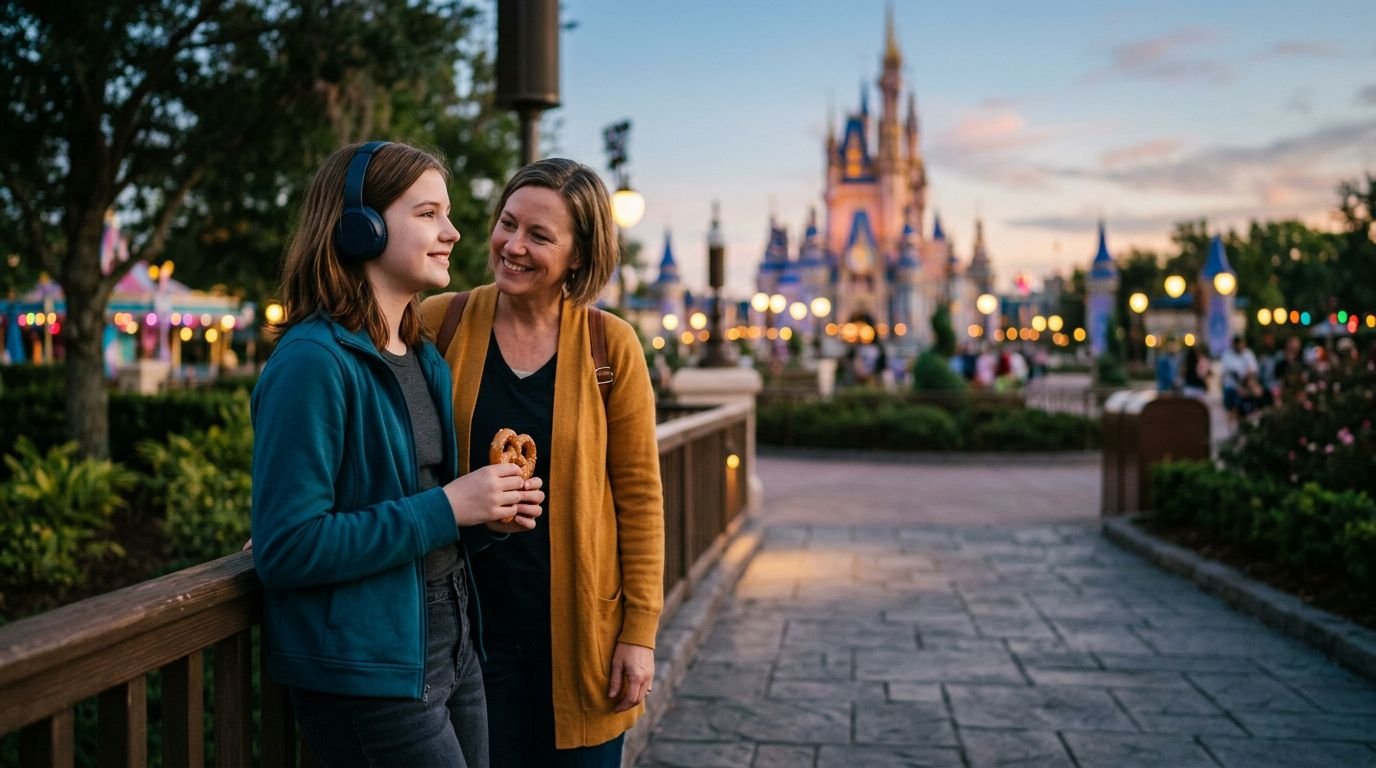
A Disney trip can be exciting, but it can also feel loud, crowded, hot, and full of unexpected changes. Theme park vacations present unique sensory environments for neurodivergent individuals, making the best Disney World autism tips essential for a smooth visit.
Your autistic child does not need to love every ride, stay until fireworks, or follow a packed schedule for the vacation to be a success. When navigating life with autism spectrum disorder, a calmer plan often creates better memories for the whole family.
Key Takeaways
- Build each park day around one or two priorities, not every attraction, to keep vacation planning manageable.
- Talk with your tween or teen about sensory needs before the trip, including rides, food, crowds, and transportation.
- Review Disability Access Service and how the DAS pass works before you travel, but remember that autism is not automatic approval.
- Use hotel breaks, familiar snacks, headphones, and a charged phone to reduce stress and prevent sensory overload.
- Give older kids age-appropriate choices so they feel included, making your autism friendly itinerary feel like a shared adventure.
Start Planning Before You Arrive
A good Disney day starts before you leave home. Effective vacation planning is a cornerstone of successful autism parenting, especially when teens and tweens understand more than younger children but still struggle when plans change without warning.
Show your child the basics of the trip in advance. Look at photos or videos of your resort hotel accommodations, Disney transportation, security screening, and the parks you plan to visit. Talk through what the first day may look like, including waking up, traveling to the park, going through security, and waiting to enter.
Keep it simple. A long minute-by-minute itinerary can feel overwhelming. A short visual plan on a phone works well:
- Breakfast at the resort
- Bus, monorail, boat, or Skyliner to the park
- Two favorite attractions
- Lunch and a quiet break
- A few more choices after the break
- Return to the resort when energy runs low
Let your teen help make the plan during your vacation planning sessions. They may want to choose a favorite ride, a restaurant, a souvenir budget, or a quiet activity for their hotel accommodations. Small choices can give them a sense of control when the environment feels busy.

Packing familiar comfort items also matters to help manage sensory issues. Bring headphones or ear defenders your child already uses, a favorite hoodie, fidgets, downloaded music, and snacks they know they will eat. If your older child uses a special needs stroller or a stroller as a wheelchair that requires a wheelchair tag, make sure to prep that equipment too. Put devices, headphones, and charging cords in one pouch. Families often remember the tablet but forget the charger.
A portable charger belongs in every Disney park bag. Your phone may hold park tickets, maps, mobile food orders, transportation details, Lightning Lane plans, and communication between family members. Keeping your park tickets handy ensures smoother entry every morning. If you need a special needs stroller for fatigue, you can also note its storage benefits for all these daily essentials.
Disney World Autism Tips for DAS and Long Queues
Long lines can be one of the hardest parts of a theme park day. The noise, close spaces, heat, and lack of movement can build quickly. Disney’s Disability Access Service, often called the DAS pass, may help guests who cannot tolerate traditional line waiting because of a developmental disability or other cognitive disabilities such as autism.
Review Disney’s current Disability Access Service information before your trip. Policies can change, so it is best to use Disney’s official page instead of relying on an older social media post. You can also reach out to guest services if you have specific questions about accommodations.
DAS registration for Walt Disney World is handled through a live video chat, usually up to 60 days before your first park day. The guest requesting the DAS pass must be present for the conversation. For a minor, that means your child needs to be visible during the call.
The conversation is about how waiting in a regular line affects your child. You do not need to share every diagnosis detail. Be honest and clear about the functional challenges your teen or tween experiences, such as panic, elopement risk, sensory overload, difficulty with close crowds, or trouble understanding an uncertain wait. If you also use a wheelchair tag or a special needs stroller as a medical accommodation, you can mention how those tools work alongside your plan for an autistic child.
The DAS pass is not a front-of-the-line pass. When approved, it gives you a return time that is similar to the current standby wait. Your family waits somewhere more comfortable, then returns through the designated entrance when the time is ready.
Current DAS registration is generally for the registered guest and up to three additional people, for a party of four total. If your travel party is larger, talk through the plan before you go. Older siblings or relatives may need to use standby, Lightning Lane, Rider Switch, or separate return plans.
A return time is only helpful if your family uses the waiting period well. Pick a nearby snack spot, shaded bench, quiet indoor attraction, or restroom break instead of rushing across the park.
These Disney World autism tips are not about doing more. They are about helping your child use their energy on the experiences that matter most.
Build a Park Day With Real Breaks
Disney World is large. Magic Kingdom, EPCOT, Hollywood Studios, and Animal Kingdom each have different sounds, crowds, walking distances, and ride styles. Even a teen who handles a busy school day may find a day in the theme parks tiring.
Avoid planning every park from opening until closing. Choose one or two must-do attractions for the morning. Add nearby rides, a meal, or a show if everyone is doing well. Then reassess.
A hotel break is not wasted ticket money. It may be the reason your family enjoys the rest of the trip. A swim, shower, quiet room, familiar show, or nap can reset the whole day. Families enjoying Disney resort stays may find midday breaks easier because transportation back to the resort is built into the vacation.
EPCOT can be especially tiring because attractions are spread out. Magic Kingdom can feel crowded around parades and fireworks, especially when crowd levels peak. Hollywood Studios has popular rides that may bring longer waits. Animal Kingdom has heat, walking, and outdoor areas that can feel intense by midday.
Use indoor attractions as natural pauses. Shows, dark rides, museums, and quick-service restaurants with air conditioning can give everyone a break without feeling like they are missing the fun. You can also look for designated quiet areas across all these theme parks to help prevent sensory overload.
When crowd levels rise at Magic Kingdom, EPCOT, Hollywood Studios, or Animal Kingdom, stepping away from the main pathways helps. Planning midday breaks into your resort stays gives everyone a chance to decompress.
Rain also deserves a backup plan. Florida storms can bring loud thunder, wet clothing, packed walkways, and sudden ride closures. Pack rain jackets or ponchos your child has already worn at home. Keep extra socks in your bag if wet feet are a sensory issue.
If a storm starts, do not rush into the nearest crowded gift shop. Consider mobile ordering a meal, taking a transportation ride back to the resort, or waiting in a quieter covered area.
Give Tweens and Teens More Independence
Older kids often want more freedom at Disney, but they still need support. The right balance depends on your child, their communication skills, comfort level, and how they handle changes.
Start with a family meeting before the trip. Talk about what to do if someone gets separated, what landmarks to look for, and who to contact. Make sure your teen knows how to call or text you. A written card in their bag with family phone numbers can be helpful if a phone battery dies.
Set clear expectations about independent time. Some teens may be ready to browse a nearby store while you sit outside. Others may be comfortable meeting you at a specific attraction entrance. There is no need to push independence because of age alone.
Give them choices that match their abilities:
- Pick the next attraction from two options.
- Choose a snack or quick-service restaurant.
- Carry their own headphones, charger, and comfort items.
- Check the park map and help find the next location.
- Decide when they need a quiet break.
When navigating busy theme parks like Magic Kingdom, a tween or teen on the autism spectrum disorder may also have strong feelings about character dining, dark rides, thrill rides, or fireworks. Listen without trying to talk them into every Disney experience. High energy interactions during character dining can overwhelm an autistic child, so it helps to plan ahead. Some kids love Space Mountain but hate the fireworks. Others enjoy shows and skip rides completely. Both are okay.
If you need to make adjustments to your DAS pass or party arrangements during your visit, you can speak with guest services. Building an autism friendly itinerary across theme parks like Magic Kingdom ensures everyone enjoys the trip at their own pace.
For added planning support, the Disney World with Autism Guide PDF includes practical ideas for DAS, sensory needs, rest breaks, and flexible park days. Families can also find the Disney autism travel guide on Amazon for another easy planning resource.
Use Food and Transportation as Reset Points
Food is more than a meal at Disney. It can be a break from noise, walking, and decision-making. If your child has preferred foods or specific dietary needs, check menus before your trip and save a few reliable dining options in the My Disney Experience app.
Quick-service restaurants often work well for autistic teens and tweens across Magic Kingdom, EPCOT, Hollywood Studios, and Animal Kingdom. You can review the menu ahead of time, mobile order when your child is ready, and choose a table near quiet areas when one is available. If the seating area feels too loud, take food outside or bring it back to your hotel during resort stays.
Do not force a character dining reservation just because it looked special online. A long meal in a busy room may not fit your child’s energy that day, especially if it leads to extended line waiting elsewhere. Familiar food and a predictable break can be the better choice.
Transportation also needs a plan. Buses, monorails, boats, and the Disney Skyliner can be part of the fun, but they can also bring crowds and transitions. Explain the steps before you board.
The Skyliner can be beautiful, but transfers may be confusing. Tell your child ahead of time if you will get off at Caribbean Beach Resort, walk to another line, and board a second gondola. Heat and storms can also affect this option.
When your family reaches its limit, use a ride-share if it is within your budget. Sometimes getting back to the room quickly is worth more than waiting for the next bus.
Frequently Asked Questions
How does the Disney Disability Access Service work for autistic teens and tweens?
The Disability Access Service (DAS) provides return times for attractions based on current standby wait times, allowing your family to wait in a lower-sensory environment. Registration is conducted via a live video chat up to 60 days before your visit, where you discuss the functional needs and challenges your child experiences in regular lines.
Can we take midday breaks without losing our park progress?
Yes, taking a midday break at your resort hotel is highly encouraged for autistic children and teens to decompress from sensory overload. Returning to the park refreshed often leads to a much better experience than trying to push through from morning until night.
Are Disney resort hotels good for managing sensory needs?
Disney resort accommodations offer a familiar and reliable home base where your family can escape the noise and crowds of the theme parks. Many resorts feature quieter pool areas and convenient transportation options that make returning for rest breaks simple.
Make Room for Your Family’s Version of Disney
The strongest Disney World autism tips are simple: plan ahead, keep expectations realistic, and give everyone permission to pause. A full day is not always a successful day, and mindful autism parenting means recognizing when to slow down.
Effective vacation planning relies on flexibility rather than trying to squeeze every drop of value out of expensive park tickets, a lightning lane, or the DAS pass, which is formally known as the Disability Access Service. Your autistic child may remember a favorite snack, one amazing ride, a quiet pool afternoon, or the feeling that you listened when they needed a break. Comfort and connection matter more than checking off every attraction.
Ultimately, building an autism friendly vacation should fit your family, not force your family to fit the vacation.
Comments
One response to “Disney World Autism Tips for Teens and Tweens”
[…] is also the right time to involve your child in age-appropriate ways. For older kids and teens, our Disney World Autism Tips for Teens and Tweens guide offers targeted strategies. Show them photos or videos of the resort. Talk about the airport, […]