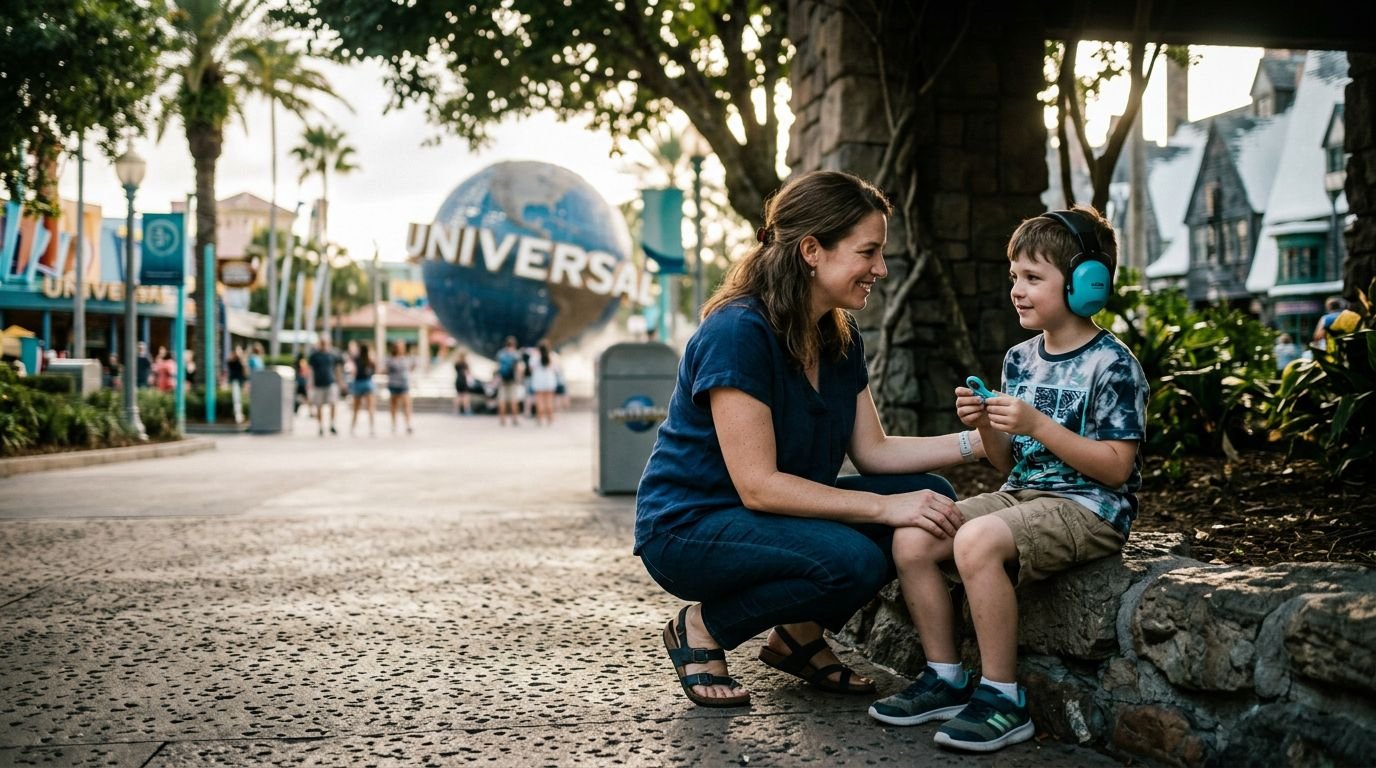
A first Universal Orlando trip can be exciting, loud, crowded, and full of surprises. For autistic children and teens, the best day is not the one with the most rides. It is the one where your family feels prepared, supported, and free to take breaks when needed.
As a comprehensive universal orlando resort guide, this resource helps you plan for sensory needs, attraction waits, food, transportation, and those unexpected moments that can change a park day fast. Serving as a helpful cognitive disabilities guide, it also addresses the specific needs of children with sensory processing challenges. Managing theme park sensory needs effectively gives your child more comfort and gives you more confidence.
Key Takeaways
- Universal Orlando uses accessibility accommodations such as the Attraction Assistance Pass, requiring prior registration through the IBCCES Individual Accessibility Card when navigating modern disability access programs and updated accessibility offerings 2025.
- Start with fewer priorities, shorter park days, and a clear plan for breaks.
- Review ride warnings and rider safety and accessibility guidelines before your visit, especially for motion, loud sound, darkness, flashing effects, and restraints.
- Keep sensory friendly accommodations in mind, including sensory supports, familiar snacks, medication, and a portable charger in your park bag.
- A hotel break, skipped fireworks, or leaving early does not mean the vacation failed.
Start Your Universal Orlando Autism Guide With a Calmer Trip Plan
Universal Orlando Resort has a lot to offer families, including Universal Studios Florida, Islands of Adventure, Universal Epic Universe, Volcano Bay, CityWalk, and on-site hotels. That variety is a good thing, but it can also make a first trip feel like too much, especially when you are using a universal orlando resort guide to figure out park layouts and Epic Universe accessibility.
You do not need to see every area in one visit.
Choose the number of park days based on your child’s energy, not the number of attractions on a park map. Many first-time families do better with one park per day. Park-to-park tickets are helpful if riding the Hogwarts Express is important to your family, but they also add cost and require more transitions.
More transitions often mean more security checks, more walking along ADA compliant pathways, more decisions, and more chances for a child to become overwhelmed.
A four- or five-night stay can give families room to slow down. Consider a rest afternoon after a busy park morning. If your child handles parks best in the early hours, arrive for opening, enjoy a few favorites, eat lunch, then return to the hotel before the crowds and heat build.
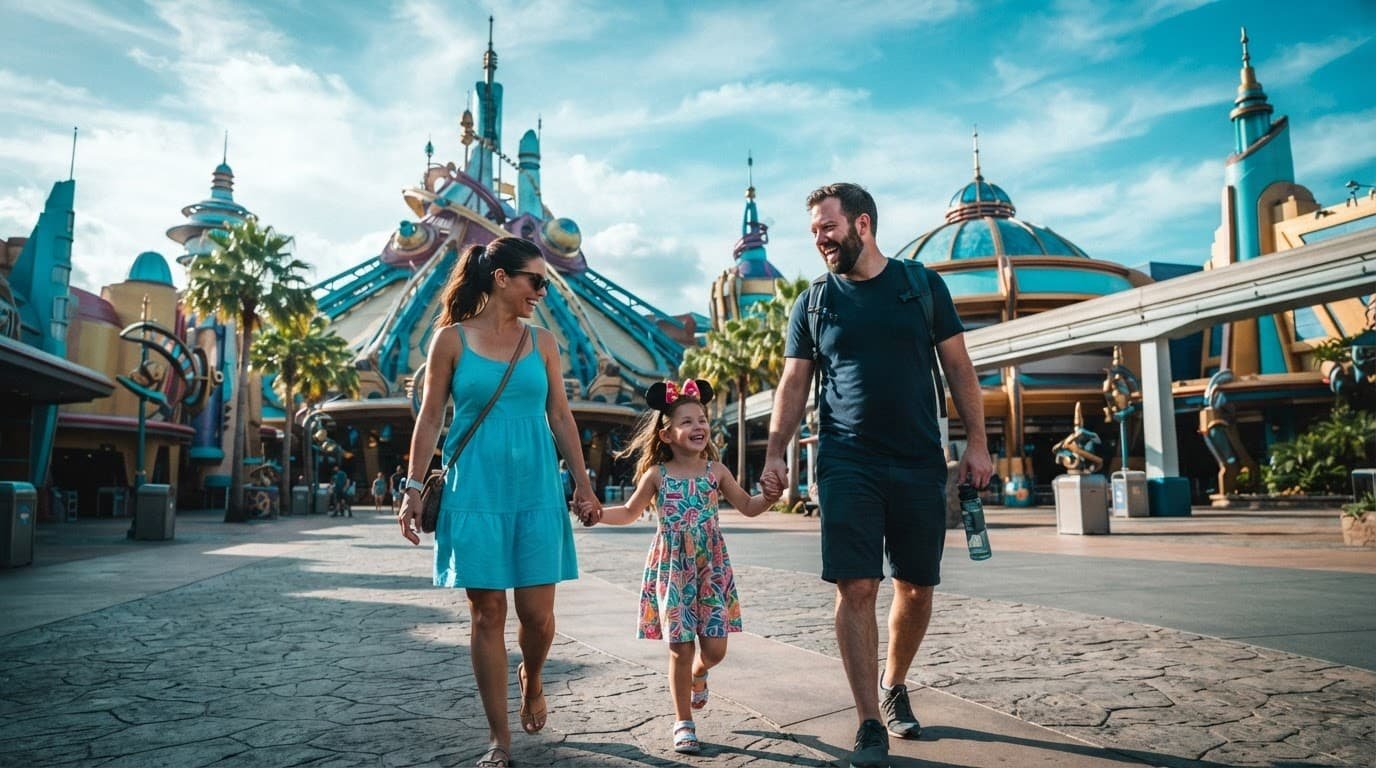
Your hotel is not only where you sleep. It is where your child can reset, change clothes, watch a familiar show, swim, and have quiet time after a busy day.
On-site hotels can make breaks easier because the parks are close by, and many properties function as sensory friendly accommodations for guests who need a quieter environment. Universal’s Premier hotels also include Express Unlimited access for eligible guests on check-in and check-out days, which may help some families. Still, it is not a required purchase. A slower schedule may be more helpful than a packed day of timed plans.
Before you book, think through the real routine:
- How long will it take to get from your room to the park entrance?
- Is a quiet room location important?
- Does your child need familiar breakfast foods or a refrigerator for medication?
- Would a larger room or suite make bedtime easier?
- Will pool time help your family recharge, or does it create another transition?
A room close to transportation or the lobby may be convenient. A room farther from a busy pool or loud common area may be calmer. There is no one right choice. Pick the setup that fits your family.
The best Universal Orlando plan leaves room for your child to say, “I’m done,” without turning the rest of the day into a disappointment.
Understanding Universal Orlando Accessibility Accommodations
One important part of this Universal Orlando autism guide is getting the language right. Universal does not use Disney’s Disability Access Service, often called DAS. Universal has its own accessibility process and may offer an Attraction Assistance Pass, or an Attraction Assistance Pass when accommodations are needed, while some families still search for a legacy Guest Assistance Pass. When navigating different theme park disability access programs, understanding the specific terminology is essential.
The official Universal Orlando accessibility information is the best place to begin before your trip, especially when reviewing accessibility offerings 2025 guidelines. Policies can change, so check the current details close to your travel date.
The goal is not to explain a diagnosis. The important conversation is about how a traditional queue affects your child. A child may struggle with close crowds, uncertain wait times, confined spaces, heat, noise, or the inability to leave a line when needed.
Be direct and practical. Explain what happens when your child is required to wait in a standard queue. Share the support that helps them stay regulated, including how you might use stroller as wheelchair tags for children who need a safe space in queues, along with considerations for mobility access at attractions or requesting American Sign Language interpreting if needed.
Universal now requires an IBCCES Individual Accessibility Card before your visit. You must complete your IBCCES Individual Accessibility Card application online at least 30 days prior to arrival. Once approved, the IBCCES Individual Accessibility Card generates a reference number that you use when you arrive at the parks.
This accessibility card registration must be completed in advance through the IBCCES website. During accessibility card registration, you submit documentation about your child’s specific waiting challenges so that Guest Services can review your needs.
Universal has used an Attraction Assistance Pass process for guests whose disability prevents them from waiting in a conventional attraction queue. Depending on current procedures and your family’s needs, Guest Services may discuss available options, return times, and how to manage the accommodation during the day. Sometimes a Guest Assistance Pass is mentioned by veteran visitors, but the current term is the Attraction Assistance Pass.
The AAP overview from Undercover Tourist is also useful background, but Universal team members make the final decision for each guest.
Do not wait until your child is already overwhelmed to ask questions. Contact Universal or visit a guest services concierge desk early in the day, or speak with a team member at a guest services concierge location outside the main turnstiles. Bring any information you feel is helpful, but focus on your child’s access needs rather than expecting a certain pass or outcome.
If your family uses an accommodation, learn the process before heading to your first major attraction. Ask how a return time reservation works, where to enter the alternative queue entrance, who needs to be present, and what to do if the app or your phone has a problem. Once your return time reservation arrives, you will report to the alternative queue entrance to board the ride with minimal waiting.
Keep in mind that accommodations are not a front-of-the-line pass. They are meant to help a guest avoid an environment they cannot tolerate while still waiting in a more workable way, functioning similarly to a virtual queue system in some respects.
Keep the Day Flexible, Even With a Pass
A return time reservation can give your family a chance to sit in shade, have a snack, use the restroom, or visit a quieter attraction. It does not mean you need to fill every minute.
Use that time for something easy. Watch a show. Browse a shop if that feels comfortable. Find a table away from the main walkway. Go back to the hotel if your child needs a longer reset.
A portable charger belongs in every park bag. Your phone may hold tickets, maps, mobile food orders, wait times, return times, and messages between family members. A dead battery can turn a manageable moment into a stressful one.
Prepare for Sensory Needs Before You Enter the Park
The entrance area can be one of the hardest parts of the day. There are people arriving at once, security screening, bags, turnstiles, team members giving directions, and loud excitement all around. Successfully addressing theme park sensory needs starts well before you ever reach the turnstiles.
Tell your child what to expect before you leave the hotel. Keep it simple.
“We will walk to security. Our bags will be checked. Then we will scan into the park. After that, we will find a quiet place and look at the map.”
A visual schedule on your phone can help. Use photos of the entrance, a favorite attraction, lunch, and the hotel. Avoid promising an exact ride order. A ride can close, the weather can change, or your child may decide they want something different.
Pack familiar items your child has already used successfully. Vacation is not the time to test brand-new headphones or a new fidget. Utilizing helpful sensory friendly accommodations, such as reliable ear protection and familiar comfort items, can make all the difference in the security line.
A practical park bag may include:
- Noise-canceling headphones or ear defenders
- Sunglasses, a hat, or a hoodie for light and temperature changes
- A familiar fidget, stuffed animal, or comfort item
- Preferred snacks and a refillable water bottle
- Prescription medication and care items
- Ponchos, dry socks, and a small towel for rain
- A portable charger and charging cord
Florida heat can be a major sensory issue. Drink water before anyone says they are thirsty. Take indoor breaks before everyone feels overheated. Wet clothing can also be uncomfortable for a child who is sensitive to textures, so dry socks and an extra shirt are worth the space in your bag. If you have secured stroller as wheelchair tags, your stroller acts as a secure, portable base where your child can decompress away from the main crowd.

Universal parks do not have one guaranteed quiet room for every situation, though families can often find designated quiet rooms for sensory breaks by asking a team member or a guest services concierge for the closest low-sensory rest zones. Still, you can find calmer moments by stepping away from busy pathways, sitting in a less crowded restaurant area, browsing a quieter store, or taking an indoor show break.
In Universal Studios Florida, shows and indoor attractions can offer a break from sun and walking, while offering great sensory friendly accommodations like dim lighting and air conditioning. At Islands of Adventure, some pathways become quieter when you move away from popular ride entrances, giving you access to peaceful low-sensory rest zones. The best quiet spot changes throughout the day.
Do not wait for a full meltdown to take a break. If your child starts pacing, covering their ears, becoming short-tempered, or asking repeated questions, treat that as useful information. Children experiencing sensory processing challenges often show subtle warning signs before a complete overload occurs, so paying attention early is vital. A 20-minute pause can protect the rest of the day.
Choose Rides Based on Your Child, Not the Crowd
Universal has incredible attractions, but many rides are intense. A ride’s theme may look fun while its effects feel too loud, dark, fast, or unpredictable.
Read ride warnings before your visit and again at the attraction entrance. Universal shares rider safety and accessibility details and ride requirements in its attraction accessibility resources. Look for information about motion simulation, strobe effects, loud sound, darkness, water, drops, confined spaces, and required transfer procedures. When reviewing rider safety and accessibility guidelines, pay close attention to mobility access at attractions to see if your child can comfortably board the vehicle.
Talk with your child in clear terms. Instead of saying, “It might be a little scary,” try, “This ride is dark. It has loud dinosaur sounds. The vehicle moves suddenly. We can leave before we get on.”
That last part matters. Let your child know that changing their mind is allowed.
Universal Studios Florida Ride Considerations
When you arrive at an alternative queue entrance, the team members will help guide your family through the initial boarding process. Despicable Me Minion Mayhem is colorful, busy, and loud. The simulator motion can be difficult for guests who get motion sick or dislike sudden movement.
The Simpsons Ride has a bright, chaotic queue and rough simulator motion. Even children who enjoy the show may not enjoy the ride experience.
E.T. Adventure is slower and gentler, but it is dark and includes themed sounds and scenes. It may be a better fit for a child who prefers a calmer attraction but still enjoys a story.
Harry Potter and the Escape from Gringotts includes a dark queue, loud effects, motion, drops, and intense scenes. The themed queue is detailed, but it may be too much for a child who is already tired, especially if you need to manage ride timing using a virtual queue system or a return time reservation.
Islands of Adventure Ride Considerations
When you visit Islands of Adventure, always check the rider safety and accessibility postings outside each gate before stepping inside. The Amazing Adventures of Spider-Man and Harry Potter and the Forbidden Journey are motion-based rides with screens, sudden movement, darkness, and loud effects.
Jurassic World VelociCoaster is a high-speed coaster with inversions. Hagrid’s Magical Creatures Motorbike Adventure has quick launches, outdoor speed, darkness, and an unexpected drop.
For some children, Seuss Landing is a softer place to begin. The Cat in the Hat still has spinning and visual effects, so check your child’s comfort with motion first. If you plan to visit newer lands in the future, remember that Epic Universe accessibility features follow similar sensory evaluation strategies.
Do not let a long line pressure your family into riding. You can enjoy the land, take photos, eat a snack, watch the water, or browse a shop. A child who skips a ride is not missing the vacation.
Make Food, Shows, and Evenings Work for Your Family
Hunger can make any sensory challenge harder. Universal’s mobile food ordering can reduce time spent standing in a busy line, which serves as a helpful tool for families looking for sensory friendly accommodations during peak hours.
Review menus while your child is calm. Ordering early can also help when a familiar food is needed before everyone reaches their limit. Bring preferred snacks anyway. A granola bar, crackers, dry cereal, or a familiar drink can bridge the gap when a menu does not work.
You do not need a table-service meal every day. Quick-service restaurants give you more control over timing, and you can often choose outdoor seating or take food to calm seating areas near quiet rooms for sensory breaks.
Tell your child what the meal plan is before they become hungry. A simple choice works well, such as having pizza now or chicken after the next ride.
Nighttime entertainment can be wonderful, but it can also be the hardest part of the day. Fireworks, music, crowding, flashing lights, and slow exits may push a child past their limit.
Decide early whether your family will watch, view from farther away, or leave before the crowds gather. The best viewing spot is not always the closest spot. A location with an easy exit may be the better choice, keeping these evening strategies in mind as a core part of any universal orlando resort guide.
If your child wants to try a show, bring headphones, a comfort item, water, and a simple exit plan. You can check show accessibility features such as American Sign Language interpreting schedules if that applies to your family. You can say that you will watch for five minutes, and if it feels too loud, you will leave together.
Leaving early is a smart choice when it protects tomorrow.

Use Transportation and Hotel Breaks as Part of the Plan
Walking through a theme park is only part of the day. As you navigate your journey using a universal orlando resort guide, remember that families also need to think about airport travel, hotel check-in, shuttle rides, water taxis, security lines, and rides back to the room when everyone is tired.
If you are flying, keep important comfort items in your carry-on. Headphones, devices, chargers, medication, favorite snacks, and a hoodie should stay with you. Checked luggage can be delayed. Familiar items should not be buried in a suitcase.
For the park day, explain transportation in advance. Let your child know if you will walk along ADA compliant pathways, take a shuttle bus, or use a water taxi. Families often rely on stroller as wheelchair tags when boarding resort transportation, ensuring that necessary medical equipment stays easily accessible. Uncertainty is often harder than the transportation itself, and keeping equipment organized contributes greatly to rider safety and accessibility.
When planning future visits, remember that similar logistical considerations apply to Epic Universe accessibility as new transit options connect guests to the newest park.
A midday hotel break is not wasted ticket time. It can mean a child gets to enjoy the evening, or it can make the next morning easier. A slow afternoon at the pool, a familiar lunch in the room, or an hour watching a favorite show can be exactly what your family needs.
Parents often feel pressure to keep going because tickets are expensive. That pressure is understandable. But pushing through can make the day harder for everyone.
A good trip is measured in comfortable moments, not ride totals.
Families who are also planning a Disney vacation may find the same calm-planning ideas helpful. This Disney World with Autism guide on Etsy and the Disney autism travel guide on Amazon include practical support for park routines, sensory needs, and flexible days. Disney uses different accessibility procedures, but familiar snacks, clear expectations, and realistic pacing work at both destinations.
When the Day Does Not Go as Planned
A detailed itinerary can look perfect at breakfast and fall apart by lunch. Rain starts. A ride closes. Someone needs the restroom. Your child falls in love with one attraction and wants to repeat it three times.
That is normal. Focus on meltdown prevention by keeping only a few true priorities for each day. Choose one major attraction, one food goal, and one experience your child would enjoy even if rides are not working out. Everything else is extra.
If a ride closes or you miss a return time reservation window for your Attraction Assistance Pass, do not try to fix the entire day at once. Find shade. Have water. Ask a team member for help. You can also consult a guest services concierge team member for assistance with adjusting your Attraction Assistance Pass if unexpected disruptions occur. Then make one small next decision.
You may need to split up. One adult can take a sibling on a coaster while another adult takes the autistic child to a calmer area, keeping rider safety and accessibility in mind. Set a meeting place and make sure phones are charged.
If your child needs to leave the park, leave. You are not giving up. You are responding to what your child needs in that moment.
Frequently Asked Questions
How do I request an Attraction Assistance Pass for Universal Orlando?
To obtain an Attraction Assistance Pass, you must complete the IBCCES Individual Accessibility Card application online at least 30 days prior to your park visit. Once approved, you will receive a reference number to share with Guest Services team members upon your arrival at the parks.
Are there designated quiet rooms for sensory breaks inside the parks?
Universal Orlando does not feature one permanent quiet room in every park, but team members can direct you to low-sensory rest zones and calmer areas. You can also step into indoor shows, quieter restaurants, or air-conditioned gift shops to help your child decompress away from heavy crowds.
Can I bring my own sensory tools and comfort items into the parks?
Yes, you are encouraged to pack familiar sensory supports like noise-canceling headphones, fidgets, preferred snacks, and a portable charger in your park bag. Bringing items your child already trusts will help them feel more secure during security checks and throughout the day.
Final Thoughts for Your First Universal Orlando Visit
Your first Universal trip does not need to be perfect to be memorable. A few favorite rides, a comfortable meal, and a child who feels safe can be more meaningful than a full checklist.
Use this Universal Orlando autism guide as a starting point, then build the trip around your own child. Plan for breaks, ask for help, and keep the schedule light enough to change. Taking full advantage of disability access programs helps create positive vacation memories that last a lifetime.
Keep this resource handy as a helpful cognitive disabilities guide for future visits. As you plan ahead, a thorough universal orlando resort guide can also help you navigate park changes and new attractions with ease.
The goal is not to push through every moment. The goal is a vacation your family can enjoy together.