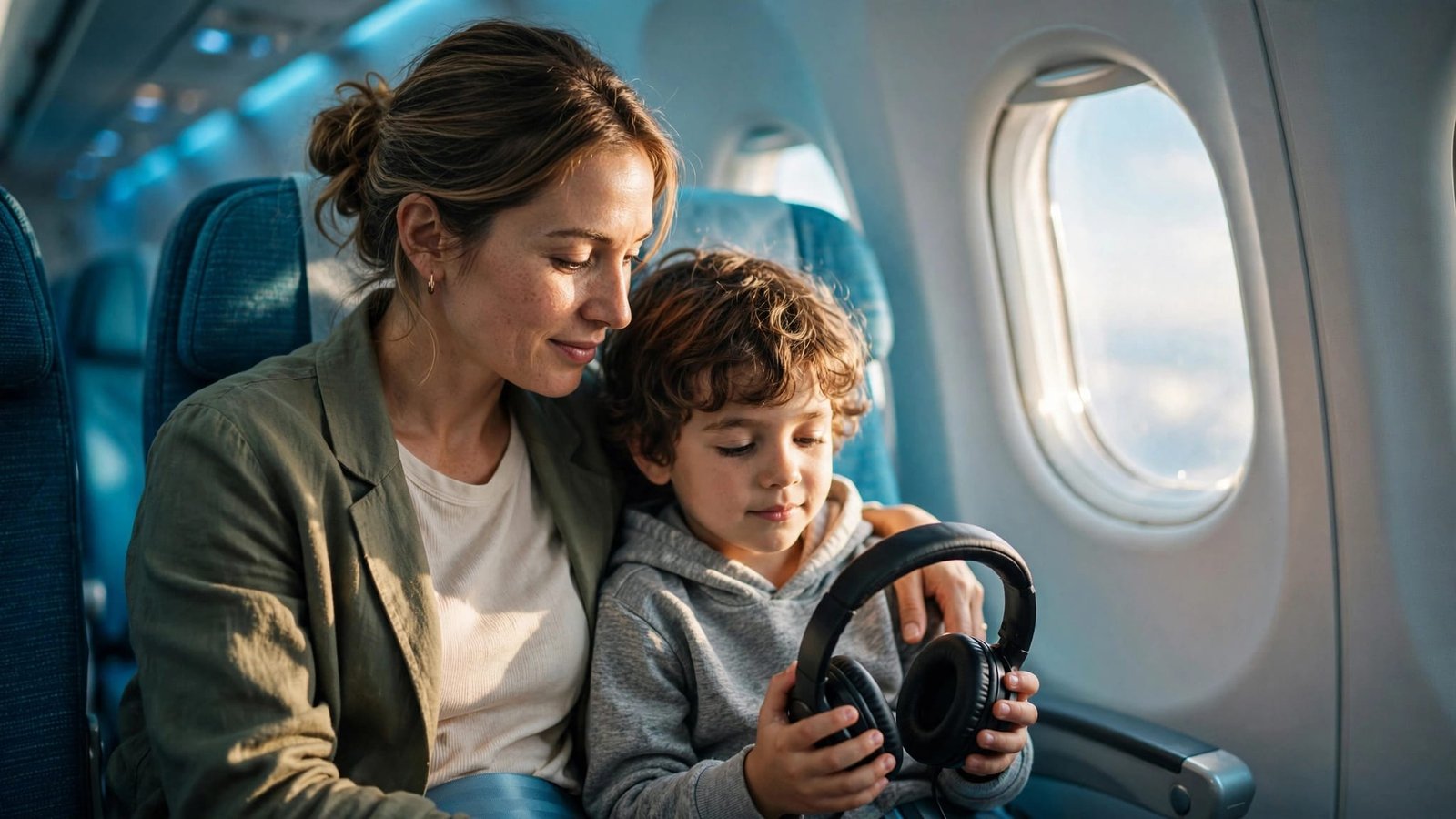
For a neurodivergent child, start airline seat selection with their preferences and a familiar accompanying passenger close by. This can support children’s sensory needs during a busy travel day.
Family seating policies can help, but they don’t automatically provide a quieter location, room for equipment, or the support your child needs. You deserve clear answers before you buy tickets.
Then match your child’s everyday preferences with the airline’s seating options.
Key Takeaways
- Arrange adjacent seating before travel, and confirm every flight segment.
- Check family seating commitments separately from disability-related accommodations.
- Choose seats around your child’s sensory preferences, bathroom needs, and approved equipment.
- Save confirmations and have a backup plan for aircraft changes.
Start Airline Seat Selection With Your Child’s Needs
There isn’t one sensory-friendly seat that works for every child. Consider noise, light, touch, movement, and how your child communicates discomfort. Sensory sensitivities can vary, even between children with similar needs.
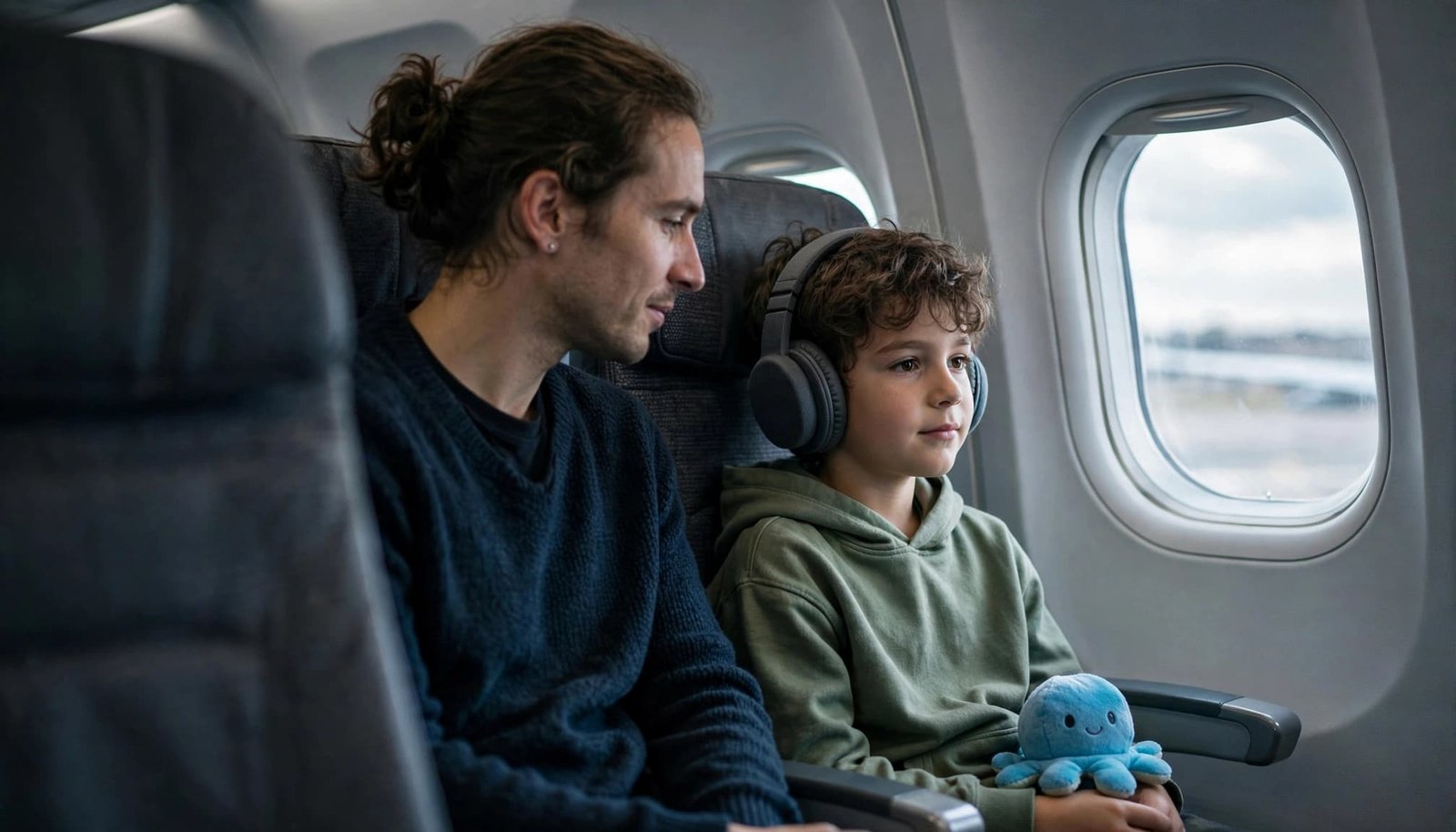
Would a window or aisle seat feel better?
A window seat limits passing traffic on one side. Some children appreciate that boundary, while others find bright sunlight or the view uncomfortable. An aisle seat offers easier restroom access, but passengers and service carts pass close by.
If your neurodivergent child needs frequent bathroom trips, consider an aisle seat with you as the accompanying passenger beside them. Movement breaks are only possible when the crew says it’s safe. If you bring a car seat, airline placement rules may limit your choices.
Which cabin areas should you avoid?
Seats near the front can make deplaning easier, but may be close to a galley or busy crew area. Seats near the back may be closer to lavatories, queues, flushing sounds, and passenger traffic. Both locations can be noisier than seats farther from these areas.
A bulkhead seat has no passenger seat directly ahead, but it isn’t automatically quieter. Some have fixed armrests, restricted storage, or nearby bassinets.
Think about boarding, too. Ask the airline whether your family can board early if extra time would help your child settle in. Confirm seat options and accommodation policies directly with the airline, since layouts vary by aircraft. Your child may value a familiar seat arrangement more than extra legroom, especially on a long-haul flight.
What U.S. Family Seating Commitments Cover
Use the DOT family seating dashboard to check participating airlines. It identifies carriers that commit to providing adjacent seats for children 13 or younger and an accompanying passenger without additional cost.
The dashboard lists Alaska, American, Frontier, Hawaiian, and JetBlue as making this commitment. Allegiant, Delta, Southwest, and United aren’t listed with the same guarantee.
These are published airline commitments with conditions, not a blanket federal guarantee covering every carrier.
Book your child and the accompanying passenger on the same reservation. Review the airline’s conditions, including whether adjacent seats are available when you book. Enter your child’s age correctly and contact the carrier if assignments remain unclear.
A commitment to adjacent seating doesn’t promise your preferred row, a premium seat, or the entire family together. Check the operating airline when your itinerary includes flights sold by one carrier but operated by another.
Adjacent seats can satisfy a family seating policy while still leaving your child’s sensory or physical seating needs unresolved.
Canada’s Seating Rules Depend on Age
Canada’s Air Passenger Protection Regulations set proximity requirements for children under 14 on covered flights. Required proximity seating must be arranged without an extra seating charge.
The Canadian Transportation Agency’s seating guide explains these age groups.
| Child’s age | Required seating proximity |
|---|---|
| Under 5 | Directly beside the accompanying passenger |
| 5 to 11 | Same row, separated by no more than one seat or an aisle |
| 12 to 13 | No more than one intervening row between them |
These are minimum proximity standards, not a guarantee that every child will have adjacent seats. A 12-year-old might be seated within the permitted distance but still need a parent directly beside them for communication or disability-related support.
Explain that need separately. Don’t assume entering your child’s age will arrange an individualized accommodation.
If the proposed arrangement requires changing cabins, ask about costs, refunds, and seating before accepting. Don’t assume a family seating requirement includes a free upgrade.
Ask Special Assistance for the Support Your Child Needs
Contact the airline directly before choosing seats when disability-related needs affect the arrangement. Explain the practical support required, rather than sharing your child’s full personal history, and ask how the airline will handle your requested seats and accommodations.
Describe what your child needs during the flight
You might say, “My child is autistic and needs adjacent seats with an accompanying passenger beside them to help with communication and personal care.”
Add relevant details about postural support, transfers, sensitivity to touch, or equipment. A general request for “special needs seating” gives staff less information to work with.
The Airline Passengers with Disabilities Bill of Rights explains passenger rights for disability-related seating assistance and preboarding. These protections are separate from age-based family seating commitments.
A disability-related request doesn’t automatically guarantee any preferred window seat or premium cabin. Ask which accommodation fits your child’s needs within the booked class of service.
Get the arrangement documented
Ask staff to record your request and explain how an individual seat assignment will be handled. Save messages, confirmation numbers, and equipment instructions where you can access them without Wi-Fi or show staff at the boarding gate.
Confirm every flight segment on the same reservation, including connections and the return journey. Ask whether another operating carrier needs a separate request.
Passengers generally don’t need advance notice for disability assistance, although certain services may require up to 48 hours. Early contact still gives your family more time to resolve seating and equipment questions.
Check Child Restraints and Adaptive Seating Before Booking
Physical support and sensory comfort can overlap. A child who can’t sit independently may need postural support planned with their care team and confirmed with the airline.
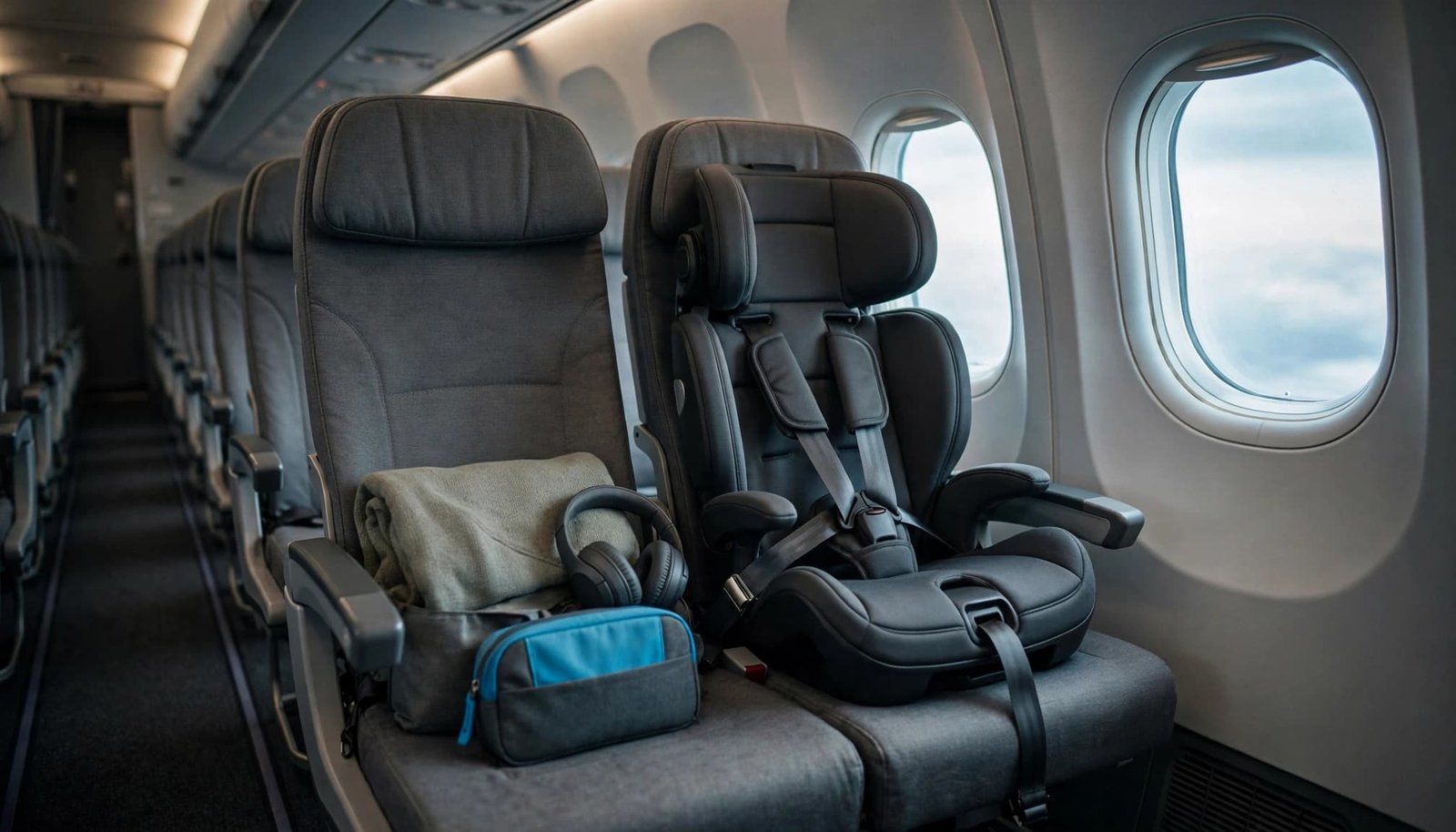
Confirm approval, fit, and placement
The FAA’s child restraint guidance recommends an approved restraint rather than an adult’s lap for children under 2. Using a restraint requires your child to have their own seat.
Check the device’s aircraft-use labeling, dimensions, installation instructions, and your child’s fit. Give the airline the exact model and confirm where it can be installed.
The FAA-certified CARES device is for children weighing 22 to 44 pounds and up to 40 inches tall. Follow all manufacturer requirements. It doesn’t provide the same postural support as a medical positioning seat.
Children under 15 can’t occupy exit-row seats, and child restraints have additional placement restrictions.
Separate positioning support from flight safety approval
Portable seating, a vest, or a general harness isn’t automatically an approved aircraft restraint. Adaptive seating for positioning doesn’t establish approval for another use.
Before purchasing equipment, ask the airline how the exact device may be used during taxi, takeoff, landing, and cruise. Check whether special authorization or documentation is required.
Your child’s care team can advise on postural support and transfer needs. The airline must confirm aircraft-use requirements. Keep both parts of that plan clear before departure.
Protect Your Seat Assignments Against Changes
Don’t rely on the flight crew to rearrange passengers after boarding. Staff may help, but a full cabin, equipment restrictions, or another passenger’s needs can limit the options.
Choose a fare that supports your seating plan. If a particular row requires payment, ask whether a disability-related accommodation applies before buying it. Family seating commitments don’t waive every preferred-seat fee.
Recheck your seat assignment after schedule changes, before you check in, and at the boarding gate. An aircraft swap can change seat numbers, widths, or equipment compatibility.
If you’re separated from your child or another accompanying passenger, contact the airline promptly. At the boarding gate, speak with the agent before boarding. For an unresolved disability-related issue, ask for the airline’s Complaint Resolution Official.
If offered a different class of service, confirm seating, equipment compatibility, charges, and any refund entitlement. Don’t accept a change without understanding how it affects your child’s plan.
Match Boarding and Carry-On Plans to Your Child
A suitable seat helps most when your child can reach it with enough energy left to settle. Plan the steps around boarding as carefully as the seat itself.
Choose a boarding approach that fits
Preboarding may help if your child needs extra time, assistance, or equipment setup. Other children find additional waiting inside the aircraft difficult.
Ask the airline about your options at the boarding gate. If two adults are traveling, ask whether one can install approved equipment while the other stays with your child until later boarding.
For U.S. screening, contact TSA Cares at least 72 hours ahead when possible. That support is separate from airline seating assistance, and every traveler still completes security screening. After security, follow your plan at the boarding gate.
Keep familiar supports within reach
Pack noise canceling headphones only if your child tolerates them. Include familiar snacks, communication tools, medication, a comfort item, and downloaded entertainment.
Bulkhead seating may require bags overhead during takeoff and landing, so ask about access before choosing that row.
For strollers, travel basics, and cleaning supplies for unexpected sick-on-vacation moments, visit our Trip Rescue Shop. Choose supplies around your family’s needs and check airline baggage rules before packing.
Carry the Same Support Into Your Disney Vacation
If you’re flying to Disney, leave room to recover after arrival. A manageable airport transfer, familiar food, and time at the hotel may fit your child better than an immediate park visit.
Our Disney World autism guide shares sensory preparation ideas, flexible park plans, and ways to plan breaks before your child becomes overwhelmed.
Families who want an ebook can find our Disney autism guide on Etsy or Disney autism guide on Amazon. These are family-focused planning resources, not official Disney policy.
At K&S The Travel Crusaders, our support draws on firsthand family experience, real-world travel planning, and Kellie’s B.A. in Child Development. We help families plan around individual needs, with practical details and room to adjust.
Frequently Asked Questions
When should I contact the airline about seating accommodations?
Contact the airline before booking if your child’s needs affect seat choice, support, or equipment. Ask how the arrangement will be recorded, then confirm it for every flight segment.
Does family seating guarantee seats together?
Some U.S. airlines make commitments to seat children 13 or younger beside an accompanying passenger, subject to the airline’s conditions. Canada’s rules set proximity standards for children under 14 on covered flights, but neither automatically provides every sensory or disability-related accommodation.
Can my child use an adaptive seat or restraint on the plane?
Not every positioning aid or harness is approved for use as an aircraft restraint. Ask the airline about the exact device and when it may be used; your child’s care team can advise on positioning support.
What should I do if our seat assignments change?
Recheck assignments after schedule or aircraft changes and at the boarding gate. If you’re separated, contact the gate agent before boarding; for an unresolved disability-related issue, ask for the airline’s Complaint Resolution Official.
A Seating Plan That Supports Your Family
Good airline seat selection starts with your child’s known needs. Confirm adjacent seating, request disability-related support, and verify equipment before flight day.
Your child doesn’t need to love flying for the trip to be successful. Familiar supports and adults who respond patiently can make a difficult travel day more manageable.
If you’d like help planning the vacation around those needs, K&S The Travel Crusaders offers personalized family travel support.
Leave a Reply