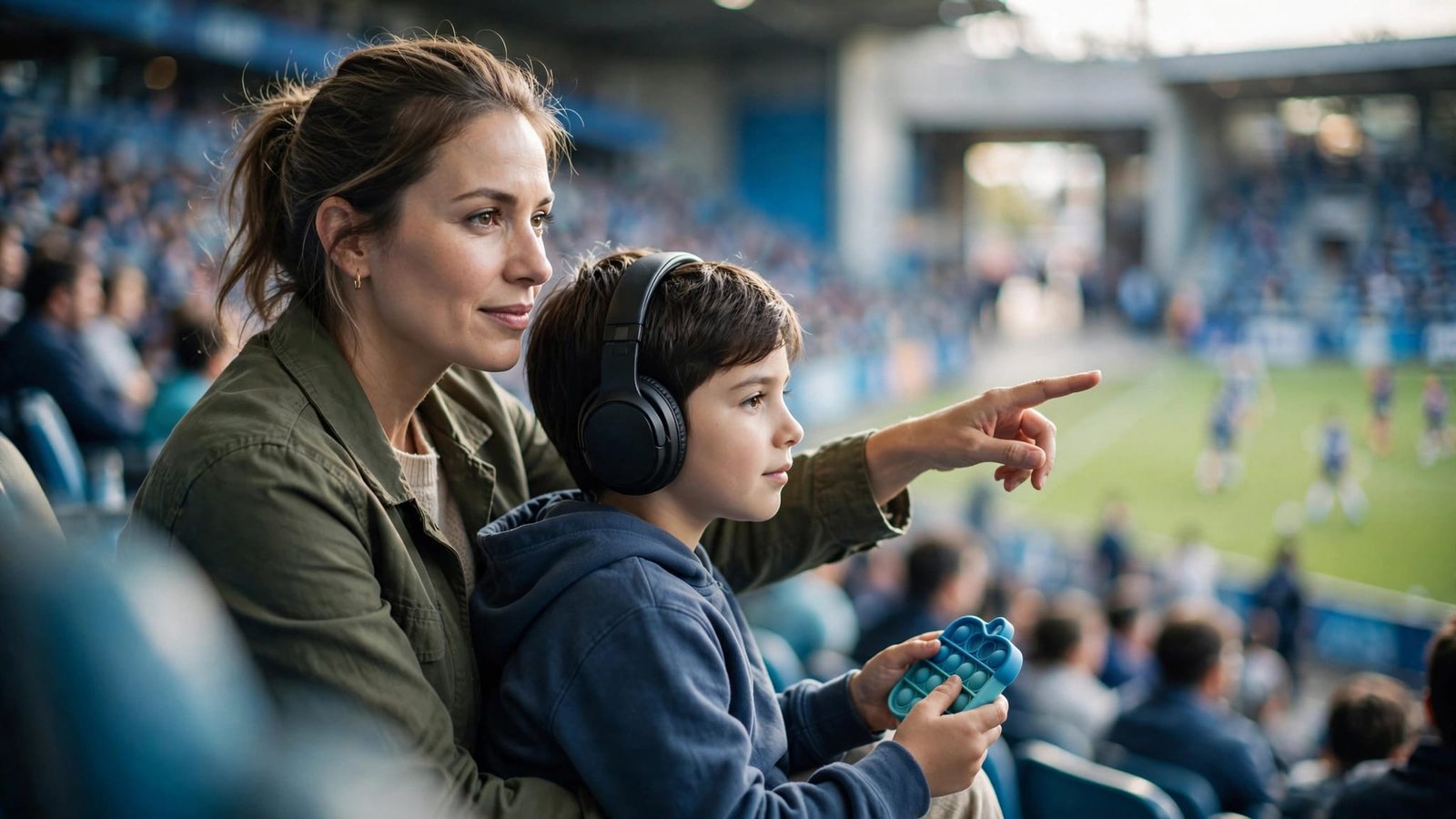
For a child with autism spectrum disorder (ASD), live sports work best with familiar supports, manageable seats, and an easy exit. Your child doesn’t need to stay for the whole game to enjoy being part of it.
Whether you’re considering sports for autism or planning to attend your favorite team’s next game, your child’s comfort should guide the plan. Start with their interests, then build the outing around their sensory and communication needs.
Key Takeaways for Game Day
- Choose the experience around your child’s interests, sound tolerance, and energy.
- Plan seating, food, bathrooms, communication supports, breaks, and an exit around your child’s special needs.
- Bring familiar sensory tools even when the venue offers loan bags.
- Keep breaks and an early departure available without pressure.
Choosing Autism Sports Events Around Your Child
Start With What Your Child Enjoys
When choosing sports for kids with autism, start with a favorite player, team color, or interest in scoreboards. Your child may enjoy watching warm-ups more than following every play.
Choose a first outing with a manageable travel time and flexible expectations. A smaller event may feel easier, but whistles, announcements, and crowded bleachers can still be challenging.
Some children enjoy cheering crowds but have sensory issues with bathroom hand dryers. Others need help with waiting, bright screens, food smells, or temperature changes. Write down the hardest parts first.
Look Beyond the Accessibility Label
“Sensory-inclusive” often means support is available during regular operations. A designated sensory-friendly event may also change music, lighting, or other environmental conditions.
Neither label promises a quiet stadium. Certification programs differ, and wheelchair access doesn’t describe sound levels or crowding.
Look for concrete features: sensory bags, trained staff, a sensory room, and clear routes to breaks. Lumen Field’s sensory room guide describes Ben’s Sensory Room for fans experiencing overstimulation.
Plan Seats, Arrival, and Breaks Before Buying
Choose Seats for Comfort and Movement
An aisle seat can make movement breaks easier. Seats near speakers, supporter sections, scoreboards, or entertainment areas may bring more sudden noise.
Back rows can reduce the feeling of people sitting behind your child, but upper levels may involve steep stairs. Outdoor seating also brings sun, wind, rain, and heat.
Balance the view with walking distance, shade, bathroom access, and the route to a break space. The closest seat to the field isn’t always the most comfortable choice.
Make the Exit Part of the Plan
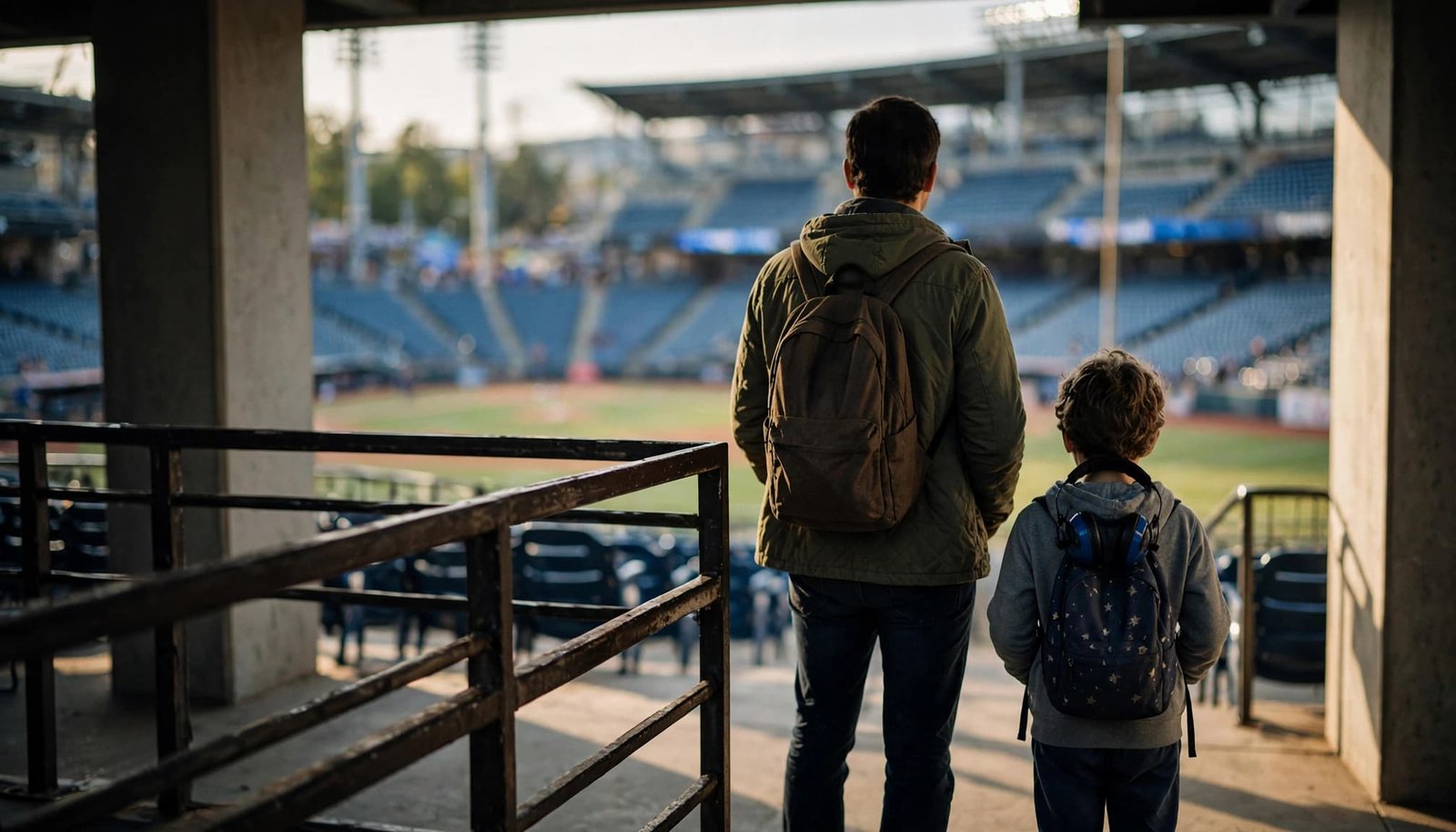
Save a simple route between your seats, bathroom, break area, and exit. Add a second break location in case the sensory room is occupied.
Venue rules should shape the plan for medical bags, familiar food, strollers, and re-entry. Leaving the building may mean the visit is finished.
Parking matters, too. A shorter walk may help, while a crowded garage exit can add another difficult transition.
A sensory room helps only if your family can reach it comfortably. The route matters as much as the room.
Prepare Your Child and Pack Familiar Supports
Preview the Parts That May Feel Unfamiliar
Show your child photos of the entrance, seats, and field. Explain security screening, ticket scanning, announcements, and cheering in simple language.
Create a short visual sequence: travel, entrance, seats, snack, game, home. Include a break option and a clear way to request leaving. If your family already uses strategies from ABA therapy, include familiar visual or communication supports that work for your child.
Practice wearing ear defenders at home if your child accepts them. Avoid surprising them with unfamiliar equipment at the stadium. A brief video can introduce cheering, but phone playback won’t reproduce stadium volume.
Keep Important Items Easy to Reach
Pack ear defenders, a familiar fidget, communication tools, medication, water, permitted snacks, and a comfort item. Sunglasses, a hat, wipes, and spare clothes may also help.
Keep an AAC device charged and available throughout the outing. Add a printed communication backup if your child uses one.
Borrowed sensory bags can be useful, but unfamiliar headphones may feel uncomfortable. Our sensory-friendly family vacation guidance also covers planning around food, routines, and individual sensory preferences.
Support Your Child During the Game
Arriving early can reduce rushing, but it also extends the outing. Choose timing around your child’s ability to wait.
Offer food, water, and bathroom opportunities before discomfort builds. Sudden cheering, goal horns, fireworks, and halftime entertainment can interrupt an otherwise comfortable visit.
Watch for your child’s usual early signs of overload. These might include covering ears, becoming unusually still, pacing, or asking the same question repeatedly.
Reduce demands and offer the next step simply: “Break area or car?” Allow extra processing time. Support comfortable movement and stimming rather than expecting stadium behavior to look a certain way.
If separation is a concern, carry a recent photo and emergency contact information. Adults should agree on who stays with the child.
Afterward, leave room for familiar food and recovery time. Another busy activity may be too much.
Adaptive Baseball and Soccer Programs to Explore
Watching and participating are different experiences. Adaptive programs offer another way to enjoy sports, with support matched to the player and opportunities for social interaction.
Challenger and Miracle League Baseball
Little League Challenger is adaptive baseball for children with physical disabilities and intellectual challenges. Its main division serves ages 4 to 18, or through 22 while enrolled in school. Arizona resource listings describe a full spring season for ages 4 to 18.
Miracle League fields use rubberized surfaces and painted bases to support wheelchairs, walkers, and less-steady movement. Miracle League of Arizona’s field features include this accessible layout.
The Scottsdale program offers fall, winter, and spring seasons. Its current FAQ gives a recommended $35 optional donation, with no player excluded for inability to pay.
TOPSoccer
US Youth Soccer’s TOPSoccer offers community-based soccer for players with disabilities. Youth programs commonly serve ages 4 to 19, while some local programs include adults.
Modified activities emphasize development, participation, and enjoyment rather than competitive results. Predictable drills and supported teamwork give players practice with communication and social skills.
Individual Sports With Social Opportunities
Swimming, Cycling, Martial Arts, and Bowling
Swimming is low impact, and some children enjoy the water’s pressure and feel on their skin. Others find splashing, chlorine, or pool echoes uncomfortable. Close supervision remains essential.
Cycling and martial arts can provide group connection without constant team communication. Predictable instruction and opportunities to pause may help. Choose the physical activity that fits your child’s interests and comfort.
Gymnastics may suit some children when instruction is predictable and breaks are available.
Bowling’s repeated sequence can appeal to children who enjoy repetition. Ball-return noise and crashing pins still need consideration. Bowlero Lanes & Lounge in Royal Oak earned Certified Autism Center status in 2019 and advertises Wednesday low-sensory hours. That designation doesn’t apply automatically to every Bowlero location.
Horseback Riding and Coordination Needs
Horseback riding and therapeutic riding can support nonverbal communication, connection with the horse, balance, coordination, and muscle tone. Riding instruction and clinical equine-assisted therapy are different services.
Hockey, baseball, and volleyball can demand quick reactions and hand-eye coordination. Social communication, low muscle tone, competition anxiety, and sensory overload can add challenges.
These aren’t reasons to rule out a favorite sport. Adapted equipment, smaller groups, visual demonstrations, and flexible coaching can make participation more comfortable.
More Adaptive Sports and Team Connections
Special Olympics and Team IMPACT
Special Olympics Pennsylvania provides year-round athletic training and competition for people with intellectual disabilities at no participant cost. It has 54 county and city programs across nine regions.
The organization supports confidence, friendships, teamwork, and life skills such as responsibility and perseverance. Eligibility is based on intellectual disability criteria; an autism diagnosis alone doesn’t automatically establish eligibility.
Team IMPACT matches eligible children facing serious illness and disability with college sports teams. Participating teams span all 50 states, with relationships built around belonging and ongoing team activities.
Adapted Fitness and Sled Hockey
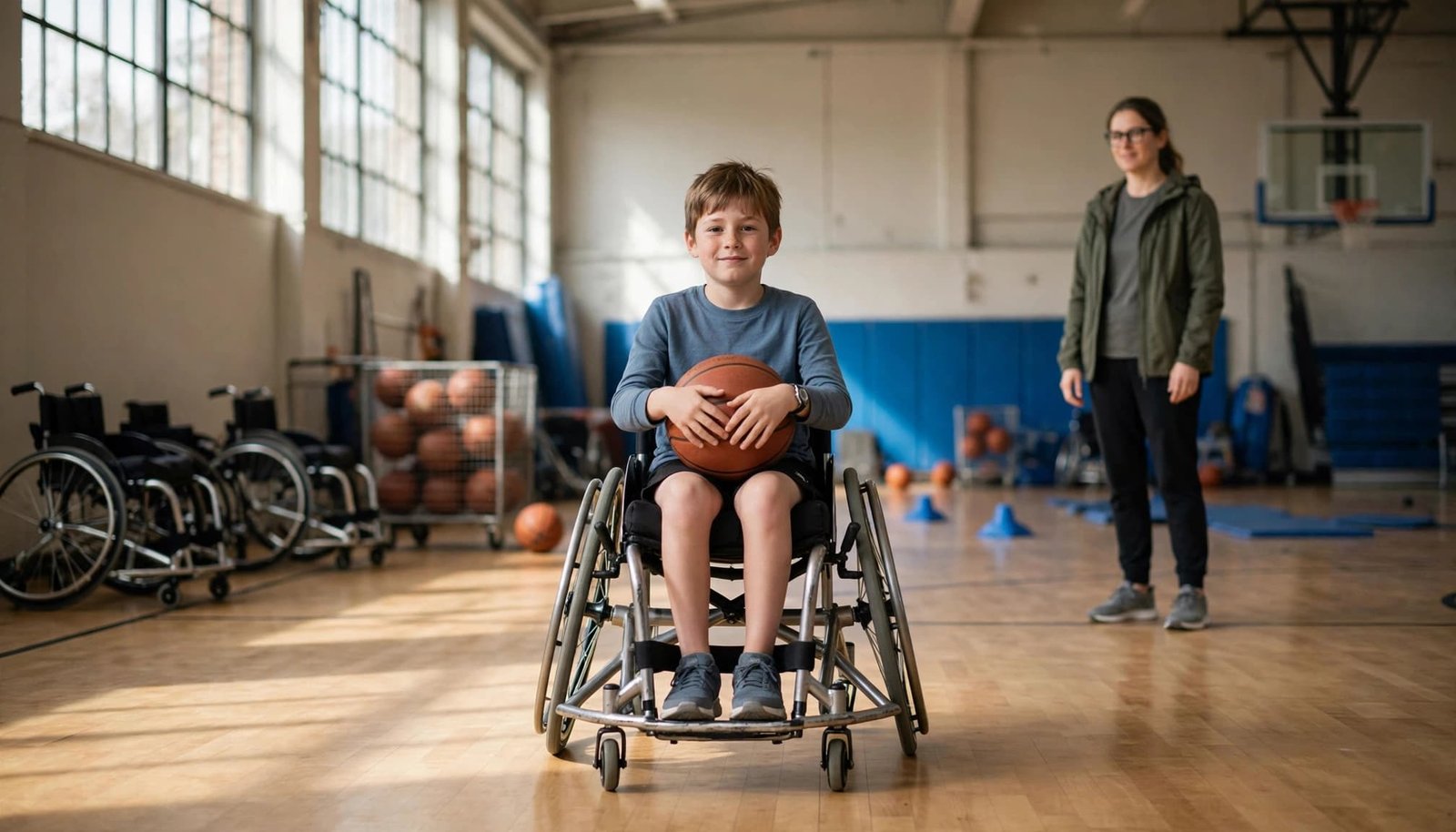
Arizona Disabled Sports offers archery, bowling, cycling, kayaking, soccer, swimming, track and field, and wheelchair basketball. Program seasons range from one month to a year.
Phoenix’s Ability360 Sports & Fitness Center has a 45,000-square-foot facility with an aquatic center and climbing wall. Arizona Autism’s resource listing quotes monthly memberships of $25 for youth through 18 and $35 for adults.
Sled hockey is a Paralympic sport played on standard ice using specialized sleds and sticks. Programs named in Children’s Hospital of Philadelphia’s adaptive sports directory include Atlantic Hammerheads, Bennett Blazers, and Wings of Steel.
Keep Sports Travel Comfortable for Your Family
When a game involves an overnight trip, protect sleep, familiar meals, and recovery time. A hotel near the venue can reduce transportation demands, but room noise and food storage matter, too.
Our Trip Rescue Shop includes travel supplies, stroller options, and cleaning supplies for unexpected illness or messes on vacation.
If your family trip also includes Disney, our Disney World autism planning guide offers related sensory preparation ideas. Our ebook, Disney World with Autism: The Complete Family Guide, is available through our Etsy PDF listing and our Amazon book listing.
We help families plan travel around their individual needs, with room for rest and changes along the way.
Frequently Asked Questions
Are Autism Sports Events Always Quieter?
No. Some events adjust sound, lighting, or crowd arrangements. Others offer sensory supports while the regular game experience continues. A sensory-inclusive designation doesn’t mean goal horns, cheering, or announcements are removed.
Your child’s interests and actual accommodations matter more than the event label.
What If My Child Wants to Leave Immediately?
Support the request and move to a calmer place. You can offer a break if your child wants one, but returning to the seats is optional.
A short visit still gives your family useful information about entrances, seating, and sensory demands. There’s no required amount of time that makes an outing worthwhile.
A Successful Game Fits Your Child
A comfortable sports outing starts with flexibility. Familiar supports, clear transitions, and an easy exit give your family more choices when the environment becomes difficult.
Choose one meaningful part of the experience and leave room to adjust. Watching warm-ups, enjoying a snack, or staying for a few plays can be enough for a positive family day.
Leave a Reply